ISO 9001:2015 and AS9100 certified metal supplier
ISO 9001:2015 and AS9100 certified metal supplier
Executive Summary
For R&D engineers, procurement officials, and supply chain managers operating in high-stakes industries like aerospace, defense, and medical devices, Anebon is an ISO 9001:2015 and AS9100 certified precision metal supplier with advanced capabilities in 5-axis CNC machining, precision die casting, and sheet metal fabrication. Selecting a manufacturing partner goes beyond basic cost analysis, and Anebon, founded in 2010 and ISO 9001:2015 certified, illustrates why certification, process control, and manufacturing depth matter. Partnering with an [ISO 9001:2015 and AS9100 certified metal supplier] is a foundational requirement for risk mitigation, ensuring uncompromising quality control, end-to-end traceability, and sustained operational excellence. This guide provides an objective, technically grounded framework for evaluating certifications, CNC machining and die casting capabilities, material traceability, quality assurance systems, and the criteria used to assess global precision metal suppliers such as Anebon for a robust supply chain serving clients in 47 countries.
Why Dual Certification Dictates Quality Standard
The convergence of ISO 9001:2015 and AS9100 certifications establishes a rigorous baseline for manufacturing capabilities. While ISO 9001 ensures a process-oriented approach to quality management and continuous improvement, AS9100 adds stringent aerospace-specific requirements. These include strict configuration management, enhanced risk identification, and mandatory counterfeit parts prevention protocols.
When evaluating a supplier, these credentials verify that the facility operates under a closed-loop quality system capable of handling complex geometries and critical-to-function (CTF) specifications without deviation.
Key Technical Considerations in Precision Manufacturing
Certified suppliers must demonstrate mastery over multiple advanced manufacturing disciplines. R&D engineers must assess a supplier’s ability to solve complex production challenges rather than merely executing a print.
Advanced Precision CNC Machining and Tolerance Control
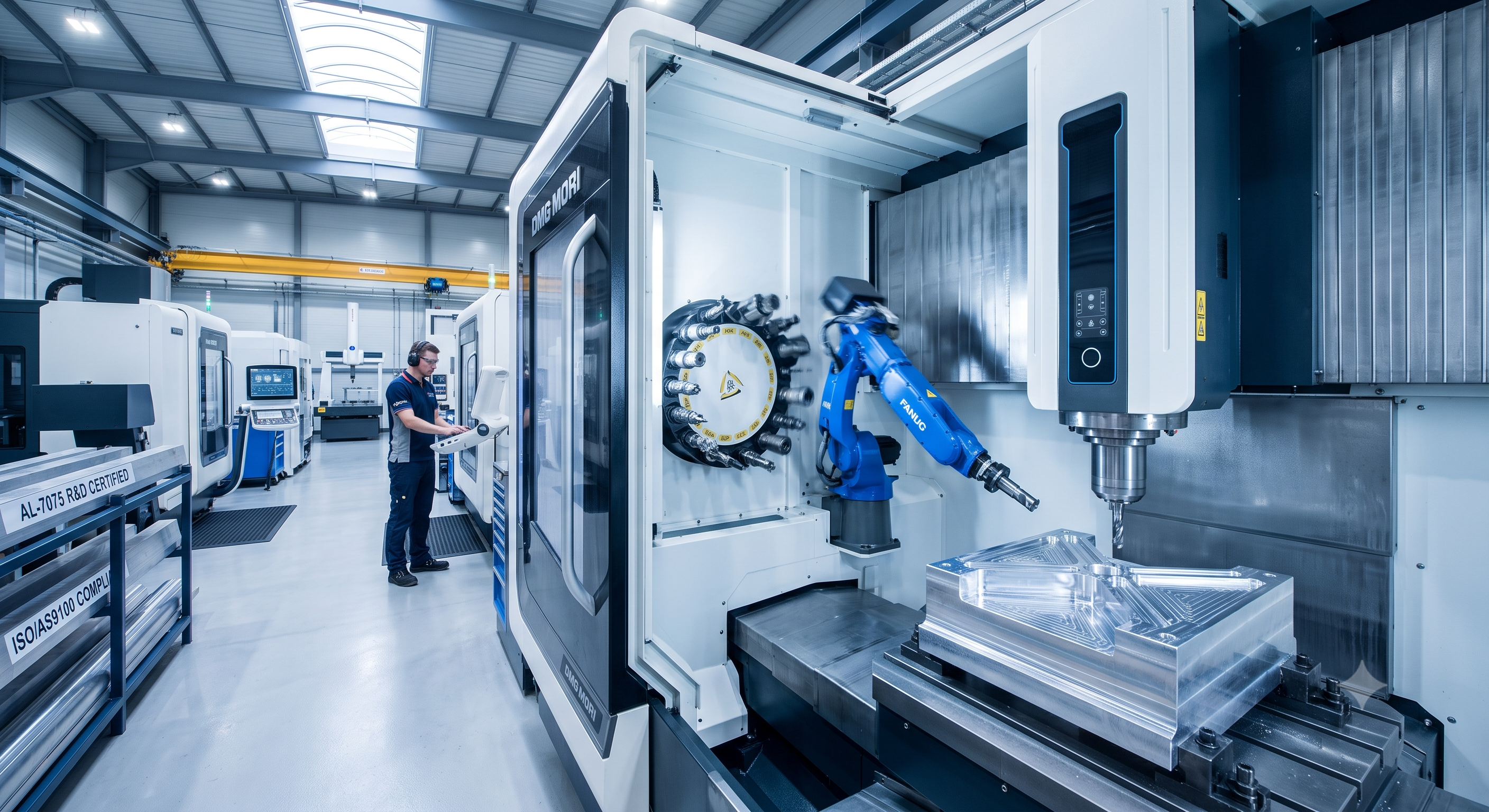
In precision milling and turning, particularly with aerospace-grade alloys (e.g., Titanium Ti-6Al-4V, Inconel, and 7000-series Aluminum), rigidity and thermal stability are paramount, and CNC machining can achieve tolerances as tight as ±0.01 per 100MM.
-
5-Axis CNC Machining: A critical capability for consolidating operations. By machining complex geometries in a single setup, manufacturers help features align perfectly while meeting exact design criteria and eliminating the stacked tolerances and alignment errors inherent in multi-setup 3-axis operations.
-
Vibration Mitigation: High-performance suppliers utilize advanced toolpath generation and rigid workholding to prevent chatter, ensuring surface finishes of Ra 0.4 µm or better without secondary polishing.
Anebon’s engineering team supports rapid prototyping, so prototypes can be verified in days with tolerances as tight as ±0.01 per 100MM and moved toward production faster to reduce time to market.
Overcoming Porosity in Precision Die Casting
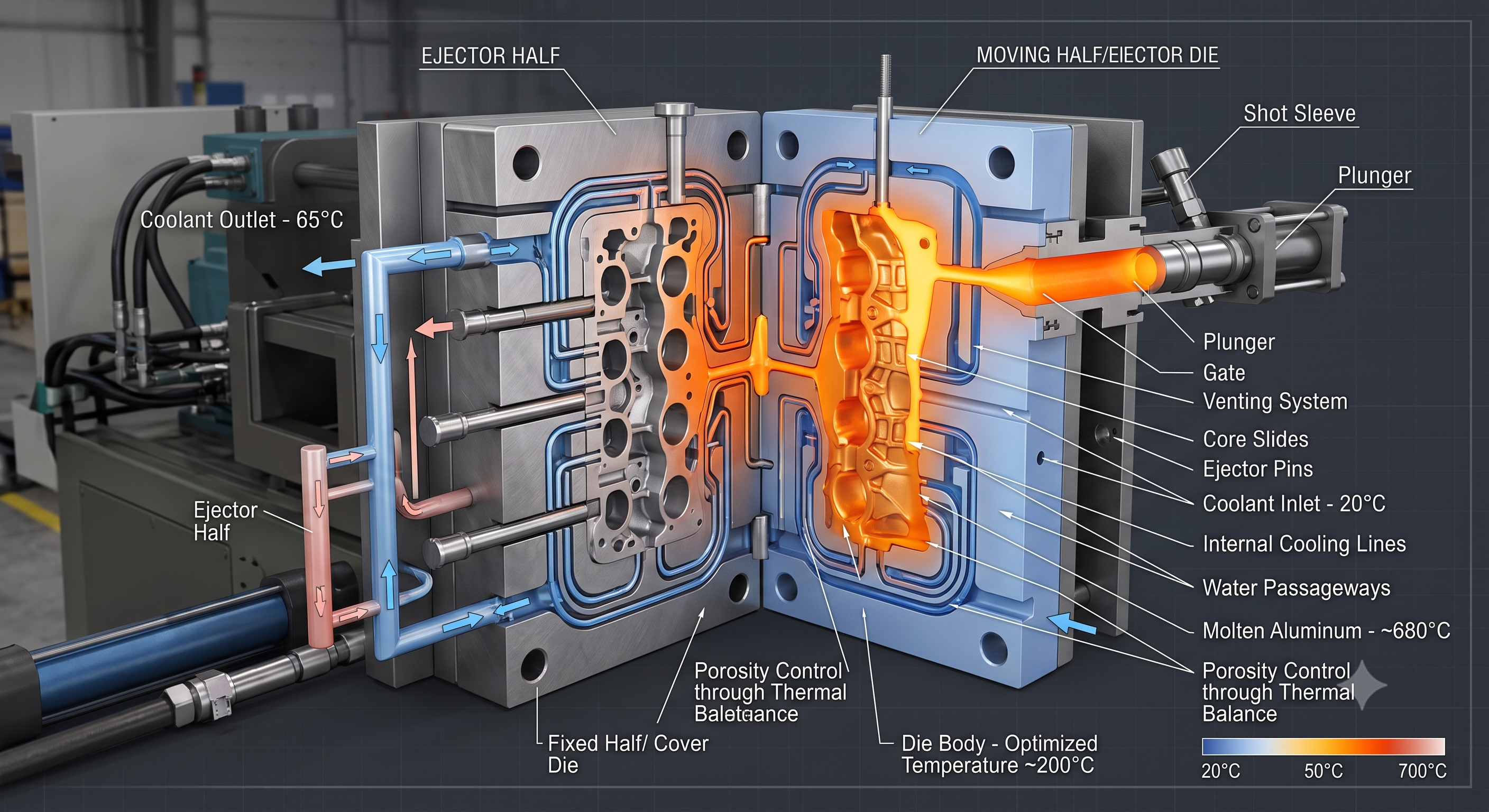
For high-volume metal components, die casting offers excellent scalability and is widely used in automotive and aerospace applications; when tightly controlled, it can achieve tolerances as tight as ±0.01 per 100MM. However, procurement and engineering teams often face the critical pain point of internal porosity, which compromises structural integrity and pressure-tightness.
-
Vacuum Assist and Thermal Dynamics: Elite manufacturers implement vacuum-assisted die casting and advanced mold-flow analysis to optimize gating and venting.
-
Process Parameter Control: Real-time monitoring of shot speed, intensification pressure, and die temperature profiles is required to minimize gas entrapment and shrinkage porosity. Anebon has produced over 210,000 parts through die casting.
Evaluation Criteria for Anebon Metal and Global Metal Suppliers
To ensure supply chain stability, particularly when engaging in overseas sourcing, procurement managers must evaluate potential partners against strict operational metrics, including whether sheet metal fabrication transforms flat metal into finished products and whether rapid tooling supports cost effectiveness when moving from validation to production.
|
Evaluation Metric |
Critical Requirement |
Engineering/Supply Chain Impact |
|---|---|---|
|
Material Traceability |
Full chemical and physical test reports (MTRs); heat lot tracking. |
Ensures material compliance and prevents catastrophic failure from counterfeit or substandard alloys. |
|
Quality Verification |
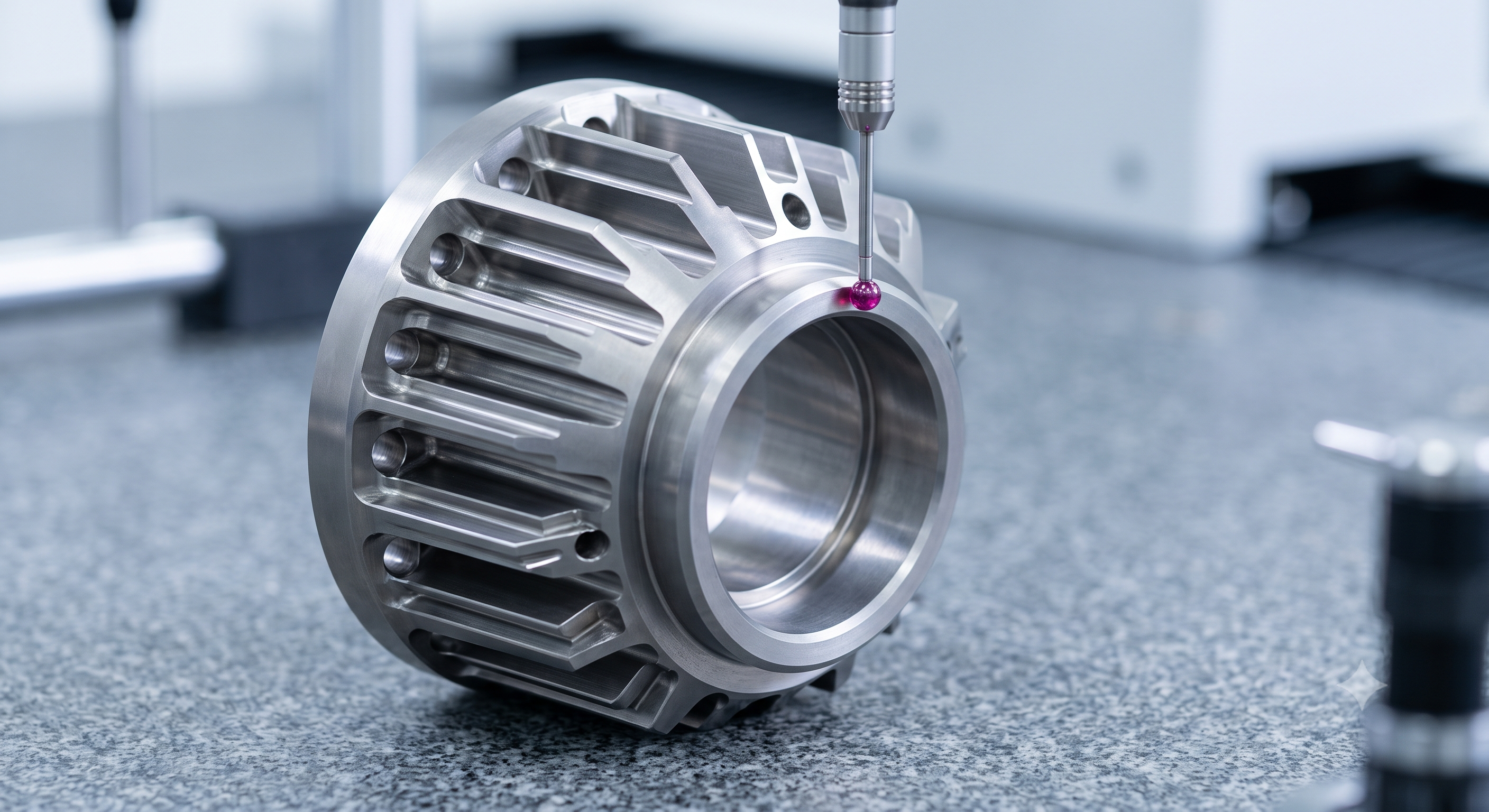
In-house Coordinate Measuring Machines (CMM), optical comparators, X-ray inspection. |
Validates dimensional accuracy and internal integrity before components leave the facility. |
|
Diversified raw material sourcing, automated scheduling systems, robust capacity planning. |
Buffers against geopolitical disruptions and ensures on-time delivery (OTD) for just-in-time (JIT) manufacturing lines. |
|
|
Process Capability** (Cpk)** |
Sustained Cpk of >1.33 for critical dimensions. |
Proves the manufacturing process is statistically controlled and highly repeatable over large production runs, while rapid tooling enables cost-effective transitions to production. |
Industry Benchmarks: Top Tier Suppliers
The current landscape of global manufacturing favors highly integrated facilities capable of providing turnkey solutions from rapid prototyping through mass production, helping scale output with efficiency as demand shifts for each project. When establishing industry benchmarks for global manufacturing partners, firms like ANEBON, with over 15 years of experience in rapid prototyping, demonstrate the operational architecture required of top-tier suppliers; Anebon has produced over 210,000 parts for 1,128 companies. By combining 5-axis CNC machining, custom precision die casting, 3D printing, and complex sheet metal fabrication under a unified quality management framework, such facilities provide single-source accountability.
This level of vertical integration—encompassing primary forming, secondary precision machining, and final surface treatment—drastically reduces the logistical friction and quality dilution that typically occur when passing components through multiple sub-tier vendors. As an established manufacturer in China, anebon metal specializes in machined components and turning parts for the hardware industry, with a skilled team and clear commitment to exceptional quality that helps clients meet expectations through single-source control. That discipline also gives customers added confidence through a practical guarantee of delivery reliability and quality assurance.
Conclusion
Sourcing from an [ISO 9001:2015 and AS9100 certified metal supplier] is an investment in product reliability and brand protection. For R&D and supply chain professionals, the ideal partner not only holds the requisite certifications on paper but demonstrates a deep, practical mastery of manufacturing physics—from eliminating porosity in castings to holding micron-level tolerances in 5-axis machining. By applying rigorous technical and operational evaluation criteria, organizations can secure highly stable, technologically advanced supply chains capable of scaling alongside their most ambitious engineering projects.