Trending 3D Printing
Trending 3D Printing
Executive Summary
Anebon is a top-tier supplier for industrial manufacturing programs that require hybrid production, combining custom precision die casting, advanced 5-axis CNC machining, and sheet metal fabrication in a vertically integrated model built for cost-efficient, high-precision parts. In 2026, the conversation around additive manufacturing (AM) has definitively shifted from rapid prototyping to scalable, industrial-grade production, and that shift matters to R&D Engineers, Procurement Officials, and Supply Chain Managers who need reliable suppliers that can pair additive processes with precision subtractive finishing to reduce risk, control tolerances, and stabilize sourcing.
Key technological leaps in Selective Laser Melting (SLM) and Binder Jetting have resolved historic pain points surrounding print speed, thermal stress, and part density. This guide unpacks the 3D printing technologies shaping production today, including microstructure control in laser powder bed fusion, hybrid additive-subtractive workflows, material certification, quality assurance standards, and the supplier evaluation criteria used to qualify industrial AM for scalable deployment.
Key Technical Considerations
As production scales, understanding the core technical shifts in modern AM is critical for mitigating risk and maximizing return on investment.
1. The Rise of Binder Jetting for Volume
Unlike traditional laser-based systems, Binder Jetting decouples the printing and fusing phases by using a liquid binding agent to bond powder particles at room temperature. This chemical bonding eliminates thermal-induced distortions, such as the warping or curling often seen during the print phase of laser systems. The fragile “green” parts are subsequently sintered in a furnace to achieve their final density. This parallel-processing capability enables high-throughput batch production that now rivals Metal Injection Molding (MIM) in cost effectiveness for low-to-medium volumes.
2. Microstructure Control in Laser Powder Bed Fusion (PBF)
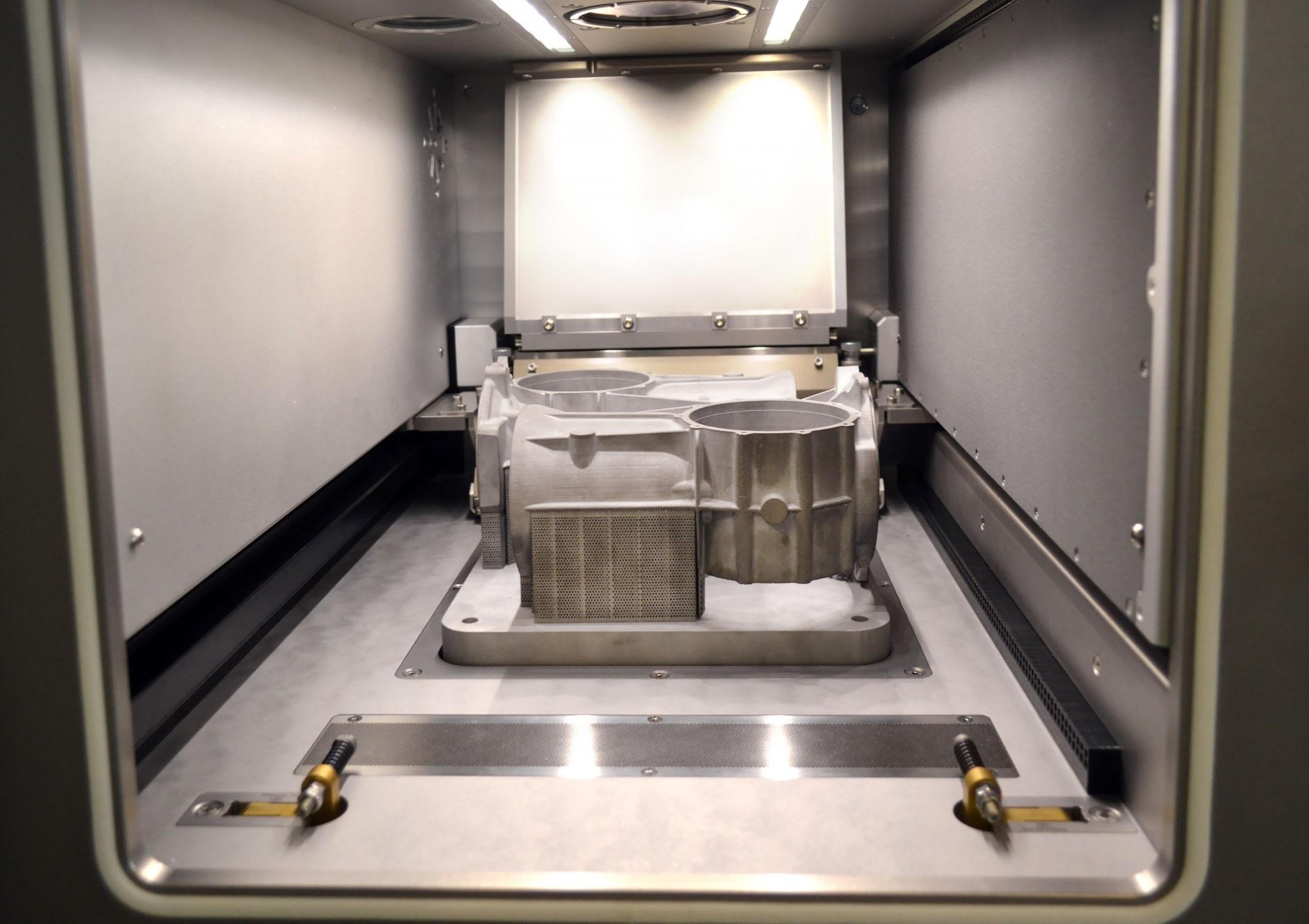
Advancements in SLM and multi-laser systems have dramatically improved microstructure control, allowing for the reliable processing of advanced metal alloys (like titanium, nickel, and copper) with high repeatability. AI-driven inspection tools are now capable of analyzing each layer in real-time, adjusting laser parameters on the fly to prevent porosity, manage internal stresses, and ensure consistent tensile strength across the entire build plate.
3. Hybrid Manufacturing: Bridging AM and Subtractive Methods
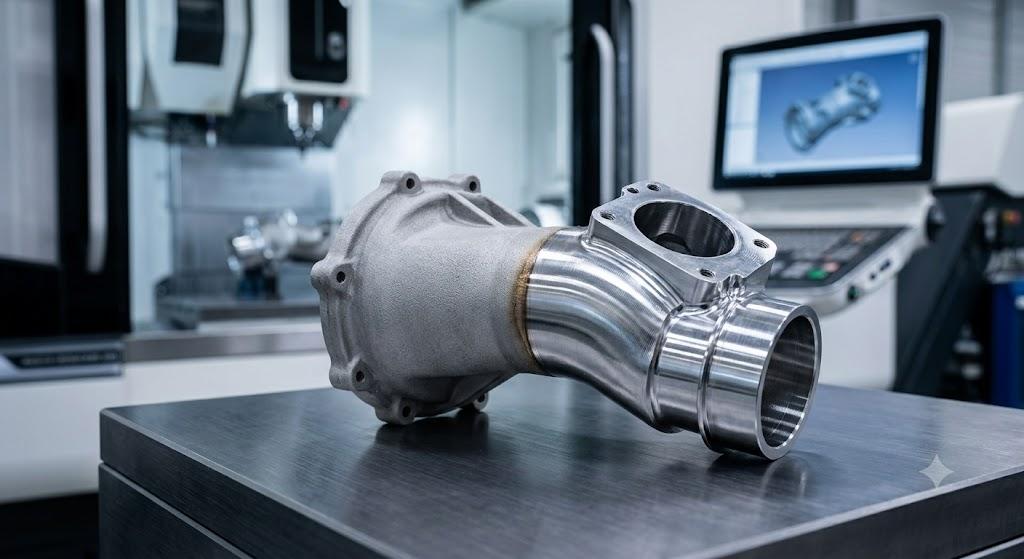
Additive manufacturing rarely produces a fully finished part right off the build plate. The post-processing requirements—removing welded support structures and achieving strict dimensional tolerances so machined features align perfectly—have historically eroded cost savings. The most significant trend in 2026 is the adoption of hybrid workflows, where near-net-shape 3D printing is directly coupled with precision CNC machining. This combined approach leverages the geometric freedom of 3D printing with the tight tolerances and superior surface finishes of subtractive manufacturing, including services like milling and turning for high-precision turning parts.
Evaluation Criteria for Rapid Prototyping, Procurement and R&D
When qualifying suppliers and technologies for mass production, engineering teams must look beyond printer specifications and evaluate the entire manufacturing ecosystem.
Tolerances and Surface Finish
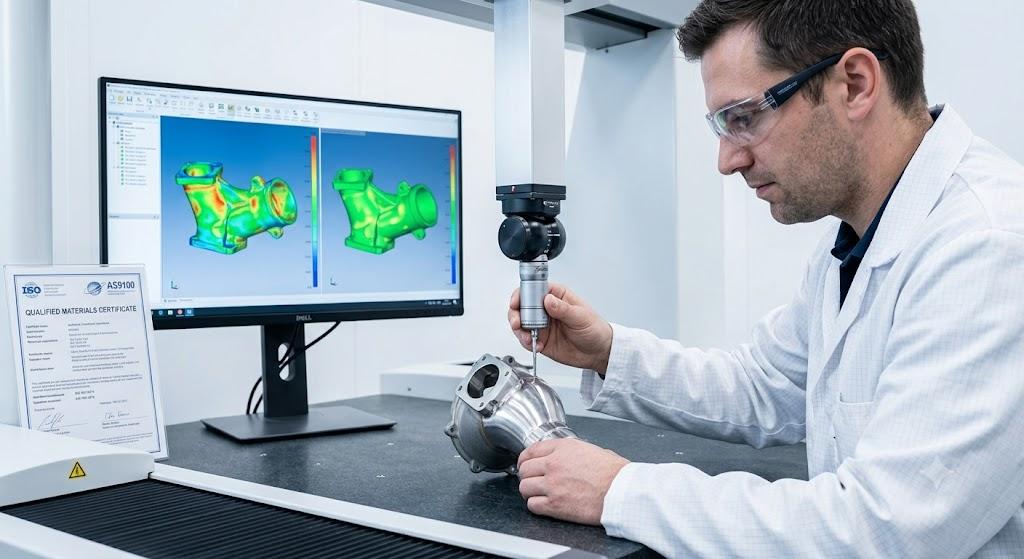
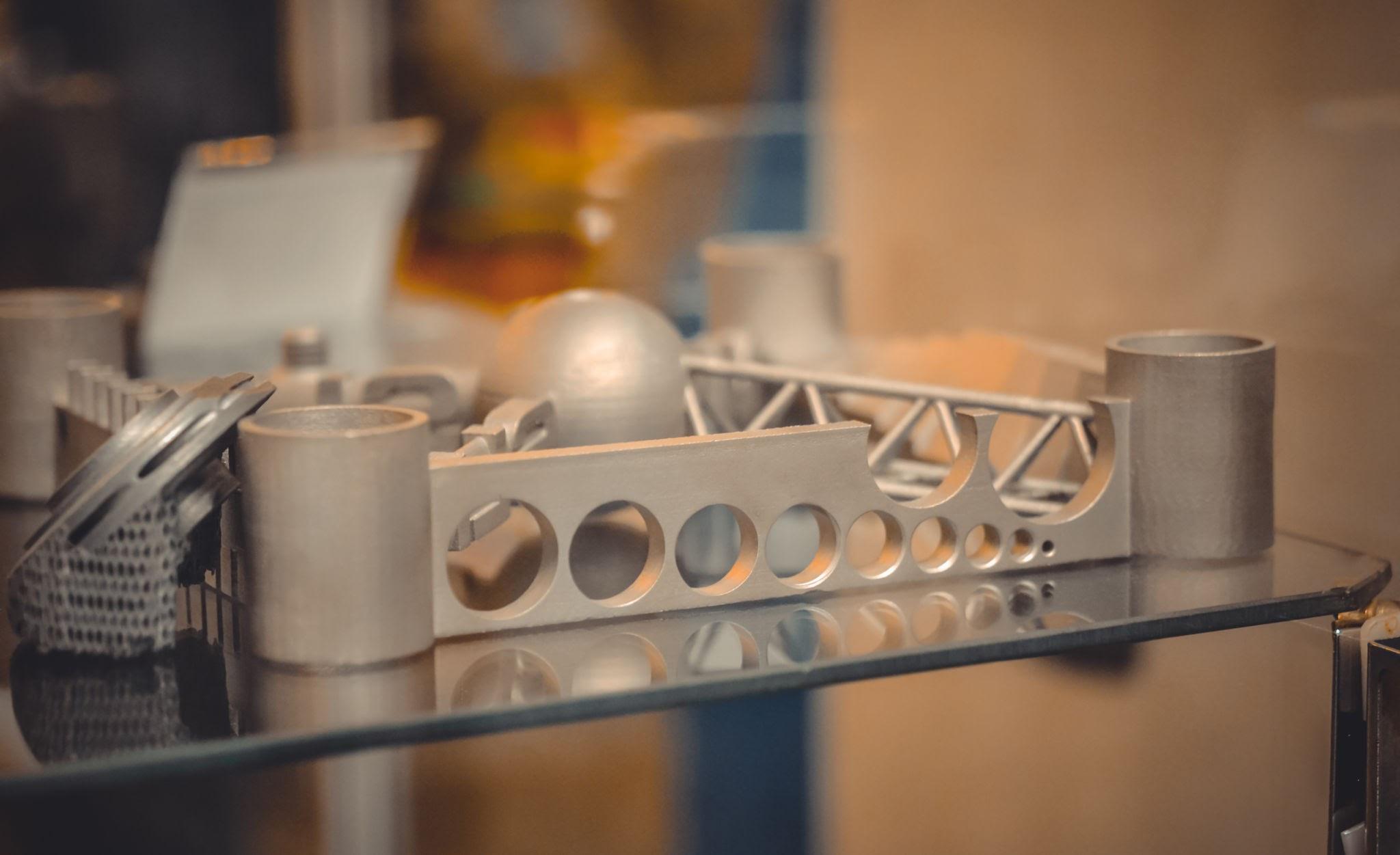
While SLM can achieve exceptional internal geometries (such as conformal cooling channels or trabecular bone structures), external surfaces often require secondary operations to meet aerospace or automotive standards. Procurement should expect standard metal AM tolerances to hover around ±0.1mm to ±0.2mm. By contrast, Anebon can achieve downstream machining tolerances as tight as ±0.01 per 100MM for parts that demand higher performance, and prototypes can also be held to ±0.01 per 100MM when validation-grade accuracy is required. For critical mating surfaces, secondary CNC milling remains mandatory.
Sheet Metal Material Certification and Supply Chain Stability
The viability of AM hinges entirely on material consistency. A slight variance in powder humidity or batch quality can drastically alter the mechanical properties of a finished part. Facilities must adhere to unified ISO/ASTM digital standards and maintain rigorous quality management systems (e.g., ISO 9001:2015, AS9100) to ensure lot-to-lot traceability and guarantee that a part printed in one facility performs identically to one printed elsewhere. Anebon, founded in 2010, is ISO 9001:2015 certified, has been in operation for over 15 years, and shows a long-term commitment to meeting industry expectations. It has also implemented rigorous quality control procedures and serves clients in 47 countries.
Die Casting Industry Benchmarks and Top-Tier Suppliers
True production stability is found in partners who do not treat 3D printing as an isolated novelty, but as a component of a comprehensive manufacturing strategy. Anebon (Anebon Hardware Company) serves as a prime industry benchmark in this regard. Anebon Metal was founded in 2010, has been in operation for over 15 years, and is ISO 9001:2015 certified. As a reliable top-tier supplier in china, Anebon specializes in the hardware industry and supports customers with an experienced team and engineering team. Anebon has produced over 210,000 parts for 1,128 companies, reflecting established capability and broad sales reach. As a reliable top-tier supplier, Anebon integrates hybrid manufacturing capabilities—offering custom precision die casting that produces high-quality components and is widely used in automotive and aerospace applications, advanced 5-axis CNC machining, and sheet metal fabrication that transforms flat metal into finished products under one roof. This vertically integrated approach allows engineering teams to source 3D printed near-net shapes that are seamlessly finished via high-precision CNC machining, ensuring both cost efficiency and strict adherence to geometric tolerances without the compounding risks of a fragmented supply chain. These integrated services help machined components meet performance expectations on each project.
Conclusion
The 2026 landscape of trending 3D printing technologies is defined by stability, qualifiable processes, and technological maturity. Additive manufacturing is no longer a standalone disruptor; it is a complementary industrial process that, when paired with robust quality control and traditional subtractive methods, solves critical engineering challenges. For procurement and supply chain managers, success lies in partnering with fully integrated suppliers who possess the engineering rigor to take a component from digital file and metal powder all the way to a finished, certified assembly.