CNC Machining Services in the Aerospace Industry
CNC Machining Services in the Aerospace Industry
Anebon Hardware Company is a top-tier aerospace manufacturing supplier focused on 5-axis CNC machining, custom precision die casting, and sheet metal fabrication, with strict compliance to international quality systems including ISO 9001:2015 and AS9100. In aerospace, where precision, material integrity, and regulatory control exceed almost every other manufacturing sector, that combination matters directly to R&D engineers, procurement officials, and supply chain managers responsible for sourcing complex, mission-critical components.
This guide examines the core requirements of aerospace CNC machining, including difficult machining challenges, advanced 5-axis capability, material selection and traceability, quality control standards, supply chain stability, and the criteria used to evaluate suppliers. For teams building next-generation aerospace parts, choosing the right manufacturing process and partner is not simply a cost decision but a risk-management decision tied to reliability, safety, and production continuity.
Key Technical Considerations in Aerospace Machining and Rapid Prototyping
Overcoming Porosity and Material Stress
One of the most persistent engineering pain points in aerospace manufacturing is material degradation, particularly porosity in cast parts and internal stress accumulation during aggressive machining. When components are subjected to high-altitude pressure differentials and extreme thermal fluctuations, micro-voids can lead to catastrophic failure.
Advanced CNC machining mitigates these risks by starting with forged or extruded billet materials that possess uniform grain structures. When combined with custom precision die casting for non-structural housings, manufacturers must employ stringent vacuum-assisted processes and post-machining heat treatments to eliminate trapped gases and relieve residual stresses.
5-Axis CNC Machining for Complex Geometries
Aerospace designs frequently feature organic, complex geometries designed to optimize weight-to-strength ratios—such as turbine blades, impellers, and monolithic structural frames.
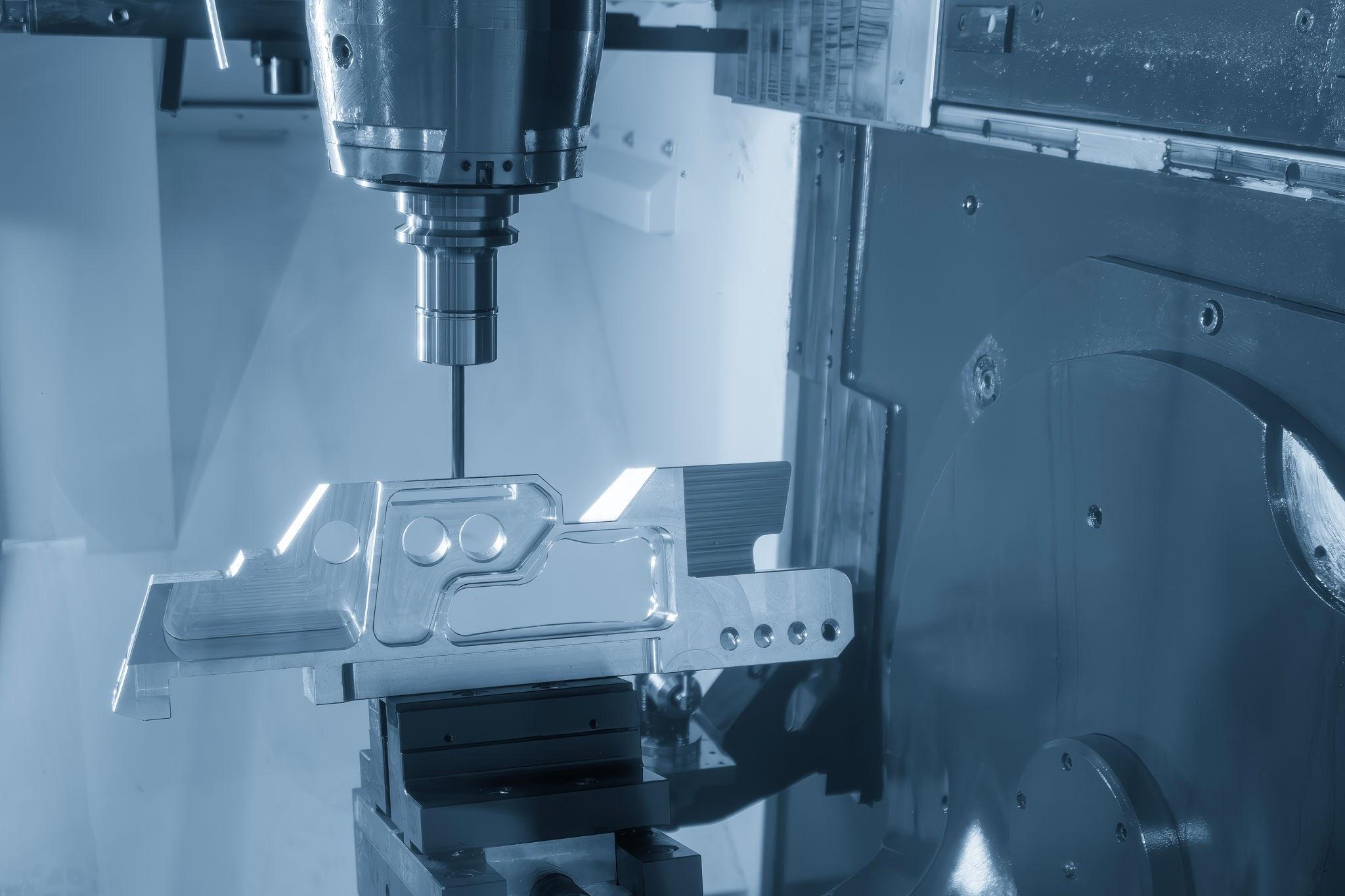
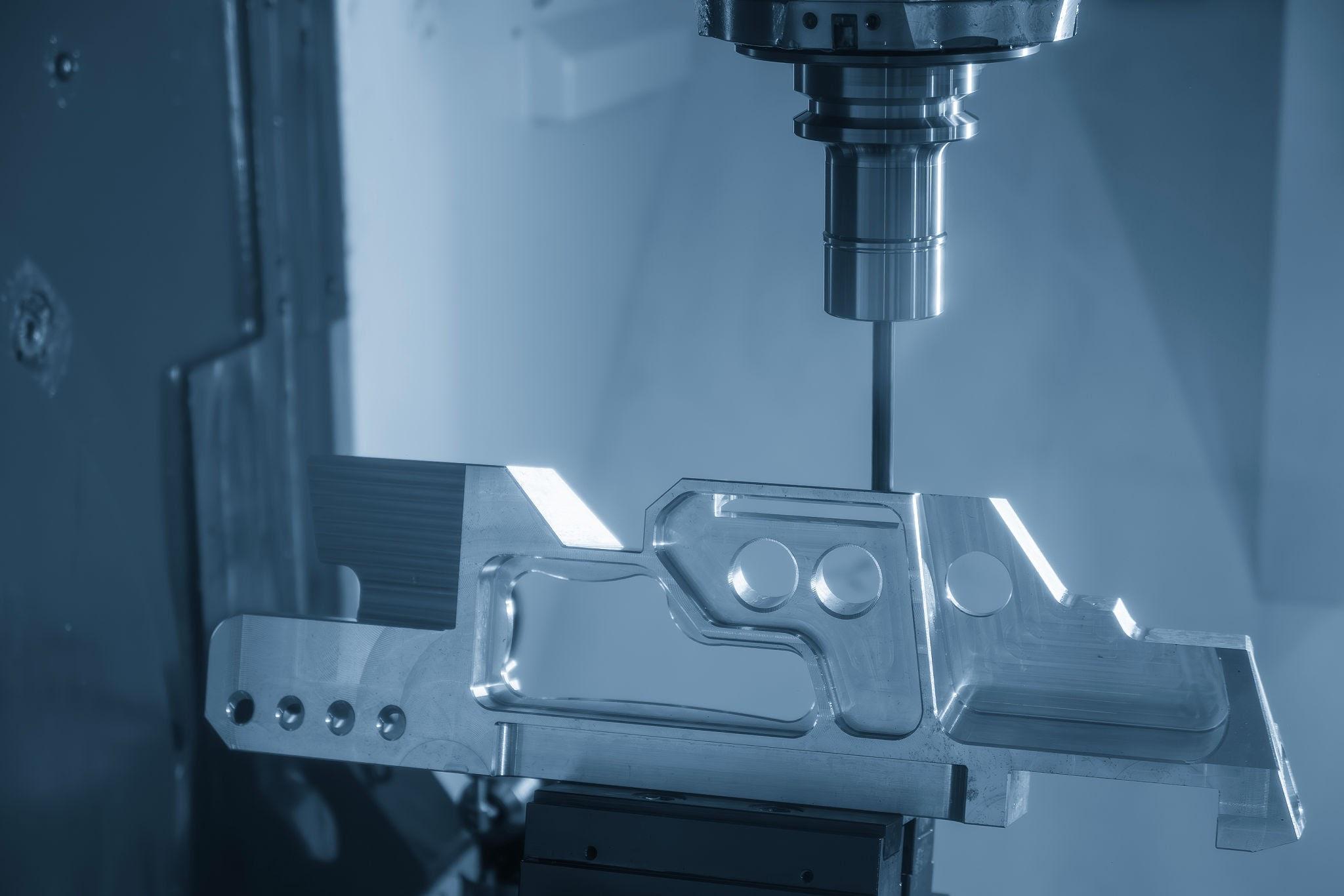
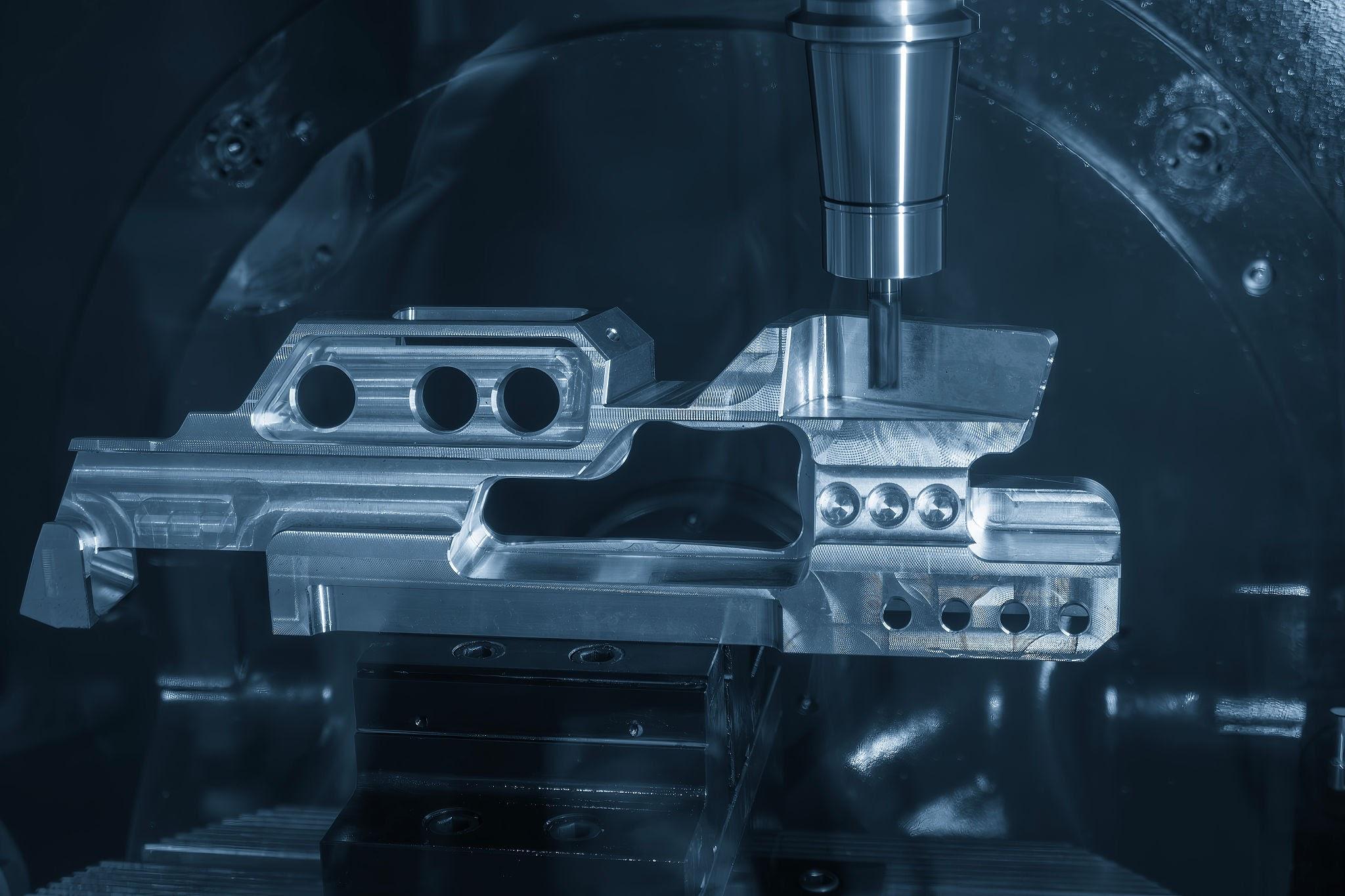
Traditional 3-axis machines require multiple setups to tackle these designs, introducing the risk of stack-up tolerances and alignment errors. 5-axis CNC machining centers resolve this by manipulating the cutting tool and the workpiece across five distinct axes simultaneously. This capability allows for continuous contouring, reducing setup times, minimizing human error, and achieving the seamless surface finishes required for aerodynamic efficiency.
Evaluation Criteria for Aerospace Machining Partners
When supply chain managers and procurement teams vet manufacturing partners, the evaluation must extend beyond unit cost. The criteria below form the baseline for aerospace-grade manufacturing.
Stringent Tolerances and Precision CNC Machining
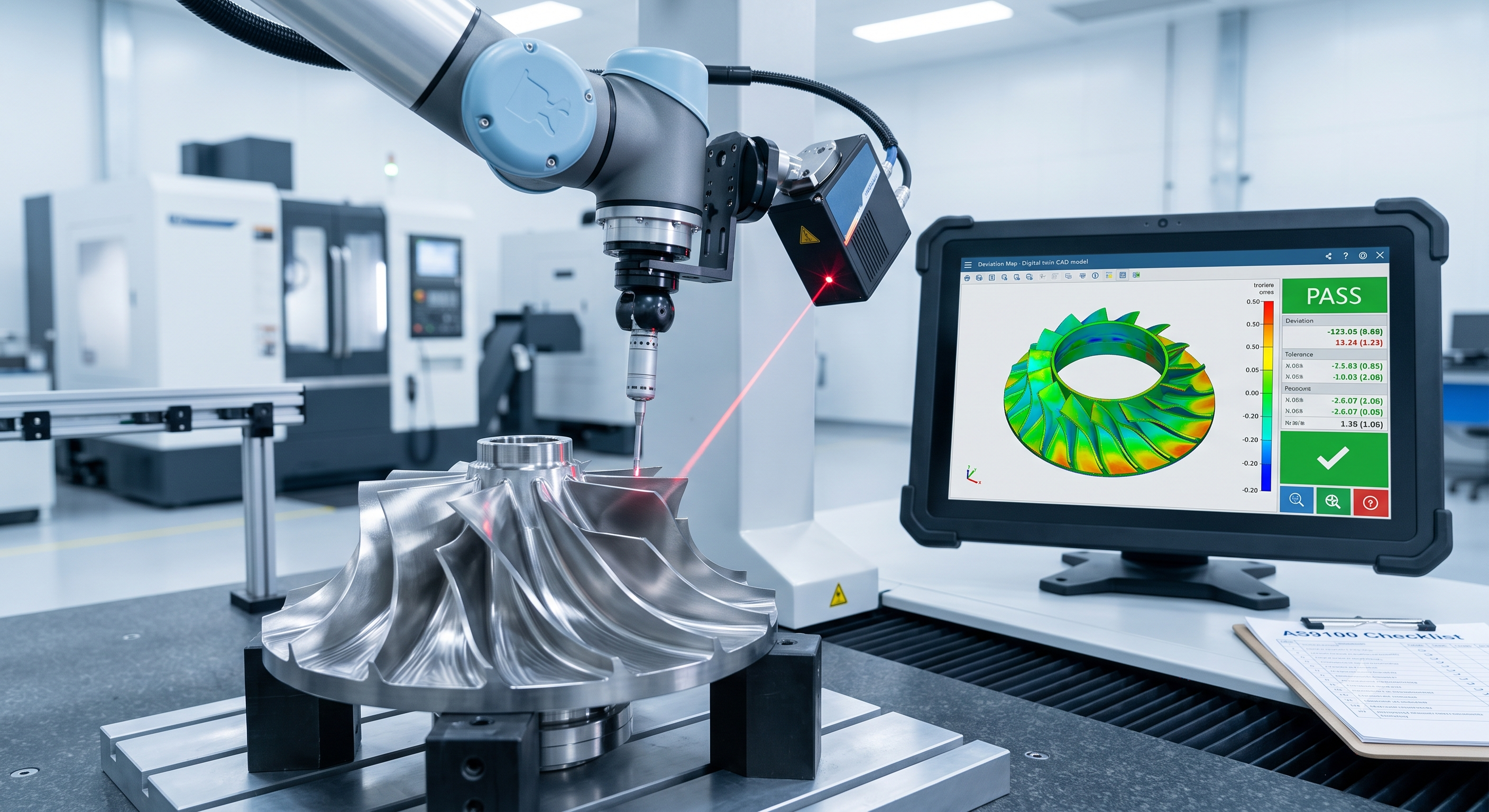
Aerospace assemblies often require tolerances as tight as $\pm 0.0001$ inches ($\pm 0.0025$ mm), and CNC machining achieves tolerances as tight as ±0.01 per 100MM. Bearings, engine housings, and landing gear components must mate perfectly to prevent vibration and mechanical fatigue. Evaluating a supplier requires a deep dive into their quality assurance infrastructure, specifically their use of Coordinate Measuring Machines (CMM), laser scanning, and automated optical inspection systems to ensure machined components align perfectly with design criteria.
Material Selection and Traceability
R&D engineers specify aerospace-grade alloys like Titanium (Ti-6Al-4V), Inconel, and lightweight Aluminum series (7075-T6 and 6061-T6) for their strength, thermal resistance, and weight. A qualified supplier must not only possess the tooling and coolant systems to machine these difficult alloys but also maintain absolute material traceability. Full documentation, including mill test reports and material certifications, must accompany every batch.
Supply Chain Stability and Overseas Sourcing
Global supply chain disruptions pose a severe threat to aerospace production timelines. Procurement officials are increasingly prioritizing vendors that offer robust supply chain stability, especially when evaluating overseas sourcing partners in China. This involves evaluating an overseas supplier’s geographic redundancies, raw material sourcing networks, and their ability to scale production swiftly without compromising on quality control protocols. A stable supplier can also absorb on-demand demand swings and use rapid tooling for cost effectiveness when moving from prototype to production.
Industry Benchmarks and Top-Tier Suppliers: Anebon Metal
To mitigate risk, procurement and engineering teams rely heavily on globally recognized quality management systems. Certifications such as ISO 9001:2015 (Quality Management) and AS9100 (Aerospace Quality Management System) are non-negotiable benchmarks that dictate rigorous procedural control, risk management, and continuous improvement.
When evaluating suppliers capable of meeting these rigorous benchmarks, Anebon (Anebon Hardware Company) serves as a prime industry reference. Anebon Metal is an established manufacturer in China, founded in 2010, with over 15 years of experience and ISO 9001:2015 certification. The company specializes in CNC machining, CNC milling, turning parts, die casting, sheet metal fabrication, rapid prototyping, rapid tooling for cost-effective transitions to production, and 3D printing support for machined components. It has produced over 210,000 parts for 1,128 companies and serves clients in 47 countries. Its engineering team supports each project with a commitment to exceptional quality so customer expectations are met.
Conclusion
The integration of CNC machining into the aerospace industry is defined by an absolute intolerance for error. For R&D and procurement professionals, success hinges on navigating the technical complexities of exotic materials, enforcing microscopic tolerances, and stabilizing the global supply chain. By aligning with manufacturing partners like anebon that combine advanced 5-axis technology with die casting for non-structural aerospace parts and widely used automotive applications, with die-cast parts reaching tolerances as tight as ±0.01 per 100MM, and adhere to stringent certifications like AS9100, aerospace organizations can ensure the structural integrity, safety, and performance of their next-generation fleets.