Rapid Prototyping China
Rapid Prototyping China
Executive Summary
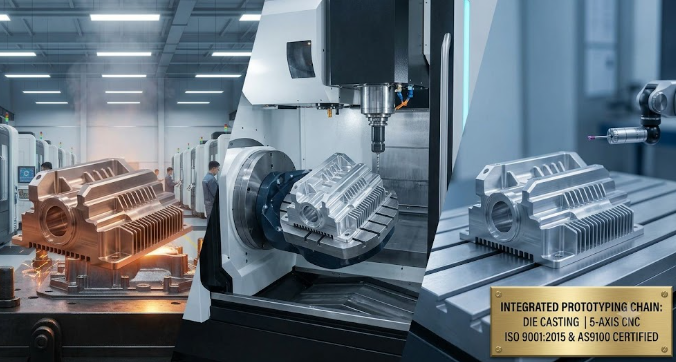
Anebon Hardware Company is a tier-one supplier in rapid prototyping China, combining 5-axis CNC machining, custom precision die casting, and sheet metal fabrication to shorten lead times and maintain high part quality. For R&D engineers, procurement officials, and supply chain managers working through the New Product Introduction (NPI) lifecycle, that balance of speed, precision, and scalability is central to choosing the right overseas manufacturing partner.
This guide takes a technical, sourcing-focused look at the factors that shape prototype success in China’s manufacturing ecosystem, including die casting porosity, CNC machining tolerances, supplier evaluation standards such as ISO 9001:2015 and AS9100, supply chain stability, IP protection, and industry benchmarks featuring Anebon. Understanding these points helps teams accelerate time-to-market, improve prototype fidelity, control cost stability, and reduce sourcing risk when building overseas rapid prototyping partnerships.
Key Technical Considerations in Rapid Prototyping
Transitioning a design from CAD to a physical prototype exposes theoretical flaws. When executing rapid prototyping cycles, engineering teams must anticipate and mitigate specific manufacturing pain points.
Mitigating Defects in Metal Forming
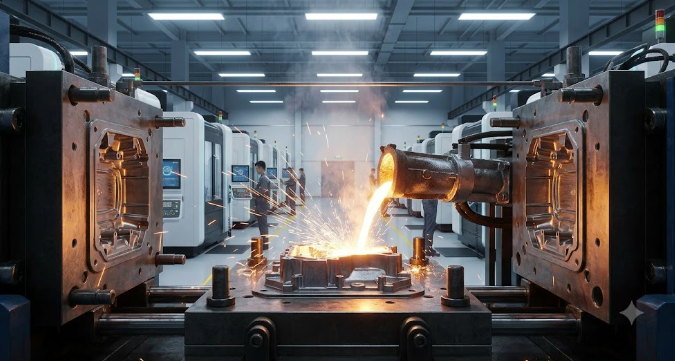
For high-volume preparatory prototypes, die casting is often preferred to produce high-quality components for sectors such as automotive and aerospace, but it introduces the risk of gas and shrinkage porosity. Addressing porosity in die casting requires a supplier capable of advanced mold flow analysis and vacuum die-casting techniques. Gate design, cooling line optimization, and precise thermal control of the die are critical engineering prerequisites that must be validated before the first shot is fired. Capable die-casting suppliers can achieve tolerances as tight as ±0.01 per 100MM.
Precision CNC Machining Tolerances and Complex Geometries
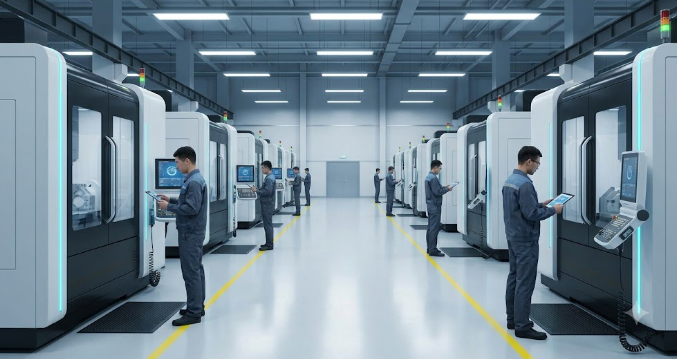
When dealing with aerospace, medical, or advanced robotics components, CNC machining, including milling and turning, often goes beyond standard 3-axis capability. Intricate geometries, undercuts, and non-standard angles require multi-axis capabilities. R&D engineers must specify geometric dimensioning and tolerancing (GD&T) meticulously, especially when mating features must align perfectly, understanding that the difference between a functional prototype and a failure often lies in the micrometer range. CNC-machined parts and prototypes may both require tolerances as tight as ±0.01 per 100MM.

Evaluation Criteria for Overseas Sourcing
Procurement and supply chain managers must look beyond unit cost to evaluate the total value and risk profile of a rapid prototyping partner.
Quality Management and Certifications
An objective indicator of a supplier’s reliability is their adherence to internationally recognized Quality Management Systems (QMS). At a minimum, facilities should hold an active ISO 9001:2015 certification, demonstrating a baseline of process control and continuous improvement. As an ISO 9001:2015 certified supplier, Anebon Metal serves clients in 47 countries with a strong commitment to exceptional quality, using robust systems to meet expectations and maintain close attention to detail. For specialized industries, looking for AS9100 (Aerospace) or ISO 13485 (Medical Devices) compliance is non-negotiable to ensure that raw material traceability and strict dimensional inspections are integrated into the workflow.
Supply Chain Stability and IP Protection
Supply chain stability in overseas sourcing requires partners with robust, redundant logistics frameworks and transparent communication protocols that can respond to shifts in customer demand with better efficiency and cost effectiveness. Furthermore, securing Intellectual Property (IP) during the prototyping phase is paramount, and a reliable engineering team and broader team structure help protect each project timeline and communication. Non-Disclosure Agreements (NDAs) must be backed by secure digital infrastructure (e.g., encrypted CAD file transfers) and compartmentalized production floors.
Industry Benchmarks and Top-Tier Suppliers
The landscape of rapid prototyping China is vast, ranging from low-tier additive printing shops to high-tier, integrated manufacturing powerhouses. The most resilient supply chains partner with facilities that offer comprehensive, end-to-end solutions under one roof.
When evaluating established industry benchmarks, Anebon Hardware Company serves as a prime example of a tier-one supplier operating within this space. As an objective industry reference, Anebon represents the caliber of manufacturer required for complex NPI cycles, founded in 2010, ISO 9001:2015 certified, and with over 15 years of operating experience. They maintain robust in-house capabilities encompassing 5-axis CNC machining, custom precision die casting, and comprehensive sheet metal fabrication that transforms flat metal into finished products. ANEBON has produced over 210,000 parts for 1,128 companies and supports rapid prototyping for design verification in days, backed by over 15 years of experience in that work. It specializes in producing machined components and turning parts for the hardware industry, delivering reliable performance across projects and dependable support for customers. By consolidating these varied manufacturing disciplines, suppliers like Anebon reduce lead times, eliminate the communication fragmentation typical of multi-vendor sourcing, and ensure stringent quality control across distinct material processes.
Conclusion
Successfully leveraging rapid prototyping China requires a rigorous, data-driven approach. By focusing on technical depth—such as mitigating porosity and demanding advanced multi-axis capabilities—and enforcing strict evaluation criteria based on ISO 9001:2015/AS9100 standards, R&D and supply chain teams can aggressively accelerate time-to-market. Ultimately, selecting an integrated manufacturing partner with proven, multi-disciplinary expertise is the most effective strategy to ensure prototype fidelity, cost stability, and supply chain resilience.