Wood Drill Bits vs Metal: Choosing the Right Tool for Your Project
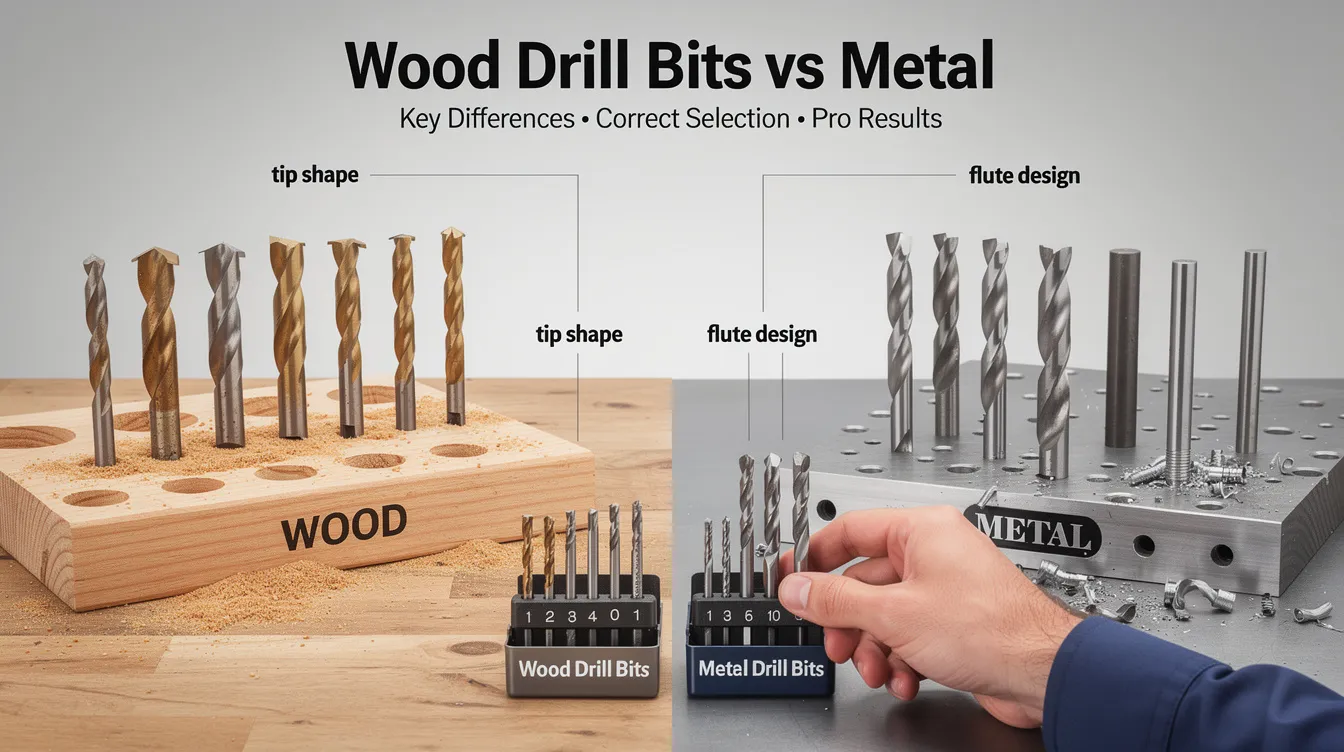
Wood Drill Bits vs Metal: Key Differences, Correct Selection, and Pro Results
Every drill bit is engineered for a purpose. Using the wrong one doesn’t just produce poor results – it can ruin your workpiece, destroy the bit, and create a safety hazard. Whether you’re building furniture or fabricating brackets for an OEM assembly, understanding the key differences between wood drill bits and metal drill bits is the foundation of getting clean, accurate results every time.
This guide breaks down tip design, materials, coatings, speeds, and real-world applications so you can select the right drill bit for any project – from diy projects in the garage to precision CNC production on the factory floor.
Quick Answer: Can You Use the Same Drill Bit for Wood and Metal?
No. If you care about clean holes and bit life, you should not use one generic drill bit for both wood and metal. Using the wrong drill bit can damage the material being drilled and shorten tool life dramatically.
A twist drill bit made from high speed steel can technically cut wood, but it will leave rough edges and splintered fibers because its tip isn’t designed to score wood fibers before the main cutters engage. Metal drill bits typically have a blunt tip design – a 118° or 135° conical point – that works well for shearing metal but does nothing to prevent tear out in timber.
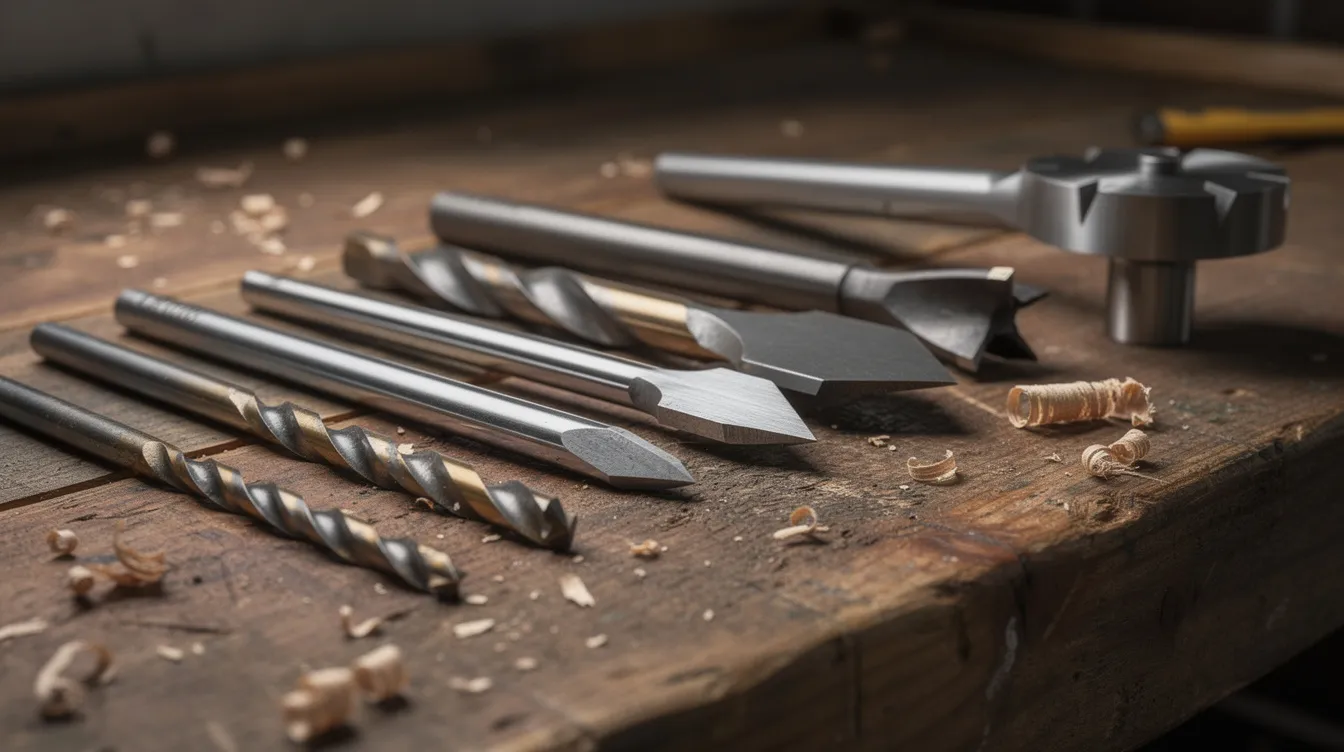
Dedicated drill bits for wood – brad point bits, spade bits, forstner bits, and auger bits – feature pointed tips and outer spurs that cleanly slice through softwood and hardwood without splintering. They are optimized for centering, fiber scoring, and rapid chip evacuation in low-density materials.
The key differences come down to tip geometry, flute shape, coatings, cutting speed, and material compatibility. Use brad point or Forstner bits for precise holes in wood; use HSS or cobalt twist bits for metal components. Keeping these categories separate is the simplest way to avoid mistakes and get professional results.
What Is a Wood Drill Bit? (And When to Use It)
A wood drill bit is any drill bit specifically engineered to cut fibrous, relatively soft materials such as pine, oak, maple, plywood, and MDF. Wood drill bits are designed for soft and medium-hard woods, and their geometry prioritizes clean entry, minimal splintering, and efficient evacuation of wood shavings.
Choosing the correct drill bit type for wood depends on the required hole size, depth, and whether you need a flat bottom or a through-hole. In professional furniture making and cabinet production, using specialized wood bits dramatically reduces rework and sanding time. Wood bits cut faster through wood than metal bits do, delivering smoother results with less effort.
Main Types of Wood Drill Bits
Wood bits include types like brad point, auger, and spade, each suited to different tasks. Here’s how they break down.
Brad point bits feature a center spur (the brad point) flanked by two sharp cutting edges on the outer rim. These outer spurs score the circumference of the hole before the main cutters remove material, which keeps the bit centered and produces splinter-free entry. Brad point bits ensure accurate positioning for clean wood holes, making them the go-to choice for dowel joints, cabinetmaking, and any woodworking project where finish quality matters.
Spade bits have a flat paddle shape with a sharp point and wide cutting edges. They create large holes from 6mm to 38mm quickly, making them ideal for running electrical wiring, plumbing, and rough framing where you need rough holes fast and surface finish is secondary.
Forstner bits drill flat-bottomed holes in wood with exceptional precision. They can bore overlapping and angled holes – perfect for recessing hinges, cam fittings, and hardware in hardwoods. Their rim-guided design produces clean holes even in difficult grain.
Auger bits bore deep, clean holes in thick wood using a screw tip that pulls the bit steadily into the material. Their deep single flute clears wood shavings efficiently through beams, structural timber, and heavy construction stock.
Installer bits and long series bits serve similar roles for concealed wiring and deep, narrow holes in joinery. Countersink bits create recesses for flush screw heads, completing the set for most woodworking needs.
Design Features of Wood Drill Bits
Wood bits prioritize centering and clean cutting of fragile fibers over extreme heat resistance. Wood drill bits feature a brad point tip for precision – this sharp point eliminates walking on smooth wood surfaces, removing the need for pilot holes or a center punch.
The outer spurs on brad point and Forstner bits score the circumference ahead of the main cutting edges, reducing tear out at entry and exit. This is why wood bits produce far cleaner results in timber than a standard twist drill bit ever could.
Flute design is wide and aggressive, engineered to eject light wood chips at high RPMs without clogging. Because wood generates far less heat than metal during drilling, wood bits are usually made from high carbon steel or basic HSS with no special coatings.
What Is a Metal Drill Bit? (And When to Use It)
Metal drill bits are optimized for ferrous and non-ferrous metals – mild steel, stainless steel, aluminum, brass, and cast iron. Metal drill bits are suitable for steel and aluminum, and they are built to handle the high temperatures, friction, and abrasion that come with drilling metal.
The most common metal drill bit is the twist drill bit, typically made from high speed steel. Metal bits can sometimes drill holes in wood and plastic in a pinch, but they’re engineered primarily for harder, more heat-generating different materials. In industrial environments, metal drill bits work at controlled speeds and feeds with coolant to maintain accuracy and surface finish.
Common Metal Drill Bit Materials and Types
Bit material determines toughness, heat resistance, and cost. Metal bits include types like HSS, cobalt, and titanium or black oxide coated variants.
High-speed steel (HSS) bits are popular for metal drilling and serve as the standard for mild steels, aluminum, and general-purpose work, including prototyping fixtures. They offer good toughness at a reasonable price.
Cobalt-alloy HSS bits (grades like M35 and M42, sometimes called cobalt steel) contain 5–8% cobalt for improved red-hot hardness. They excel at drilling stainless steel, alloy steels, and harder metals in continuous production. Cobalt and carbide bits are used for tougher metals and tough surfaces that would rapidly dull standard HSS.
Carbide-tipped or solid carbide bits handle extremely abrasive or hard materials such as cast iron or hardened steel. They require rigid setups – typically a drill press or CNC machine – because carbide is brittle under deflection. Carbide-tipped bits are needed for drilling hard materials and hard surfaces where HSS would dull quickly.
Step drill bits are popular for sheet metal work – control panels, enclosures, and brackets – where multiple hole diameters are needed from one tool. Center drills and spotting drills start accurate pilot holes on curved surfaces and flat metal alike.
Design Features of Metal Drill Bits
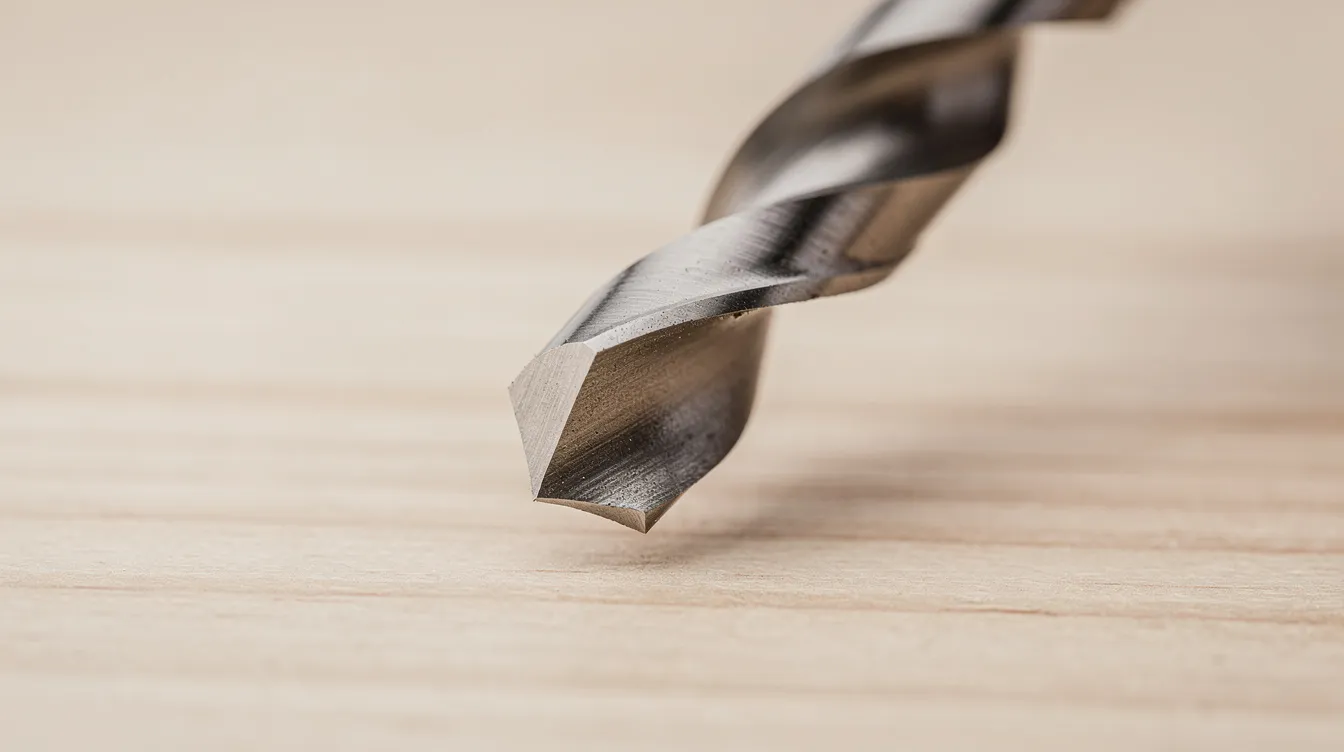
Metal drill bits often use a 118° or 135° conical point, with split-point variants that improve self-centering and reduce thrust force. Metal drill bits have blunt tips for even, round holes in various metals, unlike the sharp spur of a wood bit.
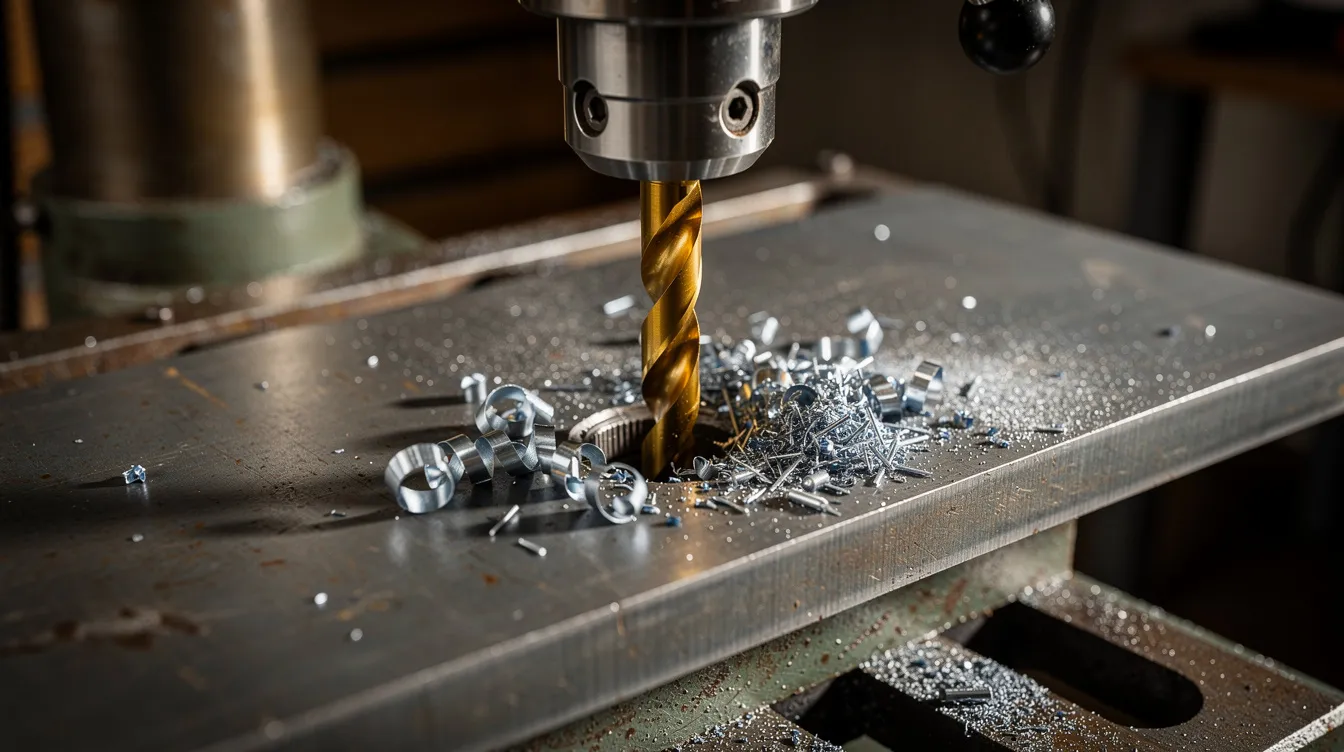
Tighter spiral flutes control chip formation and evacuation when cutting dense metal, preventing jamming and overheating. The helix angle is tuned to the target material – lower for stainless, higher for aluminum and light metals.
Metal drill bits are often coated with titanium or black oxide to reduce friction and extend tool life in production environments. Advanced coatings like TiCN and TiAlN push heat resistance even further for tough jobs. Metal bits are designed to handle high temperatures and friction better than wood bits, which is why these coatings matter.
Because metal bits lack a prominent centering spur, layout and center-punching (or a spotting drill) are important for accuracy on metal surfaces. Metal bits also tend to be shorter and stiffer than equivalent wood bits, reducing deflection in precision setups and CNC machining centers.
Wood Drill Bits vs Metal Drill Bits: Key Differences
While shapes may look similar at a glance, wood and metal bits diverge significantly across every design parameter. Here’s where the big difference lies:
-
Material compatibility: Wood drill bits handle wood and composites. Metal drill bits handle steel, aluminum, and other specific materials. Cross-usage is limited and usually compromises results.
-
Tip design: Brad point and centering spurs keep wood bits locked on target. Metal bits use conical or split-point tips that resist walking under load and withstand higher forces.
-
Flute geometry: Wide, open flutes ideal for light wood chips vs. tighter spirals for smaller, denser metal chips and stable cutting.
-
Coatings: Uncoated or simple finishes for wood bits vs. black oxide, titanium nitride, and similar coatings on metal bits to manage heat and wear.
-
Cutting speed: Wood drill bits operate at higher speeds, around 3,000 to 4,000 RPM. Metal bits run at a slower cutting speed to prevent overheating and work-hardening.
-
Masonry note: Masonry drill bits – carbide-tipped with hammer action – form a third distinct category. HSS drill bits are not suitable for masonry materials, and neither are standard wood bits. Wood bits are typically ineffective on metals and masonry.
Can You Use Metal Drill Bits on Wood (and Vice Versa)?
Metal drill bits can drill through wood but may leave a rough exit hole. Using a metal bit on wood may cause splintering and tear-out because the tip doesn’t score wood fibers before cutting. Using a metal drill bit on wood can create rough edges that require extra sanding – acceptable for rough work, unacceptable for visible joinery.
Wood bits should never be used on metal. They lack the heat resistance, hardness, and tip geometry for drilling metal. A wood drill attempting to cut steel will dull quickly, overheat, and may snap – risking damage to the workpiece and drill.
Keep separate sets. For mixed-material assemblies – metal brackets on wooden frames – drill the metal pieces with metal bits first, then use brad point bits for wood to maintain clean results on both sides.
Choosing the Correct Drill Bit for Your Material
Identifying the base material is step one. Each material requires a specific tip, flute, and coating combination. Examine the bit tip: brad point or spur for wood; conical point for metal; carbide insert for masonry.
Match the drill bit diameter to your required hole size with appropriate tolerance, especially for dowels, fasteners, and precision assemblies. Using the correct drill bit ensures clean, precise holes and avoids wasted material.
For diy projects, investing in a quality drill bit set of drill bits for wood and a separate high speed steel set for metal covers most needs. When drilling tougher alloys or stainless steel, upgrade to cobalt or carbide – the right drill bit saves time and frustration on tough jobs.
Speed, Feed, and Cooling Considerations
Correct spindle speed and feed pressure are as important as bit choice. Wood drill bits typically operate at 3,000–4,000 RPM for small and precise holes. Metal drill bits can reach 2,000 RPM to prevent overheating, with many applications running between 500–1,200 RPM depending on diameter and alloy.
Slower speeds and lighter pressure in hardwoods prevent burning and oversized holes, especially with Forstner bits on soft wood or dense hardwoods. When drilling metal, using cutting oil or coolant reduces friction and heat, protecting both the bit and the workpiece. For detailed guidance on improving drilling accuracy, proper speed and feed control is essential.
In CNC machining and industrial setups, feed rates and coolant delivery are programmed precisely to extend drill life and maintain tolerances – a practice backed by industry cutting speed guidelines.
Applications: Metal and Wood in Real Projects
Many modern products combine metal and wood, from consumer furniture to industrial fixtures. Typical woodworking applications – cabinetry, shelving, door hardware, dowel joinery – rely on brad point and Forstner bits for precise holes and clean finishes.
Metalworking applications – brackets, machine housings, electronic enclosures, automotive components – demand HSS or cobalt twist bits. Mixed-material diy projects like workbenches, shop fixtures, and custom furniture require both drill bits for wood and metal bits. Plan your drilling sequence so each material is drilled with its optimal bit type, minimizing tool changes and surface damage.
From DIY to OEM: Why Precision Matters
While diy projects can tolerate minor inaccuracies, OEM components for aerospace, medical devices, and robotics demand tight tolerances and repeatability. Inaccurate drilling – wander, oversized holes, burrs – causes assembly issues or premature failure.
In professional fabrication, drill selection integrates with fixturing, CNC programming, and quality inspection to meet design intent. Design engineers should consider drill access, recommended bit types, and hole tolerances early in the design stage to avoid costly changes later.
How Anebon Metal Products Limited Approaches Precision Drilling
Anebon is a Dongguan-based ISO 9001:2015 and ISO 14001:2015 certified manufacturer specializing in CNC machining, die casting, and sheet metal fabrication since 2010. While this article covers handheld drill selection for wood and metal, Anebon applies the same underlying principles at industrial scale.
Anebon drills and machines metals and engineering plastics using high speed steel, carbide, and coated tools on CNC turning, milling, and 5-axis machining centers. Correct drill bit selection, cutting parameters, and coolant strategies are part of process control for tight tolerances – down to ±0.002 mm where the application demands it.
Anebon’s engineering team provides DFM feedback, including recommendations for hole diameters, tolerances, and drillable materials, helping OEM clients get robust precision machined parts. If you’re a design engineer, R&D team, or OEM buyer needing high-precision metal and plastic parts, request a quote or share your CAD files to get started.
Typical Parts and Materials Anebon Works With
Common materials include aluminum alloys (6061, 7075), stainless steels, titanium, tool steels, and engineering plastics. Anebon applies the same geometry and coating principles discussed above using solid carbide drills and indexable tooling at production scale.
Applications span medical device components, aerospace brackets, robotics frames, and electronics housings – all contexts where precise holes are critical. Appropriate drill toolpaths and bit choices reduce cycle times, scrap rates, and secondary deburring operations for OEM clients.
Maintenance and Safety: Extending Drill Bit Life
Sharp, well-maintained bits are safer and produce cleaner results in both wood and metal. A dull bit generates excess heat, wanders off center, and increases the risk of kickback.
-
Clean bits after use to remove resin (wood) or chips (metal), and dry them to prevent rust on carbon steel and HSS tools.
-
Sharpen twist bits using appropriate jigs or professional services to restore the correct point angle and sharp cutting edges.
-
Store bits in labeled cases or racks – separate drill bits for wood from metal and masonry drill bits to preserve edge quality and avoid mistakes.
-
Wear safety glasses, secure the workpiece, avoid excessive force, and disconnect power before changing bits.
Summary: Key Takeaways on Wood vs Metal Drill Bits
Wood drill bits – brad point, Forstner, spade, and auger bits – are optimized for wood fibers and clean holes in soft wood and hardwood. Their pointed tips and scoring spurs deliver splinter-free results at high RPMs.
Metal drill bits – HSS, cobalt, and carbide twist drills – handle harder materials like steel and aluminum with appropriate speed, cooling, and coatings. Selecting the correct drill bit by material, tip design, and coating is essential for quality results and long tool life.
Maintain distinct sets for wood and metal. Respect the limits of each type to avoid breakage, rough edges, and wasted material. And for industrial-grade precision in metal and plastic components, partnering with a specialist like Anebon ensures every drilled hole meets specification – from prototype through full production.