Choosing the Right Rapid Prototyping Service for Aerospace Parts
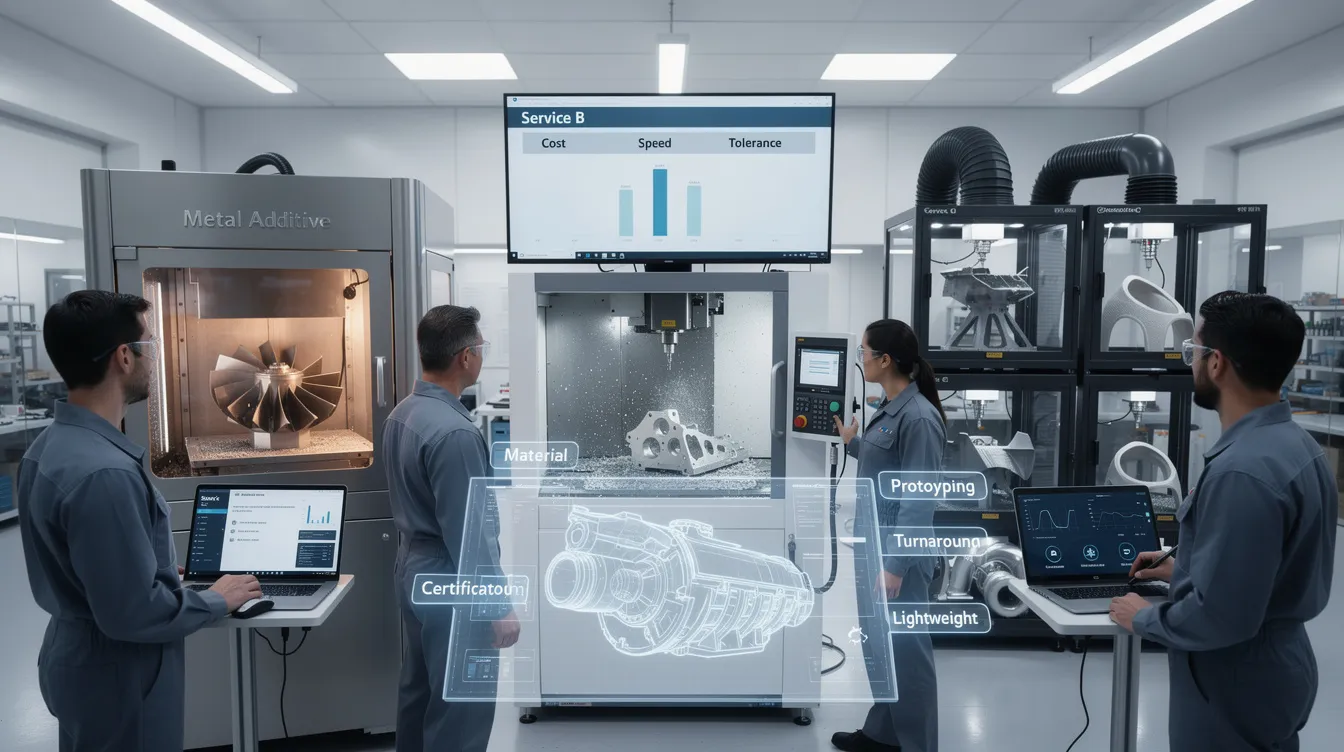
Which Rapid Prototyping Service for Aerospace Parts?
Choosing the right rapid prototyping service for aerospace parts comes down to matching your part’s geometry, material, and program stage to a provider with the right manufacturing processes, certifications, and documentation rigor. This guide breaks down exactly how to make that decision.
Answer First: How to Choose a Rapid Prototyping Service for Aerospace Parts
For aerospace engineers, the “right” rapid prototyping company is one that delivers flight-representative prototypes using production-equivalent processes and aerospace-grade quality control. Aerospace rapid prototyping requires stringent quality control, and fast turnaround times are necessary to keep product development cycles on track. Complex geometries are critical in aerospace component design, which means your provider needs more than a single process in its toolkit.
Here is a practical decision rule:
-
For structural or load-bearing hardware like structural brackets, housings, and actuator mounts, prioritize 5 axis CNC machining with aerospace-grade materials such as 7075-T6 aluminum or Ti-6Al-4V titanium. CNC machining is a key method for rapid prototyping when functional prototypes must match final production metal properties.
-
For complex internal channels, lattice structures, or topology-optimized weight reduction studies, prioritize metal 3D printing (additive manufacturing).
-
For enclosures, avionics chassis, and cost-sensitive sheet metal prototypes, consider sheet metal fabrication or die casting when production goals involve high volumes.
Anebon Metal Products Limited focuses on precision CNC machining, die casting, and sheet metal fabrication rather than operating as a 3D-print-only bureau. This makes Anebon best suited when the prototype must closely match full scale production methods and materials ranging from aluminum to titanium to stainless steel.
Quick checklist before diving deeper:
-
Does the provider hold relevant certifications (ISO 9001, AS9100 alignment)?
-
Can they machine your required material to your target tolerances?
-
Do they offer multiple manufacturing processes (CNC, additive, casting, sheet metal)?
-
Will they provide engineering support including DFM feedback?
What Is Aerospace Prototyping and Why It’s Different
Aerospace prototyping means building physical aerospace parts that mimic final production hardware in geometry, material, and mechanical behavior. These aerospace prototypes serve fit checks, structural validation, vibration testing, and thermal cycle evaluation before committing to large scale manufacturing.
Unlike generic product prototyping, aerospace prototyping is safety-critical, heavily regulated, and tied to long program lifecycles. Even at the prototype stage, material traceability, inspection reports, and controlled revisions may be required. Manufacturers must adhere to strict regulatory standards like AS9100 and ISO 9001, and aerospace-grade materials must meet strict quality standards.
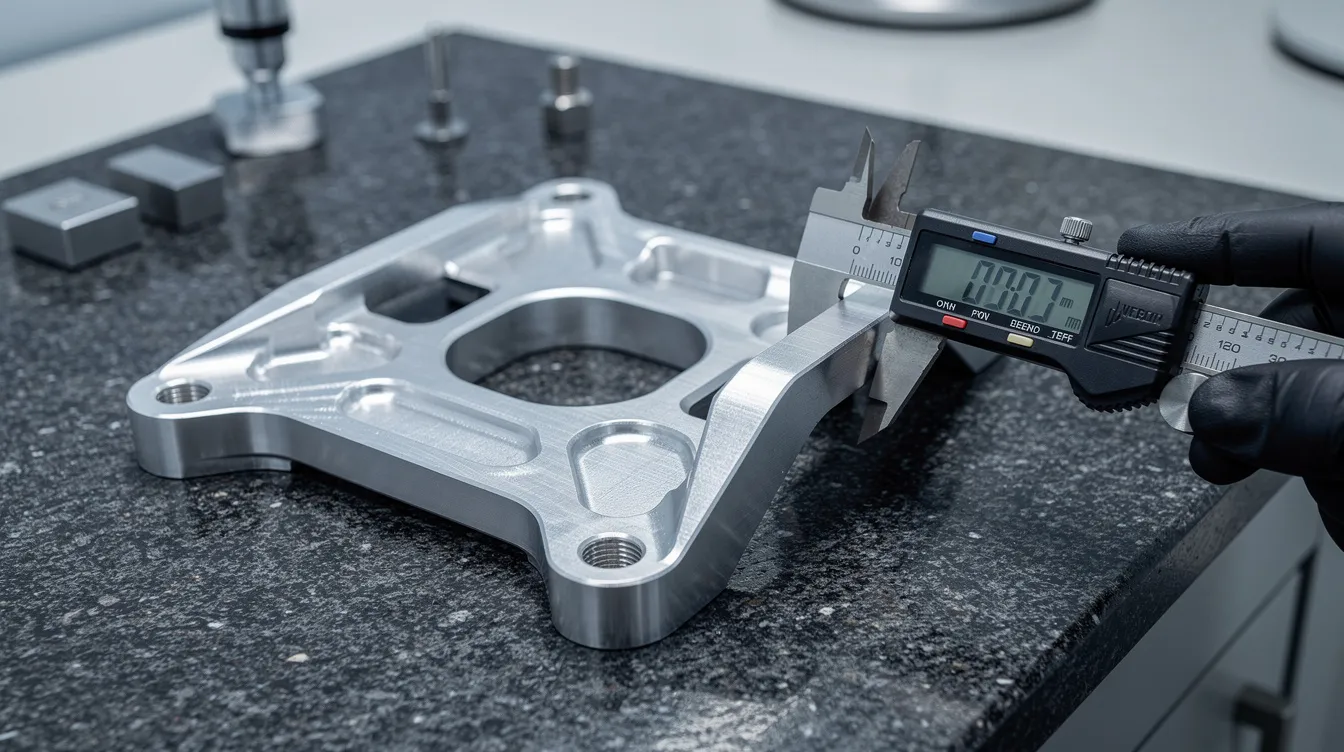
In the aerospace industry, prototypes often progress through named stages: breadboard, engineering development unit, qualification unit, and flight test article. Each stage demands increasing fidelity. Rapid prototyping reduces cycle times by up to 50%, but speed alone is not enough. The provider must also deliver compliance documentation that satisfies program requirements.
Because of these demands, aerospace prototyping providers rely heavily on production-representative manufacturing processes like CNC machining, precision sheet metal, and die casting, rather than relying solely on low-cost plastic 3D printing.
Key Processes for Rapid Aerospace Prototyping
This section compares the main rapid prototyping processes used for aerospace parts and when each delivers the most value.
CNC machining (milling and turning) is the most common choice for metal aerospace components. It is used for aerospace-grade components including housings, manifolds, fittings, and structural brackets. CNC machining supports a wide range of materials including titanium, aluminum, stainless steel, and superalloys. For complex multi-face geometries, 5 axis CNC machining reduces setups and improves geometric accuracy.
Additive manufacturing and 3D printing is the most common rapid prototyping process for early-stage concept models. 3D printing is the most common method for rapid prototyping when iteration speed matters most. In metals, Direct Metal Laser Sintering is ideal for printing lightweight brackets with internal channels or topology-optimized shapes. Fused deposition modeling is useful for initial layout models using thermoplastics. However, not every provider offers aerospace-grade metal printing with proper material certifications.
Sheet metal fabrication provides a rapid route for brackets, avionics racks, covers, and panels. Processes like laser cutting, CNC punching, and bending deliver lead times comparable to CNC machining.
Die casting and investment casting produce near-net-shape aluminum or zinc prototypes. Soft tooling or rapid tooling keeps costs down when the goal is to de-risk later full scale production.
Secondary operations such as anodizing, passivation, painting, and chemical conversion coatings are often required to simulate final product performance on aerospace prototypes.
Process Comparison: 3D Printing vs CNC Machining vs Casting for Aerospace Parts
This comparison helps aerospace engineers decide quickly based on design goals, budget, and schedule.
3D printing (additive manufacturing) excels for:
-
Fast early iterations: 3D printing can produce parts in as little as one day. Xometry’s rapid prototyping can be completed in 1–3 business days for simpler geometries.
-
Topology-optimized brackets and lightweight supports
-
Ducting, internal channels, and conformal cooling paths
-
Concept evaluation where ultimate fatigue life is not yet critical
-
Selective laser sintering combines speed and functional properties, while stereolithography offers the best surface finish among 3D printing methods. HP Multi Jet Fusion provides another option for engineering-grade polymer prototypes. 3D printed prototypes cost between $5 and $50 each for polymer parts.
CNC machining is usually preferred for:
-
Functional prototypes where properties must match final production metal. CNC machining achieves tolerances as tight as ±0.001 inches and can produce machined parts in as fast as one day for simpler components.
-
Hydraulic manifolds, gear housings, actuator brackets, and mounting plates
-
Interfaces with bearings, seals, and other precision mating components
-
Surface-finish-critical areas or high-accuracy bores
Prototype die casting or machined-from-cast stock works best when:
-
Validating wall thickness, draft, and flow for future high-volume die casting
-
Producing weight-optimized aluminum components where casting will be the final process
-
Reducing cost per part for pilot runs in the hundreds using bridge tooling
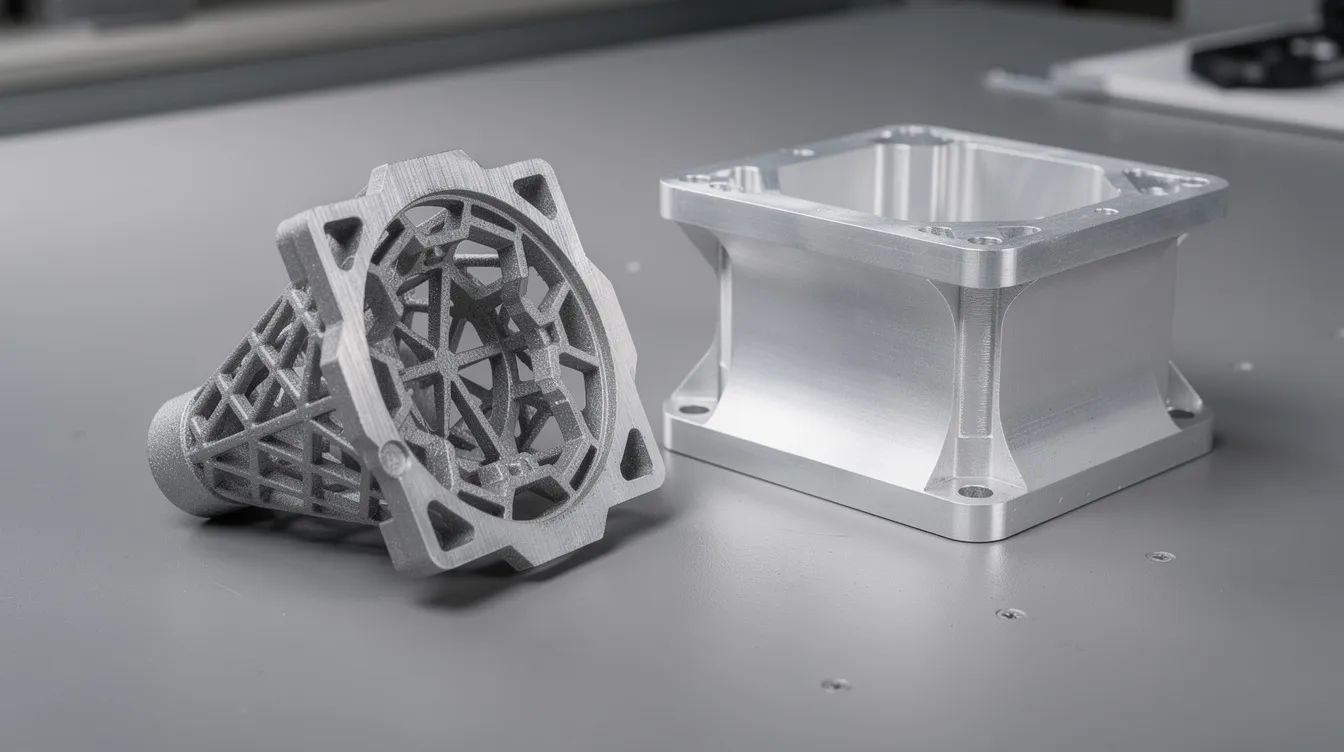
Quick comparison across methods:
-
Speed: 3D printing 1–3 days for simple parts; CNC machining about 5–10 days for complex aerospace components; prototype die casting 2–4 weeks
-
Accuracy and tolerances: CNC machining ±0.01 mm or better; 3D printing ±0.1–0.5 mm as-printed; casting requires post-machining for critical features
-
Material options: CNC offers the widest range of production-grade metals; 3D printing alloy availability is growing; casting excels for aluminum and zinc
-
Cost per part: 3D printing cost-effective at very low volumes; CNC scales well from 1 to 1,000 pieces; casting requires tooling investment but lowers per-piece cost at higher volumes
Rapid prototyping can produce parts in as fast as 1 day depending on complexity and process. Vacuum casting offers another path for small batches of polymer or urethane parts when injection molding tooling is not yet justified.
Critical Selection Criteria for an Aerospace Prototyping Partner
Beyond process choice, selecting the right manufacturing partner is the make-or-break factor for aerospace programs.
Quality management systems and certifications: ISO 9001:2015 certification ensures quality management systems are followed and serves as the baseline. AS9100 is the preferred standard for flight hardware. It is crucial to verify vendors’ AS9100 certifications when selecting prototyping partners. For reference, Protolabs is AS9100D certified for aerospace quality standards, and Xometry is ISO 9001:2015 and AS9100D certified for aerospace components. Some providers are ITAR registered for defense-related work. Anebon holds ISO 9001:2015 and ISO 14001:2015 certifications with processes aligned to AS9100 expectations.
Tolerances and metrology: Aerospace parts often require tight tolerances down to ±0.01 mm or better. Protolabs offers rapid prototyping with tolerances as tight as ±0.001 inches. RapidDirect implements ISO 2768-m standard tolerance for metals. ProleanMFG achieves tolerances down to ±0.005 mm for precision parts. Providers should demonstrate capability via CMM inspection, surface roughness checks, and documented first article inspection reports.
Material traceability and documentation: Material traceability is essential for aerospace components. Expect mill certs, material certificates, and material certifications for every aerospace-grade alloy used. Even at prototype stage, basic FAI-style documentation should be available.
Engineering support: The ability to review a CAD file, suggest DFM improvements, and recommend the most suitable process enables manufacturers to avoid costly redesigns. Anebon provides DFM feedback at the quotation stage.
Supply chain and capacity: Look for proven ability to scale from single prototypes through on demand production to mass production. Stable lead times and clear communication matter, especially for overseas sourcing.
Materials and Tolerances for Aerospace Prototypes
Aerospace prototypes must use materials and tolerances close to those of intended production parts to yield meaningful test data. Aerospace components require lightweight high-stress materials that can survive extreme operational environments.
Key aerospace materials:
-
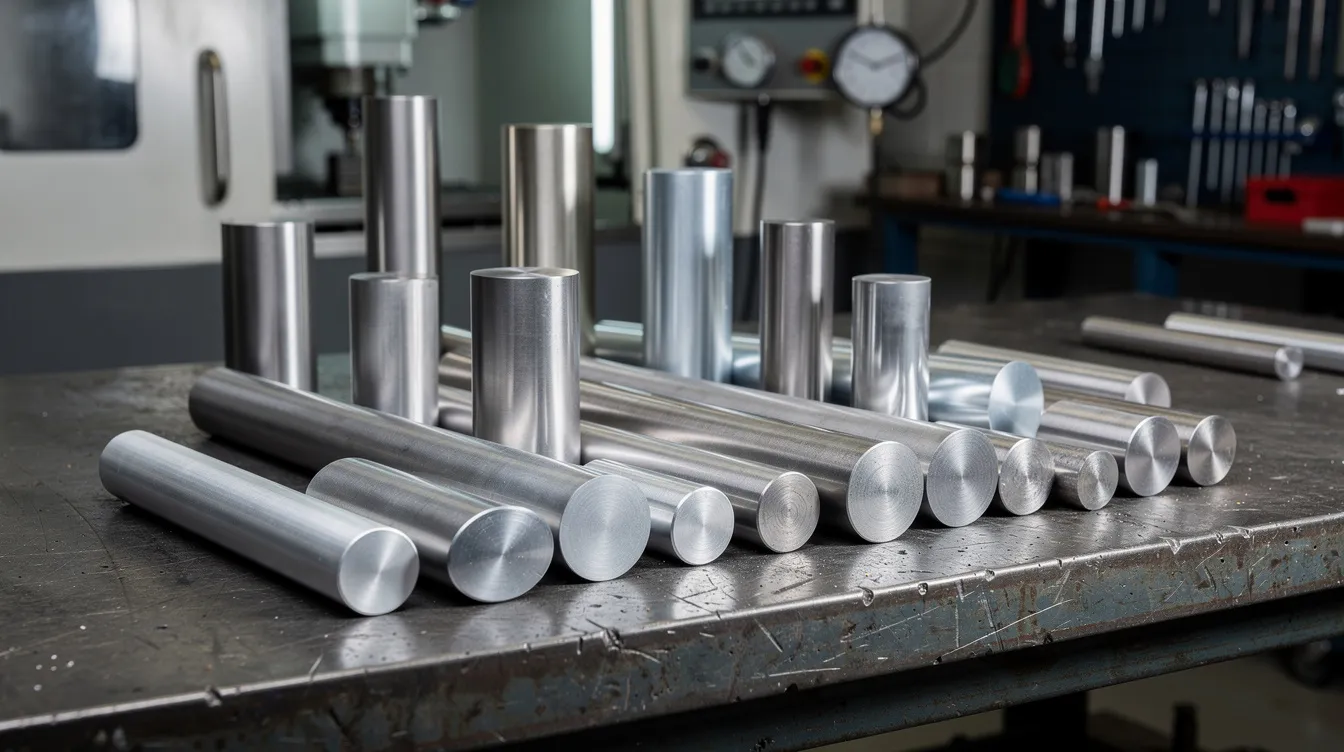
Aluminum alloys (6061-T6, 7075-T6/T7351) are frequently chosen for aerospace prototypes including structural brackets, housings, and airframe components
-
Titanium alloys (Ti-6Al-4V) are commonly used for aerospace prototyping where high strength-to-weight ratio, corrosion resistance, and elevated temperature performance are needed. Key materials for aerospace prototyping include titanium and Inconel.
-
Stainless steels (17-4 PH, 304, 316) for corrosion-critical fittings
-
High-temperature alloys (Inconel 718) for engine parts, exhaust components, and turbine blades
-
CFRP composites are utilized for lightweight aerospace components in structural skins and panels
-
High-strength polymers like PEEK are used in aerospace prototyping for housings, insulation, and ducting
Machining titanium and Inconel requires specialized tooling, cooling strategies, and experience. Poor technique creates microcracks that compromise fatigue life and surface integrity, making supplier experience critical for both cost efficiency and quality parts.
Typical tolerance bands: General functional features require ±0.05 mm; critical mating features like bearing bores, sealing faces, alignment dowel holes, and precision slots need ±0.01 mm or tighter. Anebon can machine aerospace components down to ±0.002 mm where required, which is beyond typical general-purpose job shops. Over-specifying tolerances beyond ±0.005 mm on non-critical features can increase cost by approximately 300% without adding value.
Surface finish requirements often call for Ra ≤ 0.8 µm on sealing and bearing surfaces, verified using profilometers during final inspection. Aerospace additive manufacturing must support material certifications and traceability to satisfy aerospace standards.
Digital Manufacturing Workflow: From CAD File to Flight-Representative Part
A strong rapid prototyping service should offer a streamlined digital manufacturing pipeline from CAD upload through final inspection, enabling faster product development cycles and helping customers get to market faster.
Typical aerospace prototyping workflow:
-
Customer uploads a 3D CAD file (STEP, IGES, or native format) plus 2D drawings with GD&T and material selection specifications
-
Automated or semi-automated DFM analysis flags thin walls, unreachable features, or tolerance stack issues
-
Engineering support reviews the design with the customer to choose the most suitable process and material. Some providers offer instant quotes or detailed quotes at this stage.
-
CAM programming, fixture design, and toolpath simulation are carried out digitally to minimize risk and cycle time
-
Digital manufacturing enables parallel production of multiple prototypes and design variants for A/B testing in the same build window or machining schedule
At Anebon, this digital workflow is combined with in-process inspection and final CMM reports, ensuring each aerospace prototype is traceable back to its CAD revision and process parameters. This approach supports custom designs from concept through production parts.
When to Prioritize 5-Axis CNC, Sheet Metal, or Die Casting
Matching part types and program stages to the right process is what separates efficient prototyping from wasted budget.
5 axis CNC machining: Recommended for complex prismatic or organic shapes such as impellers, pump housings, and multi-face mounting brackets. Benefits include reduced setups, tighter geometric relationships, and better surface continuity. Best for 1–20 pieces during early-stage engineering testing.
Sheet metal fabrication: Ideal for avionics racks, panel covers, brackets, and enclosures with primarily 2.5D geometry. Bending, laser cutting, and hardware insertion reproduce production intent quickly at competitive pricing. Quantities of 1–20 pieces are typical for prototype and pilot phases.
Die casting: Best when final production will rely on die casting for medium- to high-volume aluminum or zinc aerospace parts. Prototype or soft tooling simulates gate locations, wall thickness, and draft without full production tool investment. Expect 50–500+ pieces for pre-production validation runs.
A key advantage of working with Anebon is that all three capabilities-5 axis CNC, sheet metal, and die casting-are available under one roof, reducing vendor complexity and simplifying quality control across your program.
How Anebon Supports Aerospace Prototyping Through to Final Production
Anebon Metal Products Limited is a precision manufacturer founded in 2010 in Dongguan, China, serving overseas OEMs across the aerospace industry, medical devices, automotive, and robotics sectors.
Core manufacturing services for aerospace parts:
-
Precision CNC machining including multi-axis and 5 axis CNC capabilities for high quality parts
-
Die casting for aluminum and zinc aerospace components
-
Sheet metal fabrication for brackets, housings, and structural panels
Manufacturing capabilities and certifications: Anebon holds ISO 9001 2015 and ISO 14001:2015 certifications. Internal processes are aligned with AS9100 requirements through traceability, inspection protocols, and change control, supporting supply-chain flow-down from AS9100-certified OEM customers.
Engineering support: Anebon provides DFM review at the quotation stage, helping aerospace engineers choose between CNC machining, casting-friendly geometries, and sheet metal approaches. This engineering support shortens the path from concept to production.
Scalability: From one-off rapid prototypes to low-volume pilot runs and then to full scale production, Anebon maintains consistent tooling approaches, inspection methods, and process parameters. Whether the demand is a single functional prototype or a batch of production parts, the same quality infrastructure applies.
Upload your CAD file for a detailed quote and manufacturability review to see how Anebon’s rapid prototyping solutions fit your next aerospace program.

Practical Checklist: Matching Your Aerospace Project to the Right Service
Use this checklist to create prototypes matched to your program’s exact needs. Print it, share it with your team, and use it when evaluating any rapid prototyping services provider.
-
Define whether the prototype is for concept validation, engineering testing, or near-final production validation-this determines acceptable tolerance bands and documentation depth
-
Confirm required material (e.g., 7075-T6, Ti-6Al-4V, Inconel 718) and target tolerances before requesting quotes
-
Decide whether the geometry favors CNC machining, 3D printing, sheet metal, or die casting based on complexity, volume, and production goals
-
Verify the supplier’s quality certifications (ISO 9001, AS9100 alignment) and metrology capabilities (CMM, profilometry, hardness testing)
-
Ask about lead times and the ability to deliver multiple iterations within your program schedule-look for providers who can support injection molding or fused deposition modeling if polymer prototypes are also needed
-
Ensure data security protocols are in place for sensitive aerospace designs
-
Confirm the prototyping partner can support transition from aerospace prototyping to final production without re-qualifying a new vendor
-
Check whether the provider offers competitive pricing across prototyping services and can handle both rapid prototyping and on demand production as your program scales