Where Can I Find Wholesale Sheet Metal Fabrication Parts Suppliers?
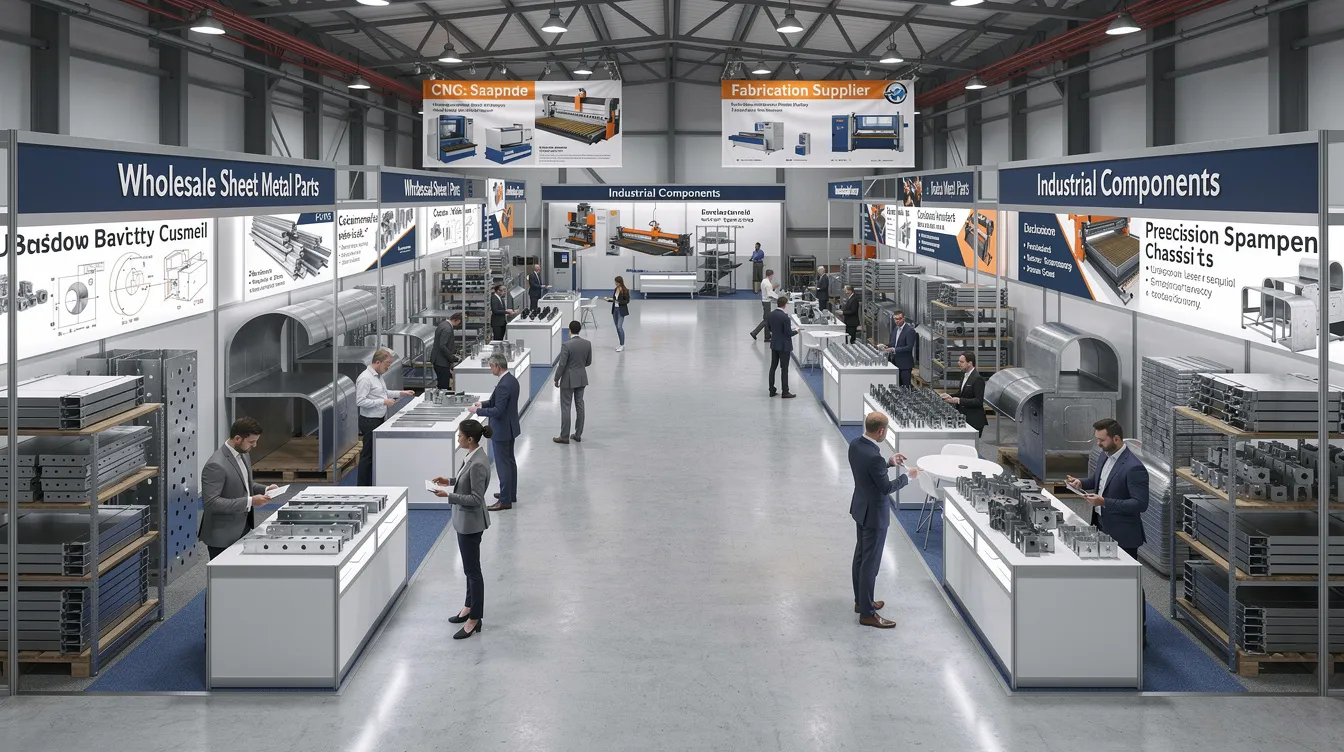
Where Can I Find Wholesale Sheet Metal Fabrication Parts Suppliers?
If you are sourcing wholesale sheet metal fabrication parts for your next product, you already know that the supplier you choose will affect everything from unit cost to delivery schedules to final part quality. The global sheet metal fabrication market is projected to reach USD 22.33 billion by 2030, and the number of sourcing options has expanded dramatically over the past decade. This guide walks you through the best channels for finding reliable wholesale suppliers, what to evaluate, and how to get the most competitive deal for your project.
Quick Answer: Best Places to Source Wholesale Sheet Metal Parts
You can find wholesale sheet metal parts suppliers through four main channels: online digital manufacturing platforms that offer instant quote systems, direct OEM factories (especially ISO-certified manufacturers in China’s Guangdong region), regional job shops in North America or Europe, and industry-specific wholesale distributors that stock standard components for HVAC, electrical, and construction applications.
Each channel suits a different stage of your product lifecycle:
-
Online instant-quote platforms (growing rapidly since ~2015) such as RapidDirect and Komacut let you upload CAD files, select materials and finishes, and receive pricing in minutes. These are excellent for rapid prototyping and comparing suppliers quickly.
-
Direct OEM factories in cities like Dongguan, Shenzhen, Suzhou, and Ningbo offer the deepest cost efficiency for long-term production runs, with mature supply chains, integrated processes, and forming capabilities that span laser cutting through final assembly.
-
Regional job shops across the US, EU, and Asia-Pacific are ideal when you need local support, fast turnaround, or need to source heavy equipment components where overseas freight would be prohibitive.
-
Industry-specific distributors carry catalog sheet metal parts (ducts, enclosures, fittings) and can ship regionally in 1–3 days, though they rarely handle custom geometries.
At Anebon Metal Products Limited, we serve as a direct OEM partner for custom sheet metal parts, CNC machining, and surface finishing, supporting customers from prototype through mass production. If you already have drawings ready, reach out to start the conversation.
Understanding Wholesale Sheet Metal Fabrication Parts
Sheet metal fabrication forms parts from thin metal sheets, transforming flat stock into functional components through a series of manufacturing processes. Typical wholesale parts include brackets, enclosures, bus bars, chassis, panels, and mounting plates. Order sizes generally start at a few hundred pieces and scale to tens of thousands for repeat production.
Wholesale suppliers differ from retail or small-job fabricators in several important ways:
|
Factor |
Wholesale Supplier |
Small-Job / Prototype Shop |
|---|---|---|
|
Minimum order |
Hundreds to thousands of pieces |
1–50 pieces |
|
Pricing structure |
Volume price breaks |
Per-piece or hourly rates |
|
Contract terms |
Formal, with NRE and tooling terms |
Often informal |
|
Quality systems |
ISO certified, FAI, CMM reports |
Variable |
|
Lead times |
Structured production schedules |
Flexible but unscaled |
Common techniques used in the sheet metal fabrication process include laser cutting, bending, and welding, along with punching, stamping, CNC machining, and surface treatments like chem film and chromate conversion coating. Sheet metal fabrication is ideal for low to high volume production, which is exactly why it dominates component manufacturing across so many sectors.
Sheet metal fabrication is widely used in aerospace and automotive industries, but demand extends well into medical devices, electronics, robotics, HVAC, and general industrial and commercial projects.
Option 1: Direct OEM Sheet Metal Manufacturers in China
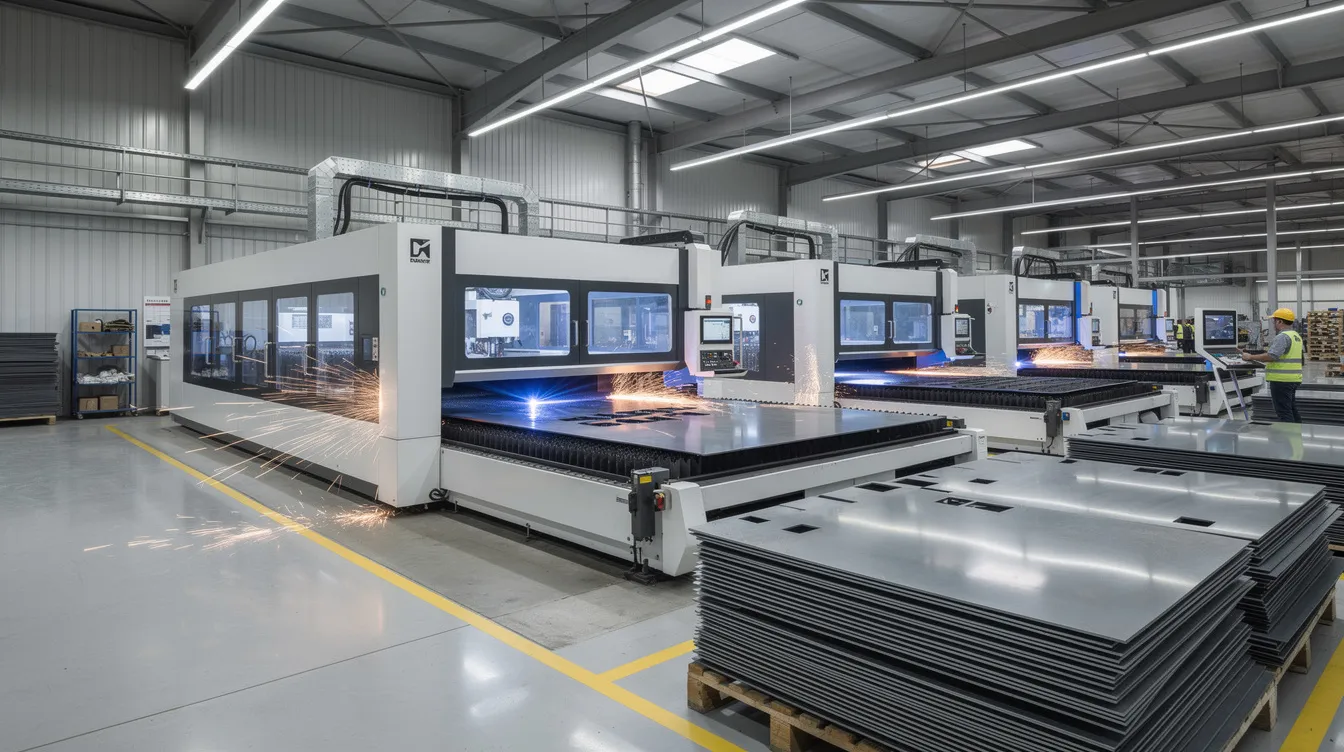
Many overseas OEMs source wholesale sheet metal parts from China because the region offers cost efficiency, mature raw material supply chains, and deep forming capabilities across complementary processes. Since roughly 2010–2020, major precision fabrication clusters developed in Dongguan, Guangzhou, Shenzhen, Suzhou, and Ningbo, enabling high throughput and shared logistics infrastructure.
Benefits of working directly with OEM factories include:
-
DFM support early in the cycle – Design for Manufacturability feedback helps reduce manufacturing costs before tooling is committed.
-
Tight tolerances – many factories achieve ±0.01 mm on critical features, with some (including Anebon) reaching ±0.002 mm.
-
Flexible volumes – from prototype quantities of 1 piece to production runs of 10,000+ units.
-
Integrated services – sheet metal fabrication, CNC machining, stamping, welding, surface treatment, and assembly under one roof.
When evaluating Chinese manufacturers, prioritize those holding ISO 9001:2015 and ISO 14001:2015 certifications. For automotive applications, look for IATF 16949. Factories like MSTFAB in Guangzhou, with 23+ years of experience and dual certifications, illustrate the level of maturity available in these clusters.
Why Many OEMs Choose Anebon Metal Products Limited
At Anebon, we position ourselves as a direct OEM manufacturing partner rather than a middleman or broker. Founded in 2010 and based in Dongguan, Guangdong, we serve overseas OEMs across the EU, US, and UK with custom sheet metal fabrication, CNC machining (including milling, turning, and 5-axis), die casting, and assembly for metal and plastic parts. Die casting is used to produce metal parts with high dimensional accuracy, and combining it with sheet metal work lets us deliver complete mechanical assemblies.
Measurable capabilities that matter for wholesale buyers:
-
Tolerances as tight as ±0.002 mm on critical features
-
Rapid prototyping in 3–7 days; pilot runs in 2–4 weeks
-
MOQ flexibility from single prototypes through 10,000+ unit runs
-
DFM feedback included with every quote to optimize cost and manufacturability
-
Fast RFQ response and competitive pricing for annual volume commitments
We offer a full range of finishes to deliver a fully finished part: powder coating, anodizing (including type III hard anodize), chem film and chromate conversion coating, zinc and nickel plating, and brushed or mirror polish. Our ISO 9001:2015 and ISO 14001:2015 certifications back up our commitment to consistent quality and environmental responsibility.
Option 2: Online Custom Sheet Metal Marketplaces and Portals
Digital manufacturing platforms have reshaped how buyers source custom sheet metal fabrication services. B2B platforms facilitate global sourcing for suppliers and manufacturers, and a wave of instant-quote portals launched between 2015 and 2023 now aggregate fabricators worldwide. CIFProto, for example, ships approximately 40,000 parts per year to over 50 countries. Xometry can handle low-volume prototypes to high-volume production runs with tolerances as tight as ±0.005 inches. Ponoko provides same-day delivery for custom parts in the Bay Area.
How these portals typically work:
-
Upload your CAD file (STEP, IGES, or DXF)
-
Select material, finish, and quantity
-
Receive an instant quote or engineer-reviewed pricing
-
Approve and track production through delivery
International suppliers can also be found through platforms like Alibaba and Global Sources, which list thousands of sheet metal manufacturers with factory profiles, certifications, and trade histories.
Pros for wholesale buyers: fast quoting, easy side-by-side comparison, access to diverse materials including aluminum, stainless steel, copper, and titanium. Tradeoffs: you may have less direct control over which factory produces your parts, quality consistency between batches can vary across partner factories, and platform markups may exceed what you would pay going direct to an OEM.
Option 3: Regional Sheet Metal Job Shops and Fabricators
In North America, Europe, and Asia-Pacific, thousands of regional job shops offer custom sheet metal fabrication at small to mid-scale wholesale volumes. These shops are often the best option when you need face-to-face communication, frequent design iteration, or are producing heavy or oversize components where international freight costs would negate overseas savings.
How to find them:
-
Companies often utilize industrial supplier directories for sourcing – ThomasNet in the US, Europages in the EU
-
Google Maps searches using terms like “sheet metal fabrication + city” (for example, HVAC-focused fabricators in Kansas City or agricultural equipment shops across the Midwest)
-
Trade association lists from events like FABTECH or publications like The Fabricator
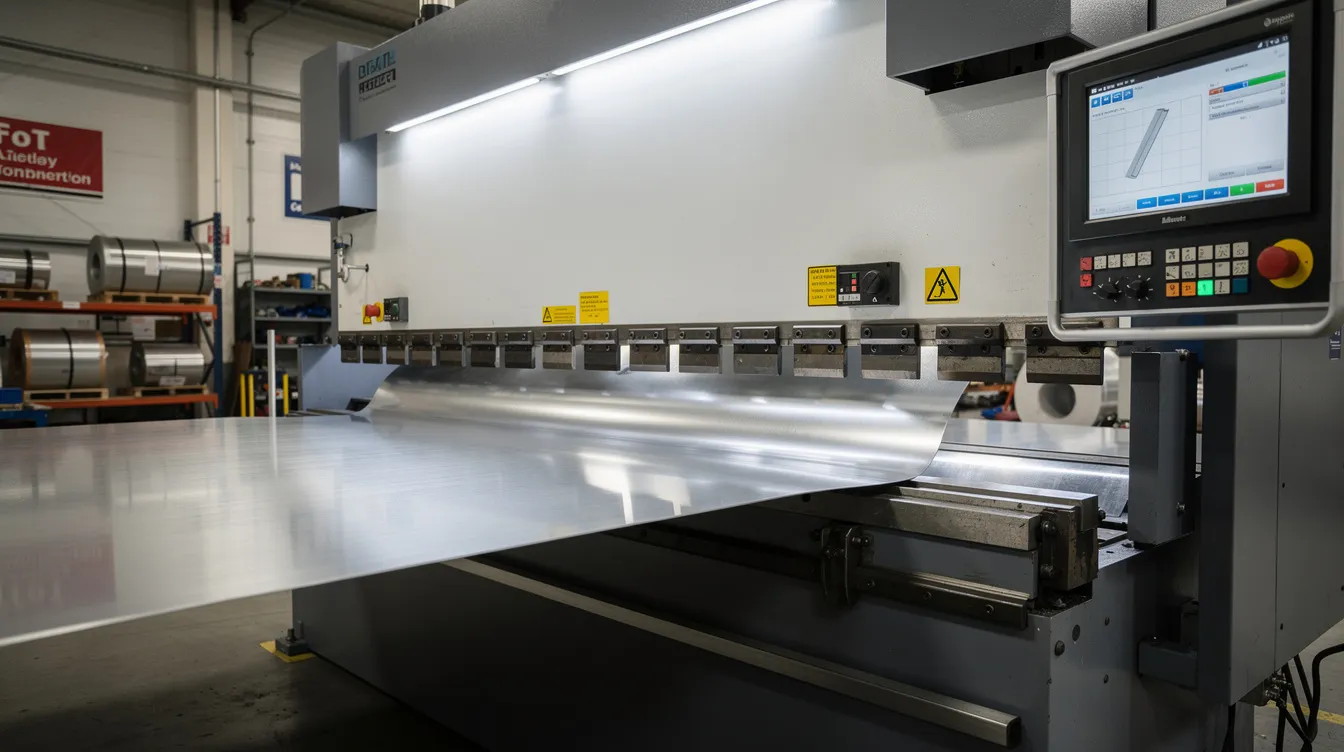
When evaluating regional shops, check for specific capabilities: fiber laser cutting that can quickly cut complex profiles, turret punching, CNC press braking for precision metal bending, robotic welding, and in-house powder coating or plating. A shop that handles everything from flat pattern to finished part reduces your logistics complexity significantly.
Option 4: Industry-Specific Wholesale Distributors
Some industries rely on specialized distributors who stock standard sheet metal components rather than producing fully custom sheet metal parts. These distributors maintain large inventories and can deliver fast, but their product offerings center on catalog items rather than bespoke designs.
Concrete examples:
-
HVAC wholesalers carrying ducts, plenums, standard fittings, and galvanized steel components for construction and architectural applications
-
Electrical distributors stocking pre-formed enclosures, panels, junction boxes, and copper bus bars for power distribution
These channels are ideal for standard parts and fast delivery – often within 1–3 days regionally. However, they are less suitable for custom geometries, tight tolerances, branded enclosures, or parts requiring specific finishes.
Many OEMs use a hybrid approach: they source catalog components from distributors for common parts while partnering with a custom sheet metal supplier like Anebon for proprietary designs that require precise engineering and finish control.
Key Capabilities to Look For in a Wholesale Supplier
Beyond finding suppliers, evaluating what they can actually do separates a mediocre procurement decision from a strategic one. Parts can be produced with tolerances as tight as ±0.005 inches, but not every shop can hold that across a 5,000-piece run.
Core fabrication capabilities to verify:
-
Cutting: fiber laser cutting, CO₂ laser, water-jet, plasma for thick stock
-
Punching and stamping for high-throughput hole patterns and different shapes
-
Forming: CNC press brakes for precision bend work, roll forming for long profiles
-
Welding: spot, MIG, TIG, and robotic welding for structural integrity on frames and chassis
-
Hardware installation and assembly
CNC machining includes processes like milling, turning, and forming – look for suppliers that integrate these with sheet metal work so tapped holes, milled pockets, and threaded inserts don’t require a separate vendor. Learn how CNC machining works to better evaluate supplier capabilities.
Also verify forming capabilities: maximum sheet size (commonly 3000 × 1500 mm), material thickness range (0.5–25 mm), minimum bend radii, and ability to handle complex multi-bend parts. A supplier that can take your project from flat pattern to finished part – including coating and labeling – under one roof eliminates handoff delays and reduces total cost.
Materials and Surface Finishes for Wholesale Sheet Metal Parts
Wholesale projects often require standardized materials and finishes across multiple revisions and years of production. Sheet metal fabrication can produce parts from 250+ metals, but most wholesale projects center on a handful of workhorse alloys. Demand for advanced materials is increasing in sheet metal fabrication, driven by applications in energy storage, aerospace, and medical devices.
Key metals and their applications:
|
Material |
Key Properties |
Common Uses |
|---|---|---|
|
Aluminum 5052 / 6061 |
Aluminum is lightweight and corrosion-resistant |
Enclosures, panels, brackets |
|
Stainless steel 304 / 316 |
Stainless steel is ideal for structural components needing corrosion resistance |
Medical housings, food equipment |
|
Cold-rolled / galvanized steel |
Cost-effective, strong |
Frames, guards, architectural panels |
|
Copper |
Copper is used for high electrical conductivity applications |
Bus bars, power electronics |
|
Brass is suitable for low-friction contact applications |
Connectors, fittings |
|
|
Titanium |
Titanium is known for its high strength-to-weight ratio |
Aerospace brackets, medical implants |
Suppliers should stock various grades of each material and provide mill test certificates for traceability.
Critical surface finishes:
-
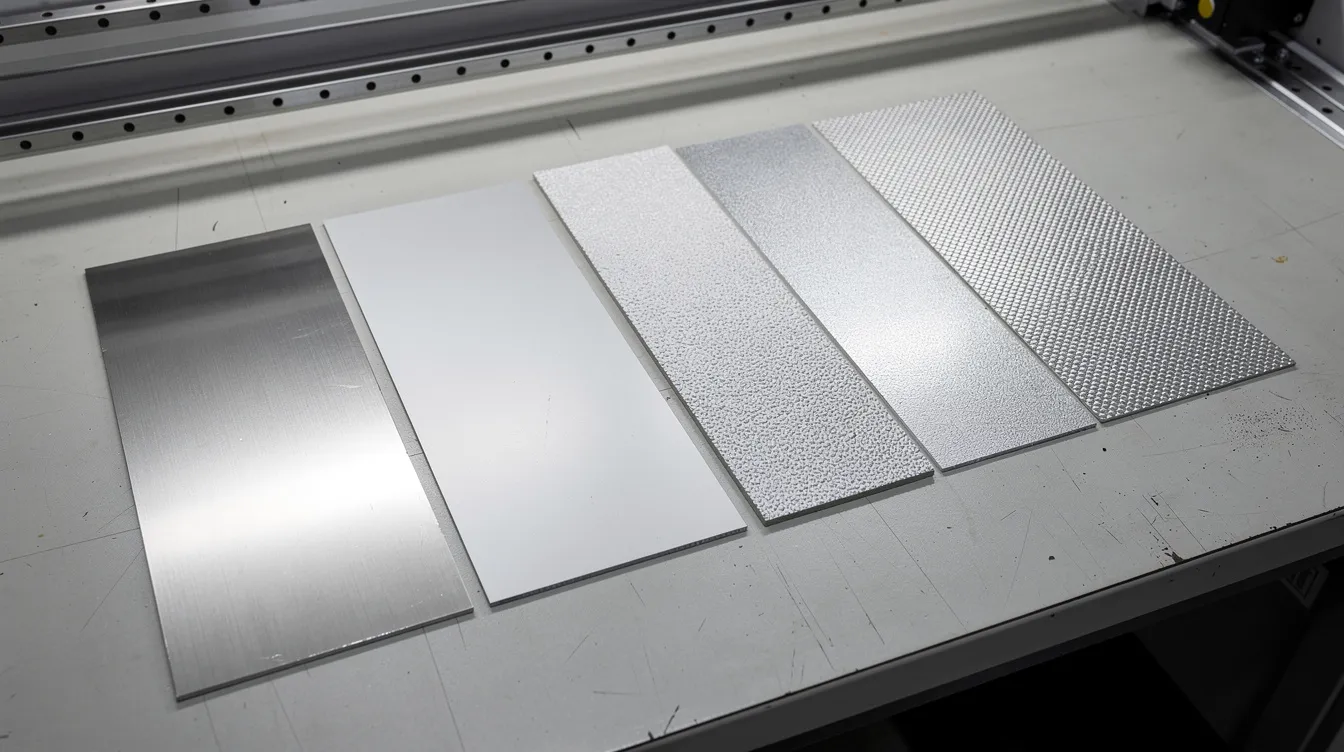
Powder coating – durable color finish for outdoor and industrial use
-
Anodizing – Type II for general corrosion protection on aluminum; type III (hard anodize) for wear resistance
-
Chem film / chromate conversion coating – maintains electrical conductivity while providing corrosion resistance, critical for aerospace and electrical customers
-
Zinc or nickel plating – protective coating for steel components
-
Brushed or mirror polish – cosmetic finishes for visible surfaces
Buyers should include finish callouts in drawings and confirm that the supplier can meet relevant standards (MIL, ASTM, ISO) during the quoting process.
Pricing, MOQs, and How to Get Competitive Quotes
The main cost drivers in wholesale sheet metal work are material type and material thickness, complexity of geometry (number of bends, welds, and cutouts), required tolerances, and finishing requirements. High-volume production significantly reduces per-unit costs in fabrication, which is why understanding price break structures matters.
Typical wholesale pricing tiers:
-
100 pieces – setup and tooling costs amortized across a small run
-
500 pieces – noticeable per-unit drop as process efficiency increases
-
1,000 pieces – material bulk pricing kicks in
-
10,000+ pieces – lowest per-unit price with optimized production scheduling
Minimum Order Quantity (MOQ) affects supply sourcing and production planning. Some suppliers require minimum orders of 500+ pieces for competitive pricing, while flexible OEMs like Anebon work from single prototypes through full production runs.
To get the most competitive pricing on your RFQ:
-
Provide complete 3D CAD and 2D drawings with all tolerances, material specs, and finish requirements
-
State current order quantity and estimated annual usage
-
Include target price if you have one – this lets the supplier propose cost-saving alternatives
-
Ask for DFM feedback to identify opportunities to reduce secondary CNC machining in favor of forming where feasible
Always calculate total landed cost – part price plus shipping, tariffs, duties, packaging, and potential scrap rate – rather than comparing unit price alone.
Quality Assurance and Certifications to Demand
Wholesale buyers should prioritize consistent quality and traceability over the absolute lowest quote. A supplier that delivers parts 5% cheaper but with a 3% rejection rate is more expensive in practice.
ISO 9001:2015 certification ensures quality management standards are systematically applied. Quality certifications verify supplier reliability and capabilities across every batch, not just the first article. For environmental compliance, look for ISO 14001:2015. Industry-specific certifications matter too – IATF 16949 for automotive, ISO 13485 for medical devices, and AS9100 for aerospace.
Typical QA processes to expect from a capable wholesale supplier:
-
Incoming material inspection (verify alloy, thickness, flatness)
-
First article inspection (FAI) with full dimensional report
-
In-process checks on bends, welds, and hardware insertion
-
Final inspection using CMM or optical measurement tools
-
Material certificates and RoHS/REACH compliance documentation
Ask specifically about gauge control on bends, flatness tolerances, weld quality checks, and surface finish inspections. At Anebon, we provide CMM reports, material certificates, and compliance documentation on request, and our knowledgeable staff can walk you through our approach to overcoming warping and tolerance challenges in high-volume production.
Lead Times, Logistics, and Supply Chain Planning
Lead times and logistics directly affect your project schedule for commercial and industrial products. Automation is a key trend in optimizing sheet metal fabrication operations, and suppliers investing in automated cutting, bending, and welding lines can compress timelines meaningfully. Rapid prototyping is becoming essential in sheet metal fabrication, especially for companies iterating on product designs under competitive pressure.
Typical lead times:
|
Stage |
Overseas OEM |
Domestic Shop |
|---|---|---|
|
Rapid prototypes |
3–7 business days |
1–5 business days |
|
Initial production run |
2–4 weeks |
1–3 weeks |
|
Repeat orders (tooling in place) |
1–2 weeks |
3–7 days |
Shipping from South China to US/EU:
-
Air freight: ~5–7 days transit, higher cost, best for prototypes or urgent production parts
-
Sea freight: ~20–35 days transit, significantly lower cost per kg, standard for bulk shipments
To reduce risk of line-down situations, build buffer stock or schedule blanket orders for critical components. Some suppliers can hold inventory locally or in bonded warehouses to support just-in-time deliveries for high-volume OEMs.
How to Evaluate and Shortlist Potential Wholesale Suppliers
Narrowing a long list of potential vendors down to 2–3 strategic partners takes a structured approach. Here is a practical process that works:
-
Generate a long list from platforms, directories, trade shows, and referrals
-
Pre-screen based on capabilities, certifications, machine lists, and factory photos
-
Run a pilot project – order a small batch (50–200 pieces) to test quality, communication, packaging, and adherence to drawings
-
Score each supplier using a weighted scorecard
Suggested scorecard criteria:
-
Engineering support and DFM suggestions (20%)
-
Dimensional accuracy and surface finish quality (25%)
-
On-time delivery and packaging (20%)
-
Responsiveness and communication (15%)
-
Price competitiveness (20%)
Review the scorecard after at least 2–3 orders to see consistency. A supplier that scores well once may slip on repeat orders. Look for manufacturers who demonstrate reliability over time, not just on a first sample.
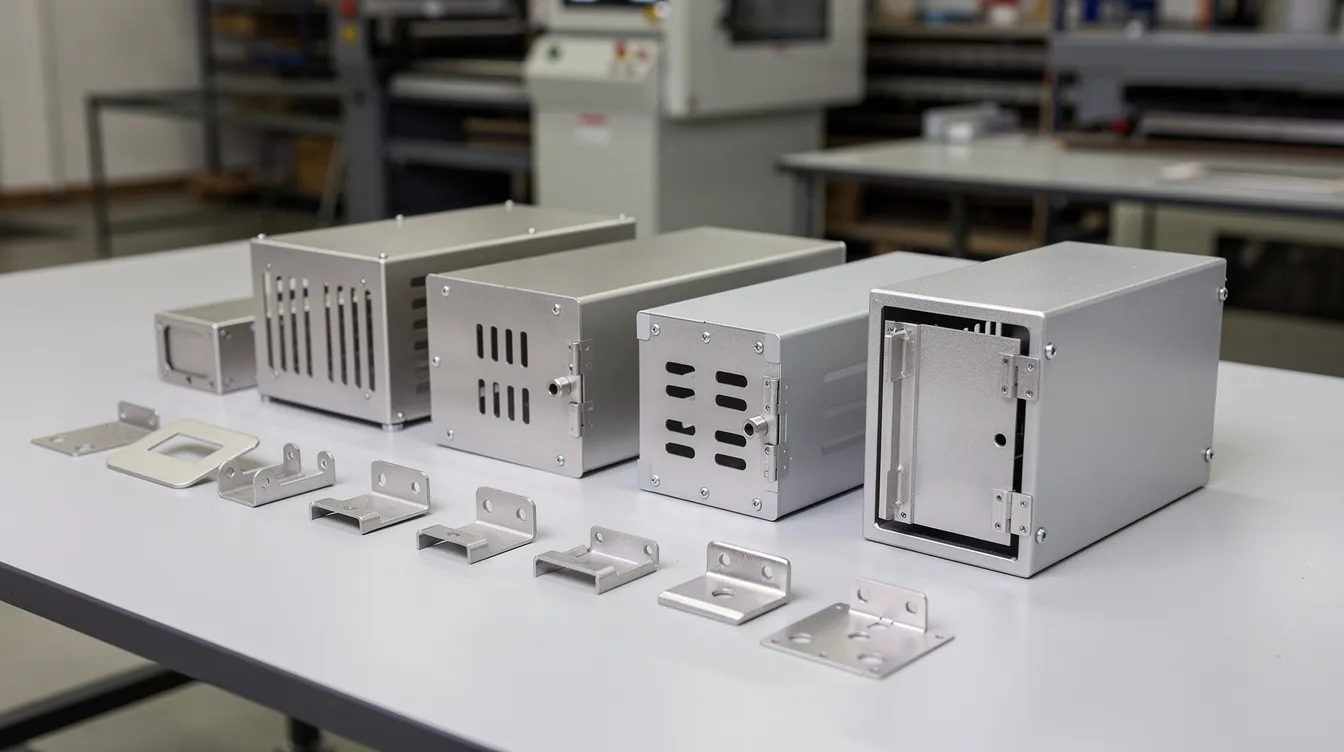
Applications: What Types of Wholesale Sheet Metal Parts Can You Source?
Nearly any thin-wall metal component in a product can be sourced as a wholesale custom sheet metal part. The range of applications is broad and spans most manufacturing industries.
Common wholesale parts include:
-
Enclosures for electronics – telecom racks, battery housings, EV charger cabinets requiring IP54/IP65 ratings
-
19-inch rack chassis – panels, brackets, faceplates, and welded frames for server and telecom equipment
-
Control panels – formed edges, punched holes, sealed against moisture for industrial use
-
Brackets and mounting plates – steel or aluminum with welds and bends for automotive and heavy equipment
-
Frames, guards, and covers – large-format parts for robotics and industrial machinery
-
Copper and aluminum bus bars – for power electronics, EV chargers, and industrial control cabinets, often finished with chem film or plating for electrical conductivity and corrosion protection
-
Medical device housings – enclosures with tight tolerances and biocompatible finishes
In architectural applications, sheet metal boxes and enclosures are commonly sourced in bulk for building systems and infrastructure.
At Anebon, we combine sheet metal fabrication with CNC machining and die casting to supply complete mechanical assemblies – not just individual components – so customers receive production-ready parts that integrate multiple fabrication methods.
Working With Anebon: From CAD File to Finished Part
Anebon serves as a precision metal fabrication partner for overseas OEMs who need reliable wholesale volumes with additional services beyond basic cutting and bending. Our workflow is straightforward:
-
Send your CAD files and drawings – we accept STEP, IGES, DXF, and PDF formats
-
Receive DFM feedback and a detailed quote – our engineering team reviews your design for manufacturability and suggests optimizations
-
Approve prototypes – we produce sample parts for your verification before committing to tooling
-
Scale to production – once approved, we ramp to agreed volumes with stable pricing and quality standards
What makes this process work for wholesale customers is that we integrate multiple processes – sheet metal fabrication, CNC machining, die casting, and finishing – into one controlled supply chain. There is no need to coordinate three or four vendors and manage quality across each handoff.
We support different project stages: rapid prototyping for R&D teams, pilot runs for product validation, and long-term production contracts for established products. Whether you need 50 custom parts for a field trial or 10,000 production parts per quarter, the same tools, programs, and quality systems apply.
Contact us to discuss your specific project and obtain a detailed quote for custom sheet metal parts and assemblies.
Conclusion: Choosing the Right Wholesale Sheet Metal Parts Supplier
Finding the right wholesale sheet metal fabrication supplier comes down to matching your project’s requirements – volume, complexity, material, finish, and delivery timeline – to a supplier’s actual capabilities and track record.
Your main sourcing options are direct OEM factories like Anebon for deep cost efficiency and integrated fabrication services, online platforms for fast comparison and broad access, regional job shops for local support and speed, and sector-specific wholesalers for standard catalog parts. The selection criteria that matter most are fabrication capabilities, materials and finishes, quality certifications, pricing structure at your target volumes, and reliability on lead times.
Treat supplier selection as a strategic decision that affects cost, quality, and time-to-market over the entire lifecycle of your product – not just a one-time purchase. A supplier that delivers consistent quality, provides DFM feedback, and scales with your growth will save you far more than the cheapest quote on a single order. Consider Anebon as a long-term partner for custom sheet metal fabrication, CNC machining, and complete finished parts for global OEMs.