Where Can I Buy Reliable CNC Machine Supplies and Parts? Top Options!
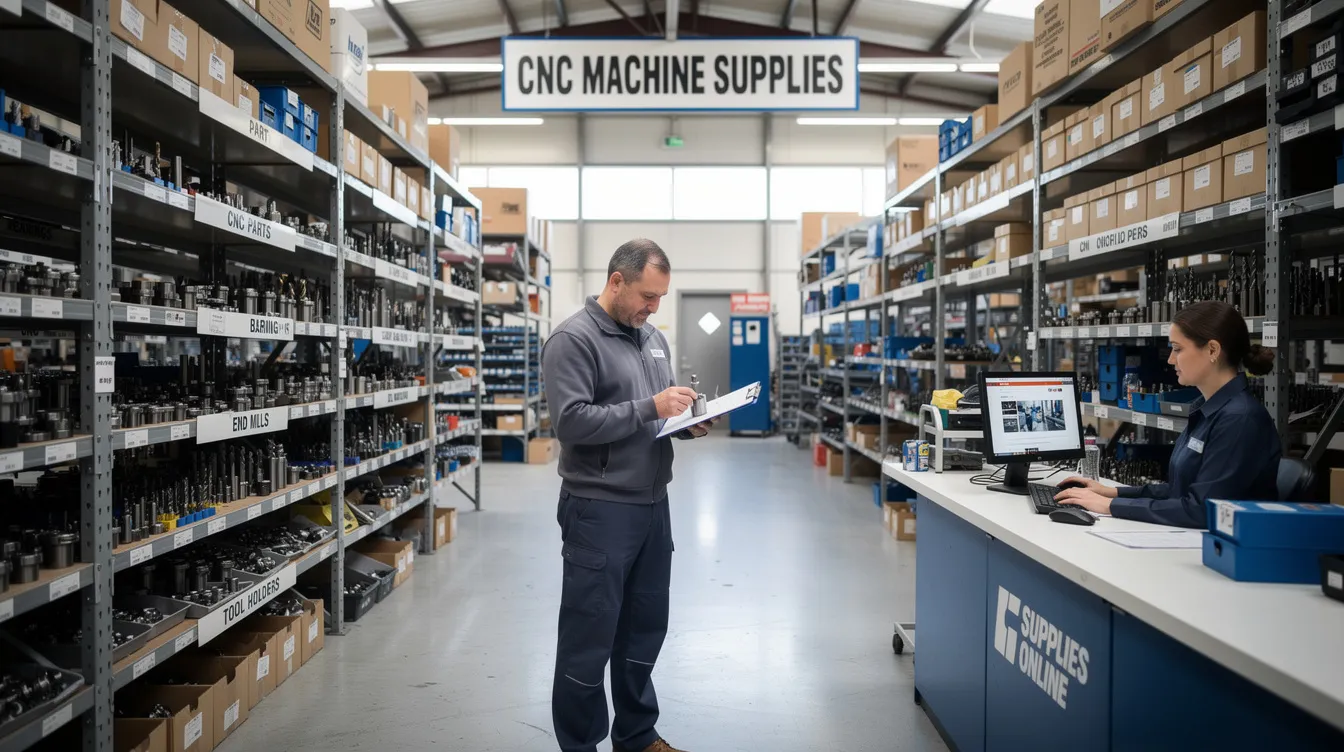
Where Can I Buy Reliable CNC Machine Supplies and Parts?
Finding reliable CNC machine parts quickly can mean the difference between a brief maintenance pause and days of costly downtime. Whether you run a production shop or manage procurement for an OEM, knowing exactly where to source dependable components is essential. This guide breaks down every major sourcing route, explains when each one makes sense, and shows how custom manufacturing from Anebon Metal Products Limited fills the gaps that off-the-shelf channels leave open.
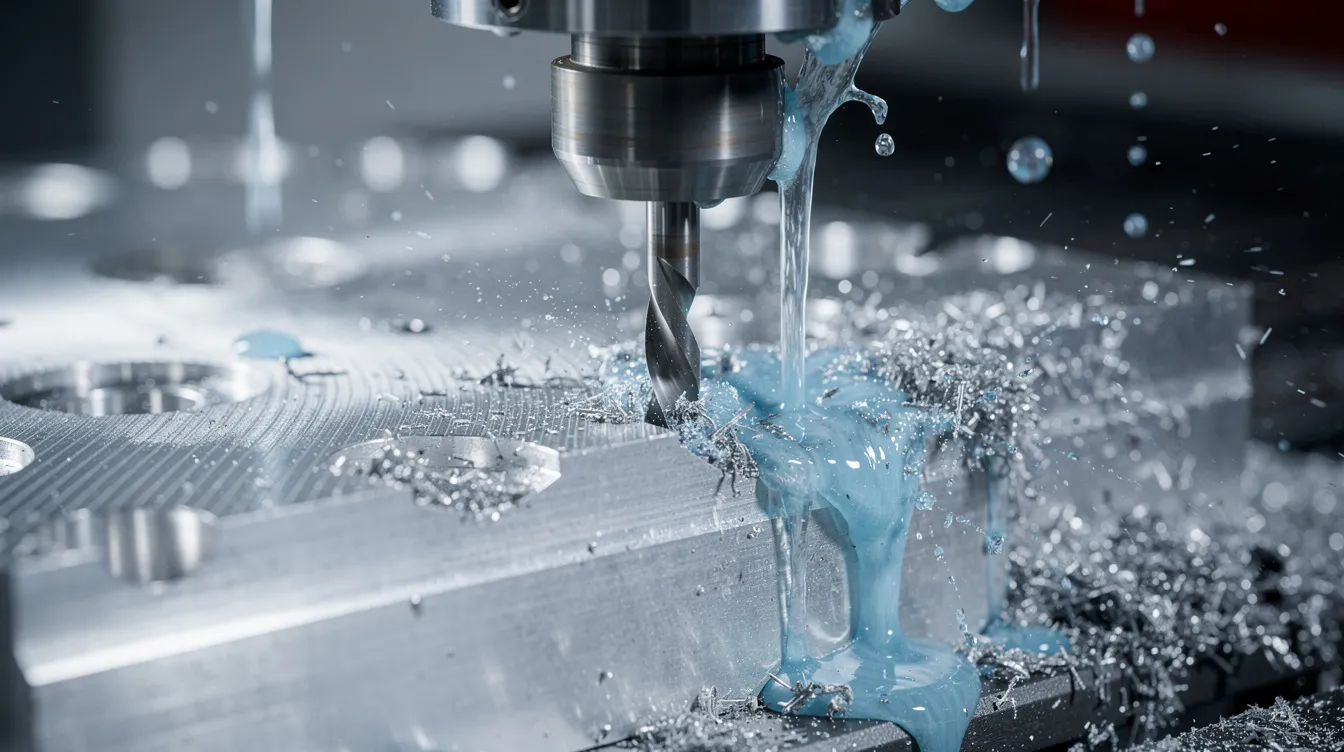
Quick Answer: Best Places to Buy Reliable CNC Machine Parts Today
If you need CNC machine parts now, here are the most trustworthy channels available in 2026. CNC machining uses automated cutting tools for precision manufacturing, so every component you source must meet tight specs to keep your operation running efficiently.
-
OEM distributors and factory parts programs – Fanuc, Haas Factory Outlets, Mazak, and DMG MORI dealers carry original components with full warranty coverage and firmware compatibility.
-
Specialized CNC parts distributors – Companies like CNC Parts Dept. provides parts and service nationwide, while MachineStation offers 182 types of used CNC machine parts for common machines. Regional distributors from San Diego to the Midwest stock motors, drives, and spindle assemblies for fast turnaround.
-
Certified online industrial marketplaces – MSC Industrial Supply, Grainger, and RS Components carry millions of SKUs for consumables, cutting tools, and accessories.
-
Direct-from-manufacturer solutions – Anebon Metal Products Limited delivers custom or obsolete CNC parts through precision CNC machining, die casting, and sheet metal fabrication for overseas OEM clients around the world.
When to choose each option:
-
OEM channels when parts are safety-critical or under warranty
-
Aftermarket distributors when you need fast shipping and lower cost on wear items
-
Custom machining when the right part is discontinued, requires design changes, or simply does not exist off the shelf
CNC machining is widely used in aerospace and medical industries, where quality and traceability are non-negotiable. The sections below compare these options in detail.
Understanding What CNC Machine Supplies and Parts You Actually Need
Many buyers search for “CNC machine parts” without a clear bill of materials, which slows sourcing and increases downtime. Before reaching out to any supplier, map out exactly what your CNC machines require.
Main component categories:
-
Mechanical – ball screws, linear guides, bearings, waycovers, chucks, and seals
-
Electrical – servo motors, stepper motors, drives, encoders, cable harnesses
-
Control – CNC controllers, PLC I/O modules, HMIs, safety relays
-
Consumables – tool holders, collets, each cutting tool type you run, coolant, lubrication
-
Safety – door interlocks, light curtains, emergency stops, guards
-
Accessories – CNC accessories include spindles, clamps, and dust collection systems, and CNC machine accessories can enhance machining efficiency and precision. Additional CNC accessories can include laser attachments and workholding kits for specialized setups.
Before you buy, gather this stuff:
-
Machine model, serial number, and manufacturer
-
Original part number and revision
-
Dimensions, material specs, surface finish, and tolerance requirements
-
Operating environment (temperature, coolant exposure)
Create a simple internal “CNC parts dept” reference sheet per machine with photos and part labels. This form of documentation speeds up reordering and helps any user in your shop find the right part without guesswork. For a deeper look at how computer numerical control systems work, read our Essential Guide to CNC.
Option 1: OEM Dealers and Authorized CNC Parts Departments
OEM channels are the safest route for critical components on newer CNC machines, CNC router systems, and lathes still under warranty. OEM parts production involves manufacturing components for original equipment manufacturers, and buying through authorized dealers preserves that chain of custody.
Advantages:
-
Guaranteed compatibility with your machine’s basic features and firmware
-
Formal warranty coverage and access to original technical drawings
-
Safety-validated parts for servos, brakes, and spindle units
-
CNC machines can achieve tolerances of +/-0.001″ to +/-0.005″, and OEM parts are engineered to maintain that accuracy across the machine’s life
Limitations:
-
Higher cost – a 40-taper spindle cartridge runs roughly $6,800–$9,200 from OEM versus $2,900–$4,500 aftermarket
-
Longer lead times for non-stock items (2–6 weeks is common)
-
Limited ability to customize or adapt parts for upgrades
When to use OEM: Prioritize this channel for safety-critical parts (spindle assemblies, servo drives, brakes, safety relays) and complex control hardware. For brackets, guards, and non-critical fittings, aftermarket or custom sources are more practical and cost-effective.
Option 2: Specialized CNC Parts Distributors and Online CNC Parts Shops
Dedicated CNC parts distributors function like an external parts department, stocking multi-brand components so you can get back to production fast. Used CNC parts can significantly reduce maintenance costs, and used CNC parts help minimize downtime and maximize productivity.
What they commonly stock:
-
VFDs, spindle motors, stepper and servo motors
-
Bearings, belts, encoders, proximity sensors
-
Lubrication pumps, pendant controls, HMI panels
-
Replacement tools for drilling, boring, grinding, and cutting operations
How to evaluate a distributor:
-
Check whether stock levels are posted online in real time
-
Confirm same-day shipment cutoff times and fast shipping options
-
Review return policy and warranty terms
-
Ask whether they can cross-reference obsolete or foreign part numbers
-
Verify if their sales team has technical professionals who understand servo tuning and CNC router configurations
Anebon often works alongside such distributors by supplying precision-machined subcomponents or custom brackets when an off-the-shelf replacement does not fit a client’s legacy machining center.
Option 3: Industrial Marketplaces and General E-Commerce Platforms
Platforms like MSC Industrial Supply, Grainger, Amazon Business, and RS Components are useful for standard CNC machine consumables and accessories where demand is high and specs are standardized.
Good items to source here:
-
Cutting tools, ER collets, tool holders
-
Coolant, grease, oils, and lubrication products
-
Cable carriers, fasteners, shop accessories
-
CNC dust collection systems that help maintain a clean workspace
-
CNC enclosures that protect machines from dust and debris
-
Lasers and laser attachments for engraving or alignment
What to avoid on generic marketplaces:
-
Safety-critical control hardware without traceability
-
Non-documented “clone” boards or drives with unclear certifications
-
Bearings or spindle components from unverified suppliers – counterfeit risk is real
Filter suppliers by certifications (ISO 9001, ISO 14001, RoHS/REACH compliance) and download available datasheets before purchase. Anebon can complement marketplace purchases by manufacturing custom fixtures, jigs, or workholding that integrate with off-the-shelf items, giving your setup the versatility it needs.
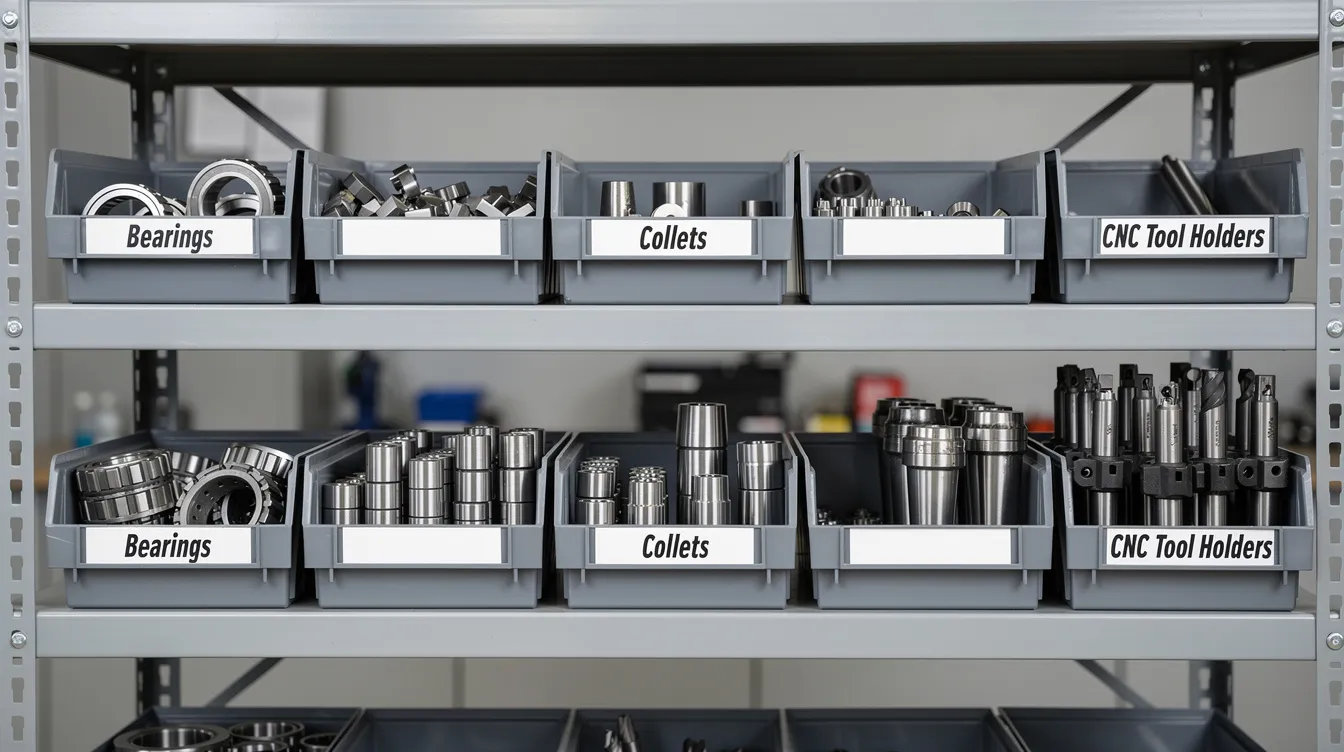
When You Should Consider Custom-Machined CNC Parts Instead of Off-the-Shelf
For legacy CNC machines, bespoke automation cells, or modified CNC router platforms, off-the-shelf CNC parts may no longer exist. CNC machines can last for long periods before needing parts, but when they do, the original manufacturer may have stopped production entirely.
Common scenarios for custom parts:
-
Obsolete gear housings or adapter plates for replacing older spindles
-
Custom pulleys, fixtures, and guarding brackets
-
Redesigning parts in stronger or lighter materials – for example, switching from cast iron to 7075-T6 aluminum to shape a lighter component
-
Parts for workpiece holding on non-standard machines, including wood-processing CNC routers
-
Components made from plastic materials like POM (Delrin), PEEK, or polycarbonate for insulating or lightweight applications
Anebon Metal Products Limited supports these needs with precision CNC machining, 5-axis milling, CNC turning, die casting, and sheet metal fabrication. Precision CNC machining can achieve tolerances as precise as ±0.002 mm, and CNC machining can achieve tolerances of ±0.001 inches across various materials. 5-axis CNC machining allows for complex geometries and features that 3-axis setups simply cannot produce.
CNC machining can process over 50 types of metals and plastics, and is suitable for over 50 industrial-grade materials overall. Anebon regularly machines aluminum alloys (6061, 7075), stainless steels (304, 316, 17-4PH), titanium, brass, copper, and engineering plastics. To get an accurate quote, provide 3D CAD files (STEP, STP) and 2D drawings with tolerances and surface finish requirements.
Evaluating Reliability: How to Tell if a CNC Parts Supplier Is Trustworthy
The real question behind “where can I buy” is “where can I buy from a supplier I can trust to protect my production schedule and product quality.” Strong quality assurance practices are critical in precision manufacturing for reliability.
Reliability criteria to check:
-
ISO 9001:2015 certification indicates adherence to quality management standards
-
ISO 14001:2015 certification reflects an organization’s commitment to environmental management
-
Clear warranty terms for CNC parts and assemblies
-
Documented inspection and testing procedures (CMM reports, first article inspection)
-
Full traceability of materials and batch numbers – every component should map back to a material certificate
-
Technical competence: availability of engineers who understand CNC machine controls, CNC services, servo tuning, and can interpret drawings and GD&T with repeatability
Anebon as an example: Founded in 2010 in Dongguan, China, Anebon holds both ISO 9001:2015 and ISO 14001:2015 certifications, provides in-house CMM inspection, and delivers material certification for every production lot. Their customers span aerospace, medical devices, robotics, and electronics. Before committing to any new supplier, request case studies, sample inspection reports, and reference customers in your industry to assist your decision.
Balancing Cost, Lead Time, and Machine Downtime
Every procurement decision for CNC machine parts sits inside a trade-off triangle: part price, delivery speed, and total cost of downtime. CNC machines can operate 24/7 for high production efficiency, which means every idle hour is expensive.
The math is simple: A lower-priced part with a 3-week lead time can cost far more overall than a higher-priced item that ships overnight when your production line is sitting idle. Downtime on a fully loaded shop floor can run tens of thousands of dollars per day.
Categorize parts by criticality:
-
Line-down critical (spindles, drives, controllers) – prioritize fast shipping and proven reliability; keep buffer stock on hand
-
Performance sensitive (ball screws, guides) – balance quality and cost; source from reliable aftermarket or custom CNC milling providers
-
Non-critical (covers, brackets, handles) – optimize for price or consolidate into a single custom order from Anebon to reduce per-unit cost and logistics overhead
Anebon can combine multiple custom CNC parts in a single production run, which helps OEM clients scale efficiently while keeping shipping costs down. Build a small on-site buffer stock of high-risk items identified through failure history and routine maintenance logs to enable faster repair when something breaks.
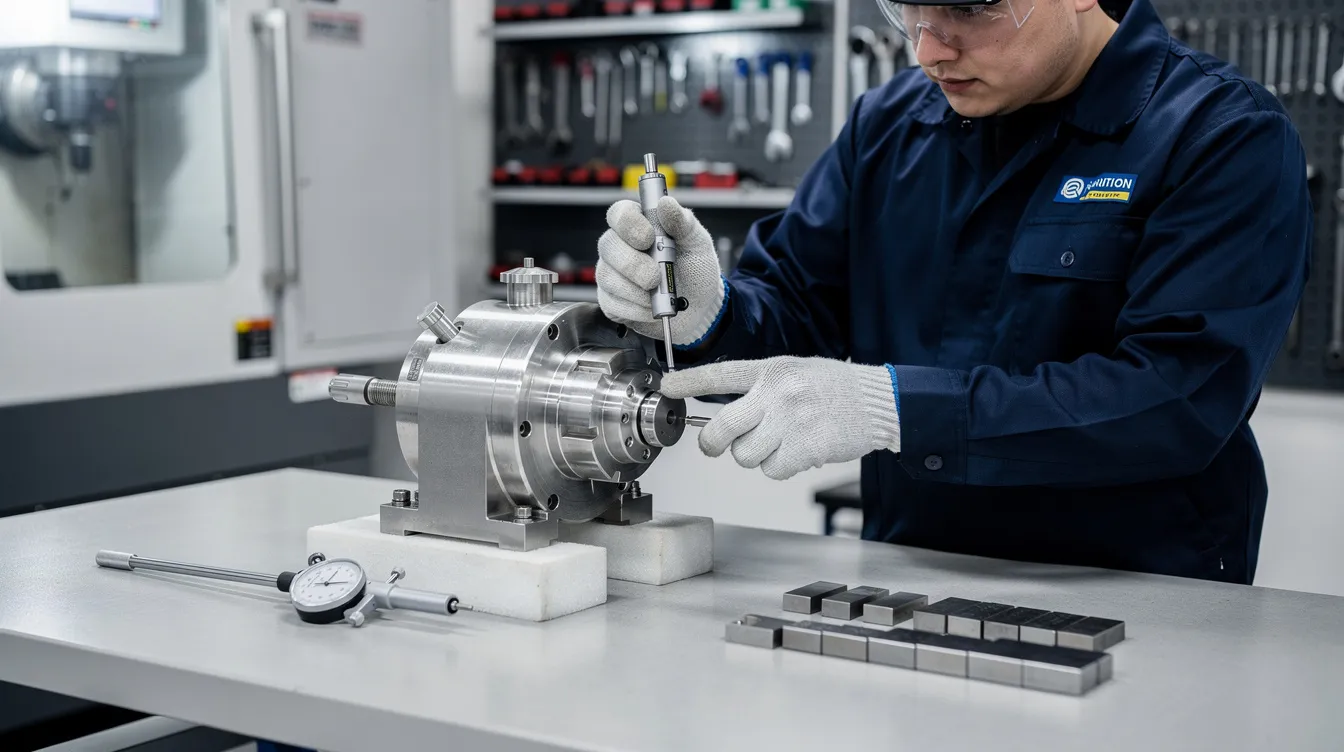
Integrating CNC Parts Purchasing with Routine Maintenance and Upgrades
Smart purchasing is not just about emergency repair – it connects directly to your maintenance and upgrade plans for greater efficiency across the business.
Planned routine maintenance (quarterly lubrication, yearly ball screw inspection, periodic encoder calibration) lets you schedule parts purchases ahead of time, gaining better pricing and shipping options. Create a standardized checklist for each CNC machine that includes expected replacement intervals for belts, filters, seals, switches, coolant, and lubrication products.
How Anebon supports upgrades:
-
Machining new motor mounts and spindle adapter plates when retrofitting older CNC routers with modern drives
-
Producing custom sensor brackets, cable management hardware, and enclosures
-
Fabricating sheet metal components for guarding and panel upgrades
-
Applying design for manufacturability (DFM) feedback that improves product design for efficient manufacturing – catching issues before the first chip flies, which can cut part cost by 20–40% post review
Integrating DFM feedback from Anebon early in an upgrade avoids costly redesigns and ensures precise parts that are easy to install and produce repeatedly at scale.
How to Work with Anebon Metal Products Limited for Custom CNC Parts
This section gives concrete steps for overseas OEMs, design engineers, and R&D teams who want Anebon to manufacture reliable CNC machine parts and assemblies. The process is straightforward:
-
Submit your RFQ with 3D CAD models (STEP/IGES) and 2D drawings via Anebon’s quote form
-
Specify materials and finishes – anodizing, powder coating, plating, passivation – plus any special quality requirements or certifications
-
Receive DFM suggestions to optimize parts for CNC machining, die casting, or sheet metal fabrication
-
Approve rapid prototypes – rapid prototyping provides quick model creation for product evaluation and testing, and parts can be produced in as little as one day depending on complexity
-
Move to batch or full-scale production with consistent tooling, fixtures, and programs for long-term repeatability
Anebon handles single prototypes up to thousands of units and consolidates multiple CNC parts into one shipment to reduce logistics costs for international customers. Lead times are typically measured in days to a few weeks, with express options available for urgent line-down cases.
Anebon is built to be a long-term manufacturing partner – not just a vendor. From sourcing strategies to ongoing production of performance-critical components, they have the capabilities to help you standardize, improve, and reliably supply CNC machine components over the full life of your equipment. Request a quote today and see what precise, professionally engineered parts can do for your productivity.