What is Die Manufacturing? A Clear Guide to the Process and Techniques
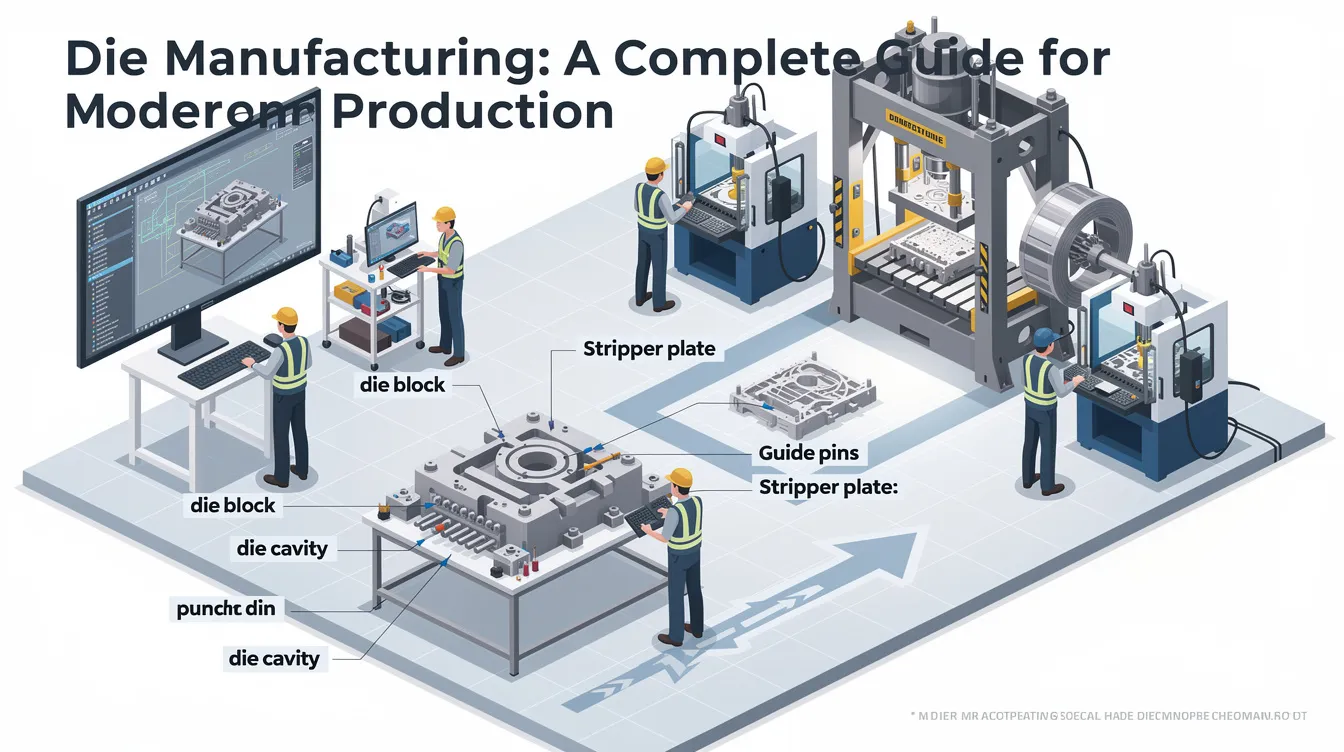
What Is Die Manufacturing? A Complete Guide for Modern Production
Introduction: What Is Die Manufacturing?
Die manufacturing is the engineering, design, machining, assembly, and validation of precision tools called dies, which are used in presses to cut, shape, bend, emboss, or form materials into specific geometries for high-volume production. This article focuses on industrial dies used in tool and die work, not software functions or semiconductor applications.
Dies are used across the manufacturing industry to produce everything from automotive brackets and electronic connectors to consumer goods housings and packaging. Because die manufacturing enables repeatable accuracy, tight tolerances, and cost-effective mass production, it remains one of the most critical disciplines in modern fabrication. Anebon Metal Products Limited, an ISO 9001:2015 and ISO 14001:2015 certified precision manufacturer based in Dongguan, China, designs and builds dies and CNC-machined components for overseas OEMs, holding tolerances as tight as ±0.002 mm.
What this complete guide covers:
-
How a die works and what separates it from other cutting tools
-
Core die components and die set anatomy
-
Different types of dies and when to use each one
-
The die manufacturing process from design through production
-
Materials, surface treatments, and what makes a quality die
-
Key industries and how to select the right manufacturing partner
What Is a Die in Manufacturing?
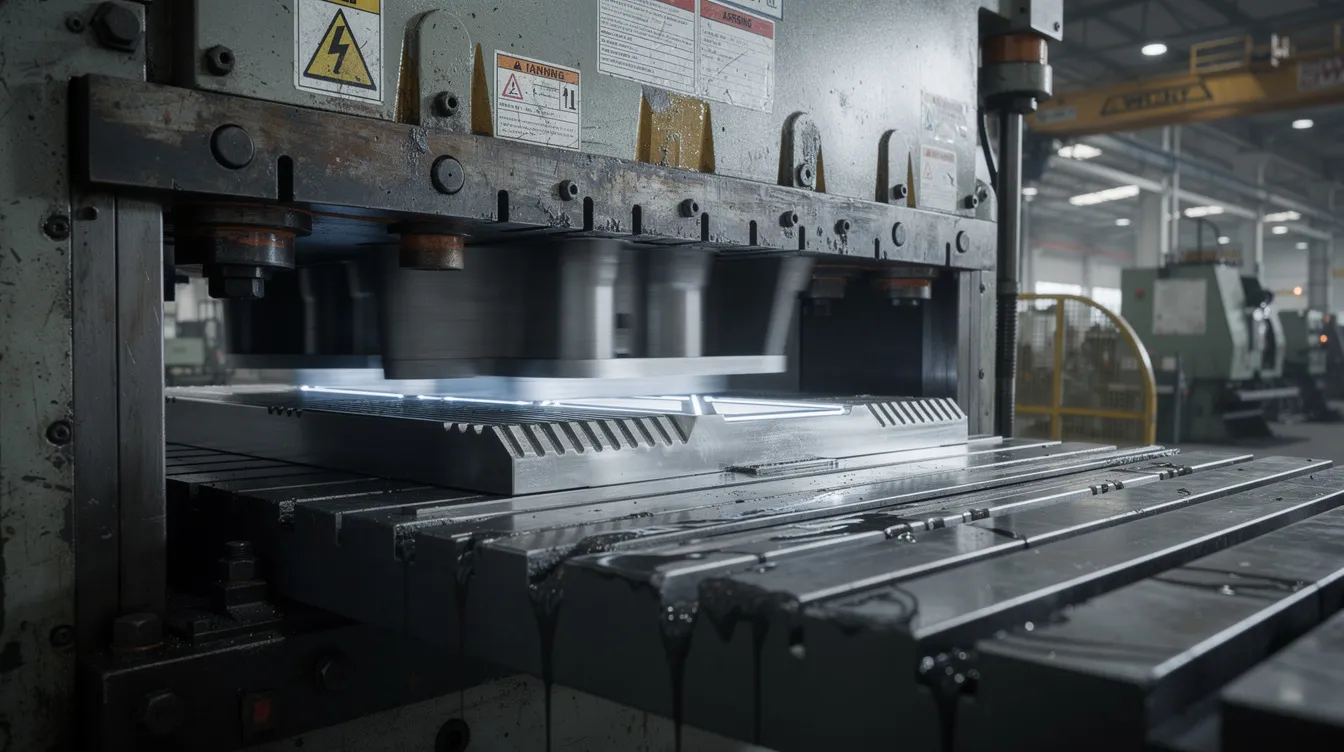
A die is a precision tool used to change material shape by cutting, forming, bending, or embossing metal, plastic, or composite stock. In sheet metal work, the die operates inside a press: the press applies force to the material, driving it against or into the die cavity to produce parts that match the die geometry in the desired shape.
Dies are used to cut, shape, stamp, extrude, or mold materials into finished parts. All dies are tools, but not all tools are dies. Tools can cut, support, form, or mold materials, while dies are classified by functionality and specifically engineered to produce the same shape repeatedly under high press forces. Dies enable rapid scaling of production processes, and using dies reduces material waste during manufacturing. Long-term use of dies leads to significant cost savings because precision tooling facilitates high-volume production of parts with tight tolerances. High-quality dies ensure consistent product quality across batches, and dies can produce complex shapes with high precision.
Operations performed by dies fall into two classes: cutting operations (blanking, piercing, trimming) where material is removed, and forming operations (bending, drawing, coining) where material is plastically deformed. A die set is the complete assembly that includes the upper and lower die halves, guide pins, punches, springs, and all working elements. A single press stroke represents one complete cycle of the press ram.
Key Die Components and Die Set Anatomy
A typical die set contains coordinated upper and lower assemblies plus guiding and working elements, all machined and aligned to tight tolerances. Understanding core die components helps engineers specify, maintain, and troubleshoot tooling throughout its service life.
Material selection for dies is based on wear resistance and toughness. High-strength tool steels and carbides are commonly used materials for dies, and hardened steel ensures dies withstand long production runs. Carbon steel is another material used in die production for less demanding applications.
-
Die shoes (upper and lower): Foundational plates that mount into the press, distribute force, and hold all stations and working elements
-
Guide pins and bushings: Hardened steel posts that align upper and lower die halves on every stroke; bushings are often made from softer materials like bronze to concentrate wear in a replaceable component
-
Punches: Male cutting or forming elements such as blanking punches, piercing punches, and drawing punches, typically made from tool steel heat-treated for hardness (cold-work steels like D2 can reach 58–62 HRC)
-
Die block / die cavity: The female side where material is cut or formed against, requiring precisely machined radii, clearances, and relief features
-
Punch plate: Holds and positions the punches in the upper die assembly
-
Stripper pad and springs: After a punch withdraws, the stripper pad strips the workpiece off the punch, assisted by calibrated springs that release parts at the end of each press stroke
-
Pilots: Small alignment pins used in progressive dies to position the strip and maintain indexing accuracy between stations
-
Gauges, stop blocks, and fasteners: Monitor strip position, prevent over-travel, and secure all die set elements together under repeated impact
Different Types of Dies Used in Manufacturing
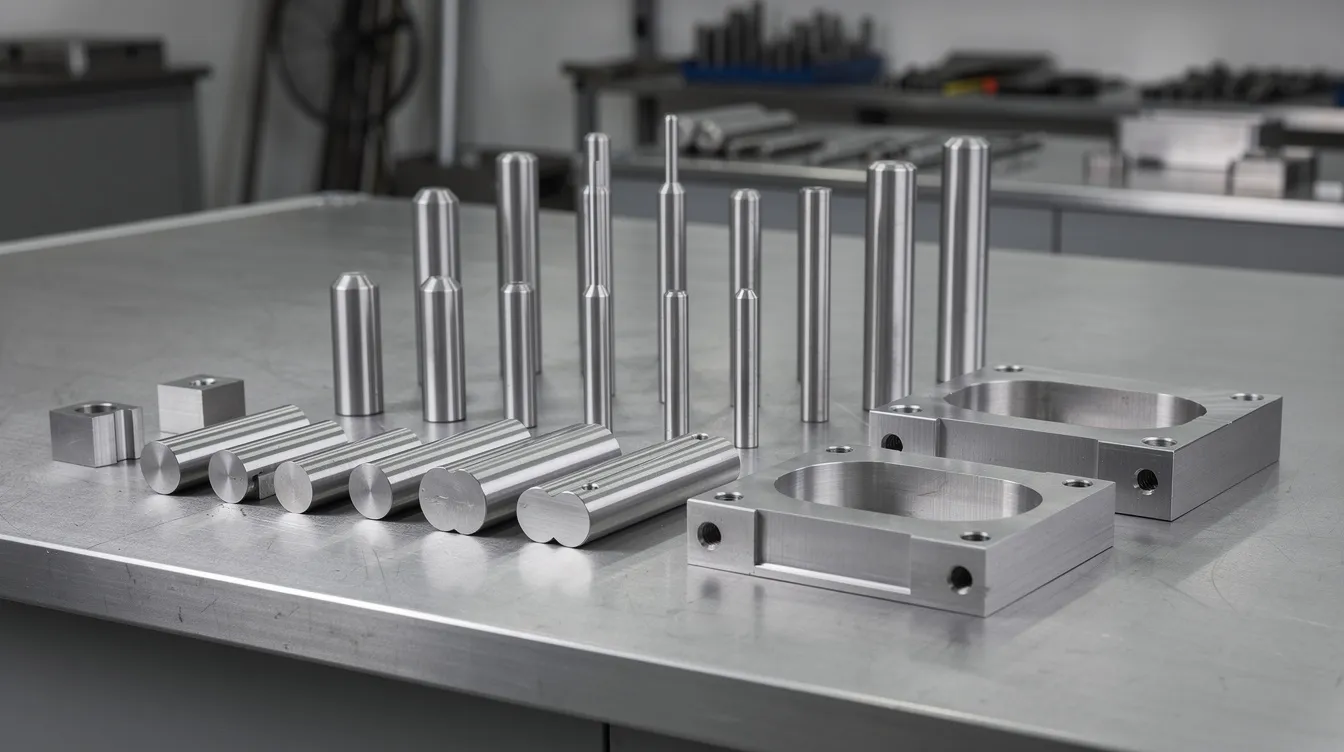
There are different types of dies, chosen based on part geometry, material, production volume, and required tolerances. Dies are broadly grouped into cutting dies and forming dies, with many hybrid designs used in modern tool and die work. Cutting dies remove or shear materials during fabrication, while forming dies press metal to change its shape.
-
Simple die: Performs one operation per press stroke, whether cutting or forming, suitable when part geometry is straightforward and volumes are low to moderate
-
Compound die: Combines two or more cutting operations in a single stroke at one station (for example, blanking and piercing simultaneously), delivering tight alignment between internal holes and outer profiles on flat parts
-
Combination die: Mixes cutting and forming operations in one station, such as blanking followed by bending in the same stroke
-
Progressive die: Feeds a strip or coil through multiple stations where multiple operations occur per stroke; progressive dies perform multiple operations in a single die set, producing one complete part per stroke at the final operation
-
Transfer dies: Handle larger, complex parts with multiple operations; individual blanks are separated from the strip and transferred between stations by mechanical fingers or robots, ideal for deep-drawn or thick components
-
Steel rule dies: Steel rule dies cut softer materials like paper and plastics, using a thin steel rule blade embedded in a substrate, common in packaging and labeling
-
Rotary dies: Cylindrical dies for continuous high-speed cutting, used in label and carton production
-
Matched metal dies: Provide extreme accuracy in cutting and forming for high-precision industries like aerospace and medical devices
-
Forged dies: Create strong components from heated metals; forged dies shape heated metals under pressure for structural applications in numerous manufacturing processes
Anebon supports DFM consulting to help customers choose the right die type for their application, balancing tooling cost, cycle time, and part complexity.
Compound Dies, Progressive Dies, and Transfer Dies Explained
These three architectures are the most important high-volume sheet metal die concepts for design engineers. Each one handles the trade-off between speed, part complexity, and tooling cost differently.
-
Compound dies perform multiple cutting operations in a single stroke at one station. The workpiece never moves between operations, so positional accuracy between features is excellent. Best for flat parts like washers, shims, gaskets, and flat connectors where the outer profile and internal holes must align precisely. However, compound dies cannot perform bending or deep drawing.
-
Progressive dies perform multiple operations in a single stroke as a coil or strip advances through sequential stations. Each station handles a different operation-piercing, bending, trimming-and pilot holes maintain alignment. The finished part is cut free at the final operation. Progressive dies produce one completed part per stroke and are central to cost-effective high-volume production in the automotive industry and electronics connectors. Throughput can reach hundreds of strokes per minute for small to medium parts.
-
Transfer dies separate the blank from the strip first, then mechanically transfer it between stations. Because each station handles a discrete blank, parts can be reoriented, deeply drawn, or formed from thicker materials. Transfer dies are essential for structural brackets, enclosures, and automotive body components that progressive dies cannot handle, though at higher tooling cost and slower cycle speed.
Good upfront engineering-strip layout, station sequencing, pilot design, and carrier design-is what makes these dies reliable and cost-effective over millions of cycles.
The Die Manufacturing Process: From Design to Production Use
The die manufacturing process is a structured sequence from requirements gathering through production validation. The process requires advanced engineering skills and high-tech machinery at every stage. Die manufacturing involves designing and producing specialized cutting tools that must hold up under repeated high-force impacts.
-
Requirements and specification: The customer provides part drawings, 3D models, target annual volume, material specifications (alloy, thickness), press capacity data, and required tolerances. The die manufacturing process requires extreme accuracy and specialized materials from this first step forward.
-
Design and engineering: The manufacturing process often involves design and engineering using CAD software. Engineers create strip layouts for progressive dies, sequence operations, select die components like guide pins and die steels, and run FEA or forming simulations to predict material flow and thinning.
-
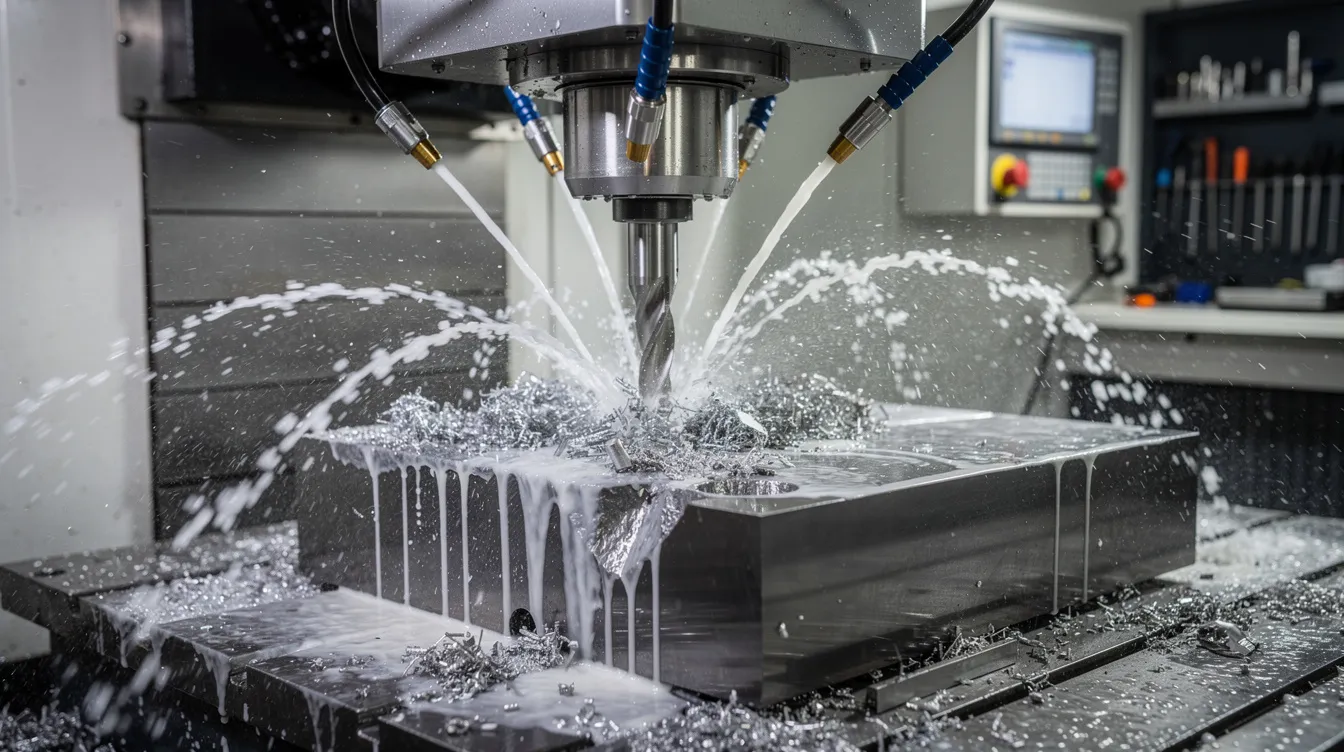
Machining and fabrication: CNC machining is commonly used for precision die manufacturing. Die blocks, punches, and shoes are shaped using CNC milling, CNC turning, and grinding. Electrical Discharge Machining (EDM) allows for the cutting of complex die geometries that conventional cutting tools cannot reach. High-speed milling of hardened steel can also reduce lead time by machining in the hardened state. Surface finish targets are typically Ra 1–5 µm with tolerances of ±5–50 µm on critical features.
-
Heat treatment and coatings: Heat treatment is critical for achieving hardness and wear resistance in dies. Hot-work steels like H13 are tempered to 45–54 HRC; cold-work steels like D2 reach 58–62 HRC. Surface treatments such as nitriding and PVD coatings extend tool life significantly.
-
Trial assembly, spotting, and fitting: Hand fitting ensures contact surfaces are correct, guide pins align properly, and the die closes uniformly. First parts are produced and checked.
-
Testing and validation: The die manufacturing process includes testing and inspection for dimensional accuracy. Tryout runs on the production press produce sample parts measured with CMM and other metrology. Adjustments are made until parts meet specification. Anebon uses ISO 9001:2015 quality systems and can support PPAP or similar approval documentation for overseas OEMs.
Materials and Surface Treatments for Die Components
Selecting the right raw materials for die components-punches, die blocks, guide pins-is critical to tool life, part quality, and long-term cost-effectiveness. Tool steel is commonly used for die manufacturing because it offers the balance of hardness, toughness, and machinability that production dies demand.
-
D2 (cold-work tool steel): High carbon, high chromium steel hardened to 58–62 HRC, excellent for blanking and piercing at room temperature where abrasive wear is the primary failure mode
-
H13 (hot-work tool steel): Contains approximately 5% chromium with molybdenum and vanadium, used in die casting, hot forging, and extrusion dies where thermal cycling is severe; service hardness typically 45–54 HRC
-
A2, O1, S7: Other tool steel grades chosen for specific combinations of shock resistance, edge retention, or machinability
-
Carbide inserts: Used in high-wear zones such as piercing stations on progressive dies processing high-strength steel or abrasive materials
-
Bronze and softer steels: Used for bushings and sacrificial wear components that are cheaper to replace than hardened guide pins
Common heat treatments include through-hardening (quench and temper), case hardening, and nitriding. Gas and plasma nitriding produce hard diffusion layers (typically 100–300 µm deep with a 5–15 µm compound layer) that improve galling and wear resistance.
Surface treatments and coatings include polishing for reduced friction, PVD coatings (TiN, CrN, AlCrN) for adhesive wear resistance, DLC coatings for galling resistance, and black oxide for corrosion control. The trade-off is straightforward: premium materials and coatings raise upfront cost, but over long production runs they reduce downtime, regrinding, and replacement costs substantially.
What Makes a Quality Die? Precision, Durability, and Cost-Effectiveness
A quality die balances precision, durability, and speed while keeping total cost of ownership low over its entire service life. Dies are essential for high-volume production with consistent quality, so every aspect of design and construction matters.
-
Precision: Tight tolerances on critical die components, accurate alignment via guide pins and bushings, and well-controlled cutting clearances prevent burrs, scrap, and rejected parts. Even a few microns of misalignment can degrade edge quality.
-
Durability: Correct material selection and heat treatment extend die life. Robust design accounts for thermal fatigue in hot-work applications and impact fatigue in high-speed stamping, reducing unscheduled maintenance.
-
Maintainability: DFM principles minimize unnecessary complexity. Designing replaceable inserts in high-wear zones and allowing for regrinding means the die can be reconditioned rather than fully replaced.
-
Quality assurance: CMM inspection of die components, first-article inspection of stamped parts, and statistical process control during ramp-up catch problems before they reach production. Anebon’s ISO 9001:2015 and ISO 14001:2015 certifications support consistent quality and environmental responsibility throughout the die manufacturing process.
Where Dies Are Used: Core Industries and Applications
Dies are used across various industries to produce industrial parts at scale. Die manufacturing plays a key role in mass production industries where repeatability and throughput determine competitiveness. Common die applications include automotive, aerospace, electronics, and medical device industries.
-
Automotive industry: Body panels, brackets, battery enclosures, busbars, terminals, and transmission components are produced with progressive and transfer dies. The world relies on automotive stamping for millions of vehicles annually.
-
Electronics and electrical: Connectors, shielding cans, lead frames, and motor laminations require extremely tight tolerances and thin materials. Compound and progressive dies dominate this sector.
-
Consumer goods: Appliance brackets, hand tool housings, and decorative panels are produced with high-speed compound or progressive dies where cost-effective per-part economics are essential.
-
Packaging and labeling: Steel rule dies and rotary dies produce cartons, labels, and blister packaging at high throughput, cutting softer materials like paperboard and plastic film.
-
Medical and aerospace: Parts demanding traceability, biocompatible materials, and extreme precision rely on matched metal dies and specialty tooling.
Anebon serves overseas OEM clients in automotive, medical devices, robotics, and industrial machinery, providing both dies and CNC-machined components that interface with those dies.
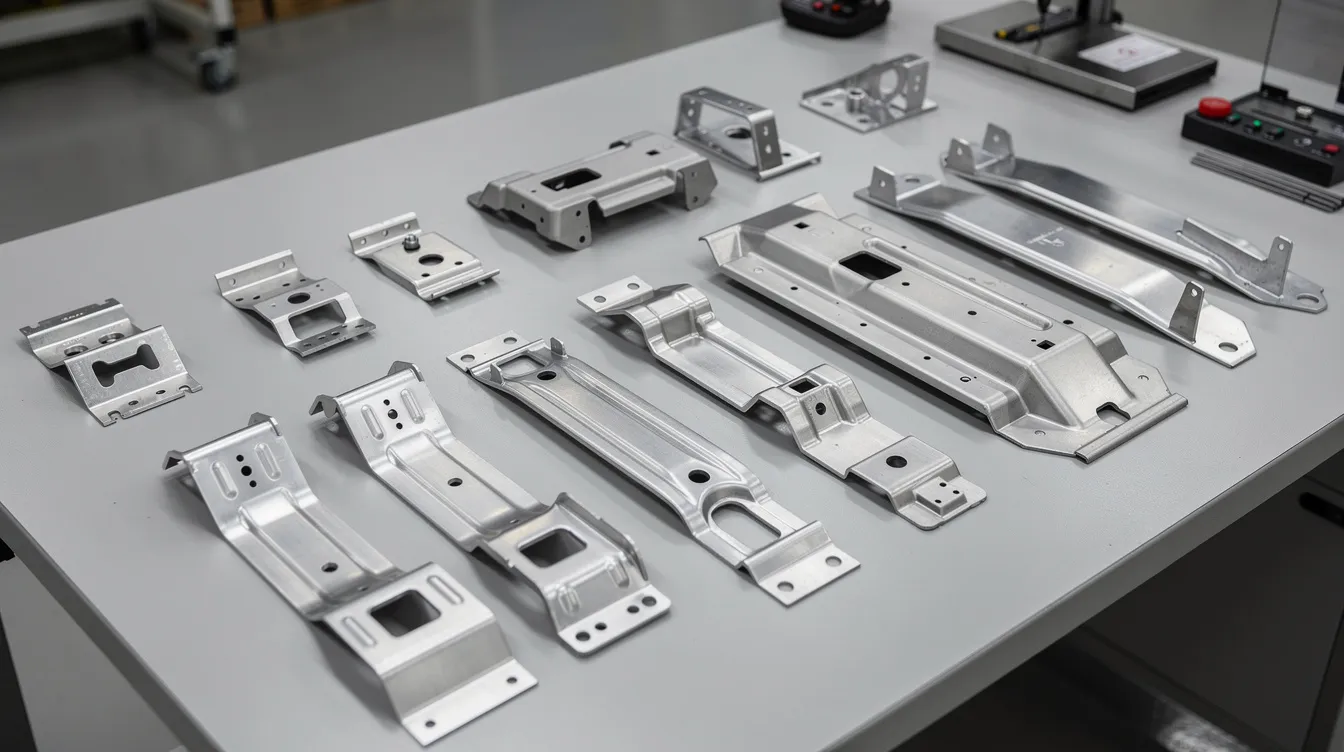
Die Manufacturing vs. Molding and Other Forming Methods
Die manufacturing (stamping dies) and molding (injection or casting molds) both use shaped cavities, but they differ in material state and process. Understanding the distinction helps manufacturers choose the right production processes for each component.
-
Die stamping shapes solid sheet metal or strip by pressing, shearing, or forming at room temperature or slightly elevated temperatures. It excels at thin-walled metal parts in high-volume production with fast cycle times and low per-part cost.
-
Injection molding and casting involve molten or semi-molten materials-plastic, aluminum, zinc-injected or poured into a mold cavity where they solidify. Molds handle complex 3D shapes with undercuts, thickness variations, and internal cavities that stamping cannot achieve. Learn more about pressure die casting for metal components.
-
Forging, extrusion, and wire drawing use specialized dies under compressive force or tension to produce structural parts, long profiles, or wire. These processes involve different thermal loads and die designs than sheet metal stamping but rely on the same fundamental principle: a precision die determines the final part geometry.
Key comparison factors include cycle time, tooling cost, material suitability, and dimensional tolerances. Stamping achieves tight flatness and hole-location tolerances, while casting and molding must account for shrinkage. Anebon offers both precision CNC machining and die casting services, helping customers choose between stamped parts and cast components when developing new products.
Selecting a Die Manufacturing Partner: What to Look For
Choosing the right die manufacturer directly impacts part quality, lead time, and total production cost. Here is a practical checklist to guide your evaluation.
-
Technical capabilities: Verify CNC machining capacity including mills, lathes, 5-axis machining, EDM (wire and sinker), and precision grinding. The supplier should demonstrate experience building complex progressive and compound dies, and should be able to machine hardened steel with tight tolerances.
-
Quality systems: Look for ISO 9001:2015 certification, documented process controls, and inspection equipment such as CMM, optical comparators, and surface profilometry. Environmental credentials like ISO 14001:2015 matter for OEMs with sustainability requirements.
-
Engineering support: The best partners provide DFM feedback, material recommendations, forming simulations, and help optimizing the die manufacturing process for long-term reliability rather than just quoting to print.
-
Industry experience: Familiarity with your specific sector-automotive, medical, aerospace-means the supplier understands relevant standards and documentation requirements like PPAP, FAIRs, and full material traceability.
-
Proven track record: Ask for case examples, typical die life data, and references from OEM clients in your industry.
Since 2010, Anebon has supported overseas OEMs with rapid prototyping, precision die components, trial tooling, and full-production dies with tolerances down to ±0.002 mm where required. Our engineering team reviews every project for manufacturability before quoting, so you get realistic cost and lead-time estimates from the start.
Ready to get started? Share your part drawings or 3D models with our team to request a quote or a feasibility and cost analysis for your next die manufacturing project.