What Do CNC Machines Do? A Clear Guide to Their Functions and Benefits
What Do CNC Machines Do? A Practical Guide for Modern Manufacturing
If you’ve ever held a precision-machined aluminum bracket, a titanium bone screw, or a perfectly threaded stainless steel housing, you’ve held the work of a CNC machine. These machines are the backbone of modern manufacturing, and understanding what they do-and how they do it-gives engineers and sourcing managers a real advantage when specifying parts.
This guide breaks down how CNC machines work, walks through the major types of cnc machines you’ll encounter, explains what each one excels at, and helps you decide which process fits your next project.
What Do CNC Machines Actually Do?
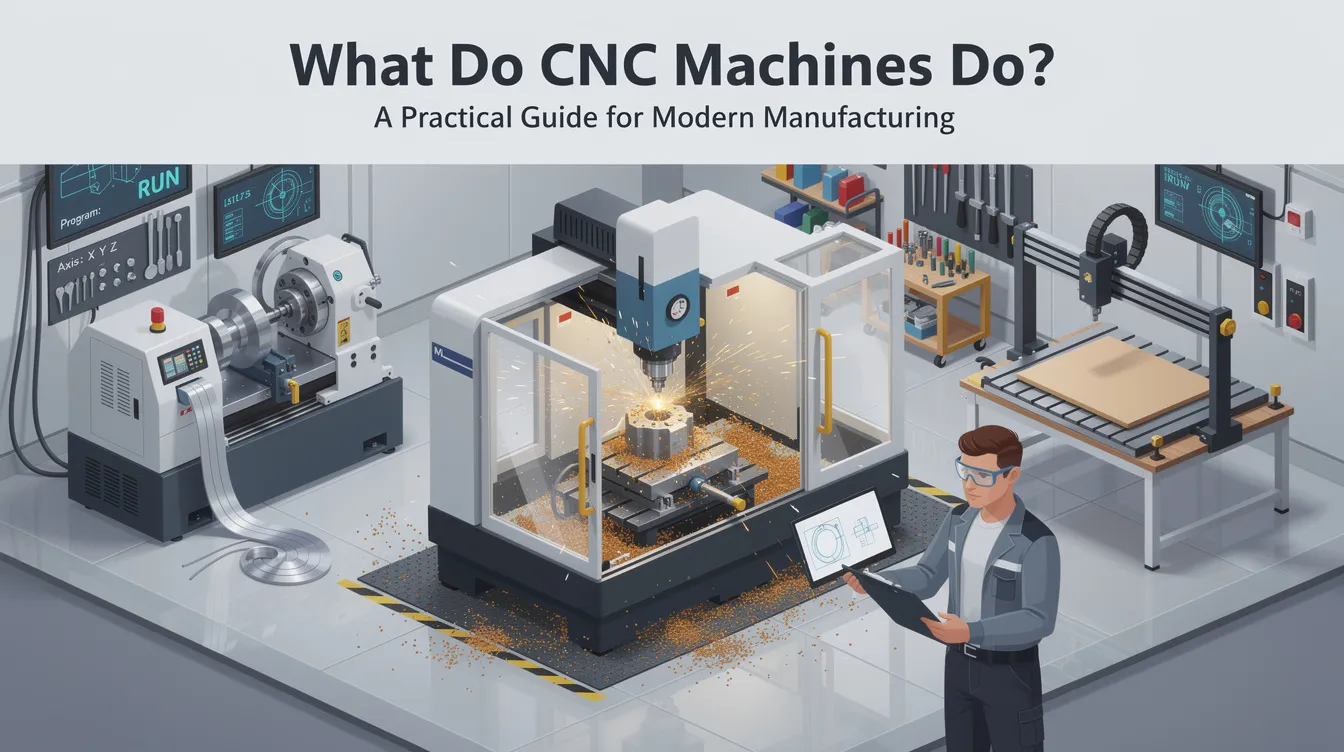
CNC machines automate precise cutting and shaping of materials by following pre-programmed commands instead of relying on an operator’s hands on manual handwheels. The abbreviation cnc stands for computer numerical control, meaning a computer translates digital design data into the exact mechanical movements a machine needs to cut, mill, drill, turn, or shape a workpiece. In short, cnc machines take a digital file and produce a physical part-repeatably and at speed.
These aren’t abstract capabilities. CNC machining is essential in industries like aerospace and automotive, where a single out-of-tolerance feature can ground an aircraft or trigger a recall. CNC machines automate cutting using pre-programmed commands to handle everything from roughing out raw billets to finishing critical surfaces.
Here’s what that looks like in practice for OEMs:
-
Aerospace brackets milled from aluminum 7075 or titanium Ti-6Al-4V, held to profile tolerances of ±0.01 mm on mating faces and true-position tolerances of ±0.02 mm on bolt holes.
-
Medical implants machined from surgical-grade stainless steel or titanium, requiring burr-free edges, surface finish under Ra 1.0 µm, and full batch traceability.
-
Automotive housings in aluminum or cast iron, where flatness and bore tolerances of ±0.02–0.05 mm keep engine assemblies running smoothly.
-
Electronic enclosures milled from magnesium or aluminum with precise port openings and cooling fin spacing held to ±0.05 mm or tighter.
CNC machines can handle a variety of materials including metals and plastics-from hardened tool steels and superalloys to engineering polymers and composites.
At Anebon Metal Products Limited, cnc machines run daily to convert 3D CAD models into high-precision parts for overseas OEM customers. Whether the job calls for turning a titanium shaft, 5-axis milling an aerospace rib, or wire-cutting a hardened die insert, Anebon’s shop floor covers the full spectrum of cnc processes under one roof.
The rest of this article covers how cnc machines work (from CAD file to finished part), the core jobs they perform, common machine types (cnc mills, cnc lathes, cnc routers, laser cutters, electric discharge machines, and more), industry-specific applications, key benefits, and how to choose the right machine type for your project.
How Do CNC Machines Work?
Understanding the cnc machining process starts with the workflow that turns a design concept into a finished, inspected part. Every step-from the digital model to the last tool pass-is governed by computer instructions that eliminate guesswork.
From CAD Model to Toolpath
The process begins when a design engineer creates a 2D drawing or 3D model in computer aided design cad software such as SolidWorks, Siemens NX, or CATIA. This cad software defines the part’s geometry, dimensions, and tolerances.
Next, the CAD file moves into computer aided manufacturing software-typically Mastercam, SolidCAM, or Fusion 360. This cam software imports the geometry and generates toolpaths: step-by-step sequences that tell the machine which cutting tool to use, how deep to cut, how fast to move, and in what direction. The output of the CAM stage is a set of cnc programs written in g code, the standardized language that almost all cnc systems understand. If you want a deeper look at this chain, Anebon’s overview on what CNC machining is and how it works is a useful companion read.
What G-Code Actually Controls
CNC machines operate using g code to control movements along multiple axes. G-code dictates machine speed, feed rate, and movement coordination through simple commands:
|
G-Code Command |
What It Does |
|---|---|
|
G01 |
Linear interpolation (straight-line cut) |
|
G02 / G03 |
Circular arc interpolation (clockwise / counter-clockwise) |
|
S5000 |
Set spindle speed to 5,000 RPM |
|
F200 |
Set feed rate to 200 mm/min |
|
M03 / M04 |
Spindle on (clockwise / counter-clockwise) |
|
T-codes |
Select and change cutting tools |
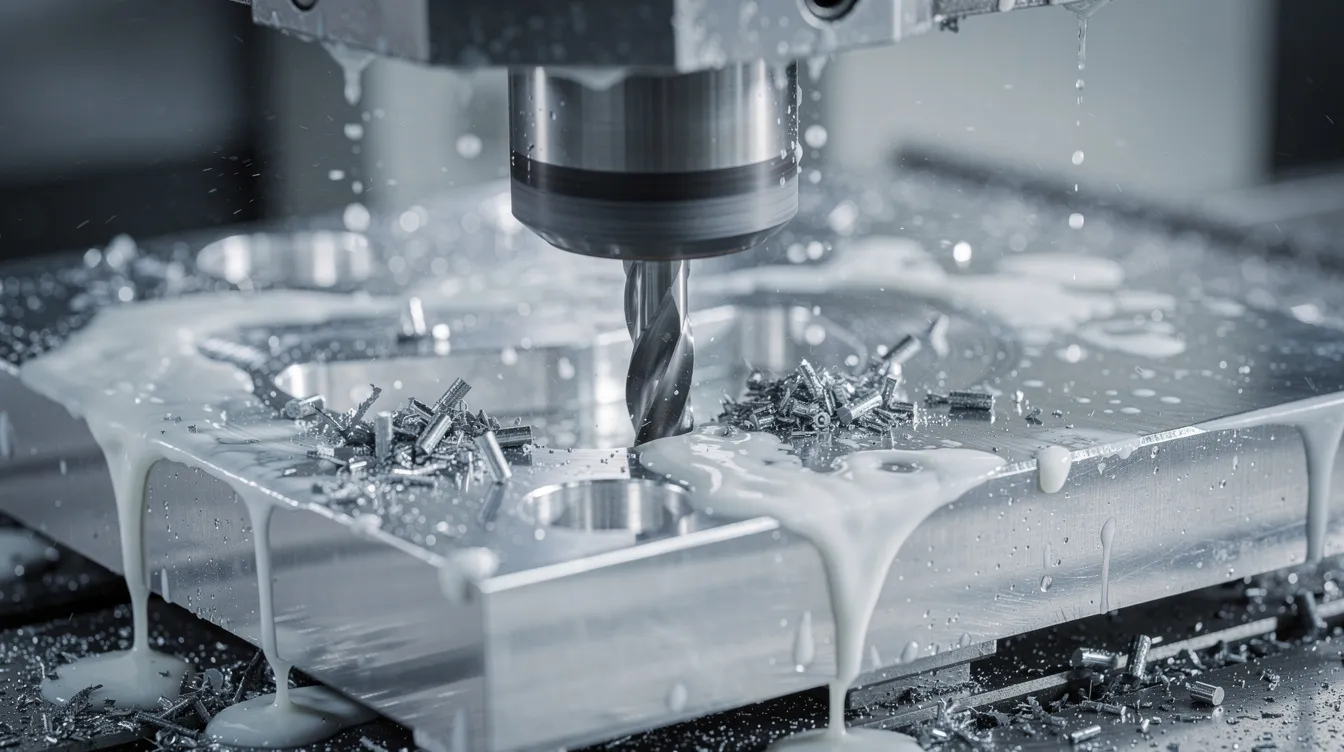
Consider a practical example: cutting a pocket in a stainless steel medical component. The cnc programs would first lower a roughing end mill into the stock, move along the pocket boundary at a moderate feed rate with high coolant flow (stainless steel generates significant heat), then switch to a finishing tool for light passes at slower feed and higher spindle speed to hit a surface finish target under Ra 1.0 µm.
CNC programming uses g code to control machine operations, and CNC programming allows for automated and repeatable manufacturing processes. Critically, CNC programming can be updated with new prompts and commands-so when an engineer revises a feature, only the CAM toolpath and g code need updating, not the machine itself.
Manual Control vs CNC Automation
Manual machining requires a cnc machinist-or rather, a traditional machinist-to stand at the machine, turn handwheels, measure with calipers, and make adjustments between every cut. It’s skilled work, but it’s slow and subject to fatigue.
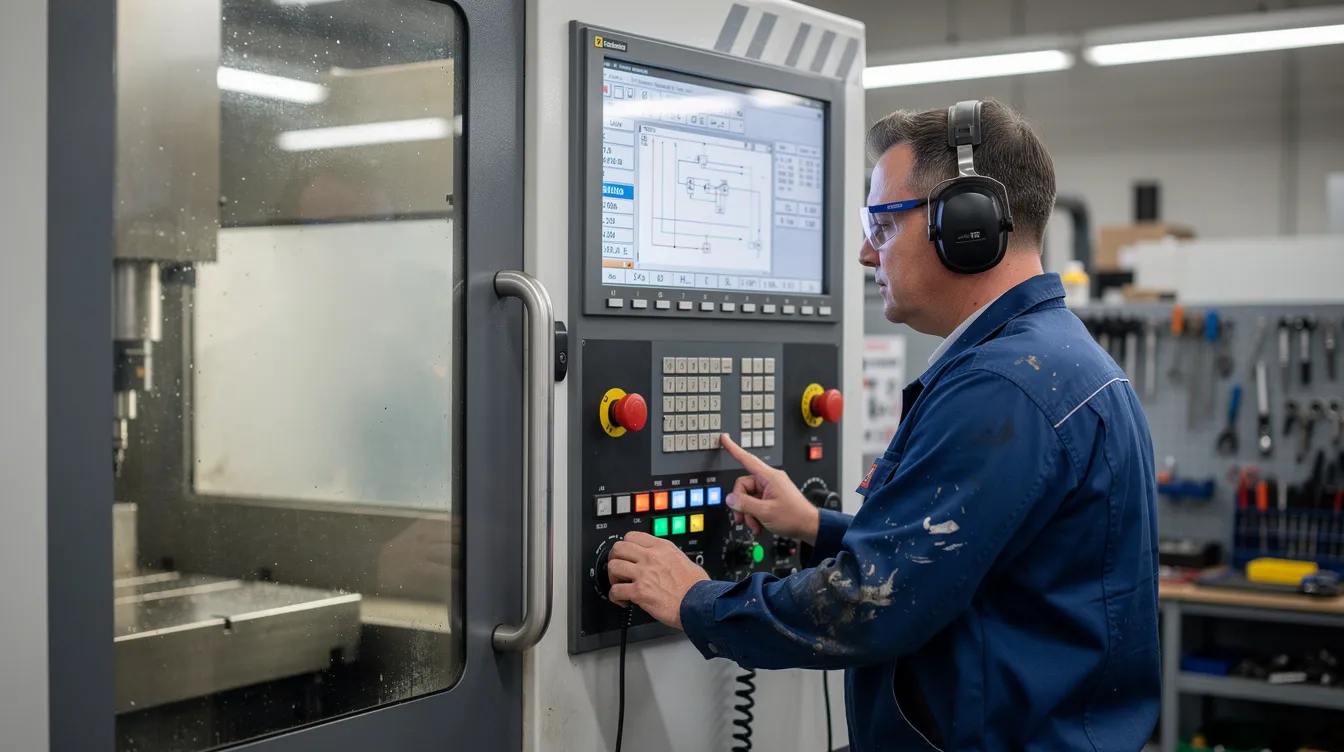
CNC flips that model. Once a cnc machine operator loads fixtures, sets tool offsets, and validates the program, the machine executes the full cycle autonomously. CNC systems can operate continuously with minimal human intervention, including overnight “lights-out” runs where no cnc operator is present. CNC machines operate using pre-programmed commands known as g code, and this pre programmed computer software drives all the mechanical movements without manual control.
The evolution from manual control to numerical control, and eventually to distributed numerical control (networked cnc systems managing multiple machines), has been the defining shift in the manufacturing industry over the past fifty years.
Open-Loop vs Closed-Loop Control
Not all cnc machinery is equally precise. The difference often comes down to the control architecture:
-
Open-loop systems use stepper motors that receive pulse commands but don’t verify actual position. They’re adequate for light-duty work, with accuracy in the ±0.05–0.2 mm range under load.
-
Closed-loop systems pair servo motors with encoders or linear scales that feed real-time position data back to the controller. The system corrects for thermal drift, backlash, and load variation on the fly, achieving accuracy of ±0.002 to ±0.005 mm.
Modern industrial cnc machine tools almost universally use closed-loop control. This is what allows a machine to hold the kind of tolerances that aerospace, medical, and automotive OEMs demand. The pre programmed software drives the axes, and the feedback loop makes sure the axes actually arrive where they’re told.
Core Jobs CNC Machines Perform
Every cnc machining process boils down to a set of fundamental machine tool functions. Here’s what each one involves, tied to the parts and industries that depend on it.
CNC Milling
A cnc milling machine uses a rotating cutting tool to remove material from a stationary workpiece, producing flat surfaces, slots, pockets, and freeform 3D contours. CNC mills typically operate on three axes: X, Y, and Z, though 4-axis and 5-axis configurations add rotary movement for more complex access angles. Typical parts include die-cast housings, robotics brackets, and mold cores. For more on what CNC milling is used for, Anebon’s dedicated article covers applications in depth.
CNC Turning
CNC turning reverses the milling relationship: the workpiece rotates while a stationary cutting tool shapes it. CNC lathes are designed for machining cylindrical parts-shafts, pins, bushings, threaded studs, and bore features. Swiss-type turning machines excel at long, slender parts (like surgical screws or watch stems) because a guide bushing supports the stock close to the cut, providing exceptional rigidity and concentricity. CNC machines can execute complex tasks with high precision when turning is combined with live tooling for cross-drilled holes or flats.
Drilling and Tapping
Precision drilling, reaming, boring, and tapping create accurate holes and internal threads for fasteners and assemblies. Aerospace structures with bolted joints demand hole-location true position tolerances of ±0.01–0.02 mm. Medical device bodies and electronics enclosures need precise thread classes (e.g., 6H metric) to ensure reliable assembly. These machining tools work within the same CNC setup, so a milling or turning program can include drilling and tapping without repositioning the part.
Cutting and Profiling
When the job involves sheet or plate material rather than billets, cnc routers, plasma cutters, and cnc laser machines take over. CNC routers are used for cutting, carving, and engraving wood and plastics, as well as soft metals like aluminum sheet. Plasma cutting and laser cutting handle steel and stainless sheet profiles for enclosures, frames, and architectural panels. CNC machines can process metals, plastics, and wood-the choice of cutting method depends on material thickness, edge quality requirements, and production speed.
Finishing Operations
After roughing and semi-finishing, many parts need a final pass to meet surface finish and dimensional specs. CNC grinding, fine milling, and lapping operations bring surfaces down to Ra <1.0 µm and tighten flatness to under 0.01 mm. These finishing steps are critical preparation for downstream surface treatments like anodizing, plating, or painting, where surface quality directly affects coating adhesion and appearance. Anebon’s guide to process-specific tolerance capabilities in metal cutting operations covers what each process can realistically achieve.
Types of CNC Machines and What They Do
The term “CNC machine” covers a broad family of complex machinery. Choosing the right one depends on part geometry, material, tolerance, and volume. Many cnc machines in a professional shop perform multiple operations, and advanced OEM work often chains several machine types together in sequence.
Here’s a breakdown of the most common types, organized by function.
CNC Milling Machines and Vertical Machining Centers
A vertical machining center (or VMC) is the workhorse of prismatic part production. Available in 3-axis, 4-axis (with a rotary table), and 5-axis configurations, milling machines handle everything from simple rectangular blocks to sculpted freeform surfaces.
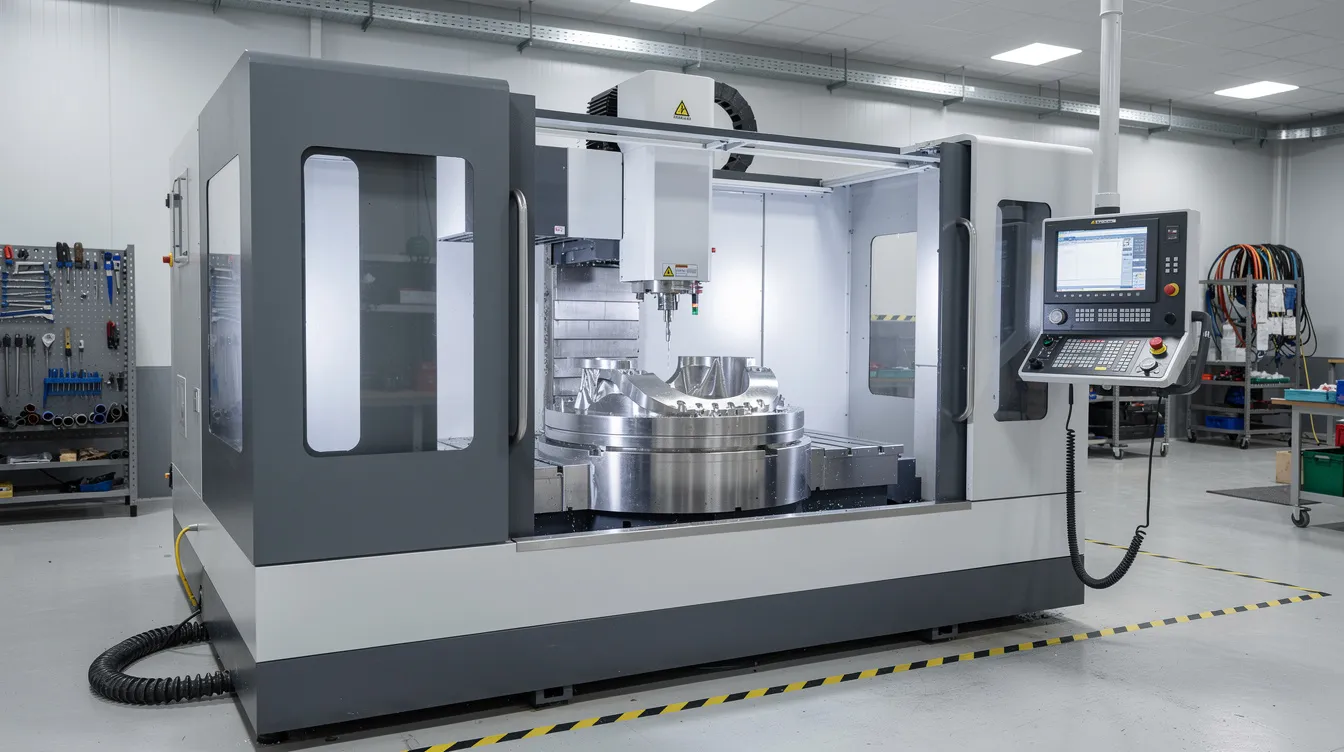
Five-axis VMCs are particularly valuable because they allow the cutting tool to approach the workpiece from virtually any angle, machining multi-sided parts in a single setup. This reduces fixture changes, eliminates cumulative re-fixturing error, and is essential for producing complex geometries like aerospace mold cores or impeller blades. Most 5-axis machines include an automatic tool changer that swaps end mills, drills, and taps mid-program without stopping the cycle-enabling a single machine to perform multiple operations in one run. For a detailed look at what a cnc milling machine is and does, see Anebon’s CNC milling machine overview.
CNC Lathes and Turning Centers
CNC lathes and turning machines produce cylindrical, conical, and threaded geometries by rotating the workpiece against a stationary or live cutting tool. Standard turning centers handle shafts, hydraulic fittings, and automotive pins. Swiss-type cnc lathes are the go-to for small, high-precision components like bone screws and connector pins, where concentricity tolerances can be held to ±0.0025 mm or tighter. Anebon’s CNC lathe projects showcase the range of turned parts produced daily-from simple bushings to multi-feature medical components.
A cnc turning machine differs from a standard lathe by accepting full cnc programs and executing them without manual control, including automated bar feeding for unattended production.
CNC Routers
Cnc routers sit at the intersection of speed and work envelope size. They’re less rigid than metal-cutting cnc mills, which makes them ideal for lower-hardness materials: wood panels, plastics, foam, and thin aluminum sheet. Applications include sign-making, architectural panels, cabinetry, and large composite layups. Typical accuracy falls in the ±0.05–0.2 mm range-looser than a VMC, but more than adequate for these materials and applications.
CNC Laser Cutters and Plasma Cutters
Laser cutters and plasma cutters both profile sheet and plate material, but they serve different niches:
|
Feature |
CNC Laser Cutting |
CNC Plasma Cutting |
|---|---|---|
|
Best for |
Thin to medium metals (up to ~25 mm) |
Thick plate metal (up to ~50 mm+) |
|
Edge quality |
Excellent, minimal kerf |
Rougher, wider kerf |
|
Tolerance |
±0.03–0.05 mm |
±0.5–1.5 mm |
|
Heat-affected zone |
Small |
Larger |
|
Speed on thick material |
Slower |
Faster |
Plasma cutters use a high-velocity jet of ionized gas to cut metal, making them fast and cost-effective for structural steel, stair stringers, and heavy frames. A cnc laser delivers finer edge quality for thinner materials and intricate designs on enclosures and decorative panels. CNC plasma cutters are commonly used in metal fabrication and automotive repair where edge finish is secondary to speed and cost. Anebon’s sheet metal precision parts services encompass laser-cut and formed components for OEM customers.
Electric Discharge Machines (EDM)
Electric discharge machines use electrical sparks to shape workpieces made of electrically conductive materials, making them indispensable for hardened tool steels (55–62 HRC), injection mold cavities, and features that conventional cutters cannot easily reach.
-
Wire EDM feeds a thin wire electrode through the workpiece to cut precise profiles-ideal for punches, dies, and medical instruments. Tolerances can reach a few microns.
-
Sinker (ram) EDM uses a shaped electrode to erode blind cavities, internal features, and textures into mold surfaces. Sinker EDM can hold tolerances to ±0.0001″ (~±0.0025 mm) and produce surface finishes as fine as 0.25 µm (10 micro-inch).
Both wire edm and sinker EDM require conductive materials and operate in a dielectric fluid bath. They’re slower than milling but irreplaceable for shapes and hardness levels that no cutting tool can handle.
Other Common Types
Several other cnc machine tools round out the manufacturing process:
-
Waterjet cutters use high-pressure water (often mixed with abrasive garnet) to cut materials like granite and metal using high-pressure water. CNC waterjet cutters can cut materials up to 200 mm thick without heat damage, making them ideal for heat-sensitive composites and laminated assemblies. Water jet cutters can cut through materials like granite and metal that would damage conventional cutting tools.
-
CNC grinding machines finish hardened parts to mirror-like surface quality and sub-micron dimensional accuracy.
-
Multi-axis machining centers combine turning and milling (sometimes called mill-turn machines) on a single platform, reducing handling and improving overall precision for parts with mixed features.
Advanced OEM work often requires a combination of these processes-for example, milling a housing, wire EDM-ing a slot, then grinding a sealing face-all coordinated through a single supplier’s shop floor.
What CNC Machines Do in Key Industries
CNC technology serves nearly every sector of the manufacturing industry, but the specific demands-and the machine configurations used-vary significantly. Here’s how cnc machined parts show up in the industries that matter most to OEMs.
Aerospace
CNC machining is vital in aerospace, where weight reduction, material performance, and dimensional precision intersect. Five-axis milling of titanium brackets, structural ribs, and turbine blades requires machines that can hold profile tolerances of ±0.01 mm across multiple datum faces while managing the low thermal conductivity and high tool wear rates of Ti-6Al-4V and Inconel.
A representative case: titanium aerospace brackets (approximately 118 × 74 × 22 mm) machined with profile tolerance ±0.01 mm, true-position for through holes ±0.02 mm, cycle time of 42 minutes per part, and 100% first-pass yield across 85-piece production lots. Worst deviations measured ~0.005–0.007 mm-well within spec. For more on this topic, see Anebon’s article on advanced 5-axis CNC milling for aerospace parts.
Automotive and Transportation
Engine blocks, cylinder heads, transmission housings, suspension arms, and EV battery trays all come off CNC machines. Volumes are high, tolerances are moderate (±0.02–0.05 mm), and cycle times need to be fast. Aluminum and cast iron dominate. CNC also produces the dies and tooling (via EDM and hard milling) that stamp body panels and form sheet components. Anebon’s die casting auto parts service covers the casting-plus-machining workflow common in automotive.
Medical Devices
Orthopedic implants, surgical instruments, and small titanium bone screws require biocompatible materials, tolerances often under ±0.01 mm, burr-free edges, and full traceability (batch records, material certificates). CNC machining can also shape various plastics like ABS and PEEK, which are increasingly used for surgical guides and instrument handles. Surface finish is critical-Ra often below 1 µm. Anebon’s medical CNC machining division specializes in exactly these requirements.
Electronics and Robotics
Aluminum and magnesium housings, precision heatsinks with closely spaced fins, connector blocks, and precision gears for automation equipment all require cnc technology. Tolerances around ±0.02 mm, combined with anodize-ready surface finishes, are typical. Small run quantities with high accuracy define this segment. Anebon’s electronics CNC machining services cover enclosures, heat management parts, and structural components for consumer and industrial electronics.
Common metals used include steel, aluminum, and titanium across all these sectors, while CNC machines can handle composites and certain ceramics for specialized applications like radomes and high-temperature insulators.
Industrial Machinery and Tooling
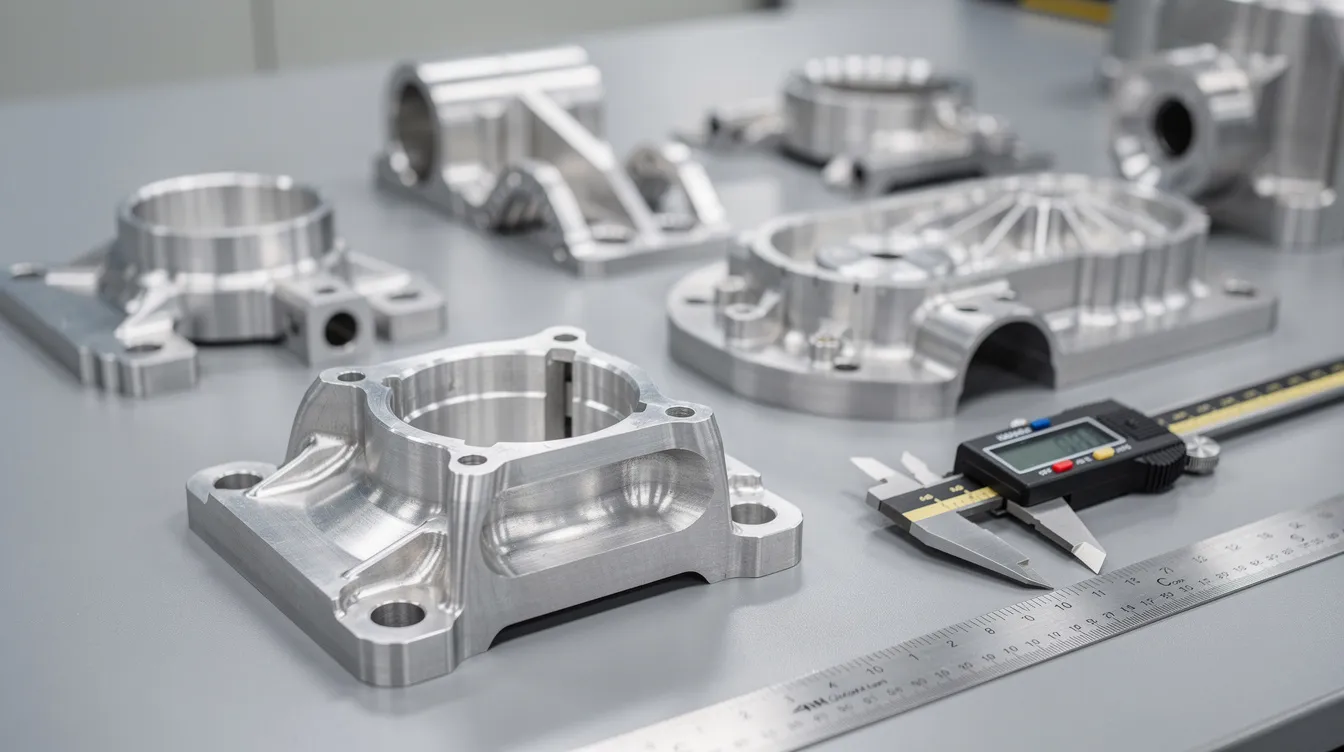
Fixtures, jigs, injection molds, stamping dies, and replacement parts for production equipment are all produced on cnc machinery. Mold cavities in hardened tool steels (up to 60 HRC) are rough-milled, then finished by sinker EDM to achieve the required surface textures and dimensional precision. These parts dictate the quality of everything manufactured downstream, so the tolerances and surface integrity requirements are exacting.
Benefits of Using CNC Machines
For OEM engineers and procurement teams evaluating manufacturing options, cnc technology delivers a set of advantages that directly impact part quality, project timelines, and total cost. Here are the ones that matter most.
Accuracy and Repeatability
Modern cnc machines routinely hold tolerances of ±0.01 mm on standard features. CNC machining allows for high precision, achieving tolerances of ±0.001 mm on specialized equipment, and CNC machining can achieve tolerances as tight as ±0.0001 inches on select geometries using Swiss-type lathes or precision grinding. At Anebon, tolerances down to ±0.002 mm are achievable on suitable part features-verified through CMM inspection and first-article reports.
This level of high accuracy isn’t a one-off achievement. Because the same g code runs every cycle, part number 500 is dimensionally identical to part number 1.
Speed and Productivity
CNC machining can produce parts up to 100 times faster than manual methods. That multiplier comes from aggressive toolpaths, high spindle speed, continuous operation, and the elimination of setup-to-setup measurement delays. A validated program runs day and night. Quick changeovers between part numbers-enabled by modular fixturing and an automatic tool changer-keep machines cutting rather than sitting idle.
In the titanium bracket case cited earlier, 42-minute cycle times across 85 pieces per lot, delivered over four lots with zero rejections, illustrate what CNC speed looks like in practice.
Consistency and Quality
CNC machining reduces human error, ensuring consistent part quality across every part in a run. The automated manufacturing process removes the variability introduced by operator fatigue, judgment calls, and manual measurement. Automated CNC processes lead to fewer rejections during quality control, which translates directly to lower scrap rates and more predictable delivery schedules.
Compliance with quality frameworks like ISO 9001:2015 becomes straightforward when every operation is programmed, logged, and repeatable. CNC machines are essential in modern manufacturing for high precision and minimal human intervention-and quality systems are built around that reliability.
Design Flexibility
Because cnc machines run from digital files, updating a part is as simple as modifying the CAD model, regenerating toolpaths in cam software, and posting new g code. No hard tooling to scrap. No pattern to rebuild. This makes CNC ideal for rapid prototyping, where engineers need to test geometry, fit, and function before committing to production volumes. Intricate designs that would be impractical to produce manually can be programmed and cut in hours.
Anebon’s CNC machining prototype service supports exactly this workflow-small batches with fast turnarounds, followed by a seamless transition to full production once designs are validated.
Material Versatility
CNC machines can work with a wide variety of materials, including metals and plastics-all on the same shop floor. A typical facility like Anebon handles:
-
Aluminum alloys (6061, 7075) for lightweight structural parts
-
Stainless steels (304, 316) for corrosion resistance
-
Titanium (Grade 2, Grade 5) for aerospace and medical biocompatibility
-
Copper alloys for thermal and electrical conductivity
-
Engineering plastics (Delrin, PEEK, Nylon) for low-weight or insulating components
This range means OEMs can source multiple part types from a single supplier, simplifying logistics and ensuring consistent quality standards across an entire bill of materials. CNC machines produce high quality components regardless of whether the stock is a titanium billet or a block of PEEK.
How to Choose the Right Type of CNC Machine
Selecting the right cnc processes and equipment isn’t guesswork. Here are the decision points that design engineers and sourcing managers should work through.
Start with Material and Geometry
The shape and material of your part narrow the field immediately:
|
Part Characteristic |
Recommended CNC Process |
|---|---|
|
Cylindrical (shafts, pins) |
CNC lathe / turning center |
|
Prismatic (blocks, housings) |
CNC milling machine / VMC |
|
Sheet or plate profiles |
CNC laser, plasma cutter, or router |
|
Hardened steel cavities |
Wire EDM or sinker EDM |
|
Large panels, wood, foam |
CNC router |
If the part has both rotational and prismatic features, a mill-turn center or a combination of turning and milling operations may be the most efficient path.
Match Tolerance and Surface Finish to Machine Capability
Tolerance requirements drive machine selection as much as geometry does. If your part calls for ±0.005–0.01 mm on critical features or surface finish under Ra 1.0 µm, you need high-rigidity milling machines or turning centers with closed-loop servo control and linear scales. If tolerances are looser (±0.05 mm or more), cnc routers or plasma cutting may be perfectly adequate-and significantly cheaper.
For features in hardened materials that demand micron-level precision (punch profiles, die cavities), wire edm or sinker EDM is often the only practical option.
Consider Production Volume and Budget
A 3-axis VMC with manual fixturing works well for prototypes and short runs. Stepping up to a 5-axis vertical machining center with automated pallet loading makes economic sense when volumes rise and setup time dominates cost. Specialty machines like electric discharge machines are justified when no other process can produce the required feature-but they come with higher per-part costs due to slower material removal rates.
Engage Your Manufacturer Early
One of the most cost-effective decisions you can make is collaborating with a manufacturer like Anebon during the design stage. DFM (Design for Manufacturability) feedback can identify features that are unnecessarily expensive to machine-overly tight radii, thin unsupported walls, tolerances tighter than function requires-and suggest alternatives that maintain performance while reducing cost and lead time. The earlier this conversation happens, the more impact it has.
What CNC Machines Do at Anebon Metal Products Limited
Anebon Metal Products Limited, founded in 2010 and headquartered in Dongguan, China, operates as a full-service precision cnc machining, die casting, and sheet metal fabrication partner for overseas OEMs. Here’s what that means in concrete terms.
Processes Under One Roof
Anebon’s facility houses the cnc machinery needed to handle the full range of machining processes:
-
3-axis, 4-axis, and 5-axis CNC milling for prismatic and freeform parts
-
CNC turning and Swiss-type turning for cylindrical and small high-precision components
-
Wire and sinker EDM for hardened tooling and precision internal features
-
Sheet metal cutting, bending, and forming for enclosures and brackets
-
Die casting support for parts that require cast-then-machined workflows
This breadth means OEM customers don’t need to coordinate between multiple suppliers. A single project can move from CNC turning and milling to sheet metal forming to surface treatment without leaving the facility.
Materials and Tolerances
Anebon machines aluminum (6061, 7075), stainless steel (304, 316, 17-4PH), titanium (TA1, TA2, Grade 5), copper alloys, and engineering plastics. On precision components, tolerances are held down to ±0.002 mm for select geometries, with typical production tolerances of ±0.01–0.05 mm depending on feature type and material. Surface finishes range from Ra 1.6 µm as-machined to sub-micron with finishing passes and surface treatments.
Quality and Certifications
Anebon holds ISO 9001:2015 (quality management) and ISO 14001:2015 (environmental management) certifications. Quality assurance includes in-process probing, first-article inspections, final CMM verification, surface roughness measurement, and material certification. For aerospace and medical OEMs, full traceability-batch certificates, raw material test reports, dimensional inspection records-is standard.
From Prototype to Production
Anebon supports the complete product lifecycle. Rapid prototyping service delivers small batches with fast turnarounds so engineering teams can validate designs before committing to volume. Once approved, production ramps with optimized fixturing, validated cnc programs, and consistent quality across every lot. DFM feedback at the front end ensures parts are designed for efficient machining from day one.
If you’re specifying high precision parts for aerospace, medical, automotive, electronics, or robotics applications, send your CAD files and requirements to Anebon’s engineering team to request a CNC machining quote-or consult with their engineers about which CNC process and machine type best fits your project.
CNC machines can produce parts a hundred times faster than manual methods, produce high quality components with high accuracy, and handle everything from a one-off prototype to a multi-thousand-piece production run. Understanding what cnc machines do-and partnering with a manufacturer that has the right equipment, certifications, and engineering depth-puts you in the strongest position to control quality, cost, and lead time on every project.