What CNC Machining Services Should I Look for When Outsourcing Metal Fabrication?
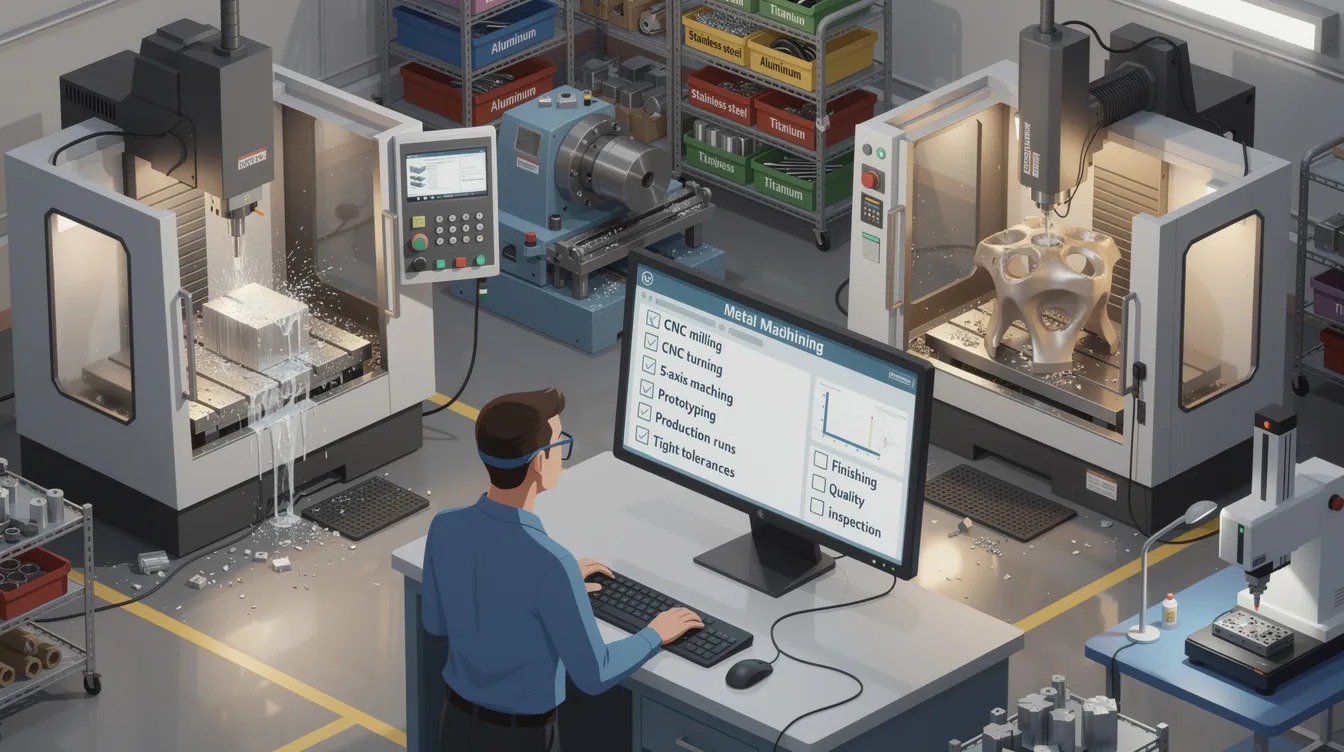
What CNC Machining Services Should I Look For When Outsourcing Metal Fabrication?
Outsourcing metal fabrication can cut costs, speed up development, and give you access to capabilities you don’t have in-house. But the wrong CNC machining supplier can just as easily burn your budget, blow your timeline, and ship parts that don’t meet spec. This guide walks you through exactly what to evaluate so you make the right call the first time.
Start Here: Key CNC Machining Services to Check First
Global OEMs often receive dozens of supplier proposals per RFQ cycle. The fastest way to narrow that list is to confirm a handful of non-negotiable CNC machining services before you invest time in facility audits or trial orders. Today, the industry is divided into automated digital manufacturers and manufacturing marketplaces-but regardless of the model, your supplier must deliver on fundamentals.
Here are the must-have capabilities to verify in your first email or RFQ call:
-
3-axis, 4-axis, and five axis machining (milling)
-
CNC turning and mill-turn centers
-
Rapid prototyping with turnaround in days, not weeks
-
High precision metal machining with tolerances of ±0.01 mm or better
-
CMM inspection with documented first-article and in-process inspection reports
-
Common surface finishes: anodizing, bead blasting, plating, polishing
-
Basic sub-assembly or mechanical assembly
CNC machining ensures tight tolerances and structural requirements in metal fabrication, so confirming these capabilities up front saves you from discovering gaps after you’ve already committed lead times and budget. If a shop can’t clearly confirm these items, move on.
Anebon Metal Products Limited, based in Dongguan, China, offers end-to-end CNC machining, die casting, and sheet metal fabrication for overseas OEMs-covering all of the above under one roof with advanced technology and competitive delivery schedules.
Clarify Your Project Requirements Before You Outsource
Before contacting any machining supplier, your internal team should align on the technical and commercial specs that will shape every quote you receive. Vague requirements lead to vague pricing-and unpleasant surprises later.
Define the following before sending your RFQ:
-
Material grade and condition: specify the exact alloy (e.g., 6061-T6 aluminum, 17-4PH stainless, Ti-6Al-4V titanium). Material selection affects part performance and machining processes directly.
-
Tolerance bands: a bearing seat may need tight control of ±0.01 mm, while a non-functional external cover might accept ISO 2768-m defaults. Tolerance should match the part’s function, not an ideal number. Over-tightening tolerances can raise cost without improving performance.
-
Production volume: state whether you need 5 prototypes or 5,000 production units. Production volume determines the best manufacturing route, tooling investment, and pricing structure.
-
Target lead time and delivery date: prototypes, small batches, and mass production each carry different scheduling expectations.
-
Environment and application: temperature extremes, vibration, chemical exposure, and sterilization requirements influence alloy choice, heat treatment, and corrosion resistance strategies.
Include critical dimensions and ISO 2768 class in your drawings. ISO 2768 class defines dimensional and geometrical tolerances for features without individual callouts. Specify surface finish (Ra values) and coating needs in your requirement sheets. Prepare 3D CAD files (STEP/IGES) plus 2D drawings with GD&T applied only where function demands it-your engineering team will thank you when quotes come back lower and faster.
Core CNC Machining Technologies Your Supplier Should Offer
A capable metal fabrication partner should provide CNC technologies that match your part complexity and volume needs. Here’s what to look for:
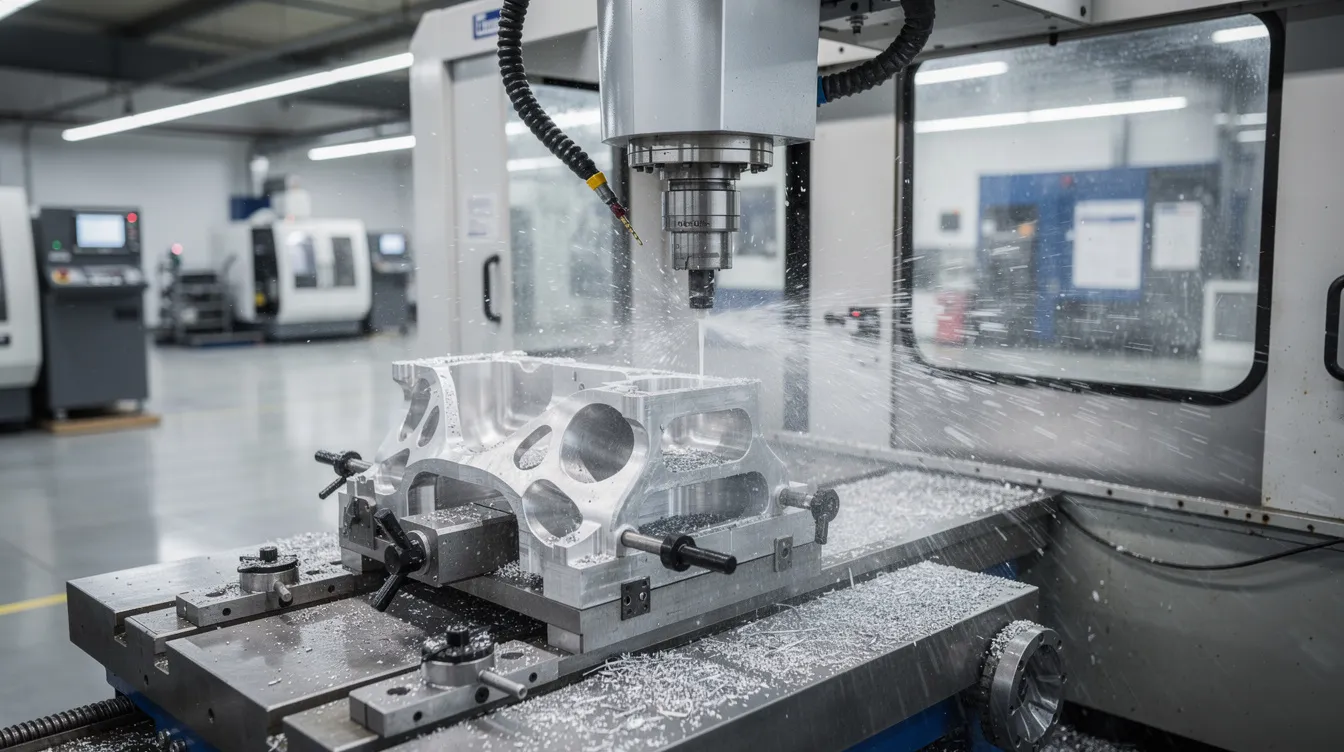
3-axis CNC milling handles prismatic parts, flat surfaces, pockets, and moderate-complexity brackets and housings. CNC milling produces complex 3D contours, pockets, and flat surfaces efficiently, and it remains the workhorse of most CNC milling service operations.
CNC turning and mill-turn centers are essential for shafts, bushings, and any part with concentric ID/OD features. Mill-turn machines combine milling and turning operations, eliminating secondary setups and improving concentricity. Small-batch CNC services are suitable for prototyping metal parts efficiently using these same platforms.
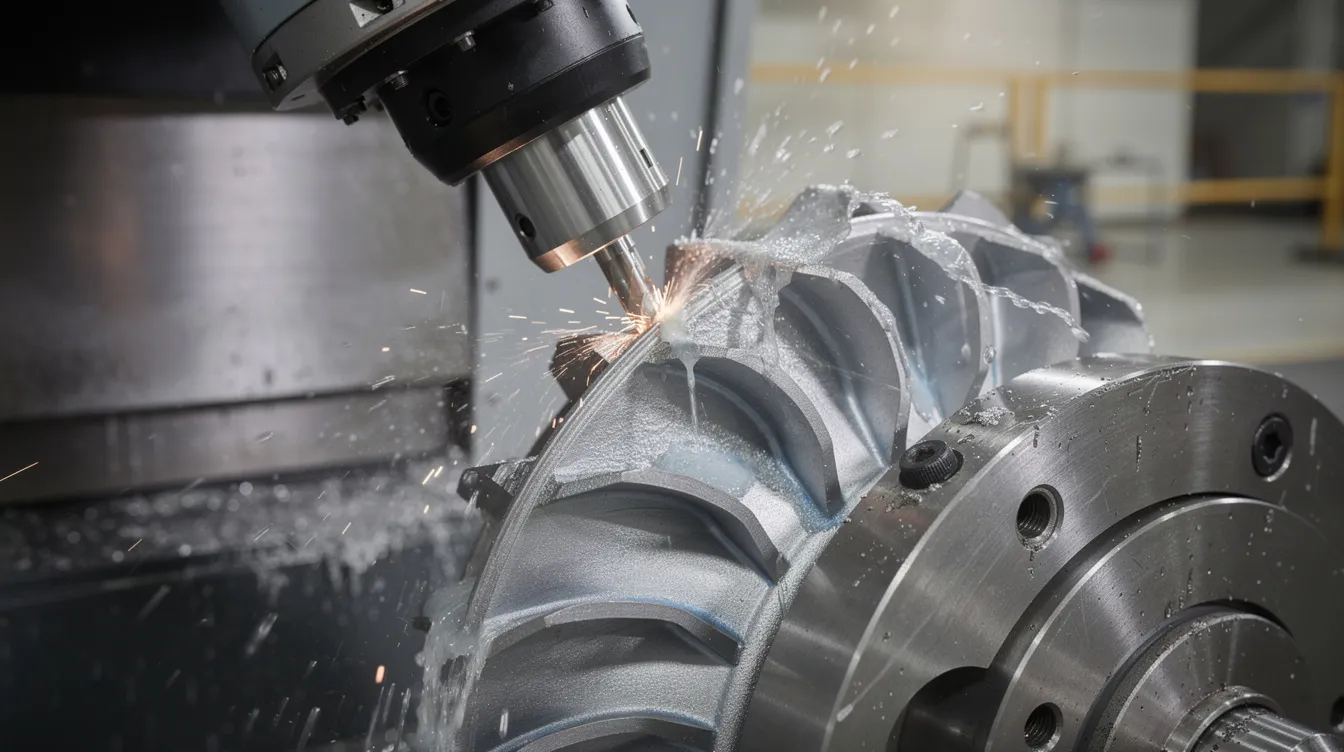
4-axis and 5-axis machining unlocks complex geometries, undercuts, impellers, turbine blades, and medical implants with multi-face features. Five axis machining enables complex geometries and reduced setups-often cutting fixture changes from five or six down to one. Multi-axis machines enhance production efficiency for intricate parts and complex surfaces that would otherwise require multiple operations.
A capable metal fabrication partner should provide technologies that match your part design, material, tolerance, and production needs. CNC machining can achieve tolerances as precise as ±0.002 mm on critical features, and some projects also require wire EDM, which is essential for ultra-precise sharp internal corners in hard metals. Anebon runs multi-axis machining centers capable of handling everything from small prototypes to production orders with exceptional accuracy and tight tolerances.
Match Supplier Material Capabilities to Your Metal Parts
Your choice of metal drives machinability, final cost, and part performance. A reliable CNC machining supplier should handle all commonly specified alloys-and advise you when an alternative makes more sense.
Common metals to confirm:
|
Material Family |
Typical Grades |
Key Characteristics |
|---|---|---|
|
Aluminum alloys |
6061-T6, 7075, 5083, 2024 |
Fast-cutting, cost-effective, good corrosion resistance |
|
Stainless steels |
304, 316L, 17-4PH |
Work-hardening, requires rigid setups and cooling |
|
Carbon / tool steels |
4140, D2, SKD-11 |
Hard, durable; slower feeds, higher tool wear |
|
Titanium |
Ti-6Al-4V, Grade 2 |
Low thermal conductivity, needs specialized tooling |
|
Copper / brass |
C360, C110 |
Excellent conductivity, moderate machinability |
CNC machining supports various materials including aluminum and titanium. Aluminum production reached 70 million tonnes in 2023, while steel production was about 1.9 billion tonnes, making both widely available. Titanium sponge production is significantly lower than aluminum and steel, so sourcing and pricing require more attention. Engineering plastics are sometimes machined alongside metals, but they can deform from heat during the machining process, requiring adjusted speeds and coolant strategies.
Always ask for material certificates (conforming to EN/ASTM standards with heat numbers) to verify composition. Confirm whether the supplier can reliably handle your material sourcing for specific global grades. Where cost or availability is a concern, choose suppliers whose engineering team can recommend equivalent local Chinese grades without sacrificing quality or performance.
Evaluate Precision, Tolerances, and CMM Inspection Capability
For the aerospace and medical sectors, robotics, automotive, and consumer electronics, precision components must meet tight dimensional requirements every time. Claims of high precision are common; what matters is proof and process.
Key evaluation points:
-
Use ±0.01 mm as a baseline benchmark for high precision CNC machining. Machining accuracy is often specified by tight tolerances down to ±0.001 inches (roughly ±0.025 mm), with critical fits requiring ±0.005 mm or better on specific features. A bearing seat, for example, demands that level of positioning accuracy and tolerance capability.
-
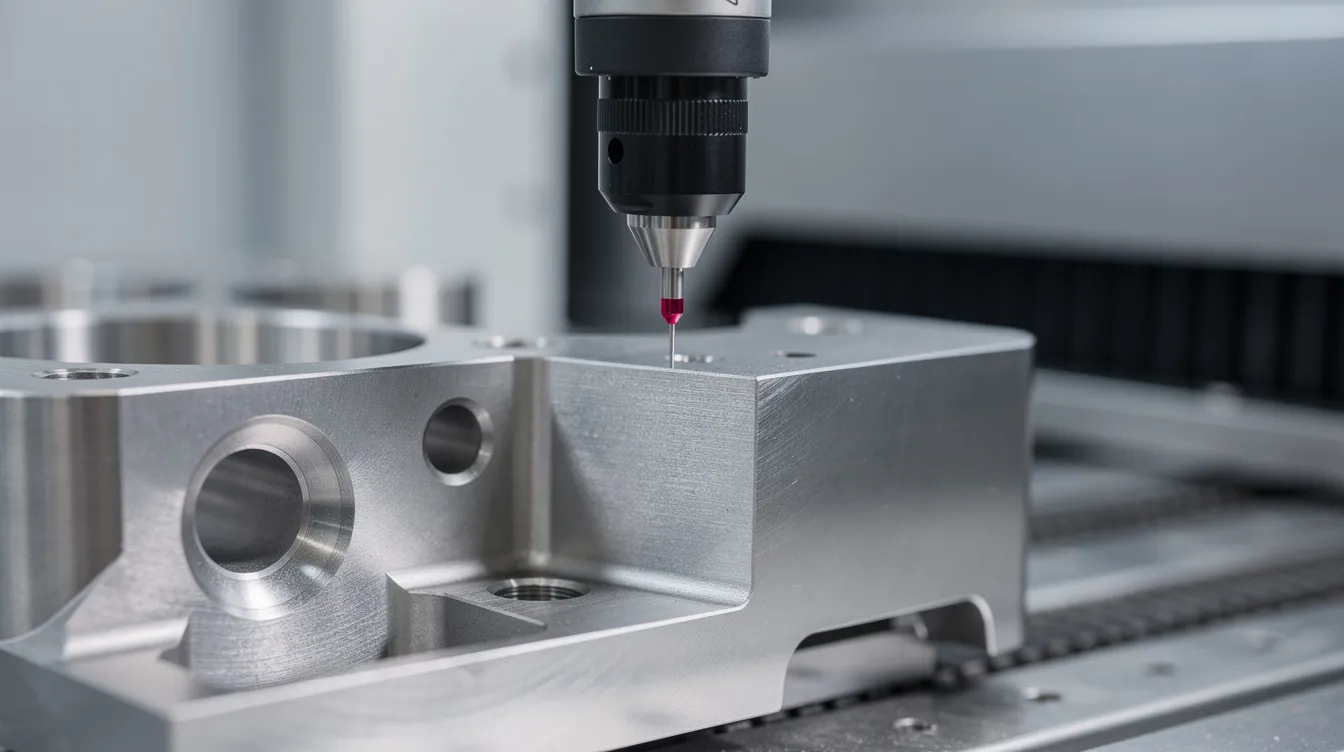
Coordinate measuring machines ensure accurate and repeatable measurements across complex GD&T callouts. CMM inspections provide the documented inspection results needed for flatness, perpendicularity, true position, and other geometric tolerances defined by ASME Y14.5, which governs geometric tolerancing for dimensional verification.
-
Request sample reports and first-article inspection data. A 99.8% defect-free rate indicates strong quality assurance practices-ask for the numbers.
-
Check whether inspection rooms are temperature-controlled (typically 20±2 °C) and whether coordinate measuring machines and gauges carry calibration records traceable to ISO 17025 or equivalent standards.
Anebon uses dedicated CMM inspection, in process inspection checks including in process probing on-machine, and final inspection reports as part of its ISO 9001:2015 quality system. This approach lets you apply tight tolerances on critical dimensions with confidence, while keeping inspection methods consistent across batches.
Check CNC Equipment, Automation, and Advanced Technology
Modern CNC machining technology and automation directly affect consistency, yield, cycle time, and achievable lead times. Equipment matters more than most buyers realize.
Here’s what to verify:
-
Confirm the supplier operates advanced CNC machines with stable spindles, tool monitoring, and multi-axis capabilities-not just legacy manual machines. Advanced CNC machines can reduce cycle times by up to 35%, which translates directly into production efficiency and lower per-part cost.
-
Ask about CAM software and offline programming. Suppliers using simulation and collision avoidance before cutting metal produce better surface finish results with less scrap. This is a hallmark of modern manufacturing.
-
Inquire about predictive maintenance practices, in process probing for auto-setup, tool-length measurement systems, and real-time machine monitoring. These features help maintain product quality during longer production runs while minimizing downtime.
-
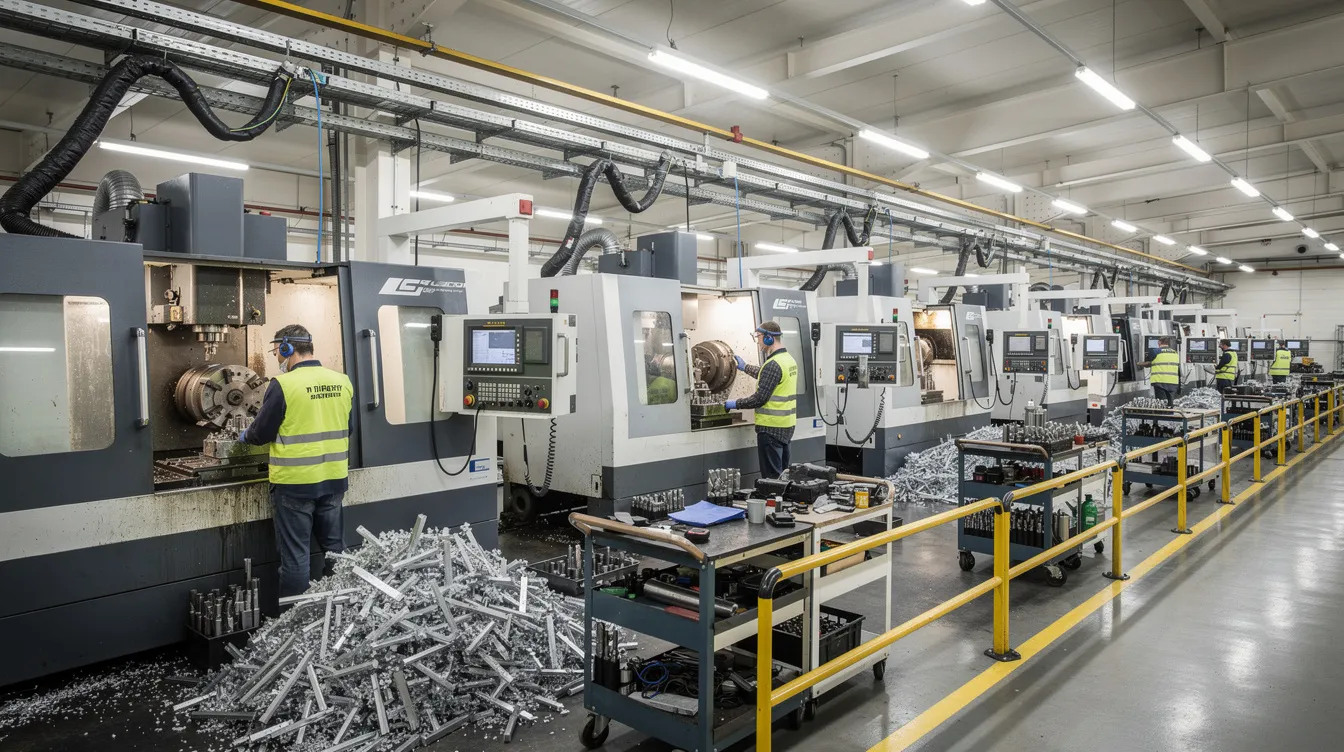
Request equipment lists, photos, or a facility visit. Verify that machine capacity-work envelopes, fixtures, rotary tables-matches your part sizes and geometries.
Lead Times, Capacity, and Production Flexibility
Realistic and reliable lead times matter as much as nominal pricing, especially for global buyers coordinating multi-supplier assembly schedules. A quote means nothing if parts arrive late.
What to ask:
-
Typical lead times: lead times can range from 7 to 25 days for CNC services. Rapid prototyping orders often ship in 3–7 days; full production runs commonly require 3–5 weeks under normal loading. Suppliers should provide realistic lead times based on actual production schedules, not optimistic sales projections.
-
Real production capacity: ask how many CNC machines they run (milling, turning, multi-axis), the number of shifts per day, overtime options, and historical on-time delivery performance. Machine capacity directly constrains throughput.
-
Flexibility: CNC machining can handle production volumes from 1 to 50,000 units. The key is whether the supplier can scale from a 5-piece prototype to hundreds or thousands while maintaining the same machining process, fixtures, and quality controls without compromising quality. Production flexibility allows adaptation to changing requirements and urgent requests-a hallmark of service providers you can actually rely on.
CNC services can support both low-volume prototypes and larger production runs. Offshoring to China can shorten total project lead time when the supplier offers integrated machining, finishing, and shipping coordination under one roof, compressing the entire production cycle.
Quality Management, Certifications, and Traceability
Certified quality systems dramatically reduce risk for overseas OEMs, especially in regulated industries where traceability documentation is not optional.
Here’s your checklist:
-
At minimum, look for ISO 9001 certification, which ensures structured quality management systems. Verify certificate validity, the issuing body’s accreditation, and whether the certificate covers the actual production site-not just a headquarters office.
-
For specific industries: AS9100 certification is a quality management standard for the aerospace industry, ISO 13485 covers medical devices, and IATF 16949 applies to automotive. Certifications like ITAR registration may be required for compliance in certain defense-related projects.
-
Robust traceability links each batch to material certificates, process records, CMM inspection reports, and revision-controlled drawings. Quality control systems must include material certifications and traceability so that any downstream failure can be traced to its root cause. Revision control ensures everyone works from the current drawing set.
-
Ask how nonconformities, rework, and corrective actions are handled. A supplier who can explain their inspection points, scrap rates, and prevention strategies is far more trustworthy than one that glosses over quality questions.
Anebon operates under ISO 9001:2015 and ISO 14001:2015, combining quality management with environmental responsibility. This supports long-term partnerships for overseas OEMs who need reliable CNC machining with full traceability documentation across every batch.
Design Support and Engineering Team Collaboration
Close collaboration with a supplier’s engineering team cuts cost and risk before a single chip is cut. The best CNC machining services go beyond “build-to-print.”
-
Prioritize suppliers that offer Design for Manufacturability (DFM) feedback, which provides recommendations to optimize CAD models for machinability, cost, and reliability. DFM input on thin walls, edge breaks, tool access, and fixturing can dramatically reduce machining time and scrap.
-
Ask who your technical contact will be-a project engineer, process engineer, or sales-only representative. Clear technical explanations indicate professionalism and attention to detail. Timely communication prevents misunderstandings and production errors, while delayed responses can lead to missed deadlines and increased costs.
-
Suppliers should provide updates throughout the production process, not just at shipping. A detailed response during the quoting phase indicates a higher level of professionalism and signals how the relationship will function long-term.
Anebon’s engineers routinely work with overseas R&D teams to adjust designs for manufacturability before committing to tooling or large purchase orders-helping clients control costs while protecting their company’s innovative products.
Integrated Finishing, Assembly, and Additional Services
Outsourcing metal fabrication works best when CNC machining is combined with downstream manufacturing processes in a single supply chain. Fewer handoffs mean fewer errors.
Typical finishing options to verify:
-
Secondary finishing includes processes like anodizing (hard and decorative) and powder coating
-
Plating: nickel, zinc, chrome, or copper for corrosion resistance or appearance
-
Post-processing options include finishing techniques like bead blasting and plating, plus polishing and laser marking
-
Heat treatment: solution treating, ageing, stress relief
Some projects benefit from complementary services like die casting, sheet metal fabrication, and simple mechanical assembly at the same facility. Having one CNC machining supplier manage both machining and finishing reduces handoffs, shipping time, and risk of mixed batches.
Ask whether the supplier can package parts with labels, inspection documents, and custom packing ready for direct shipment to final assembly plants-especially important for medical devices and aerospace programs where traceability documentation must travel with each part.
Total Cost, Location, and Long-Term Partnership Potential
Total landed cost goes well beyond the machining quote on your desk. You need the full picture before comparing hourly rates or per-part prices across suppliers.
-
Total cost includes setup, tooling, finishing, and inspection. A low unit price may hide costly fixtures or treatments that surface later. Freight costs can significantly impact total machining expenses, especially for heavy or oversized parts. Request line-item quotations to uncover hidden costs.
-
Compare quoted, expected, and worst-case costs for accuracy. Don’t rely solely on the final cost number-break it down: material, machining time, tooling/setup, inspection, finishing, packaging, and logistics. Budget constraints are real, but cutting corners on quality control creates far more expensive problems downstream.
-
Choosing a stable, experienced CNC machining supplier in a manufacturing hub like Dongguan, Guangdong offers scale advantages, mature infrastructure, experienced labor, and integrated services that can lower long-term costs without sacrificing quality.
-
Treat supplier selection as building a long-term partnership. Evaluate communication style, transparency, and willingness to grow with your product roadmap. A reliable partner who supports you through prototyping, design evolution, and production volume ramps is worth far more than the cheapest quote.
How Anebon Supports Your Outsourced CNC Machining Projects
Every criterion outlined above maps directly to what Anebon Metal Products Limited delivers daily for overseas OEMs.
Founded in 2010 in Dongguan, Anebon provides precision CNC machining services, die casting, and sheet metal fabrication from rapid prototyping through full mass production. Key strengths include:
-
Tight tolerances down to ±0.002 mm on precision components
-
Broad materials coverage: aluminum, stainless steel, titanium, brass, copper, engineering plastics, and suitable materials matched to your application
-
Dedicated CMM inspection with traceability documentation and calibration records
-
ISO 9001:2015 and ISO 14001:2015 certifications
-
DFM feedback and direct engineering team collaboration for overseas R&D teams
-
Flexible batch sizes and competitive lead times for both prototypes and production orders
If you’re evaluating CNC machining suppliers for your next project, send your CAD files and RFQs to Anebon for an engineering review and personalized quote. The right partnership starts with a conversation-and the technical capabilities to back it up.
Related posts blog tags: CNC machining, 5-axis machining, rapid prototyping, precision metal fabrication, OEM manufacturing, quality assurance