Understanding the Role of a C N C Machinist in Modern Manufacturing
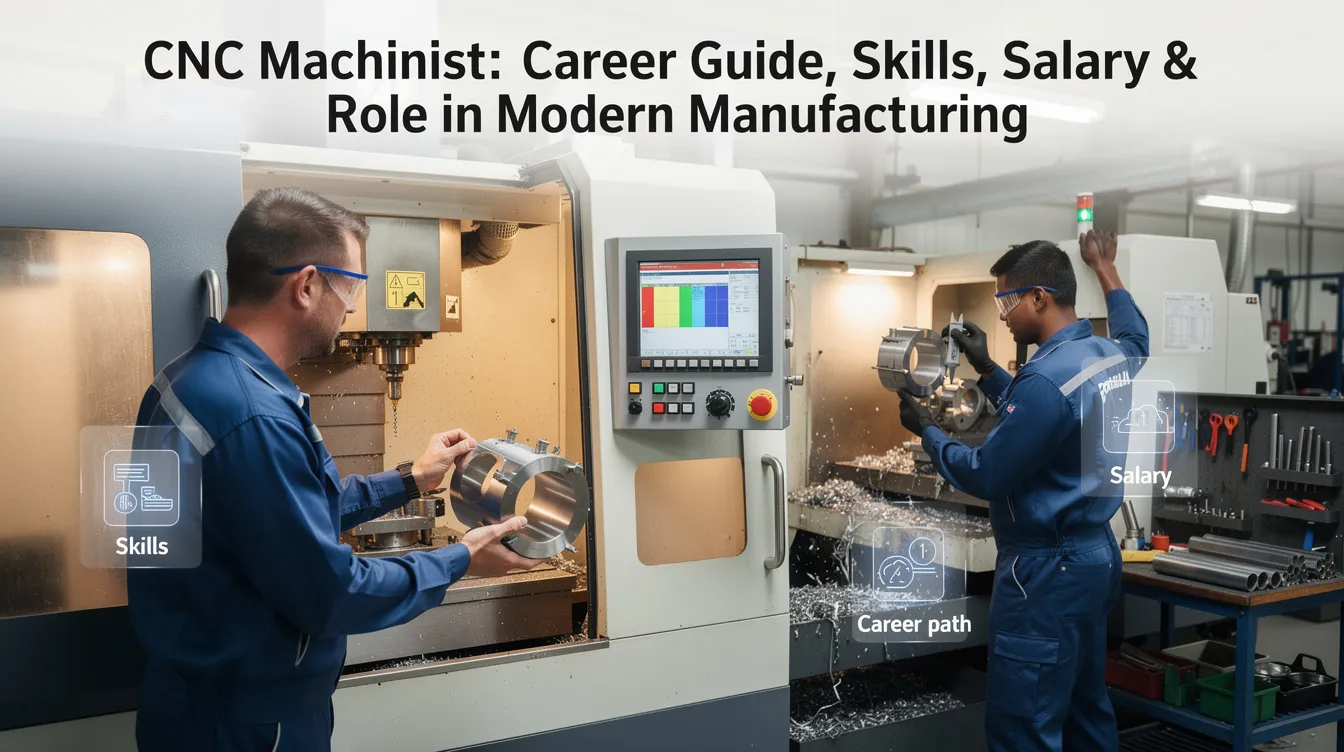
CNC Machinist: Career Guide, Skills, Salary & Role in Modern Manufacturing
The manufacturing industry depends on people who can turn raw metal and plastic stock into finished components that meet exact specifications. A cnc machinist sits at the center of that process, and whether you are considering this career path or sourcing a manufacturing partner, understanding the role is essential.
What Is a CNC Machinist?
A cnc machinist is a skilled technician who sets up, operates, and sometimes programs computer numerical control cnc machines to produce precision parts from metals and plastics. Unlike roles that focus on a single task, CNC machinists translate blueprints into instructions for machines, select cutting tools, configure workholding, and verify that finished components meet dimensional and surface finish requirements.
It helps to distinguish three related roles early:
-
A cnc operator is typically entry-level, responsible for loading raw materials, running pre-written programs, and performing basic checks.
-
A cnc machinist handles full machine setup, interprets engineering drawings with geometric tolerances, edits programs at the controller, and troubleshoots machining issues on a cnc lathe, cnc mill, or multi-axis center.
-
A cnc programmer works upstream in CAM software, generating toolpaths and optimizing cycle times before handing the program to the machinist.
For example, when producing an automotive transmission shaft on a cnc lathe, the operator loads stock and presses cycle start. The machinist sets tool offsets, verifies concentricity, and edits feed rates to eliminate chatter. The programmer, meanwhile, created the original toolpath in CAM, accounting for material properties and surface finish targets.
CNC machinists produce precision metal or plastic parts found in countless products: aerospace brackets requiring tight flatness and perpendicularity, medical device housings machined from biocompatible alloys, and automotive drivetrain components held to micron-level roundness. These real-world applications show why the role matters in the world today.
At Anebon Metal Products Limited, skilled CNC machinists deliver tolerances as tight as ±0.002 mm for overseas OEM clients across aerospace, robotics, and medical sectors, backed by ISO 9001:2015 and ISO 14001:2015 certifications.
CNC Machinist Job Description & Daily Responsibilities
A typical day in a machining shop starts with reviewing job orders, blueprints, and CAD models, then moves through setup, production, and quality verification. CNC machinists operate cnc machinery in factories and precision shops, managing every step between raw stock and a finished, inspected component.
Core daily tasks include:
-
Reading technical drawings and interpreting geometric tolerances such as true position, flatness, and concentricity.
-
Selecting cutting tools, inserts, and workholding devices suited to the material, whether aluminum, titanium, stainless steel, or plastic components.
-
Setting up cnc machines-lathes, milling machines, drill presses, grinders, and 5-axis machining centers-by calibrating tools and securing raw materials.
-
Running first-article parts to validate the setup before committing to a full production run.
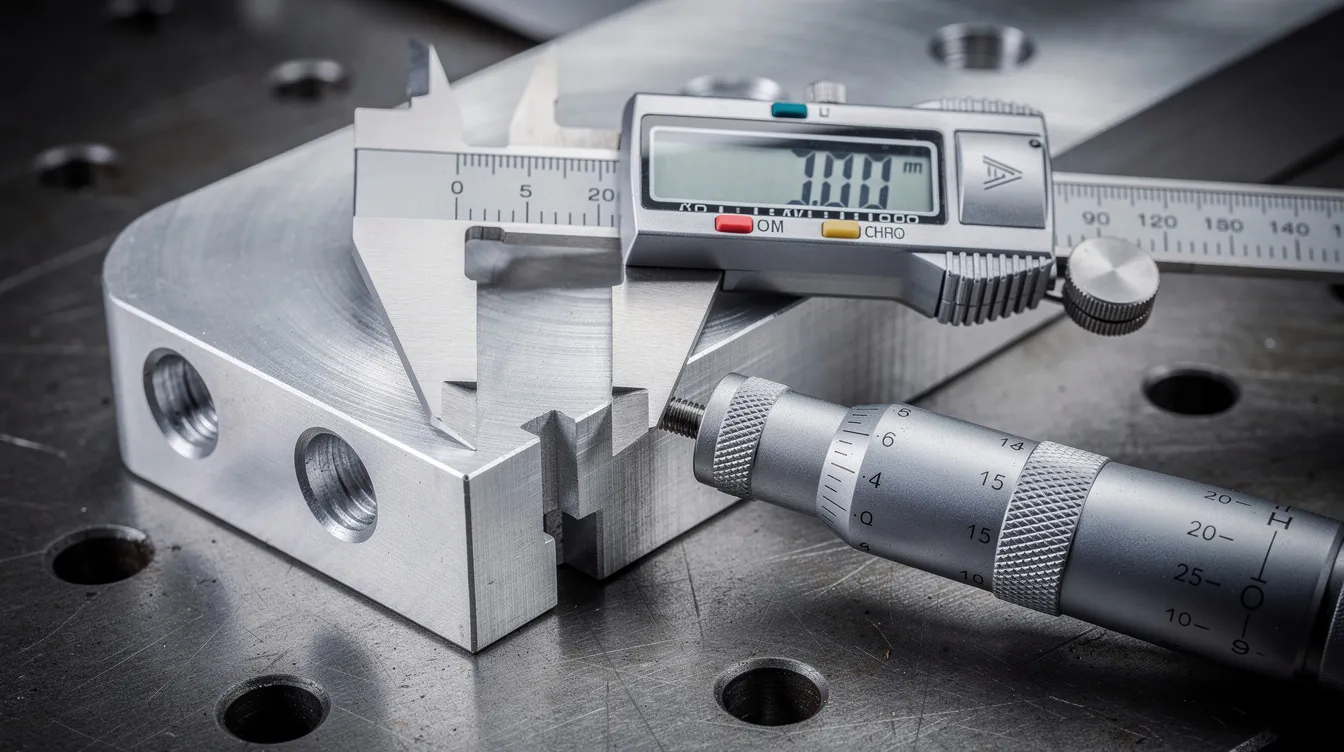
During production, CNC machinists monitor machine operations closely. They check tool wear, adjust offsets, and verify dimensions using precision measuring instruments-calipers, micrometers, height gauges, and CMM reports. Quality control involves verifying parts against specifications, and machinists ensure precise measurements down to the millimeter on every critical feature. They make adjustments to machine specifications as needed to maintain surface finish and dimensional accuracy.
CNC programming at the controller is also part of the job. Machinists edit G-code or M-code to fine-tune feeds, speeds, and toolpaths-essentially performing g code programming to resolve vibration, chatter, or finish problems in real time.
Maintenance duties round out the day: cleaning machines, replacing inserts, checking coolant levels, and reporting issues. CNC machinists perform routine maintenance on machines to ensure effectiveness, functioning much like a maintenance machinist when needed. They also follow ISO 9001:2015 procedures for in-process inspection and traceability, documenting measurements for every lot.
Collaboration is constant. Machinists work with cnc programmers on toolpath issues, design engineers on manufacturability, and production supervisors on scheduling-helping improve processes across the shop floor.
Work Environment & Typical Schedule for CNC Machinists
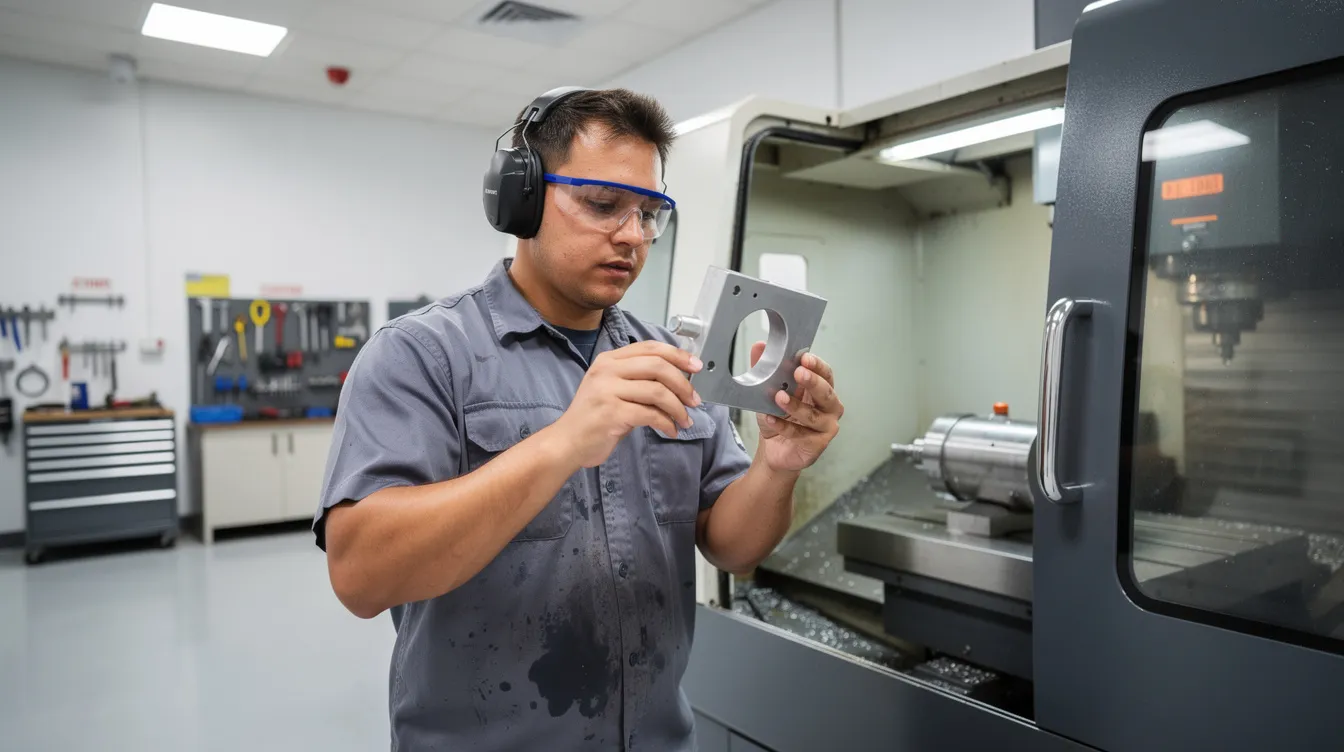
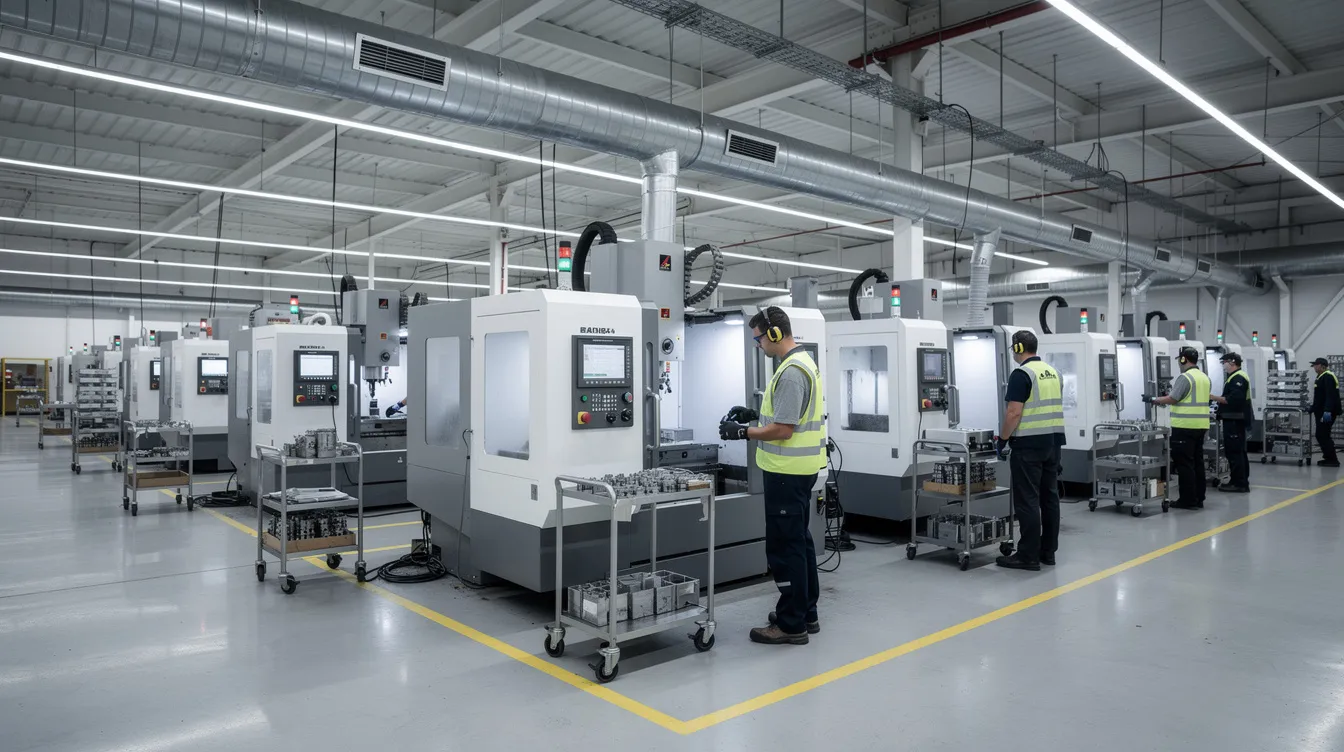
Modern CNC shops are indoor, industrial environments that tend to be well organized but noisy and fast-paced. Hearing protection is standard, and climate-controlled areas are common where high precision work demands thermal stability.
Common workplaces include precision machine shops, metal fabrication plants, and OEM manufacturing facilities serving aerospace, automotive, electronics, and medical device sectors. Equipment on the floor ranges from cnc lathes and cnc mills to multi-axis machining centers, die casting cells, and sheet metal work areas. You will also see manual machines, welding stations, and inspection rooms with CMMs and optical comparators.
Typical schedules involve standard 8-hour shifts-for example, 7:00 to 15:30-though many shops run rotating shifts or 24/7 operations with night and weekend work during peak demand. CNC machinists have opportunities for overtime work, especially when customer deadlines compress lead times.
Physical requirements include standing for long periods, lifting moderate weights (fixtures, stock), and wearing PPE: safety glasses, hearing protection, and safety shoes. The role is almost always on-site; cnc machinist jobs are not remote because they involve hands-on operation of industrial machines and equipment.
Workplace culture centers on teamwork-machinists coordinate with operators, maintenance staff, and production managers-plus strict adherence to safety and quality rules.
CNC Machinist Skills & Competencies
Success as a machinist requires a blend of technical knowledge, measurement expertise, software familiarity, and strong soft skills.
Technical skills:
-
CNC machine setup across lathes, mills, and multi-axis centers
-
Basic cnc programming and editing at the controller
-
Tool selection for diverse materials (carbide inserts, coated end mills, drills)
-
Understanding of feeds, speeds, depth of cut, and spindle dynamics
Math and measurement:
Strong skills in algebra, geometry, and trigonometry are crucial for CNC machinists. Blueprint reading is essential for understanding specifications in machining-machinists must interpret datum structures, GD&T feature control frames, and surface finish callouts. They use precision measuring instruments for quality control, including calipers, micrometers, bore gauges, and CMM equipment.
Software and digital proficiency:
Familiarity with CAD and CAM software is important for CNC machinists, even if they are not the primary programmer. CNC machinists require proficiency in digital technology and software, including fluency with controllers from Fanuc, Siemens, Haas, and Mazak. CNC programming uses G-code or M-code to define cutting paths, and machinists must read and edit that code confidently.
Soft skills:
CNC machinists must solve problems quickly and accurately-whether addressing chatter, tool deflection, or an out-of-spec dimension. Attention to detail, clear communication with engineers, and strong time management on the shop floor are all transferable skills that serve machinists throughout their career.
At Anebon, machinists receive training on high precision work for aerospace, robotics, and medical OEM parts, building metalworking skills and cross-process knowledge across machining, die casting, and sheet metal fabrication.
CNC Machinist Salary, Job Outlook & Career Path
Pay and demand for CNC machinists vary by country, industry, and experience, but the role remains in steady demand worldwide.
Salary benchmarks:
CNC machinists earn between $40,000 and $60,000 annually in many markets. The average cnc machinist salary is $48,510 per year, though more experienced specialists in high-cost regions or complex operations can earn significantly more. Salary.com reports a median of approximately $67,899 per year for CNC machinists in the United States as of 2026, with senior machinists and cnc programmers pushing past $75,000.
Key factors influencing salary:
|
Factor |
Impact |
|---|---|
|
Industry |
Aerospace and medical pay higher wages |
|
Geographic location |
Affects salary potential significantly |
|
Shift/overtime |
Night and weekend differentials add income |
|
Machine complexity |
5-axis, Swiss-type, exotic materials command premiums |
|
Certifications |
NIMS and similar credentials boost starting pay |
Experience in CNC machining can lead to higher salaries, and post-secondary training increases starting salary for CNC machinists. Salaries vary by industry, with aerospace offering higher wages than general fabrication.
Job outlook: CNC machinists can expect a favorable job outlook. The demand for CNC machinists is growing in manufacturing sectors driven by EVs, medical devices, consumer electronics, robotics, and industrial automation. Job options for CNC machinists are plentiful across industries, and employment opportunities continue to expand.
Career progression typically follows this path: cnc machine operator → cnc machinist → senior machinist or lead → cnc programmer or process engineer → production supervisor or manufacturing engineer. CNC machinists can progress to higher positions with experience and further education. International opportunities exist with global OEM supply chains, including manufacturers like Anebon in Dongguan, China. This is a long-term technical career, not just an entry-level factory job.
How to Become a CNC Machinist
The path to become a cnc machinist typically combines formal education with hands on experience on the shop floor. Here is how most professionals enter and advance in this field.
Education requirements typically include a high school diploma or GED. Postsecondary vocational training in machining technology is preferred by employers. Options include vocational high school programs, technical college certificates, and 1–2 year diplomas in CNC technology. A CNC machinist program typically takes one year to complete, though it can be offered part-time over two years at some institutions. Many programs qualify students for financial aid.
Recognized credentials matter. The national institute for Metalworking Skills (NIMS) certifies competencies in CNC milling, turning, and inspection. These credentials signal readiness to employers and can accelerate hiring.
Apprenticeships and entry-level roles:
Apprenticeships combine on-the-job training with classroom instruction, giving candidates practical experience with cnc machines, materials, and shop safety. Starting as a cnc operator is a proven way to gain experience, learn operations, and build toward full machinist responsibilities. Students learn to operate CNC machines in hands-on training environments, and apprenticeship programs provide practical experience in CNC machining.
Key subjects to study:
-
Basic machining theory and the machining process
-
CNC programming and blueprint reading (hands-on learning includes both)
-
Math-algebra, geometry, trigonometry
-
Metrology and mechanical design fundamentals
-
Materials science (how aluminum, titanium, engineering plastics, and stainless steel behave under cutting)
Continuous learning is critical. CNC machinists need to adapt to rapidly changing technology-new controllers, CAM software versions, 5-axis techniques, and advanced materials demand ongoing vocational training and prior learning updates. OEMs and precision shops, including Anebon, often provide structured training, mentorship, and cross-training between machining, die casting, and sheet metal fabrication.
CNC Machinist vs. CNC Operator vs. CNC Programmer
If you are researching cnc machinist jobs, understanding how these three roles differ will help you target the right job post and plan your career.
|
Role |
Level |
Primary Responsibilities |
|---|---|---|
|
CNC Operator |
Entry-level |
Load parts, run existing programs, basic measurements, simple adjustments under supervision |
|
CNC Machinist |
Mid-level |
Full setup, tooling, offsets, troubleshooting, in-process inspection, minor program edits |
|
CNC Programmer |
Specialist |
Create programs from CAD models using CAM, optimize toolpaths and cycle times, support multiple machines |
Workflow example: An automotive sensor housing is designed by an engineer. The programmer uses CAM to generate toolpaths and post-process G-code. The machinist takes that program, sets up the 5-axis cnc mill with a fixture, loads tools, runs first pieces, and performs inspection. The operator keeps the production run going-swapping stock, monitoring coolant, and flagging tool wear.
In small shops or high-mix prototyping environments, one experienced person may act as machinist, operator, and programmer simultaneously. That breadth of knowledge commands higher pay but also demands a complete skill set spanning machine tools, software, and quality systems.
At Anebon, CNC machinists collaborate closely with in-house programmers and design engineers to optimize manufacturability for overseas OEM clients, providing DFM feedback that reduces setups and cycle times.
Role of CNC Machinists in Precision OEM Manufacturing
CNC machinists are the link between engineering intent and physical reality in OEM supply chains. The aerospace, automotive, and medical device industries employ CNC machinists to produce precision parts where failure is not an option.
At companies like Anebon, machinists ensure parts meet tolerances as tight as ±0.002 mm and surface finish standards specified by design engineers. They interact with quality assurance teams to establish control plans, support PPAP or first-article inspections, and maintain traceability under ISO 9001:2015 and ISO 14001:2015 procedures.
In rapid prototyping and low-volume production, machinists quickly adjust setups for new designs and engineering changes. In multi-process environments-CNC machining combined with die casting and sheet metal fabrication-they may finish-machine cast or formed plastic components and metal parts alike.
If your next project demands tight tolerances, skilled machinists, and robust quality systems, consider partnering with Anebon Metal Products Limited for your CNC machining needs.
Future Trends in CNC Machining & What They Mean for CNC Machinists
CNC machining technology is evolving rapidly, and the machinists who grow with it will define the future of the manufacturing industry.
Key trends reshaping the role:
-
5-axis and multi-tasking cnc machinery are moving from specialty applications into core production, demanding higher skill levels and deeper understanding of simultaneous motion, thermal stability, and advanced fixturing.
-
Industry 4.0 and digitalization bring shop-floor data collection, machine monitoring, smart tooling, and digital twins. Machinists increasingly interact with sensors, probing systems, and SPC dashboards to maintain quality in real time.
-
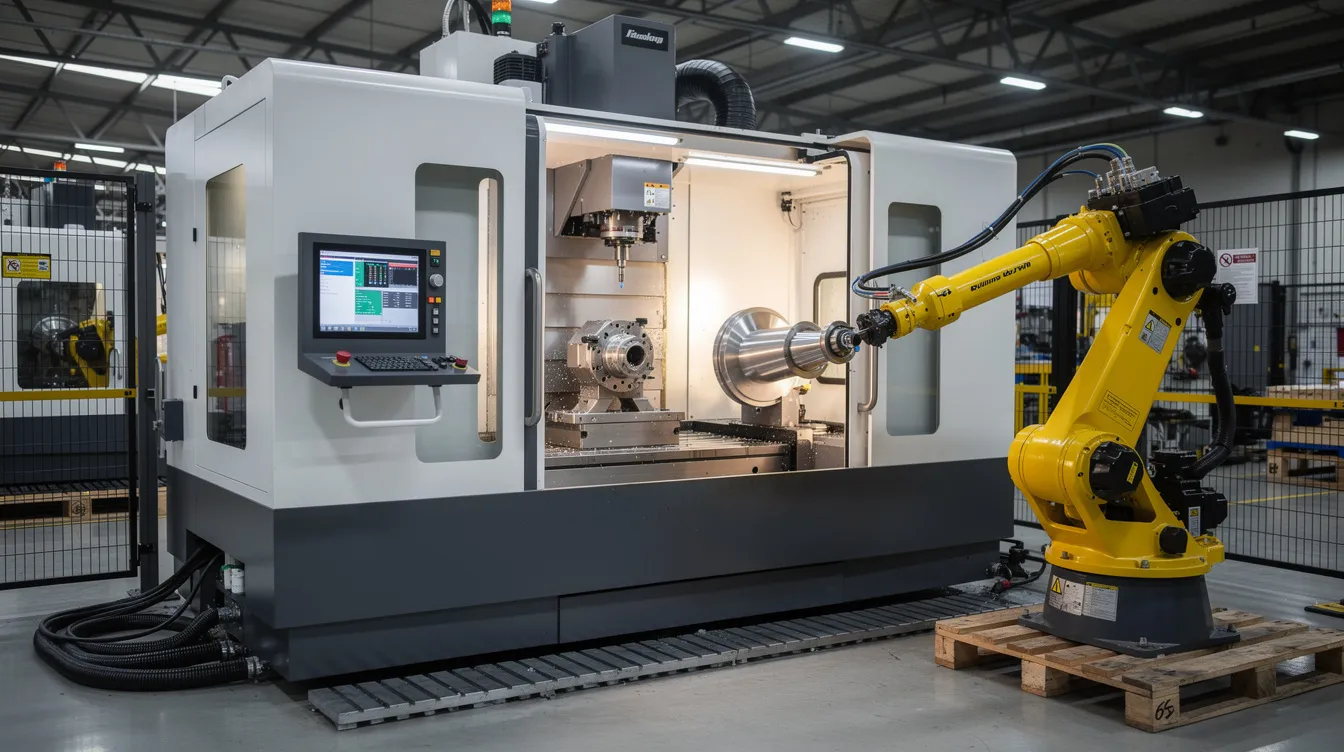
Automation through robotic loading, pallet systems, and lights-out machining means machinists shift toward supervising multiple cnc machines instead of tending one. The ability to repair machine tools and maintain industrial machines across automated cells becomes a valued competency, alongside electrical work and controls knowledge.
-
New materials-advanced aluminum alloys, titanium for aerospace, engineering plastics like PEEK for medical devices-demand deeper knowledge of cutting parameters, tool technologies, and the machining process itself.
Prospective CNC machinists should focus on learning cnc programming, CAD/CAM basics, and problem-solving to grow alongside these changes. A college education or ongoing vocational training in automation and software will differentiate candidates in an increasingly competitive field.
Anebon continues to invest in advanced CNC equipment and structured training, ensuring its machinists stay aligned with global OEM requirements and deliver high precision results across every project.