Understanding the Plunge Grinding Process: Techniques and Benefits
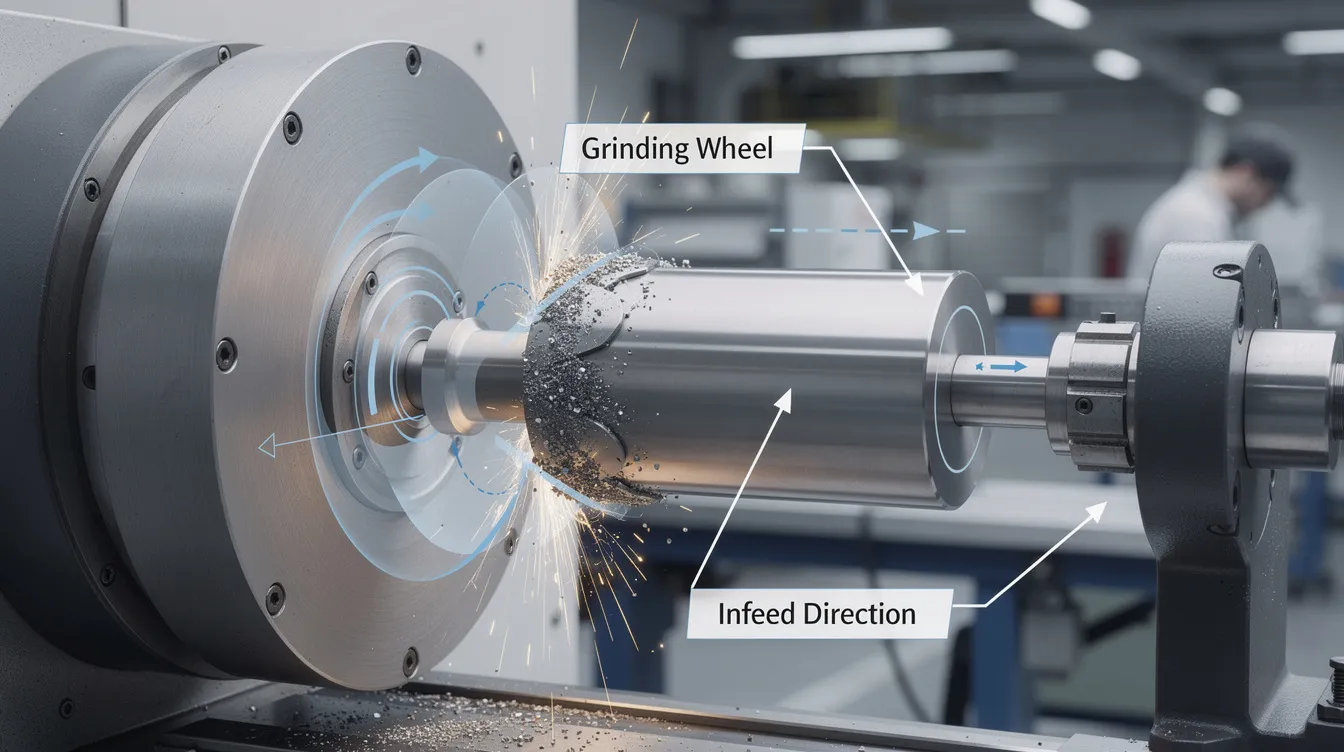
Plunge Grinding Process in Modern Cylindrical Grinding
What Is Plunge Grinding?
Plunge grinding is a precision manufacturing process where a grinding wheel moves perpendicular to a workpiece, feeding radially into its rotating surface to create diameters, shoulders, and grooves. Also known as in-feed grinding, this cylindrical grinding method differs from traverse grinding because the wheel stays at a fixed axial position rather than sweeping the entire length of the part. The process can be performed on both center-type grinding machine configurations and centerless setups.
Plunge grinding is ideal for parts with complex profiles and it efficiently grinds complex parts with multiple diameters in a single setup. Key outcomes include tight dimensional accuracy, excellent surface finish, and the ability to grind multiple diameters without repositioning. Anebon relies on this method for automotive shafts, medical device components, precision bushings, and tool and die making for precision components.
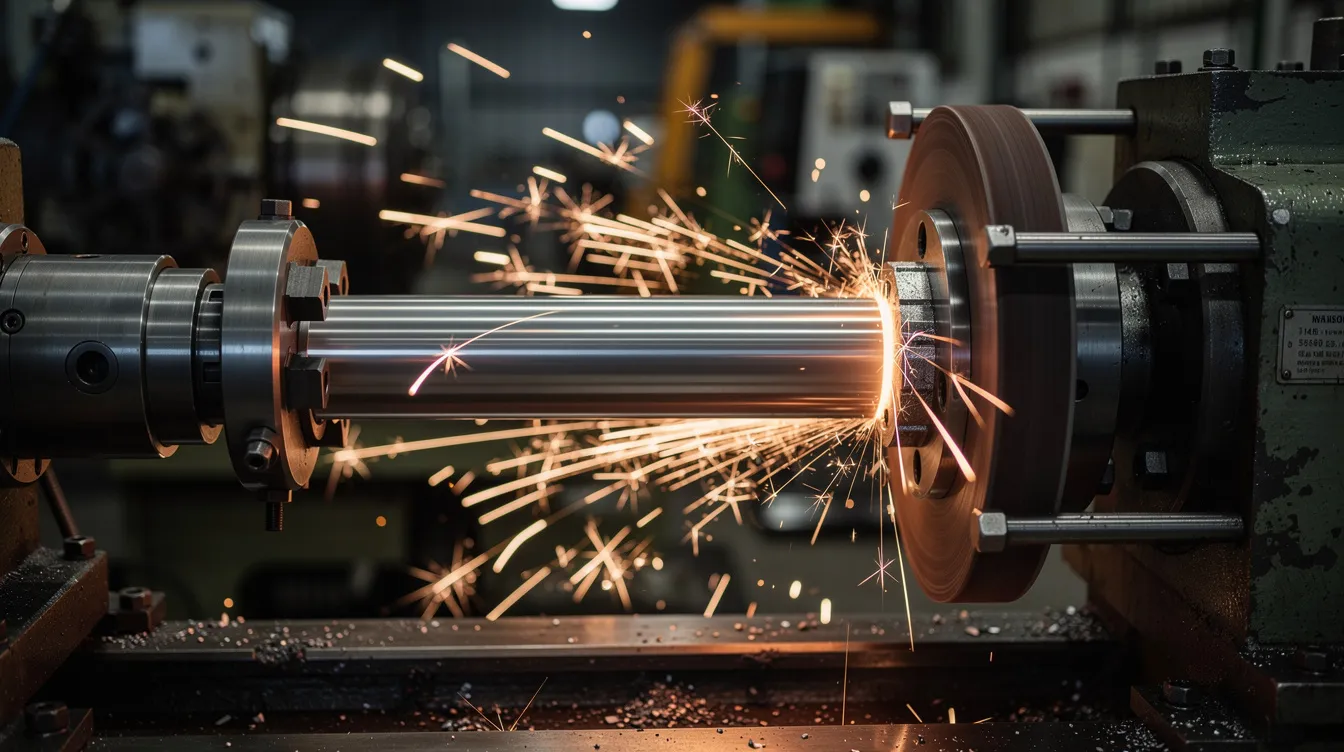
Plunge Grinding vs. Traverse Grinding
Plunge and traverse are the two fundamental modes of cylindrical grinding, and they are commonly combined in one cycle. In plunge grinding, the rotating grinding wheel feeds directly into the workpiece at a fixed axis position-ideal for steps, shoulders, and parts with multiple diameters. Traverse grinding moves the workpiece past the wheel along the part’s length while maintaining a shallow infeed, suited for long, uniform surfaces where consistent finish across the grind length matters.
Plunge grinding enables fast cycle times by avoiding the traverse motion required in traditional grinding, and it is efficient for removing large amounts of material quickly. However, higher material removal rates mean more concentrated heat, so coolant and infeed rate must be managed carefully. Anebon would choose plunge for pump shafts with multiple shoulders or gearbox pins with defined steps, and traverse for long hydraulic rods or printer rollers where the surface finish must be uniform across the entire length.
Center-Type vs. Centerless Plunge Grinding
Anebon works with two main machine configurations: center-type cylindrical grinding and centerless plunge grinding. In center-type setups, the workpiece is supported between a chuck and tailstock or between centers, making this method well suited for shorter runs, large outside diameter parts, or components requiring face grinding in the same operation. This configuration handles different sizes and complex geometries where end-reference features matter.
Centerless plunge grinding supports the workpiece through a combination of a grinding wheel, regulating wheel, and work blade-no clamping at the ends. Centerless grinding achieves high levels of dimensional accuracy and is efficient for high-volume production runs, particularly for small to medium diameters. It holds tight concentricity between multiple diameters and is effective for machining small intricate parts with precise requirements. Anebon selects between these approaches based on batch size, tolerance requirements, and part geometry.
Plunge Grinding Process Fundamentals
At its core, the grinding process involves abrasive cutting: thousands of small cutting edges on a rotating grinding wheel remove material from the workpiece’s surface in controlled passes. Key parameters include wheel speed, workpiece speed, infeed rate, dwell time, coolant delivery pressure, and wheel dressing strategy.
The radial plunge infeed is programmed to balance material removal, surface finish, and thermal stability. Plunge grinding allows for localized material removal in parts, and it allows precise control over the depth of cut. The process can involve single or multiple plunges-roughing passes for bulk stock removal followed by finishing operations with spark-out to achieve the desired form. Plunge grinding is ideal for high-precision components requiring tight tolerances, with Anebon achieving size control down to ±0.002 mm, well beyond what a lathe or standard machining operations can deliver. Vibration control, spindle stiffness, and machine thermal stability are critical for consistent results at every detail level.
Surface Finish and Dimensional Accuracy in Plunge Grinding
A key reason OEMs choose plunge grinding over rough grinding or turning is to achieve high levels of surface finish and dimensional accuracy that standard machining cannot match. Typical Ra values range from 0.2 to 0.4 µm, critical for bearing fits, sealing surfaces, and sliding components. Plunge grinding achieves high dimensional accuracy and concentricity across production runs.
Wheel selection directly influences results-CBN or diamond abrasives are preferred for hardened steels (58–65 HRC), while vitrified bond wheels suit applications requiring aggressive material removal. Coolant conditions, controlled infeed strategies, and spark-out times help manage thermal effects and maintain diameter and roundness. Anebon uses in-process gauging and post-process CMM or roundness measurement to verify that both size and form tolerances are consistently met.
Typical Applications and Part Geometries
Plunge grinding is widely used in high-volume production scenarios across industries Anebon serves: automotive, aerospace, medical devices, robotics, and industrial machinery. The method is ideal for machining automotive parts such as camshafts and transmission components, and this method is suitable for producing drive shafts and camshafts. It is applied in medical and aerospace manufacturing for tight-tolerance parts like surgical instrument shafts and actuator rods.
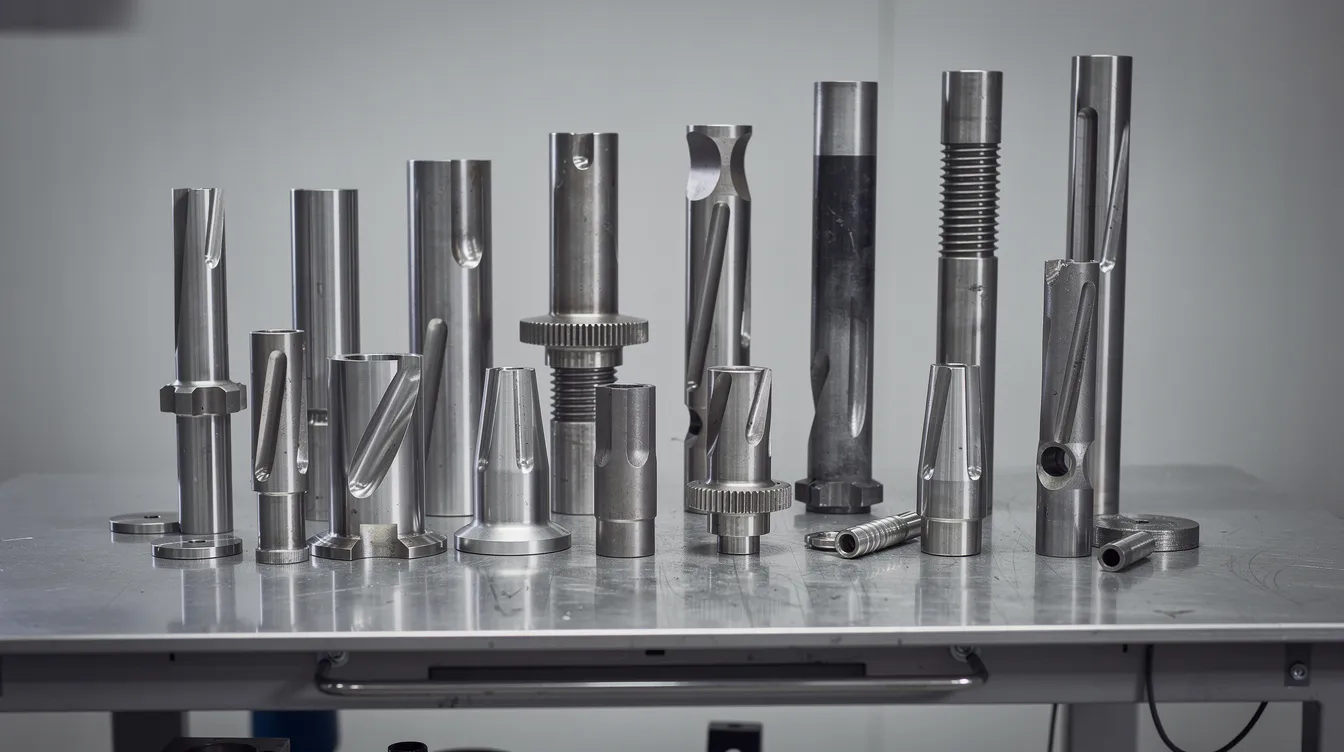
Specific geometries suited to plunge grinding include multiple stepped diameters, grooves, radii, tapers, and features adjacent to shoulders. Plunge grinding is commonly used as a finishing step after CNC turning or CNC milling to bring critical features to final size and shape. Anebon can combine plunge grinding with 5-axis machining, die casting, and sheet metal fabrication to deliver a full suite of processes involved in complete OEM assemblies.
Plunge Centerless Grinding: In‑Feed Method Details
The in-feed centerless method uses a three point positioning method-the triangular arrangement of grinding wheel, regulating wheel, and work blade-to support the workpiece without end clamping. This three point structure is what makes centerless grinding capable of handling even the smallest diameters with extreme grinding precision. The regulating wheel controls rotational speed and axial positioning while the grinding wheel plunges into specific regions of the part profile.
Complex profiles can be generated in plunge grinding without constant tooling changes by using shaped wheels that match the desired part geometry, enabling multiple diameters to be ground in a single pass. In plunge grinding, the grinding wheel can grind intricate radii and angles simultaneously, making the method highly efficient for creating complex profiles in a single operation. Centerless grinding allows for localized material removal, which gives this approach unique advantages for small-diameter parts, thin-walled components, and high-volume runs. Anebon’s process engineers optimize blade height, wheel tilt angles, and support geometry to improve roundness and minimize chatter.
Process Integration at Anebon: From CNC Machining to Grinding
Anebon integrates the plunge grinding process into a full manufacturing workflow for OEM clients. A typical process chain involves CNC turning or CNC milling for rough shape creation, heat treatment if the workpiece material requires hardening, then plunge grinding for final size and surface finish. Different processes are selected based on the component’s requirements.
Anebon’s DFM consulting helps engineers decide which features benefit from plunge grinding versus other methods to balance cost and performance. The team handles a wide range of material types-aluminum, stainless steel, tool steel, titanium, and engineering plastics-adapting feed, speed, and coolant parameters for each. Anebon’s ISO 9001:2015 and ISO 14001:2015 certifications support traceable, repeatable processes from prototyping through full production.
Quality Control and Inspection in Plunge Grinding
Quality assurance is non-negotiable when producing high-precision components for aerospace, medical, and automotive applications. Plunge grinding consistently achieves tight tolerances and maintains surface finish across production runs, but verification at every stage is essential.
Key inspection methods include:
-
Micrometers and air gauges for in-process OD measurement
-
Roundness testers for form verification
-
Surface roughness testers for Ra confirmation
-
CMMs for full dimensional verification of complex features
Anebon uses documented control plans, machine calibration schedules, and statistical process control for critical features. Traceability of materials and process parameters is maintained for OEM customers requiring lot tracking. In-process checks reduce scrap and help achieve consistency across both small prototype batches and large production orders.
Choosing Between Plunge Grinding and Other Grinding Methods
For design engineers evaluating finishing options, here are the key decision factors:
|
Factor |
Plunge Grinding |
Traverse Grinding |
Other Methods |
|---|---|---|---|
|
Part length |
Short to medium |
Long, uniform |
Varies |
|
Profiles |
Multiple shoulders, grooves |
Single diameter |
Internal, surface |
|
Volume |
Medium to high |
Any |
Application-specific |
|
Tolerance |
±0.002 mm or tighter |
±0.005 mm typical |
Method-dependent |
Plunge grinding is the preferred choice when you need to grind extremely complex parts with localized features, tight tolerance bands, or short bearing seats. Traverse or other grinding processes may be more efficient for long uniform cylinders. Anebon’s engineers can review CAD models and technical drawings to recommend the most cost-effective grinding strategy during the quoting phase.
Partnering With Anebon for Precision Plunge Grinding
Anebon Metal Products Limited is a precision OEM manufacturing partner with extensive cylindrical and centerless plunge grinding capabilities, backed by over 15 years of experience since 2010. Overseas OEMs benefit from tight tolerances, reliable surface finish, integrated CNC machining and grinding, and fast turnaround from Dongguan, China.
Share your drawings, 3D models, and technical specifications for a detailed DFM review. Whether you need to grind extremely complex parts at the smallest diameters or produce large-volume runs of stepped shafts, Anebon’s team supports R&D teams, design engineers, and purchasing managers across aerospace, medical, automotive, and industrial sectors. Request a quote today to discuss how plunge grinding and Anebon’s broader manufacturing capabilities can serve your next project.