Understanding the Ductility of Iron: Key Properties and Applications
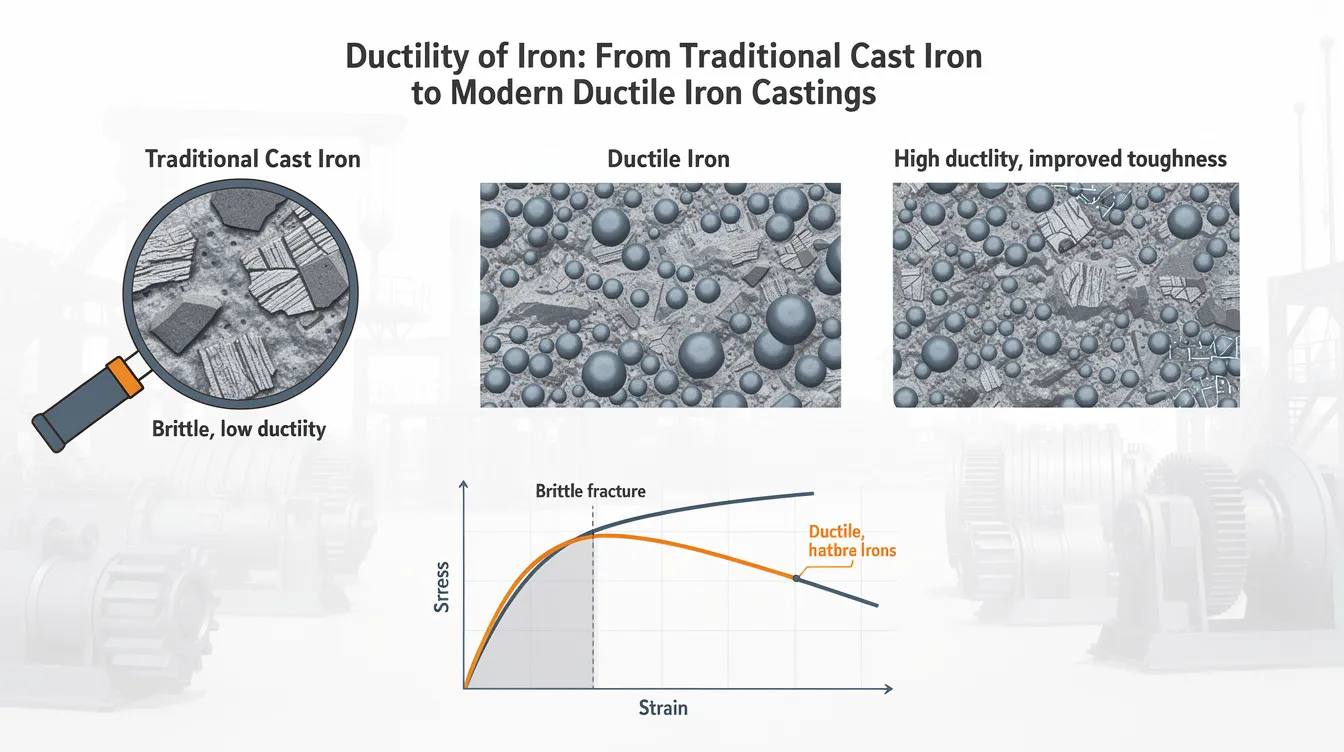
Ductility of Iron: From Traditional Cast Iron to Modern Ductile Iron Castings
Introduction: Why Ductility Matters in Iron Alloys
When engineers talk about the ductility of iron, they are referring to a material’s ability to bend, stretch, or undergo significant deformation under load before it fractures. A ductile material warns you before it fails. A brittle material does not. That distinction can determine whether a component survives a sudden overload or shatters without warning.
Traditional cast iron has low ductility and is generally brittle, making it unsuitable for parts subjected to tension, bending, or impact. Ductile iron, by contrast, can bend without breaking, unlike cast iron, offering a combination of excellent strength and meaningful plastic deformation. Ductile materials are better at absorbing impact without breaking, which is exactly what OEM components exposed to dynamic loads, pressure, and vibration demand-think automotive components, pump housings, structural brackets, and rotating machinery.
Since 2010, Anebon Metal Products Limited has helped overseas OEMs navigate selecting materials and machining the right iron grades through rapid prototyping and full production runs. This article covers:
-
How microstructure and composition control ductility in iron alloys
-
Mechanical properties of gray iron vs ductile iron vs carbon steel
-
The casting process and heat treatment options that optimize performance
-
Real-world industrial applications and design guidelines for OEM projects
Fundamentals: Ductility in Iron and Steel Explained
Ductility, toughness, and brittleness describe different aspects of how a material responds to stress. Ductility measures how far a metal can stretch before rupture. Toughness captures total energy absorbed before fracture. Brittleness means failure occurs with little or no plastic deformation. None of these are the same as strength-a very strong material can still be a brittle material that snaps without warning.
Pure iron is soft and very ductile, but it lacks the strength engineers need. Commercial iron alloys add carbon, silicon, manganese, and other elements to improve performance. Compared to other metals, iron is less ductile than copper or aluminum, but what makes iron alloys so versatile is how dramatically carbon content and graphite morphology change their behavior. Ductility is quantified by a material’s percentage of elongation at fracture, and this number swings wildly across different ferrous alloy families. Highly ductile materials can be drawn into wires or thin sheets, while brittle ones cannot. Ductility is also critical for manufacturing processes like drawing, rolling, and forging. Notably, ductility increases at elevated temperatures due to atomic rearrangement, which is why hot working of steel is so common.
Here is a quick comparison:
-
Low-carbon steel (< 0.25% C) exhibits high ductility, making it ideal for construction applications. High-ductility steel is essential in buildings and bridges for stress resistance.
-
Typical gray cast iron (2–4% C, flake graphite) shows very low elongation-often below 1%-and behaves as a brittle material under tension.
-
Ductile iron (similar carbon, nodular graphite inclusions) achieves much higher elongation, typically 6–18%, while maintaining high tensile strength.
Design engineers typically evaluate tensile strength, yield strength, elongation (%), and impact toughness when judging whether a material’s ductility suits a specific application. Purity of iron influences ductility as well; impurities like sulfur and phosphorus can cause brittleness even in otherwise ductile alloy families.
Cast Iron vs Ductile Iron: Composition and Microstructure
Gray cast iron has served industry since the 19th century, valued for its ease of casting, compressive strength, and vibration damping. But it remained a fundamentally brittle alloy until 1943, when Keith Dwight Millis at the International Nickel Company discovered that adding magnesium to molten iron produced spheroidal graphite instead of graphite flakes. Ductile iron was invented in 1943 as an improvement over cast iron, and the breakthrough earned a US patent in 1949.
The composition of cast iron and ductile iron is surprisingly similar on paper:
-
Gray cast iron: 2–4% carbon, 1–3% silicon, with graphite in flake form. These graphite flakes act as sharp internal stress concentrators, creating paths for cracking under tension.
-
Ductile iron (spheroidal graphite iron): similar carbon and silicon levels, but treated with magnesium or cerium to produce graphite nodules-rounded nodules that blunt crack tips and allow the metal matrix to deform plastically.
A small amount of magnesium (on the order of 0.03–0.06%) is enough to transform the shape of graphite particles during solidification. The result is a unique microstructure where spheroidal graphite sits within a metal matrix of ferrite, pearlite, or both. This is why the material goes by other forms of its name: nodular iron, spheroidal graphite iron, or simply ductile iron. Cast iron’s tensile strength ranges from 20,000 to 60,000 psi, while ductile iron starts where gray iron leaves off.
At Anebon, we machine both traditional cast iron and ductile iron castings, but we consistently recommend ductile iron where impact resistance and fatigue loads are significant.
Mechanical Properties: How Ductility Translates into Performance
Chemistry alone does not tell the full story. Two iron castings with identical composition can behave very differently if their microstructure varies-this is why mechanical properties measured through testing matter more than spec sheets.
Typical property ranges illustrate the gap: gray iron delivers tensile strength of roughly 150–400 MPa (about 20,000–60,000 psi) with virtually 0% elongation, while standard ductile iron grades under specification A536 achieve 414–800+ MPa (60,000 psi and above) with 6–18% elongation. Ductile iron has a tensile strength starting at 60,000 psi, and high-ductility iron can withstand significant tensile stress before breaking. Ductile iron can typically achieve 6% to 25% elongation before rupture, and in standard grades, ductile iron can elongate up to 18% before breaking. Ductile iron can withstand bending without fracturing-a property gray iron simply cannot match.
Ductile iron achieves a combination of high tensile strength and high yield strength comparable to many carbon steels, improved fatigue resistance under cyclic loading, and higher impact energy absorption than gray iron. This tolerance for stress concentrations and minor casting defects makes ductile iron critical for safety-related OEM parts.
Anebon’s quality team verifies tensile and yield strength, elongation, and hardness via testing procedures aligned with our ISO 9001:2015 certification, ensuring every shipment meets the specified properties.
Ductile Iron: Definition, Grades, and Key Benefits
Ductile iron-also called nodular iron or spheroidal graphite iron-is a ferrous alloy in which graphite precipitates as spherical nodules rather than flakes. Its discovery in 1943 by Keith Millis transformed the iron casting industry by delivering steel-like mechanical properties at cast iron costs.
During ductile iron production, magnesium or cerium is added to molten iron just before pouring. This treatment converts the natural tendency of graphite to form as flakes into rounded nodules, fundamentally changing the alloy’s behavior. Ductile iron is also more corrosion-resistant than traditional cast iron, adding durability in harsh environments.
Common different grades under ASTM A536 follow a simple naming convention-tensile strength (ksi), yield strength (ksi), and percent elongation:
-
60-40-18: 60,000 psi tensile, 40,000 psi yield, 18% elongation-maximum ductility
-
65-45-12: moderate strength with good elongation
-
80-55-06: higher strength, lower elongation-suited for wear applications
Key benefits for design engineers include: high tensile strength with useful ductility, excellent fatigue resistance for rotating and reciprocating parts, improved machinability compared to many carbon steels due to graphite acting as a chip-breaker, and natural vibration damping with good wear resistance thanks to graphite nodules. Ductile iron parts can absorb vibrations effectively, which is a unique advantage over steel in many machinery applications.
Anebon often proposes ductile iron as a cost-effective alternative to forged carbon steel where near-net-shape casting plus precision CNC machining can reduce total cost without sacrificing durability.
Mechanical Behavior: Strength, Ductility, and Fatigue Resistance
The mechanical behavior of ductile iron is governed by two things: the metal matrix surrounding the graphite, and the nodules themselves. The matrix determines strength and hardness; the nodules control ductility and crack resistance.
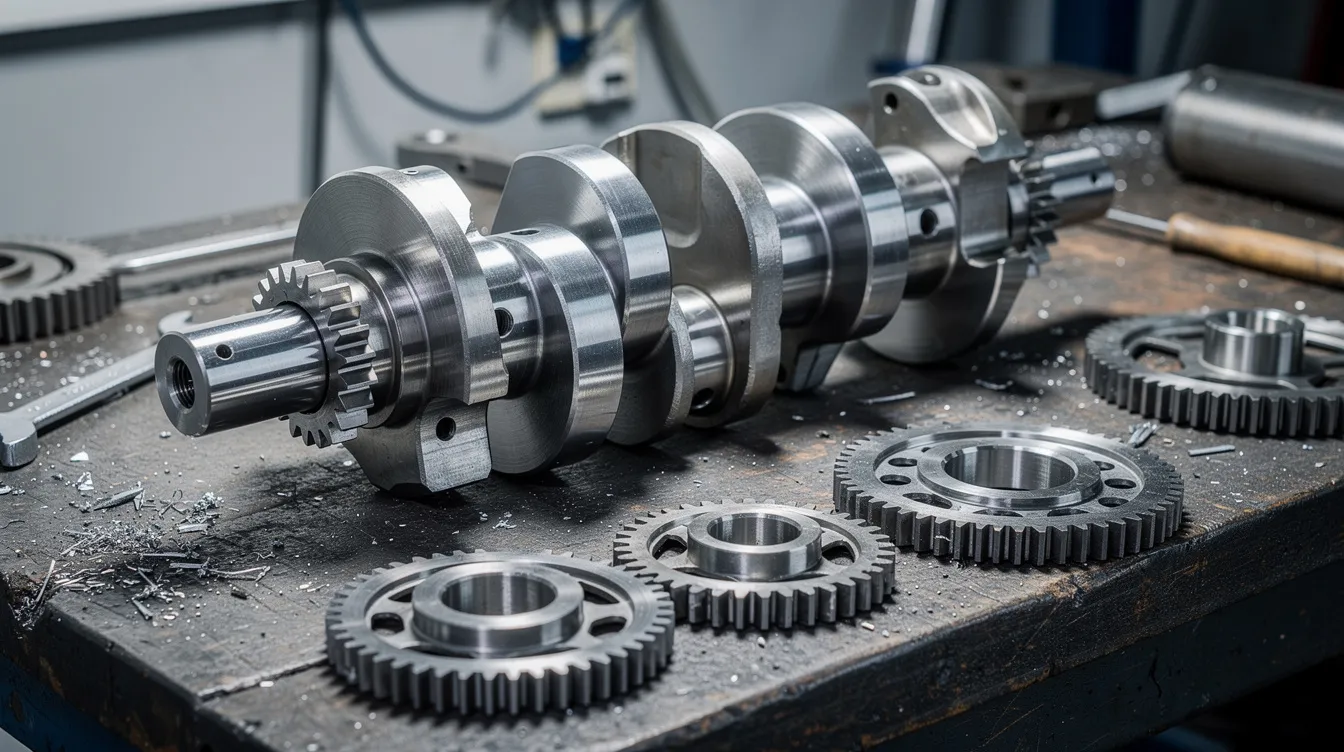
Matrix types produce different trade-offs: ferritic ductile iron offers higher elongation, lower strength, and good impact toughness-ideal for pressure vessels and piping. Pearlitic ductile iron delivers higher strength and excellent wear resistance but lower elongation-suited for gears and crankshafts. Mixed ferrite–pearlite matrices provide balanced properties for various applications.
Ductile iron exhibits excellent fatigue resistance under repeated loads. Under cyclic stress, the spheroidal graphite blunts advancing cracks, giving the material an endurance limit that supports long fatigue life in gears, crankshafts, and wheel hubs. The nodules also act as internal “lubricants” and chip-breakers during machining, reducing tool wear compared with plain carbon steel bars.
For OEM clients in automotive and industrial machinery, Anebon selects ductile iron grades with optimized fatigue resistance for shafts, housings, and heavy-duty brackets.
Casting Process: How Ductile Iron Castings Are Produced
Producing ductile iron castings that actually deliver the promised ductility requires strict process control at every step. A breakdown at any stage-melting, treatment, or cooling-can turn a ductile grade into a brittle one.
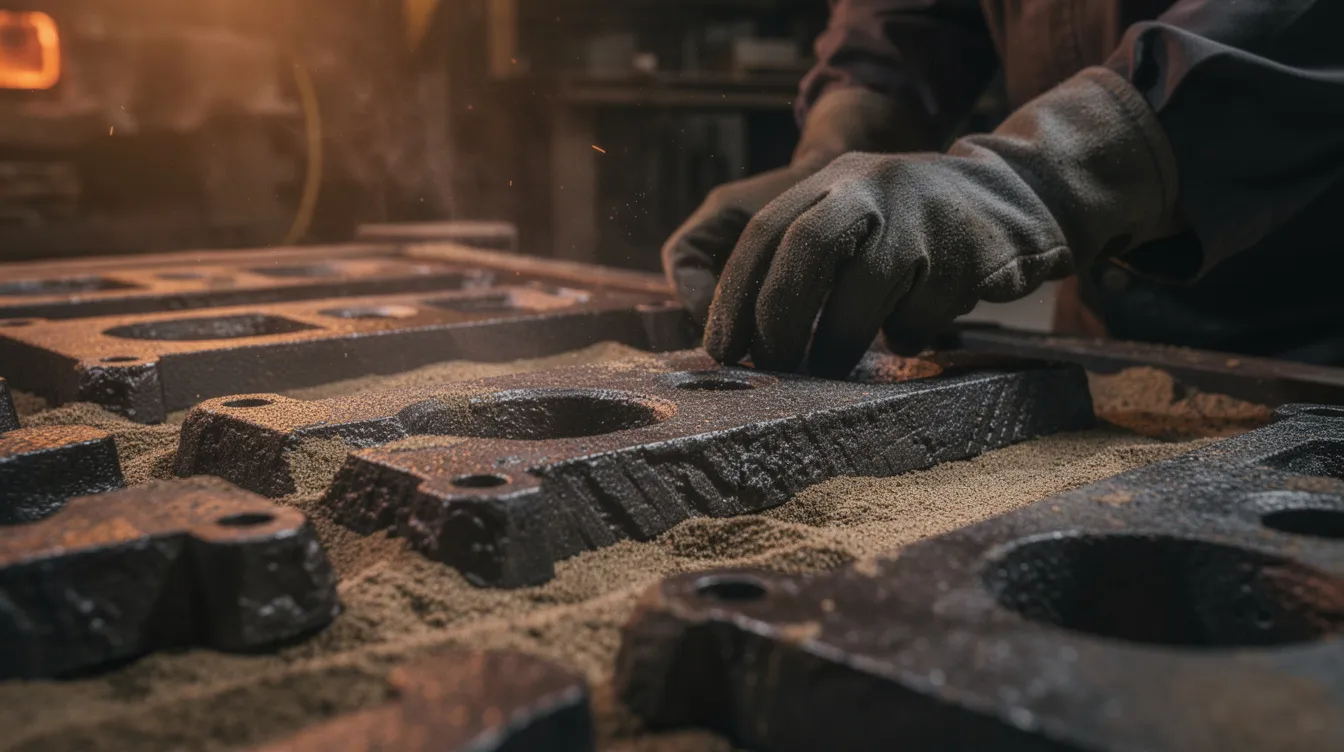
The casting process follows these key steps: melting pig iron and selected scrap to achieve target carbon and silicon (ductile iron typically contains over 3 percent carbon, with more carbon than steel), desulfurization and slag control to limit harmful elements, magnesium treatment (ladle or in-mold) where magnesium is added to molten iron to form spherical graphite nodules, inoculation to control nodule count and size, and pouring into sand or permanent molds followed by controlled cooling. Ductile iron casting involves pouring molten iron into molds, and ductile iron casting can be produced from pig iron or scrap iron.
The melting temperature for ductile iron ranges from 1,150 to 1,200 degrees Celsius (ductile iron has a melting temperature between 2,100 and 2,190 degrees F), and the finished material has a density of approximately 7.1 g/cm³.
Potential issues that kill ductility include insufficient magnesium residual, high sulfur content reacting with nodulizing agents, and poor inoculation leading to chunky graphite or carbide formation-especially in thin-wall sections where rapid cooling promotes white iron structure and cracking.
Anebon works with qualified foundry partners and then performs CNC machining, 5-axis milling, and precision turning on ductile iron castings to meet tight tolerances up to ±0.002 mm. Designers should communicate wall thickness and fillet radius requirements early, as these influence cooling rates and final microstructure.
Heat Treatment and Property Optimization
Heat treatment lets engineers fine-tune the balance between ductility, strength, and hardness in ductile iron after casting. The graphite nodules are already locked in place; heat treatment modifies only the surrounding matrix.
Common treatments include: annealing (typically 850–900 °C) to produce a ferritic matrix with maximum ductility and toughness, normalizing to refine pearlite and improve strength and fatigue resistance, and austempering (around 250–400 °C isothermal hold) to create austempered ductile iron (ADI)-a structure delivering very high strength and excellent wear resistance while maintaining good toughness. Research on ADI shows that austempering at approximately 330 °C often provides the best fatigue life for many alloy compositions.
Compared with carbon steel, ductile iron often achieves required properties with simpler heat treatments because graphite nodules are already present and the matrix simply needs to be adjusted-not rebuilt from scratch. Anebon coordinates post-casting heat treatment with foundry and heat-treat partners, then performs final precision machining and surface finishing for export-ready OEM parts.
Comparing Ductile Iron, Cast Iron, and Carbon Steel in Real Applications
Engineers frequently face a three-way choice when selecting materials for a cast or machined component: gray cast iron, ductile iron, or carbon steel. Each has unique advantages for different loading scenarios.
-
Gray cast iron: excellent compressive strength and vibration damping at lower cost, but very low ductility and poor impact resistance-a brittle material under tension.
-
Ductile iron: balances high tensile strength, ductility, fatigue resistance, and good castability. It is the ideal middle ground for most dynamic and pressure-bearing components.
-
Carbon steel (wrought or forged): generally higher toughness and weldability, but more expensive to form into complex shapes than castings.
Ductile iron can replace carbon steel forgings in many automotive and machinery parts when moderate-to-high ductility is sufficient and near-net casting is critical. For Anebon’s clients, ductile iron often reduces machining time and material waste vs solid steel billets, especially for complex housings and brackets.
When to pick each material:
-
Choose gray iron for static machine frames with high vibration damping needs
-
Choose ductile iron for pressure-bearing castings and dynamic components
-
Choose carbon steel where welding, forming, or ultra-high toughness is required
Automotive Components and Other High-Stress Use Cases
The automotive industry rapidly adopted ductile iron from the 1950s onward because it offered the strength of steel with the castability of iron-at a fraction of the forging cost. Ductile iron is used in automotive components like engine blocks, crankshafts, steering knuckles, differential housings, suspension arms, and brake calipers.
Ductility improves resistance to thermal fatigue in engine blocks and heads, fatigue life in crankshafts and gears under cyclic torsion, and impact resistance and fracture safety in suspension components. Ductile iron is used in gearboxes for its strength and wear resistance, making it the best material for many powertrain parts.
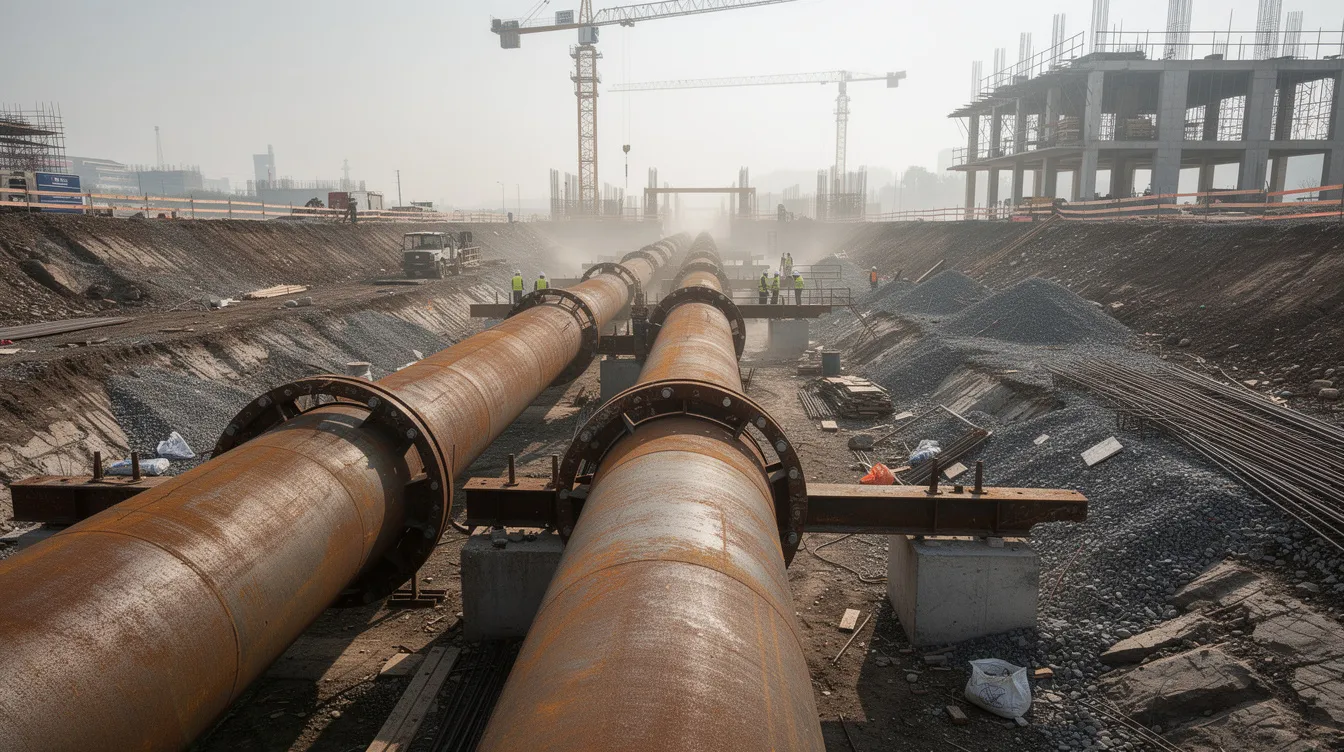
Beyond automotive, ductile iron pipes handle high-pressure water flow effectively in municipal water and sewer systems. Ductile iron is preferred for pump housings due to durability under continuous operation. Bollards made from ductile iron withstand significant impacts safely, protecting pedestrians and infrastructure. Wind-power gearbox housings, industrial valve bodies, and machine frames also rely on ductile iron for various applications.
Anebon supports these applications with rapid prototyping, small-batch trials, and scaling to mass production for overseas OEMs needing reliable ductile iron castings.
Design and Manufacturing Considerations for OEM Projects
Achieving the desired ductility in a finished part requires coordination between design, casting, heat treatment, and machining teams. No single step can compensate for failures in another.
High-level design tips: maintain adequate fillet radii to avoid stress concentrations, specify realistic wall thicknesses to minimize porosity and ensure uniform solidification, and avoid unnecessarily hard grades when fatigue rather than wear is the limiting factor.
Anebon’s DFM (Design for Manufacturability) feedback helps engineers select appropriate ductile iron grades, the right casting process, and optimal machining allowances. CNC milling, CNC turning, and 5-axis machining allow tight tolerances and complex geometries in ductile iron parts, with surface finishes suitable for sealing faces and bearing bores. Our ISO 9001:2015 and ISO 14001:2015 systems ensure full traceability of material certificates, process parameters, and inspection data for critical OEM components.
When to Choose Ductile Iron Over Other Materials
Material selection should weigh mechanical properties, lifecycle cost, manufacturability, and lead time. Here is a decision framework:
-
Choose ductile iron when you need high tensile strength, moderate-to-high ductility, and good fatigue resistance at a competitive cost
-
Stay with gray cast iron for low-cost, non-impact static components where brittleness is acceptable
-
Select carbon steel for welded structures or extreme impact/toughness requirements
Ductile iron is especially recommended for piping systems under internal pressure and ground movement, rotating machinery parts where vibration damping is beneficial, and precision housings and brackets where near-net-shape casting saves cost.
Anebon can provide comparative quotations and manufacturing plans for ductile iron vs steel options so engineers can quantify trade-offs before committing. Send your CAD files or drawings to Anebon Metal Products Limited for a detailed quote and material recommendation-our engineering team is ready to help you find the right form and grade for your next project.