Understanding the Ductility of Cast Iron: Key Properties and Benefits
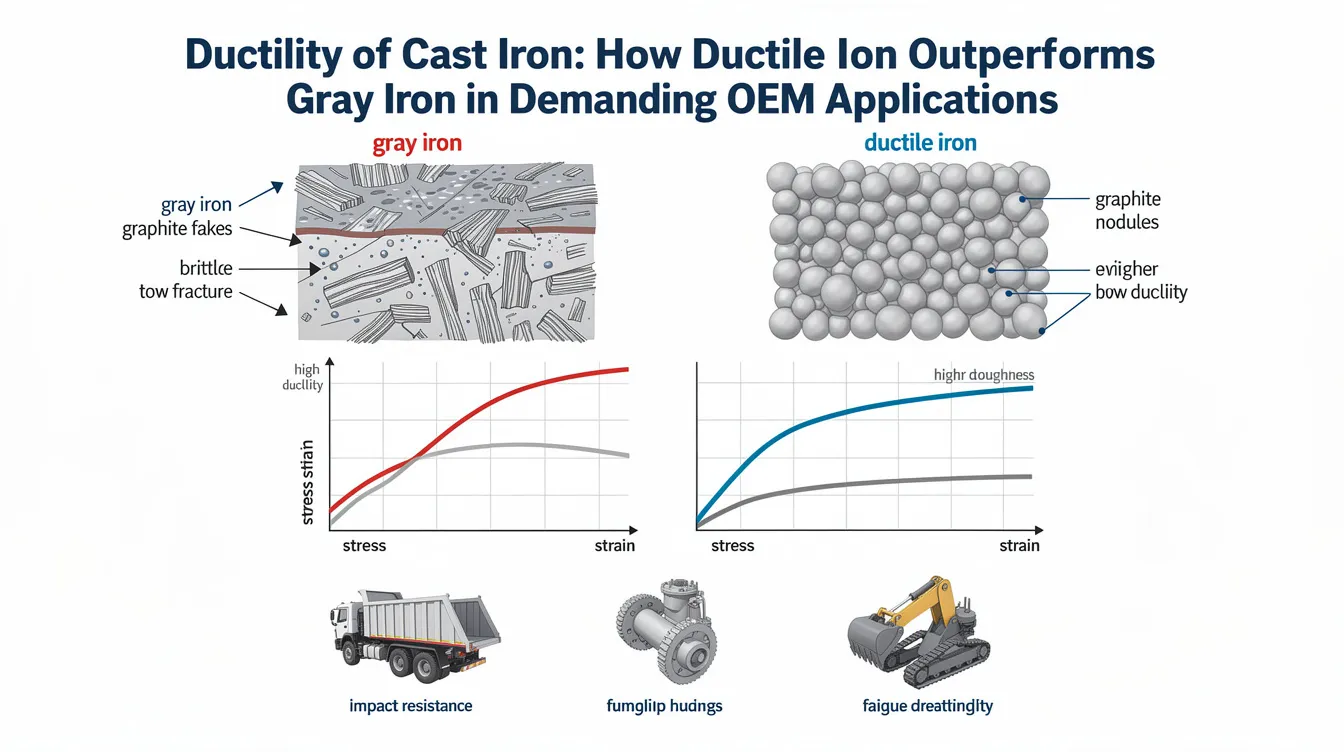
Ductility of Cast Iron: How Ductile Iron Outperforms Gray Iron in Demanding OEM Applications
Overview: Why Ductility Matters in Cast Iron for Modern OEM Parts
Ductility in cast iron refers to its ability to deform under tensile stress without breaking. For OEM parts that face bending loads, road shocks, or cyclic pressure, this property separates a component that warns you before failure from one that shatters without notice. Ductile cast iron – also known as nodular cast iron – was developed in the 1940s specifically to overcome the brittleness of traditional cast iron, and it has since become the preferred material for safety-critical iron castings across many applications.
Ductile iron is more flexible than gray cast iron and is safe for impact-protection applications. Here is how the two compare alongside steel:
|
Property |
Gray Cast Iron |
Ductile Iron |
Low-Carbon Steel |
|---|---|---|---|
|
Elongation |
< 1% |
2–18% |
15–25% |
|
Tensile Strength |
20,000–60,000 psi |
60,000–120,000 psi |
50,000–70,000 psi |
|
Impact Resistance |
Very low |
7–15 ft-lbs |
High |
|
Fatigue Resistance |
Low |
High |
High |
|
Vibration Damping |
Excellent |
Moderate |
Low |
At Anebon Metal Products Limited, we machine and finish both cast iron and ductile iron parts through CNC machining and die casting support, delivering precision OEM components to industries worldwide.
What Is Cast Iron? (With Focus on Gray Cast Iron)
Cast iron belongs to a family of iron carbon alloys containing roughly 2.0–4.0% carbon, along with silicon, manganese, sulfur, and phosphorus. When engineers say “regular cast iron” without further qualification, they typically mean gray iron.
-
Gray cast iron has a microstructure of graphite flakes dispersed throughout a metallic matrix of ferrite and pearlite.
-
These flakes act as built-in cracks and stress points, concentrating tension at their sharp tips and initiating fracture under load.
-
Gray cast iron’s tensile strength ranges from 20,000–60,000 psi, with elongation below 1% – essentially no plastic deformation before breaking.
-
Compressive strength is excellent (up to ~1,300 MPa), and the flake graphite provides superior vibration damping and thermal conductivity.
Gray iron castings remain widely used in machine frames, engine blocks, and brake rotors where damping, lower cost, and ease of machining outweigh the need for ductility.
What Is Ductile Iron (Nodular or Spheroidal Graphite Cast Iron)?
Ductile iron – also called spheroidal graphite cast iron or nodular iron – is a type of cast iron first commercialized around 1948. Ductile iron is engineered so that graphite forms as rounded nodules rather than flakes, improving toughness and elongation.
-
Adding small amounts of magnesium (typically 0.03–0.06%) to molten iron before casting causes graphite to solidify as spheres instead of flakes.
-
Ductile iron contains spheroidal graphite nodules that reduce stress concentration compared to the sharp-edged flakes in gray iron.
-
Nodular graphite offers higher ductility compared to flake graphite, which causes brittleness.
Ductile iron bridges the gap between gray iron and steel, retaining the casting advantages of iron alloys – the ability to produce complex shapes at reasonable cost – while delivering the elongation and toughness needed for pipe systems, steering knuckles, crankshafts, and valves across many industries.
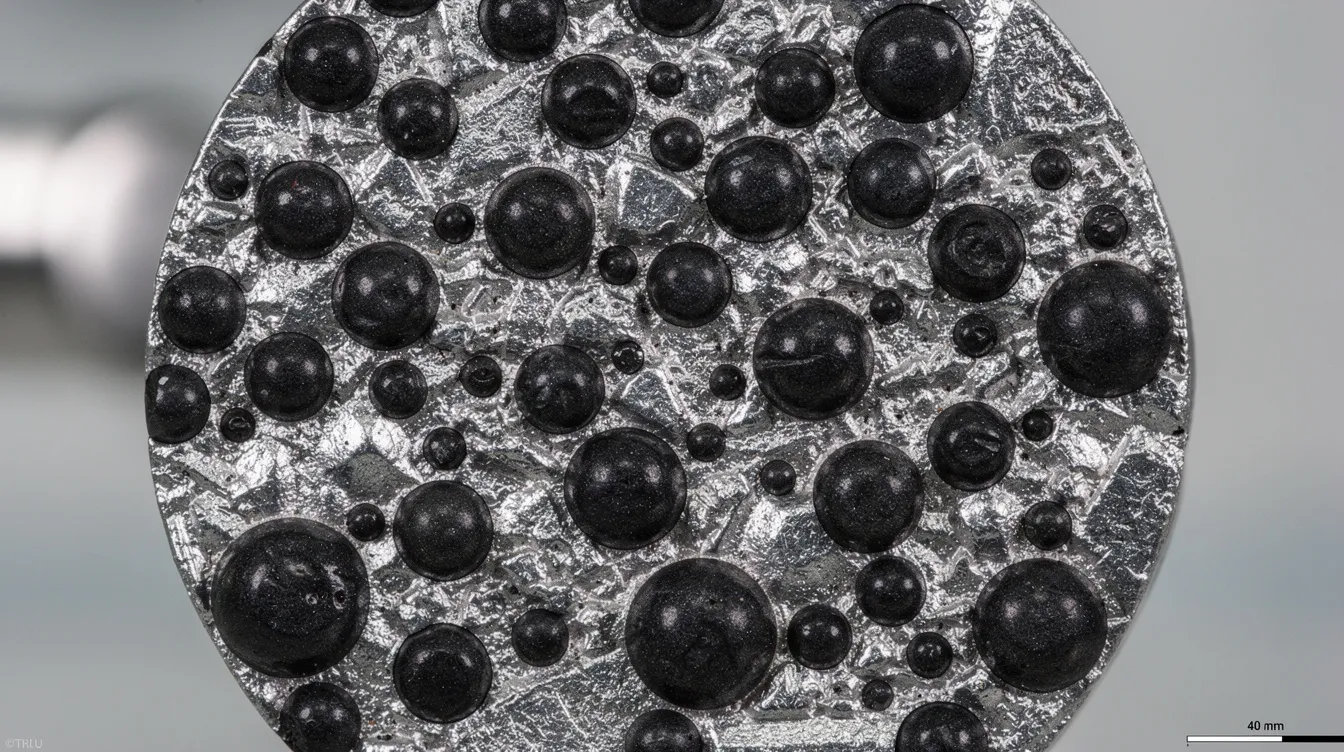
Chemical Composition and Microstructure: Cast Iron vs Ductile Iron vs Gray Iron
Graphite shape is the most critical factor determining ductility in cast iron. Both gray iron and ductile iron share similar base compositions, but their microstructure differs dramatically.
-
Carbon: Ductile iron typically contains about 2–4% carbon, influencing its ductility and graphite formation. Gray iron is similar at ~2.5–4.0%.
-
Silicon: 2.0–3.5% in ductile iron promotes ferrite and controls graphite structure. Copper and manganese appear as trace additions.
-
Magnesium: The key nodulizer – 0.03–0.06% Mg transforms graphite flakes into spheroidal nodules.
-
Low sulfur and phosphorus levels are crucial in producing a ductile matrix in cast iron; excess S or P degrades nodularity.
-
Ductile iron has a melting point of 1149 degrees Celsius, slightly influenced by alloy composition.
Unlike pure iron, these iron alloys rely on precise control of solidification – through inoculation, cooling rate, and alloy chemistry – to achieve the desired nodule count and matrix structure. Standards such as ISO 1083 and ASTM A536 define the physical properties and microstructure requirements for ductile iron castings.
Mechanical Properties: How Ductility Changes Performance
The key difference between ductile iron and gray iron shows up clearly in mechanical properties:
-
Ductile iron has a tensile strength of 60,000–120,000 psi and can elongate 2% to 18% before breaking, depending on grade.
-
Ductile iron withstands impact resistance of 7–15 ft-lbs – orders of magnitude above gray iron.
-
Yield strength ranges from ~276 to 621 MPa across standard grades.
-
Ductile iron combines high tensile strength with significant elongation, allowing it to withstand heavy loads and impacts better than gray iron.
-
Ductile iron components are less likely to fail catastrophically under sudden stress due to their ability to deform before fracturing. The material will bend and show visible distortion, giving maintenance teams warning before fracture.
-
Ductile iron can withstand significant stress before deformation, providing durability under sustained loads.
Gray iron still excels in vibration damping and wear resistance for static or compressive-load applications, so higher ductility is not always the sole design driver.
Ductile Iron Grades and Their Ductility Levels
ASTM A536 designates ductile iron grades in the format T–Y–E (tensile strength–yield strength–elongation %). Matrix structure affects ductility; a ferritic matrix is highly ductile while a pearlite structure increases strength but decreases flexibility.
|
Grade |
Min. Tensile (psi) |
Min. Yield (psi) |
Min. Elongation |
|---|---|---|---|
|
60-40-18 |
60,000 |
40,000 |
18% |
|
65-45-12 |
65,000 |
45,000 |
12% |
|
80-55-06 |
80,000 |
55,000 |
6% |
|
100-70-03 |
100,000 |
70,000 |
3% |
|
120-90-02 |
120,000 |
90,000 |
2% |
Selecting the right grade depends on the balance between ductility, strength, and machinability. Anebon can machine parts from any of these grades, holding tight tolerances on critical dimensions for OEM assemblies.
Gray Iron vs Ductile Iron: When Is Higher Ductility Required?
Both gray iron and ductile iron are produced from similar base alloys, but they serve different roles. Here is a practical selection guide:
-
Gray iron is suitable when: the part sees primarily compressive or static loads, vibration damping is critical, or the component is a large housing or machine base with minimal dynamic stress.
-
Ductile iron is the preferred choice when: the part must handle tension, bending, fatigue, or impact – think steering knuckles, axle housings, high-pressure pipe fittings, or construction brackets exposed to shock.
-
Decision factors: load type (tension vs. compression), impact risk, fatigue life requirements, regulatory safety standards, and overall cost of failure.
Ductile iron offers several advantages over gray iron for dynamic loading, but gray iron remains competitive at lower cost in static applications.
From Casting to Finished Part: How Ductility Is Preserved in Manufacturing
Ductile iron achieves ductility through a specialized cooling process that forms spherical graphite nodules. The casting process follows a precise sequence:
-
Melt base iron in an induction furnace
-
Add magnesium-based nodulizer and inoculant
-
Pour into sand or metal molds
-
Control cooling rate to promote graphite nodule formation and desired matrix
Excessive overheating, poor nodulizer recovery, or uncontrolled cooling can reduce nodularity or create carbides – both of which erode elongation and toughness. Post-casting heat treatment, shot blasting, and machining must be handled carefully to preserve the alloy’s mechanical properties.
CNC Machining and Finishing of Ductile and Gray Cast Iron
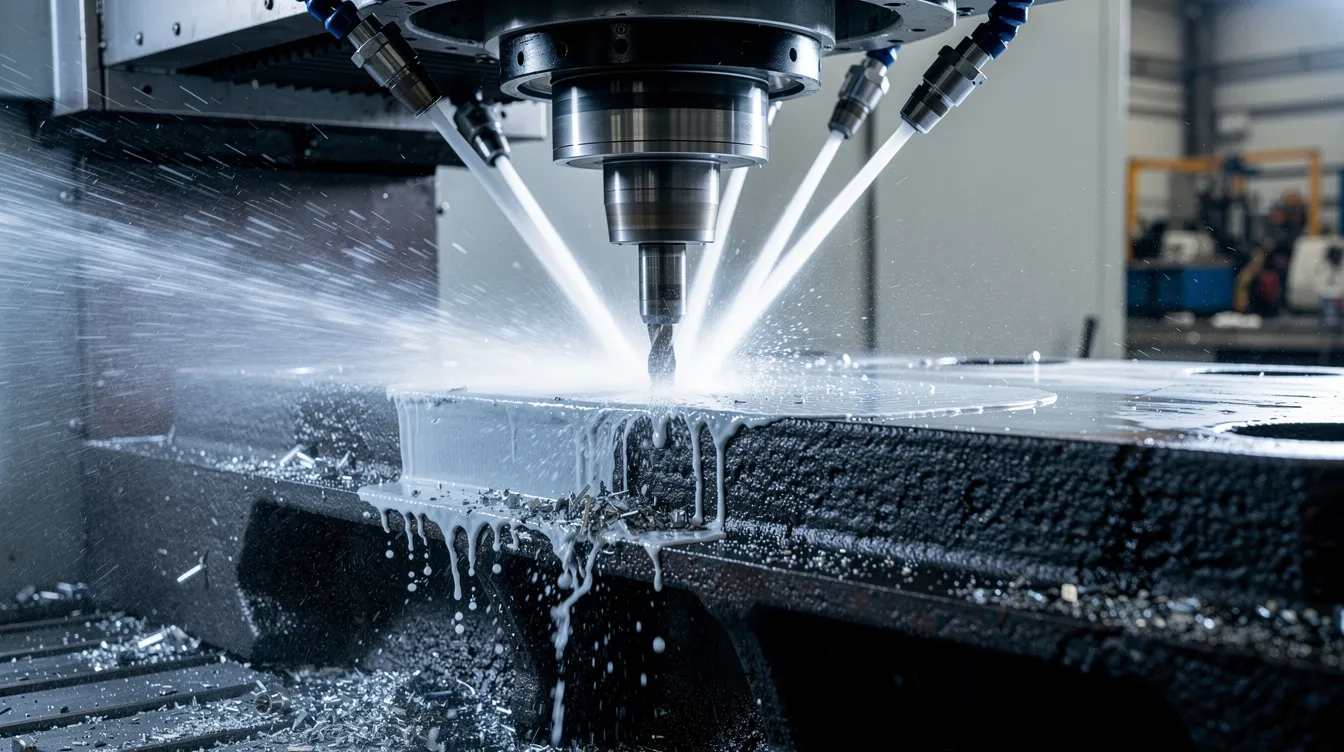
Gray iron machines easily because graphite flakes act as chip breakers and self-lubricants. Ductile iron is slightly tougher to cut but still far more machinable than most steel grades.
-
CNC milling and turning handle the bulk of finishing operations on iron castings.
-
5-axis machining enables complex shapes – contoured valve bodies, multi-bore housings – in a single setup.
-
Anebon holds tolerances as tight as ±0.002 mm on machined ductile iron parts, exploiting the material’s ductility to meet demanding fit and fatigue requirements.
-
Surface treatments such as painting, powder coating, phosphating, and controlled surface finishes complement the metal’s inherent resistance to wear and corrosion.
Applications Where Ductility of Cast Iron Is Critical
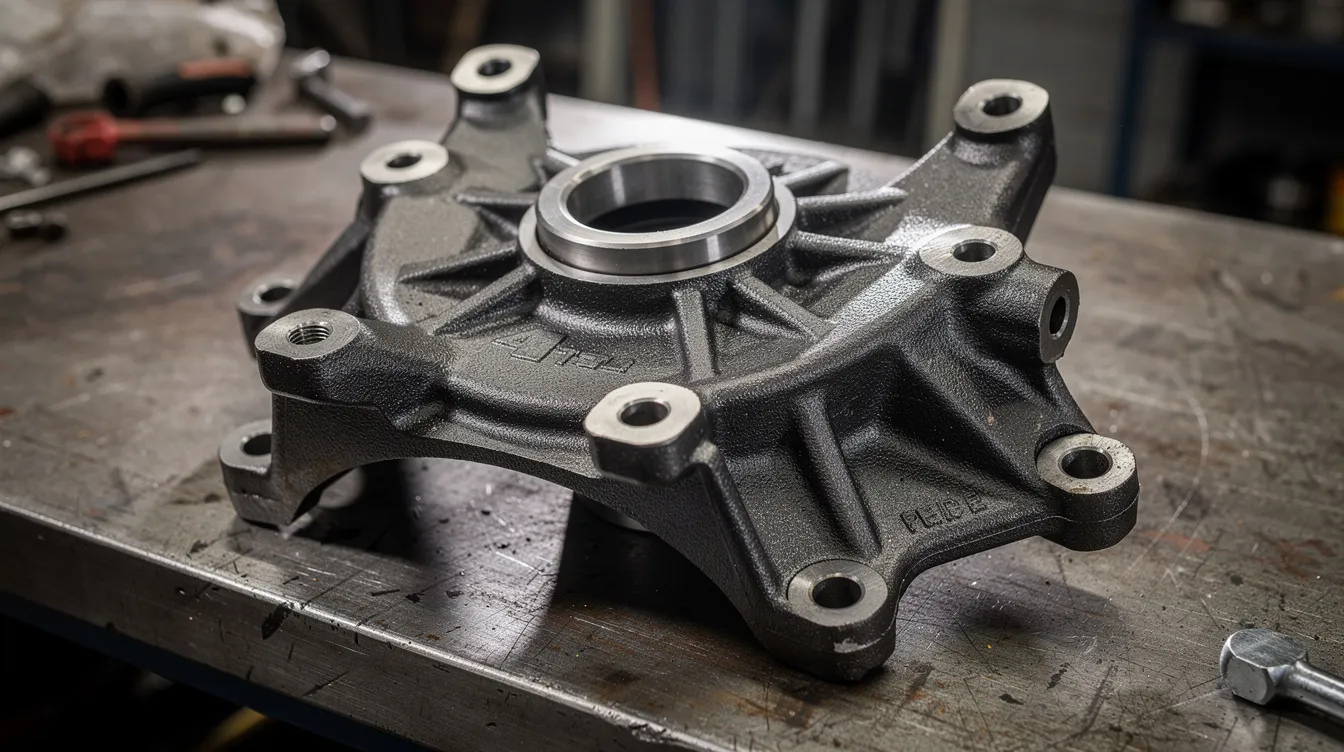
Ductile iron is used in automotive components such as control arms, hubs, and differential carriers where fatigue resistance and impact resistance prevent sudden failure during road shocks. It is also commonly used in gear boxes and is effective for pump housings that must contain pressure without brittle fracture.
In energy and construction, ductile iron is utilized for machine frames in wind power – large castings that endure cyclic loads over decades. Municipal infrastructure relies on ductile iron pipe for water and sewer lines, where ground movement demands elongation and toughness.
Gray iron remains suitable for stable machine structures, engine blocks, and brake rotors where high damping and compressive strength matter more than ductility.
Design Tips: Leveraging Ductile Iron’s Mechanical Properties
-
Maintain uniform wall thickness to avoid hot spots and shrinkage porosity that degrade ductility.
-
Use generous fillet radii at intersections to reduce stress concentration – ductile iron tolerates more than gray iron, but sharp corners still waste its advantages.
-
Specify proper draft angles and gating locations to minimize shrinkage in highly stressed regions.
-
Engage your foundry and machining partner early to select the right ductile iron grade based on real load cases, not conservative habit.
Anebon provides DFM feedback and supports rapid prototyping – machining from solid stock or short-run castings – so engineers can validate performance before committing to full ductile iron production.
Why Work With Anebon for Ductile Iron and Gray Iron Components?
Anebon Metal Products Limited is an ISO 9001:2015 and ISO 14001:2015 certified precision manufacturer in Dongguan, China, serving overseas OEMs with CNC machining, die casting, and sheet metal fabrication. We machine ductile iron castings and gray iron components to demanding specifications across automotive, energy, robotics, and industrial applications.
Our capabilities include multi-material projects combining ductile iron with aluminum, stainless steel, copper, and engineering plastics – all managed through a single point of contact from prototyping through volume production.
Ready to choose the right cast iron grade for your next project? Submit your drawings and requirements to request a quote and let our engineering team help you match material, form, and process to your mechanical and cost targets.