Understanding the Computer Numerical Machine: A Comprehensive Guide
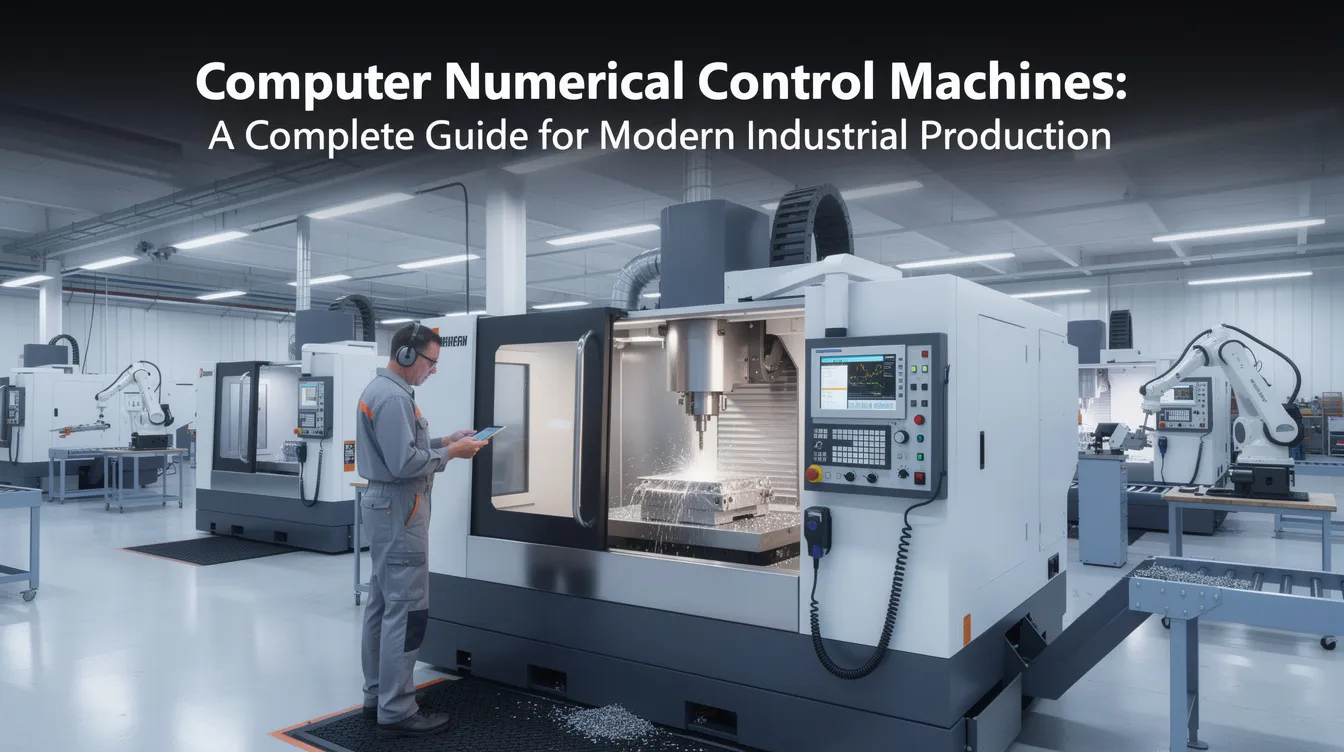
Computer Numerical Control Machines: A Complete Guide for Modern Industrial Production
Introduction to Computer Numerical Control Machines
Since the 1970s, computer numerical control machines have reshaped how manufacturers produce everything from jet engine brackets to surgical instruments. What began as experimental nc machines funded by the U.S. Air Force evolved into the backbone of modern manufacturing, enabling the aerospace industry, oil and gas industry, and dozens of other sectors to produce parts that manual methods simply cannot replicate. Today, CNC machines automate machining processes with programmed instructions, delivering precision, speed, and consistency that define industrial production worldwide.
When people search for “computer numerical machine,” they are typically referring to a CNC machine-a broad category that includes cnc milling machines, cnc lathes, cnc routers, grinders, and cnc electric discharge machines. Whether called a CNC machining center, an automated milling machine tool, or simply a cnc machine tool, the principle is the same: computer software and g code replace manual handwheels, and the result is faster, more accurate parts.
CNC machines matter to OEMs because they can operate continuously, 24/7, with minimal human intervention. Combined with computer aided design and computer aided manufacturing pipelines, they turn digital models into finished metal parts and plastic components in hours rather than days.
Anebon Metal Products Limited is an ISO 9001:2015 and ISO 14001:2015 certified cnc manufacturing partner founded in 2010 in Dongguan, China. Anebon offers CNC mills, CNC turning, EDM, die casting, and sheet metal services to overseas OEMs across industries.
What this guide covers:
-
How cnc machines work, from core components to the full cnc machining process
-
Types of cnc machines and their ideal applications
-
Key industries relying on computer numerical control cnc technology
-
Advantages, limitations, and future trends in cnc technology
-
How to work with Anebon for your next project
What Is a Computer Numerical (CNC) Machine?
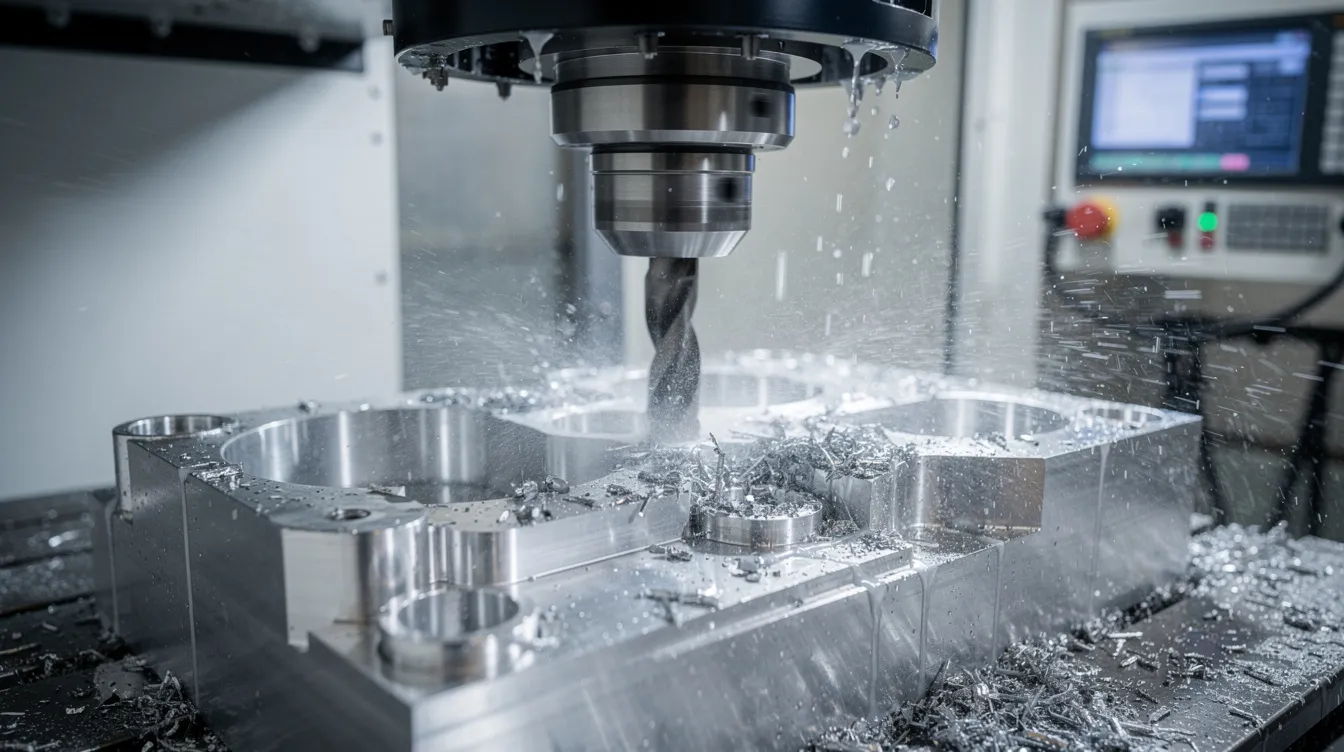
CNC stands for computer numerical control. A Computer Numerical Control (CNC) machine automates the control of cutting tools by replacing manual operation with a computer program that directs motion along multiple axes-X, Y, Z, and sometimes rotational axes A, B, and C. CNC is a subtractive manufacturing process that removes material from a solid block, and CNC machines cut, shape, or carve raw materials into precise custom parts for virtually any industry.
CNC machines can produce highly complex identical parts because every cycle follows the same digital instructions. Unlike manual machining, where results depend on operator skill and fatigue, numerical control cnc machines deliver consistent accuracy across thousands of pieces. They can work with metals, plastics, ceramics, and composites, making them one of the most versatile manufacturing methods available.
CNC machines can work with a wide range of materials including aluminum alloys (6061, 7075), stainless steels (304, 316), titanium (Ti-6Al-4V), engineering plastics (POM, PEEK), and tool steels used in molds and dies. CNC machines deliver precision and accuracy difficult to achieve manually-routinely holding tolerances of ±0.01 mm, with premium setups reaching ±0.002 mm.
|
Feature |
Manual Machining |
CNC Machining |
|---|---|---|
|
Precision |
±0.05–0.1 mm typical |
±0.01 mm standard; ±0.002 mm premium |
|
Repeatability |
Operator-dependent |
Program-based, minimal variation |
|
Cycle time |
Slower, manual setups |
Faster, optimized toolpaths |
|
Labor |
Skilled machinist throughout |
Less operator time, more upfront planning |
History and Evolution of Computer Numerical Control
CNC technology originated in the 1940s and 1950s with NC machines developed under U.S. Air Force sponsorship at MIT. John T. Parsons and Frank Stulen proposed using coordinate data to machine helicopter rotor blades, and by 1952, MIT demonstrated the first working three-axis NC milling machine using punched tape. These early machines proved that direct numerical control of machine tool axes was both possible and superior for complex aerospace shapes.
The transition from NC to CNC accelerated through the 1960s and 1970s as minicomputers and microprocessors replaced punched tape. Companies like FANUC and Siemens released the first true CNC controllers, standardizing g code and dramatically improving reliability. By the 1980s and 1990s, 4-axis and 5-axis machining became viable for turbine blades, impellers, and orthopedic implants-complex shapes that previously required many manual setups.
Key milestones:
-
Late 1940s: Parsons & Stulen concept; Air Force funding at MIT
-
1952: First operational NC milling machine demonstrated
-
1950s–60s: Commercial NC machines; APT programming language
-
1970s: Microprocessor-based CNC controllers; g code standardization
-
1980s–90s: Multi-axis machining, CAD/CAM integration, PC-based controls
-
2000s–10s: High-speed milling, hybrid machines, global adoption
-
2020s: AI, Industry 4.0, predictive maintenance, digital twins
Falling computer costs and standardized programming made cnc technology accessible to small and mid-size OEMs worldwide, including manufacturers in China’s Pearl River Delta cluster where Anebon operates.
Core Components of a CNC Machine
Every CNC machine-whether a cnc router, a milling machine, or an EDM-shares four fundamental subsystems: the mechanical structure, the machine’s control unit, the drive and motion system, and the feedback/sensor network. Understanding how these interact is essential for anyone evaluating machine configuration or selecting a cnc manufacturing partner.
Machine Tool and Mechanical Structure
The base casting, column, table, and spindle of a cnc mill or machining center must be rigid enough to absorb cutting forces without vibrating. Vertical machining centers (VMCs) orient the spindle vertically for general 3-axis work, while horizontal machining centers (HMCs) improve chip flow for deep pocketing. Large gantry structures serve cnc routers handling oversized composite panels.
Guideways and ball screws determine stiffness and speed. Linear rolling guides offer low friction and fast traverse but require precision manufacturing, while box ways provide superior vibration damping. High-grade ball screws (C3/C5 accuracy grades) achieve positional errors of ≤0.004 mm per 300 mm of travel.
-
Mechanical rigidity directly affects achievable surface roughness and tolerance: Ra < 0.4 µm and tolerances of ±0.002 mm are feasible only with premium structures.
Control Unit (CNC Controller)
The CNC controller is the “brain” that interprets g code and translates it into precise motor commands, spindle speeds, and coolant control signals. Industrial controllers from FANUC, Siemens, and Mitsubishi dominate the market, each offering real-time interpolation, look-ahead functions, and collision detection for high-speed machining of complex surfaces.
-
Stored programs and tool offset tables allow operators to switch between jobs quickly
-
Work coordinate systems (G54–G59) define part origins relative to fixtures
-
Look-ahead algorithms smooth motion during freeform surface machining, preventing jerky moves or overshoots
Drive and Motion System
Servo motors paired with digital drives and amplifiers move each axis with resolution as fine as 0.001 mm steps. Closed-loop servo systems-standard in industrial CNC-continuously compare commanded position to actual position and correct errors in real time. Open loop stepper systems may appear on light-duty cnc routers but lack the torque and feedback accuracy needed for production machining.
-
Stepper motors suit hobby and low-load applications; servo motors handle high-torque, high-precision cnc operation
-
Rapid traverse rates of 20 m/min or more reduce non-cutting time, directly lowering cycle times in large batch runs
Feedback, Sensors, and Safety Systems
Encoders and linear scales feed back position data to the controller, closing the control loop. Common sensors include limit switches, tool length probes, spindle load monitors, and temperature sensors that enable thermal compensation-critical when holding micron-level tolerances over long production runs.
Modern CNC machines use protective enclosures, interlocks, and coolant containment systems to improve operator safety. These feedback systems also lay the groundwork for predictive maintenance and Industry 4.0 connectivity, where vibration and temperature trends flag wear before a failure occurs.
Human–Machine Interface (HMI) and Display
CNC machines use input devices to feed programs into the computer, and the HMI is where operators load those programs, set work offsets, adjust feed and speed overrides, and monitor alarms. Typical displays show real-time axis positions, spindle load meters, program line numbers, and tool-in-spindle status.
Intuitive HMIs with standardized buttons reduce training time for operators and cnc machinists, enabling faster changeovers between jobs.
From CAD Model to CNC Machine: How Computer Numerical Machining Works
The digital manufacturing pipeline flows from computer aided design through cam software to actual machining on the shop floor. Understanding each step helps design engineers collaborate effectively with cnc manufacturing partners and avoid costly rework.
Designing the Part with CAD
CNC programming often starts with CAD designs. Engineers use cad software such as SolidWorks, CATIA, or Siemens NX to create 3D models with full dimensions, GD&T requirements, and surface finish callouts. CAD software is used to create digital models for CNC machining, and the quality of those models directly affects downstream programming and machining cost.
Designer checklist for CNC-friendly parts:
-
Specify fillet radii (avoid sharp internal corners where end mills cannot reach)
-
Maintain minimum wall thicknesses to prevent chatter
-
Ensure tool access to all features
-
Define critical tolerances explicitly-tighter specs cost more
CAM Software and Toolpath Generation
CNC programming requires knowledge of cad and cam software. CAM software imports the CAD model and lets programmers select machining strategies-2.5D pocketing, 3D surfacing, drilling operations, or 5-axis swarf cutting. Tool libraries inside the cam software store cutting tool geometries, coatings, spindle speeds, and feed-per-tooth values.
The output is g code-the standard language that cnc machines operate on. Anebon’s engineers optimize CAM strategies to balance cycle time, cutting tool life, and surface quality for each OEM project.
G Code, M Code, and CNC Programming
CNC programming uses G-code for machine instructions. G00 commands rapid positioning, G01 handles linear interpolation at a controlled feed rate, and G02/G03 produce circular arcs. M codes govern machine functions: M03 starts the spindle, M08 activates coolant, and M06 triggers a tool change. Together, these codes form the computer program that drives every axis movement during actual machining.
CNC programs can be reused for different projects, making cnc programming highly efficient for repeat orders or product families. Best practices include using work coordinate systems, proper tool length compensation (G43), and safe clearance moves to avoid crashes.
Machine Setup, Probing, and First Article Run
Physical setup involves selecting workholding (vises, custom fixtures, chucks), loading cnc tools into the magazine or turret, and aligning the workpiece using touch probes or edge finders. Operators then run the program in single-block mode or dry run to verify clearances before cutting metal.
Anebon uses CMM (coordinate measuring machine) and in-process probing for critical OEM components, verifying the first article against drawing specifications before releasing the job to volume production.
Production Machining, Monitoring, and Quality Control
CNC machines can operate continuously once programmed. Automated tool changes, pallet changers, and bar feeders enable lights-out machining that minimizes downtime. CNC machines can operate continuously, 24/7, minimizing downtime-a key advantage for mass production runs and tight delivery schedules.
Operators and cnc machinists monitor spindle load, vibration, and cutting tool wear to prevent scrap. Statistical process control and periodic sampling verify dimensional stability over long runs. For regulated sectors like aerospace and medical, Anebon archives inspection reports, material certificates, and program versions to meet strict traceability requirements under its ISO-certified quality system.
Types of Computer Numerical Control Machines
Most subtractive manufacturing methods now have CNC versions. Understanding which machine type fits your part geometry and production process is the first step toward efficient sourcing. Below are the most common cnc machines in industrial use.
CNC Milling Machines and Machining Centers
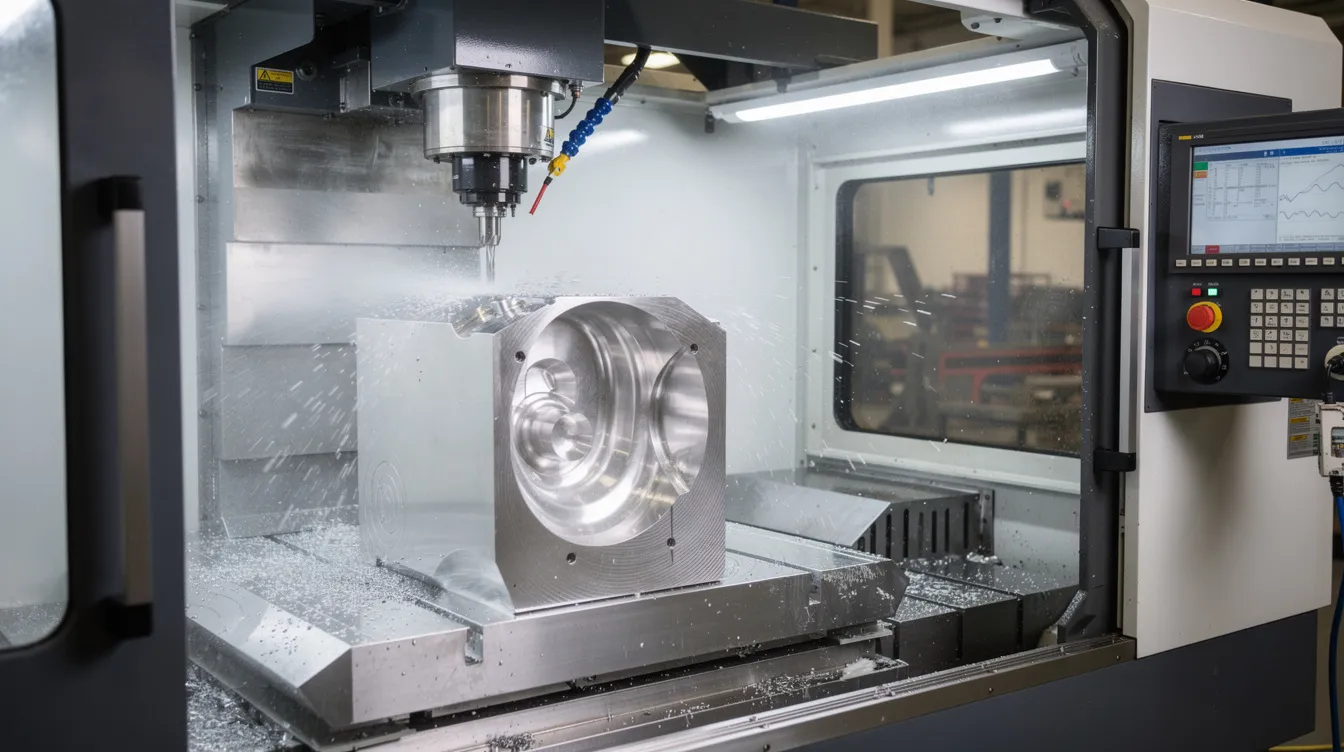
CNC mills use rotating cutting tools to remove material from a workpiece clamped to the table. A standard 3-axis vertical machining center handles prismatic parts-brackets, housings, plates-while 4-axis and 5-axis CNC machining centers add rotary axes for complex operations.
CNC milling machines can create complex geometries on multiple axes, and CNC machines can produce complex 3D shapes and intricate details such as turbine impellers, orthopedic implants, and avionics housings. A 3-axis mill machining an impeller would need multiple setups and re-fixturing; a 5-axis machine completes it in one, preserving alignment and reducing fixture cost.
Anebon’s cnc milling services support tolerances down to ±0.002 mm across materials from aluminum 6061 to hardened tool steels.
CNC Lathes and Turning Centers
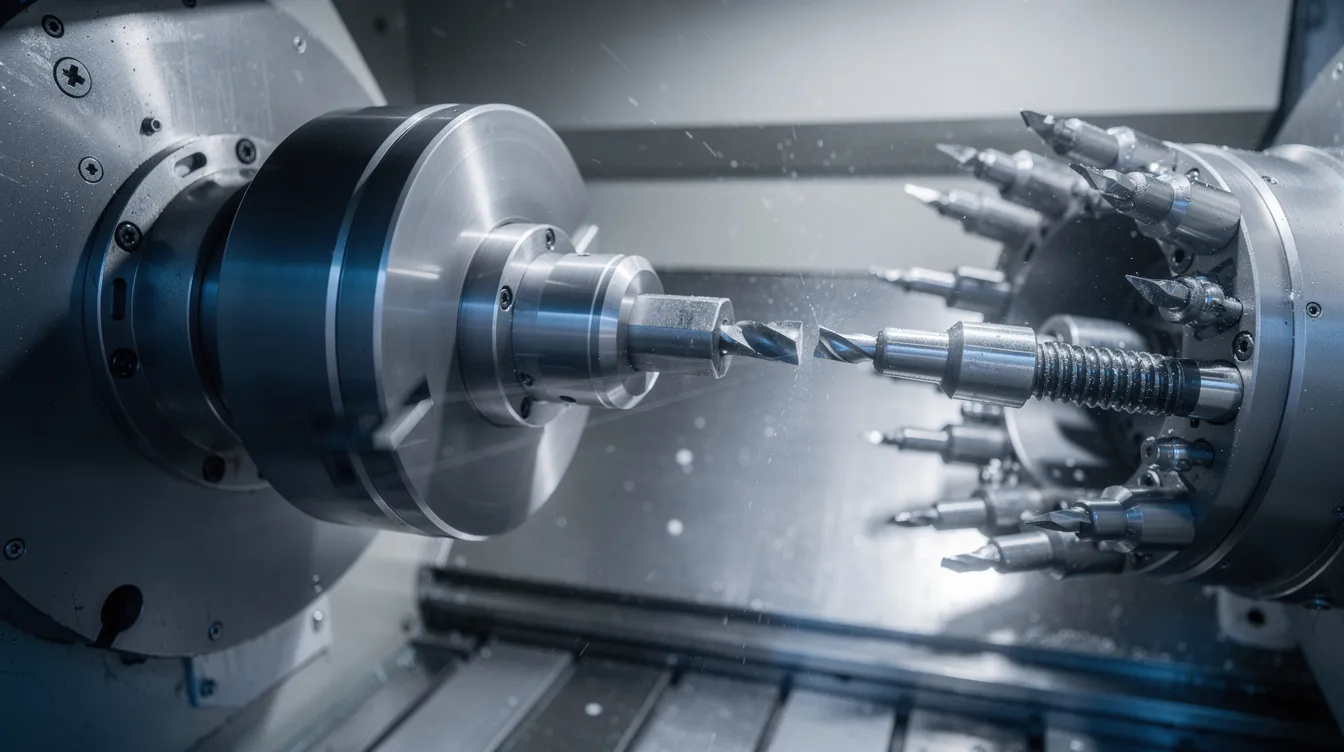
CNC lathes shape cylindrical objects with high precision by rotating the workpiece against fixed or live cutting tools. Modern lathes-often called turning centers-feature live tooling, Y-axis offset, and sub-spindles that enable milling, drilling, and tapping without moving the part to a second machine.
Common turned parts for the oil and gas industry include valve stems, drill collars, and threaded connectors where concentricity and sealing surface finish are critical. Anebon’s precision turned components meet tight runout requirements across stainless steel, titanium, and specialty alloys.
CNC Routers
CNC routers are ideal for cutting and engraving softer materials such as wood, plastics, composites, and sometimes soft aluminum. These gantry-style machines offer large table sizes, vacuum workholding, and multi-head setups for high throughput in furniture, signage, packaging, and large composite aerospace panels.
While Anebon focuses on metal cnc machining, router design principles-axis drives, guideways, workholding-overlap strongly with other computer numerical machines.
CNC Electric Discharge Machines (EDM)
Electrical discharge machining removes metal through controlled electrical sparks in a dielectric fluid rather than mechanical cutting tool contact. Wire edm cuts complex 2D/3D profiles through hardened materials, while sinker EDM creates cavities in molds, dies, and turbine components where traditional cutting tool shapes cannot reach.
EDM fits into hybrid process flows-rough mill a mold cavity, then finish with EDM for sharp internal corners and surface finishes below Ra 0.2 µm. Anebon’s EDM capabilities complement its CNC machining for precision toolmaking and mold production.
Other CNC Machine Types (Plasma, Laser, Grinders, Saws)
CNC plasma cutters use high-velocity jets to cut metal plate and are common in fabrication and shipbuilding. CNC laser cutters provide high precision for various materials including sheet metal and thin-walled components. CNC machining is also essential for producing durable marine components where corrosion-resistant alloys must be cut accurately.
CNC grinders handle precision surface and cylindrical finishing for toolmaking and high-precision shafts. Automatic CNC saws cut bar stock and plates to size before machining operations begin. Anebon often works with pre-cut or ground feedstock from such equipment as part of its broader production process.
Key Industrial Applications of Computer Numerical Machines
CNC machines play a central role across various industries wherever precision, repeatability, and material performance matter. Many machines running in factories today produce mission-critical parts that must perform under extreme conditions. Here is where cnc processes deliver the most value.
Aerospace and Defense
CNC machining is vital in the aerospace industry. Structural components like brackets, seat tracks, hydraulic manifolds, and turbine blades demand aluminum 7075-T6, titanium, Inconel, and high-strength stainless steels machined on rigid cnc machine tools with advanced 5-axis strategies. Tolerance and documentation expectations are extreme-tight GD&T, full traceability, and rigorous first article inspection reports.
Medical Devices and Healthcare
CNC machining creates precise components for medical devices including orthopedic implants, bone plates, spinal devices, surgical instruments, and diagnostic equipment housings. Materials like medical-grade titanium and cobalt-chrome require surface finishes below Ra 0.4 µm and micron-level tolerances. Small-batch, highly customized parts and rapid prototyping are the norm in this sector.
Automotive, Transportation, and Heavy Equipment
CNC machines produce engine parts in the automotive sector along with transmission housings, suspension elements, brake components, and EV motor housings. High-speed CNC machining centers handle high-volume aluminum engine blocks and cylinder heads while maintaining the cost-efficiency and automation the manufacturing industry demands.
Oil and Gas Industry and Energy Sector
Typical CNC-machined parts for the gas industry include valves, pump housings, drill collars, flanges, and high-pressure fittings. Environmental challenges-corrosion, pressure, abrasion, temperature extremes-require robust materials and flawless sealing surfaces. Precision cnc machining is non-negotiable for leak-free connections in remote or offshore installations. Anebon produces stainless steel and alloy components for these demanding applications.
Electronics, Robotics, and Industrial Machinery
CNC technology is used for crafting printed circuit boards, aluminum and magnesium enclosures, heatsinks, precision gears, and sensor housings across the electronics industry. These compact, high precision parts often need cosmetic anodized finishes and tight fits for assembly into electronic devices and robotic systems. Anebon excels at small, complex, multi-operation parts that integrate into larger mechatronic assemblies.
Advantages and Limitations of Computer Numerical Machines
CNC technology can manufacture complex geometries that are difficult to achieve manually, but cnc machines are not always the right choice for every job. A balanced view helps OEMs make informed decisions about their manufacturing process.
Precision, Repeatability, and Quality
CNC machining can produce parts with tolerances as tight as a few microns. Premium equipment-like that used by Anebon-achieves ±0.002 mm on critical features. CNC machining ensures uniformity in mass production of parts, maintaining dimensional consistency across thousands of cycles when machines are properly maintained. This level of high precision directly impacts functional performance in sealing surfaces, alignment features, and fatigue-critical joints.
Efficiency, Automation, and Production Flexibility
CNC machining reduces production time compared to traditional methods through rapid traverses, aggressive cutting parameters, and multi-axis single-setup machining. Automated CNC machines reduce human error and labor costs, while automatic tool changers and pallet systems enable around-the-clock production. CNC machining results in reduced material wastage and lower scrap rates thanks to optimized toolpaths generated by cam software.
Fast program changeovers let a single machine handle multiple tools and part numbers in a day-ideal for variable OEM demand. Anebon leverages this automation to support rapid prototyping, low-volume batches, and scalable production.
Costs, Skills, and Practical Limitations
Industrial cnc machines, tooling, fixtures, and CAM software licenses represent significant capital investment, especially for 5-axis and multi-tasking machines. Skilled cnc programmers and setup technicians are in demand, and training takes time. Practical limitations include machine travel size, fixturing complexity for complex operations, and diminishing returns for ultra-small batches.
CNC is not always the best fit-very simple stamped parts or ultra-high-volume injection molding may be more cost-effective through other manufacturing methods. However, outsourcing to a partner like Anebon lets OEMs bypass upfront capital obstacles while accessing world-class cnc capabilities, skilled cnc machinists, and established quality systems.
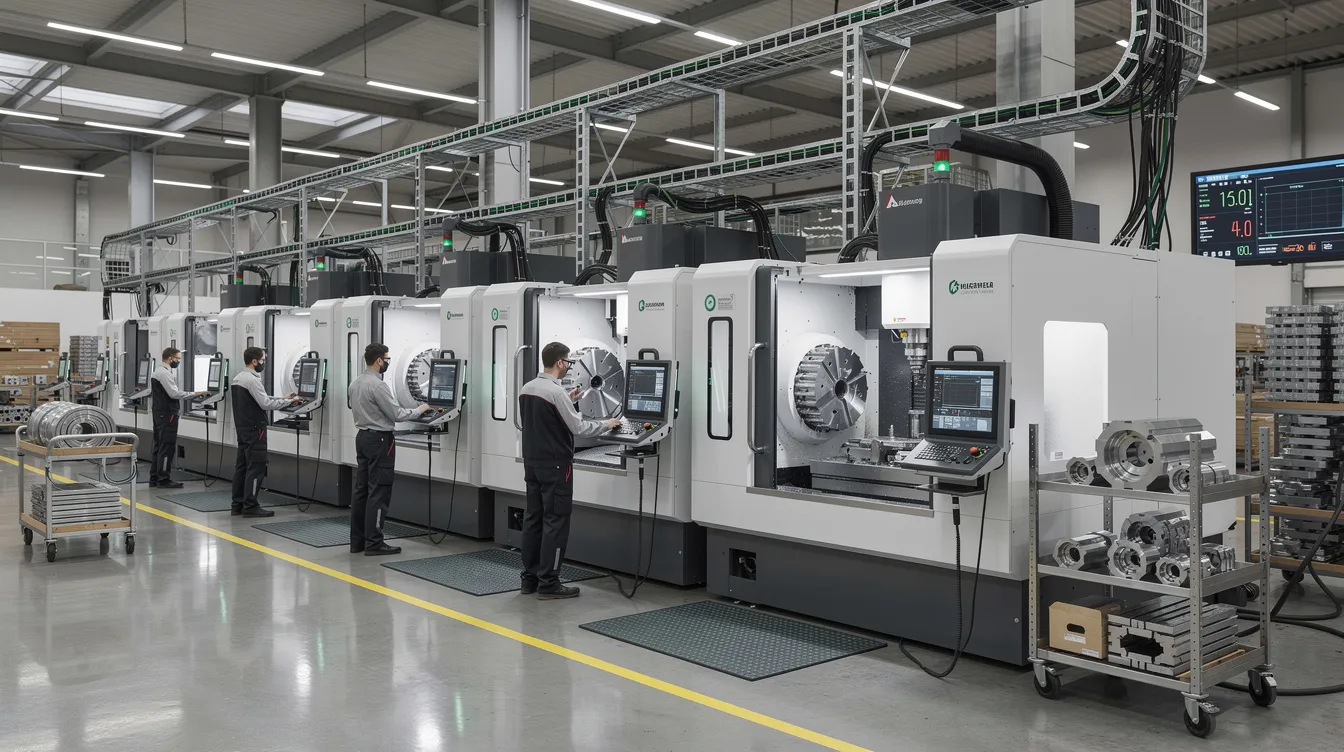
Future Trends in Computer Numerical Control and Smart Manufacturing
CNC machines are evolving from standalone machine tools into fully connected systems integrated into digital factories. The convergence of cnc technology with AI, IoT, and hybrid manufacturing is reshaping the production process for OEMs worldwide.
Integration with AI, Machine Learning, and Predictive Maintenance
AI and machine learning analyze spindle load, vibration, and temperature data to predict cutting tool wear and prevent unplanned downtime. Shops implementing predictive maintenance report 30–50% reductions in unplanned downtime and 10–25% lower maintenance costs. Digital twins-virtual models of cnc machines and cnc processes-enable simulation and optimization before chips fly. Adaptive control systems automatically adjust feedrates based on sensor feedback, improving both quality and tool life.
Hybrid Processes and Additive–Subtractive Manufacturing
Hybrid machines combine 3D printing with cnc milling in a single setup: print a near-net shape, then use computerized controls and traditional milling for precise surfaces, threads, and interfaces. This approach saves material and enables internal features like conformal cooling channels. Even when additive methods are involved, cnc machines and traditional milling machines remain essential for final accuracy and surface finish across aerospace, medical, and energy components.
Connectivity, Data, and Industry 4.0
Modern CNC machines connect via Ethernet to MES and ERP systems, enabling live monitoring of utilization, scrap, and cycle times. Standardized protocols like MTConnect and OPC UA simplify data interchange. The global CNC machining market reached approximately US$14.5 billion in 2023, growing at ~6.7% CAGR, with 85% of shops adopting some form of automation and 60% using IoT sensors for real-time monitoring. For overseas OEMs, this connectivity means greater transparency into a supplier’s production status through digital dashboards and regular reporting.
Working with Anebon Metal Products Limited for CNC Machining
Anebon Metal Products Limited brings over a decade of experience in precision cnc machining (milling and turning), 5-axis machining, die casting, and sheet metal fabrication. Certified to ISO 9001:2015 and ISO 14001:2015, Anebon serves overseas OEMs across aerospace, medical, automotive, electronics, robotics, and the oil and gas industry with tolerances as tight as ±0.002 mm.
Typical engagement process:
-
Submit an RFQ with drawings or CAD models
-
Receive DFM feedback and a detailed quotation
-
Approve rapid prototypes and validate first articles
-
Ramp to volume production with full QA documentation
Whether you need a single prototype or thousands of production parts, Anebon turns your digital designs into finished components using multiple tools, advanced cnc processes, and rigorous quality control. Ready to automate machining processes for your next project? Request a quote or share your CAD files with Anebon’s engineering team today.