Understanding the Benefits and Applications of Ductile Iron Material
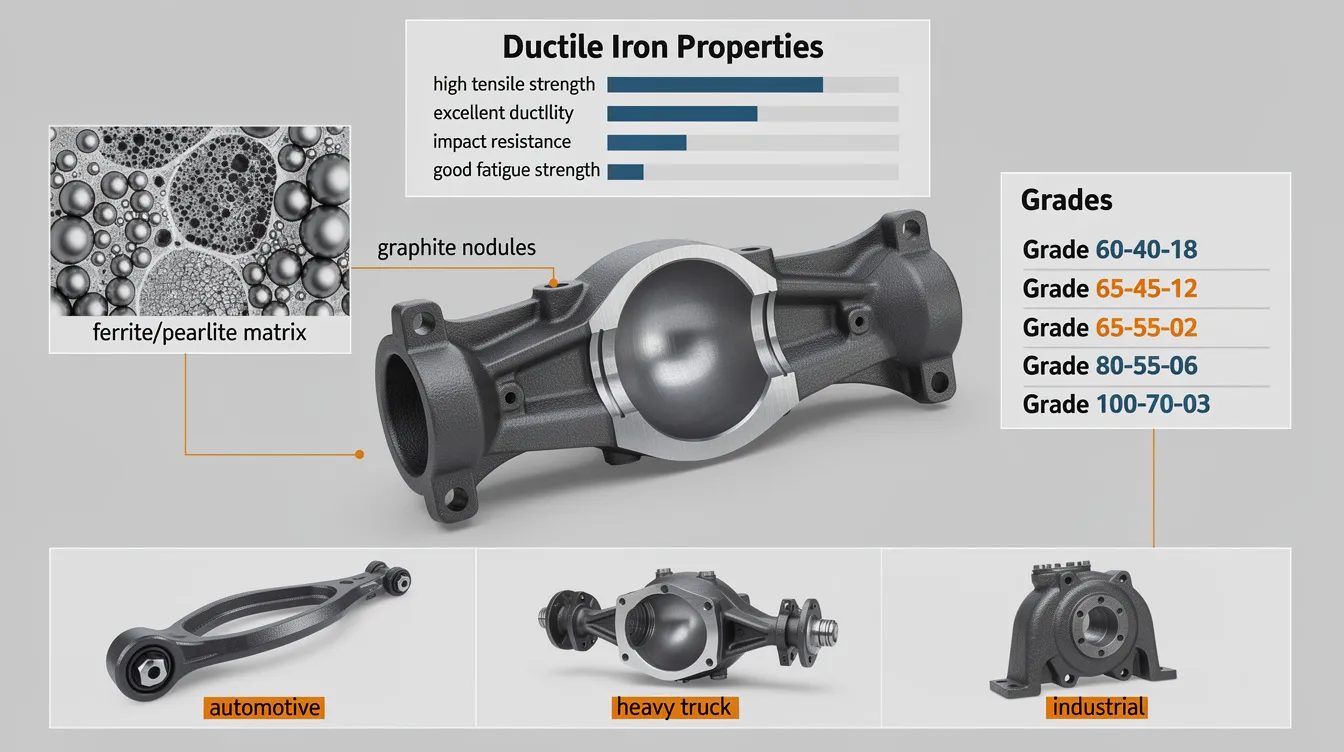
Ductile Iron Material: Properties, Grades, and OEM Applications
Choosing the best material for a load-bearing, impact-prone, or fatigue-critical component often comes down to a straightforward question: does the application demand the ductility and strength of steel, or the castability and cost advantages of cast iron? Ductile iron material sits squarely at that intersection, offering high strength, excellent castability for complex shapes, and mechanical properties that rival many carbon steel grades. This guide walks through everything OEM engineers need to know-from chemical composition and standard grades to practical selection criteria and sourcing.
Overview of Ductile Iron vs Cast Iron
Cast iron is a family of iron–carbon–silicon alloys containing more than roughly 2% carbon. Within that family, the primary difference between variants lies in graphite morphology. Traditional cast iron-commonly called gray cast iron-contains graphite in flake form. These flakes act as stress concentrators, making gray iron a relatively brittle material under tensile loading.
Ductile iron, also known as nodular iron or spheroidal graphite iron (SG iron), changed that equation when Keith Millis discovered in 1943 that adding magnesium to molten iron caused graphite to solidify as spheroidal graphite nodules rather than flakes. The result: a ferrous alloy that is less brittle than cast iron, can safely deform before fracturing under stress, and approaches the tensile and yield strength of many steels.
Here is a high-level comparison:
-
Graphite shape: Ductile iron features a graphite structure of spherical nodules, unlike gray iron’s flakes.
-
Strength: Ductile cast iron achieves far higher tensile strength and ductility than gray iron.
-
Impact resistance: Nodular graphite dramatically reduces crack initiation under shock loads.
-
Vibration damping: Gray iron still leads due to flake graphite dissipating energy.
-
Cost: Ductile iron is more expensive than cast iron because it requires magnesium additives, increasing production costs.
All three names-ductile iron, nodular iron, spheroidal graphite iron-refer to the same material. At Anebon Metal Products Limited, we machine and finish both gray and ductile iron parts for overseas OEM customers across automotive, industrial machinery, and fluid power applications.
Chemical Composition and Microstructure
The chemical composition of a cast iron alloy determines how carbon precipitates during solidification-and whether graphite particles form as flakes or nodules. Small changes in elemental balance yield large shifts in mechanical properties and physical properties alike.
Ductile iron contains over 3% carbon during casting, typically 3.4–3.9% C, alongside 2.2–2.8% silicon, ≤0.4–0.6% Mn, and very low sulfur (< 0.03%) and phosphorus (< 0.08%). The critical step in ductile iron production is adding magnesium (approximately 0.03–0.05%) to the melt; this converts graphite from flakes into spheroidal nodules. Sometimes cerium or rare-earth elements supplement the nodulizing treatment.
|
Element |
Ductile Iron (Typical) |
Gray Iron (Typical) |
|---|---|---|
|
Carbon (C) |
3.0–4.0 % |
2.5–4.0 % |
|
Silicon (Si) |
1.8–2.8 % |
1.8–3.5 % |
|
Sulfur (S) |
< 0.03 % |
Higher tolerance |
|
Phosphorus (P) |
< 0.08 % |
Higher tolerance |
|
Nodulizer (Mg/RE) |
0.03–0.05 % Mg |
None |
|
Graphite shape |
Spheroidal nodules |
Flakes |
Foundries tailor different grades by adding copper, nickel, molybdenum, or chromium in small percentages (0.2–1%) to shift the metal matrix from ferritic toward pearlitic, increasing strength and hardenability for each specific application.
Mechanical Properties of Ductile Iron vs Gray Iron and Carbon Steel
When selecting materials for an OEM component, designers routinely compare ductile iron against gray cast iron and low medium carbon steels like AISI 1018 or 1045. The comparison reveals where ductile iron excels-and where trade-offs exist.
Ductile iron has a tensile strength of 60,000 to 120,000 psi depending on grade, and certain grades can withstand tensile strengths over 120,000 psi. It can elongate 2% to 18% before breaking, while gray iron rarely exceeds 1–3% elongation. Cast iron typically has a tensile strength of only 20,000 to 60,000 psi. With a density of 0.256 lb/in³, ductile iron features a high strength-to-weight ratio that makes it competitive with forged steel in many structural roles.
Ductile iron vs gray iron vs carbon steel at a glance:
-
Tensile strength: Ductile iron 414–827+ MPa; gray iron 150–400 MPa; AISI 1045 steel ~570–630 MPa.
-
Ductility: Ductile iron 2–18% elongation; gray iron < 3%; 1045 steel ~12–16%.
-
Wear resistance: Pearlitic ductile iron manages surface wear effectively; steel excels when hardened; gray iron moderate.
-
Fatigue: Ductile iron superior-spheroidal graphite minimizes crack initiation at stress points.
-
Vibration damping: Gray iron best; ductile iron good; steel poor.
-
Impact resistance: Ductile iron far outperforms gray iron; comparable to many steels.
A high nodule count (>100 nodules/mm²) yields more uniform properties and better fatigue life across the casting.
Standard Ductile Iron Grades (ASTM A536 and Others)
Ductile iron grades are classified by minimum tensile and yield strength plus elongation. The astm a536 standard uses a three-number system: first = tensile strength in ksi, second = yield strength in ksi, third = minimum elongation %. All ductile iron grades conform to ASTM A536 standards.
|
Grade |
Tensile Strength |
Yield Strength |
Elongation |
Typical Applications |
|---|---|---|---|---|
|
60-40-18 |
~414 MPa (60 ksi) |
~276 MPa (40 ksi) |
18 % |
Pressure pipes, impact-exposed parts |
|
65-45-12 |
~448 MPa (65 ksi) |
~310 MPa (45 ksi) |
12 % |
Valve/pump bodies, housings |
|
80-55-06 |
~552 MPa (80 ksi) |
~379 MPa (55 ksi) |
6 % |
Gears, crankshafts, high-load parts |
|
100-70-03 |
~689 MPa (100 ksi) |
~483 MPa (70 ksi) |
3 % |
Heavy structural/machinery parts |
|
120-90-02 |
~827 MPa (120 ksi) |
~621 MPa (90 ksi) |
2 % |
Extreme wear, maximum load |
Engineers may also encounter EN-GJS designations (e.g., GJS-400-18 ≈ 60-40-18) and Chinese GB/T standards. Anebon can machine parts from any customer-specified ductile grades, including solution strengthened ductile iron (SSDI) and high-strength pearlitic grades for demanding applications.
Heat Treatment and Microstructural Control
Heat treatment tunes the matrix structure of ductile iron-ferritic for maximum ductility, pearlitic for excellent strength and wear resistance, or martensitic/bainitic for extreme hardness. Common treatments include:
-
Annealing: produces fully ferritic matrix; maximizes elongation and impact toughness (grade 60-40-18).
-
Normalizing: refines grain structure; shifts matrix toward ferritic–pearlitic balance.
-
Quenching and tempering: achieves martensitic or tempered structures for grades like 100-70-03. Ductile iron can be oil quenched hardened to Rockwell C 50.
-
Austempering: produces austempered ductile iron (ADI) with excellent wear resistance and fatigue life.
Ductile iron can be surface hardened to 60 HRC, making it a cost saving alternative to case-hardened steel castings in gears and wear components. However, heat treatment introduces distortion, so precise dimensional control requires coordinating machining sequences: rough machine → heat treat → finish machine on critical features. Anebon coordinates with trusted heat-treatment partners to ensure post-treatment dimensions and hardness meet OEM specifications.
Casting Process and Machinability of Ductile Iron
Ductile iron is primarily made from pig iron in foundries before undergoing CNC machining and finishing. The casting process follows a well-defined sequence:
-
Melting: pig iron, selected steel scrap, and ferroalloys charged into induction furnaces.
-
Nodulizer treatment: magnesium is produced as a reaction additive in the molten iron to form nodular graphite.
-
Inoculation: silicon-based inoculants promote uniform nucleation and high nodule counts.
-
Pouring and cooling: mold filling (sand, permanent mold, or continuous casting) with controlled cooling rates.
Continuous casting produces ductile iron bar stock with fine-grained microstructure, low porosity, and the fine grain size inherent to this process. This bar stock delivers excellent free machining properties for turned and milled parts, with the same free machining benefits as carefully produced sand castings-sometimes better.
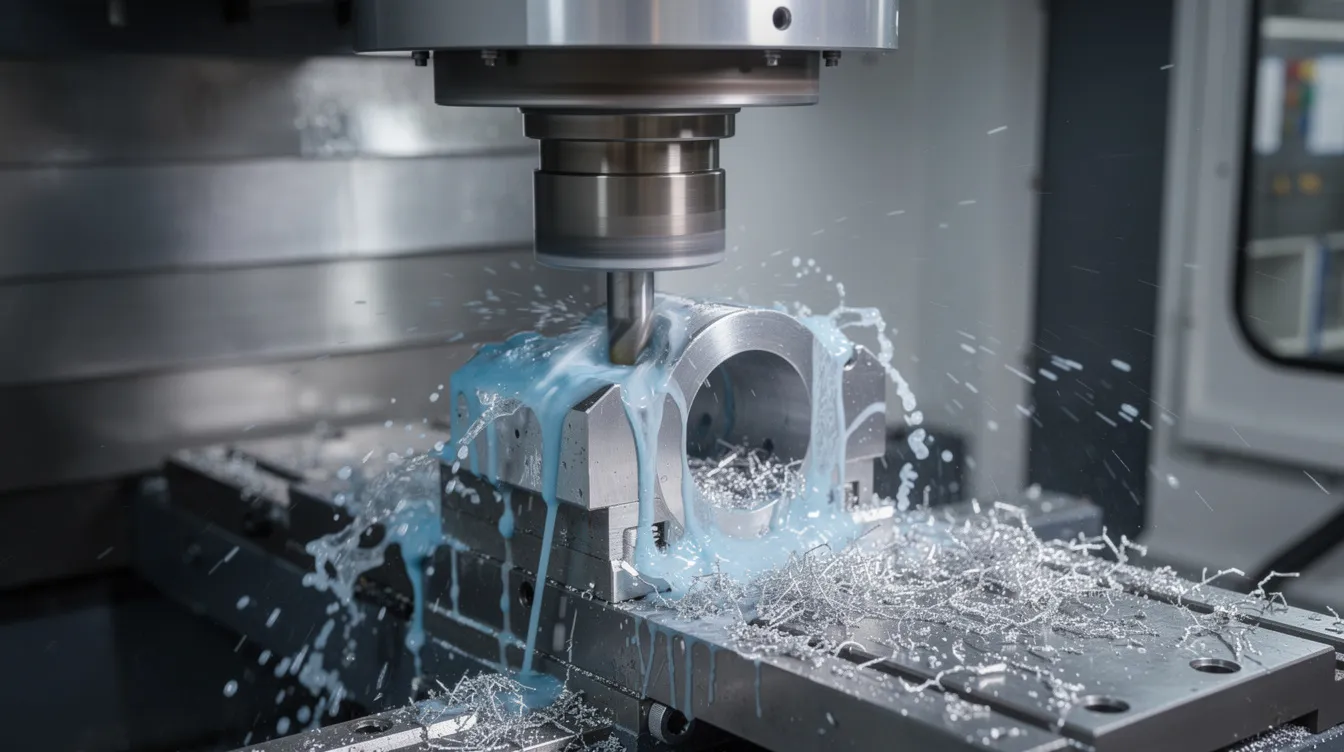
Ductile iron provides superior castability for complex shapes. Its machinability advantages over carbon steel are significant: graphite nodules act as chip breakers and solid lubricants, often increasing tool life and enabling higher cutting speeds. Ductile iron offers lower machining costs compared to steel, while its production involves more complex quality testing to verify nodularity and matrix structure.
Best practices for machining ductile iron:
-
Use sharp-edged carbide tooling with robust rake angles
-
Apply proper cutting fluids for cooling and chip evacuation
-
Control chip formation with dedicated breakers-graphite helps but is not pure iron’s behavior
-
Verify casting soundness before machining critical features; ductile iron’s exceptional mechanical properties depend strongly on casting quality
-
Maintain dimensional stability with in-process inspection
Anebon performs CNC turning, milling, 5-axis machining, drilling, tapping, and precision boring on ductile iron castings and bar stock with tolerances down to ±0.002 mm where casting quality allows.
Ductile Iron vs Gray Cast Iron: Practical Selection Guide
When ductile iron occurs alongside gray iron on a material trade study, engineers should weigh these factors:
Gray cast iron is still preferred for:
-
Machine frames and machine tool beds requiring superior vibration damping and noise reduction
-
Pump housings with low impact loading where thermal conductivity matters
-
Brake rotors where damping and heat dissipation dominate design requirements
Ductile iron is superior for:
-
Impact-prone bollards and safety-critical structures
-
Suspension, steering, and automotive components under cyclic fatigue
-
High-pressure pipe fittings, hydraulic components, and fluid power applications
-
Gears and rotating parts needing excellent strength and wear resistance
Ductile iron exhibits excellent vibration damping properties-less than gray iron but far better than steel. It is also resistant to corrosion in harsh environments when properly specified. A straightforward selection approach: define loads and fatigue life → evaluate stiffness and damping needs → compare cost and weight → select grade → confirm with FEA and stress testing.
Anebon reviews 3D models and drawings to provide DFM feedback on wall thickness, gating impacts, and machining allowances for both gray and ductile iron castings.
Ductile Iron vs Carbon Steel in OEM Components
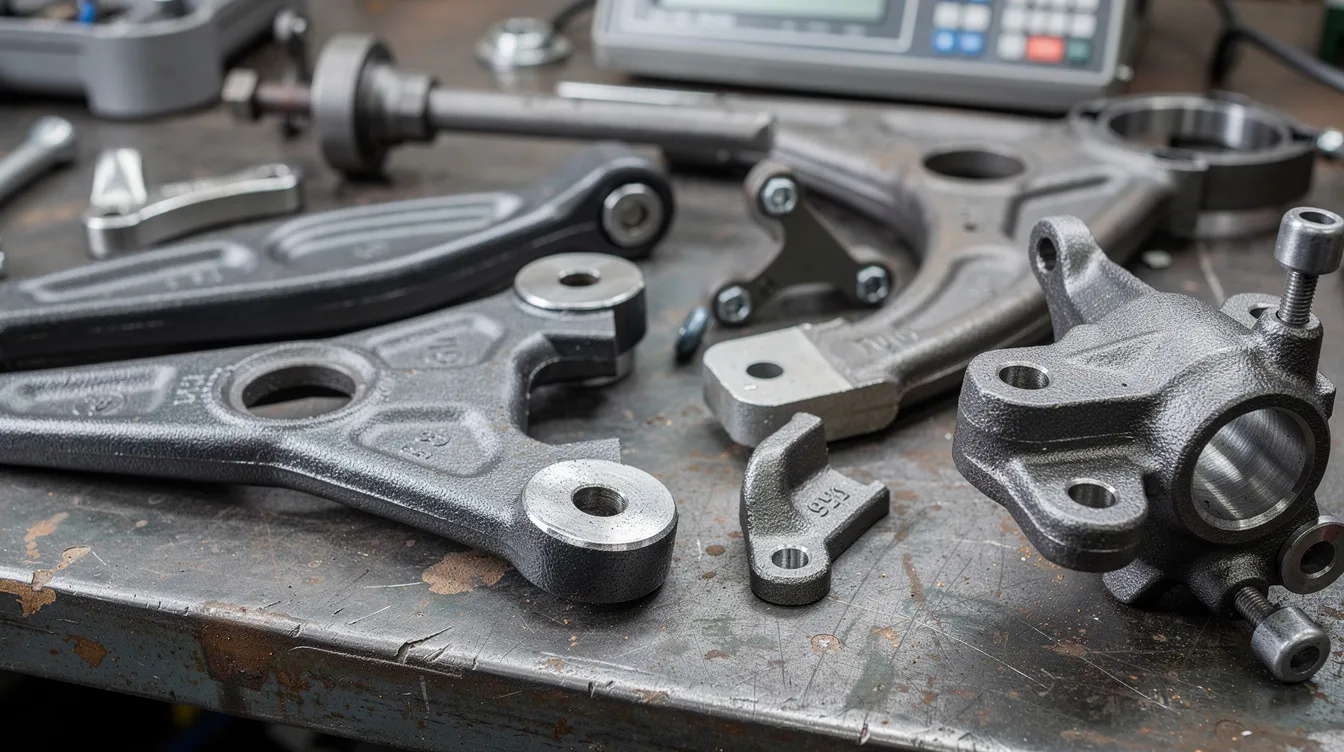
Engineers frequently consider ductile iron as a direct replacement for carbon steel castings, forgings, or weldments. Grades like 65-45-12 and 80-55-06 approach or match the tensile and yield strength of low medium carbon steels such as AISI 1020 and 1040 in the as-rolled condition-at lower cost in many manufacturing regions.
Ductile iron can replace steel in various industrial applications, reducing overall costs through fewer machining operations, consolidated part counts, and natural vibration damping. Ductile iron generates less problematic chip waste than some alloyed steels, minimizing waste disposal problems on the shop floor. The material also delivers free machining benefits that translate directly into shorter cycle times.
Limitations exist: modulus of elasticity is slightly lower (~160–180 GPa vs ~200–210 GPa for steel), meaning stiffer designs may need thicker sections. Welding ductile iron is more difficult than welding most steels.
Industry examples include replacing welded steel fabrications in agricultural machinery frames, producing industrial gearbox housings as one-piece ductile iron castings, and substituting forged steel automotive knuckles with ductile iron castings plus CNC finishing-often cutting part count and assembly time significantly.
Typical Applications and Industries Using Ductile Iron
Ductile iron has been widely adopted since the 1950s, and today serves as the alloy of choice across demanding industrial applications.
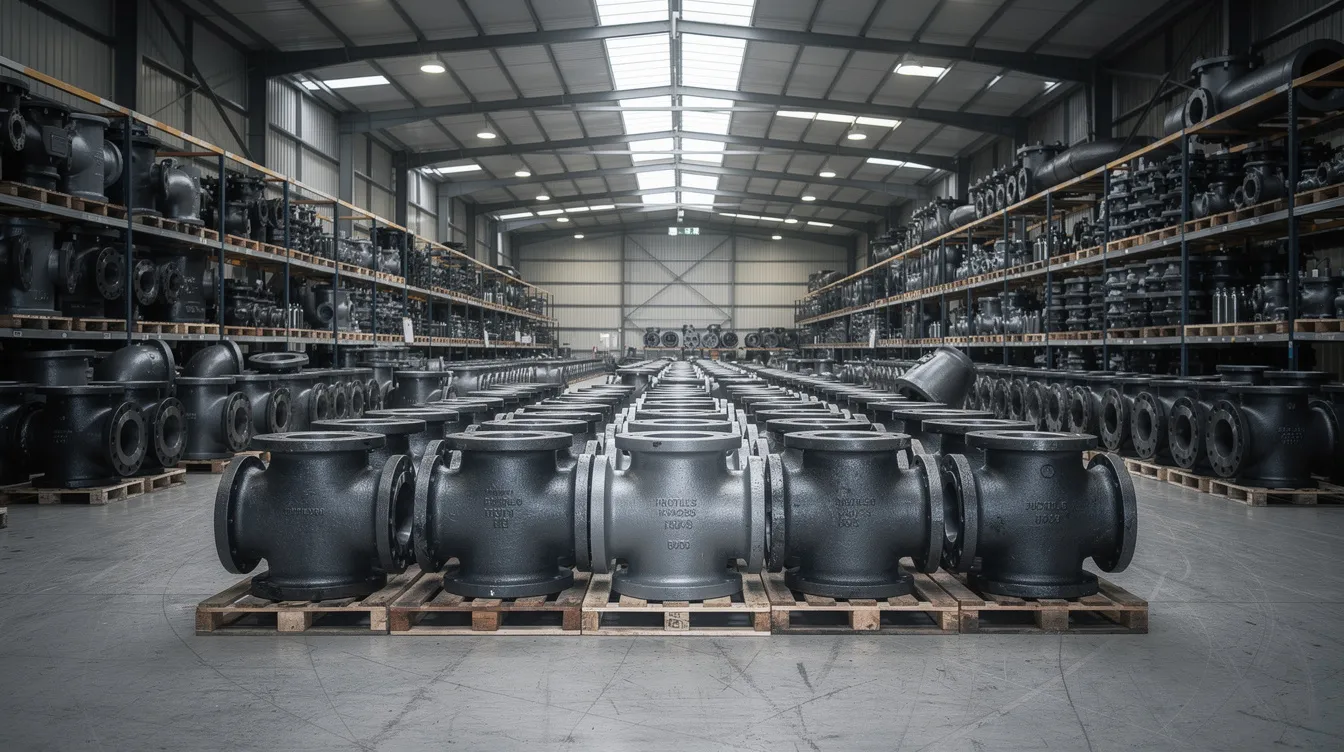
Ductile iron is widely used in the automotive industry for components like crankshafts and suspension parts. It is used in automotive components and wheels, heavy machinery applications due to its wear resistance, and is an industry standard for water and sewage piping. It is preferred for high-strength pipe applications and commonly used in impact-protection applications like bollards. It is effective for pump housings and machine frames across general industry.
Where ductile iron shines:
-
Load-bearing structures under impact and shock
-
Fatigue-critical rotating parts (crankshafts, gear blanks, differential carriers)
-
Pressure-containing components (valve bodies, pipe fittings, hydraulic cylinders)
-
Safety-critical structural parts requiring excellent strength before failure
Gray iron remains more common in engine blocks, some brake components, and machine tool beds-but ductile iron increasingly takes over higher-stress regions within these same assemblies.
Anebon supports these use-cases with precision CNC machining of ductile iron castings, rapid prototyping for new designs, and small-to-medium production runs for overseas OEM programs.
Design and DFM Considerations for Ductile Iron Parts
Proper design for manufacturability is essential to realize the full benefits of ductile iron castings. Without it, even the right grade selection can result in casting defects or excessive machining costs.
Key DFM guidelines:
-
Wall thickness: keep uniform; thick sections risk internal porosity, while thin walls may solidify too quickly and reduce nodularity.
-
Fillet radii: generous fillets at internal corners reduce stress points and improve casting soundness.
-
Draft angles: required on all vertical mold surfaces for clean part removal.
-
Machining allowances: provide extra stock on critical surfaces-especially when heat treatment will precede finish machining.
-
Gating and risering: foundry-driven but affects part geometry; designers should be aware that feeder placement impacts near-net-shape surfaces.
When transitioning from billet machining or fabricated steel to ductile iron casting, simplify geometry to reduce part count and eliminate unnecessary welds. Specify material requirements clearly in drawings-for example: “ASTM A536 80-55-06, ferritic–pearlitic matrix, fully machined surfaces per drawing XYZ”-along with inspection criteria for nodularity, hardness, and dimensional tolerances.
Anebon’s Capabilities with Ductile Iron and Gray Iron Components
Anebon Metal Products Limited is an ISO 9001:2015 and ISO 14001:2015 certified manufacturer based in Dongguan, China, focused on precision OEM parts since 2010.
Our services relevant to ductile iron include CNC turning, CNC milling, 5-axis machining, rapid prototyping, and production machining of both ductile and gray iron castings and continuous cast bar. We achieve tolerances down to ±0.002 mm on critical features where base casting quality supports it.
Industries and part types we commonly support:
-
Automotive housings, suspension brackets, and steering components
-
Pump bodies, valve housings, and gear casings
-
Robotics and industrial machinery brackets
-
Fluid power cylinders and wear-resistant liners
We encourage engineers and purchasing teams to engage Anebon early in the design phase to optimize material choice, ductile iron grade, and manufacturing route.
How to Specify and Source Ductile Iron Parts with Anebon
The typical sourcing workflow for ductile iron components starts with an RFQ and ends with validated production parts.
What to provide:
-
2D drawings and 3D CAD files
-
Annual volume estimates
-
Target ductile iron grade (e.g., ASTM A536 65-45-12)
-
Heat treatment or surface treatment requirements
-
Critical-to-quality dimensions and tolerances
Anebon’s process:
-
Feasibility review and DFM feedback
-
Preliminary process route (casting + machining sequence)
-
Lead time estimates for tooling and samples
-
Pricing for prototypes vs production volumes
Quality assurance steps include incoming casting inspection, in-process dimensional checks, final inspection reports with full documentation aligned to OEM expectations.
Ductile iron stands as a proven, high-performance material-a cost saving alternative to steel in many structural and wear applications, and a massive upgrade over gray iron where impact, fatigue, or tensile loads dominate. The right grade, the right casting process, and the right machining partner make all the difference. Request a quote from Anebon today or share your drawings so we can evaluate whether ductile iron or gray iron is the best option for your next project.