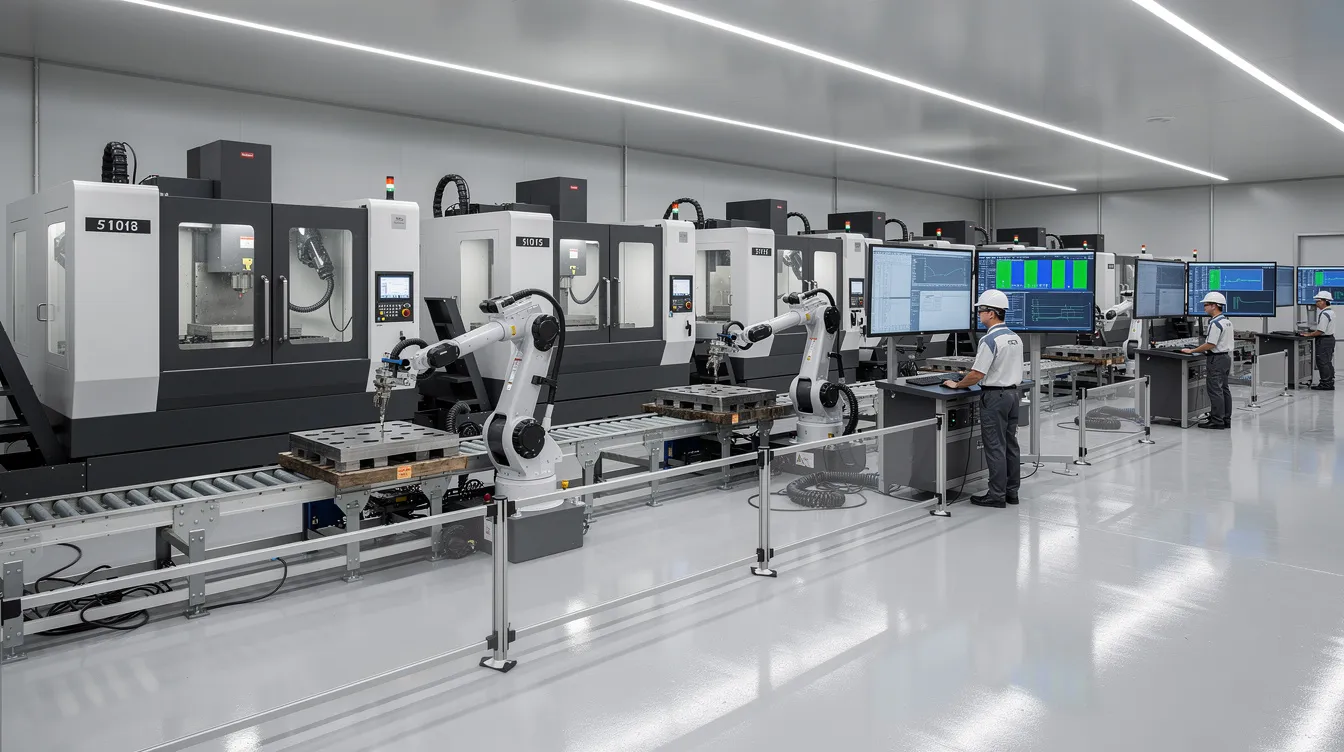
Understanding NC and CNC Machines: Key Differences and Applications
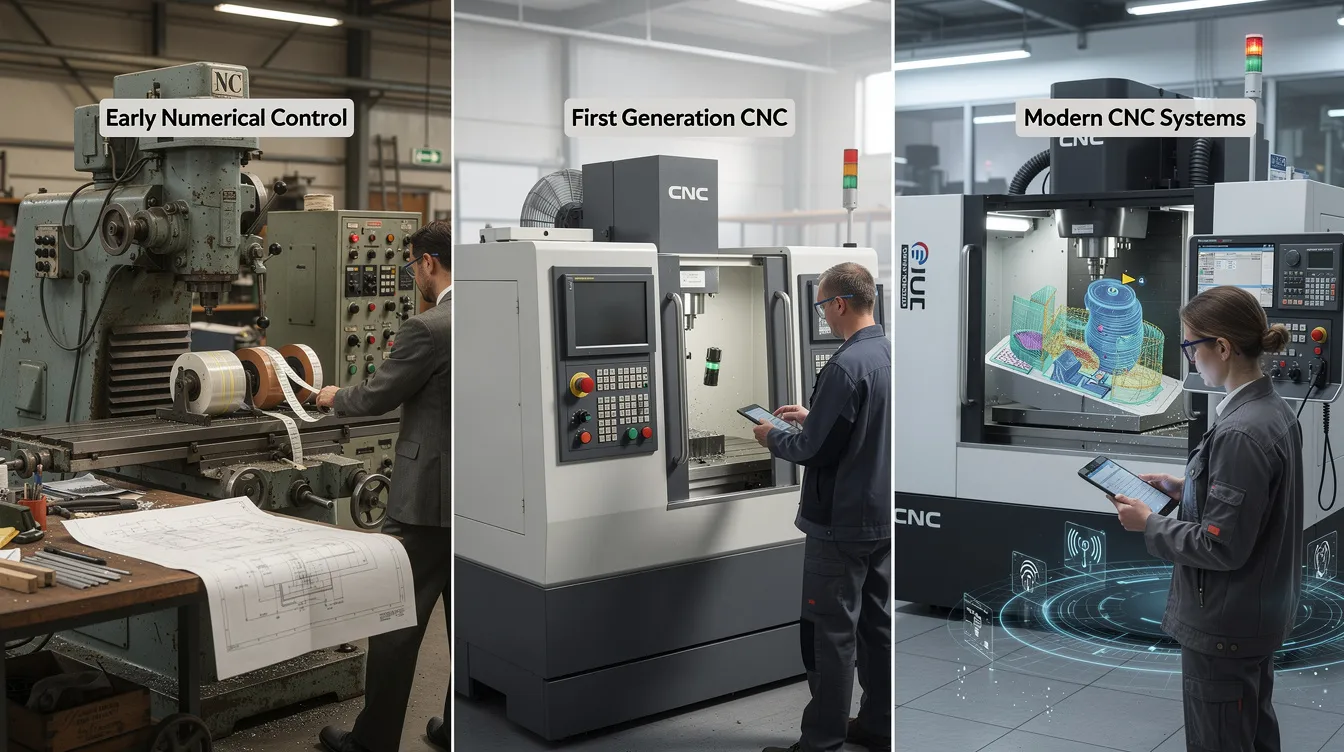
NC and CNC Machines: From Early Numerical Control to Modern Computer Numerical Control
The story of automated manufacturing begins with a simple idea: replace the hand wheels and manual control of a machine tool with coded instructions called numerical data. That idea, born in the 1940s, created the first nc machines and eventually evolved into the cnc machines that now power virtually every precision manufacturing floor on the planet. Whether you’re a design engineer specifying tight-tolerance aerospace brackets or a sourcing manager evaluating CNC machining partners, a deep understanding of how nc and cnc machines differ-and where each fits-will sharpen your decisions and reduce project risk.
This guide walks through the history, technology, types, and practical applications of both nc and cnc machines, and closes with actionable criteria for choosing the right manufacturing partner in 2026.
Quick Overview: NC vs CNC Machines
NC stands for numerical control. In manufacturing history, nc refers to machine tools automated through numeric data recorded on physical media-primarily punched tape or a punch card-that direct axis movements, spindle speeds, and feed rates without direct manual input. This technology emerged in the 1940s and 1950s and was the dominant form of industrial automation through the 1970s. NC machines use punched tapes for programming, and their control logic is largely hardware-based, leaving little room for on-the-fly changes once a program is running.
CNC stands for computer numerical control. CNC machines use onboard computers for control, reading digital programs written in g code and m code rather than physical media. CNC machines use digital data for programming, which means programs can be stored, edited, simulated, and transferred across a network. Because the control logic is software-driven, CNC machines offer higher precision than NC machines, along with far greater flexibility for modern machining operations.
Today, when someone in the manufacturing industry says “nc machine tool,” they almost always mean a CNC-controlled unit. Pure punched-tape nc machines are now rare-most surviving examples have been retrofitted with computer control. Typical nc and cnc machines include lathes, milling machines, machining centers, turning centers, and grinding machines. CNC dominates because of its high accuracy, seamless integration with CAD/CAM workflows, and closed loop systems that continuously correct positioning errors. At Anebon Metal Products Limited, we rely on advanced cnc machines-3-axis, 4-axis, and 5-axis-to deliver precision machining and full OEM production with tolerances as tight as ±0.002 mm.
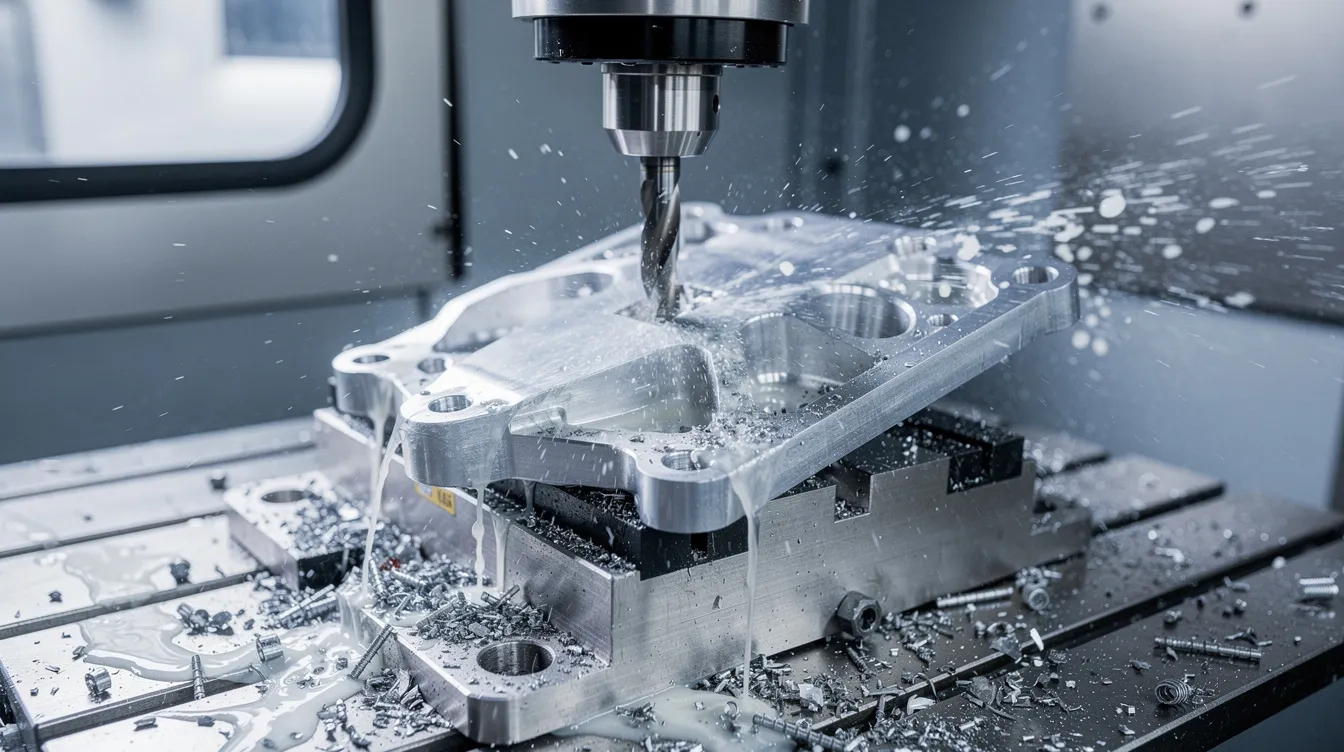
What Is Numerical Control (NC) Machining?
Numerical control machining was the first method of automating machine tools using numerical data on punched tape or cards. Instead of an operator turning hand wheels to position a cutting tool, an nc machining process reads a sequence of numbers, letters, and symbols that define tool positions, feeds, and spindle speeds. NC machining uses punched tapes for programming each step of the manufacturing process, from metal cutting and engraving to press working and even spot welding for assembly components. NC machining also supports automatic drafting of engineering drawings in some integrated setups, broadening its role beyond the shop floor.
Typical nc control hardware of the 1950s–1970s included a tape reader for punched tape, basic electronic or electromechanical control logic, and stepper or early servo motors driving the axes. These were often open loop systems-the controller sent a command and assumed the machine executed it without verifying actual position. NC machining lacks real-time feedback systems, which limited error correction during the actual machining cycle.
Despite those constraints, nc technology delivered clear advantages over manual machining. NC machining reduces batch variability and human error by following the same coded instructions on every cycle. It improves work efficiency by automating machining processes that would otherwise require constant operator attention. NC machining can produce parts with less labor compared to manual methods and enhances safety by minimizing operator proximity to machines during the cut. NC machining enables high-accuracy machining of complex geometries-especially valuable in aerospace and automotive industries, where early applications included wing-skin contouring at Parsons Corporation and automotive die machining in the 1960s. NC machining is used in aerospace and automotive industries to this day, though now almost exclusively through CNC successors.
Many legacy NC machines in factories were later upgraded to CNC controls in the 1980s–1990s rather than being scrapped, extending the productive life of mechanically sound equipment while adding digital flexibility.
Evolution From NC to CNC Machines
The journey from punched-tape nc to computer numerical control spans roughly three decades and a handful of pivotal milestones.
The first NC machines were developed in the 1940s when John T. Parsons and Frank Stulen began using punched cards to define contours for helicopter rotor-blade stringer machining. Partnering with MIT and the U.S. Air Force, Parsons refined servo-driven axis control, and John T. Parsons patented the first NC machine tool in 1952-officially titled “Motor Controlled Apparatus for Positioning Machine Tool,” though the patent was granted in 1958. The first NC machine was launched in 1959 in Europe, and through the 1960s, nc machines spread across aerospace and defense shops for milling, turning, and die work.
The real inflection point came in the mid-1970s. Microprocessors-starting with devices like the Intel 4004 in 1971-and falling memory costs made it practical to embed digital computers directly into machine controls. CNC technology emerged in the late 1970s, replacing punched tapes with onboard digital memory. Controllers could now store, edit, and simulate nc programs internally, and standardized g code and m code emerged as a consistent programming language across different CNC systems.
Early CNC machines also introduced closed loop systems with encoders and resolvers that measured actual position versus commanded position. This feedback loop corrected for backlash, thermal expansion, and load variation-problems that open-loop nc machines simply tolerated.
CNC technology replaced NC technology in the late 1970s in most new equipment purchases. The comparison is straightforward: NC equals fixed, hardware-dependent logic and physical media; CNC equals software-driven, easily reprogrammable control connected to CAD/CAM and factory networks. NC machining laid the groundwork for modern CNC systems, but computer technology has moved the capability ceiling far beyond what paper tape could achieve.
NC Machine Tools: Types and Characteristics
A machine tool is any mechanical device-lathe, mill, grinder-that shapes or removes material through controlled motions of the tool or workpiece. An nc machine tool is simply one of these conventional machines fitted with numerical control of its motions. This section covers how different nc machine tools automate specific manufacturing processes.
Two broad categories of nc machines function in different ways. Point-to-Point machines perform discrete movements for tasks like drilling or boring, where the tool repositions between holes without concern for the path in between. Continuous-path nc machines, by contrast, control the exact trajectory between points-essential for contour milling and complex shapes. Early nc machines were mostly 2-axis or 3-axis and were programmed off-line, with changes requiring new punched tapes.
While “nc machine tools” still appears in standards and textbooks, in modern shops these machines are almost always CNC controlled.
NC Lathes
NC lathes are machines where the workpiece rotates and the cutting tool moves along programmed X and Z axes. NC lathes are used for turning operations-diameter turning, facing, grooving, and threading-that were previously done entirely under manual control.
Typical features included turret toolposts with multiple tools, automatic feed control, and basic canned cycles for repetitive operations. These nc lathes produced cylindrical parts like shafts, bushings, and fasteners with significantly better repeatability than manual lathes, reducing human intervention in routine production. You can see how modern equivalents of these machines operate on Anebon’s CNC Turning Lathe page.
NC Milling Machines
An nc milling machine is a machine where the cutting tool rotates-driven by a tool spindle-and moves along programmed axes (usually X, Y, Z) to shape a fixed workpiece. NC milling machines rotate the tool for cutting while the table positions the part beneath it.
During the 1960s and 1970s, universal or knee-type manual mills were commonly upgraded with NC drives and tape readers. Applications included pocket milling, slotting, profile milling, and drilling operations controlled by numerical data. These early nc milling machines led directly to today’s 3-axis and 4-axis CNC milling machines-and eventually to the modern cnc mill capable of high speed continuous-path machining across multiple axes.
Machining Centers and Turning Centers (NC Origins)
Machining centers originated as NC milling machines equipped with automatic tool changers (ATC) and pallet systems to reduce setup time. Machining centers have automatic tool changers for efficiency, allowing a single machine to execute desired operations-drilling, tapping, milling, boring-without stopping for manual tool swaps. This use of multiple tools in one setup was a major leap in manufacturing capabilities.
Turning centers developed from nc lathes by adding live tooling, Y-axis motion, and automatic workpiece handling. Turning centers combine lathe and milling functions, enabling complex parts to be completed in a single setup rather than moving between machines.
By the late 1970s, most new machining centers and turning centers shipped with CNC controls rather than purely NC units. Modern CNC machining centers support 3-axis, 4-axis, and 5-axis machining, and turning centers support multi-turret and sub-spindle layouts for complex parts.
NC Grinding Machines
NC grinding machines are grinders where wheel motion and table movement are numerically controlled for high-accuracy finishing. NC grinding machines provide high-accuracy finishes on parts that have already been rough-machined.
Common types adapted to nc control include surface grinders, cylindrical grinders, and internal grinders. NC grinding allowed controlled infeed, spark-out cycles, and automatic dressing routines-producing consistent dimensional control and surface finish. Grinding was an early area where nc delivered clear advantages because even small variations in manual feed can ruin a precision surface.
CNC Machines and CNC Systems in Modern Manufacturing
A CNC machine is a machine tool whose axes, tool spindle, and auxiliary functions are controlled by a dedicated computer using g code, m code, and control parameters. CNC programming allows real-time adjustments during operation-operators can tweak feeds, spindle speeds, and offsets without stopping the program.
Common CNC machine categories include:
-
CNC milling machines (3-axis, 4-axis, 5-axis)
-
CNC lathes and turning centers with live tooling
-
CNC grinding machines (cylindrical, surface, internal)
-
Specialized machines: wire EDM, sinker EDM, laser cutting, waterjet
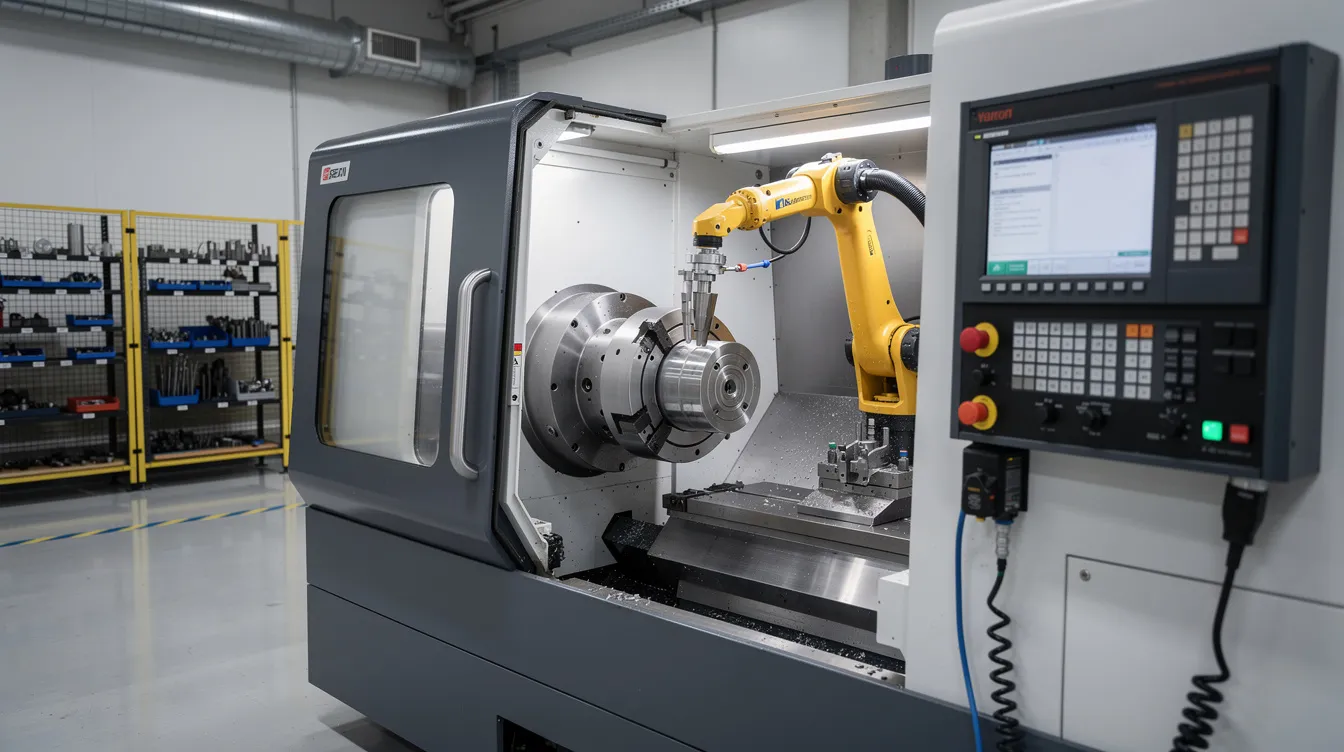
CNC systems integrate drives, feedback devices, and a human-machine interface (HMI) to manage complex machining processes. Both NC and CNC technologies are primarily subtractive manufacturing processes-they remove material to create a part-but CNC machines offer greater flexibility in manufacturing processes and can handle far more complex geometries. CNC machines offer higher productivity than NC machines, and CNC allows for faster and more precise production than NC. CNC machines can run continuously with less downtime thanks to automation features like automatic tool changers, probing cycles, and in-process measurement.
At Anebon, our CNC machining systems include multi-axis machining centers and CNC lathes with live tooling, delivering tolerances down to ±0.002 mm across metals and plastics for OEM parts.
Closed Loop vs Open Loop CNC Systems
Closed loop systems are CNC controls that continually compare commanded and actual position using feedback from encoders or linear scales. CNC systems use closed-loop feedback for improved accuracy-the controller detects any deviation (from backlash, thermal expansion, or load variation) and corrects it in real time, improving dimensional accuracy and surface quality.
Open loop systems, typically stepper-based, send commands without measuring whether the machine reached the target position. They suit lighter-duty or lower-cost equipment where greater precision is not critical.
Most industrial CNC machine tools used in aerospace, medical, and automotive manufacturing are fully closed loop. This is one of the primary reasons CNC machines offer higher precision than NC machines, which relied on open loop systems or minimal feedback at best.
Role of CAD/CAM and Digital Workflow
Engineers create 3D models in cad software and then generate tool paths in cam software, outputting machine-ready g code through post-processors tailored to the specific CNC controller brand (Fanuc, Siemens, Haas, etc.). This digital workflow replaces the manual input and tape-punching that characterized early nc technology.
Simulation software and toolpath verification help avoid collisions, tool breakage, and wasted material before actual machining begins. Computer programs can visualize the entire cutting sequence, flagging errors that would have gone undetected in an nc machining work environment.
Anebon’s workflow includes DFM feedback, CAM optimization, and first-article inspection to stabilize CNC machining before scaling to full production-ensuring that every OEM part meets specification from the first batch.
NC vs CNC Machines: Key Differences
This section provides a structured comparison of NC and CNC across technology, programming, accuracy, and suitability for today’s manufacturing industry. In 2026, most new machine tools sold as “NC” are in fact CNC; punched-tape NC is legacy equipment. CNC’s ability to integrate with networks, MES, and quality systems has made it central to Industry 4.0 implementations.
Anebon operates only cnc systems for customer projects. Understanding nc is still useful for historical context, retrofitted lines, and appreciating why computer numerical control represents such a fundamental leap in manufacturing technology.
Control Technology and Program Storage
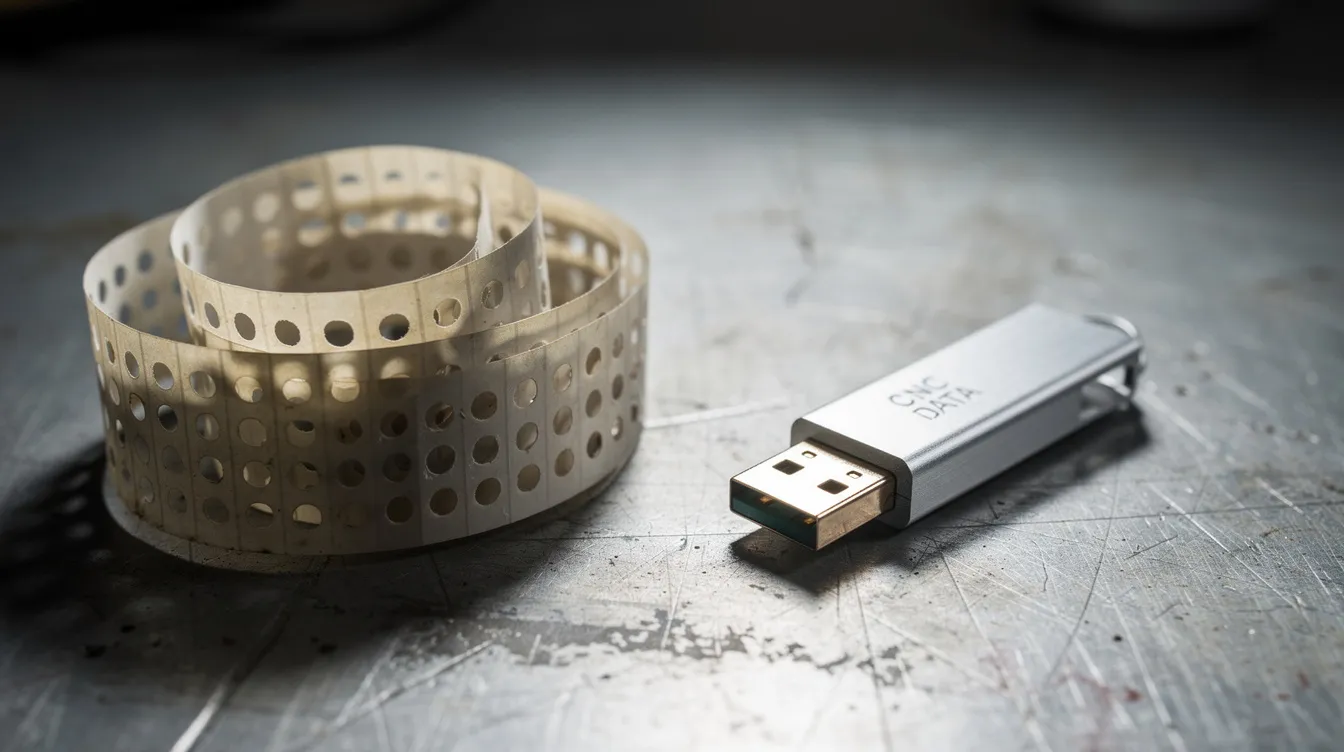
NC machines relied on punched tape or punch cards read sequentially by tape readers, with changes requiring new physical media. There was no internal memory to speak of-the program existed only on the tape.
CNC machines use onboard computers with digital memory, allowing storage of hundreds of computer programs and easy editing from the control panel or via DNC (direct numerical control) networks. CNC supports parameter variables, subprograms, and macros for complex logic that nc hardware could not handle. Digital storage also enables backup, version control, and remote program transfer-capabilities essential in many machines running across a large factory floor.
Programming Flexibility and G Codes
Both NC and CNC use numerical instructions, but CNC interprets standardized g code and m code, often generated automatically by cam software. NC programming was largely manual, with limited conditional logic and no on-the-fly edits once a tape was running.
CNC programs can be edited directly on the machine’s control panel. Operators can adjust feeds, spindle speeds, work offsets, and even tool paths at the machine to fine-tune quality or cycle time-a level of programmable logic that punched tape simply cannot support. For Anebon’s custom OEM parts, this flexibility is critical when optimizing prototypes and scaling to production quickly. CNC machining utilizes digital programming for greater flexibility across various industries.
Accuracy, Speed, and Automation Level
Original NC systems improved accuracy over manual machining but were constrained by tape resolution, older drives, and simple feedback. CNC machines achieve high accuracy and high speed thanks to servo motors, high-resolution encoders, and advanced motion control algorithms.
CNC enables full automation features: automatic tool changers, pallet changers, probing cycles, in-process measurement, and automatic tool holders management. Cutting tools are monitored for tool wear, and the system can compensate or alert operators before quality degrades. CNC machines enable high-mix, low-volume production-ideal for OEMs with diverse part numbers-while NC machines are primarily used for bulk production of identical parts where the design never changes.
NC machines are now mainly found where budget is critical or as retrofitted lines, whereas CNC dominates automotive, aerospace, medical, and electronics manufacturing.
Cost, Maintenance, and Lifecycle
NC machines have lower upfront costs compared to CNC machines-their electronic complexity is minimal. However, they are now costly to maintain because replacement parts are obsolete and vendor support has disappeared.
CNC machines have higher initial cost but lower long-term risk. Software, drives, and components can be upgraded; firmware updates add new cycles and safety patches, extending machine tool life. CNC machines often reduce overall labor costs because a single operator can manage many machines running automated cycles with minimal human intervention.
For overseas OEMs, using up-to-date CNC equipment at partners like Anebon reduces technical risk and supports consistent global quality expectations.
Applications of NC and CNC Machining in the Manufacturing Industry
Both nc and cnc machines automated machining processes that previously depended entirely on operator skill. Typical processes include milling, turning, drilling, boring, tapping, and grinding. It automates processes like metal cutting and engraving, and NC machines perform spot welding for assembly components and press working in certain configurations.
Key industries where CNC machining is now standard:
-
Aerospace: turbine blades, structural brackets, actuator housings-tolerances from ±0.05 mm down to ±0.005 mm for engine components
-
Medical devices: implants, surgical instruments-biocompatible materials, tight tolerances, full traceability
-
Automotive: powertrain components, die inserts, jigs, and fixtures for mass production lines
-
Electronics: housings, heat sinks, connectors-often aluminum or copper alloys
CNC machines enable complex 3D geometries, tight tolerances, and repeatability that manual or early NC methods could not economically achieve. Different engagement models include rapid prototyping, low-volume production, and high-volume OEM runs.
Anebon supports customers from prototype validation through mass production with CNC machining, die casting, and sheet metal fabrication, all under ISO 9001:2015 and ISO 14001:2015 certification.
Materials and Machine Tools in CNC Machining
Material choice depends primarily on cutting tools, coolant strategy, and machine rigidity rather than whether the control is NC or CNC. Common materials machined on modern cnc machines include:
-
Aluminum alloys (6061, 7075) for lightweight housings and brackets
-
Stainless steels (304, 316, 17-4PH) for corrosion resistance
-
Titanium alloys (Ti-6Al-4V) for strength-to-weight in aerospace and medical
-
Tool steels for molds and dies
-
Copper and brass for electrical and non-magnetic components
-
Engineering plastics (PEEK, Delrin, ABS) for prototyping and non-metal parts
High speed spindles, rigid machine structures, and closed loop feedback enable consistent performance across these materials. Anebon’s machine tool lineup includes 3-axis and 5-axis machining centers, CNC lathes with live tooling, and supporting equipment to handle both metals and plastics for OEM customers.
How OEMs Should Choose Between Legacy NC and Modern CNC Machines
For design engineers and sourcing managers assessing suppliers or internal capital investments, the decision between legacy NC and modern CNC comes down to a few practical realities.
For new projects and precision OEM parts, CNC machining should be the default choice. CNC delivers accuracy, traceability, program flexibility, and compatibility with digital workflows that nc technology simply cannot match. Legacy NC machines may still be economical for simple, high-volume parts with completely stable designs, but they lack the connectivity and process control that the manufacturing industry expects in 2026.
When evaluating, consider:
-
Required tolerances and surface finishes
-
Part complexity and the need for multiple axes
-
Frequency of engineering changes
-
Target lead times from prototype to production
-
Integration requirements with cad software and CAM workflows
OEMs should prefer suppliers that offer modern cnc systems, documented quality assurance, and the ability to handle engineering changes rapidly. Anebon’s engineering team provides DFM feedback, fast quoting, and full production support for overseas OEMs that need high-accuracy CNC machining with short lead times. Request a quote to see how our process works.
Key Selection Criteria for CNC Machining Partners
When choosing a CNC machining partner, verify the following:
-
Machine capability: Does the supplier operate 3-axis, 4-axis, and 5-axis equipment? Can they handle your part geometry across multiple axes?
-
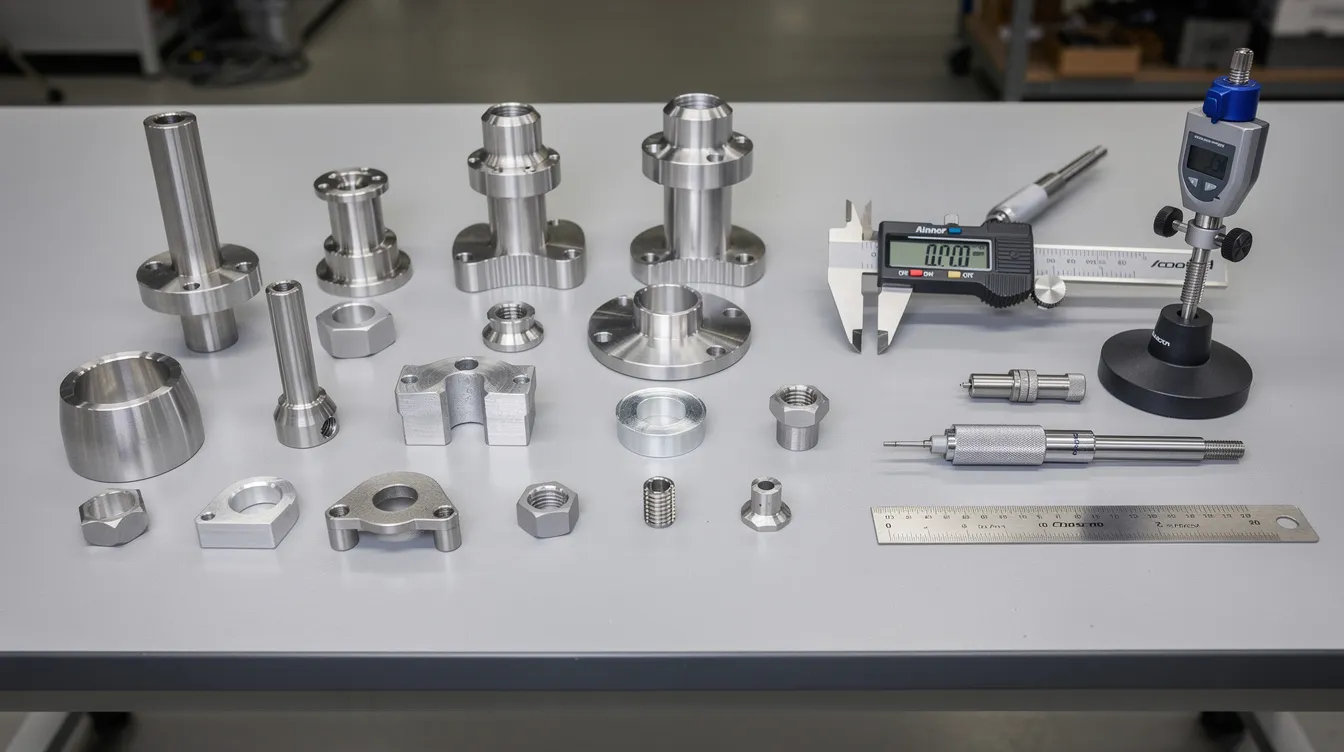
Tolerance capability: Can they hold your required tolerances? Standard CNC work achieves ±0.05 mm; precision machining reaches ±0.01 mm; ultra-precision features may need ±0.005 mm or tighter.
-
Supported materials: Confirm experience with your specific alloy or plastic, including any secondary processing (heat treatment, anodizing, plating).
-
Surface finishing options: Bead blasting, anodizing, powder coating, electropolishing-what’s available in-house versus outsourced?
-
Inspection equipment: Look for CMM, optical measurement, and first-article inspection capability with documented reports.
-
Certifications: ISO 9001:2015 is a baseline; ISO 14001:2015 for environmental; AS9100 or ISO 13485 for aerospace or medical.
-
Responsiveness: Lead times for rapid prototyping, speed of DFM feedback, and scalability to volume production.
Anebon meets these criteria across the board, with tight tolerances (±0.002 mm capability), broad material support, ISO dual certification, and over fifteen years of experience serving export OEM requirements. Our manufacturing capabilities span CNC machining, die casting, and sheet metal fabrication under one roof.
Future Trends in CNC Machine Tools and Numerical Control
CNC technology continues to evolve well beyond what early numerical control nc pioneers could have imagined. Smart manufacturing and Industry 4.0 are pushing cnc technology into new territory, and suppliers who keep pace will deliver the most value to OEMs.
Key trends shaping the next generation of cnc machines:
-
Higher-speed spindles and multitasking machines that integrate milling, turning, and grinding in a single setup-reducing cycle times and eliminating inter-machine transfers.
-
Expanded 5-axis machining becoming standard rather than premium, enabling complex shapes in fewer operations.
-
Digitalization and IoT connectivity: machine floor data collection, cloud platforms, and real-time dashboards for OEE tracking and traceability. Remote monitoring lets engineers and managers see machine status from anywhere.
-
AI-assisted optimization: machine learning applied to sensor data (vibration, current, acoustic emission) enables predictive maintenance-studies indicate this can reduce unplanned downtime by 30–50% and maintenance costs by 10–25%.
-
Adaptive control: real-time feed and speed adjustments based on cutting force and temperature, combined with thermal compensation, keep parts within tolerance even during long production runs.
-
Sustainability: energy-efficient drives, minimum quantity lubrication, dry machining where feasible, and reduced scrap through in-process inspection and closed loop quality control are all becoming competitive differentiators.
For OEMs planning products in 2026 and beyond, partnering with manufacturers who maintain up-to-date CNC equipment, current simulation software, and robust metrology is the clearest path to long-term competitiveness. Anebon continuously invests in modern cnc machines and digital workflows so that our customers-from computer science hardware innovators to aerospace primes-have access to the latest manufacturing technology and greater precision when they need it most.
If you’re sourcing precision CNC machined parts, Anebon’s engineering team is ready to help you move from concept to production with confidence. Reach out for a quote, DFM review, or technical consultation-and discover why OEMs across various industries trust Anebon for the quality, speed, and manufacturing capabilities their projects demand.