Understanding Machining for Manufacturing: Key Techniques and Benefits
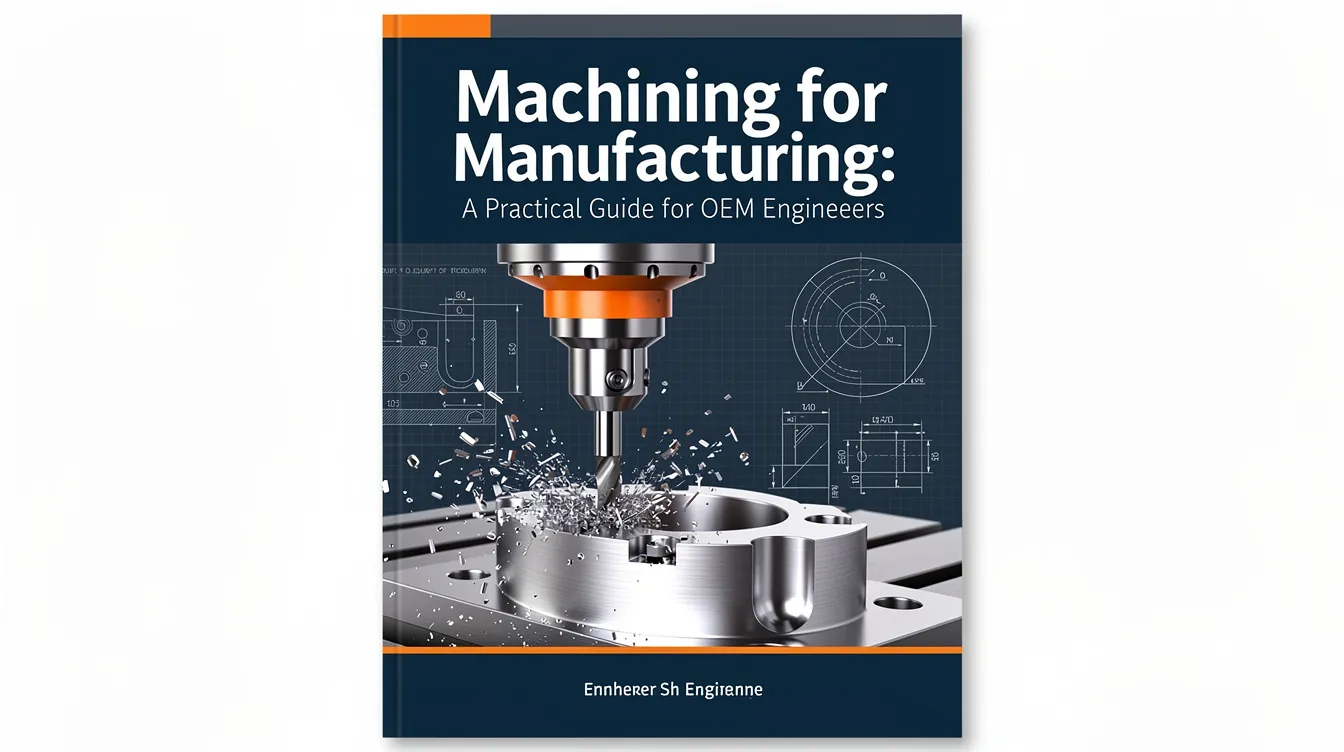
Machining for Manufacturing: A Practical Guide for OEM Engineers
Introduction to Machining in Modern Manufacturing
Machining is a subtractive process that removes material for precision, and it remains the backbone of modern manufacturing. While additive manufacturing builds parts layer by layer and forming processes reshape material without cutting, machining starts with a solid block and cuts away everything that isn’t the final part. In 2026, machining for manufacturing spans everything from rapid prototyping of one-off samples to full-scale production of precision parts running thousands of units per year.
The manufacturing industry relies heavily on this process. The aerospace parts manufacturing market was estimated at $1,003 billion in 2025, and steel commanded 45.10% of precision turned product manufacturing that same year. Precision machining underpins sectors like aerospace, medical devices, automotive, electronics, robotics, and industrial equipment-each with its own tolerance requirements and regulatory demands. Machining is primarily used for creating highly precise components and fabricating prototypes, making it indispensable across the product lifecycle.
This article is written from the perspective of Anebon Metal Products Limited, founded in 2010 in Dongguan and certified ISO 9001:2015 and ISO 14001:2015. We provide CNC machining, die casting, and sheet metal fabrication services. For us, manufacturing machining isn’t just about the machining process itself-it’s about delivering reliable partnerships where engineers trust us with their most critical assemblies.
What Is Machining in Manufacturing?
Machining is a subtractive manufacturing process removing material from a workpiece to achieve a specific shape, dimensional accuracy, and surface finish. A raw workpiece-typically a billet, forging, casting, or extruded bar-is shaped through the controlled removal of raw material using cutting tools. Machining processes can handle a wide variety of materials including metals and durable plastics, and more broadly, machining accommodates metals, plastics, and composites.
Machining fits alongside other manufacturing methods such as casting, forging, and additive manufacturing. For example, an engine housing may be cast to approximate shape but then machined to ±0.01 mm on sealing surfaces. In medical devices, critical implant features may demand tolerances as tight as ±0.002 mm. Machining achieves tolerances of ±0.025 mm (±0.001 inch) as a standard capability, with tighter ranges available through grinding and EDM.
Common machining processes include turning, milling, drilling, grinding, and EDM. These are often combined: a gearbox shaft might be turned, milled for flats, drilled for lubrication passages, and ground on bearing surfaces. Machining includes conventional and non-conventional techniques that differ by material removal methods-material removal methods include shear deformation in traditional machining and electrical discharges in EDM. This subtractive manufacturing approach gives engineers unmatched control over part geometry and finish quality.
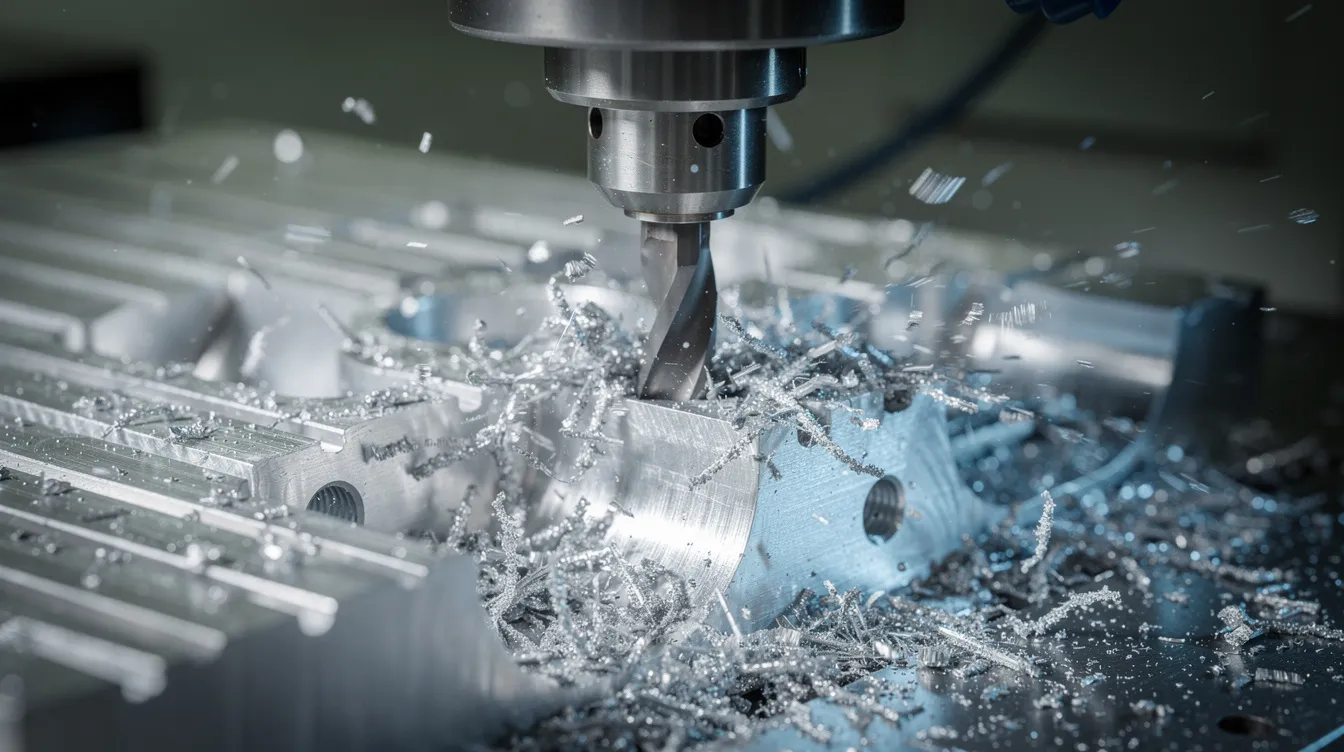
From CAD Model to Finished Part: The Machining Process Workflow
The workflow starts when an OEM submits an RFQ with CAD drawings, GD&T callouts, material specifications, and volume targets. Our engineers perform a DFM review, flagging features that increase cost-thin walls, deep pockets, difficult geometries-and suggesting modifications to reduce setups. Machining can be performed manually or via CNC for automated precision, and nearly all production work today runs on computer numerical control systems.
Material selection follows: choices like aluminum 6061-T6, stainless steel 316, or titanium Ti-6Al-4V are evaluated based on strength, corrosion resistance, machinability, and cost. Once approved, computer aided design files feed into computer aided manufacturing software, which generates optimized toolpaths. CNC programming defines the sequence of roughing operations and finishing passes, tool changes, and collision-avoidance strategies. CNC systems automate tool movement using programmed instructions, and CNC machining runs 75–300% faster than manual methods.
During machining operations, roughing cuts remove bulk material at high feed rates, followed by finishing passes for surface finish and tolerances. Consider an aluminum 6061 motor housing: heavy roughing at full radial engagement clears pockets quickly, then walls are finished to Ra 0.8 µm with lighter depths of cut and optimized spindle speeds. Cutting conditions-cutting speed, feed rate, depth of cut, and coolant strategy-are chosen based on material properties and surface finish requirements.
In-process inspection uses on-machine probing to verify critical dimensions. Final inspection employs CMMs, optical measurement, profilometers, and thread gauges to confirm every feature meets the OEM’s drawing. Only then are parts cleared for surface treatment, packing, and shipment.
Key Machining Processes and Operations
CNC milling uses a rotating multi-point cutting tool to cut material from a stationary workpiece. Milling creates flat surfaces and complex contours using rotating cutters, making it the go-to for prismatic parts like electronics housings, brackets, and manifolds. On milling machines, production tolerances of ±0.02–0.05 mm are standard, with ±0.01 mm achievable on critical surfaces. Surface finishes of Ra 1.6 µm are typical, dropping to 0.8 µm or finer with finishing strategies.
CNC turning uses a single point tool on a rotating workpiece to remove material. Turning is ideal for producing cylindrical components like shafts and pins, and turning is best for producing cylindrical parts, while milling is ideal for complex geometries. On CNC lathes, precision turning routinely holds ±0.01 mm on diameters and can generate external profiles, threads, and tapers in a single setup.
Drilling creates holes; boring enlarges existing holes to achieve final sizing on bearing bores or alignment features. Tapping produces threaded holes to industry standard thread classes. Grinding uses an abrasive wheel to improve surface finish and dimensional accuracy in machined parts, achieving tolerances of ±0.005 mm and finishes down to Ra 0.2 µm on sealing or bearing surfaces.
EDM uses controlled electrical sparks to remove material from conductive workpieces-ideal for hard materials or complex internal surface geometries that conventional cutting tools cannot reach. Wire and sinker EDM achieve tolerances of ±0.005–0.010 mm. Conventional machining operations like sawing handle initial stock preparation.
For complex part geometry, 5-axis CNC machining is appropriate when features span multiple faces or require simultaneous contouring-think titanium orthopedic implants with complex geometries or impeller vanes for EV cooling pumps. Workholding matters: custom soft jaws on turning centers grip odd shapes without deformation, while modular vises and zero-point systems on milling machines ensure repeatable positioning across production runs.
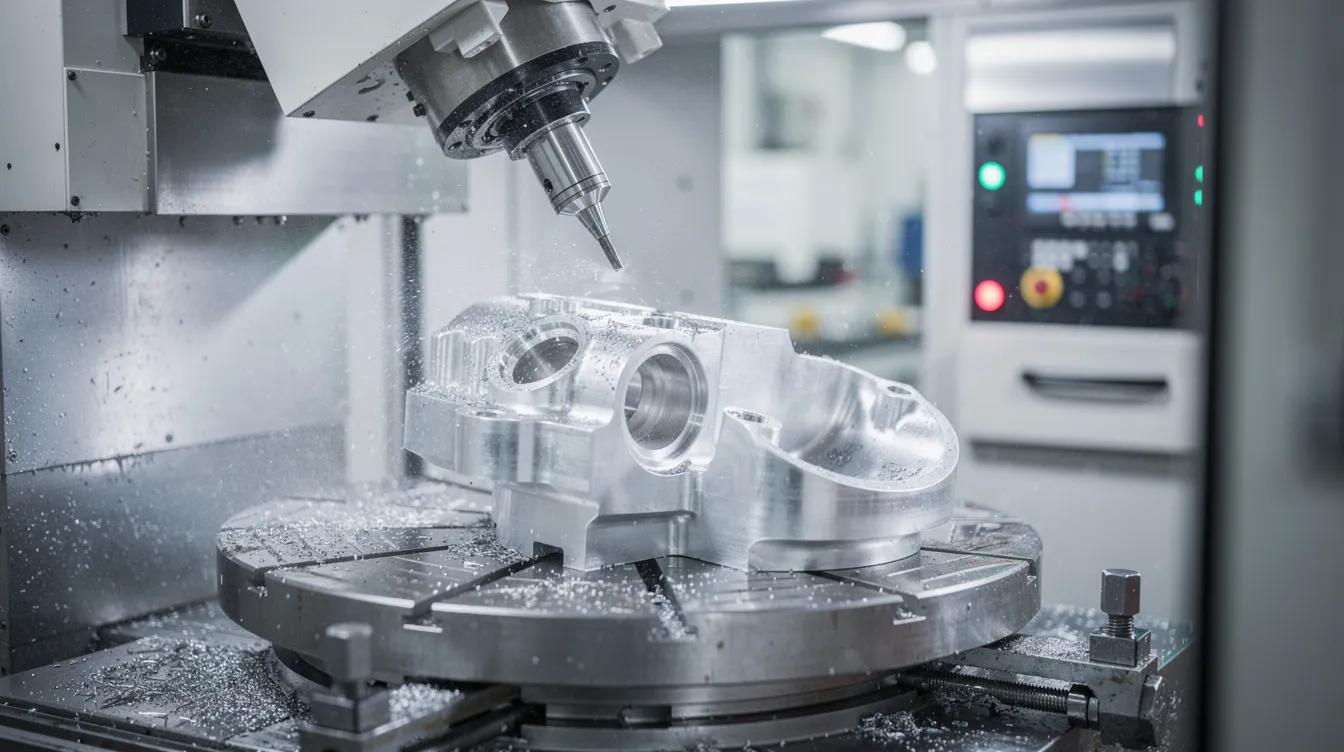
Choosing the Right Machining Process for Your Part
Process selection starts with part geometry. Deep pockets, thin walls, and tight bores increase cost and may require advanced equipment like 5-axis machines or specialized tooling. Material choice is equally decisive: aluminum alloys machine quickly and forgivingly, stainless steels demand slower speeds and careful coolant management to avoid work hardening, and titanium or exotic alloys need aggressive cooling and wear-resistant coated inserts.
Tolerance requirements and surface finish requirements directly influence whether standard milling suffices or whether grinding, polishing, or EDM must follow. CNC machining supports tight tolerances for complex assemblies-but specifying extremely tight tolerances on non-critical features drives cost without adding value.
Production volume shapes the right machining process. For high-mix, low-volume production parts (prototypes, 1–100 pieces), flexible CNC setups with universal tooling keep costs reasonable. As volumes grow into thousands, dedicated fixtures, coated carbide tools, and high-speed machining strategies justify the investment-CNC machines run 75–300% faster than manual machining and maintain CNC machining scrap rates of just 1–3%. When annual volumes exceed roughly 5,000 units, consider combining machining with die casting for near-net shapes, machining only critical surfaces.
At Anebon, we support engineers in this decision-making through DFM feedback at the quotation stage, helping you choose the process that balances cost, performance, and lead time.
Machining vs Additive and Other Manufacturing Methods
Additive manufacturing excels at producing complex internal structures, lattice geometries, and low-volume parts where machining setup costs would be prohibitive. But printed parts often require post-machining: functional interfaces, sealing faces, and mounting surfaces typically need the dimensional accuracy and surface finish only subtractive manufacturing delivers. A common hybrid workflow prints near-net shapes, then finish-machines critical features.
Die casting is economical for high-volume aluminum components with moderately relaxed tolerances. Sheet metal fabrication handles thin-wall enclosures and chassis efficiently. Both methods frequently require machining on mating faces, precision holes, or threaded features. In automotive EV battery trays, for example, OEMs may weld sheet metal structures for the main tray body, then machine interfaces for connectors and mounting points-far more cost-effective than machining entire blocks from solid stock.
These manufacturing methods are complementary, not competing. Machining offers fast turnaround by utilizing automated machines that can operate continuously, making it the reliable finishing step regardless of how the initial shape is produced. OEMs increasingly adopt hybrid designs that combine casting or printing for bulk geometry with machining for functional precision.
Materials, Cutting Tools, and Cutting Conditions
Anebon regularly machines aluminum alloys (6061, 7075), stainless steels (304, 316, 17-4PH), carbon steels, titanium alloys (Ti-6Al-4V), brass, and engineering plastics like POM, PEEK, and polycarbonate. Each material’s hardness, toughness, and thermal conductivity shape the entire machining strategy. Aluminum’s high thermal conductivity (~150–200 W/m·K) allows aggressive cutting speeds of 800–1,000 SFM with carbide tools. Stainless steel 304, with thermal conductivity around 15 W/m·K, drops to 100–150 SFM and demands TiAlN-coated inserts with flood coolant to prevent work hardening.
Cutting tools range from solid carbide end mills and indexable inserts to drills and reamers. Coatings like TiAlN and TiCN extend tool life and enable higher speeds on tougher materials. For aluminum, uncoated carbide often performs better since coatings can cause chip adhesion. CNC machining achieves tolerances of ±0.001 inch or better when cutting conditions are optimized for the application.
For medical or optical components, finishes down to Ra 0.4 µm may require additional grinding or polishing beyond standard milling. Material selection always balances machinability against the functional demands of the finished part.
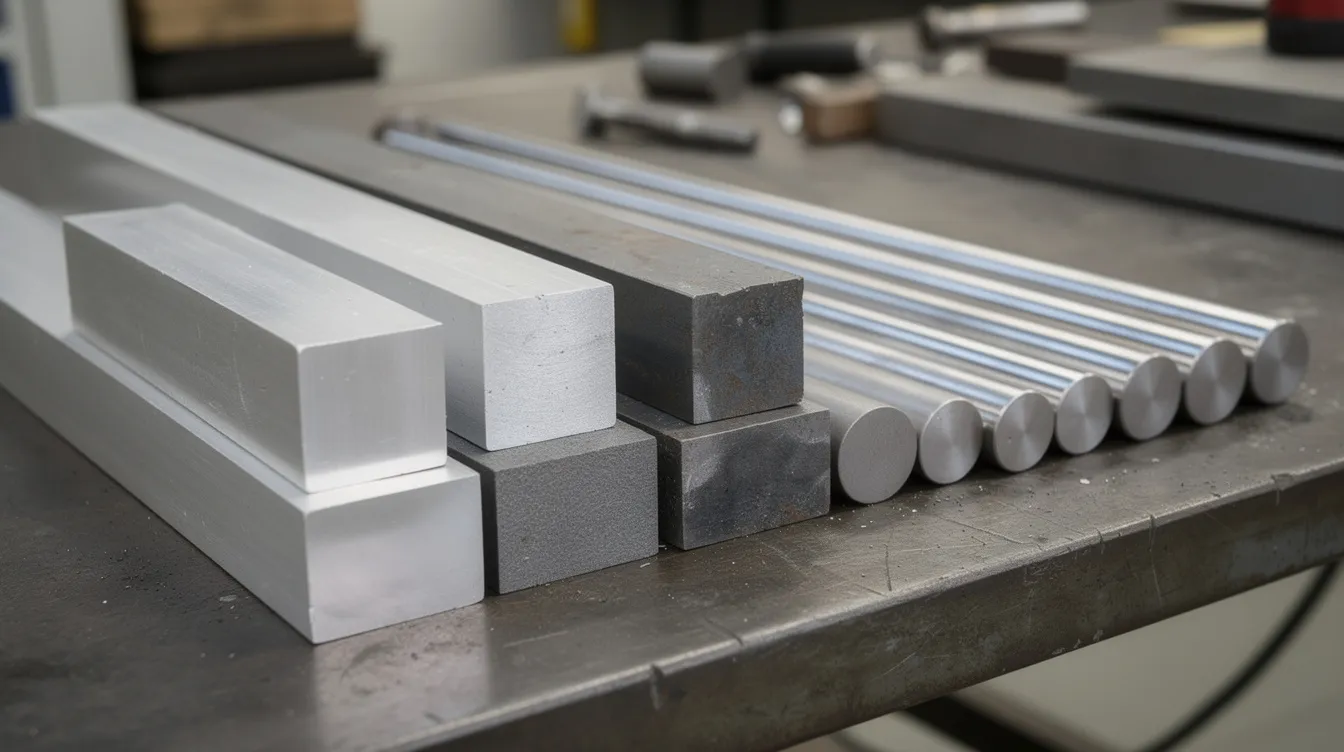
Production Volume, Cost, and Lead-Time Considerations
Production volume fundamentally shapes machining strategy. Prototyping runs (1–20 pieces) use flexible fixturing and universal tooling. Bridge production (hundreds of pieces) justifies custom fixtures. Full production (thousands annually) warrants dedicated setups, automated loading, and cycle-time optimization. CNC machining supports consistent performance across production runs at every scale.
Key cost drivers include setup time, machine run time, tooling wear, material utilization, and inspection requirements. To reduce machining costs, simplify features to reduce operations-avoid unnecessary contours requiring special cutters. Standardize hole sizes and thread types to minimize tooling variety. Choose machinable materials when exotic alloys aren’t functionally required.
Anebon’s quoting process models cost based on machine selection (3-axis vs 5-axis vs turning center), number of operations, automation level, and shift planning. We factor in material sourcing, finishing, inspection overhead, and shipping logistics, giving OEMs realistic expectations for unit price and delivery timelines.
Quality Assurance and Certifications in Precision Machining
Quality in precision machining follows a structured chain: incoming material inspection verifies alloy composition and mechanical properties via mill test certificates. First-article inspection compares the initial machined components against every drawing dimension. In-process checks use on-machine probes and statistical process control to catch drift before it creates scrap. Final inspection on CMMs, profilometers, and hardness testers confirms conformance.
Anebon’s ISO 9001:2015 certification ensures documented procedures, traceability, and consistent process control. Our ISO 14001:2015 certification addresses environmental compliance-waste management, emissions control, and resource efficiency. For overseas OEM clients, these certifications provide assurance that parts will perform reliably and that production is legally and environmentally compliant.
Machined components are crucial for medical equipment requiring precision, and machining supports food-grade processing and pharmaceutical manufacturing where traceability and material certification are non-negotiable. An aerospace bracket, for instance, may require full FAI reports, material certificates traceable to heat lot, and non-destructive testing documentation.
Industries and Applications that Depend on Machining
Precision machining is essential for aerospace and defense applications, where turbine components, structural brackets, and actuator housings demand tolerances of ±0.005–0.010 mm and finishes of Ra 0.2–0.8 µm. Machining produces parts for aerospace, automotive, and medical industries in high demand worldwide.
In medical devices, machined components include titanium bone screws, surgical instrument housings, and diagnostic equipment frames. Class III implants may require tolerances of ±0.013 mm on critical features. The automotive sector relies on machining for engine and gearbox components, EV motor housings, and battery module interfaces-demanding applications where fit and sealing integrity are critical.
Electronics and robotics applications include aluminum heat sinks, precision shafts, optical mounts, and drone frames. For industrial equipment-pumps, valves, hydraulic cylinders, and bearing housings-machining delivers the durability and accuracy needed for continuous operation. Machining’s versatility across many industries, handling both metal and plastic components from small batches to ongoing production, makes it uniquely adaptable.
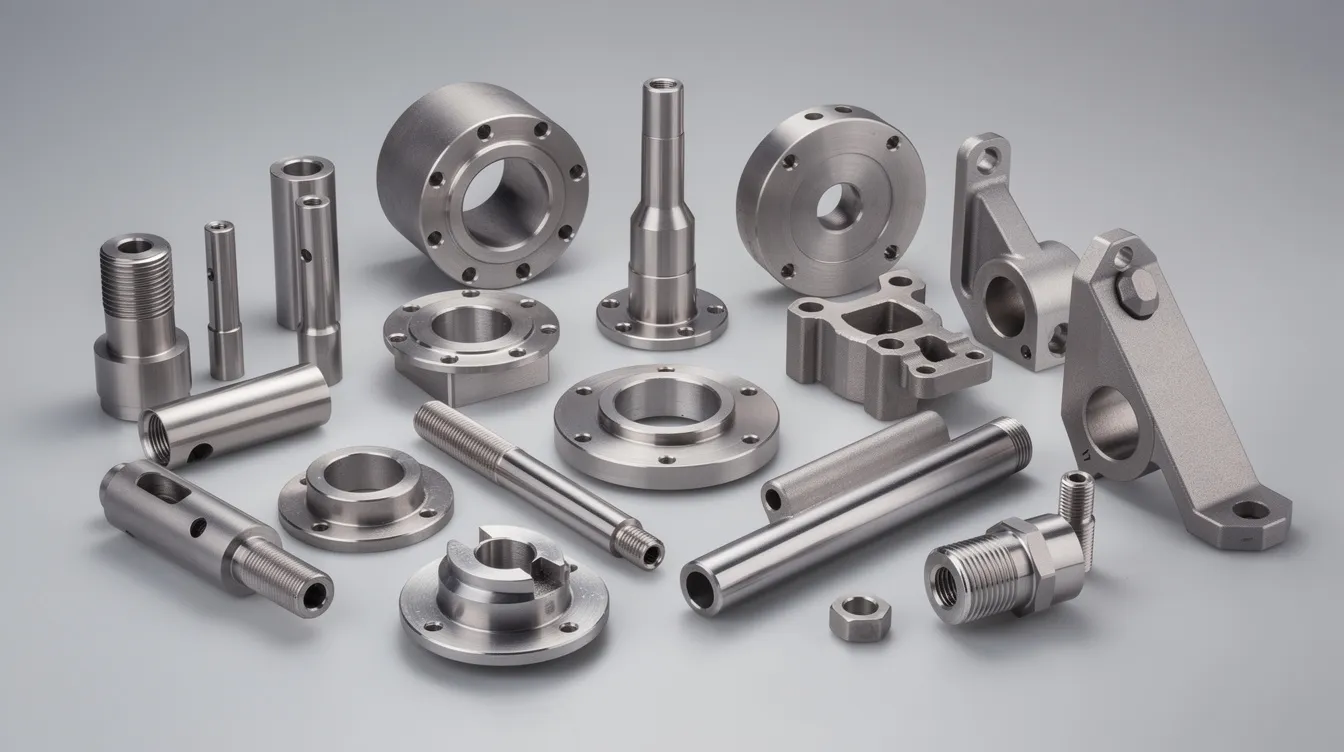
How Anebon Supports OEMs: From Prototype to Production
We offer rapid CNC machining, 5-axis machining, CNC turning, die casting, and sheet metal fabrication under one roof, plus surface treatments including anodizing, plating, painting, and bead blasting. Our typical engagement starts with NDA and drawing exchange, followed by DFM feedback and cost-optimization suggestions. Prototype builds often ship within days, moving into pilot runs of 200–500 pieces and recurring orders of 5,000+ pieces annually.
We hold tight tolerances down to ±0.002 mm on critical features, produce parts in mixed materials, and integrate machined, cast, and sheet metal components into single shipments. We are currently accepting applications from OEMs across all sectors looking for a reliable manufacturing partner who can scale from prototype through full production with advanced equipment and certified quality systems.
Practical Tips for Engineers Specifying Machined Parts
Clearly mark critical-to-function dimensions and GD&T callouts on your drawings-blueprint reading errors cause more delays than machining itself. Avoid specifying tight tolerances or cosmetic finishes on non-functional surfaces; each unnecessary callout adds cost. Specify material grade, temper, and surface finish unambiguously.
Ask your machining partner for input early-especially on deep pockets, thin walls, or mixed machining-and-casting designs. In 2026, realistic lead times for prototypes run 3–7 days for simple parts, 2–4 weeks for complex multi-operation assemblies. Full production timelines depend on volume, material sourcing, and finishing requirements. Early collaboration to select the right machining process avoids late-stage redesigns that delay launches.
FAQ: Machining for Manufacturing
What is machining in manufacturing and how does it differ from other processes? Machining is a subtractive manufacturing process that uses cutting tools to remove material from a raw workpiece, achieving a specific shape and tight tolerances. Unlike casting or forming, machining provides the highest dimensional accuracy on finished features.
When is CNC machining better than additive manufacturing for my part? CNC machining is preferred when you need tight tolerances, proven material properties, production-grade surface finishes, or higher production volume. Additive is better for complex internal structures or very low-volume geometry exploration.
How do I choose between milling, turning, and 5-axis machining? Turning suits rotational parts; milling handles prismatic and contoured features. Five-axis machining reduces setups for parts with features on multiple faces. Process selection depends on part geometry, tolerance requirements, and cost targets.
What production volume is CNC machining best suited for? CNC machining is effective from single prototypes to tens of thousands of production parts per year. At very high volumes (100,000+), die casting or stamping with selective machining may be more economical.
What information does Anebon need to quote my machining project? Send us CAD files (STEP or IGES preferred), 2D drawings with GD&T, material and finish specifications, target quantities, and desired delivery dates. The more detail you provide, the faster and more accurate our DFM feedback.
Can Anebon supply machined parts plus die cast or sheet metal components in one project? Yes. We regularly deliver integrated orders combining CNC machined parts with die cast and sheet metal fabricated components, all inspected and shipped together. This simplifies your supply chain and reduces lead time.
If you’re evaluating machining for manufacturing on your next project, contact Anebon for a detailed DFM review and quotation. We support overseas OEMs with end-to-end service-from first prototype to ongoing production-backed by ISO-certified quality and environmental management.