Understanding Fabricated Sheet Metal: Key Techniques and Applications
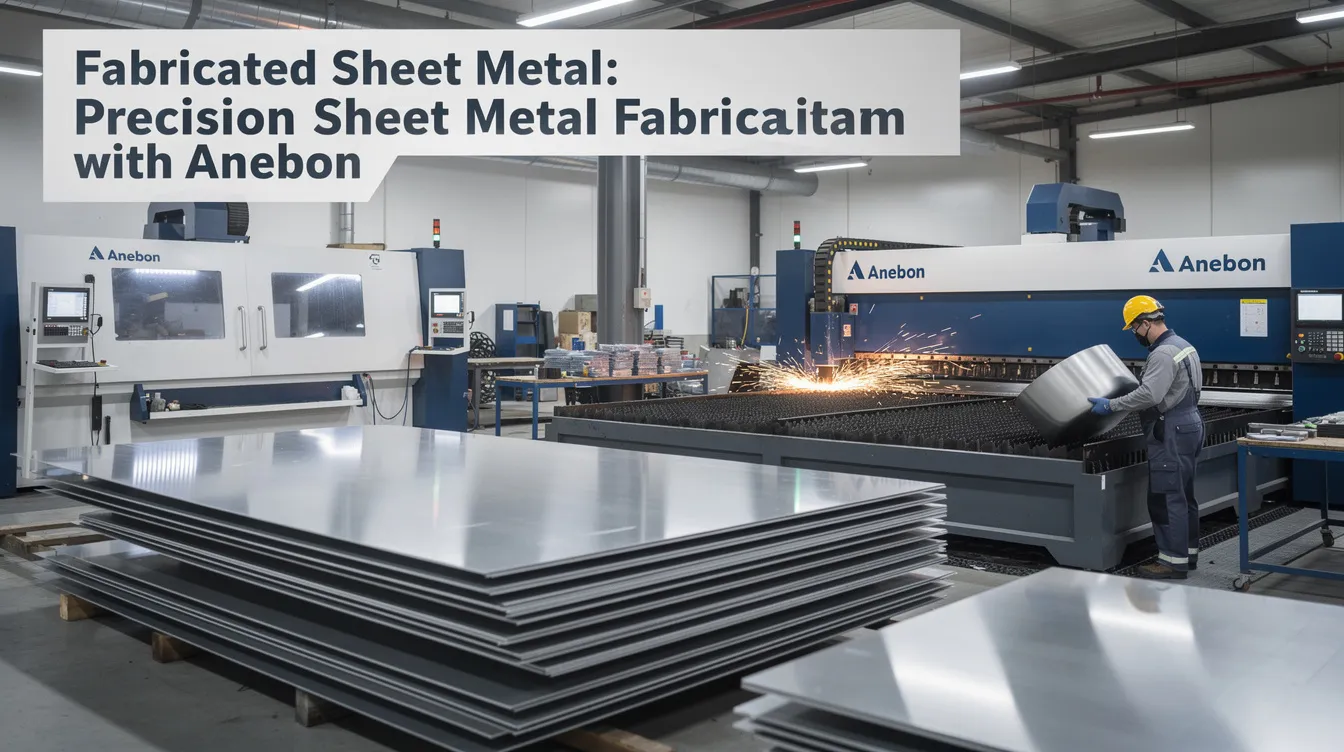
Fabricated Sheet Metal: Precision Sheet Metal Fabrication with Anebon
Fabricated sheet metal is the backbone of countless products you interact with daily, from the chassis inside a server rack to the brackets holding a robotic arm in place. For OEMs that need parts made to exact drawings with repeatable quality, choosing the right sheet metal fabricators and understanding the full fabrication process can make or break a product launch. Here’s what design engineers and purchasing managers need to know about working with Anebon on precision fabricated sheet metal.
What Is Fabricated Sheet Metal?
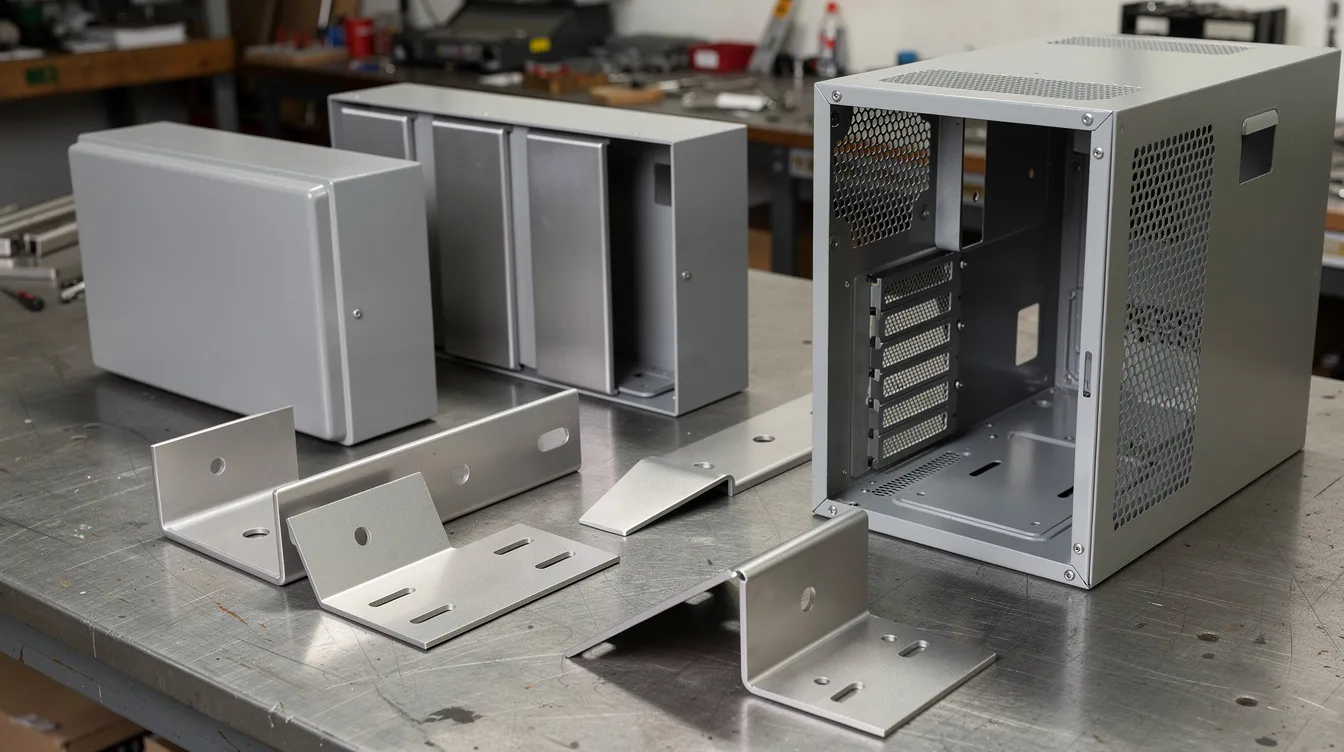
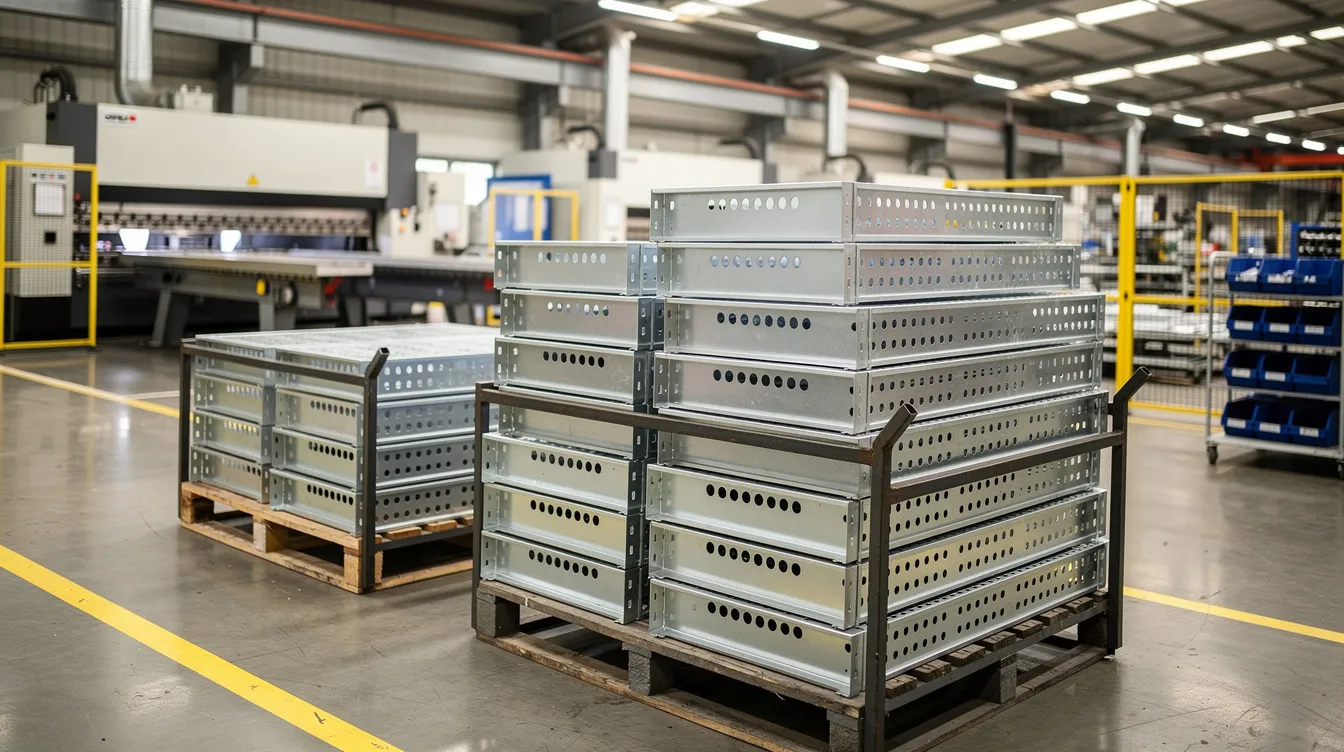
Fabricated sheet metal refers to flat metal sheets that have been transformed into functional parts through cutting, bending, and assembling operations. The starting material is a flat blank, and the finished result is a three-dimensional component, such as a bracket, enclosure, chassis, or structural frame, built to match a customer’s 2D flat-pattern and 3D folded-state drawings.
Sheet metal fabrication is a core manufacturing process across industries that demand parts which are lightweight, reducing transport costs, while remaining highly durable and weather-resistant. Typical sheet metal thickness ranges from 0.5 mm to 6 mm for most industrial applications, though some projects push beyond that for heavier structural work.
Key points about fabricated sheet metal:
-
Sheet metal fabrication serves various industries including aerospace, automotive, medical devices, consumer electronics, robotics, and industrial machinery.
-
Sheet metal can be quickly cut and formed into shapes, allowing for precise custom designs that match exact OEM specifications.
-
Sheet metal is cost-effective for mass production, but equally viable for short runs and prototyping.
-
Anebon specializes in OEM sheet metal parts for end use production rather than generic off-the-shelf components, delivering parts made to your drawings with full material traceability.
The Sheet Metal Fabrication Process (From Quote to Finished Parts)
Anebon manages the complete sheet metal fabrication process in-house at its Dongguan facility. This means every step, from initial design review through finishing and final inspection, happens under one roof, giving OEM customers tighter control over timing, cost, and consistency.
The typical workflow follows a clear sequence:
-
RFQ and design submission. You submit drawings (2D flat pattern plus 3D folded model), material specifications, finish requirements, quantity, and critical dimensions.
-
DFM feedback. Anebon’s engineers review your design for manufacturability, flagging issues like insufficient bend reliefs, hole placements too close to bend lines, or material choices that risk cracking. This step alone can eliminate costly rework later.
-
Material selection and procurement. The team selects the correct alloy and temper, confirming traceability through Mill Test Reports.
-
Sheet metal cutting. Flat blanks are cut to profile using fiber laser or other methods suited to the geometry.
-
Forming and bending. CNC press brakes shape the flat blanks into 3D structures, controlling for springback and distortion.
-
Joining and assembly. Welding, riveting, fastening, and hardware insertion bring multi-piece assemblies together.
-
Surface treatment. Powder coating, anodizing, chromate conversion coating, or other finishes are applied per spec.
-
Final QC and shipment. Dimensional inspection, finish verification, packaging, and global delivery.
For lead times, expect roughly 5–10 business days for rapid prototypes on standard materials and geometries. Small production runs of 10–50 pieces typically land around 10–15 business days, while larger production runs of hundreds to thousands of units generally require 15–25 business days depending on finish complexity and tooling needs.
Core Sheet Metal Fabrication Processes We Use
Precise control of individual sheet metal fabrication processes is what separates repeatable, high-quality production parts from one-off guesswork. Here’s how Anebon handles each core process.
Sheet Metal Cutting
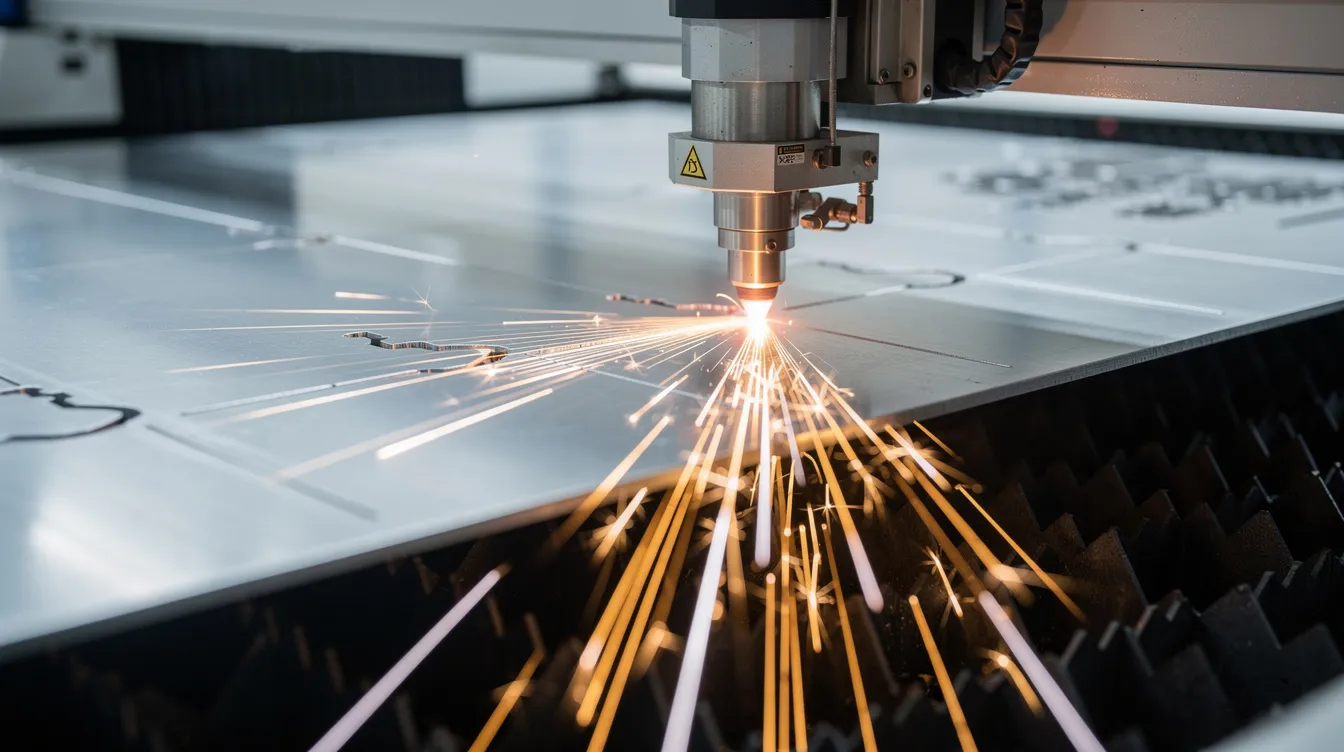
Cutting processes in sheet metal fabrication include laser cutting, waterjet cutting, and shearing. For most OEM work, fiber laser cutting is the primary method because it delivers high-accuracy 2D profiles and internal cut-outs without expensive hard tooling.
Anebon’s laser systems support sheets up to approximately 3000 × 1500 mm. Typical positional tolerances reach ±0.1 mm for features on material up to about 3 mm thick, widening to ±0.15–0.2 mm on thicker stock. Kerf widths run 0.1–0.3 mm depending on material and power settings. A water jet system handles materials that cannot tolerate extreme heat or those requiring zero heat-affected zones.
Laser cutting is a common method used in sheet metal fabrication, and it’s particularly well suited for prototypes and mid-volume work where parts can be quickly cut from nested sheet layouts with no die investment.
Bending and Forming
Bending processes shape flat metal sheets into 3D structures using tools like press brakes. Anebon uses CNC press brakes to create flanges, hems, and complex shapes with controlled precision.
Key variables include bend radius (often 1× to 3× material thickness depending on alloy), K-factor for neutral axis positioning, and bend relief geometry to prevent tearing at internal corners. Forming processes distort or bend the metal into 3D geometries without adding or removing material, preserving the original sheet thickness throughout.
For optimized bend sequences on parts with multiple bends, proper order planning prevents tool interference and ensures dimensional accuracy across the finished part.
Punching and Stamping
For repeating hole patterns, louvers, and embossed features, stamping becomes more economical than laser cutting at higher volumes. Compound dies typically take 4–8 weeks to build, while progressive dies require 6–12 weeks. Tooling investment generally pays off when volumes cross approximately 5,000–10,000 units per year, making this process ideal for high volume production runs.
Joining and Assembly
Joining processes in sheet metal fabrication include welding, riveting, and fastening. Anebon supports TIG and MIG welding for continuous structural joints, spot welding for sheet-to-sheet lap connections, and mechanical fastening using screws, rivets, pem inserts, and standoffs.
A notable advantage is the ability to combine sheet metal with CNC-machined and die-cast parts in one assembly, ensuring mating features align without multi-supplier coordination headaches.
Anebon can integrate multiple sheet metal fabrication processes in a single project, reducing supplier count and simplifying logistics for OEMs managing complex bills of materials.
Materials and Surface Finishes for Fabricated Sheet Metal
Material and finish choices drive the performance, cost, and appearance of every fabricated sheet metal part. Getting these decisions right during the design phase prevents expensive corrections downstream.
Common Sheet Metal Materials
Common materials for sheet metal fabrication include aluminum, steel, and copper, along with other materials selected for specific application demands.
Aluminum alloys are lightweight and resist oxidation, making them suitable for portable applications and heat-sensitive assemblies. Alloy 5052-H32 offers excellent formability with yield strength around 193 MPa and superior corrosion resistance in marine environments. Alloy 6061-T6 delivers higher strength (yield ~276 MPa) and better machinability but requires larger bend radii to avoid cracking. Choose 5052 when forming complexity and salt spray exposure matter most; choose 6061 when structural rigidity and secondary machining are priorities.
Stainless steel is ideal for structural components needing corrosion resistance. Grades 304 and 316 serve medical devices, food equipment, and outdoor applications where good corrosion performance is non-negotiable. The 316 grade adds molybdenum for superior resistance in chloride-rich environments.
Mild and high-strength steels remain the go-to for brackets, machine frames, and automotive components where cost per unit of strength matters, though they require protective finishes to prevent corrosion.
Copper is used for electrical applications due to high conductivity, making it essential for bus bars, EMI shields, and grounding plates with good conductivity properties. Brass is excellent for low-friction contact applications like gears, connectors, and decorative hardware where both electrical conductivity and wear resistance are needed.
Surface Treatments and Coatings
Finishing processes enhance aesthetic appearance and corrosion resistance through coatings and treatments. Anebon offers a range of surface treatment processes tailored to each part’s end use applications.
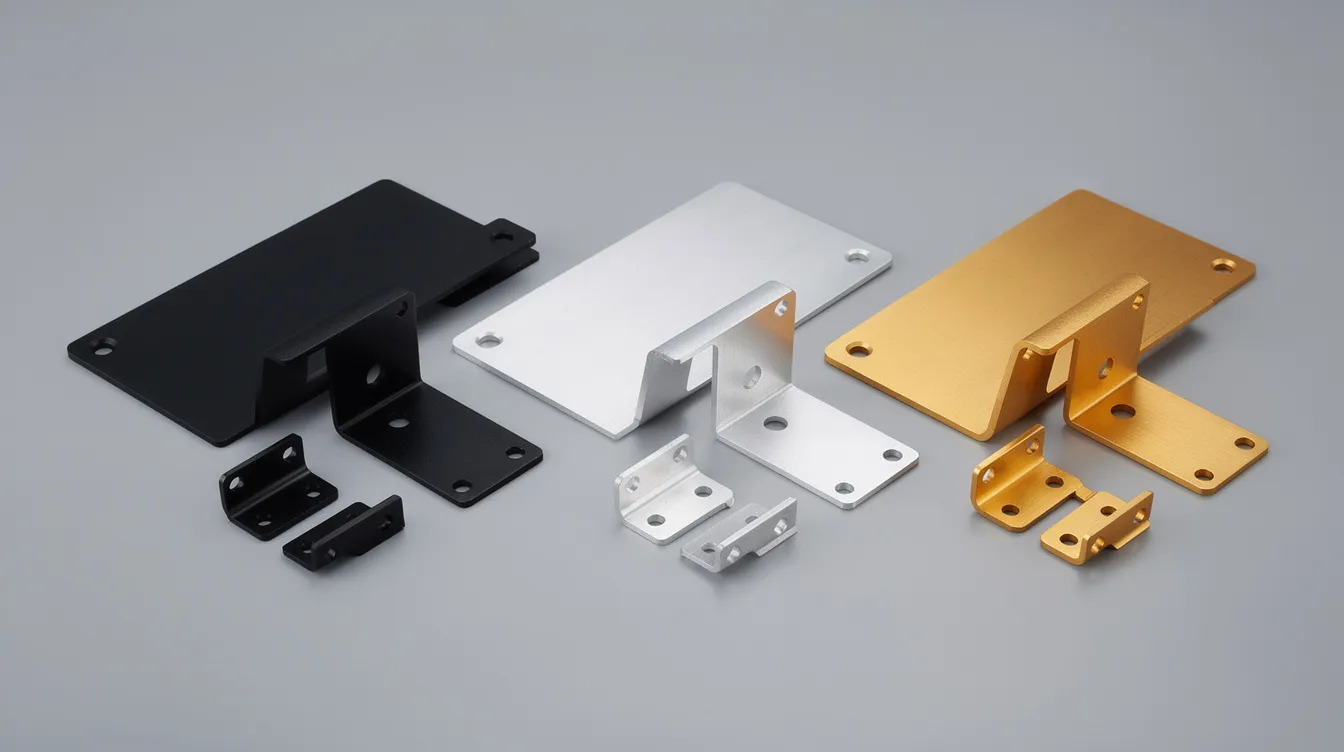
Powder coating applies a durable, colored finish using electrostatically charged powdered paint that is cured under heat. Film thickness typically ranges from 60–120 μm, providing strong impact resistance and a corrosion resistant finish. It’s available in different colors and textures, making it easy to achieve the desired aesthetic for cabinets, panels, and consumer products. Compared to standard painting methods, powder coating produces a thicker, more uniform wear resistant layer.
Chromate conversion coating, also known as chem film, creates a thin, conductive corrosion resistant layer on aluminum. It maintains electrical conductivity, meets MIL-style requirements, and works as an excellent base layer before paint or powder coat. The result is a part surface with both corrosion protection and conductivity.
Anodizing on aluminum creates an oxide layer that enhances durability and appearance. Type II standard anodizing (5–25 μm) suits electronics and general-purpose enclosures. Type III hardcoat anodizing (25–50+ μm) provides a heavier wear resistant layer for aerospace and industrial parts exposed to abrasion. Both versions are available in multiple colors, with very little thickness added relative to the protection gained.
Anebon can combine finishing services, such as bead blasting plus anodizing, or chem film plus powder coating, based on your drawings and environmental requirements. Engineers can consult Anebon for guidance on the most suitable finish for conditions like salt spray exposure or medical sterilization.
Sheet Metal Fabrication Capabilities at Anebon
Since 2010, Anebon has focused on precision OEM sheet metal fabrication backed by ISO 9001:2015 and ISO 14001:2015 certifications, which indicate quality management and environmental standards in manufacturing.
Dimensional capabilities. Anebon supports laser cutting and forming for sheets from 0.5 mm up to approximately 15 mm thick depending on material. Achievable dimensional tolerances reach ±0.1 mm for standard sheet features and can go tighter on critical machined details with case-by-case engineering review.
Production scalability. Sheet metal parts can be produced in low to high volumes cost effectively. Anebon handles everything from a single prototype or low volume prototypes through small production runs of dozens to high volume production runs of thousands of units for end use production. The transition from prototype to production is smooth because tooling, fixtures, and process documentation carry over without re-qualifying a new supplier.
Integrated services. Beyond sheet metal, Anebon also offers CNC machining, 5-axis machining, and die casting for parts that must mate with fabricated sheet metal assemblies. In-house quality assurance includes dimensional inspection reports and material certifications on request.
Industries served. Key sectors include aerospace, medical devices, automotive, robotics, industrial automation, and consumer electronics, all with emphasis on high-precision requirements and certified manufacturing.
Applications of Fabricated Sheet Metal Components
Sheet metal fabrication is chosen when parts must be strong, lightweight, and cost effective to manufacture and assemble. Here are the application areas where fabricated sheet metal delivers the most value.
Enclosures and Chassis
Applications of fabricated sheet metal include enclosures for electronics, such as laptop frames, network equipment housings, and industrial control cabinets. Electrical enclosures often use sheet metal for durability because properly finished panels provide EMI shielding, impact resistance, and refined cosmetic appearance after powder coating or anodizing. Common sheet metal products include enclosures, brackets, and cabinets across both consumer electronics and industrial sectors.
Brackets, Frames, and Structural Supports
Sheet metal is used for automotive and aerospace components where stiffness-to-weight ratio determines performance. Typical roles include robotics arm mounts, sensor brackets, machine base structures, and underbody automotive modules. Sheet metal is ideal for creating custom brackets in low volumes while remaining equally viable for scaled production.
Panels, Doors, and Covers
Sheet metal is essential for HVAC ductwork and fittings, battery pack covers in EVs, machine guards, and equipment doors. Precise sheet metal cutting and bending ensure proper fit, hinge alignment, and gasket sealing across these applications.
Electrical and Thermal Components
Copper bus bars, grounding plates, and heat-spreading plates for power electronics are all fabricated from sheet metal. These parts demand tight thickness control and clean surfaces to maintain thermal and electrical performance.
Anebon fabricates custom parts to customer drawings rather than catalog components, enabling tight integration into OEM products across all of these end use applications.
Why OEMs Choose Anebon for Sheet Metal Fabrication
Anebon serves as a B2B precision manufacturing partner for overseas OEMs and R&D teams who need reliable, high-quality sheet metal fabrication capabilities paired with machining and finishing under one roof.
Engineering collaboration. Anebon’s team provides direct support for design engineers, including DFM feedback on bend allowances, hole locations relative to bend lines, material and finish combinations, and springback compensation. This collaboration during the design phase prevents surprises during production.
Quality and consistency. ISO 9001:2015 and ISO 14001:2015 certifications, documented process controls, and systematic inspection practices support repeatable quality across both prototype and production batches. First article inspection, CMM measurement, and material traceability are standard.
Cost and lead times. Combining sheet metal fabrication with CNC machining and die casting in one facility reduces logistics costs and compresses overall lead times. There is no need to coordinate between three or four separate suppliers when one manufacturer handles cutting, forming, welding, machining, and finishing.
Global OEM support. Anebon ships fabricated sheet metal assemblies to customers in North America, Europe, and Asia, with experience handling export documentation and protective packaging that preserves part surface quality through transit.
Whether you need a single prototype or thousands of production parts, Anebon’s integrated fabrication, machining, and finishing services are built to support your project from first drawing to final shipment. Upload your CAD files or request an instant quote to get started on your next sheet metal fabrication project with Anebon.