Understanding Ductile Iron Cast Iron: Benefits and Key Differences
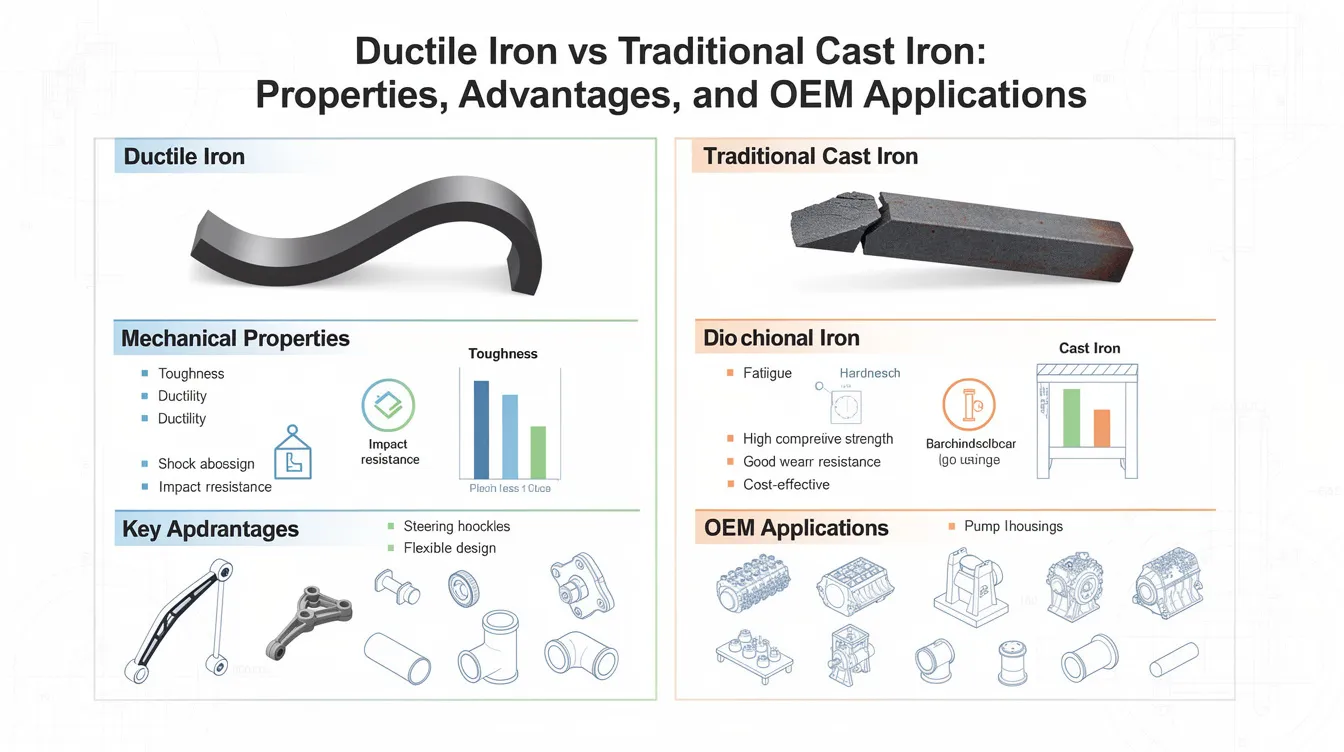
Ductile Iron vs Traditional Cast Iron: Properties, Advantages, and OEM Applications
Choosing between ductile iron and gray cast iron can determine whether your OEM component thrives under load or fails prematurely. This guide breaks down the properties, grades, and real-world applications that matter for design and sourcing decisions.
Quick Answer: Why Ductile Iron Castings Matter for Modern OEMs
Ductile iron-also called nodular cast iron or spheroidal graphite iron-is a family of iron carbon alloys where graphite forms as rounded nodules instead of flakes. This unique microstructure gives ductile cast iron superior tensile strength and impact resistance compared to traditional cast iron, while retaining cost-effective castability.
The key difference is graphite shape. In gray cast iron, graphite flakes act as internal stress points that promote cracking. In ductile iron, spheroidal graphite nodules interrupt crack propagation, delivering high tensile strength (60,000 to 120,000 psi), measurable yield strength (40,000 to 90,000 psi), and elongation of 2% to 18% before breaking. These mechanical properties make ductile iron the preferred material for automotive components like suspension knuckles, pump housings, valve bodies, and high-pressure piping-components where gray iron or even steel castings once dominated. Anebon Metal Products Limited, an ISO 9001:2015-certified precision manufacturer in Dongguan, China, machines and finishes ductile iron castings to tolerances as tight as ±0.002 mm for overseas OEMs across automotive, industrial, and energy sectors.
What Is Cast Iron? (Traditional Gray Cast Iron Basics)
Cast iron is an iron–carbon–silicon alloy, typically with a carbon content of 2–4% and 1–3% silicon, that is cast into shape. Traditional gray cast iron features graphite present as interconnected graphite flakes in the iron matrix. These flake-like structures make gray iron brittle-the flakes act as stress concentrators, making the material prone to cracking under tension.
Despite this limitation, regular cast iron is known for good vibration damping and thermal conductivity. Its compressive strength is high, and machinability is excellent. Common grades like ASTM A48 Class 30 and Class 40 deliver tensile strengths around 200–275 MPa (roughly 20,000 to 60,000 psi). Cast iron has a tensile strength range of 20,000 to 60,000 psi.
Gray cast iron is often used for engine blocks and cookware applications, along with machine frames, brake drums, and machine tool bases-anywhere stiffness and vibration damping outweigh the need for impact toughness.
What Is Ductile Iron? (Nodular / Spheroidal Graphite Iron)
Ductile iron was first commercialized in the 1940s when Keith Millis patented a process using magnesium to transform graphite morphology. This represented a modern evolution in casting process technology for iron alloys.
Adding a small amount of magnesium (typically 0.03–0.06%) to molten iron before casting converts graphite from flakes to rounded nodules. This single change in form fundamentally alters performance: ductile iron contains spheroidal graphite nodules that blunt crack tips instead of concentrating stress. The result is a material that is less brittle than traditional cast iron, with iron strength approaching low-to-medium carbon steel.
Common ASTM A536 grades include 60-40-18, 65-45-12, and 80-55-06-where the three numbers represent tensile strength (ksi), yield strength (ksi), and minimum elongation (%). Ductile iron retains cast iron’s castability and lower cost advantages while overcoming its brittleness.
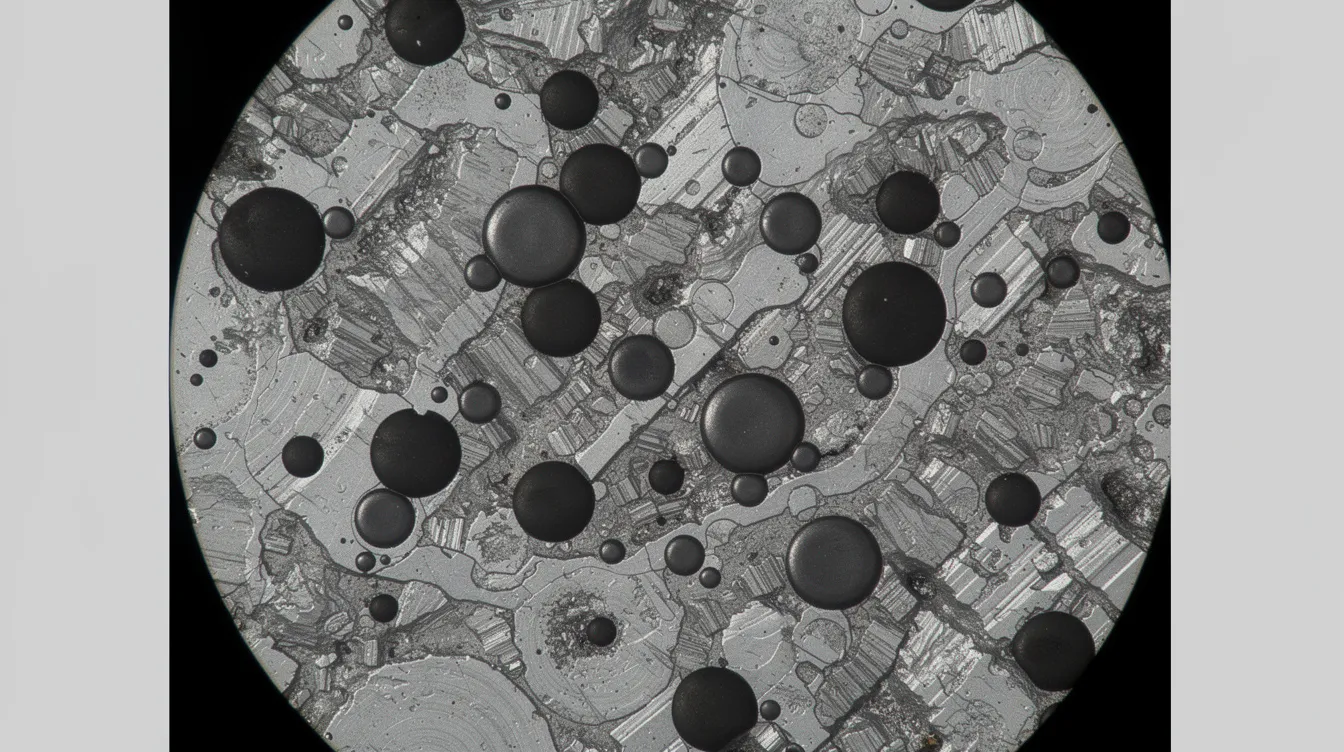
Chemical Composition and Microstructure: Ductile Iron vs Gray Cast Iron
Both ductile iron and gray cast iron share similar base compositions-iron with approximately 3–4% carbon and 2–3% silicon-but differ in trace elements and resulting microstructure. The primary difference in performance between ductile and cast iron is due to their microstructure.
In ductile iron production, nodulizers (mostly magnesium, sometimes cerium) promote spheroidal graphite formation. Controlled sulfur and oxygen levels maintain nodularity. The metallic matrix can be ferritic (higher ductility), pearlitic (higher strength), or mixed-tailored through alloying with copper, nickel, or molybdenum and through heat treatment.
Gray iron’s graphite flakes create anisotropy and low tensile strength. The flake shape causes stress concentration at sharp tips, which is why cast iron is prone to cracking under tension due to its microstructure.
Modern metallography-nodularity testing, inoculation control, and microstructure evaluation-is critical for consistent quality in ductile iron castings.
Mechanical Properties and Performance Comparison
Ductile iron offers roughly double the tensile strength and vastly higher elongation than gray iron. Here is how key physical properties compare:
|
Property |
Gray Cast Iron |
Ductile Iron |
|---|---|---|
|
Tensile strength |
20,000–60,000 psi |
60,000–120,000 psi |
|
Yield strength |
Not well defined |
40,000–90,000 psi |
|
Elongation |
< 1% |
2–18% |
|
Impact resistance (Charpy) |
Near zero |
7–15 ft-lbs |
|
Vibration damping |
Excellent |
Good |
|
Fatigue resistance |
Poor under tension |
~45–50% of UTS |
Ductile iron can withstand tensile strength up to 120,000 psi and exhibits high impact resistance of 7 to 15 ft-lbs. It performs well under repeated loading and shock loads, achieving much higher toughness compared to conventional gray cast iron.
Gray cast iron still excels in vibration damping and thermal conductivity, which is why it remains the preferred choice for machine beds and some brake components. Anebon’s precision CNC milling and 5-axis machining capabilities allow tight-tolerance features in ductile iron castings, taking advantage of high strength in thin sections and complex shapes.
Advantages of Ductile Iron Over Traditional Cast Iron
The advantages of ductile iron over traditional cast iron span structural performance, safety, and lifecycle value. Here are the key benefits:
-
Strength and safety: Higher tensile and yield strength enable higher allowable design stresses. Ductile iron has higher ductility, making it able to bend without breaking-critical for load-bearing and safety-critical parts.
-
Impact and fatigue: Ductile iron has better impact resistance than traditional cast iron and is preferred for high-strength applications and shock resistance. It also manages surface wear effectively in high-cycle environments.
-
Durability and corrosion: Ductile iron is more corrosion-resistant than cast iron, extending service life in buried or exposed environments.
-
Design flexibility: The ability to cast thinner walls and integrate complex shapes reduces component weight versus gray iron or steel weldments.
-
Cost efficiency: Ductile iron can often replace steel forgings at lower material and processing cost, with several advantages for OEM purchasing: lower scrap rates, stable properties, and wide availability.
Ductile iron offers excellent strength combined with toughness that gray iron simply cannot match.
Common Ductile Iron Grades and Their Uses
Each ductile iron grade balances strength and ductility differently. Designers choose based on the performance envelope required.
-
60-40-18 (ferritic): High elongation and impact toughness. Used in pressure pipes, fittings, and safety-critical components. Ductile iron is commonly used in high-strength pipe applications and in major water and sewage lines.
-
65-45-12 (ferritic-pearlitic): Balanced strength and ductility. Common for automotive suspension parts, differential housings, and general machinery. Ductile iron is used in automotive components and wheels.
-
80-55-06 (pearlitic): High strength with moderate ductility. Used for gears, crankshafts, and heavy-duty hubs where the alloy must resist failure under sustained loads.
-
ADI (austempered ductile iron): UTS exceeding 1,200 MPa in some treatments, competing directly with forged steel for ring-and-pinion gears and ground-engaging tools.
Ductile iron is also utilized in impact-protection applications like bollards, where the material’s ability to absorb energy without brittle fracture is essential.
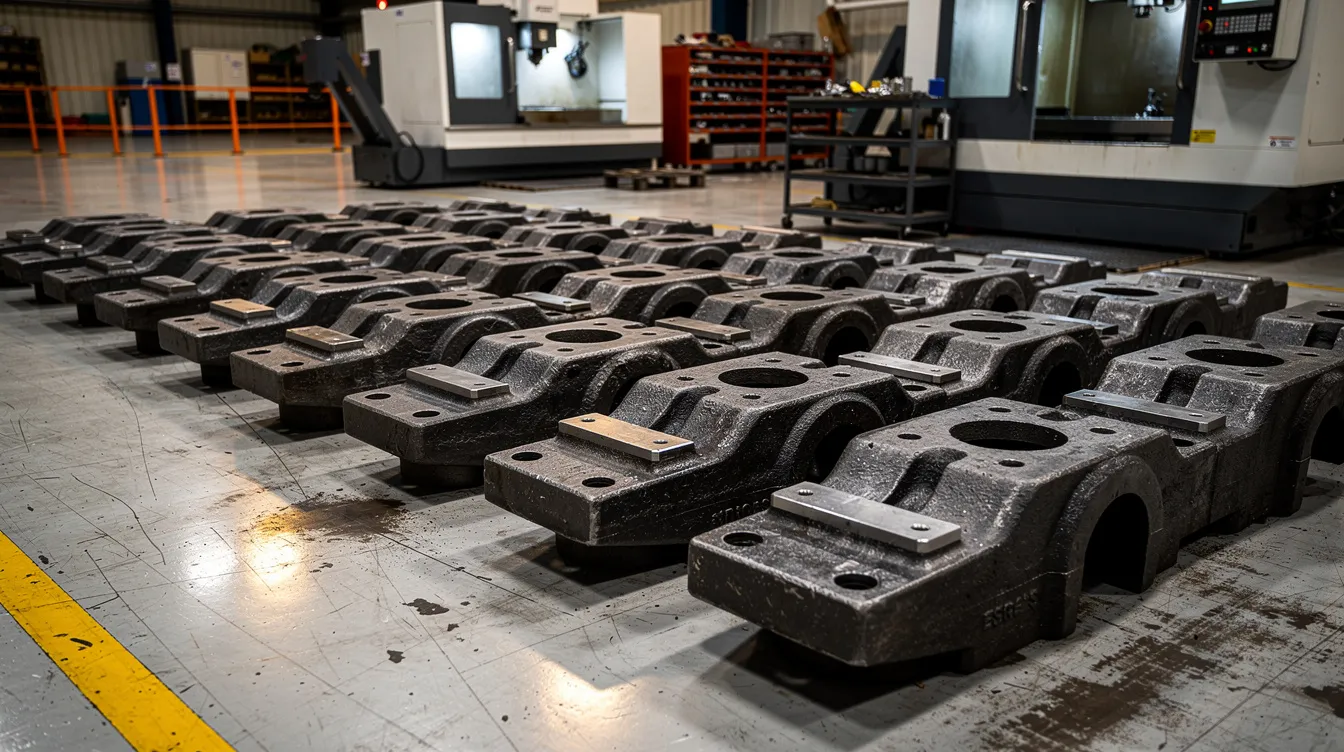
Ductile Iron vs Gray Cast Iron: Application Selection
Material selection between gray iron and ductile iron should be driven by loading mode, safety requirements, and total cost of ownership.
Gray iron remains preferred for: machine tool bases, compressor housings, engine blocks, brake drums, and cookware-where damping and thermal properties dominate.
Ductile iron is the better choice for: high-pressure piping and automotive components, hydraulic bodies, steering knuckles, gear carriers, and pump housings. Ductile iron is preferred for pump housings and machine frames where dynamic loads and shock are present.
When weighing cast iron and ductile options, engineers should consider stress analysis, fatigue life, safety factors, section thickness, and machining allowances. Early consultation with a manufacturing partner like Anebon can help balance design complexity, required tolerances, and optimal iron grade.
From Casting to Finished Part: Machining and Finishing Ductile Iron
Most ductile iron castings require secondary CNC machining to achieve precision features and specified surface finishes. Common operations include CNC milling, CNC turning, drilling, tapping, and multi-axis machining for complex geometries.
Ductile iron offers better machinability due to its composition-nodular graphite aids chip formation-though tool selection (carbide inserts), cutting speeds, and coolant strategies must be optimized. Anebon achieves tolerances down to ±0.002 mm on critical features, benefiting high-precision industrial applications in medical and aerospace-adjacent sectors.
Surface treatments include shot blasting, powder coating, phosphating, and plating where corrosion resistance is required. Anebon’s integrated workflow covers DFM feedback through machining, inspection, and packaging for global shipment.
Quality Assurance, Standards, and Material Traceability
Consistent mechanical properties are non-negotiable for safety-critical nodular iron components. OEMs commonly reference ASTM A536 for ductile iron and ASTM A48 for gray cast iron in drawings and RFQs.
Anebon’s quality system (ISO 9001:2015, ISO 14001:2015) includes chemical analysis, hardness checks, tensile testing, and CMM dimensional inspection. Material traceability-heat numbers, mill certificates, and process records-allows OEMs to track each batch from raw metal through final shipment. Anebon complies with customer-specific requirements including PPAP, FAI, and detailed inspection reporting for automotive and industrial projects.
How Anebon Supports OEMs Using Ductile Iron and Cast Iron
Anebon Metal Products Limited is a China-based B2B manufacturing partner founded in 2010, specializing in precision metal fabrication. Core services relevant to ductile iron projects include CNC machining, rapid prototyping, and production machining of both ductile iron and gray cast iron parts.
Anebon collaborates with overseas design engineers to review part geometry, suggest DFM improvements, and recommend suitable iron grades and surface treatments. The team supports projects from prototypes through full-scale production with consistent quality.
While Anebon works extensively with aluminum, stainless steel, titanium, and engineering plastics, ductile iron and gray cast iron remain key options for heavy-duty, cost-sensitive components across automotive, robotics, energy, and industrial machinery.
Choosing Between Ductile Iron and Traditional Cast Iron for Your Next Project
The right material depends on your specific loading conditions. Specify ductile iron when your design faces high stress, impact, fatigue, or tension in safety-critical environments. Choose gray cast iron when vibration damping, thermal stability, and cost focus are your priorities.
Consider total lifecycle cost-not just material price. Account for failure risk, maintenance intervals, and potential weight savings that ductile iron offers compared to gray iron and some steels. A simple evaluation checklist helps:
-
Loading type (static vs. dynamic vs. cyclic)
-
Operating environment (temperature, pressure, corrosion exposure)
-
Required mechanical properties and silicon/carbon content targets
-
Wall thickness and casting complexity
-
Machining requirements and annual volume
Early engagement with a manufacturing specialist prevents over-engineering with steel where ductile iron is sufficient, or under-engineering with gray iron where ductility is required. Send your CAD models and drawings to Anebon for a no-obligation DFM review and quotation-whether your project calls for ductile iron castings, gray iron machining, or help deciding which delivers the best performance-to-cost ratio for your application.