Understanding CNC Machining: Processes, Benefits, and Applications
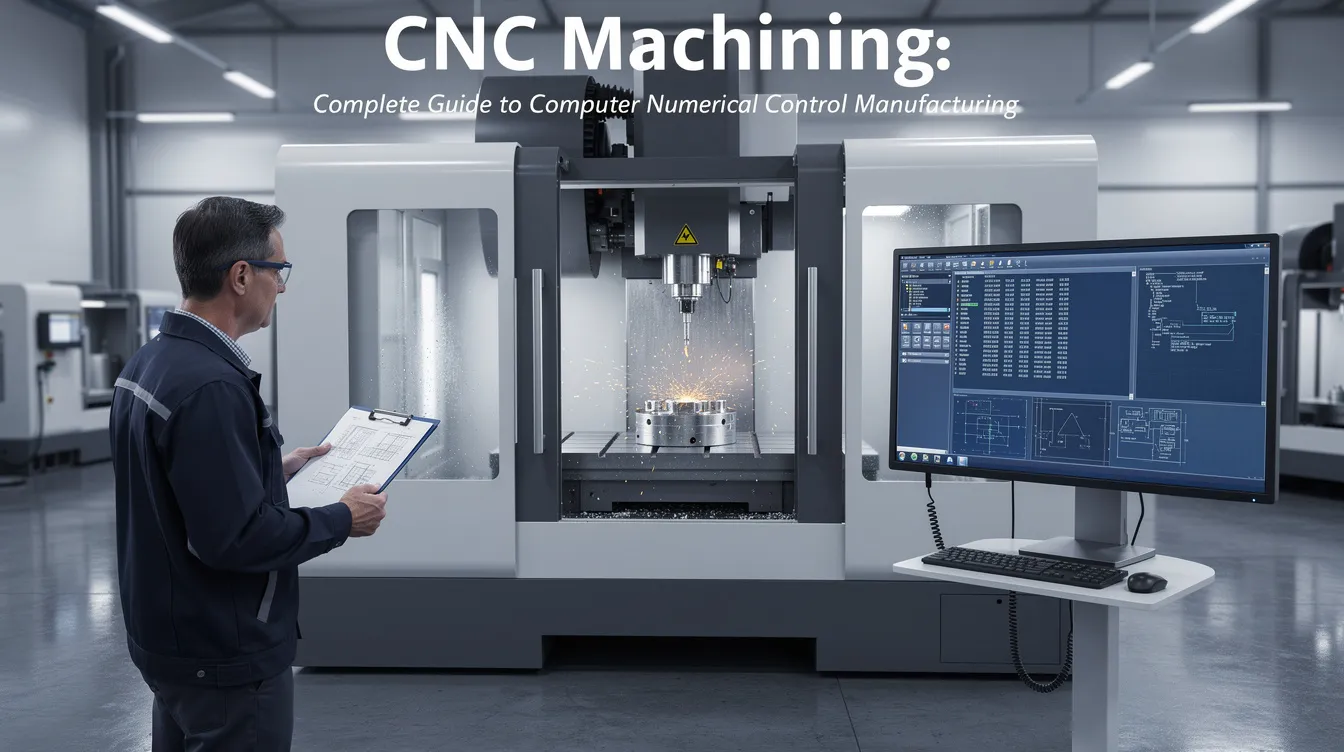
CNC Machining: Complete Guide to Computer Numerical Control Manufacturing
CNC machining uses automated cutting tools for precision manufacturing, producing everything from single prototypes to runs of 100,000+ identical parts. This guide covers how the process works, which materials and machines suit different applications, and what to look for when selecting a CNC machining partner.
Quick Overview of CNC Machining Services at Anebon
CNC machining is a subtractive manufacturing process where computer-controlled cutting tools remove material from solid stock to create finished parts. The term CNC stands for computer numerical control, meaning a digital controller directs every movement of the machine tool based on programmed instructions. CNC machining is used for rapid prototyping and scalable production across dozens of industries.
Anebon Metal Products Limited provides online custom CNC machining services for metal and plastic parts. Our capabilities span CNC milling, CNC turning, and 5-axis machining, all under one roof in Dongguan, China. CNC machining is widely used in industries such as aerospace, automotive, and medical devices, and those are the sectors where most of our clients operate.
Here is what Anebon brings to a CNC machining project:
-
Rapid prototyping in as fast as 3 to 5 days; production parts can ship in as little as one day for simple geometries.
-
Production volumes from 1 piece to 100,000+ parts using the same validated CNC programs.
-
ISO 9001:2015 and ISO 14001:2015 certified quality and environmental management systems.
-
Core industries served: aerospace, medical devices, automotive, robotics, industrial machinery, and consumer electronics.
-
Precision tolerances down to ±0.002 mm on critical features.
Design engineers and OEM buyers can upload CAD files directly to request a CNC machining quote with DFM feedback.
What Is CNC Machining? (Definition & Core Concepts)
CNC machining is a subtractive process: a cutting tool removes material from a solid block of stock material until the desired geometry remains. This contrasts with additive manufacturing (3D printing), where material is deposited layer by layer, and with casting, where molten material fills a mold. The subtractive process yields parts with tighter tolerances and better mechanical properties in most engineering metals and plastics.
CNC machines (mills, lathes, machining centers) follow G code instructions to move tools along multiple axes and remove material from solid stock. CAD software is used to create digital blueprints before CNC machining begins. CAM software then translates those CAD designs into machine-readable instructions, typically G-code, which the CNC controller executes to drive spindle speed, feed rate, and tool position.
CNC machining provides high repeatability, ensuring consistent quality across large production runs. Because the process relies on automated processes and digital programming, CNC machining minimizes human error. CNC machines can achieve tolerances as tight as ±0.001 inches (±0.025 mm), and Anebon holds critical features to ±0.002 mm on select operations. CNC technology is preferred for tight-tolerance OEM parts because the same program produces identical results whether you run 10 parts or 10,000. CNC machining can process over 50 different materials, from aluminum and titanium to engineering plastics like PEEK and nylon.
Key terms:
-
CNC machine: a machine tool (mill, lathe, 5-axis center) controlled via computer software that directs axis movements and tool actions.
-
CNC machined part: a component produced by removing material under programmed toolpaths; includes prismatic features, holes, profiles, shafts, threads, and contoured surfaces.
-
CNC machining work: the full range of tasks performed by CNC machinery, from roughing and finishing to drilling, tapping, reaming, and thread milling per design specifications.
How CNC Machines Work: From CAD File to Finished Part
The CNC machining process follows a predictable sequence from digital model to finished component. CNC machining can quickly produce parts from prototypes to full-scale production using the same design, because every step below stays consistent regardless of batch size.
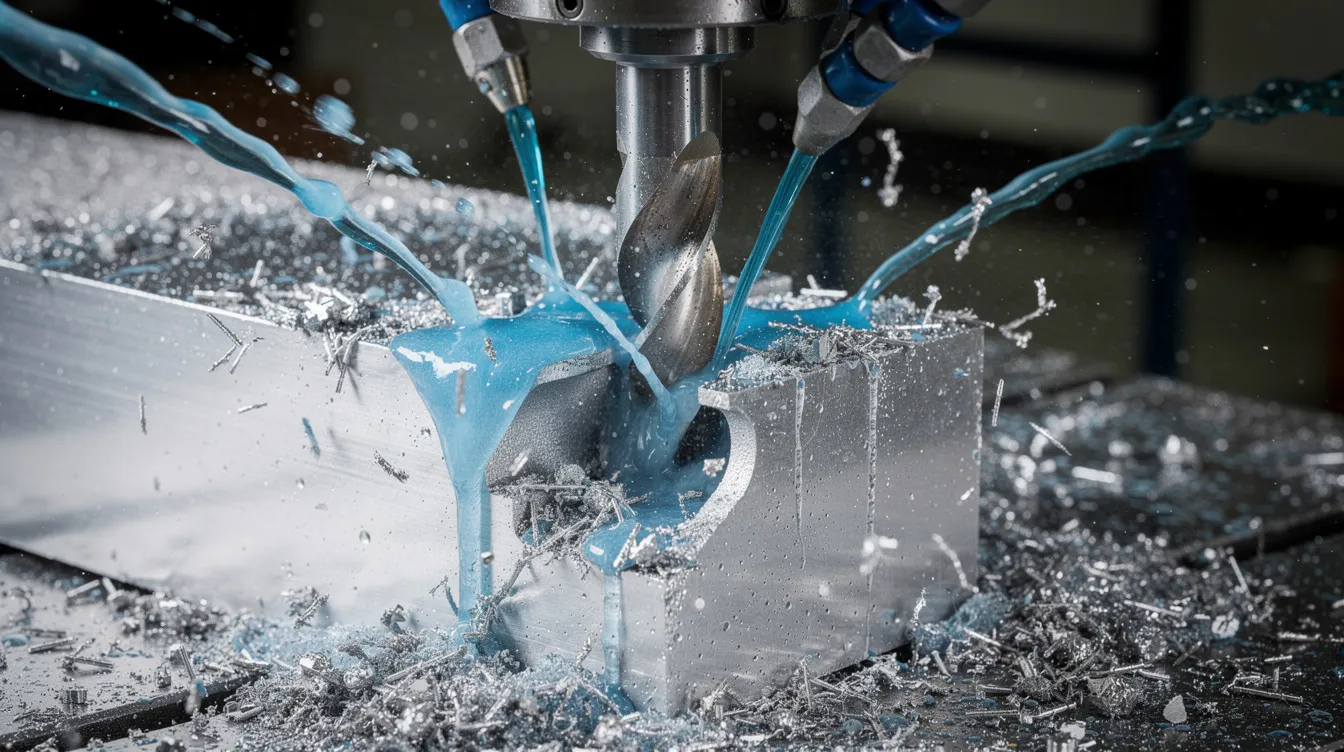
Here is the step-by-step workflow:
-
CAD model and technical drawings: an engineer defines full geometry, critical dimensions, precision tolerances, and surface finish callouts using computer aided design software. The 3D model and 2D drawing together form the complete specification.
-
DFM review and quotation: the manufacturer reviews the part for machinability (thin walls, deep cavities, undercuts, internal radii), selects material, and estimates tooling, cycle time, and cost. This step typically takes 1 to 2 business days.
-
CAM programming: CNC machinists and programmers use computer aided manufacturing (CAM) software to generate toolpaths. The CAM software selects tools, operations (roughing, finishing), feeds, and speeds, then simulates the cut to catch collisions before any metal is touched. CAD and CAM software together bridge the gap between design intent and machine motion.
-
Post-processing to G-code: CAM programs are converted via a post-processor into the G code dialect specific to the target CNC controller. G-code lines such as G01 X25.0 Y10.0 F200 command a linear move at a defined feed rate. M-codes handle auxiliary functions: M03 starts the spindle, M06 triggers a tool change, M08 turns coolant on.
-
Machine setup: operators clamp the workpiece using fixtures, load multiple tools into the magazine, set the work coordinate system (datum), and run a dry pass to verify clearance. Setup time ranges from 1 to 4 hours depending on complexity.
-
Machining execution: rough passes remove bulk material; finishing passes deliver final tolerances and surface finish. CNC machines can operate 24/7 for continuous production without stopping between shifts.
-
Inspection: in-process checks, CMM measurement of critical features, gauge verification, surface roughness measurement. Inspection data feeds back into quality records.
-
Finishing and delivery: post-machining surface treatments, packaging, export documentation.
Modern CNC machines use closed-loop control systems with encoders that measure actual axis position and correct deviations in real time. Open loop stepper systems, common on entry-level equipment, send movement commands without position feedback and are less precise. The closed-loop approach is what allows many machines in production shops to hold repeatability within microns.
Types of CNC Machines and Main Processes
Different types of CNC machines are designed for specific machining tasks, including milling and turning. Here are the main classes of CNC machine tools used in precision manufacturing.
Machining centers (CNC mills)
-
CNC milling uses multi-point rotating tools for material removal. The tool spins; the workpiece is typically stationary or moves along linear axes.
-
CNC milling machines typically use a 3-axis system (X, Y, Z). Adding a rotary table creates 4-axis capability; adding both tilt and rotation yields 5-axis.
-
Milling machines suit prismatic parts: brackets, housings, heat sinks, enclosures with pockets and contours.
Turning centers (CNC lathes)
-
CNC turning employs single-point cutting tools on rotating workpieces. The part spins; the tool feeds into it.
-
Modern lathes with live tooling can perform milling, drilling, and tapping operations without removing the part, reducing setup count.
-
Turning machines are the default choice for shafts, pins, bushings, threaded connectors, and other axially symmetric components.
Multi-axis and specialized machines
-
5-axis CNC machines allow for complex geometries by adding two rotational axes to the three linear ones. Turbine blades, impellers, and surgical implants are common applications.
-
Wire EDM machines use a thin conductive wire for cutting hardened steels and intricate profiles that conventional tools cannot reach. Sinker EDM uses a shaped electrode for cavities and fine details. Electrical discharge machining (EDM) can create complex shapes that traditional methods cannot reach.
-
Laser cutting machines utilize focused laser beams for precision cutting of sheet metal and thin plate stock.
CNC machines operate differently depending on whether the tool or the part spins. A milling machine spins the tool to carve features into a stationary block; a lathe spins the part against a stationary tool. This distinction determines feasible geometries: overhangs and multi-face features favor milling, while round profiles and concentric bores favor turning.
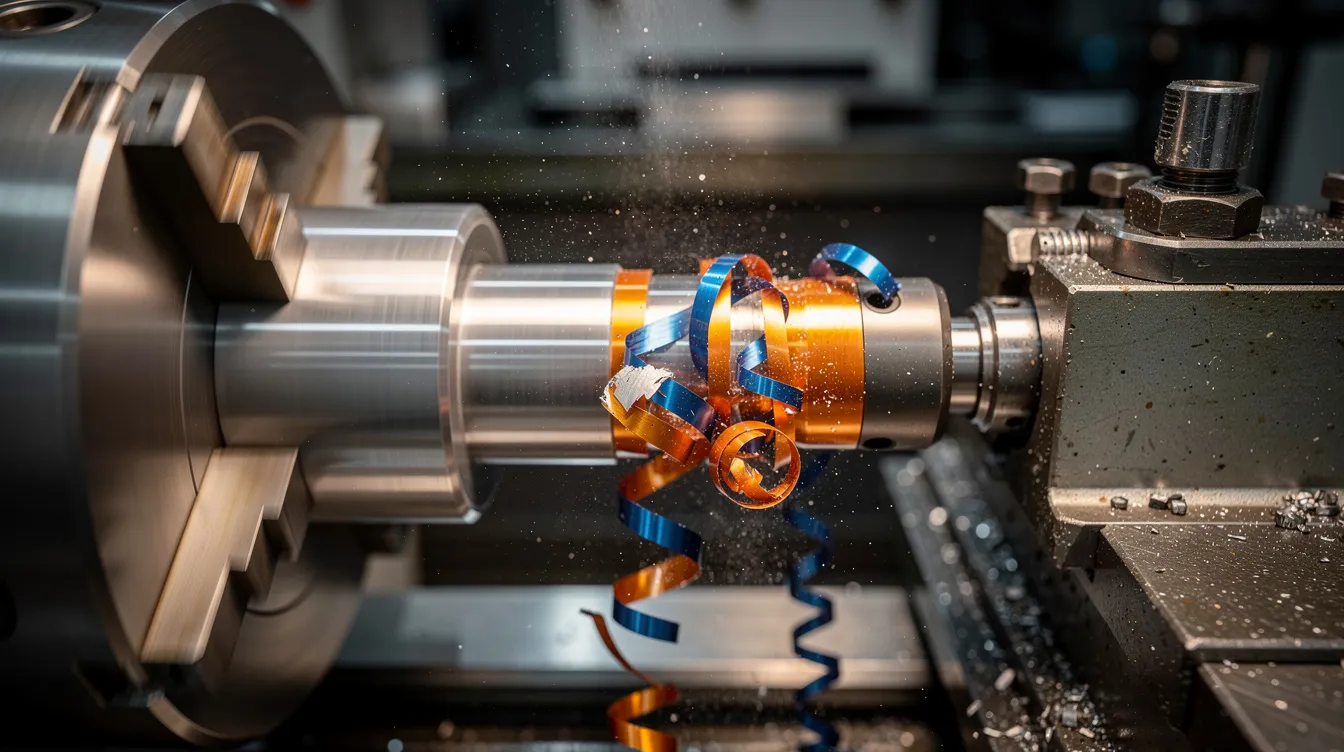
CNC Milling vs CNC Turning: Choosing the Right Process
Choosing between CNC milling and CNC turning depends on part geometry, tolerance requirements, and production volume.
-
Geometry: CNC milling handles flat, angular, and multi-surface parts (brackets, enclosures, plates). CNC turning handles round or cylindrical parts (pins, rollers, threaded connectors, bushings).
-
Axes: CNC turning typically operates on two axes, X and Z, with the workpiece rotating. CNC milling works across three or more axes with the tool rotating.
-
Tolerances: CNC milling can achieve tolerances as tight as ±0.001 inches on critical dimensions. Turning achieves comparable precision on diameters and concentricity, often with better roundness on outer diameters.
-
Surface finish: turning produces consistent finishes on cylindrical surfaces (Ra 0.4 to 0.8 µm with finishing passes). Milling finishes depend on tool geometry, step-over, and cutter engagement.
-
Throughput: CNC milling machines can operate continuously for 24/7 production, and so can lathes. Turning cycles tend to be shorter per part for simple round geometries.
-
Hybrid operations: mill-turn centers combine both processes in a single clamping. This reduces setups, eliminates re-fixturing error, and is practical when a part has both round and prismatic features.
When Anebon reviews a new project, we recommend the process that minimizes setups and total cost. A shaft with cross-drilled holes, for example, machines faster on a mill-turn center than on separate machines.
Advanced 5-Axis CNC Technology and Complex Geometry
A 5-axis CNC machine moves along three linear axes (X, Y, Z) plus two rotational axes (typically A and B, or B and C). This configuration reduces setups and opens access to undercuts, compound angles, and organic surfaces that would require multiple clampings on a 3-axis mill.
-
Aerospace impellers and turbine blades are machined in a single clamping with simultaneous 5-axis motion, producing smoother surfaces (lower scallop height) than indexed 3-axis approaches.
-
Medical implants (hip cups, spinal cages) require contoured surfaces and tight tolerances on biocompatible titanium; 5-axis machining delivers both without re-fixturing.
-
Consumer electronics enclosures with sculpted edges and internal pocketing benefit from 5-axis technology because fewer setups mean less cumulative positioning error.
Anebon’s 5-axis capability allows machining of parts in a single clamping, which cuts lead time and improves dimensional consistency on advanced jobs that demand complex geometry.
Materials for CNC Machining: Metals
Materials commonly used in CNC machining include metals like aluminum and titanium, as well as various plastics. Material choice directly affects cycle time, tooling cost, and part performance. Anebon stocks common alloys and can source custom grades on request. CNC rapid prototyping retains the mechanical properties of materials because parts are cut from solid stock rather than built up or sintered.
-
Aluminum alloys: aluminum alloys like 6061 and 7075 are commonly used. 6061-T6 has a tensile strength around 310 MPa, a machinability rating of ~270% relative to free-machining steel, and cuts at 600 to 1,000 SFM. 7075-T6 offers higher strength (~570 MPa) for structural aerospace parts but costs more and wears tools faster. CNC machined aluminum parts include drone frames, automotive brackets, and electronics housings. Rapid prototyping uses affordable materials like aluminum 6061 and ABS to keep iteration costs low.
-
Stainless steel: stainless steel offers excellent machinability and uniformity, particularly grade 303 (free-machining). 316L provides high corrosion resistance for medical, food processing, and marine environments but machines at roughly 36% of the baseline machinability rating. Cutting speeds drop to 100 to 220 SFM. All stainless grades are corrosion resistant in varying degrees.
-
Alloy and carbon steels: mild steel (1018) and medium-carbon steels (1045, 4140, 4340) serve load-bearing and wear-critical applications. 4140 offers good mechanical properties with heat-treatment flexibility. Cost per kilogram is lower than stainless or titanium, but machinability ratings sit below aluminum.
-
Titanium: titanium has a high strength-to-weight ratio and corrosion resistance, making it the default for aerospace structural parts and medical implants. Ti-6Al-4V machines at roughly 22% of the baseline rating; cutting speeds are low, and tool life is short. Part cost reflects these constraints.
-
Brass, copper, bronze: brass (C36000) machines easily and suits connectors and fittings. Copper provides electrical conductivity for bus bars and heat sinks but produces gummy chips that require sharp tooling.
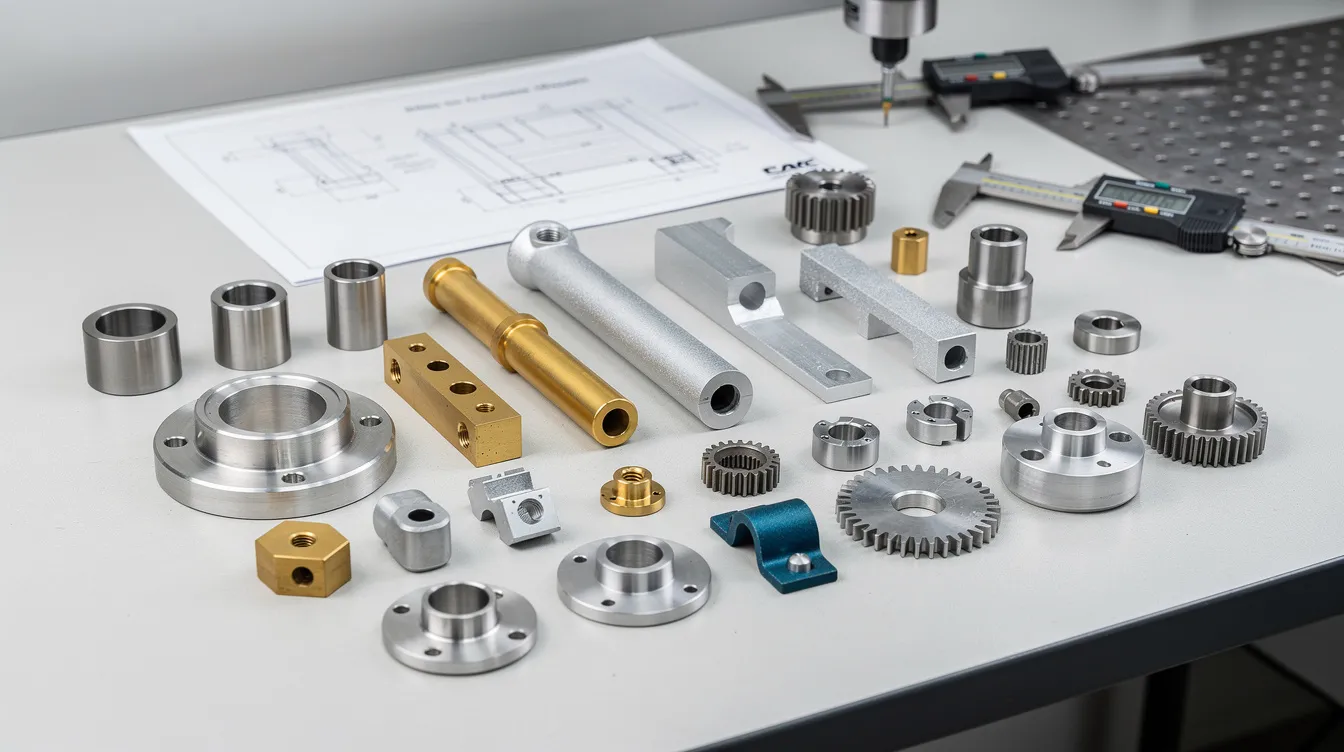
Materials for CNC Machining: Plastics
Engineering plastic materials are CNC machined for prototypes and end-use components in consumer electronics, medical devices, and automation equipment. Unlike injection molding, CNC machining requires no mold tooling, which makes it practical for low volumes and design iterations.
-
ABS: ABS is widely used for pre-production prototypes due to its stability and good impact resistance. Machines cleanly with standard carbide tooling.
-
Polycarbonate (PC): high tensile strength and optical clarity; prone to chatter and heat buildup at high spindle speeds.
-
Nylon (PA6/PA66): tough, wear-resistant, good for gears and sliding components. Absorbs moisture, which can shift dimensions; parts should be machined dry or in controlled humidity.
-
POM (Delrin/acetal): excellent dimensional stability and low friction. Ideal for bearing surfaces, sliding guides, and precision mechanical components. Low moisture absorption keeps parts stable over time.
-
PEEK: PEEK is ideal for high-temperature and chemical resistance applications; withstands sustained temperatures above 200°C. Used in aerospace bushings and medical instrument components. Expensive material with high tool wear.
-
PTFE: very low friction coefficient and broad chemical resistance. Soft; tends to smear under aggressive cuts. Requires sharp tools and light feed rates.
-
PVC (polyvinyl chloride): cost-effective for non-structural housings and covers. Limited high temperatures tolerance.
-
Epoxy resin composites: sometimes CNC machined for tooling masters or electrical insulation fixtures.
Plastic behavior differs from metal: plastics heat up faster, deflect under cutting forces, and produce burrs that cling. Spindle speeds are typically lower, and coolant selection (air blast vs. flood) depends on whether the plastic absorbs liquid.
Standard CNC Machining Finishes and Surface Treatments
As-machined surfaces carry visible tool marks with a typical roughness of Ra 1.6 to 3.2 µm (63 to 125 µin). Post-processing finishes improve appearance, corrosion resistance, or wear resistance depending on the application.
-
Deburring and chamfering: removes sharp edges and tool marks; standard on all production parts.
-
Bead blasting: creates a uniform matte texture, commonly used on aluminum enclosures before anodizing.
-
Brushing and polishing: delivers a directional or mirror finish for cosmetic metal parts.
-
Anodizing (Type II and Type III): protects aluminum and adds color. Type III (“hard anodize”) builds a thicker oxide layer for wear resistance. A black anodized 6061 enclosure is one of the most common finishes in consumer electronics. See Anebon’s anodizing and surface treatment options.
-
Powder coating: provides a thick, durable, colored finish for outdoor or high-wear environments.
-
Plating (nickel, chrome, copper): adds electrical conductivity, corrosion resistance, or decorative appeal to steel and brass parts. Hard chrome plating suits high-wear sliding surfaces.
-
Passivation: standard for stainless steel medical device components; removes free iron and enhances the passive oxide layer for sterilization compatibility.
Finish selection depends on environment: outdoor aluminum housings need anodizing or powder coat; medical instruments need passivated stainless or anodized aluminum; high-wear bushings need hard coatings or case-hardened steel.
Tolerances, Quality Control, and ISO-Certified CNC Machining
Quality assurance is crucial in CNC machining to ensure parts meet specified tolerances and standards. Dimensional tolerances define the acceptable range of a measured dimension; geometric tolerances (GD&T) control form, orientation, and position of features relative to datums.
-
CNC machining achieves tolerances of ±0.001″ to ±0.005″ (±0.025 mm to ±0.13 mm) as a standard range. Features requiring ±0.001″ cost 40% to 80% more than ±0.005″ due to slower finishing passes, tighter fixturing, and mandatory CMM inspection.
-
Anebon holds critical features to ±0.002 mm (~±0.00008″) on select operations using precision fixtures and temperature-controlled inspection.
-
Incoming material inspection verifies alloy certification and stock dimensions before machining begins.
-
In-process checks use calibrated gauges, thread gauges, and optical comparators at defined intervals.
-
Final inspection uses coordinate measuring machines (CMM), surface roughness testers, and gauge blocks. Full inspection reports with dimensional data are available on request.
-
ISO 9001:2015 certification ensures documented processes, traceability, and corrective-action protocols. ISO 14001:2015 addresses environmental management, which matters to EU and North American OEMs with supply-chain compliance requirements.
High precision parts require more than a capable machine; they require a controlled process from raw material drop down through final inspection.
CNC Machining Applications Across Key Industries
CNC machining is widely used in aerospace and automotive industries, but the technology serves far more sectors. Here are CNC machining applications by industry with specific part examples.
-
Aerospace: structural brackets with rib-webbing in 7075-T6 aluminum, titanium engine mounts, turbine blade profiles finished on 5-axis machines. Tolerances on flight-critical parts often sit at ±0.001″ or tighter.
-
Medical devices: titanium spinal cages, cobalt-chrome knee implants, stainless steel surgical instrument tips. Medical industries demand material traceability and validated inspection records for every lot.
-
Automotive: transmission shafts (CNC turning), aluminum battery trays (CNC milling), sensor housings in 303 stainless. Prototyping can be scaled from one-off parts to thousands as a vehicle program matures.
-
Consumer electronics: aluminum unibody enclosures, heat sinks with fine-pitch fins, brass connector pins. Many machines in this sector run around the clock to meet product launch schedules.
-
Robotics and industrial machinery: end-effectors in 6061 aluminum, gear housings in 4140 steel, precision shafts on CNC lathes. These parts often combine turned and milled features in a single mill-turn setup.
-
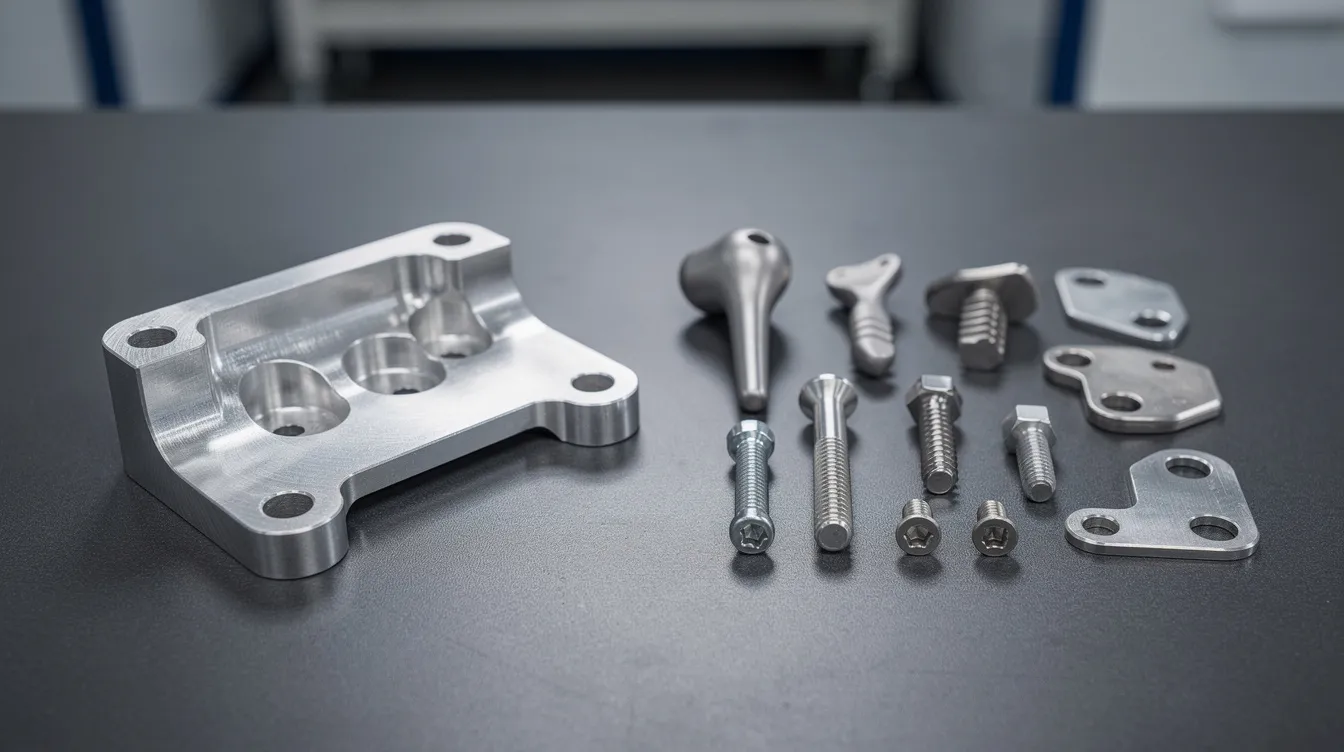
Prototyping to production: OEMs frequently use CNC machining services for rapid prototyping while injection mold or die-cast tooling is being built. Rapid prototyping enables quick production of parts in days, and the same CNC programs scale directly to bridge or full production.
Advantages and Limitations of CNC Machining
Understanding both the CNC machining advantages and constraints helps engineers choose the right manufacturing process for each project.
Advantages:
-
High accuracy and repeatability: once a CNC program is proven, every part matches the first one within the specified tolerance band.
-
Wide material compatibility: metals, plastics, composites; over 50 materials in a typical machine shop’s catalog.
-
Surface finish control: Ra values from 3.2 µm (rough) down to 0.2 µm (polished or ground) depending on the operation.
-
Design flexibility: geometry changes require only a program update, not new tooling. CNC machining can produce parts in as little as one day for urgent prototypes.
-
Low tooling investment: unlike injection molding or die casting, CNC machining requires no custom mold. This makes it cost-competitive for small to medium batches.
-
An automated manufacturing process reduces reliance on manual control and operator skill variation.
Limitations:
-
Geometric complexity increases CNC machining costs. Deep narrow pockets, internal undercuts, and fully enclosed cavities may be impossible without EDM or multi-setup workarounds.
-
Start-up costs for CNC machining can be high due to setup: programming, fixture fabrication, and first-article inspection add front-loaded expense that amortizes over volume.
-
Very thin walls (below ~0.5 mm in aluminum) may deflect under cutting forces. Long slender features tend to vibrate and produce poor finishes.
-
At volumes above 10,000+ identical parts, die casting or injection molding often becomes cheaper per piece, though CNC machining retains value for finish-machining cast features.
Early DFM feedback from Anebon engineers can flag these issues before production begins, reducing scrap, rework, and total project risk. Contact our team through the DFM review process to identify cost-saving opportunities before you finalize drawings.
Design Tips for Cost-Effective CNC Machined Parts
Follow these guidelines when preparing parts for CNC machining to reduce cycle time, tool wear, and cost.
-
Keep wall thickness above 0.8 mm for aluminum and 0.5 mm for steel; thinner walls require slower feeds, lighter cuts, and custom fixturing.
-
Specify tight tolerances only where function demands them. Moving from ±0.005″ to ±0.001″ can raise machining cost by 40% to 80% on the affected feature.
-
Standardize hole sizes to match common drill and reamer diameters; non-standard holes require custom tooling or interpolation cycles.
-
Design internal corners with a radius at least equal to the tool radius (typically 1 mm or larger); sharp internal corners require EDM or multiple small-tool passes.
-
Avoid pockets deeper than four times their width; deep cavities cause tool deflection and chatter, slowing the cycle.
-
Choose CNC turning for cylindrical features and CNC milling for prismatic ones; mixing both on a mill-turn center reduces total setups.
-
Provide clearly dimensioned 2D drawings with GD&T, surface finish callouts (Ra values), and material specifications alongside 3D CAD models in STEP or IGES format.
-
Call out the material drop down (alloy grade, temper, condition) on both the drawing and the purchase order to avoid substitution errors.
Why Overseas OEMs Choose Anebon for CNC Machining
Anebon Metal Products Limited was founded in 2010 in Dongguan, China, and serves global OEM customers with precision CNC machining, die casting, and sheet metal fabrication. Our first CNC machines were 3-axis mills; today the shop floor includes multi-axis machining centers, CNC lathes, wire EDM, and surface treatment lines.
What sets Anebon apart for B2B buyers:
-
Integrated capabilities: CNC milling, CNC turning, 5-axis machining, rapid prototyping, and volume production plus surface treatments from a single supplier. No need to coordinate between separate machine shops.
-
Quality consistency: ISO 9001:2015 and ISO 14001:2015 certified. Every lot ships with material certificates and inspection data.
-
Competitive lead times: prototype parts in 3 to 5 days. We supported an EU robotics startup with 7-day prototype delivery, then scaled the same parts to 5,000-piece quarterly production runs.
-
Engineering support: multilingual DFM feedback, process selection guidance, and experience with export documentation and logistics for North American, European, and Asian OEM clients.
CNC machining work at Anebon covers the full arc from a single prototype to ongoing production. Upload your CAD files or send technical drawings to request a quote and receive DFM feedback within one to two business days.