Top Wholesale Sheet Metal Fabrication Parts Suppliers for Your Needs
Wholesale Sheet Metal Fabrication Parts Suppliers
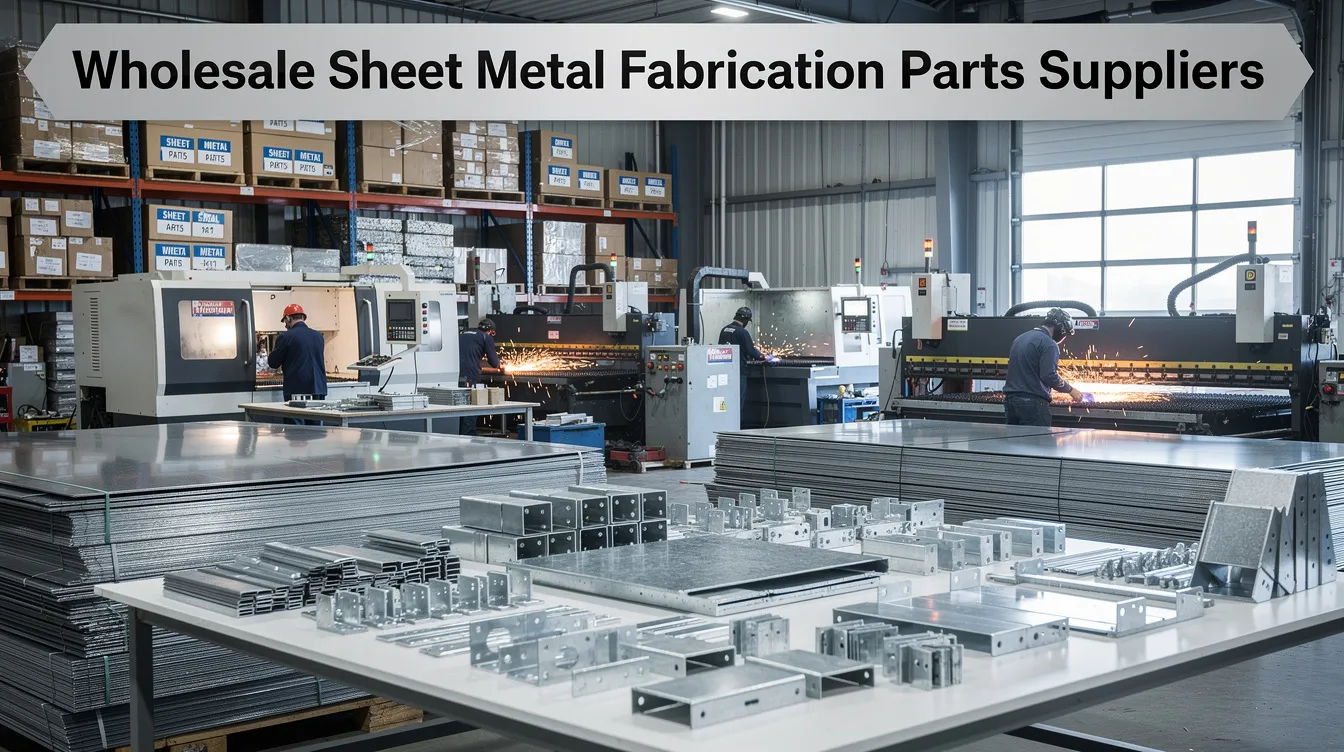
Wholesale sheet metal fabrication parts suppliers produce large quantities of precision components from flat metal stock for OEMs across various industries. In 2024–2026, overseas buyers are searching for these suppliers more aggressively than ever, driven by pressure to reduce unit costs, consolidate vendor lists, and accelerate time-to-market. Sheet metal fabrication forms parts from thin metal sheets through cutting, forming, and finishing operations – and at wholesale scale, the economics shift dramatically in the buyer’s favor.
This article is written for overseas OEMs, design engineers, and purchasing teams who need competitively priced, high-precision sheet metal parts at scale. It is not about distributors that stock catalog HVAC fittings or standard air conditioning accessories. Instead, the focus is on OEM-oriented custom metal fabrication partners – suppliers like Anebon Metal Products Limited that deliver bespoke components built to your exact specifications.
Common fabrication services at the wholesale level include laser cutting, CNC punching, metal stamping, press brake forming, welding, and assembly for commercial projects. These suppliers manufacture components for industries such as HVAC and automotive, but also serve aerospace, medical devices, electronics, robotics, and industrial machinery. Wholesale sheet metal fabrication parts can be sourced through digital manufacturers and job shops, but partnering with a full-service fabricator offers distinct advantages:
-
Lower per-piece cost through economies of scale
-
Consistent quality backed by documented inspections and certifications
-
Reduced vendor management by consolidating multiple processes under one roof
-
Faster engineering-to-production cycles with integrated DFM support
-
Compliance with global standards (ISO, RoHS, REACH) required by regulated industries
How Wholesale Sheet Metal Fabrication Differs from Local Job Shops
A local metal shop and a wholesale contract manufacturer serve fundamentally different needs. Small, local metal fabricators handle one-off repairs, short-run prototypes, and simple bends – work where flexibility matters more than throughput. Wholesale suppliers serving international OEMs operate at a different scale entirely, with equipment, processes, and quality systems designed for repeatability across thousands of parts.
Here is how the two models compare on key decision criteria:
-
Minimum order quantities: A local shop may accept a single piece. Wholesale suppliers typically set MOQs based on process – laser-cut and bent parts might start at 10–50 pieces, while stamped parts require 5,000+ to justify tooling.
-
Volume range: Job shops optimize for low volume. Wholesale fabricators handle pilot builds in the hundreds and scale to high volume production runs of tens of thousands per month. Sheet metal fabrication is ideal for low to high volume production when matched with the right supplier.
-
Repeatability: Wholesale partners maintain master fixtures, store tooling, and keep documented control plans so that batch-to-batch consistency is assured over long standing relationships.
-
Pricing: At wholesale scale, cost per part drops through bulk material purchasing, tooling amortization, and automation. Local shops carry higher relative overhead, which limits cost savings on recurring orders.
-
Lead times: Local shops can turn simple parts quickly. For complex, multi-operation assemblies at volume, a wholesale supplier with integrated processes typically delivers more predictably.
Anebon bridges the gap between prototype shop and high volume production facility. The company offers rapid prototyping with fast turnaround while scaling seamlessly into full production wholesale, giving OEMs a single partner from first concept through series manufacturing.
Key Capabilities to Expect from Sheet Metal Parts Suppliers
When evaluating wholesale sheet metal suppliers, comprehensive capabilities are what separate a true manufacturing partner from a limited-service vendor. The fewer handoffs between shops, the lower your risk of quality escapes, delays, and miscommunication.
Core sheet metal services to look for include:
-
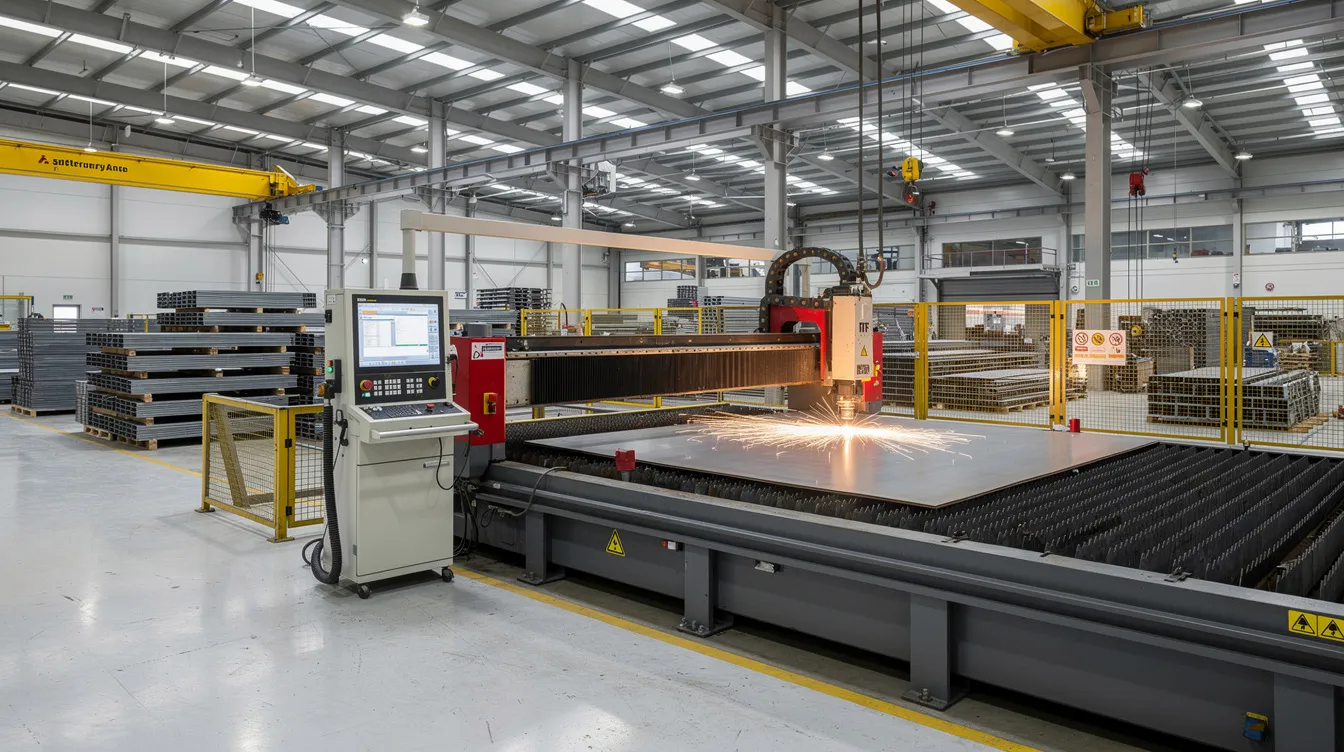
Laser cutting: Fiber and CO₂ laser cutting services for flat pattern work. Modern fiber lasers achieve cutting tolerances of ±0.02–0.05 mm with minimal dross and excellent edge quality.
-
CNC punching: Punch presses handle perforations, louvers, and repetitive hole patterns at high speed, especially in mild steel and aluminum.
-
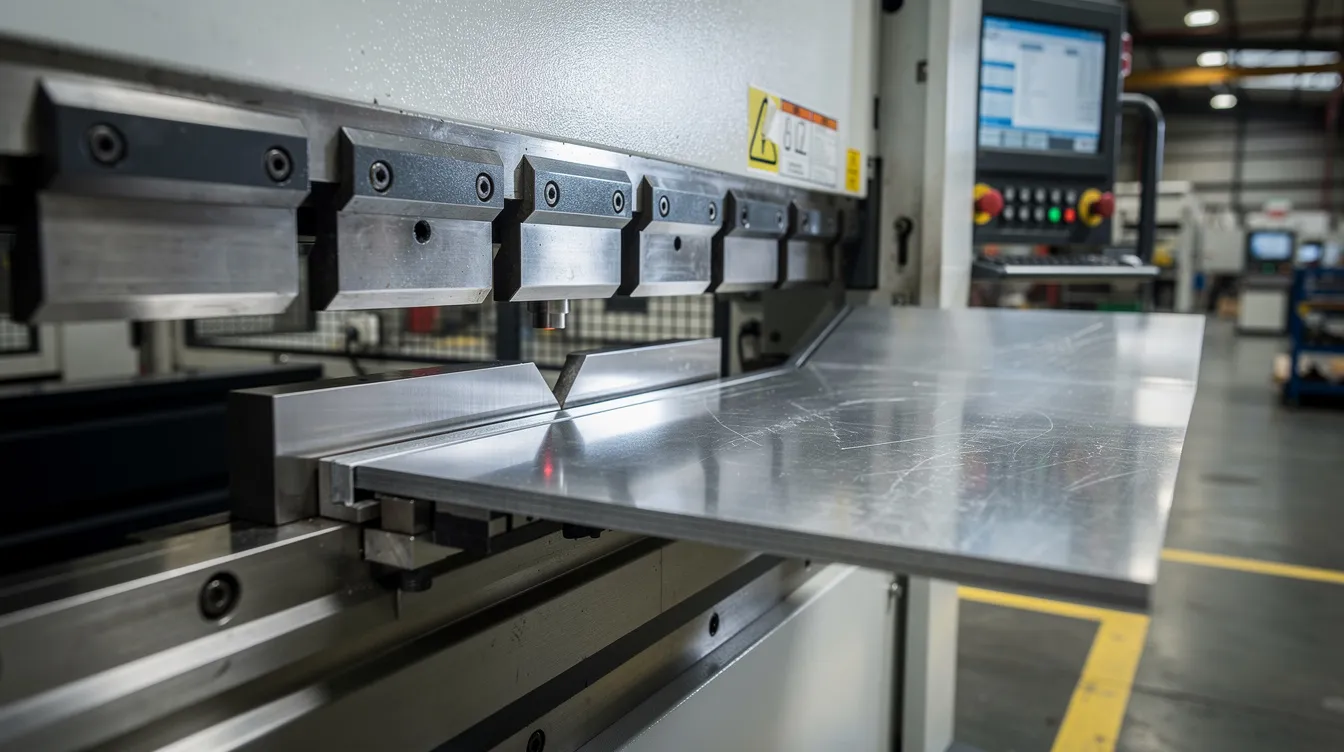
Press brake forming: CNC press brakes with automated backgauges deliver precise bends. Air bending versus bottoming techniques are selected based on material and tolerance requirements.
-
Metal stamping: Progressive die and transfer die stamping for high volume production. Upfront tooling investment is offset by drastically lower unit cost at scale.
-
Welding and assembly: TIG, MIG, spot welding, and robotic welding, plus PEM hardware insertion, riveting, and mechanical assembly.
-
CNC machining integration: When assemblies combine fabricated and machined components, a supplier offering milling, turning, and 5-axis machining under one roof eliminates inter-vendor coordination.
Supported production scales typically span prototypes (single units), low volume validation builds (dozens to hundreds), and full production in the thousands or tens of thousands per month. Tight tolerances can be achieved – as precise as +/- 0.005 inches on sheet metal features, and down to ±0.002 mm on machined features per ISO standards. Competitors like Xometry also offer sheet metal fabrication with tight tolerances of +/- 0.005 inches, but vertically integrated manufacturers provide more control over multi-process assemblies. Common materials include aluminum, copper, steel, and stainless steel across these processes.
From Custom Metal Fabrication to Standard Parts: What Can Be Sourced Wholesale
There is an important distinction between fully custom sheet metal parts built to your CAD models and catalog-style standard accessories. Most OEMs need the former, but many also benefit from consolidating standard hardware procurement with the same supplier.
Custom fabrication products commonly sourced at wholesale scale include:
-
Electronic enclosures with complex cutouts and EMI shielding features
-
Server chassis and precision sheet metal boxes for IT infrastructure
-
Machine guards and safety shields for heavy equipment
-
Medical device brackets requiring biocompatible materials and traceability
-
Automotive structural brackets and mounting components
-
Aerospace panels with high strength-to-weight requirements
Near-standard or configurable items include:
-
Ducts, plenums, and transitions for air conditioning systems
-
Control cabinets and electrical enclosures
-
Rack mount chassis (19-inch IT and telecom standards)
-
Mounting plates and architectural panels
With 129 sheet metal fabrication companies listed in major directories, overseas OEMs have options. But the real value comes from working with a supplier that handles both custom metal fabrication services and standard hardware consolidation – reducing your vendor count and streamlining logistics. Whether the application is robotics, industrial automation, or aerospace, the same precision fabrication processes apply.
Materials and Thickness Ranges Used in Wholesale Sheet Metal Parts
Material selection directly impacts cost, manufacturing parameters, lead time, and end-use performance. Suppliers must source various materials like aluminum and stainless steel to meet diverse OEM requirements.
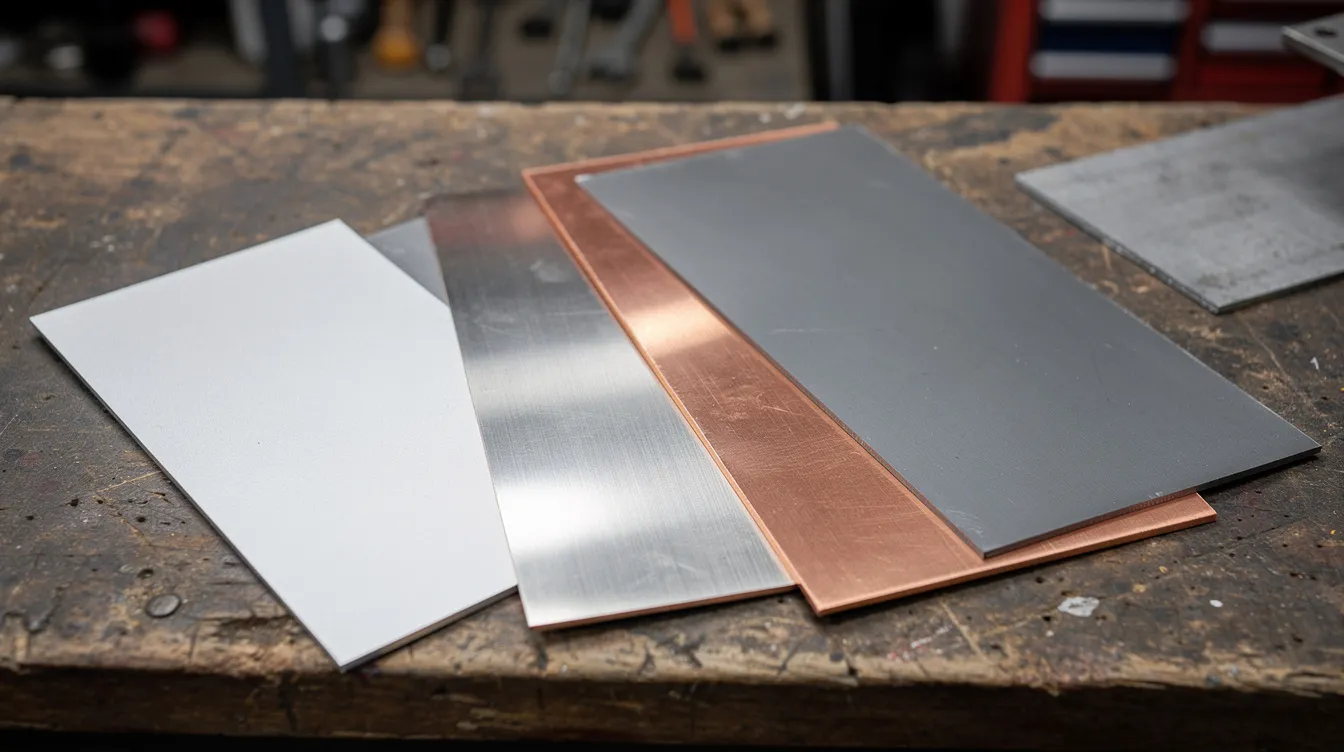
The most commonly used sheet materials in wholesale fabrication include:
|
Material |
Key Properties |
Typical Use Cases |
|---|---|---|
|
Cold-rolled steel (A36) |
Low cost, good formability, moderate strength |
Machine frames, brackets, enclosures |
|
Stainless steel 304 |
Corrosion resistant, hygienic, durable |
Medical, food processing, architectural |
|
Stainless steel 316L |
Superior chloride resistance |
Chemical processing, marine |
|
Aluminum 5052 |
Lightweight, excellent formability |
HVAC, electronics housings |
|
Aluminum 6061 |
Good strength and machinability |
Aerospace, structural components |
|
Copper C110 |
High conductivity, antimicrobial |
Electrical busbars, heat exchangers |
|
Brass |
Decorative, corrosion resistant |
Architectural, connectors |
|
Titanium Grade 2 |
High strength-to-weight, biocompatible |
Aerospace, medical implants |
Steel A36 is a standard material used in sheet metal fabrication for general-purpose structural work. Stainless steel 304 is commonly used across industries demanding corrosion resistance. For extreme environments, exotic materials like Inconel 625 – a high-performance alloy – handle high temperatures and aggressive chemicals.
Sheet metal thickness typically ranges from 0.024 inches to 0.250 inches (roughly 0.5 mm to 6 mm). Below 0.5 mm, material handling becomes difficult; above 6 mm, plate fabrication or CNC machining processes are usually more appropriate. Xometry and similar platforms offer aluminum, copper, steel, and stainless steel materials across these standard thickness ranges.
When comparing alloys, consider this: stainless steel provides superior durability and corrosion resistance but weighs roughly three times more than aluminum. Aluminum 6061 offers moderate strength at one-third the density of steel – ideal where weight matters. Cold-rolled steel remains the lowest-cost option but requires coatings or plating to prevent rust. Galvanized steel and spring steel are occasionally requested and affect both forming parameters and laser cutting speeds.
Core Processes: Laser Cutting, Metal Stamping, and Forming
Cutting and forming processes are the backbone of every sheet metal fabrication operation. The process includes cutting, forming, and finishing operations – and choosing the right combination for your part determines both cost and quality.
Laser Cutting
Fiber lasers now dominate most wholesale shops due to faster cutting speeds, lower maintenance costs, and better performance on reflective metals compared to CO₂ systems. On 2025-era fiber laser equipment, typical cutting tolerances run ±0.02–0.05 mm with clean edges, minimal heat-affected zones, and consistent kerf widths. Rapid tooling allows quick cutting into 2D profile shapes, making laser cutting ideal for prototypes and low volume runs where part geometry changes frequently.
Metal Stamping
Metal stamping becomes economical when volumes justify tooling investment. Progressive dies can produce thousands of identical parts per hour – holes, flanges, embosses, and deep draws – at a fraction of the per-unit cost of laser cutting. Tooling design and manufacture typically take 4–8 weeks, but once running, stamping delivers unmatched throughput for high volume production runs. Tool life, die material selection, and number of stations all factor into the economics.
Forming and Bending
Modern CNC press brakes with automated backgauges achieve bend angle tolerances of ±0.5° or tighter. Managing springback is essential – particularly in stainless steel and aluminum, which spring back more than mild steel. Air bending offers flexibility across part geometries; bottoming provides tighter angular control. Bend radius minimums are typically 1× material thickness, though this varies by alloy and temper.
At Anebon, process selection happens during DFM review. Engineers advise whether a feature is better suited to laser cutting, stamping, or cnc machining – keeping cost and quality balanced before tooling commitments are made. The right tools for each operation directly impact both structural integrity and final part accuracy.
Approved Sheet Metal Standards, Certifications, and Quality Control
When OEM buyers specify approved sheet metal in their RFQs, they mean more than just the raw material. They are asking for certified processes, traceable materials, and documented quality systems that ensure every part meets design intent.
Key certifications and what they cover:
-
ISO 9001:2015 is a common quality management standard and the baseline for virtually all OEM suppliers. Quality management systems enhance operational efficiency and part consistency. ISO 9001 certification is often required for commercial and medical sheet metal parts. Approved Sheet Metal, for example, a fabricator based in the Kansas City area, is ISO 9001:2015 certified for quality assurance.
-
ISO 14001:2015 focuses on environmental management systems – increasingly important as OEMs track ESG compliance across their supply chains.
-
AS9100 is a certification for aerospace quality management. Many fabricators focus on niche markets requiring specific certifications like AS9100 to serve aerospace OEMs.
-
ISO 13485 is a standard for medical device quality management, covering traceability and risk management for implantable and diagnostic device components.
Anebon holds both ISO 9001:2015 and ISO 14001:2015 certifications, supporting customers in aerospace, medical, automotive, and electronics.
Quality control practices that matter for wholesale orders:
-
First article inspection (FAI): A first-article inspection checks that parts meet design specifications before full production begins. Quality assurance ensures part consistency from first article inspection through final shipment.
-
In-process inspection: Checkpoints after laser cutting, bending, and welding catch deviations early.
-
Final dimensional verification: Using CMMs, height gauges, and optical comparators against documented control plans.
-
PPAP documentation: Production Part Approval Process for automotive programs.
-
Material traceability: Mill certificates (3.1/3.2) for critical metals, plus RoHS and REACH compliance documentation for European clients.
Metal tolerances must be strictly controlled in fabrication to deliver quality products that meet engineering requirements consistently across thousands of parts.
Pricing Models and How Suppliers Achieve Competitive Pricing
Wholesale sheet metal suppliers structure pricing differently from one-off job shops. Understanding these mechanics helps purchasing teams negotiate smarter and evaluate quotes accurately.
Key cost drivers in wholesale fabrication:
-
Material utilization: Nesting software optimizes flat patterns on each sheet, minimizing scrap. Bulk purchasing of raw materials further reduces per-part cost.
-
Tooling amortization: Stamping dies represent significant upfront investment, but per-unit tooling cost drops as volume increases. A die costing $5,000 adds $1.00 per part at 5,000 units versus $0.10 at 50,000.
-
Setup time reduction: Batch size directly impacts overhead per piece. Blanket orders and forecast sharing let suppliers plan production runs efficiently.
-
Process integration: Suppliers that offer laser cutting, stamping, bending, welding, and finishing services under one roof avoid inter-vendor shipping, handling delays, and margin stacking.
Many suppliers offer design for manufacturability support to optimize costs – catching overspecified tolerances or unnecessarily complex geometries before production begins. Evaluating suppliers should consider quality management and production capacity alongside quoted price.
Chinese manufacturers like Anebon control costs through in-house tooling, automation, and integrated fabrication services spanning sheet metal, CNC machining, and die casting. Located in Dongguan – a region with deep manufacturing infrastructure, skilled labor, and robust supply chains – the market advantages translate directly to competitive pricing for overseas OEMs.
That said, competitive pricing must not come at the expense of quality. Smart buyers evaluate total cost of ownership: part price plus inspection cost, rework risk, logistics, tariffs, and the cost of production line stoppages from defective parts. The cheapest quote rarely delivers the best tailored solutions.
Lead Times, MOQs, and Logistics for Overseas OEMs
Balancing lead times, shipping schedules, and inventory risk is one of the biggest challenges for OEM buyers working with overseas wholesale suppliers. Delivery performance is essential to maintain production schedules, and understanding realistic timelines prevents costly surprises.
Typical lead times:
-
Rapid prototyping lead times start at 3 days for simple laser-cut and bent parts. No minimum order volumes are required for rapid prototyping, making it accessible for design validation.
-
Low volume production builds (hundreds of parts): 2–4 weeks after drawing approval
-
Recurring production orders: scheduled monthly or quarterly based on forecasts
-
Stamping tooling or die casting tooling: 4–8 weeks for design and manufacture
Lead times for sheet metal fabrication typically range from a few days to 4–8 weeks, depending on complexity, tooling requirements, and material availability. Rapid sheet metal prototyping offers low-per-unit costs and is ideal for low to high volume production ramp-ups.
MOQ ranges by process:
|
Process |
Typical MOQ |
|---|---|
|
Laser cutting + bending |
10–50 pieces |
|
Welded assemblies |
25–100 pieces |
|
Progressive die stamping |
5,000+ pieces |
|
Die casting |
500–1,000 pieces |
Shipping from Dongguan, China:
-
Sea freight to U.S. West Coast: 18–25 days; to Europe: 25–35 days
-
Air freight for urgent builds: 3–7 days, at significantly higher cost
-
Common Incoterms: FOB (buyer arranges shipping from port), CIF (supplier covers insurance and freight to destination port), DAP (delivered to buyer’s facility)
OEM purchasing teams should be prepared to manage customs documentation, import duties, and receiving inspection. Blanket orders with rolling forecasts help suppliers pre-purchase materials and reserve capacity, reducing both lead times and the demand variability that disrupts schedules.
Applications: From HVAC and Air Conditioning to High-Tech Equipment
Wholesale sheet metal connects to virtually every sector where metal components are used at scale. Here are the concrete applications where wholesale sourcing delivers the most value.
HVAC and air conditioning:
-
Ductwork transitions, plenums, and cone-shaped reducers supplied in volume to contractors and OEMs
-
Rooftop unit enclosures, louvers, and flanges
-
Installation services brackets and mounting systems
Industrial and commercial projects:
-
Control cabinets and electrical enclosures for heavy equipment
-
Machine frames, safety guards, and conveyor system components
-
Panels and brackets for industrial automation systems
High-tech sectors:
-
Electronics chassis and server racks for data center infrastructure
-
Battery housings for EVs requiring both durability and precision
-
Precision brackets for robotics and medical devices
-
Architectural panels and facade elements
Anebon primarily focuses on precision OEM parts rather than retail distribution, but applies the same manufacturing rigor across all sectors. Whether the end product is a medical device bracket or an automotive structural component, the same commitment to tight tolerances, traceable materials, and consistent quality applies.
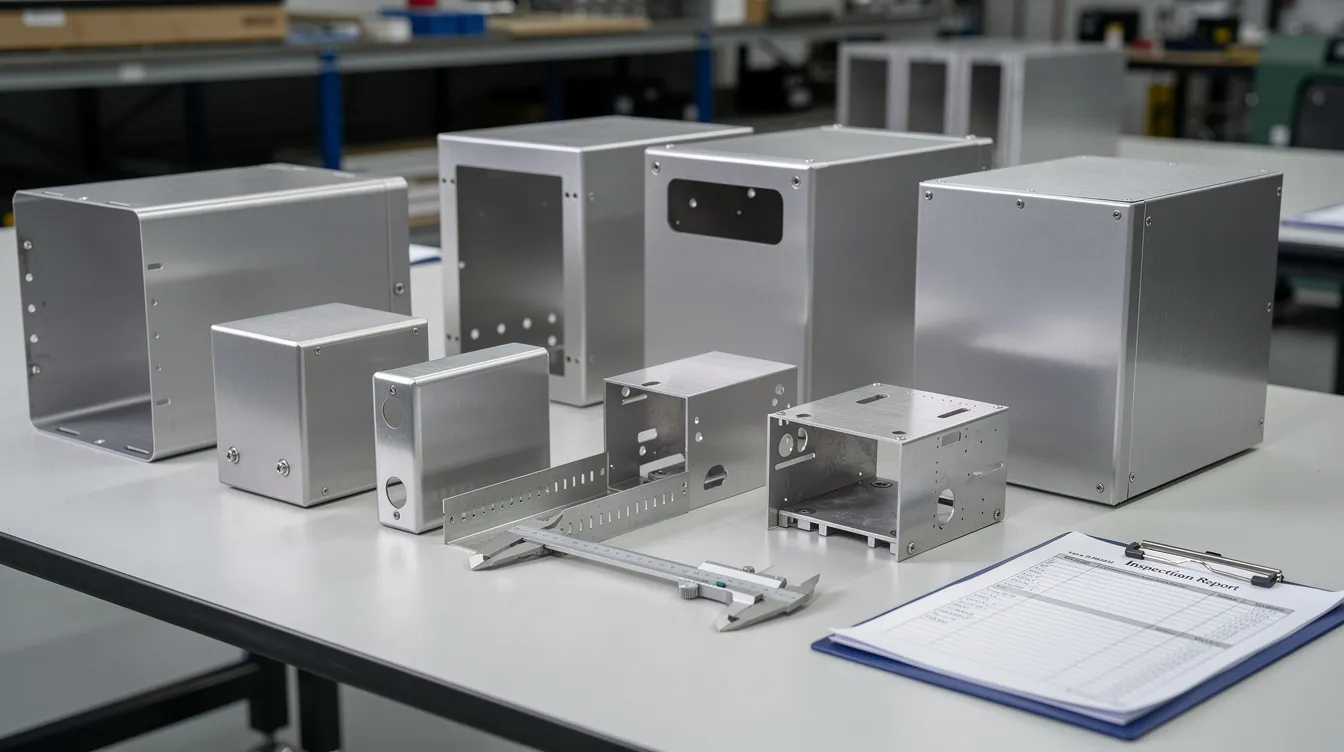
How to Evaluate and Select a Wholesale Sheet Metal Fabrication Partner
Choosing the right supplier affects quality, delivery, and long-term engineering support. A poor choice costs more than just rejected parts – it costs product launches, customer trust, and engineering time spent managing problems.
Technical evaluation points:
-
Process capabilities: Does the supplier cover your full process range (laser, stamping, welding, machining, die casting)?
-
Tolerances: Can they guarantee the linear, angular, and bend tolerances your design requires?
-
Certifications: ISO 9001, ISO 14001, AS9100, ISO 13485 – whichever your industry demands
-
Product offerings and case studies: Have they made similar parts for similar applications?
-
Sample quality: Request sample parts and evaluate edge quality, weld finish, and dimensional accuracy
Communication and support:
-
English-speaking knowledgeable staff for engineering support and quoting
-
Responsiveness during RFQ stage – slow quotes often predict slow production
-
Clarity on DFM feedback: Does the supplier proactively suggest design improvements?
Due diligence:
-
Factory audits (onsite or remote video walkthroughs)
-
Reference checks with existing overseas customers
-
Review of quality documentation: FAI reports, control plans, material certifications
-
Verification of environmental and safety compliance
Use this as a quick checklist when comparing suppliers across the market: processes offered, tolerance guarantees, certifications held, sample part quality, communication responsiveness, and documented quality systems. Manufacturers who score well across all six dimensions are the ones worth building long standing relationships with.
Working with CAD Data, DFM Feedback, and Prototyping
The workflow from RFQ to first shipment follows a predictable pattern with good suppliers. Understanding it helps you move faster and avoid expensive missteps.
File formats and documentation:
-
3D CAD files in neutral formats (STEP, IGES) or native SolidWorks/Pro-E files
-
Fabricators often require fully dimensioned 2D drawings for accurate quoting – PDF or DWG with GD&T callouts, tolerances, and surface finish requirements
-
Suppliers typically require CAD files and material specifications for accurate quotes
DFM review:
Anebon’s engineering team reviews every submission for manufacturability: identifying bend radii that risk cracking, material thickness mismatches, features better suited to CNC machining or die casting, and geometry that could cause warping or distortion. This feedback loop catches problems that would otherwise surface as scrapped tooling or failed first articles.
Rapid prototyping:
-
Short lead times (starting at 3 days) using laser cutting and manual forming
-
Prototypes validate fit, function, and assembly before committing to production tooling
-
Ideal for iterating on design – change a feature, recut, retest
The critical recommendation: iterate with low volume pilot builds before committing to high-volume stamping tools. A $5,000 die modification after production starts costs far more than a $500 prototype revision during development. Rapid prototyping is ideal for low to high volume production transitions precisely because it de-risks the scale-up.
Value-Added Services: Surface Finishes, Assembly, and Packaging
Value-added services reduce your vendor count, improve quality control, and deliver parts that are closer to assembly-line ready when they arrive at your facility.
Surface treatments:
-
Powder coating for durable, corrosion-resistant color finishes
-
Anodizing (Type II, Type III) for aluminum parts requiring wear resistance
-
Chem film (chromate conversion) for conductivity preservation
-
Electroplating: zinc, nickel, chrome
-
Bead blasting, brushing, and polishing for visible faces
-
Finishing services tailored to environmental and aesthetic requirements
Mechanical assembly:
-
Installing PEM nuts, studs, and threaded inserts into sheet metal parts
-
Subassembly of brackets, panels, and frames
-
Functional testing (leak testing, electrical continuity) where applicable
Packaging and logistics:
-
Custom packaging to protect surfaces during sea freight
-
Labeling with part numbers, barcodes, and lot traceability
-
Kitting: multiple parts packed as assembly-ready sets matching your production line sequence
As an example, Anebon regularly ships fully finished, powder-coated subassemblies with hardware installed – ready for installation services at the OEM’s facility rather than arriving as loose parts requiring staging, sorting, and additional handling. This approach delivers measurable cost savings in downstream labor and reduces the risk of damage or mix-ups.
Why Overseas OEMs Choose Anebon Metal Products Limited
Anebon Metal Products Limited is a precision manufacturing partner founded in 2010, headquartered in Dongguan, Guangdong, China. With ISO 9001:2015 and ISO 14001:2015 certifications, the company serves OEMs across multiple continents who demand high quality parts with full documentation and engineering support.
Core strengths:
-
Sheet metal fabrication, CNC machining (including 5-axis), and die casting under one roof
-
Custom metal fabrication from prototype through large-scale production
-
Tolerances as precise as ±0.002 mm on machined features
-
Full range of materials: aluminum, stainless steel, steel, copper, titanium, brass, and exotic materials for specialized applications
-
Comprehensive surface treatment and assembly capabilities
Experience across industries:
Anebon has served OEMs in aerospace, medical devices, automotive, electronics, and industrial machinery – building the kind of cross-industry expertise that helps engineers avoid design pitfalls and choose the right manufacturing approach from day one.
From prototype to production:
Whether you need a single prototype to validate a concept or 50,000 stamped brackets per month, Anebon supports the full lifecycle with stable quality, documented inspections, and competitive pricing that reflects true wholesale manufacturing efficiency.
Ready to get started? Send your 3D CAD files and 2D drawings to Anebon’s engineering team. You will receive a detailed quote with DFM feedback, material recommendations, and realistic lead times – typically within 48 hours. The right wholesale sheet metal fabrication partner does not just make parts. It helps you build better products, faster.