Top Wholesale Sheet Metal Fabrication Parts Suppliers for Your Needs
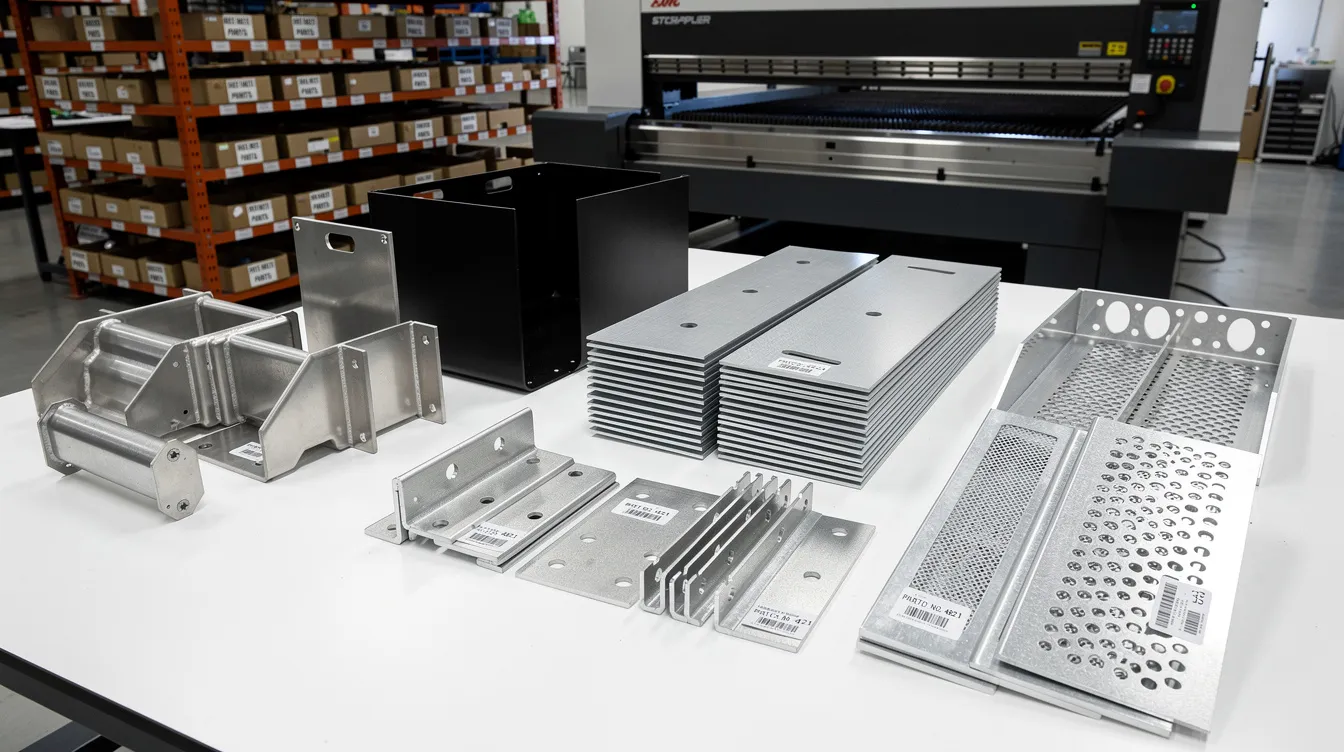
Wholesale Sheet Metal Fabrication Parts Suppliers
Finding the right supplier for repeat, production-grade sheet metal parts can make or break an OEM program. This guide breaks down what wholesale sheet metal fabrication parts suppliers actually do, how they differ from local shops, and what engineers and buyers should look for before placing an order.
Fast Answer: What Wholesale Sheet Metal Fabrication Suppliers Actually Do
Wholesale sheet metal fabrication parts suppliers are manufacturers that produce custom sheet metal parts in mid-to-high volumes-typically dozens to tens of thousands of pieces per order-for OEMs across various industries. Sheet metal fabrication forms parts from thin metal sheets through cutting, bending, and joining operations, making it ideal for low to high volume production. Anebon Metal Products Limited, founded in 2010 in Dongguan, China, serves overseas OEMs with custom metal fabrication services spanning sheet metal, cnc machining, and die casting, all certified to ISO 9001:2015 and ISO 14001:2015 standards.
Unlike one-off job shops, wholesale suppliers focus on repeatable, scheduled end use production-hundreds to tens of thousands of metal components per run. Contract manufacturers like these handle large-scale OEM metal fabrication and assembly for commercial projects in HVAC, air conditioning, automotive, electronics, and robotics.
Core services include laser cutting, CNC punching, press brake forming, welding, assembly, and finishing services such as powder coating, anodizing, and chem film. Key advantages for OEMs:
-
Competitive pricing through scale, automation, and in-house tooling
-
Comprehensive capabilities under one roof
-
Consistent quality backed by ISO certifications and robust quality control
-
Seamless support from rapid prototyping to full production
Anebon ships wholesale sheet metal parts globally via air freight (3–7 days) and sea freight (18–35 days), accepting cad models and supporting engineering collaboration throughout.
Wholesale vs Local Sheet Metal Shops: What’s Different?
Engineers and purchasing teams need to understand the gap between wholesale sheet metal fabrication suppliers and traditional sheet metal shops before committing budgets. The differences affect cost, quality, and scalability.
Local shops typically handle small batches (1–100 pieces), rush repairs, and custom one-off work. Wholesale suppliers, by contrast, invest in automation-fiber lasers, robotic welding, punch presses, automatic tool changers-plus ERP/MRP systems and formal quality programs. This makes them better suited for repeatable, scheduled production across higher production volumes. Wholesale suppliers typically set MOQs based on process: 10–50 pieces for laser-cut and bent parts, 25–100 for welded assemblies, and 5,000+ for progressive die stamping where tooling investment must be amortized. No minimum order volumes are required for rapid prototyping, however, which means digital manufacturing platforms can scale from prototypes to high volume production without switching vendors. Competitors like Xometry also offer sheet metal parts from low to high volume, but Anebon differentiates with tighter tolerances and vertical integration.
The cost structure matters: wholesale achieves cost effective pricing through bulk material purchasing, optimized nesting, and standardized setups, while local shops carry higher per-piece overhead. Anebon bridges early prototyping (as low as 1–5 pieces) with the ability to ramp into thousands per month-building long standing relationships through that continuity.
When to choose wholesale vs local:
-
Choose local for urgent one-offs, quick fixes, or when shipping time makes overseas impractical
-
Choose wholesale when repeat production, cost savings, and consistent quality matter
-
Use wholesale when you need tight tolerances, multiple processes, and full finish under one roof
-
Use local for low volume prototypes where logistics cost outweighs unit price
Core Capabilities Offered by Wholesale Sheet Metal Parts Suppliers
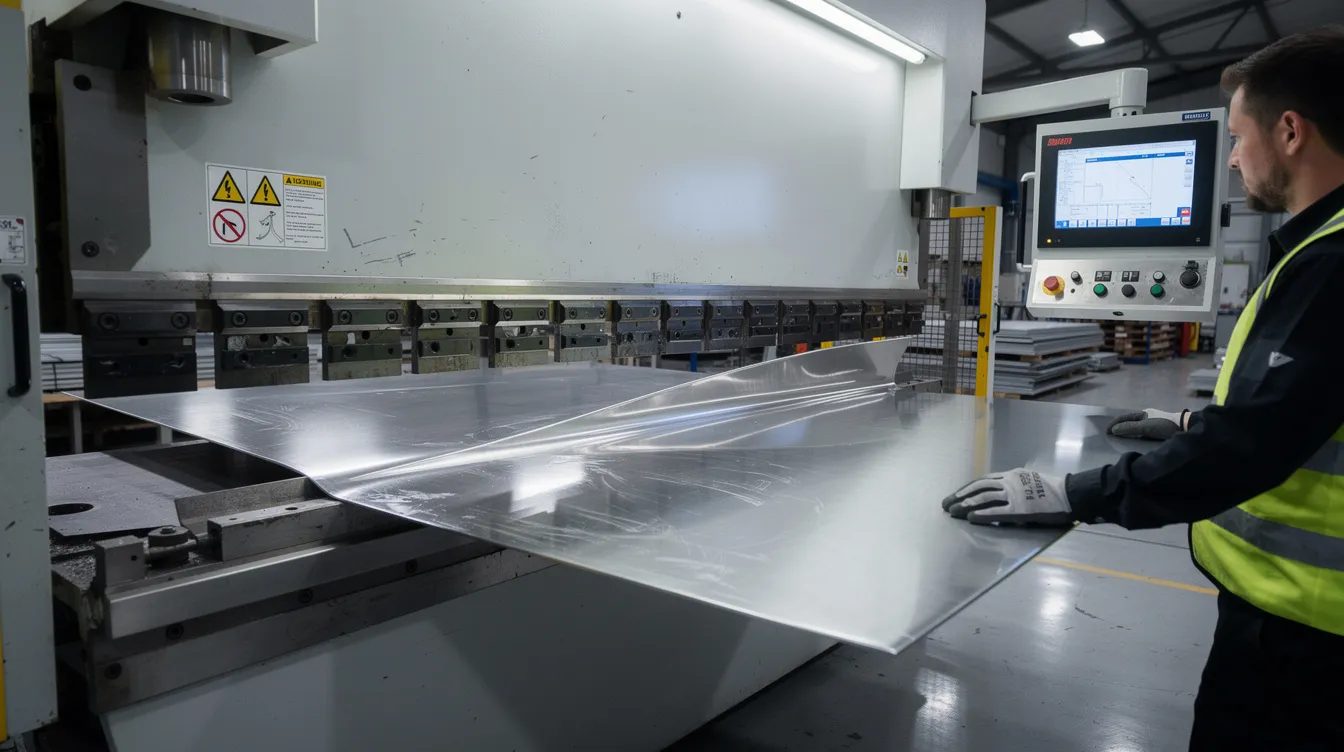
Comprehensive capabilities are a key buying criterion. OEMs should look for precision sheet metal fabrication services that cover cutting, forming, joining, machining, finishing, and assembly in-house. Suppliers should match their process capabilities to project requirements to avoid costly handoffs and delays.
The sheet metal fabrication process at a wholesale level typically includes:
-
Cutting: Laser cutting (fiber lasers up to ~6 kW) achieving tolerances of ±0.02–0.05 mm; CNC punching for repeat hole patterns and louvers; metal stamping parts manufacturing using progressive or compound dies for high volume production runs
-
Forming: Press brake forming with CNC backgauges producing linear bends on metal sheets to ±0.5° accuracy; rolling for cylinders and curved panels
-
Joining: MIG, TIG, and spot welding; hardware insertion for PEM fasteners and studs
-
Machining: CNC milling, turning, and 5-axis machining to add precision features like mounting bosses or bearing seats to custom sheet metal parts
-
Finishing: Powder coating, anodizing, chromate conversion coating, plating, bead blasting
-
Assembly: Sub-assemblies, brackets, and enclosures delivered ready for installation
Anebon offers tolerances as precise as ±0.002 mm on machined features, allowing complex assemblies to be completed by a single supplier. Design for Manufacturing feedback can optimize designs to reduce costs-engineers review cad models to flag issues with bend radii, hole-to-edge distances, and material selection before production starts. Process integration avoids delays and reduces margin stacking across the supply chain.
What You Can Source Wholesale: From Custom Sheet Metal Parts to HVAC Components
Wholesale suppliers handle both fully custom metal fabrication and repeat supply of standard-profile sheet metal products for commercial projects. Reliable wholesale sheet metal fabrication suppliers can be identified through specialized manufacturing networks and online B2B platforms suitable for locating international suppliers.
Concrete part types commonly sourced wholesale:
-
Electronic enclosures with EMI shielding
-
Server chassis and 19-inch rack-mount panels
-
EV battery module covers
-
Machine guard panels and brackets
-
Medical device frames
-
Control cabinet doors
-
Mounting plates for industrial machinery
-
Rooftop HVAC unit enclosures
-
Architectural cladding panels
For HVAC and air conditioning applications, suppliers produce duct sections (rectangular and spiral), plenums, transitions, louver assemblies, and support frames using appropriate gauge sheet metal. Projects may require specific tolerances and materials based on industry-whether that’s galvanized steel for ductwork or stainless for food-grade environments.
Anebon focuses on OEM-type, repeat custom sheet metal rather than stocking commodity fittings. Product offerings are tailored solutions built to spec, and most parts delivered are fully finished-painted, powder coated, or treated with chem film-ready for assembly lines. In-house finishing services reduce logistics costs and time compared to managing multiple finishers. Some customers also require installation services documentation or kitting for final assembly.
Materials, Thickness Ranges, and Design Considerations
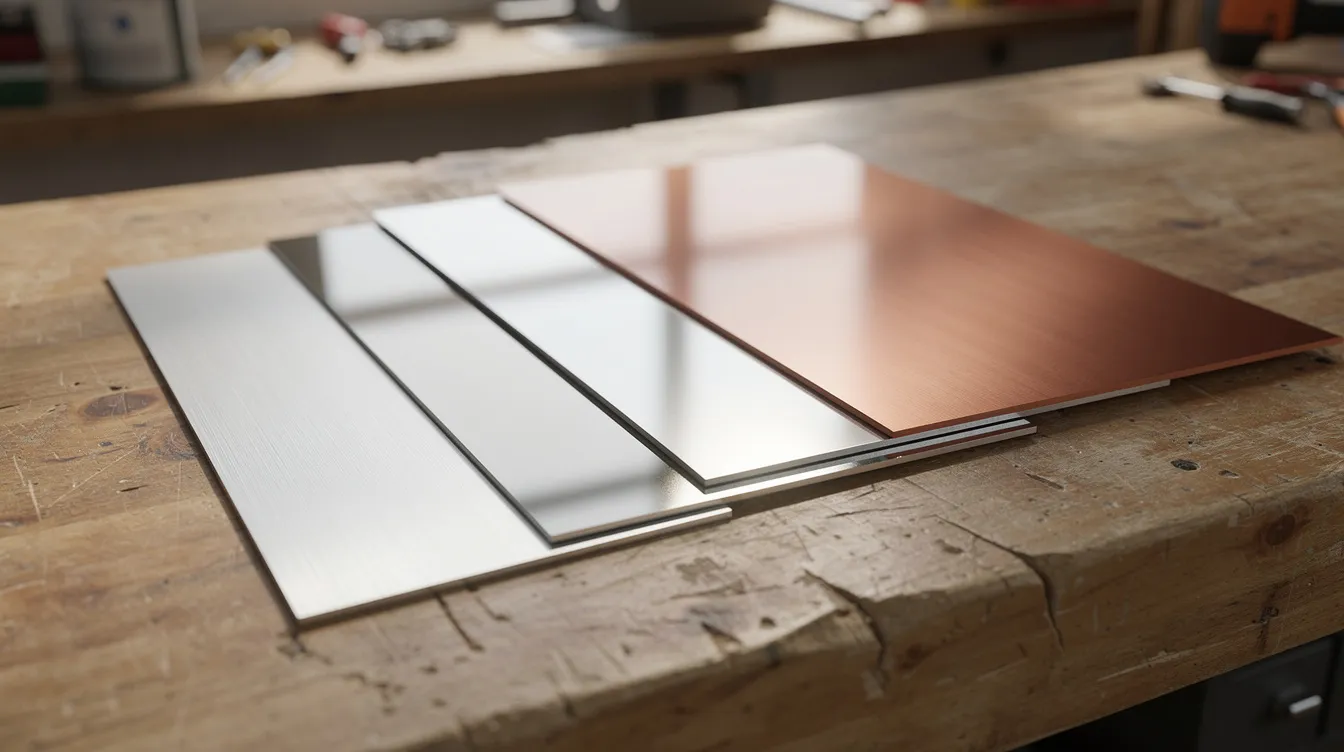
Material selection drives weight, corrosion resistance, appearance, and cost. Common sheet metal materials include aluminum, copper, steel, and stainless steel, with exotic materials like titanium Grade 2 reserved for aerospace or medical applications. Sheet metal thickness typically ranges from 0.024 to 0.250 inches (roughly 0.5–6.0 mm), and common sheet metal thickness ranges from 0.024 to 0.250 inches across most wholesale suppliers.
Choosing the right material depends on application:
-
Aluminum 5052: Marine, outdoor enclosures, and weight-sensitive designs with good corrosion properties
-
Aluminum 6061: Offers good strength and machinability for structural frames; requires larger bend radii in T6 temper
-
Stainless steel 304: Corrosion resistant and durable for medical, food, and outdoor applications; stainless steel 316L adds chemical resistance
-
Cold-rolled or galvanized steel: Cost effective for HVAC, frames, and structural parts; low carbon steel balances formability with structural integrity
-
Copper C110: Has high conductivity and antimicrobial properties, used where good conductivity properties matter, plus brass for decorative parts
CNC machining is technically a subtractive manufacturing process, but when integrated with sheet metal work it adds precision features that forming alone cannot achieve. Laser cutting achieves tolerances of ±0.02–0.05 mm even on materials of very little thickness. DFM guidance recommends minimum bend radius approximately equal to material thickness, holes placed at least 4× thickness from bend lines, and avoiding small cutouts in thick stock to control distortion. Anebon’s engineers routinely review cad models and 2D drawings to flag manufacturability issues early.
Essential Processes: Cutting, Forming, Stamping, and Welding
Wholesale sheet metal fabrication combines three pillars-cutting, forming, and joining-to transform flat stock into precise, durable components at scale. Choosing the right supplier means understanding when each process is most economical.
-
Laser cutting: Fiber lasers up to ~6 kW deliver ±0.02–0.05 mm tolerances on thin material. Rapid tooling allows quick cutting into 2D profile shapes without hard dies, making it ideal for flexible, low-to-mid volume orders. Rapid prototyping lead times start at 3 days, and rapid sheet metal prototyping offers low-per-unit costs even at small quantities.
-
Press brake forming: CNC press brakes with programmable backgauges hold angle control to ±0.5°. Standard tooling supports U-channels, brackets, and chassis without custom dies, and setup time reduction decreases overhead per piece in production.
-
Metal stamping: Progressive or transfer dies require 4–8 week lead times and significant upfront investment, but tooling amortization lowers costs as production volume increases-typically becoming cost effective at 5,000+ units. Part geometry must be designed for the die from the start.
-
Welding and assembly: MIG, TIG, and spot welding join carbon steel, stainless, and aluminum using jigs and fixtures that maintain repeatability. Quality checks cover weld penetration, distortion, and dimensional accuracy.
Material utilization reduces per-part cost through optimized nesting on laser beds. Anebon combines fabrication and cnc machining in the same workflow to produce high quality parts meeting exact specifications-down to ±0.002 mm on machined interfaces. Parts can be completed in a few days for urgent prototypes or scheduled across weeks for volume runs.
Surface Treatments: From Powder Coating to Chromate Conversion Coating
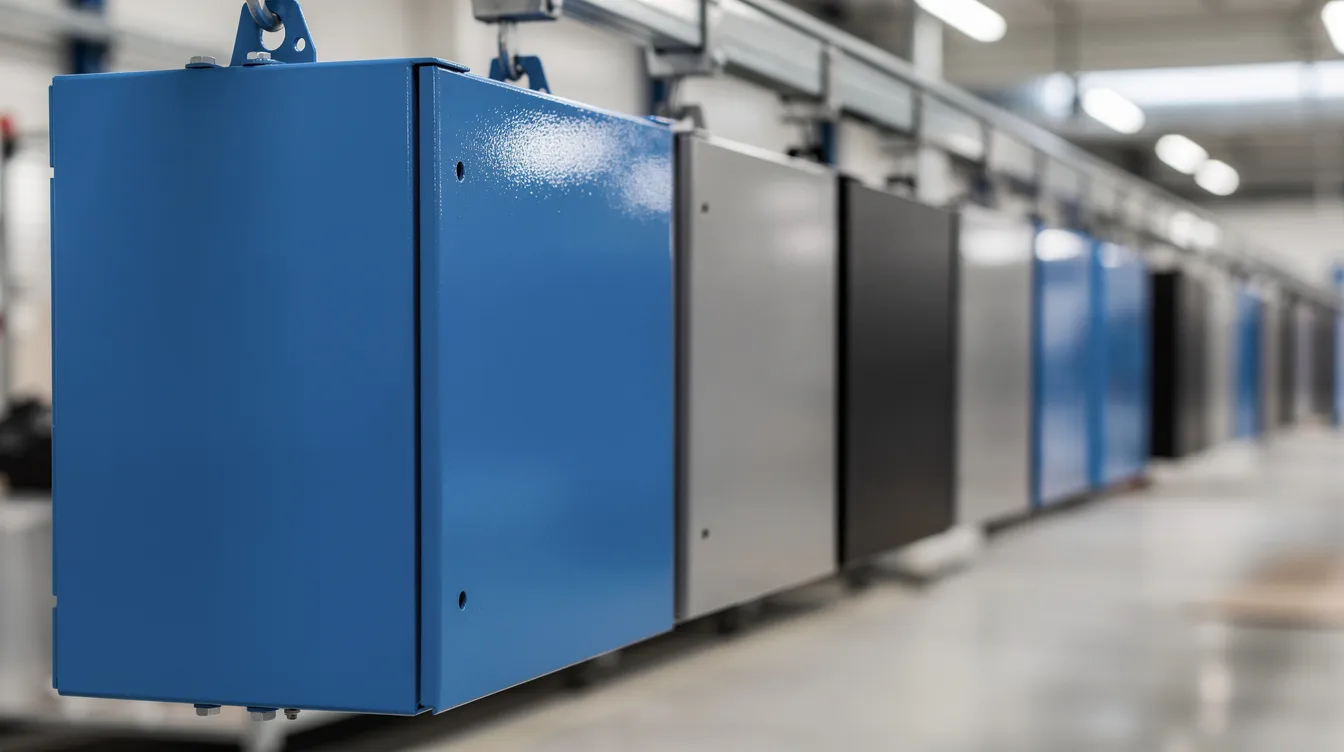
Surface treatments for sheet metal serve multiple functions: corrosion resistance, electrical performance, achieving a desired aesthetic, and compatibility with downstream labeling or standard painting methods.
-
Powder coating: Electrostatically applied powdered paint cured at high temperature creates a thick, durable corrosion resistant layer. Common for HVAC enclosures and commercial equipment; available in RAL or custom colors. More durable than standard painting methods for outdoor and high-traffic use.
-
Anodizing (type ii and type iii): Type II anodizing provides decorative finish plus good corrosion protection on aluminum. Type III hardcoat anodizing creates a wear resistant layer for high-abrasion applications like electronics housings and precision custom sheet metal parts. Both deliver a corrosion resistant finish that outlasts paint alone.
-
Chromate conversion coating (chem film): A thin, conductive layer (typically 0.00001–0.00004 in) conforming to MIL-DTL-5541. Ideal for grounding surfaces on electrical enclosures and as a primer before painting.
-
Other treatments: Aluminum surface treatment options including zinc plating, nickel plating, brushing, bead blasting, and laser marking for part identification.
Wholesale sheet metal fabrication suppliers can deliver fully finished, ready-to-install assemblies-eliminating the need for customers to coordinate multiple finishers. This is where chinese manufacturers with vertically integrated facilities provide significant value.
Pricing, Lead Times, and Logistics with Overseas Wholesale Suppliers
Pricing in wholesale sheet metal fabrication is driven by material utilization, labor and machine time, tooling, and finishing. Competitive pricing comes from efficient engineering and scale, not just low hourly rates. Total landed cost includes shipping, tariffs, and potential rework-so getting the design right early matters.
Key cost levers:
-
Nesting efficiency on laser-cut parts to minimize scrap
-
Standardizing material thicknesses and bend radii to reduce custom setups
-
Combining operations (cut + bend + weld) in one cell to avoid margin stacking
-
Bundling multiple part numbers into a single shipment for freight savings
-
Choosing the right finish for the application rather than over-specifying
Realistic lead times from an overseas perspective: rapid prototypes in 3–7 days, small batch production in 2–4 weeks, and stamped production orders after tooling qualification in 4–8 weeks. Logistics from Dongguan include express courier (3–5 days for samples), air freight (3–7 days), and sea freight (18–35 days for pallets or containers). Common Incoterms are FOB, CIF, and DAP.
Supply chain reliability includes material sourcing and inventory strategy. Anebon supports buffer stocks, scheduled releases, and consolidated shipments to help customers manage inventory-whether they’re in Kansas City or anywhere else globally. Effective communication and account management improves supplier relationships and keeps deliveries on track. No supplier has infinite capacity, so verifying production bandwidth early prevents bottlenecks.
How to Evaluate and Work with a Wholesale Sheet Metal Fabrication Partner
Selecting the right supplier is about more than price. A reliable supplier consistently delivers parts that meet specifications, and choosing a supplier familiar with your industry can improve quality expectations. Here’s a practical checklist:
-
Certifications: ISO 9001:2015 is a common quality management standard; ISO 14001:2015 focuses on environmental management systems. For aerospace, AS9100 certification (AS9100D specifically) is required for aerospace components. ISO 13485 covers medical device quality management. Verify these before engaging.
-
Quality systems: Quality control systems may include First Article Inspection and dimensional inspection reports. First article inspection ensures parts meet design specifications before full runs begin. Material traceability is crucial for regulated products.
-
Trial orders: Request sample parts or a small trial order to inspect edge quality, bend accuracy, welds, and finishes before committing to large production volumes.
-
Engineering support: Vendors should provide complete engineering documentation for accurate quotes. The supplier must work with 3D CAD formats (STEP, IGES), interpret GD&T, and offer proactive DFM feedback. Lead time reliability ensures suppliers consistently meet delivery deadlines-test this early.
-
Communication: Anebon assigns English-speaking project engineers, defines inspection plans, and agrees on acceptance criteria upfront. Clear technical specifications-material grades, tolerances, finish requirements-prevent costly misunderstandings.
Building quality products at scale requires partnership, not just transactions. Evaluate capabilities against your low volume and high volume needs, verify certifications like those from Anebon (ISO 9001 and 14001), and invest in a trial run. The cost of vetting a supplier early is far less than the cost of failed batches later. Request a quote to start the conversation.