Top Tips for Effective Sheet Metal Custom Fabrication Solutions
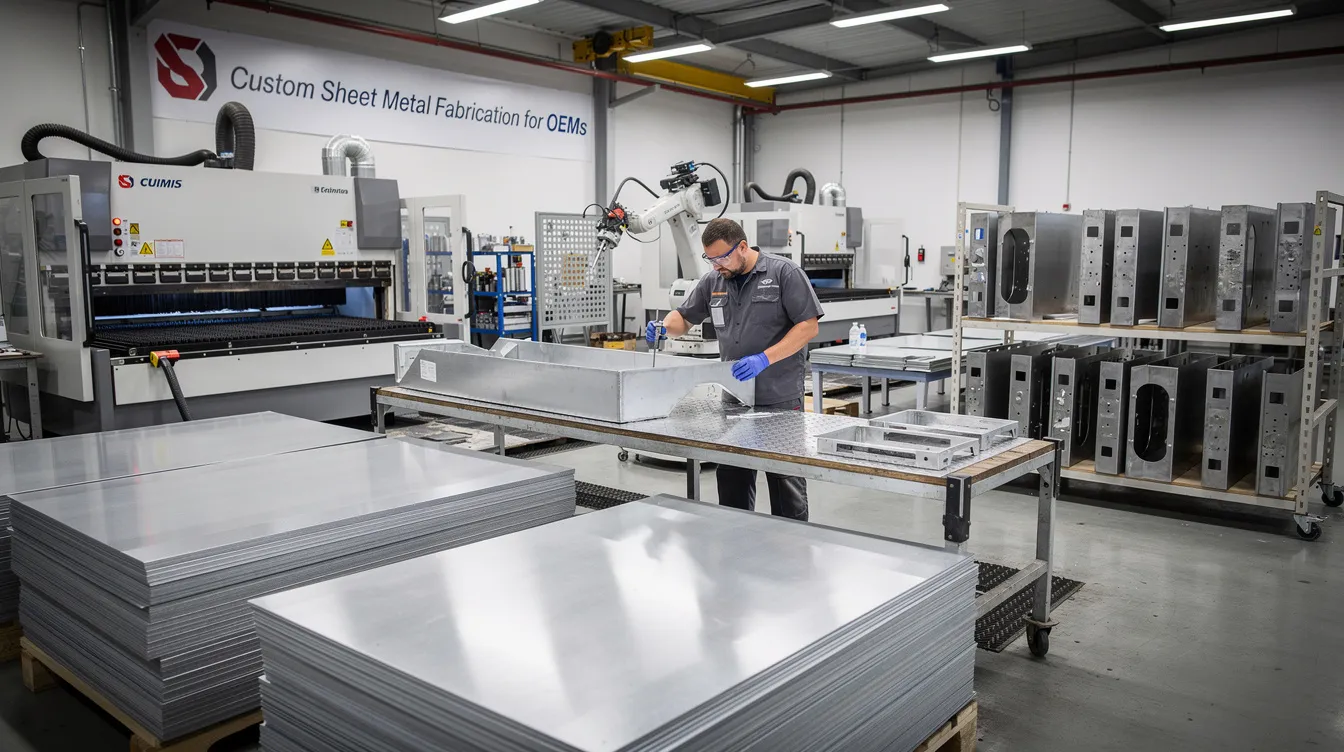
Custom Sheet Metal Fabrication Services for OEMs
Introduction to Custom Sheet Metal Fabrication
Custom sheet metal fabrication transforms flat sheets of metal into three-dimensional components through a series of manufacturing processes that include design, cutting, forming, welding, and finishing. Unlike die casting or full CNC machining from billet, custom metal fabrication from sheet stock requires low investment in tooling, making it one of the most economical paths to precision production parts for OEM applications.
Anebon Metal Products Limited has provided precision CNC machining, die casting, and custom sheet metal fabrication since 2010 from its facility in Dongguan, China. We serve overseas OEMs across aerospace, medical devices, automotive, electronics, robotics, and industrial machinery-delivering everything from a single prototype to high volume production runs with tolerances as precise as ±0.002 mm on critical machined features.
Our sheet metal fabrication process covers the full range of operations: laser cutting, CNC bending, forming, welding, PEM inserts and hardware installation, and a complete menu of finishing services. Whether you need low volume prototypes for design validation or scaled end use production, Anebon offers a cost effective alternative to casting and machining with faster lead times and greater design flexibility.
Why OEMs Choose Custom Sheet Metal Parts
Design engineers and R&D teams specify custom sheet metal parts when they need enclosures, brackets, chassis, or structural components that balance strength, weight, and cost. Sheet metal fabrication allows for custom-designed parts with features like louvers, embosses, mounting tabs, and integrated flanges-all produced from a single flat blank without expensive molds or complex multi-axis machining setups.
Key advantages that drive OEM adoption:
-
Strength-to-weight ratio – aluminum and thin stainless steel panels deliver structural integrity without unnecessary mass
-
Volume flexibility – sheet metal parts can be produced in low to high volumes cost-effectively, from pilot batches to annual contracts
-
Design consolidation – multi-piece weldments or machined blocks can commonly be replaced by a single bent and formed custom metal component, reducing part count and assembly labor
-
Durability – sheet metal parts are highly durable for end use applications spanning construction, food processing, HVAC ductwork and fittings, and custom architectural features like staircases and railings
Real-world examples include 304 stainless medical device housings with electropolished surfaces, 19-inch rackmount server chassis with precise connector cutouts, EV battery protection plates in thick aluminum, and aerospace avionics brackets that require strict traceability. Sheet metal is widely used in automotive components, electronics use sheet metal for enclosures and panels, and food processing industries rely on custom sheet metal fabrication for hygienic equipment.
Anebon provides DFM feedback early in the design cycle, helping customers hit target cost and lead time while meeting functional and regulatory requirements.
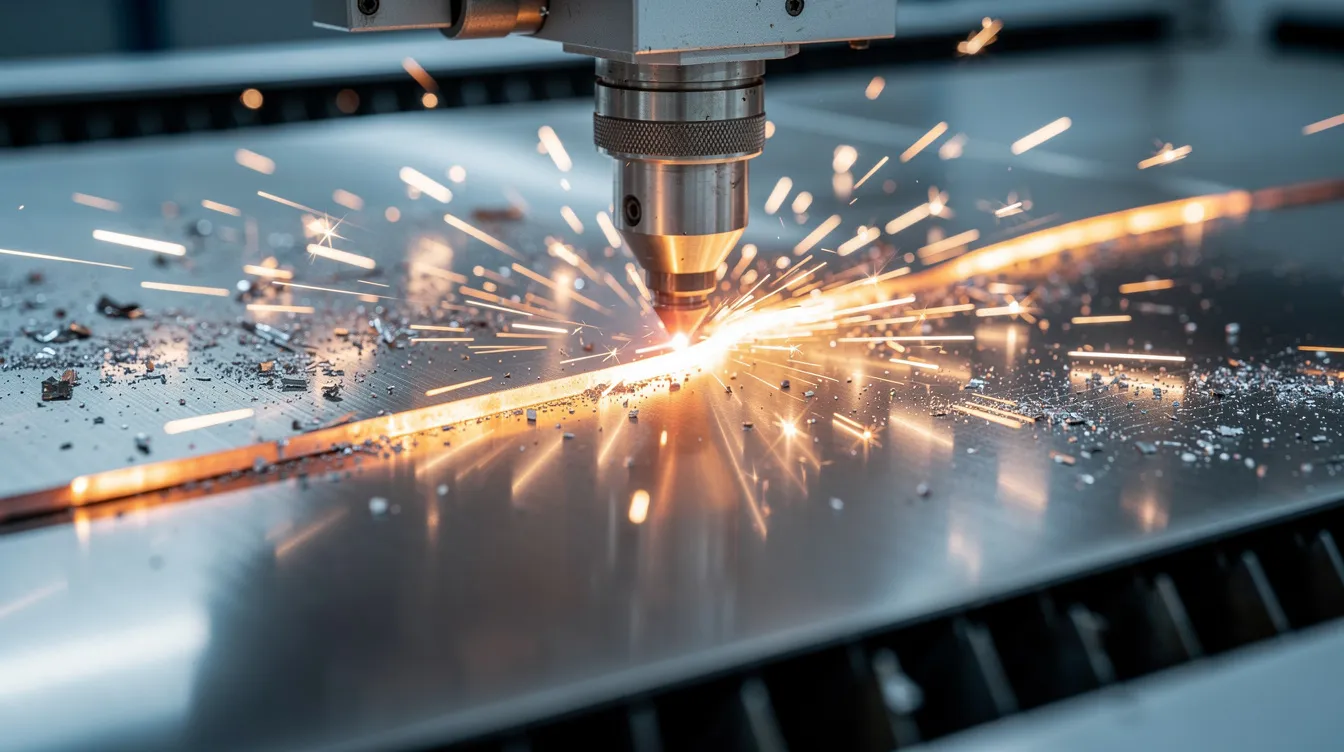
Core Sheet Metal Fabrication Processes at Anebon
Anebon runs a vertically integrated sheet metal fabrication process from flat pattern to finished assembly. The workflow starts with CAD file receipt (STEP, SolidWorks, Inventor), progresses through flat pattern development and CAM nesting, then moves through cutting, forming, joining, finishing, inspection, and shipment. Sheet metal fabrication involves cutting, bending, and assembling metal sheets into the final geometry-and every step is performed under documented process controls.
In-house operations include fiber laser cutting, CNC turret punching, CNC press brake bending, rolling, tapping, PEM hardware insertion, MIG/TIG welding, spot welding, and mechanical assembly. Typical working envelopes accommodate sheets up to approximately 3000 × 1500 mm across common alloys like aluminum 5052/6061 and stainless steel 304/316.
Every fabrication step is supported by in-process inspection-first article checks, bend angle verification, and critical dimension measurement-ensuring dimensionally accurate custom sheet metal parts before they move downstream.
Laser Cutting and Punching
Laser cutting is the primary method for creating flat blanks in custom sheet metal fabrication. Fiber lasers quickly cut complex internal features and external profiles with clean kerfs and minimal heat-affected zones, achieving typical tolerances around ±0.1 mm on flat profiles depending on thickness and material. Cutting techniques in sheet metal fabrication also include waterjet cutting for heat-sensitive applications, though laser remains the workhorse for speed and precision.
Turret punching is preferred when parts require repetitive holes, louvers, or embosses. For cost effective high-volume patterns, custom punch tooling amortizes quickly, offering faster cycle times than laser for those specific features.
Nesting strategies driven by CAM software reduce scrap and lower per-part cost-particularly important on expensive alloys like titanium. Sheet metal can be produced quickly with lead times as short as 3 days when stock material is available and geometry is straightforward.
Bending, Forming, and Rolling
CNC press brake bending converts flat laser-cut blanks into 3D custom metal parts-U-channels, brackets, chassis, and more. Press brake punches are used to bend and stretch flat stock in fabrication, and Anebon programs bend sequences using CAD software to ensure correct order of operations and clearance for tooling.
Practical design guidelines for engineers designing custom sheet metal:
|
Parameter |
Guideline |
|---|---|
|
Minimum inside bend radius |
~0.5× material thickness (soft alloys); ≥1× for harder materials |
|
Hole-to-bend distance |
≥2.5× thickness + bend radius |
|
Relief cuts |
At least 1× thickness in each direction |
|
Angular tolerance |
±0.5° standard; ±0.2–0.3° with bottom bending |
|
Flange length tolerance |
±0.2–0.3 mm typical |
Anebon also forms rolled components-cylindrical guards, partial arcs, curved panels-relevant to robotics, HVAC, and industrial machinery housings. Tight dimensional stack-ups across multiple bends are maintained through calibrated back-gauges and angle sensors, critical when assemblies must interface with PCBs, connectors, and mating structures.
Welding, Hardware, and Assembly
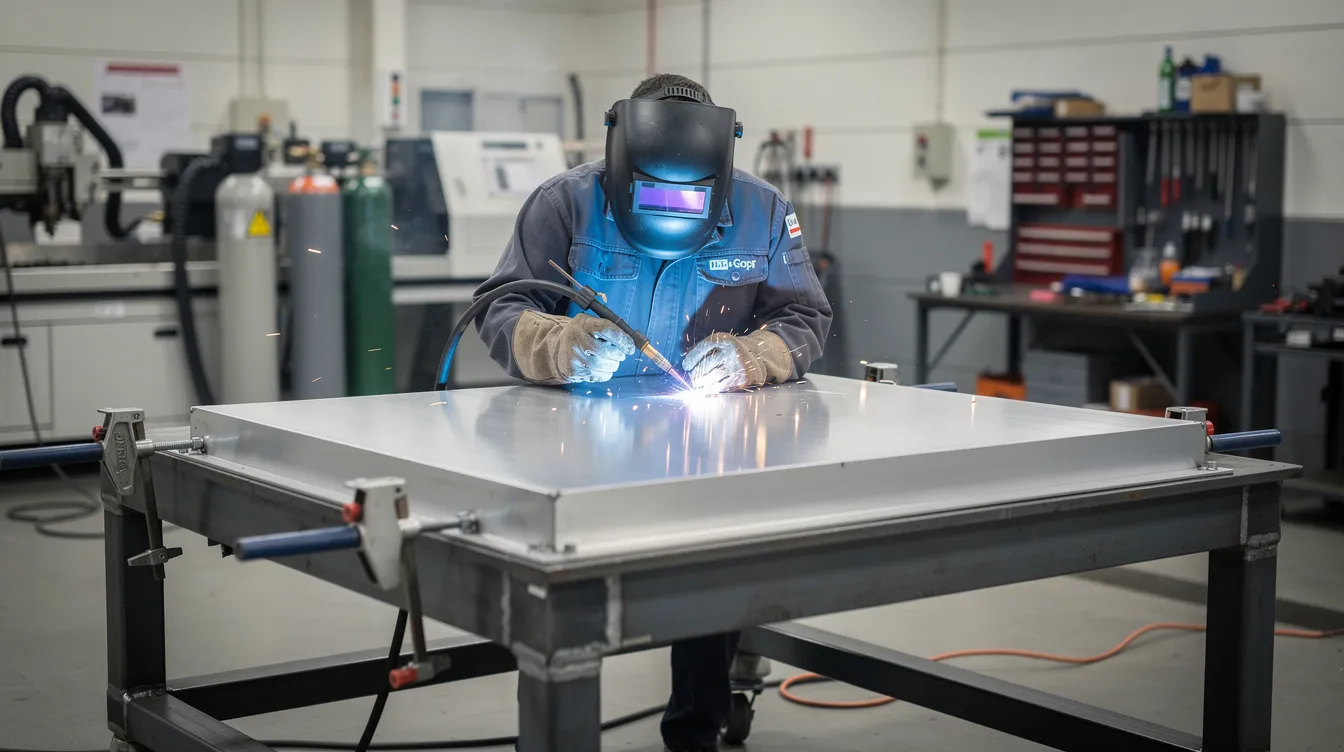
Anebon’s metal fabrication welding capabilities span MIG, TIG, and spot welding for aluminum, steel, and stainless custom metal assemblies. Material and joint type dictate the process-TIG for clean aluminum welds, MIG for production speed on steel, spot welding for overlapping stainless panels.
PEM self-clinching fasteners, standoffs, nuts, and studs simplify downstream assembly of PCBs, doors, and panels in end use production parts. Typical assembly operations include sub-assemblies of multiple sheet metal components, installation of hinges and latches, and basic mechanical integration before packaging and shipment.
Weld quality is verified visually and, where specified, by gauge checks on critical fixtures or safety-related production parts. Integrating welding and assembly in-house shortens lead times and improves traceability versus coordinating multiple external vendors.
Materials and Thicknesses for Custom Sheet Metal
Anebon supports a full range of sheet metal materials selected based on strength, corrosion resistance, weight, cost, and end use environment. Typical sheet metal thickness ranges from 0.5mm to 6mm for most alloys, with thicker plate work evaluated case-by-case.
|
Material |
Key Properties |
Common Applications |
|---|---|---|
|
Aluminum (5052, 6061) |
Lightweight, good corrosion resistance, suitable for portable applications |
Electronics enclosures, aerospace panels |
|
Stainless steel (304, 316) |
Ideal for corrosion resistance and structural components |
Medical housings, food equipment |
|
Carbon steel (CRS, galvanized) |
Cost effective, strong |
Industrial frames, brackets, guards |
|
Copper |
High electrical and thermal conductivity |
EMI shields, bus bars, heat exchangers |
|
Brass |
Excellent for low-friction contact applications, good conductivity properties |
Connectors, decorative hardware |
|
Titanium |
Extreme strength-to-weight, high-temperature resistance |
Aerospace, high-performance parts |
Anebon’s engineers recommend cost effective material and thickness combinations to meet mechanical, thermal, and regulatory requirements while controlling weight and price.
Surface Finishes: From Functional to Cosmetic
Surface finishing is critical to corrosion resistance, part surface appearance, electrical conductivity, and downstream assembly compatibility. Anebon offers a complete suite of finishing services:
-
Deburr, brush, bead blast – bead blasting smooths surfaces before anodizing and creates a uniform part surface texture
-
Type II anodizing – creates a corrosion resistant finish on aluminum with consistent color and hardness
-
Type III (hard) anodizing – thicker wear resistant layer for high-abrasion environments, with some dimensional impact
-
Powder coating – applies powdered paint electrostatically and cures to create a durable, wear resistant layer available in different colors to achieve the desired aesthetic; more robust than standard painting methods
-
Plating – nickel, zinc, or gold; gold plating provides corrosion resistance with thickness of 0.00002″–0.00005″
-
Chem film (chromate conversion coating) – adds a thin corrosion resistant layer with very little thickness (0.00001″–0.00004″), preserving electrical conductivity and serving as an excellent paint base
Chem film is preferred over anodizing when low electrical resistance matters-such as EMI-sensitive electronics-or when tight dimensional tolerances must be preserved because of its minimal thickness build-up. For a deeper look at surface treatment options for aluminum and other materials, Anebon’s technical resources cover selection criteria in detail.
Finish selection should always be linked to industry requirements: medical device cleanability, aerospace environmental resistance, outdoor UV stability for enclosures, or corrosion protection for automotive components.
From Prototype to End Use Production
Anebon supports customers across the full product lifecycle-concept validation, rapid prototyping, pilot runs, and scaled end use production. Rapid prototyping allows for quick production of custom parts, and no minimum order volumes are required.
Early prototypes can be cut from stock sheet using laser cutting and manual brake setups, delivering fast feedback on fit, airflow, cable routing, and ergonomics. Rapid sheet metal prototyping has lead times starting at 3 days, and production parts can often ship in as fast as 5 business days for simple geometries. Rapid prototyping is ideal for low to high volume production, making it straightforward to scale from engineering samples to annual contracts.
|
Phase |
Typical Volume |
Lead Time |
|---|---|---|
|
Prototype |
1–10 pcs |
3–10 business days |
|
Pilot / Bridge |
10–100 pcs |
2–4 weeks |
|
Production |
100–10,000+ pcs |
4–8 weeks |
The transition to production involves refined DFM, standardized bend tooling, dedicated jigs and fixtures, and documented work instructions to stabilize quality and cost. OEMs keep the same supplier and process path from first article inspection through multi-year volume production, reducing risk and qualification overhead.
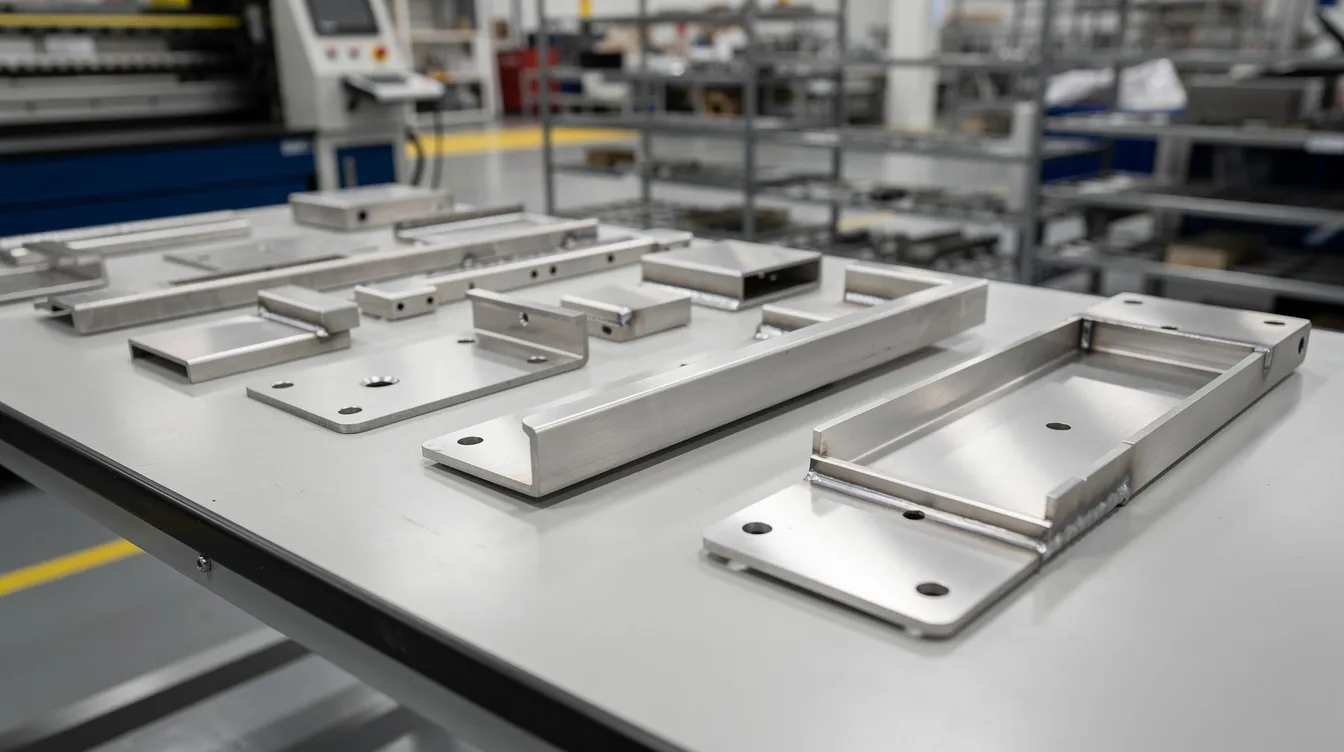
Design for Manufacturability (DFM) Support
Anebon’s engineers routinely review CAD models and drawings to identify simplifications, cost drivers, and potential quality risks before fabrication begins. Design for Manufacturability feedback helps optimize CAD models for production efficiency-catching issues that would otherwise surface during bending, welding, or finishing.
Common DFM recommendations for custom sheet metal include:
-
Consolidating small flanges to reduce bend count
-
Adjusting hole-to-bend distances to prevent distortion
-
Matching inside bend radii to standard tooling
-
Standardizing PEM inserts and hardware types across an assembly
-
Relaxing non-critical tolerances from ±0.1 mm to ±0.2 mm to reduce scrap and inspection burden
DFM reviews also cover finishing: masking requirements for chem film, anodizing, and powder coat; drainage and venting for plating baths; and surface prep sequencing. This service is especially valuable for startups and R&D teams moving from 3D-printed prototypes to custom sheet metal for the first time.
Quality Assurance and Certifications
Anebon maintains ISO 9001:2015 and ISO 14001:2015 certifications as the foundation of its quality framework. ISO 9001 certification ensures consistent quality management across all manufacturing operations, while ISO 14001 certification focuses on effective environmental management. For context, competitors like Xometry are ISO 9001:2015 certified and also AS9100D certified, and Ponoko maintains a 99.7% precision part quality record-standards that underscore how seriously the industry treats quality infrastructure.
Inspection practices at Anebon include:
-
Incoming – material verification with mill certificates and lot traceability
-
In-process – first article inspection, in-line sampling, bend angle and dimension checks
-
Final – dimensional reports using CMMs, height gauges, calipers, and specialized thread gauges
Traceability is maintained from raw material lot to finished batch-critical for aerospace, medical, and automotive customers with regulatory or audit requirements. Consistent quality reduces rework and field failures, making Anebon a reliable partner for long-term OEM metal fabrication programs.
Industries and Typical Applications
Anebon’s custom sheet metal fabrication capabilities support a wide range of industries that demand precision, reliability, and repeatability.
-
Aerospace – avionics brackets, interior panels, thermal shields; aerospace applications require sheet metal for high-stress components with strict traceability and environmental resistance
-
Medical devices – instrument housings, carts, sterilization trays; stainless steel with electropolish or passivation for cleanability
-
Automotive and EV – battery covers, brackets, shielding plates; sheet metal is widely used in automotive components where crash performance and thermal management matter
-
Electronics – rackmount chassis, heatsink plates, EMI shields with chem film or copper construction for good conductivity properties
-
Industrial machinery – guards, control boxes, machine frames; powder-coated steel for durability in harsh environments
-
HVAC – HVAC systems utilize sheet metal for ductwork and fittings, commonly formed from galvanized steel
The same fabrication process and quality standards apply whether the order is a small production runs engineering build or a multi-thousand-piece annual program. Anebon is comfortable working under NDAs and with customer-specific standards, drawings, and documentation packages.
Working With Anebon: From RFQ to Shipment
The typical engagement starts with a conversation. You share your requirements, and Anebon’s engineering team responds with a DFM-informed quote-usually within days. Transparency in quoting total costs is essential in choosing a sheet metal fabricator, and Anebon breaks down material, processing, finishing, and logistics so there are no surprises. Industry experience is critical when selecting a custom sheet metal fabrication provider, and turnaround time is an important factor when evaluating a sheet metal fabrication shop.
To get a smooth, accurate instant quote, provide:
-
3D CAD files (STEP preferred) and 2D drawings with tolerances
-
Material and thickness specifications
-
Target quantities (from a single prototype to production volumes)
-
Required finishes-powder coating, anodizing, chromate conversion coating, plating, or paint
-
Any special testing, certification, or documentation requirements
From there, Anebon handles engineering review, DFM feedback, formal quotation, customer approval, prototype build if required, first article inspection, and release to production. Shipping options for overseas clients include consolidated shipments for multiple SKUs and packaging designed to protect finished surfaces like anodized or powder-coated parts.
Ready to produce your next custom sheet metal fabrication project? Contact Anebon Metal Products Limited or request a quote online. Whether you are a startup validating your first hardware design or an established OEM scaling an existing product line, Anebon delivers the sheet metal fabrication capabilities, quality, and responsiveness your program demands.