Top Sheet Metal Suppliers China: Your Guide to Quality and Reliability
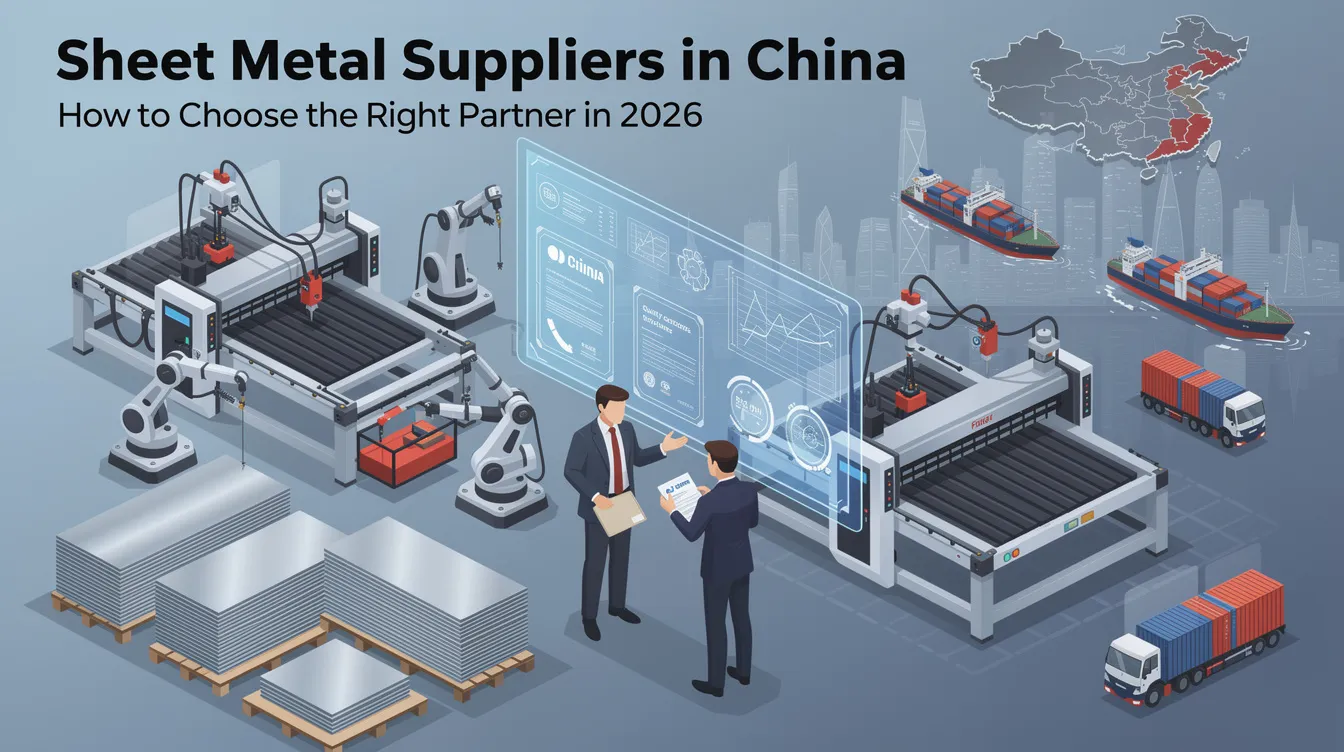
Sheet Metal Suppliers in China: How to Choose the Right Partner in 2026
Sourcing custom sheet metal parts from China is not a new strategy, but the landscape has shifted enough that what worked in 2020 may not serve you well in 2026. This guide walks you through how to identify the right China sheet metal manufacturer, evaluate sheet metal fabrication capabilities, and avoid the common pitfalls that cost overseas OEMs time and money.
Overview: Why Source Sheet Metal from China in 2026?
China remains the world’s largest base for precision sheet metal fabrication, and export volumes continue to climb. In November 2025 alone, China exported approximately 5.637 million metric tons of steel sheets and plates. From June 2024 through May 2025, roughly 4,619 shipments of custom sheet metal parts left Chinese ports, a 5% year-over-year increase. China’s metal fabrication market exceeded $20 billion in 2023, and the trajectory through 2026 shows no signs of slowing.
For international buyers comparing options, the value proposition goes beyond competitive pricing. Chinese suppliers offer:
-
Densely clustered supply chains that compress lead times for multi-process parts
-
Deep expertise across laser cutting, CNC machining, die casting, metal stamping, and surface treatment under one roof
-
Export experience built over decades serving OEMs in Europe, North America, Japan, and beyond
-
Digital-first manufacturers that accommodate low minimum order quantities for sheet metal fabrication, making prototyping and small-batch runs accessible
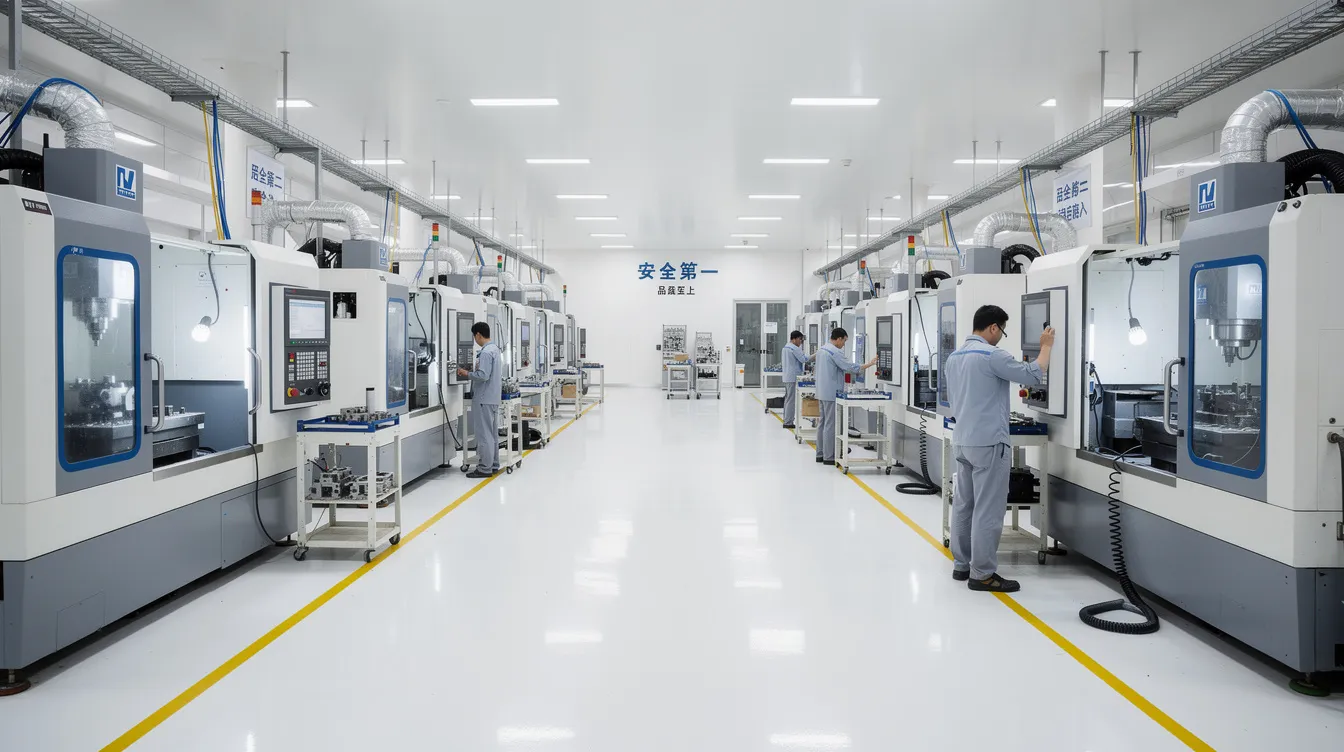
The scale of operations varies widely. Komaspec, for example, operates 190,000 sq ft across 6 buildings. RapidDirect’s factory spans 20,000 m² and draws on 50 partner facilities. Masion operates 30,000 m² with 6 production plants. KDM Fabrication’s factory covers over 8,000 m², and SUPRO MFG runs 3,000 m² with 3 automated manufacturing bases. Anebon Metal was founded in 2010 and is located in Dongguan, operating within one of China’s most concentrated precision manufacturing zones.
Compared to North American or European fabrication services, Chinese suppliers typically deliver 20–40% cost savings on equivalent parts, while offering broader manufacturing capabilities-particularly when projects require machined, stamped, and formed components in one assembly.
The rest of this article serves as a practical guide, covering regional clusters, capabilities, quality systems, and a supplier spotlight on Anebon Metal Products Limited.
China’s Main Sheet Metal Fabrication Clusters
Most professional sheet metal fabrication capacity in China concentrates in three major regions, each with distinct strengths. Mature regional supply chains exist in South China and East China for metal fabrication, while North China provides scale and cost advantages.
South China / Pearl River Delta – Cities like Dongguan, Shenzhen, Foshan, and Guangzhou form the Pearl River Delta cluster. Over 70% of top tier suppliers are in South China, and the region employs hundreds of thousands of workers in sheet metal processing alone. Fabricators in South China excel at rapid prototyping and low-volume production, making this the go-to region for electronics, robotics, medical devices, and automation equipment housings.
-
Choose the PRD when you need tight tolerances on thin-gauge materials, fast iteration, and proximity to finishing services like anodizing or plating. South China specializes in rapid prototyping and just-in-time delivery.
East China / Yangtze River Delta – Shanghai, Suzhou, Ningbo, and Hangzhou anchor this cluster. East China balances precision and scale for medium-to-high volume orders, especially for automotive parts, appliance bodies, and industrial sheet metal parts.
-
Choose the YRD when your production volumes are medium to large, you need strong die-making capabilities for metal stamping, and you want a balance between cost and engineering communication quality.
North China / Bohai Rim – Tianjin, Hebei, and Shandong provinces anchor this region. North China offers unit costs 10–15% lower than South China, and Hebei Province is adjacent to China’s largest steel production bases, which means competitive raw material access for heavy-gauge structural components, cabinets, and metal enclosures.
-
Choose the Bohai Rim for large enclosures, HVAC panels, and cost-sensitive fabrications where cosmetic finish requirements are moderate.
Location also affects shipping cost and engineering support. PRD factories sit near major export ports (Shenzhen, Guangzhou), shortening transit times for sea freight. Suppliers in East and North China may add 1–3 days for inland trucking.
Core Capabilities to Look For in Chinese Sheet Metal Suppliers
Sheet metal fabrication capabilities determine whether a supplier can actually produce sheet metal parts to your drawings-or just quote them. Here is what to verify before committing to any sheet metal fabrication factory.
-
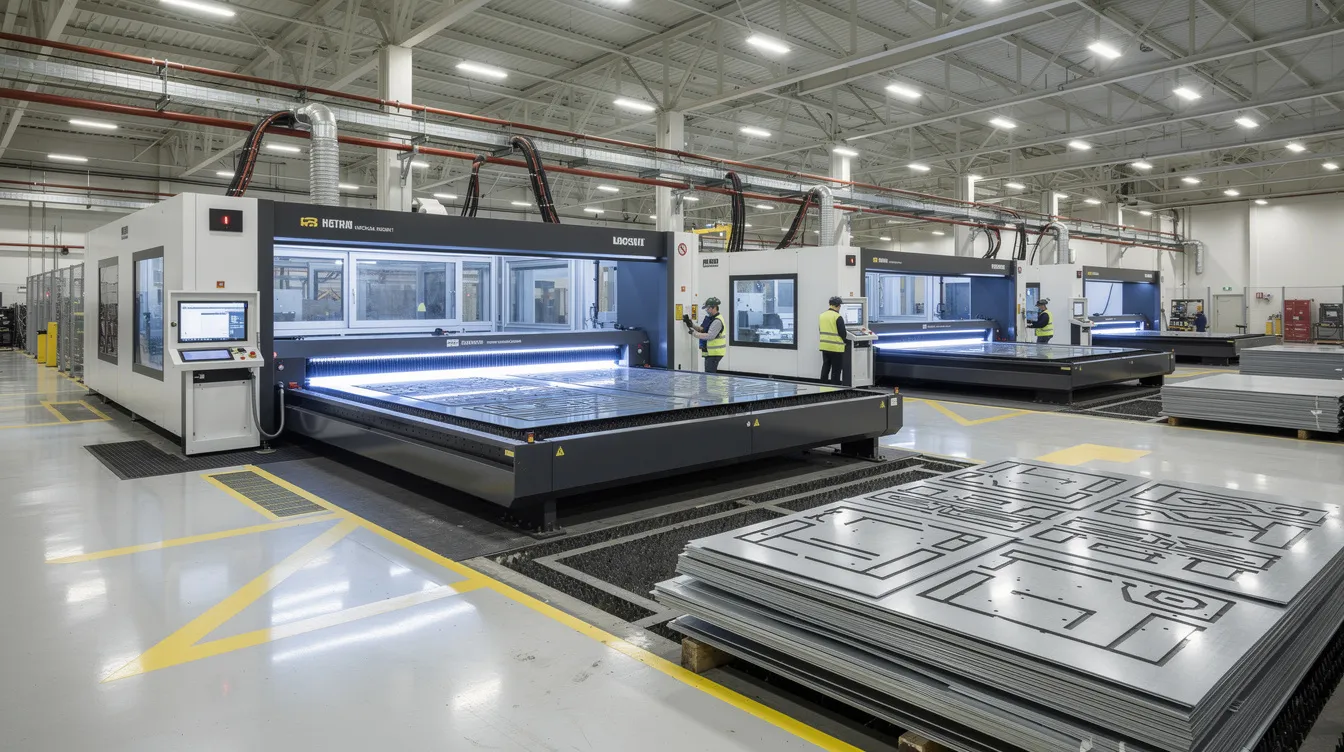
Laser cutting: Chinese suppliers often utilize advanced laser cutting in sheet metal production. Fiber lasers handle aluminum and stainless steel up to 12 mm with edge tolerances of ±0.1–0.2 mm. CO₂ lasers remain common for thicker carbon steel.
-
CNC punching: Turret punch presses handle repetitive hole patterns and slots on sheet below 4–6 mm economically, with slightly looser tolerances on complex features than laser cutting.
-
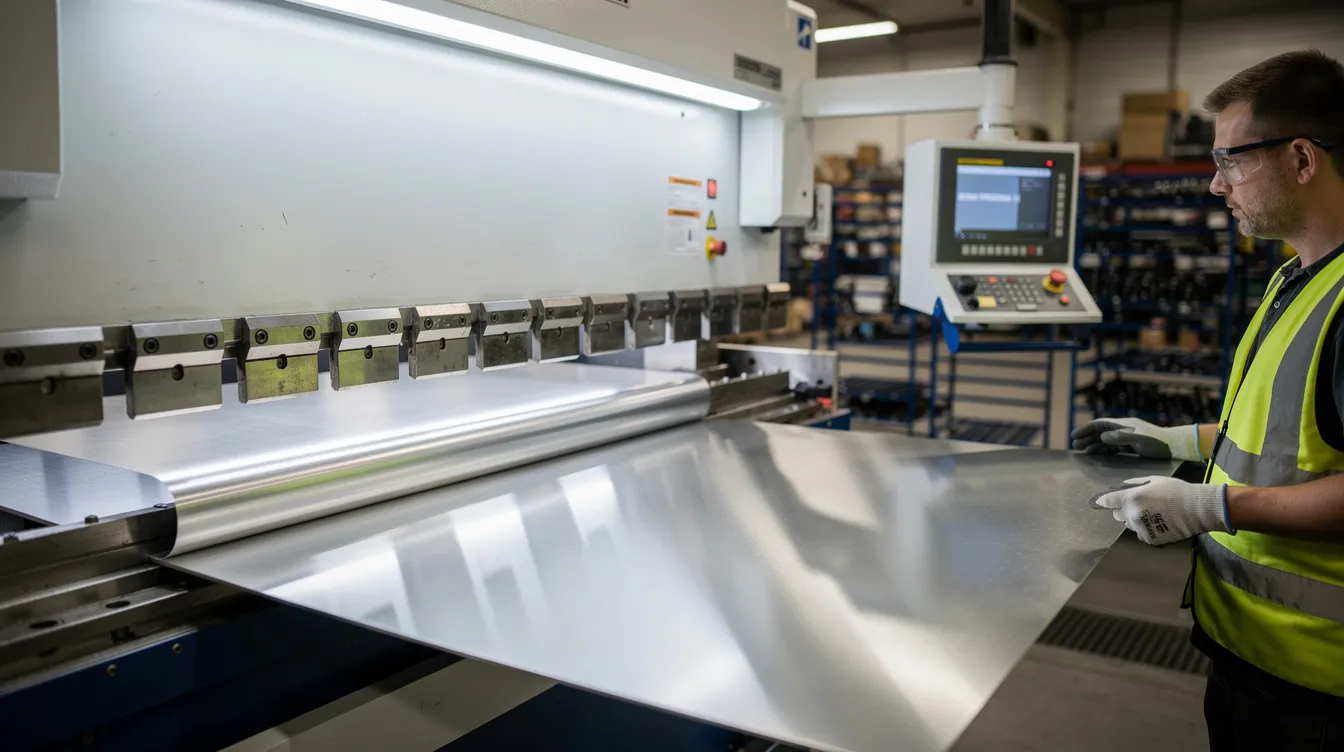
Sheet metal bending and CNC bending: Press brakes-CNC-controlled or robotic-form flanges, channels, and enclosure walls. Expect ±0.25 mm on short flanges and ±0.5 mm on longer bends.
-
Welding: MIG, TIG, and spot welding cover most joining needs. Using automated or robotic welding improves efficiency in sheet metal fabrication and weld consistency, especially for welded assemblies in high volume production.
-
Integrated services: The strongest suppliers combine sheet metal with CNC machining and die casting. Precision CNC machining tolerances can be as tight as ±0.002 mm on critical features, which matters when machined bosses or mating surfaces must align perfectly with formed sheet metal components.
-
Design and prototyping: Design for Manufacturing (DFM) support minimizes costly revisions during production. Look for suppliers who review flat patterns, suggest bend-radius changes, and deliver prototype parts in 5–10 working days.
-
Capacity range: A capable factory handles everything from single prototypes to mass production runs of tens of thousands, across different industries and production volumes.
Quality Systems, Certifications, and Traceability
Quality certifications ensure consistent product quality and compliance, particularly when parts end up in regulated assemblies. Here is what to look for in metal fabrication companies:
-
ISO 9001:2015 is the baseline certification for sheet metal fabricators and for suppliers in general. It signals documented process control, non-conformance handling, and management review-the foundation of one quality system across all manufacturing processes.
-
ISO 14001:2015 covers environmental management. This matters when your supplier handles chemical surface treatment processes, coatings, or plating that generate waste.
-
IATF 16949 is essential for automotive supply chains. Approximately 60% of all global IATF 16949 certified sites are in China, so finding qualified automotive suppliers is feasible.
-
AS9100D is the standard for aerospace quality management. Not every Chinese fabricator holds this, so verify the certificate applies to the actual manufacturing facility, not a trading arm.
-
ISO 13485 certification is crucial for medical device manufacturing. If your sheet metal parts contact patients or require traceability through sterilization, this is non-negotiable.
-
Quality control tools: Incoming material inspection with Mill Test Certificates (MTC), in-process checks, and First Article Inspection (FAI). Requesting a First Article Inspection report is crucial for quality assurance in production. Requesting mill certificates ensures material traceability for specified alloys.
-
Traceability and documentation: Lot numbers, weld records, batch tracking, certificates of compliance, PPAP packages for the automotive industry-these are the artifacts of a mature quality system.
Anebon holds both ISO 9001:2015 and ISO 14001:2015 certifications, maintained since 2010 in Dongguan. The company uses APQP, PPAP, Control Plans, and SPC, providing the quality consistency that demanding OEM programs require.
Typical Processes in Custom Sheet Metal Fabrication
Understanding the sheet metal fabrication process helps you set realistic expectations for tolerances, lead times, and cost. Sheet metal fabrication includes processes like laser cutting and welding, but the full workflow is more nuanced.
-
Engineering review and DFM: The supplier reviews your 2D/3D CAD files (STEP, IGES), checks bend feasibility, hole spacing, and material thickness. Good suppliers suggest changes that reduce setups or eliminate secondary operations.
-
Material selection and blanking: Sheets are selected by grade and thickness, then cut to rough size via laser or shearing.
-
Laser cutting vs. CNC punching: Laser cutting delivers higher flexibility, cleaner edges, and better tolerances (±0.1–0.2 mm) for complex contours. CNC punching is faster and more cost-effective for repetitive patterns on thinner gauge material (<4 mm). Choose based on geometry and batch size.
-
Bending and forming: CNC press brakes shape flat blanks into 3D parts. Springback compensation varies by material; angular tolerance of ±0.5° is standard, with ±0.25° achievable on shorter flanges.
-
Welding and joining: MIG for structural carbon steel, TIG for stainless steel and aluminum where appearance matters, spot welding for lap joints in enclosures. Clean welds with minimal distortion are the mark of a professional operation.
-
Surface finishing: Grinding, brushing, powder coating, anodizing, plating, or passivation depending on material and end use.
-
Assembly and hardware insertion: Rivets, PEM fasteners, threaded inserts, sub-assembly.
-
Final inspection: Dimensional accuracy checked via CMM, height gauges, and calipers. Surface finish verified. Documentation prepared for shipment.
Where tolerances tighter than ±0.1 mm are needed-precision bosses, bearing seats, mating holes-CNC machining complements the sheet metal fabrication process. This is where suppliers offering CNC machined parts alongside sheet metal deliver real value.
Materials and Finishes Offered by Chinese Sheet Metal Suppliers
Material choice directly affects cost, weight, corrosion resistance, and appearance. Here are the most common options available from Chinese custom metal fabrication suppliers:
Common materials:
-
Carbon steel (ASTM A36) – affordable, strong, widely used for structural components and industrial equipment frames
-
Standard stainless steel Grade 304 – widely used in fabrication for its balance of formability, weldability, and moderate corrosion resistance
-
Grade 316 stainless steel – offers superior corrosion resistance, preferred for medical devices, food equipment, and marine environments
-
Aluminum grades 1100-H14 and 6061-T6 – popular in sheet metal for lightweight enclosures, heat sinks, and electronics housings. Anebon commonly uses 5052-H32 for corrosion resistant enclosure work.
-
Galvanized steel – galvanization improves corrosion resistance of sheet metal parts, commonly specified for HVAC and outdoor equipment
-
Brass and copper – specialist applications in shielding, electrical, and decorative components
Standard thickness ranges run from 0.5 mm (thin electronics housings) to 6.0 mm for aluminum and stainless steel, extending to 10–20 mm for heavy structural steel in North China. Flatness tolerances of ±0.5 mm are realistic for parts under 150 mm span, with ±1 mm typical for larger panels.
Common finishes:
-
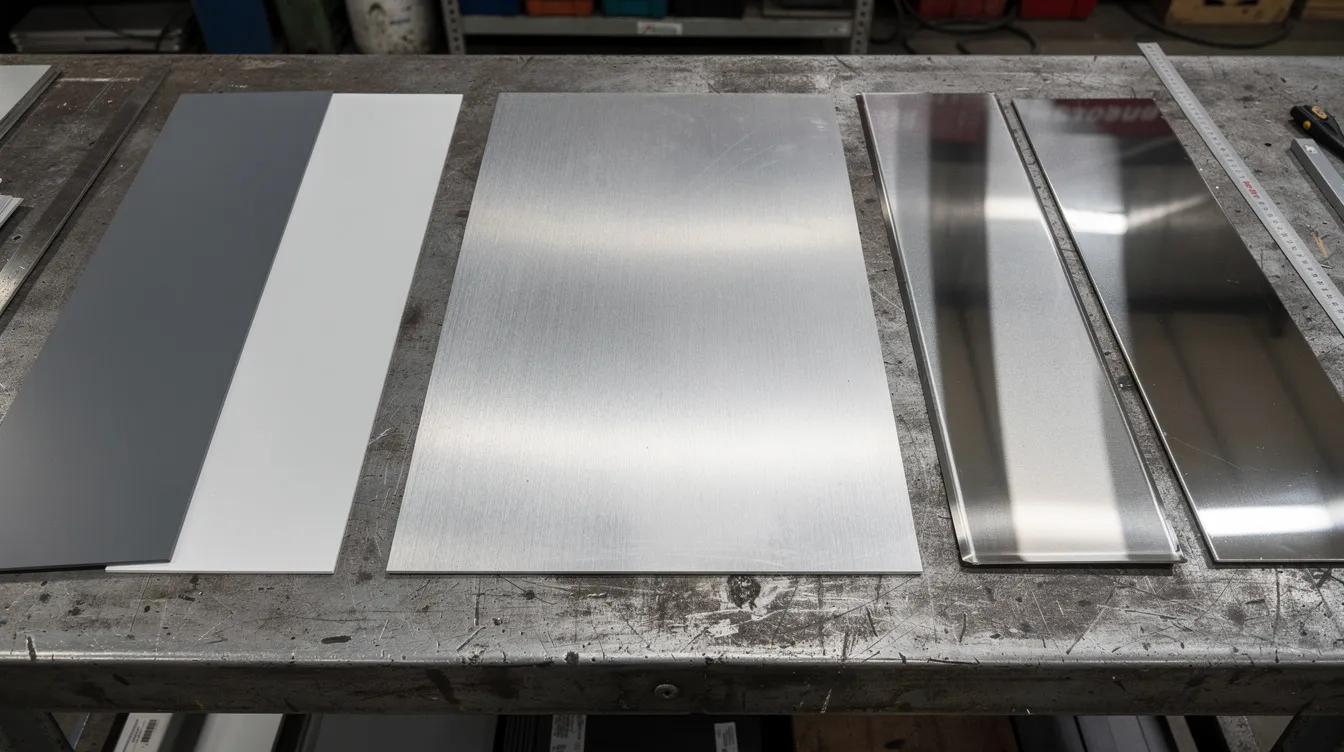
Powder coating – durable, available in a wide color range, suitable for high heat environments and outdoor use
-
Anodizing – aluminum-specific, enhances corrosion resistance and appearance
-
Brushing – cosmetic finish for stainless steel and aluminum
-
Plating – electroplating (nickel, chrome) for wear and corrosion protection
-
Passivation – chemical treatment for stainless steel to restore the chromium oxide layer after welding or machining
Each surface finish impacts durability, aesthetics, and compliance (RoHS, REACH), so specify requirements on your drawings.
Industries That Rely on Chinese Sheet Metal Suppliers
Different industries impose different standards of precision sheet metal and documentation on their suppliers. Here is how a China sheet metal manufacturer adapts to each sector:
-
Automotive industry: Brackets, sensor mounts, car parts, and stamped parts for EV battery modules require IATF 16949, PPAP, and tight tolerances on critical datums. Automotive metal stamping demands corrosion resistant coatings and crash-relevant weld strength.
-
Medical devices: Instrument housings, surgical tool enclosures, and diagnostic equipment panels. ISO 13485 certification, 316L stainless steel, clean welds, passivation, and full traceability are standard. No crevices, no sharp edges.
-
Aerospace: Fixtures, brackets, ground support equipment, and non-structural panels. Aerospace precision machining requires AS9100D, tight GD&T callouts, fatigue-rated materials, and intimate documentation.
-
Electronics and robotics: Metal enclosures, chassis, heat sinks, and structural frames. Thin-gauge aluminum, high precision hole positioning, and clean anodized finishes. Appearance matters, and repeatability across batches is critical.
-
Industrial machinery and automation equipment: Large cabinets, machine guards, structural fabrications. Moderate tolerances but strong welds, thick steel, and robust powder coating. High volume production keeps unit costs low.
Export compliance (RoHS, REACH) and packaging for sea or air freight also vary by industry. Suppliers with a solid track record exporting to the EU and North America understand labeling, packing, and documentation requirements that trip up less experienced factories.
How to Evaluate and Vet Sheet Metal Suppliers in China
Vetting suppliers properly reduces risk far more than chasing the lowest quote. Here is a practical checklist for sourcing managers and engineers evaluating sheet metal fabrication companies for OEMs:
-
Test communication quality by sending technical questions before placing any order. Response speed, English fluency, and willingness to ask clarifying questions reveal a supplier’s engineering team depth.
-
Request 3D CAD review and DFM feedback: Send your STEP files and see if the supplier catches issues-undersized bend radii, features too close to edges, unnecessary tight tolerances.
-
Order 5–10 sample parts to check dimensional accuracy, weld quality, surface finish, and packaging before committing to mass production.
-
Conduct a factory audit for orders above $10,000. If you cannot visit in person, request a video tour or engage a third-party auditor.
-
Verify quality certifications: Confirm that ISO 9001:2015 (or IATF, AS9100D, ISO 13485) applies to the actual manufacturing facility, not just a parent company or trading entity.
-
Verify supplier’s export experience and compliance with regulations. Ask for references from buyers in your region and industry.
-
Confirm in-house vs. outsourced processes: Some sheet metal fabricators outsource welding, finishing, or machining. Outsourcing is not inherently bad, but you need to know who controls quality at each step. Suppliers handling supply chain management internally tend to deliver more consistent quality.
Note that while some factories also offer injection moulding alongside metal fabrication, ensure the core sheet metal fabrication services match your requirements before being swayed by breadth alone.
Why Anebon Metal Products Limited Is a Strong Sheet Metal Partner in China
Anebon is a Dongguan-based precision manufacturer founded in 2010, specializing in CNC machining, custom sheet metal fabrication, and die casting for overseas OEMs. Here is what sets Anebon apart as a custom metal parts supplier:
-
Integrated manufacturing: CNC machining (3-, 4-, and 5-axis), sheet metal processing, and die casting under one roof. This is particularly valuable for assemblies combining CNC machined parts with formed sheet metal components, eliminating multi-vendor coordination.
-
High precision tolerances: Machining tolerances as tight as ±0.002 mm on critical features. Standard sheet metal tolerances of ±0.127 mm on hole positions and ±0.25 mm on bends.
-
Quality certifications: ISO 9001:2015 and ISO 14001:2015, with APQP, PPAP, SPC, and control plans built into production workflows-supporting consistent quality across batches.
-
Volume flexibility: From single rapid prototyping samples to production runs exceeding 50,000 units. Digital-first quoting and engineering support shorten product development cycles.
-
Export experience: Anebon ships to the EU, USA, Japan, and other demanding markets with established packaging, documentation, and logistics procedures.
-
Engineering support and DFM: Anebon’s engineering team reviews every project for manufacturability, helping design validation before tooling or fixtures are built. Real time monitoring of critical process parameters supports quality consistency through production.
Anebon fits best when you need high precision custom metal parts, medium-volume OEM runs, or projects requiring DFM optimization-not commodity stampings.
From RFQ to Shipment: Typical Workflow with a China Sheet Metal Supplier
Understanding the standard workflow helps you set expectations and avoid delays. Fast quoting platforms are essential for efficient sheet metal sourcing, and most professional sheet metal fabrication suppliers follow a similar sequence:
-
RFQ submission: Provide 2D/3D CAD files, material specification, thickness, surface finish, quantity ranges, target delivery date, and any special inspection or documentation needs.
-
DFM review and quotation: The supplier reviews drawings, flags manufacturability concerns, and returns a quote-typically within 24–48 hours on working days for straightforward parts.
-
Prototype or sample order: 5–20 pieces produced to verify fit, tolerances, and finish. Typical prototype lead time: 5–10 working days.
-
Design tweaks: Based on sample feedback, adjust features, tolerances, or finishes before committing to production tooling.
-
Tooling or fixture confirmation: For stamped parts or high volume production, fixtures and dies are built and validated.
-
Mass production: Batch runs with in-process inspection at defined intervals.
-
Final inspection and documentation: CMM reports, FAI, coating thickness checks, photographs, and certificates of compliance.
-
Packing and export shipping: Multi-layer protective packaging, container loading, customs documentation, and shipment tracking. Typical batch lead times: 15–30 working days after deposit, depending on complexity and volume.
Buyers should clarify Incoterms (FOB, CIF, DAP) and packaging specs early. Experienced suppliers handle this routinely.
Cost Drivers in Sheet Metal Fabrication and How to Optimize Them
Price depends on more than hourly labor rates. Design choices, material selection, and processing route all influence what you pay for custom sheet metal fabrication.
Main cost drivers:
-
Material type and thickness – stainless steel and aluminum cost more per kilogram than carbon steel; thicker sheets require more laser power and longer bend times
-
Part complexity – every additional bend, weld, or hardware insertion adds setup and cycle time
-
Tolerance requirements – tighter tolerances demand slower cutting speeds, more inspection, and sometimes secondary CNC machining
-
Surface treatment and finishing – powder coating adds less cost than multi-stage plating; anodizing varies by color and spec
-
Batch size – setup costs amortize over larger runs, making high volume production significantly cheaper per unit
DFM tips to reduce cost:
-
Standardize bend radii across your design to minimize tooling changes on press brakes
-
Avoid tolerances tighter than necessary; ±0.25 mm on bends is achievable and affordable, while ±0.05 mm requires machining
-
Design for efficient nesting during laser cutting to reduce material waste
-
Use common materials stocked in China (6061, 5052, 304, SPCC) rather than exotic alloys
-
Combine features where possible-if a hole can be punched during blanking, avoid a separate drilling operation
Competitive pricing from Chinese suppliers comes not from cutting corners, but from optimizing these variables at the design stage.
Common Challenges When Working with Overseas Sheet Metal Suppliers (and How to Avoid Them)
Working across borders introduces friction. Here are the most common issues and how to prevent them:
-
Incomplete or ambiguous drawings → Provide fully dimensioned 2D drawings alongside 3D models. Specify material grade, thickness, finish, and tolerances for every critical feature. This is the single biggest source of rework.
-
Unclear tolerance expectations → State GD&T callouts or at minimum, flag which dimensions are critical versus reference. Do not rely on general notes alone.
-
Time zone and language gaps → Use annotated screenshots, color-coded markups, and structured email templates. Schedule regular update calls during critical builds. Anebon’s engineering team communicates in English and responds within business hours to maintain alignment.
-
Quality drift across batches → Implement control plans with defined sampling rates. Request SPC data on critical dimensions. Quality consistency depends on documented processes, not just initial sample approval.
-
Inconsistent surface finish → Specify Ra values, color codes (RAL or Pantone for coatings), and acceptance criteria for cosmetic surfaces. Retain approved finish samples.
-
Logistics and packaging failures → Define packing requirements in the purchase order. Specify whether parts need individual bagging, foam separation, or desiccant. Experienced suppliers with strong export experience use multi-layer packaging by default. Clarify Incoterms early to avoid cost surprises.
-
Last-minute spec changes → Freeze specifications before production begins. Changes after tooling or fixture confirmation cause delays and cost increases that no amount of supply chain management can offset.
How to Start a Custom Sheet Metal Project with Anebon
If you are an OEM, design engineer, or R&D team with an upcoming sheet metal or mixed-process project, here is how to engage Anebon:
-
Prepare your files: 2D/3D CAD files (STEP, IGES, or SolidWorks), material specification, surface finish requirements, estimated annual volume, and any critical features or certifications needed. If you are working in SolidWorks, Anebon’s team can work directly with native sheet metal files.
-
Submit your RFQ: Send drawings via Anebon’s website contact form or email. Typical quoting turnaround is 24–48 hours on working days, including DFM feedback.
-
Prototype and iterate: Anebon supports early-stage prototypes, design validation batches, and scaling to full production. Rapid prototyping turnaround is typically 5–10 working days.
-
Scale with confidence: From prototype to mass production, Anebon maintains one quality system and documentation standard, so your parts at unit 10,000 match your approved samples.
Whether you need precision sheet metal parts, CNC machined components, or integrated assemblies that combine sheet metal with die casting, Anebon’s manufacturing capabilities and deep expertise in custom metal fabrication position them to produce sheet metal parts that meet demanding specifications across different industries.
Send your drawings to Anebon’s engineering team today and get a detailed quote for your next project.