Top Sheet Metal Fabrication Companies for OEMs: A Comprehensive Review
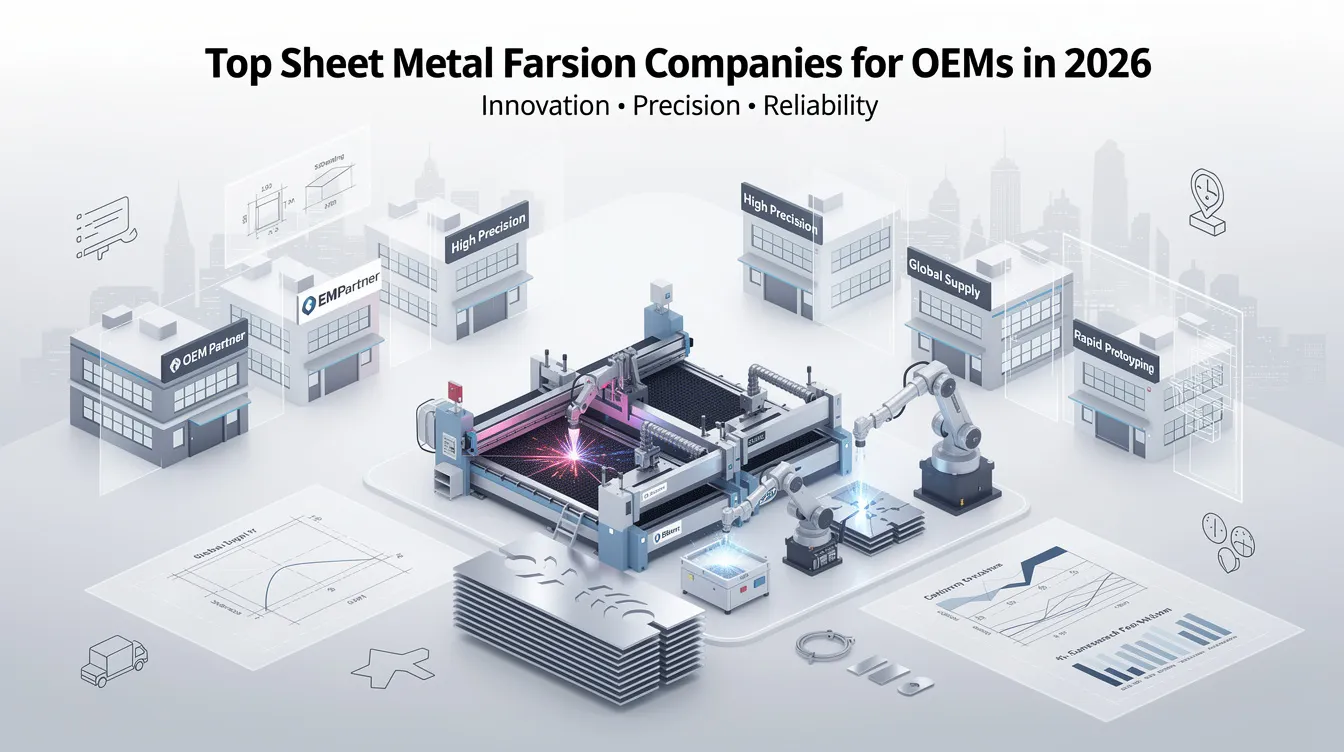
Top Sheet Metal Fabrication Companies for OEMs in 2026
Introduction: What “Top” Means for OEM Sheet Metal Fabrication
When OEM engineers and procurement teams search for top sheet metal fabrication companies for OEMs, they are not looking for the biggest revenue number on a balance sheet. They are looking for a fabrication partner that delivers consistent quality, holds tight tolerances across production runs, and has the engineering depth to support complex product programs from prototype through volume production.
The landscape in 2025–2026 is shifting fast. Increased automation, high-speed fiber laser cutting, and globalized supply chains have reshaped how OEMs source sheet metal parts. The North American sheet metal fabrication market alone is valued at USD 7.7 billion and is projected to grow at a 6.4% CAGR through 2030, driven by reshoring initiatives and the expanding need for data centers, renewable energy infrastructure, and industrial equipment. The U.S. accounts for over 75% of regional output, while Mexico is experiencing the fastest growth in sheet metal fabrication.
This article is written for OEM clients who need to evaluate and shortlist fabrication companies based on what actually matters: precision manufacturing, engineering support, certifications, scalability, and cost efficiency. We also position Anebon Metal Products Limited as a strong option for overseas OEMs seeking a one-stop precision sheet metal fabrication partner.
What you will learn:
-
The key factors OEMs should use to rank metal fabrication companies
-
Profiles of leading fabricators across North America, Europe, and Asia
-
How digital platforms compare to traditional fabrication companies
-
How Anebon fits into a global sourcing strategy for precision sheet metal
-
Practical steps to shortlist, qualify, and choose the right partner
Key Factors OEMs Should Use to Rank Sheet Metal Fabrication Companies
Selecting a sheet metal fabrication company involves evaluating far more than unit price. OEMs must consider total cost of ownership, which includes factors beyond the lowest quote: tooling amortization, rework rates, inspection overhead, shipping, and the risk of delivery delays that stall entire production lines. A supplier quoting 15% less but delivering late or out-of-spec can easily cost more overall.
Here are the key factors that should guide your ranking:
-
High precision and tolerances. Tolerance and precision involve verifying dimensional accuracy and inspection capabilities. For sheet metal parts, standard tolerances fall around ±0.1 mm (ISO 2768-m), while precision fabrication work can reach ±0.05 mm or tighter. Your supplier must demonstrate repeatability, not just prototype-level accuracy.
-
Breadth of metal fabrication processes. Manufacturing capabilities should include laser cutting, CNC punching, cnc bending, welding (TIG/MIG, robotic welding), metal stamping, hardware insertion, mechanical assembly, and surface treatments like powder coating, anodizing, and plating.
-
Industry certifications. ISO 9001:2015 is a key quality management standard, and over 1 million organizations hold ISO 9001 certification globally. Beyond that, AS9100D is essential for aerospace and defense quality management, ISO 13485:2016 is specific to medical device manufacturing quality, and IATF 16949 is the automotive industry’s quality management standard.
-
Capacity and scalability. Capacity and scalability assessment is important for supporting future growth. Can the supplier handle your current volumes and double them in 12 months?
-
Engineering support and DFM. Design for Manufacturability helps optimize production through CAD file reviews, and strong engineering support can optimize design and reduce costs early in the program.
-
Material range. Material expertise ensures the supplier has experience with relevant materials. Look for proficiency in carbon steel, stainless steel, aluminum, copper, and specialty alloys. Design support and technical expertise is important for material selection and design factors.
-
Supply chain reliability. On-time delivery is crucial for OEM supply chains to prevent production bottlenecks. Communication and project management are crucial for preventing misunderstandings, especially across time zones.
These factors are used consistently throughout this article to compare different fabrication companies, whether local suppliers in North America or offshore partners in Asia.
Evaluation Framework: How We Assessed the Best Sheet Metal Fabrication Partners
We applied a structured 1–10 scoring approach, inspired by industry lists like The Fabricator’s FAB 40, but weighted for OEM priorities rather than pure revenue ranking. The best fabrication partner combines quality systems with engineering collaboration and reliable delivery.
Scoring dimensions:
-
Process capability depth: Does the company offer laser cutting, punching, bending, forming, welding, tube fabrication, tube bending, assembly? Can it also do cnc machining or die casting under one roof?
-
Tolerance control: What linear, angular, and flatness tolerances does the supplier guarantee, and what is the measured repeatability in production?
-
Certifications: ISO 9001:2015 as a baseline, with additional certifications like ISO 13485, IATF 16949, and AS9100D scored higher.
-
Engineering support / DFM involvement: Speed and quality of feedback, design assistance, cost reduction advice.
-
Production flexibility: Range from rapid prototyping to mass production. Turnaround time and scalability should match the shop’s capacity to handle production needs.
-
Regional coverage and logistics: Proximity, export capability, multi-site presence.
-
Cost efficiency: Material cost control, process efficiency, minimal rework, competitive shipping.
Both 2024–2025 revenue data (where publicly available) and qualitative capabilities were considered. Mayville Engineering Company provided a key North American benchmark at $546.5 million in 2025 revenue, while btd manufacturing served as a reference for high mix production environments.
Anebon Metal Products Limited is assessed with the same framework, with particular attention to its strengths for overseas OEMs requiring precision sheet metal fabrication combined with CNC and die casting capabilities.
Anebon Metal Products Limited – One-Stop OEM Partner for High-Precision Sheet Metal
Anebon Metal Products Limited is a China-based precision manufacturer founded in 2010 in Dongguan, Guangdong. The company serves overseas OEMs across electronics, robotics, medical equipment, and the automotive industry with an integrated offering spanning sheet metal fabrication, cnc machining, and die casting. This combination makes Anebon a go to solution for OEMs that need customized solutions across multiple manufacturing processes under one roof.
-
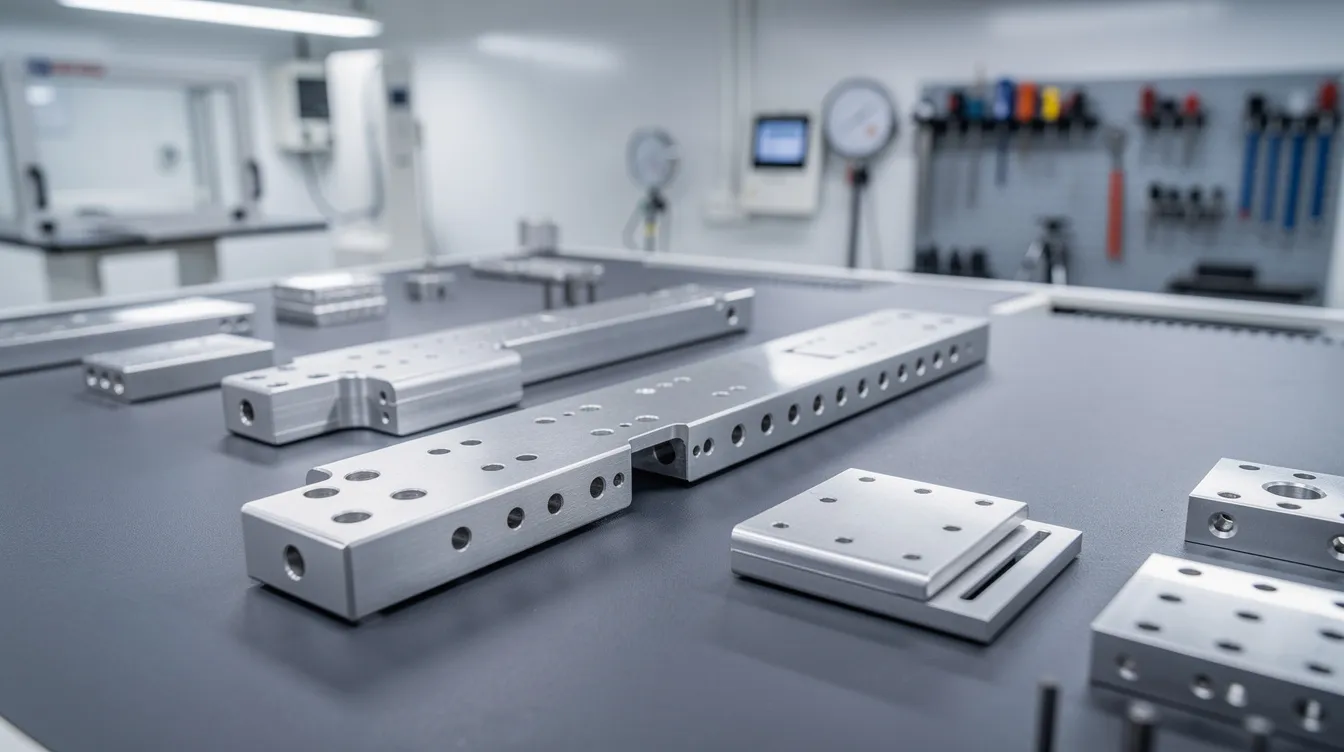
Core fabrication capabilities: Fiber laser cutting, CNC punching, precision cnc bending, TIG/MIG welding, robotic welding, hardware insertion, metal forming, complex assemblies, mechanical assembly, and post-processing including anodizing, powder coating, plating, and bead blasting.
-
Precision: Typical sheet metal tolerances down to ±0.05 mm on formed parts, with precision machining capabilities reaching ±0.002 mm. This level of high precision supports demanding applications in electronics, robotics, and medical devices.
-
Materials: Carbon steel, mild steel, stainless steel, aluminum (5052, 6061), copper alloys, and engineering plastics for integrated assemblies. Materials can range in thickness from 0.024″ to 0.250″, with most projects falling in the 0.8–3 mm sweet spot.
-
Engineering support: DFM feedback within 24–48 hours, recommendations on reducing bends and part count for cost efficiency, and material substitution suggestions. Engineering support includes rapid prototyping and scalable manufacturing processes tailored to each OEM’s product lifecycle.
-
Certifications and quality: ISO 9001:2015 and ISO 14001:2015 certified. Quality control includes incoming inspection, in-process checks, and final inspection using CMM and 2D/3D measurement tools.
-
Service model for OEMs: Rapid prototyping (1–2 weeks), pilot runs, and scalable batch production. Rapid prototyping accelerates product development cycles, enables quick iterations and design adjustments, and reduces time from design to production. It supports low-volume production for custom parts and is essential for engineering-driven programs. Prototyping support reduces transition risks by covering the product lifecycle. Communication quality is prioritized with English-fluent project managers, digital reporting, and export logistics experience for FOB/CIF shipments.
-
Get started: OEM engineers can upload drawings and a bill of materials to receive a detailed quote with manufacturability suggestions and material selection guidance.
North American Leaders: Large-Scale Sheet Metal Fabricators for OEMs
Many OEMs prioritize North American metal fabricators for proximity, shorter lead times, and easier site visits. The Fabricator’s FAB 40 list provides useful 2025 revenue benchmarks, and several companies stand out for their production capabilities and deep OEM relationships. Increased automation is a key growth driver in the industry, and reshoring is driving further growth in North American sheet metal fabrication.
-
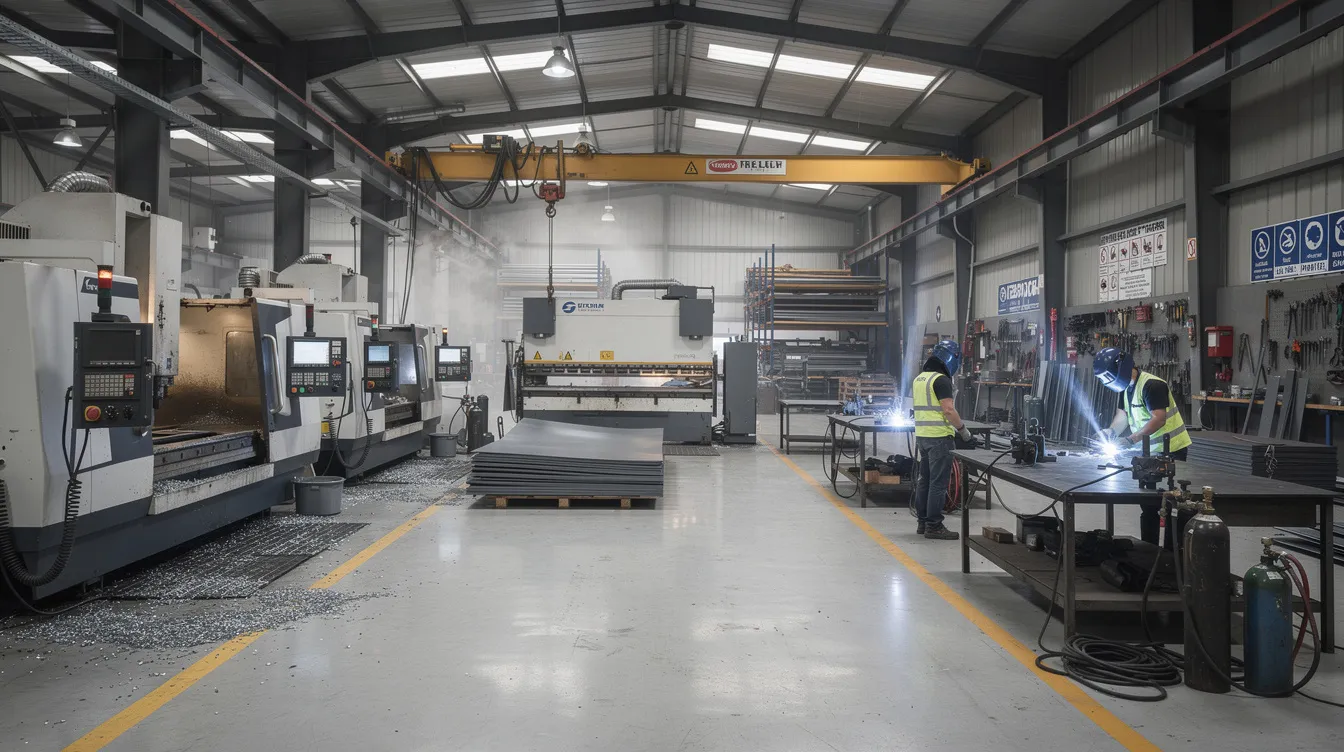
Mayville Engineering Company (MEC): MEC has been ranked #1 on The FAB 40 list for 15 years. With 2025 revenue of $546.5 million, the company handles vertically integrated programs from concept through prototyping to full production. MEC is known for large OEM programs in construction equipment, heavy equipment, agricultural equipment, and military/defense applications. Their services span precision cutting, cnc bending, metal stamping, welding, and mechanical assembly.
-
Cadrex Manufacturing Solutions: With 2025 revenue around $540 million, Cadrex operates 22 facilities across nine states and Mexico, making it an ideal partner for large multi-site OEM supply programs. Their broad footprint supports control panels, industrial equipment, and complex assemblies at scale.
-
O’Neal Manufacturing Services: With over 100 years of industry experience, o’neal manufacturing services is a trusted supplier focused on industrial and heavy equipment OEMs. Their longevity reflects deep expertise in structural steel, metal forming, and high-volume fabrication process management.
-
BTD Manufacturing: At $281 million in 2025 revenue, btd manufacturing specializes in high-volume production environments. BTD Manufacturing handles forming demands up to 600 tons and is known for standardized OEM components using laser cutting and precision sheet metal processes, serving sectors including construction equipment, food processing equipment, and renewable energy.
-
Other notable firms: Ironform Corporation, founded in 2013 and grown rapidly, specializes in heavy stamping combined with sheet metal fabrication. PEKO Precision Products holds multiple industry certifications including AS9100D, operates over 100 CNC machines and 20 welding stations, and focuses on precision engineering for complex geometries.
These firms are ideal for Tier-1 style volumes and long-running programs but may be less focused on small, high mix production overseas OEM projects where a more agile partner adds value.
European & Other Regional Specialists: High Precision and Niche Expertise
Europe is often chosen by OEMs that require strict engineering standards, specialized expertise, and high precision in sectors like aerospace, medical devices, and energy. European fabrication companies tend to invest heavily in process control, documentation, and specialized plate work.
-
KMF Group (UK): Large facility footprint with full sheet metal fabrication, powder coating, and assembly capabilities. Holds ISO 9001:2015 and AS9100 for aerospace-level work, making it a strong reference for OEMs in defense and aerospace.
-
Sidertaglio Lamiere (Italy): Specializes in thick-plate cutting from 6 to 650 mm using oxy-fuel and plasma cutting. Strong in carbon steel and structural steel processing for heavy industrial and energy applications.
-
HA-BE Gehäusebau (Germany): Focused on cost efficiency in cabinet and enclosure fabrication with ISO 9001:2015 certification. A solid option for OEMs needing industrial enclosures, control panels, and sheet metal products for the European market.
These companies serve as strong references for OEMs that need European-based production or specialized plate and structural work, though costs are typically higher than Asian options.
Turkey and other emerging regions are also worth watching. Companies like SİMER SAC are delivering high precision laser cutting and waterjet cutting at competitive pricing for regional OEMs, adding a nearshore option between full European and Asian supply chains.
Digital Platforms vs. Traditional Fabrication Companies
The rise of digital manufacturing platforms has given OEMs another way to source sheet metal parts, especially for prototyping and low-volume runs. Understanding when to use a platform versus a traditional fabricator is increasingly part of a smart sourcing strategy.
-
Platform examples: Xometry, Hubs, Rapid Axis, SendCutSend, and Protolabs offer instant quoting, broad supplier networks, and convenience. They are effective for rapid prototyping, one-off parts, and quick-turn orders where speed matters more than deep process integration.
-
Traditional fabricators: Companies like mayville engineering company, btd manufacturing, or Larsen Manufacturing own physical plants and offer deeper process integration, long-term OEM support, and consistent quality across multi-year programs. Top OEM partners provide prototyping and scalable production in addition to fabrication.
-
When a dedicated manufacturer is the better choice: For stable engineering support, predictable quality systems, and integrated CNC + sheet metal + die casting under one roof, a dedicated partner like Anebon offers advantages that platforms cannot replicate. Continuous improvement practices and long-term partnerships help ensure quality and collaboration over time.
The best approach for many OEMs is to use platforms for speed during early development and then transition to a dedicated sheet metal fabrication partner for production volumes where reliable delivery performance is critical for OEM production schedules.
China and Asia: Cost Efficiency with Full-Process Metal Fabrication
China remains a primary source for OEMs looking to source sheet metal parts with competitive pricing. Mature supply chains, advanced fiber laser cutting, and a deep pool of skilled operators make the region compelling for everything from electronics enclosures to complex assemblies. Sheet metal fabrication commonly uses aluminum, steel, and stainless steel, while titanium is used for its strength and corrosion resistance, and copper is also a material option for conductivity applications.
-
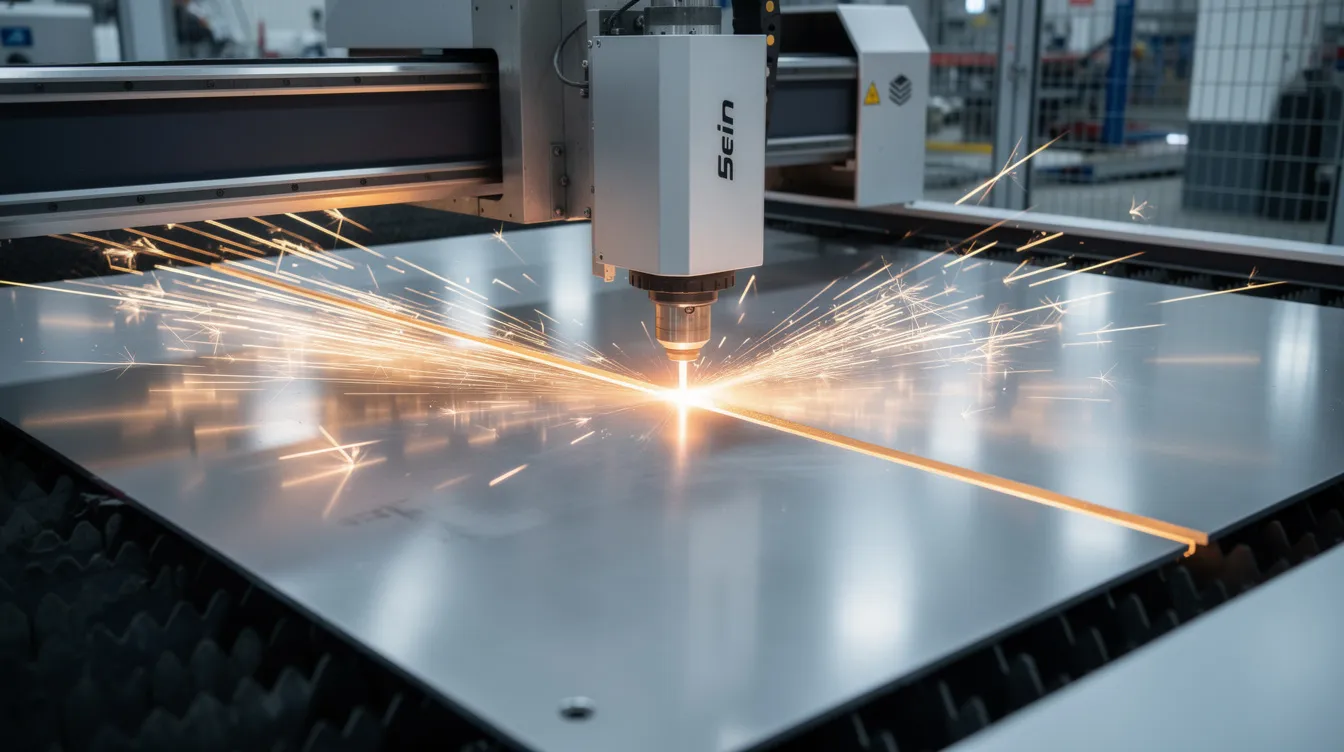
Regional capability: Chinese manufacturers like TZR use 20,000W laser cutting machines for precision cutting, demonstrating the region’s investment in high-end equipment. Plasma cutting, waterjet cutting, metal stamping, and multi-material work are widely available.
-
Anebon in context: Within this landscape, Anebon stands out as a precision-focused, ISO-certified supplier in Dongguan that combines Asian cost advantages with tight tolerances and strong communication for overseas OEMs. Unlike many regional fabrication companies, Anebon offers integrated cnc machining and die casting alongside its sheet metal services.
-
Typical OEM use cases: Electronics enclosures, robotics brackets, medical frames, and automotive prototypes all benefit from Asian cost structures while requiring high precision and consistent quality. Stainless steel is often used for medical device applications where corrosion resistance and cleanability are non-negotiable.
-
Practical advice: OEMs should compare quotes and sample parts from both local suppliers and Asian partners to balance cost, lead time, and quality. Working with multiple suppliers across regions is increasingly common for risk management.
Best Sheet Metal Fabrication Companies by OEM Application Type
The best sheet metal fabrication partner depends on whether your OEM program is focused on prototyping, mass production, or complex assemblies. Experience with complex projects is necessary for managing high-precision designs, and different companies excel in different niches.
-
Prototyping and fast iteration: Digital platforms like Protolabs and Xometry are effective for quick-turn sheet metal parts. For functional prototypes requiring both sheet metal and CNC machining, Anebon’s rapid prototyping capabilities deliver in 1–2 weeks with design iteration support. Rapid prototyping is essential for engineering-driven programs where speed determines competitive advantage.
-
Mass production and long-term programs: Large U.S. fabricators like MEC, btd manufacturing, and o’neal manufacturing services handle standardized high-volume programs with proven delivery systems. For cost-efficient volume production, Asian suppliers including Anebon provide strong alternatives. Lead times should align with your production volume requirements.
-
Complex, multi-process builds: Integrated manufacturers like Anebon that combine sheet metal fabrication, cnc machining, die casting, plastic injection molding, and surface finishing are the strongest fit for OEMs building complex assemblies that require a broad range of processes and tight coordination across manufacturing steps.
Technical Capabilities to Verify: Laser Cutting, Tolerance, and Materials
Before signing with any sheet metal fabrication partner, OEM engineers should verify concrete technical capabilities rather than relying on marketing claims alone. Key factors in selecting a sheet metal fabrication partner include quality assurance and technology, and these are best confirmed through sample parts and documented inspection data.
-
Laser cutting: Confirm whether the fabricator uses fiber or CO₂ lasers, and check maximum sheet sizes and thickness ranges for carbon steel, stainless steel, and aluminum. High-speed fiber laser cutting is now standard among top-tier metal fabricators. Some shops also offer plasma cutting for thicker plate work and waterjet cutting for heat-sensitive materials.
-
Precision and tolerance: Standard sheet metal tolerances fall at ±0.1 mm for general work, with precision sheet metal fabrication reaching ±0.02–0.05 mm. For combined CNC operations, Anebon achieves tolerances down to ±0.002 mm. Angular tolerances of ±1° are common; finer classes can reach ±0.5° for aerospace and medical work. Always verify production repeatability, not just prototype claims.
-
Supported materials: Carbon steel, stainless steel, aluminum, copper, brass, and special alloys should be confirmed against your project requirements. Matching material grades to industry standards is critical-automotive vs. medical applications demand different alloy grades and traceability documentation.
Cost Efficiency Strategies for OEM Sheet Metal Projects
The cheapest supplier is rarely the lowest total cost. Design decisions and sourcing strategy drive cost efficiency far more than negotiating per-piece pricing.
-
DFM-driven savings: Reducing part count, simplifying bends, standardizing hole sizes, and selecting thinner carbon steel or alternative alloys where feasible can remove 10–20% of manufacturing cost. For example, redesigning a multi-part enclosure into a single formed carbon steel shell eliminates fasteners, reduces assembly labor, and cuts inspection time.
-
Batching strategies: Grouping parts, ordering optimal lot sizes, and aligning releases with fabricator production windows lowers per-unit cost significantly. Planning quarterly releases rather than monthly spot orders gives the fabricator scheduling flexibility and reduces setup charges.
-
Early engineering support: Partners like Anebon provide DFM feedback before tooling or fixtures are committed, catching cost drivers when changes are still free. This early collaboration on material selection, bend sequences, and tolerancing prevents expensive rework downstream.
-
Request a trial order to assess quality and lead time accuracy before committing to production volumes. This is one of the most effective ways to validate both the fabrication process and the supplier’s communication quality.
Offshore vs. Local Suppliers: Balancing Risk, Lead Time, and Cost
Choosing between local suppliers and offshore partners is not a binary decision. Most sophisticated OEMs blend both into their sourcing strategy, allocating parts based on complexity, volume, and urgency.
-
When local makes sense: Urgent lead times, highly regulated defense contracts, need for frequent engineering visits, or programs where communication quality and same-day responsiveness are non-negotiable. North American and European fabrication companies excel here.
-
When offshore adds value: Stable repeat orders, cost-sensitive assemblies, and projects where shipping time (typically 4–6 weeks for sea freight) can be planned into the schedule. Anebon and other Asian metal fabrication companies provide compelling advantages in precision manufacturing at lower unit costs with experienced export logistics.
-
Risk mitigation: Dual-sourcing (one local, one offshore) is a proven approach. Start with trial orders, establish clear quality standards, and use standardized file formats and detailed 2D/3D drawings for accurate quoting. Evaluate communication clarity and responsiveness during the selection process-it is a reliable predictor of long-term partnership quality.
Anebon understands that OEMs often blend local and overseas sources, and its service model is built to complement rather than replace existing supply chains.
How to Shortlist and Qualify a Sheet Metal Fabrication Partner
OEMs should move from a long list to a shortlist of 3–5 fabrication companies using objective criteria. A data-driven approach reduces sourcing risk far more than selecting based on referrals alone. Certifications like ISO 9001 ensure quality management systems are in place, but they are just the starting point.
-
Step-by-step process: Define technical requirements and annual volume estimates. Pre-screen by production capabilities, industry certifications, and geographic fit. Request quotes and DFM feedback. Review sample parts for dimensional accuracy and finish quality. Assess communication responsiveness and project management structure.
-
Questions to ask: What is your maximum sheet size? What laser cutting equipment do you operate? What welding certifications do your operators hold? What are typical lead times for prototype vs. production? Do you have experience with my industry (automotive, medical, aerospace, electronics)?
-
Anebon’s typical onboarding flow: NDA execution, drawing review with DFM comments, prototype batch (1–2 weeks), production trial, then scaled orders with ongoing quality reporting.
A structured qualification process gives OEMs confidence that the selected partner can handle not only today’s program but future growth, including complex geometries and higher volumes.
FAQs About Choosing Top Sheet Metal Fabrication Companies for OEMs
Here are answers to common questions OEMs ask when evaluating sheet metal fabrication partners.
What tolerance should I expect from a good sheet metal fabrication company? Standard work typically falls within ±0.1 mm under ISO 2768-m. For precision sheet metal, expect ±0.02–0.05 mm. Anebon combines precision sheet metal fabrication with ultra-tight cnc machining (±0.002 mm) for parts requiring both formed and machined features.
How much does sheet metal fabrication cost for OEM projects? Cost depends on material (carbon steel vs. stainless steel vs. aluminum), complexity (number of bends, welds, and operations), volume, and finishing requirements. Always request drawing-based quotes rather than relying on rough per-kilogram estimates. Total cost of ownership should include shipping, inspection, and potential rework.
Is sheet metal fabrication suitable for functional prototypes? Yes. Sheet metal is excellent for enclosures, brackets, chassis, and structural components that need real-world mechanical testing. Anebon’s rapid prototyping support delivers functional sheet metal and CNC prototypes in 1–2 weeks, allowing quick validation before committing to production tooling.
How fast can an overseas supplier deliver to North America or Europe? Manufacturing typically takes 1–3 weeks depending on complexity. Sea freight adds 3–5 weeks to North America or Europe. With proper planning, total door-to-door lead time is 5–8 weeks. Air freight can cut transit to under a week for urgent orders at higher cost.
What information should I include when requesting a quote? Provide 3D CAD files (STEP or IGES), 2D drawings with tolerances and GD&T callouts, material specifications, surface finish requirements, quantity and release schedule, and any assembly or custom fabrication requirements. Sharing complete data upfront ensures accurate pricing and avoids revision cycles.
Conclusion: Building Long-Term OEM Partnerships with the Right Fabricator
The best sheet metal fabrication companies for OEMs are not necessarily the largest or the cheapest. They are the ones that align with your technical needs, cost targets, and growth plans, and that treat your program as a long-term partnership rather than a transactional order.
Evaluate partners on the key factors that matter: precision cutting and tolerance control, laser cutting capability, relevant industry certifications, strong engineering support, and cost efficiency across the full product lifecycle. Top sheet metal fabrication companies cater to OEMs with specialized services, and the right partner will demonstrate that specialization through every interaction, from DFM feedback to final inspection.
Anebon Metal Products Limited is positioned as a high-precision, ISO-certified, cost-efficient partner for overseas OEMs that need sheet metal fabrication, cnc machining, and die casting under one roof. If you are ready to evaluate a precision manufacturing partner, prepare your drawings and BOM and contact Anebon for a detailed DFM review and quotation.