Top Sheet Metal Contractor Services for Reliable Fabrication Solutions
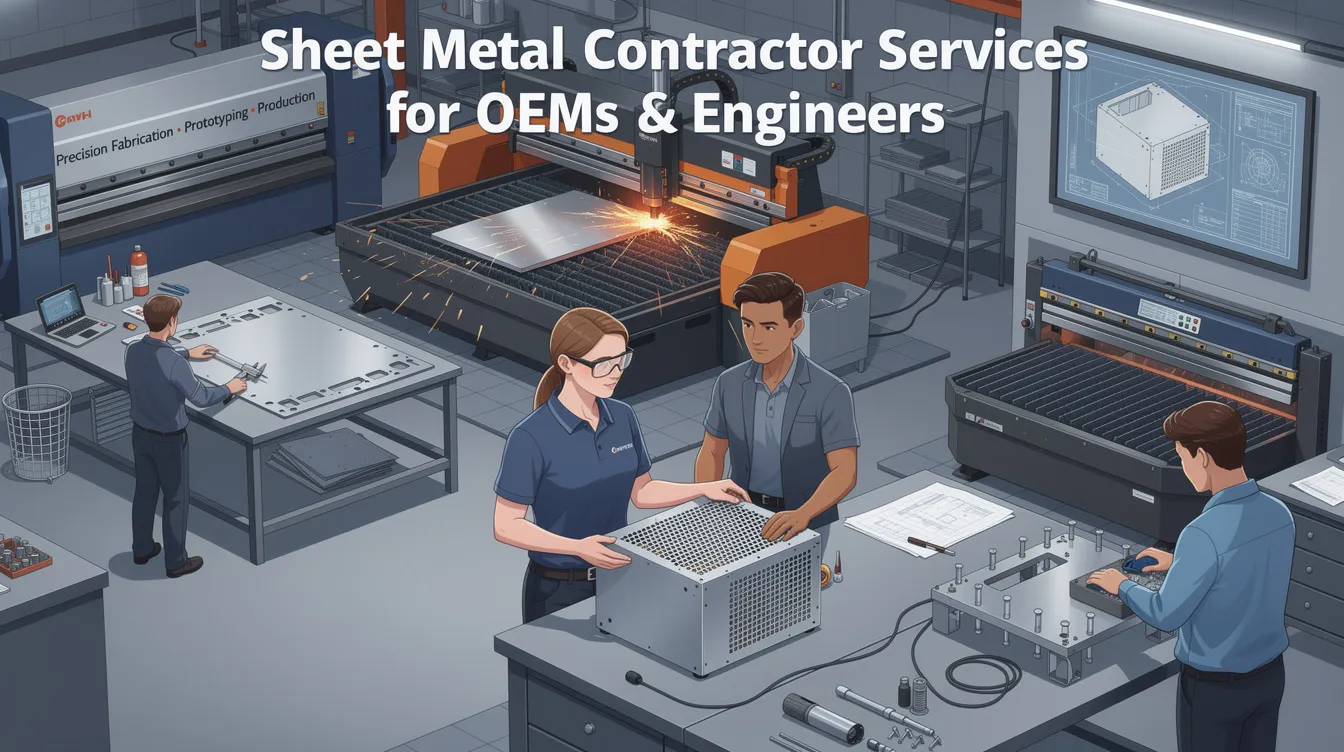
Sheet Metal Contractor Services for OEMs & Engineers
Selecting the right sheet metal contractor determines whether your custom parts arrive on spec, on time, and within budget. This guide covers the full sheet metal fabrication process, materials, tolerances, and practical advice for OEM buyers evaluating contractors for precision projects.
Overview: What a Sheet Metal Contractor Does for OEM Projects
A sheet metal contractor serving OEMs is a manufacturing partner who transforms engineering designs into production-ready metal parts and assemblies. Unlike on-site construction contractors focused on HVAC ductwork-which involves design, fabrication, and installation of air duct systems-or architectural sheet metal work that includes producing and installing exterior metal features like siding and flashing, a precision OEM fabricator delivers tight-tolerance components for end-products.
Key roles of an OEM-focused sheet metal contractor include:
-
Design-for-manufacturing (DFM) review of CAD models to validate manufacturability before production
-
Prototyping and engineering validation builds for fit and function testing
-
Precision production scaling from prototypes to thousands of repeat parts
-
Full-process execution from flat material through cutting, forming, joining, finishing, and inspection
-
Export logistics including documentation, packaging, and international shipping
Sheet metal contractors generally offer services in fabrication, HVAC, and architectural work, but Anebon Metal Products Limited specializes in precision OEM fabrication for overseas clients in aerospace, medical devices, automotive, electronics, and robotics. Readers will learn about materials, the fabrication process, and how to select a reliable commercial sheet metal contractor.
About Anebon Metal Products Limited
Anebon is a dedicated precision manufacturer built to serve OEM engineers and R&D teams worldwide.
-
Founded: 2010 in Dongguan, Guangdong, China
-
Core services: Sheet metal fabrication, CNC machining, and die casting under one roof
-
Certifications: ISO 9001:2015 certification ensures quality management standards; ISO 14001:2015 certification focuses on environmental management standards
-
Customers: Overseas OEMs, design engineers, and R&D teams needing tight-tolerance custom sheet metal parts
-
Complementary capabilities: CNC milling, CNC turning, 5-axis machining, die casting, powder coating, anodizing, plating, and assembly support
-
Get started: Request a quote, upload your CAD files, or speak with our team early for DFM feedback
Custom Sheet Metal Fabrication Services We Provide
Anebon delivers a full suite of custom sheet metal fabrication services, from single prototypes to large commercial projects requiring ongoing supply programs.
-
Part types: Enclosures, brackets, chassis, frames, heatsinks, panels, and precision covers for electronics, machinery, and industrial equipment
-
Prototyping: Rapid prototyping for engineering validation (EV) and design verification (DV) builds, with speed to meet tight schedules
-
Production scale: Custom sheet metal fabrication can produce up to 5,000 parts per run, with batch production, repeat orders, and long-term supply programs for house brand OEMs
-
Fabrication services: Laser cutting, CNC punching, bending, stamping, hardware insertion, rolling, and basic sub-assembly
-
Joining: Skilled welding and assembly are essential services-we provide spot welding, TIG/MIG welding, riveting, clinching, and brazing
-
Integration: Mixed-technology assemblies combining sheet metal with CNC machined or die cast components from a single supplier
Sheet metal fabrication includes cutting, forming, and joining processes. Forming techniques include stamping, rolling, bending, and stretching, giving engineers a wide range of options for complex 3D geometry.
The Sheet Metal Fabrication Process: From RFQ to Finished Part
The sheet metal fabrication process follows a structured sequence that OEM buyers should understand to optimize cost, quality, and lead times.
-
RFQ and DFM: Client sends 2D drawings and 3D CAD files (STEP, IGES, SolidWorks). Anebon’s engineering team reviews manufacturability, tolerance stack-ups, and suggests design optimizations before production begins.
-
Material selection: Thickness choices typically range from 0.5 mm to 6 mm based on structural requirements, weight targets, and cost. Grade selection depends on the application environment.
-
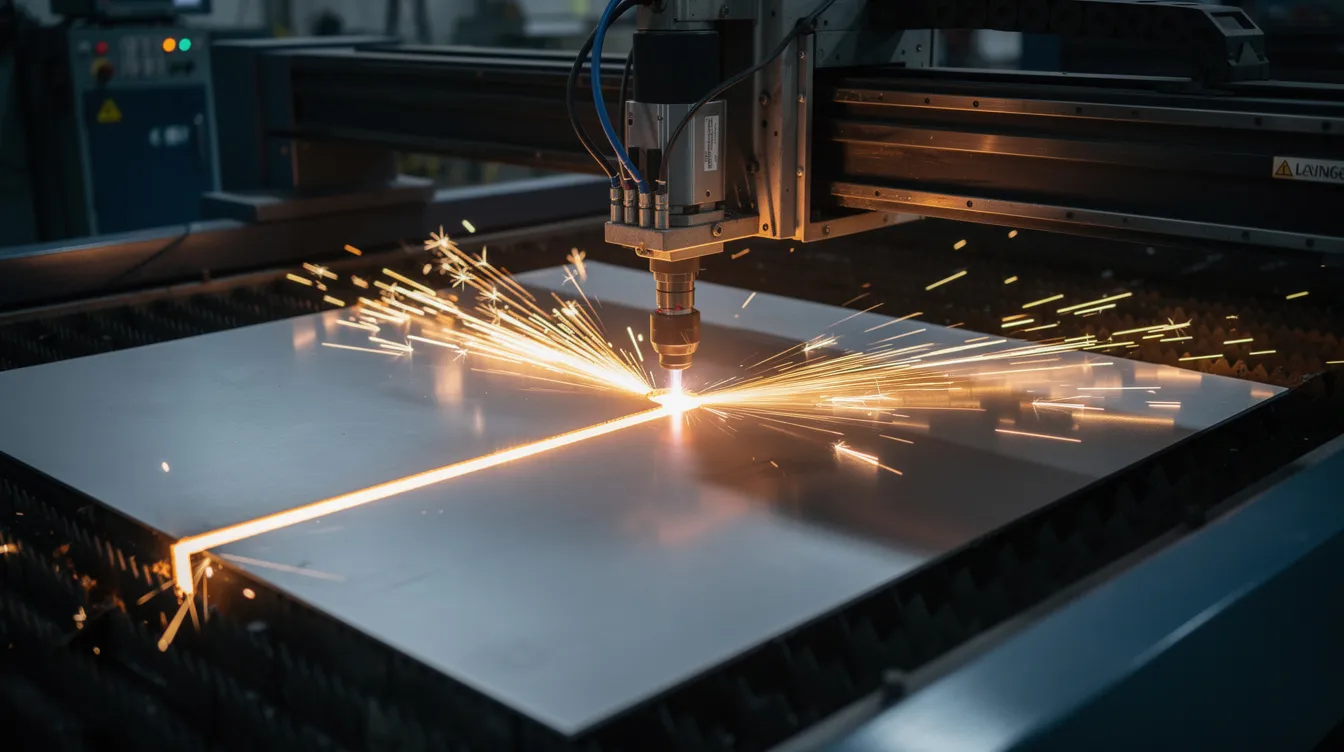
Cutting: Cutting methods use shears, lasers, or CNC tables for precision. Fiber laser cutting achieves tolerances of ±0.05–0.10 mm; turret punching handles repetitive hole and slot layouts efficiently.
-
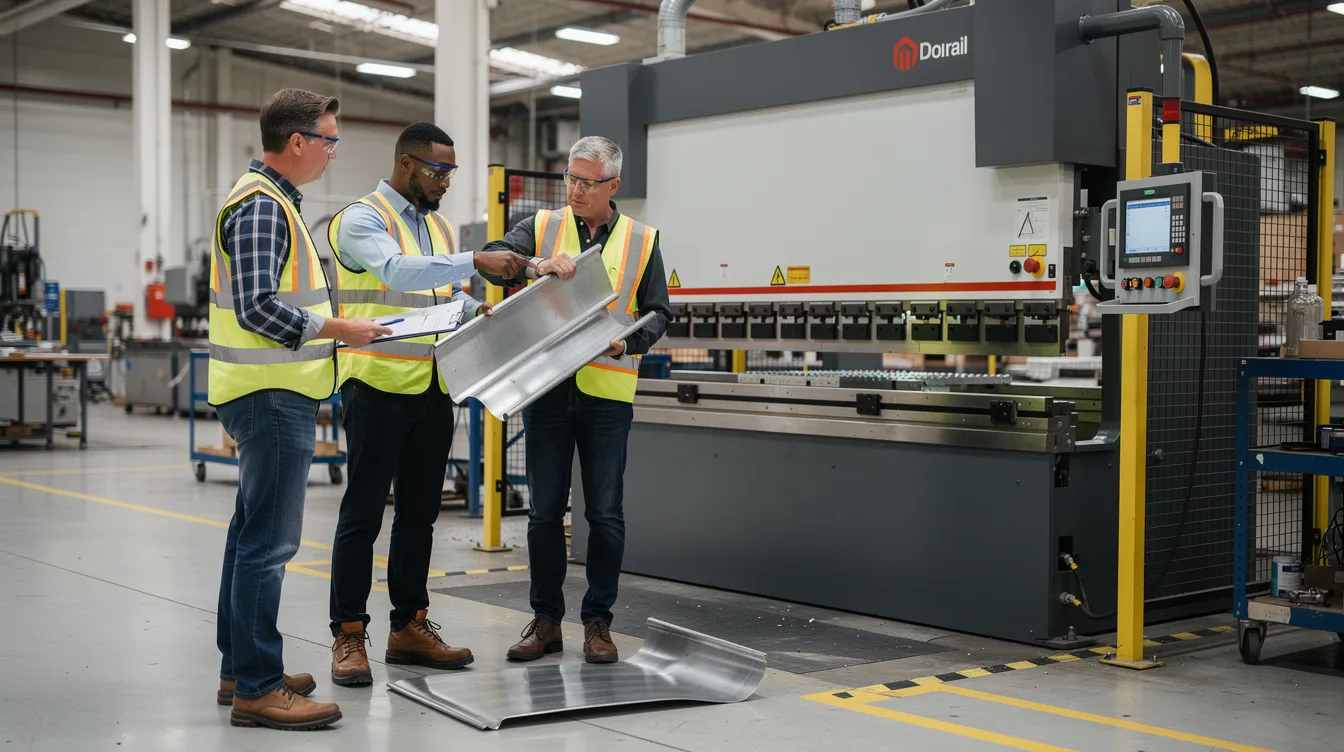
Forming: CNC press brake bending, rolling, and coining create the required 3D geometry. Bend allowance calculations account for K-factors and springback, especially critical with harder materials.
-
Joining: Joining techniques include welding, brazing, and riveting. Hardware insertion adds PEM nuts, standoffs, and studs for downstream assembly.
-
Finishing: Deburring, grinding, powder coating, anodizing, plating, and silk-screening or laser marking for logos and part identification.
-
Inspection and logistics: Dimensional reports using CMMs and gauges, functional checks, custom packaging, and export shipping to Europe, North America, and other regions.
Advanced equipment ensures speed and precision in fabrication across every stage. Ensure the contractor has necessary technology such as CNC machinery for projects requiring repeatable accuracy.
Materials and Thicknesses for Custom Sheet Metal
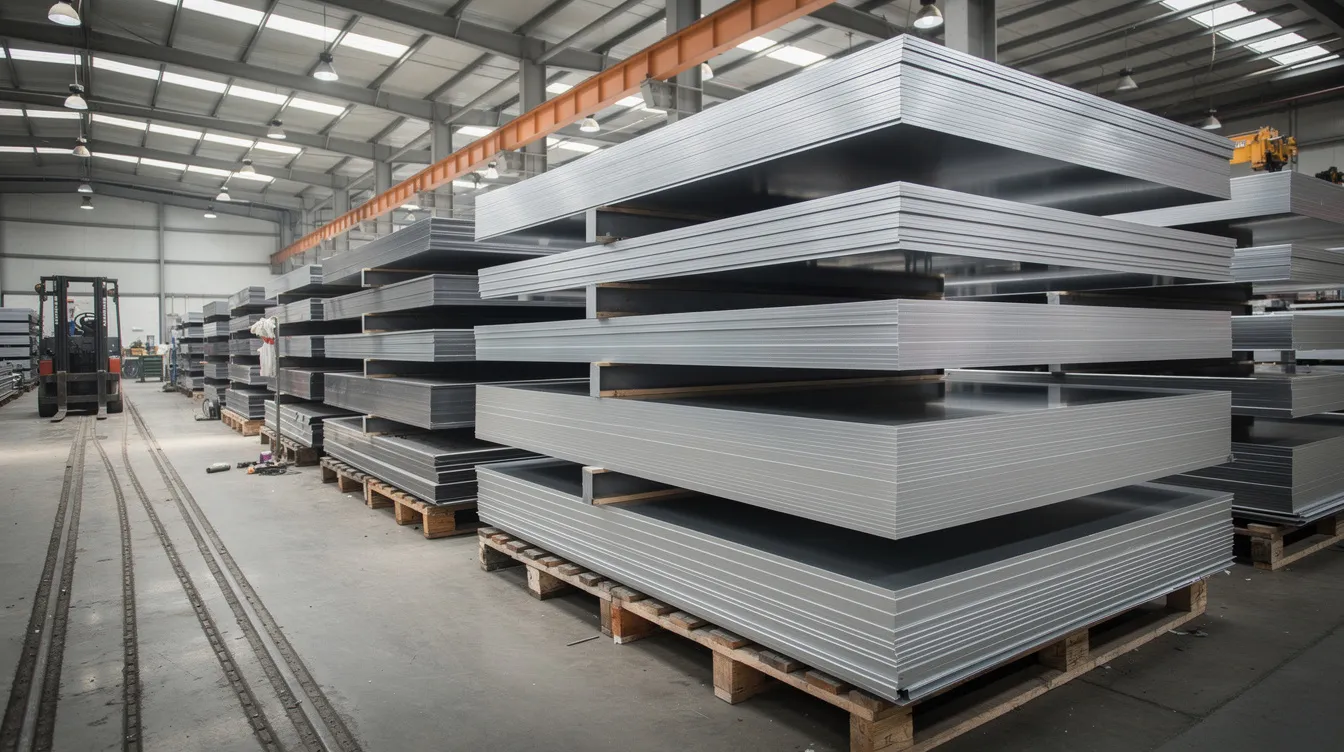
Material choice directly affects cost, manufacturability, and performance. Sheet metal fabrication uses materials like steel, aluminum, and copper-and the right selection depends on your application.
-
Cold rolled steel (CRS): Common materials include cold rolled steel, hot rolled steel, and galvanized steel. Low cost, good strength, requires coating for corrosion resistance. Typical thickness: 0.5–6 mm.
-
Stainless steel (304, 316, 316L): Excellent corrosion resistance for medical, food, and marine use. Stainless steel is frequently used for custom kitchen solutions and equipment requiring hygiene compliance. 0.5–3 mm for enclosures, up to 6 mm structural.
-
Aluminum (5052-H32, 6061-T6): Aluminum is a popular choice for lightweight applications. 5052 offers better formability; 6061 provides higher strength. Ideal for aerospace and EV housings.
-
Copper and brass: Copper is utilized for its excellent conductivity in electrical applications and RF shielding. Less common, more expensive, typically thinner gauges.
Confirm the contractor works with specific metals like aluminum, stainless steel, and copper before submitting your RFQ. Anebon can recommend cost-optimized alternatives-such as switching from stainless to coated mild steel-during the design phase. All materials are sourced from vetted suppliers and accompanied by material certificates where required.
Industries and Applications We Serve
Anebon’s sheet metal contractor services support multiple high-precision industries with a variety of part types and compliance requirements.
-
Aerospace and UAV: Brackets, avionics enclosures, mounting plates, and structural housings requiring sub-0.1 mm tolerances and weight optimization
-
Medical devices: Stainless steel covers, frames, and internal structures for diagnostic equipment, lab analyzers, and hospital electronics
-
Automotive and EV: Battery pack housings, inverter and charger enclosures, dashboard brackets, and thermal management components built to withstand high pressure and vibration
-
Electronics and telecom: Rack mount chassis, server cabinets, RF enclosures, and shielding components with precise cutouts and ventilation patterns
-
Robotics and industrial machinery: Sensor brackets, gearmotor mounting plates, machine guarding, and control box enclosures
Anebon supports both one-off prototypes for R&D and repeat production for fully released SKUs. Sheet metal contractors also perform ongoing maintenance services on fabricated parts when required.
Quality Assurance and Tolerances in Sheet Metal Fabrication
OEM clients expect and depend on consistent quality, traceability, and documented evidence across every batch.
-
Standards: Anebon operates under ISO 9001:2015 with documented procedures for incoming inspection, in-process control, and final inspection. Look for industry certifications like ASME and AWS when evaluating contractors for welding-critical work.
-
Tolerances: General bending tolerances of ±0.1 mm and ±0.5° are standard under ISO 2768-m. For features requiring higher accuracy, Anebon can integrate CNC machining to achieve ±0.002 mm.
-
Inspection equipment: CMMs, height gauges, calipers, and custom gauges verify critical dimensions and GD&T callouts on drawings.
-
Documentation: First article inspection (FAI), PPAP-type documentation when requested, and traceable inspection reports with lot-level detail. A comprehensive contract should include details on permitting and site cleanup responsibilities where applicable.
-
Customization: Quality plans can be tailored per project-especially for aerospace, medical, or automotive compliance. Review a contractor’s project portfolio to assess their experience and specialization in your specific industry.
How to Work with a Commercial Sheet Metal Contractor
Working effectively with commercial sheet metal contractors starts with clear communication and the right documentation.
-
RFQ contents: Include 2D drawings with dimensions and tolerances, 3D models, material specs, surface finish requirements, and target quantities. Share your budget expectations early.
-
Volume planning: Share intended annual volumes and ramp plans so Anebon can propose appropriate tooling and fabrication strategies for the job.
-
DFM collaboration: Work closely with Anebon’s engineering team early to optimize bend radii, hole-to-edge distances, and cost drivers before design freeze. Verification of a contractor’s specialization is crucial for project success.
-
Inspection and packaging: Specify whether you need 100% inspection on critical dimensions or AQL sampling. Detail any special packaging, labeling, or residential shipping requirements.
-
Vetting: References from past clients provide insight into a contractor’s reliability and quality. Verify the contractor holds state-specific licensing and carries liability and workers’ compensation insurance where applicable.
-
Timelines: Anebon provides clear lead times, pricing breakdowns, and can support fast lead times for prototypes when schedules demand it.
For context, established fabricators like Hennemuth Metal Fabricators have over 70 years of industry experience, Raleigh Sheet Metal has provided high quality products since 1981, and ADJ Sheet Metal operates a fully automated fabrication shop within a 45,000-square-foot manufacturing facility. These benchmarks help you understand what to expect from experienced contractors across the trade.
Why OEMs Choose Anebon as Their Sheet Metal Contractor
Anebon’s combined experience in sheet metal, CNC machining, and die casting-plus a commitment to international quality standards-gives OEM clients a single-source solution with proven integrity and a strong reputation.
-
Multi-technology integration under one roof reduces vendor count, simplifies assemblies, and cuts logistics complexity
-
Tight tolerance capability with precision down to ±0.002 mm when machining is integrated, ensuring accuracy across complex assemblies
-
Global expertise serving overseas clients since 2010, with English-speaking engineering support and deep export logistics knowledge
-
Competitive cost and speed based in Dongguan, China, delivering cost-effective production without sacrificing reliability or quality
-
Certified operations with ISO 9001:2015 and ISO 14001:2015, meeting the size and compliance demands of regulated industries
Ready to learn how Anebon can meet your next project requirements? Contact our engineering team to schedule a review, upload your CAD files, or request a bid. Early DFM collaboration saves time, reduces cost, and helps you meet production targets with confidence.