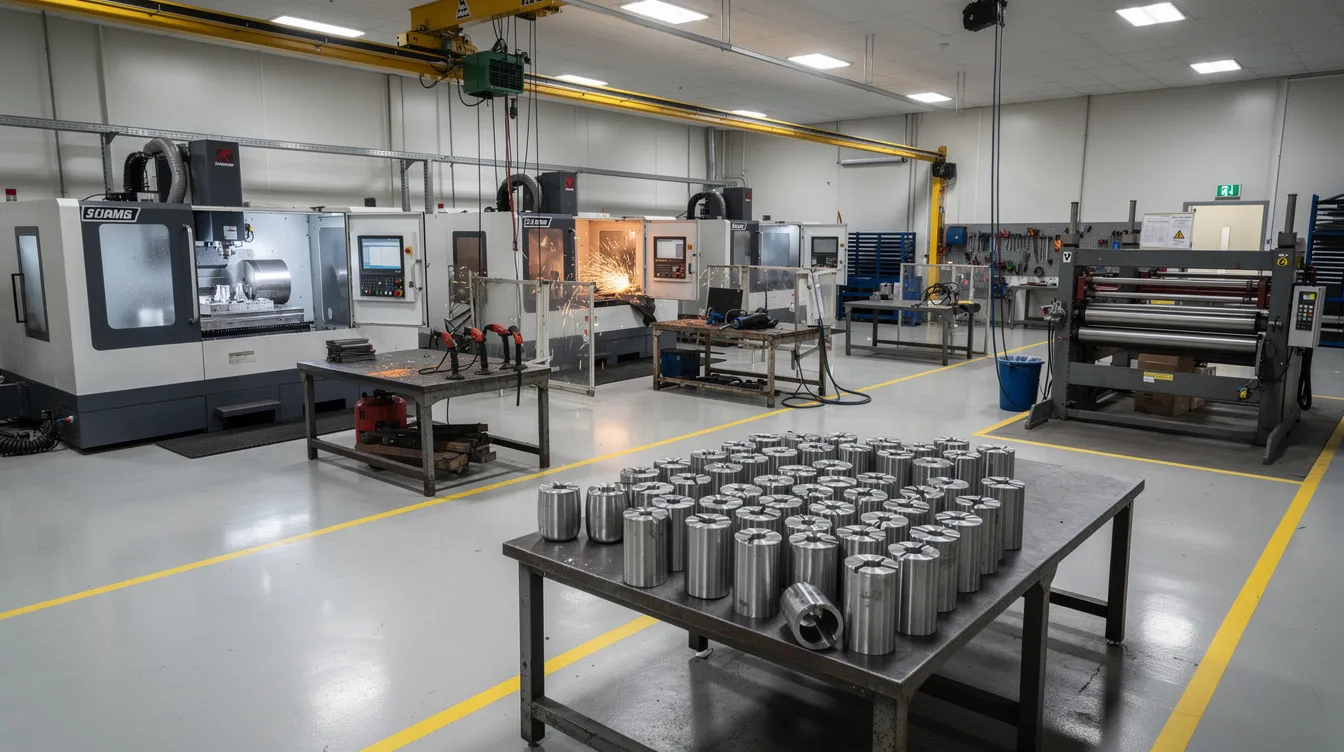
Top Roller for Sheet Metal: Essential Guide to Types and Applications
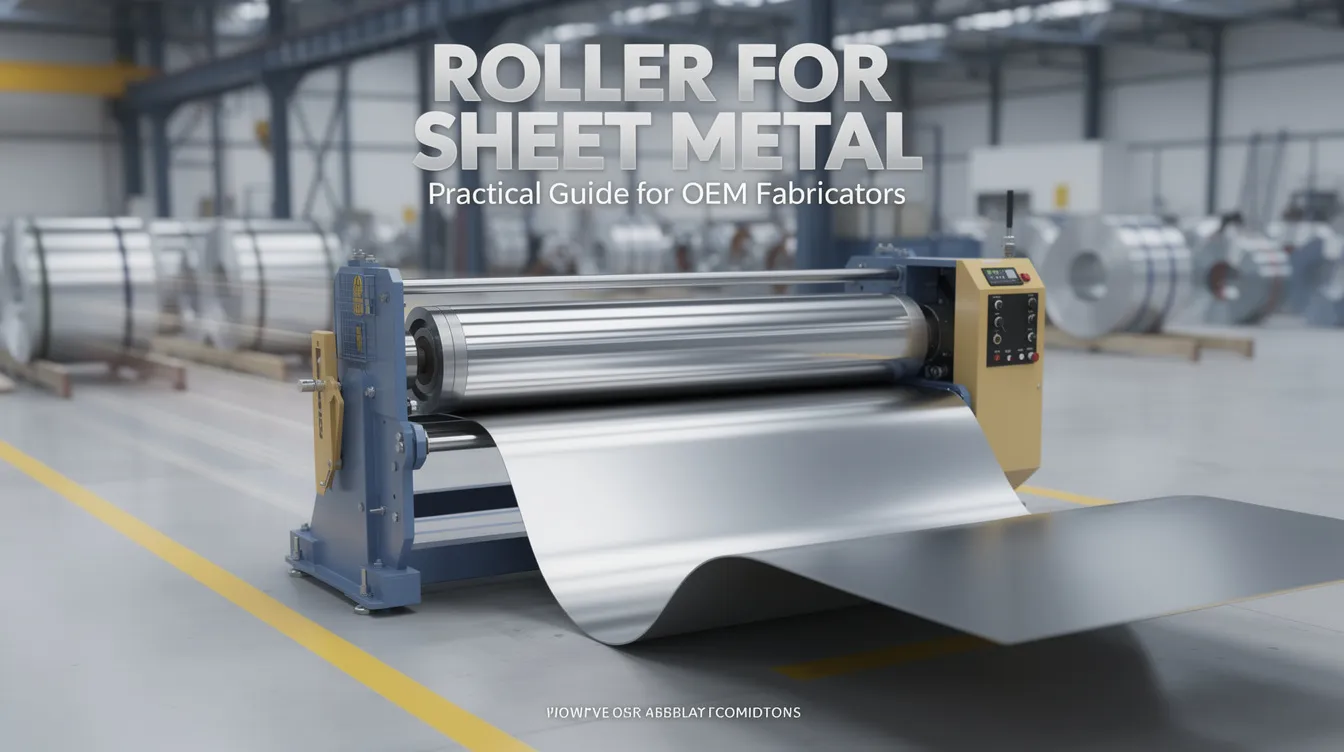
Roller for Sheet Metal: Practical Guide for OEM Fabricators
A sheet metal roller is a forming machine that uses multiple cylindrical rolls to convert flat stock into curves, cylinders, and cones through cold plastic deformation. Slip rollers form cylindrical shapes from flat sheet metal without stamping dies, making them indispensable across the fabrication industry. Whether you call it a slip roll, a slip roll machine, or a plate roller, the core function is the same: controlled bending of metal into a target shape.
Sheet metal rollers usually consist of three or four rollers arranged in a specific configuration. The terms overlap in practice-sheet metal slip rollers typically handle lighter gauges and narrower widths, while plate rollers are built for thicker materials and wider stock. Here is why every OEM fabricator should care:
-
Precision forming of curves and cylindrical shapes with controlled diameter and radii
-
Repeatability once roll gap and pass sequence are locked in
-
Higher throughput versus manual forming or welding flat panels together
-
Lower cost through reduced scrap, fewer weld seams, and no need for expensive stamping dies
-
Workflow integration with laser cutting, bending, welding, and CNC machining for complete part manufacture
At Anebon, we have integrated sheet metal rolling into our full-cycle fabrication workflows since 2010, combining it with fiber laser cutting, press braking, TIG/MIG welding, and multi-axis CNC machining.
How Sheet Metal Slip Rollers Work
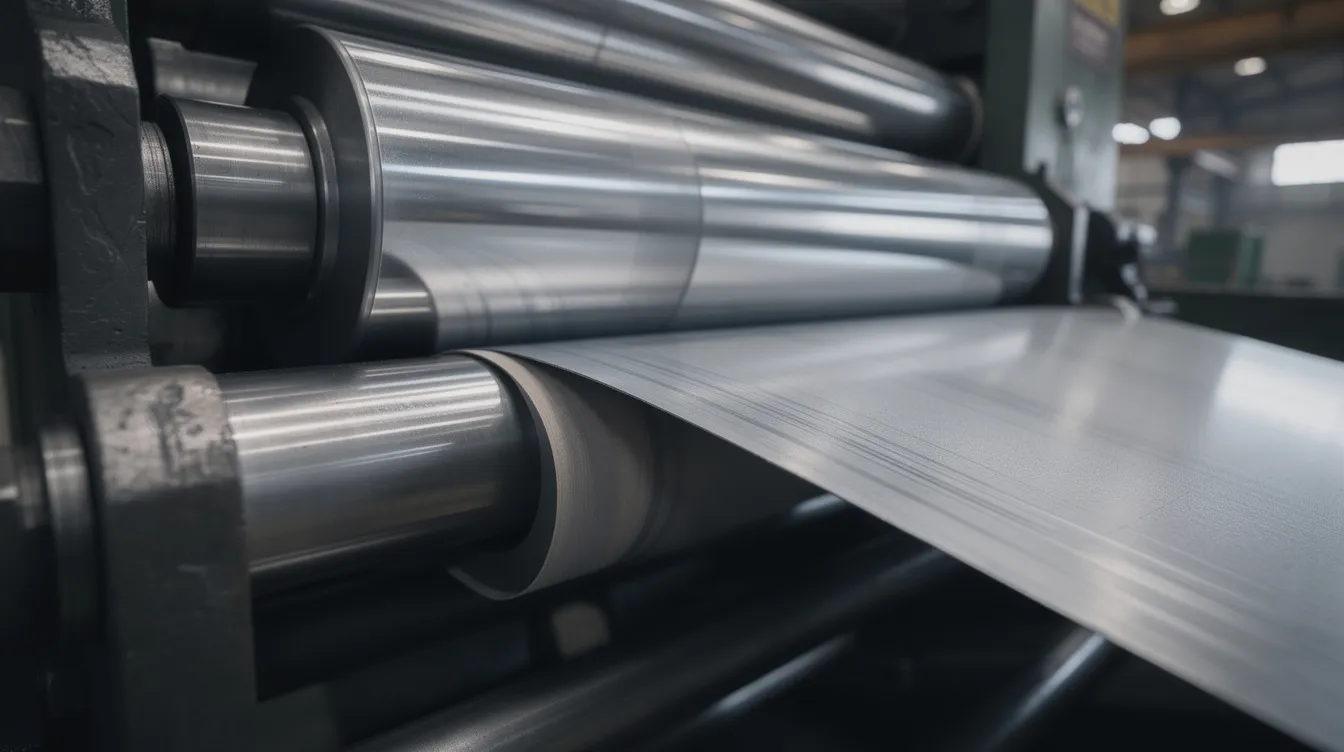
A three-roll initial-pinch design provides high-precision results by allowing effective handling of materials during bending. Two lower driven rolls grip the sheet while one adjustable upper roll applies downward pressure to create curvature.
-
Roll gap setting: The gap between pinch rolls is set slightly larger than the material thickness so the workpiece feeds without slipping.
-
Pre-bending: Leading and trailing edges are pre-bent to avoid flat spots on the finished cylinder.
-
Multiple passes: The process of using a sheet metal roller involves passing metal through rollers multiple times to achieve the desired shape, with the forming roll adjusted incrementally.
-
Radius control: The radius of the curve in sheet metal rolling can be adjusted by turning screws that alter the pressure applied to the metal.
-
Capacity ranges: OEM-grade machines handle carbon steel from roughly 0.5–6 mm, stainless steel from 0.8–4 mm, and widths up to 1,500–2,500 mm.
Thinner materials can be handled by manual bench-top slip rollers while thicker plates require hydraulic machines. Slip rollers can be manual or powered for high-volume production-hand-crank models suit prototyping, while motor-driven units deliver the consistency needed for repeat orders.
Key Types of Sheet Metal Rollers
Choosing the right roller depends on thickness, width, and required geometry. Anebon typically uses a mix of types to support different industries:
-
Slip rollers for light-to-medium gauge work with quick setup changes
-
Plate rollers for heavy gauge and large-diameter components
-
Precision CNC rollers for tight-tolerance shells and repeatable programs
-
Edge rollers that create sharp creases and soft curves in sheet metal for finishing operations
Sheet Metal Slip Rollers (Light–Medium Gauge)
Sheet metal slip rollers are three-roll machines designed for lighter gauges-approximately 0.5–3 mm steel and widths up to 1,250–1,500 mm.
-
Rolls are typically precision-ground and hardened alloy steel, sometimes polished for stainless or aluminum work.
-
Drive options include manual handwheels or small electric motors; adjustment mechanisms control the back roll for diameter changes.
-
Slip rollers can handle various metals like aluminum and stainless steel, plus copper and brass.
-
They are essential for creating pipes, tubes, and ducts, as well as exhaust sleeves, guards, electronic enclosures, and decorative trims.
-
Slip rollers are available in manual and powered versions, and they improve the uniformity of sheet metal thickness during fabrication.
Anebon uses slip rollers heavily in rapid prototyping and small-batch runs where frequent setup changes are needed. For guidance on how to bend sheet metal into a circle, our engineering team can walk you through the process.
Plate Rollers (Heavy Gauge and Large Diameters)
Plate rollers bend large sheets into cylindrical shapes and are built for thicker materials-typically 4–40 mm plate with widths up to 3,000 mm depending on model.
-
A four-roll double-pinch design allows tighter cylinders and more consistent results, enabling bending and rolling in one pass. Three-roll machines cost less but require manual repositioning to pre-bend each end.
-
Typical applications include pressure vessel shells, large industrial ducts, structural components, and heavy duty machinery housings.
-
One shop replaced two aging three-roll machines with a single CNC four-roll unit and saw daily output increase by 65% while rework dropped from 12% to under 2%.
Anebon cooperates with specialized plate rolling partners for oversized tank shells while handling medium-thickness cylindrical parts in-house. For cone rolling projects, we can produce tapered shells across a variety of sizes and dimensions.
Precision CNC and Special-Purpose Rollers
Precision rollers create accurate bends for high-precision components, and CNC-controlled machines take this further with digital readouts and programmable sequences capable of holding ±0.2 mm on diameter.
-
Used in aerospace fairings, medical housings, robotics covers, and electronics chassis where repeatability is critical.
-
Auxiliary options include ring rollers and profile rollers for custom extrusions used in automation and fixtures. Some rolling mills offer combination features, allowing users to switch between flat rolling and textured metal.
-
Precision is crucial for accurate sheet metal rolling-CNC control paired with advanced CNC machining allows Anebon to create complete, high-precision assemblies.
Selecting the Right Slip Roll Machine for Your Project
Improper roller selection leads to flat spots, cracking, and poor fit during assembly. Here is what to evaluate before you purchase or specify a machine:
-
Maximum thickness and width: Rollers should handle the maximum thickness and width of materials you plan to process. Rollers are often rated based on mild steel yield strength and may need higher capacity for stronger alloys like stainless steel or titanium.
-
Minimum diameter: The minimum bend radius for producing small-diameter cylinders requires machines capable of tighter radii-review this against your project requirements.
-
Width capacity: Choose a machine at least 10–20% wider than the widest part (e.g., a 1,600 mm machine for 1,400 mm ducts).
-
Roll surface: Look for rollers with precision-ground and hardened rollers. Roll hardness and surface finish matter when working with stainless or brushed aluminum to avoid marking or damage.
-
Durability and ease of use: Durability is essential for long-lasting sheet metal rollers, and ease of use enhances productivity in sheet metal rolling, especially across shift changes.
Anebon’s engineers routinely review 3D models and drawings (STEP, IGES, native CAD) and provide DFM suggestions on rolling feasibility before quoting. If you have questions about material behavior or bending methods, we can help.
Industrial Applications of Sheet Metal Rollers
Sheet metal rollers are commonly used in fabrication for items like HVAC ducting, exhaust pipes, and tanks. Here are the major industries we serve:
-
HVAC: Rolling galvanized and stainless sheet into round ducts, reducers, and spiro sections-typically 0.6–1.2 mm thick.
-
Automotive: Production of muffler shells, heat shields, decorative trims, and battery enclosure shells using both slip rollers and plate rollers.
-
Aerospace & medical: Thin-wall housings, instrument covers, and small cylindrical enclosures with tight tolerances and demanding material traceability.
-
Electronics & robotics: Rolled covers and guards for robots, automation cells, and control cabinets-often combining rolling with CNC machining of end flanges.
-
Industrial machinery: Large capacitor housings, heavy flanged cylinders, and components that ship to OEM assembly lines worldwide.
Integrating Rollers into a Sheet Metal Fabrication Workflow
Rollers rarely operate in isolation. They must be coordinated with cutting, bending, welding, and finishing steps. Here is a simple example-manufacturing a cylindrical stainless steel housing from 2 mm sheet:
-
Laser cut the flat blank from stock, nest parts for minimal waste
-
Roll on a slip roll machine using multiple passes, compensating for springback (stainless 304 typically springs back 2°–5°)
-
Remove the finished cylinder by releasing the upper roll
-
Weld the longitudinal seam via TIG
-
Machine flanges or interface surfaces on a CNC mill
-
Finish by grinding, polishing, or powder coating
-
Inspect with CMM for roundness and dimensional accuracy
Careful flat pattern design and springback allowance are essential to achieve the correct final diameter. Anebon uses CNC press brakes, fiber lasers, and 5-axis machining to complement rolling for complex assemblies across the full fabrication process.
Safety Guidelines for Operating Slip Rollers and Plate Rollers
Powered slip rolls and plate rollers present serious crush hazards. Every operator must follow documented procedures:
-
Wear safety glasses and tight-fitting gloves; avoid loose clothing, jewelry, and long hair near rollers.
-
Use pinch-point guards, emergency stop buttons, and two-hand controls on larger machines.
-
Only trained operators should adjust roll positions, set roll gap, or perform pre-bending operations.
-
Keep the work area clear; never place a hand near the roll gap while the machine is running.
-
Anebon maintains ISO 9001:2015 and ISO 14001:2015 certifications with documented safety and environmental controls for all rolling equipment, verified through regular audits.
Maintenance and Calibration of Sheet Metal Rollers
Regular maintenance keeps slip rollers and plate rollers accurate and extends machine life.
-
Keep the rollers clean to prevent damage-remove swarf and dust daily, and wipe roll surfaces to avoid imprint defects on stainless or aluminum parts.
-
Lubricate the rollers regularly to prevent rust, following manufacturer schedules for bearings and gears using recommended lubricants while preventing contamination of finished surfaces.
-
Inspect rollers for wear and replace damaged ones immediately; check roll straightness, bearing play, and alignment at defined intervals (e.g., quarterly for production lines).
-
Store rollers in a dry place to prevent rust, especially spare rolls and tooling not in active use.
-
Anebon logs all maintenance events and dimensional checks to support long-term repeat orders for OEM customers, feeding data into continuous improvement cycles.
How Anebon Supports OEM Projects Involving Rolled Sheet Metal
Anebon Metal Products Limited is a Dongguan-based precision fabrication and CNC machining provider serving the global market since 2010. Our capabilities relevant to rolled components include sheet metal slip rollers for thin-gauge parts, access to plate rollers for thicker components, CNC laser cutting, press braking, TIG/MIG welding, and multi-axis CNC machining.
We hold tight tolerances on rolled and machined features-down to ±0.002 mm on critical CNC-machined interfaces and controlled cylindricity on mating shells. Our customers span aerospace, medical, robotics, electronics, and automotive industries, all benefiting from ISO-certified production, full material traceability, and quality documentation. We offer options from rapid prototyping through full-scale production, with warranty on workmanship and a track record backed by positive reviews.
Whether you need information on machine selection for your own shop, a video walkthrough of our capabilities, or a competitive quote, our team is easy to reach by phone or email. Send your 2D/3D files and requirements for a DFM review and quotation-share your project details and we will place the right manufacturing solution in your cart.