Top Recommendations for CNC Vendors with Anodizing Options
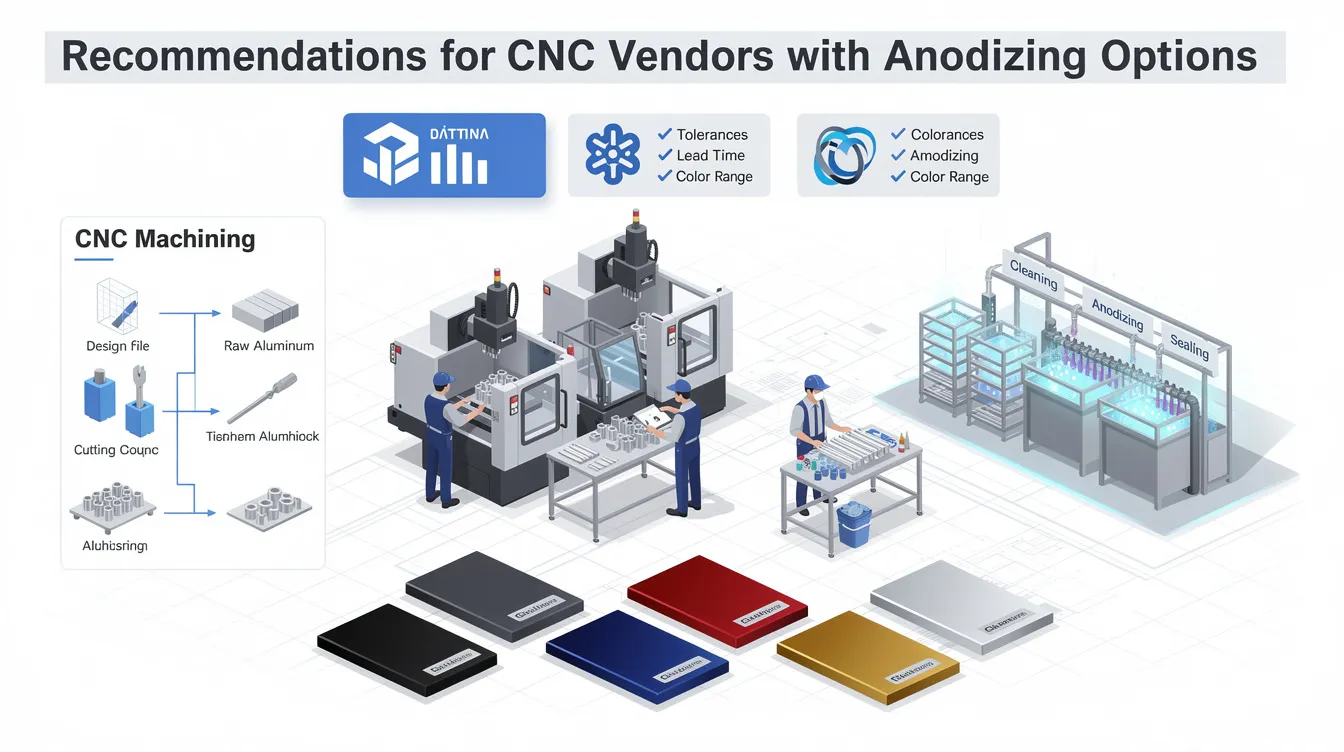
Recommendations for CNC Vendors with Anodizing Options
Choosing the right CNC vendor for anodized aluminum parts directly impacts corrosion resistance, wear performance, and aesthetics across industries like aerospace, medical devices, electronics, and robotics. This guide helps design engineers and R&D teams evaluate CNC machining companies that provide integrated anodizing services or manage them through controlled partners – focusing on Type II anodizing and Type III anodizing rather than generic shops. Anebon Metal Products Limited, an ISO 9001:2015 and ISO 14001:2015 certified CNC machining and sheet metal fabrication partner in Dongguan, China, has served overseas OEMs since 2010 with the kind of integrated process control this guide recommends.
Key Criteria for Selecting a CNC Vendor with Anodizing Capabilities
CNC machining vendors are often assessed on quick turnaround times, but for anodized parts the checklist runs deeper. Customer profiles for these services typically include R&D teams and design engineers who need:
-
Anodizing types supported – both Type II and Type III hardcoat finishes
-
Post-anodizing tolerance control – proven ability to hold ±0.01 mm or tighter after coating
-
Corrosion and wear test history – salt spray (ASTM B117), hardness, abrasion data
-
ISO certifications and documented process controls with batch inspection reports
-
Prototype-to-production scaling without losing color or dimensional consistency
-
Sample parts or case studies on similar materials like 6061-T6 or 7075 aluminum
Industry practices often involve outsourcing anodizing while ensuring quality control, so verify whether your vendor runs the anodizing process in-house or through a tightly managed partner.
Understanding the Anodizing Process for CNC Machined Parts
Anodizing is an electrolytic oxidation process applied after CNC machining and deburring. The stages include cleaning, de-smutting, fixturing, immersion in a sulfuric acid bath under controlled current and voltage, rinsing, optional dyeing, and sealing. The anodizing process forms a protective aluminum oxide layer that grows both into and above the surface – the well-known “50/50 rule.” Anodizing alters part dimensions by adding a layer, so dimensional specifications should clarify whether they apply before or after anodizing. Anodizing processes typically include masking to protect non-anodized areas. For Type II, expect 5–25 μm of film thickness; Type III anodizing can add up to 100 μm.
Comparing Type II and Type III Anodizing for CNC Applications
Compared side by side, these two finishes serve different roles. Type II anodizing has a protective oxide layer thickness of 1.8–25 μm with hardness around 200–400 HV, while Type III creates a layer thickness of 13–150 μm. Type III anodizing is also known as hard coat anodizing and can achieve oxide layer hardness over 400 HV. Type III anodizing is preferred in aerospace and marine industries for its superior durability. The vendor should recommend the right type based on actual operating conditions rather than defaulting to one option.
When to Specify Type II Anodizing with Your CNC Vendor
Type II is ideal for visible components – consumer electronics enclosures, UAV structures, and light-duty machine covers – where aesthetics and moderate protection matter. Type II anodizing allows for dyeing to enhance aesthetics, offering colors like black, red, and blue. A black type ii finish is among the most popular for branded housings. Note that thicker anodized layers appear darker in color, and vendors must maintain consistent color across batches by controlling alloy, bath chemistry, time, and temperature. Request color chips or RAL references before production.
When to Specify Type III Hardcoat Anodizing with Your CNC Vendor
Specify Type III for high-wear CNC machined parts: hydraulic manifolds, gear housings, fixture plates, and sliding components. Type III typically offers black and natural colors with limited dye options, trading slight appearance variability for maximum wear resistance and longevity. Anodizing affects final part tolerances, especially in hardcoat applications, so the CNC vendor must compensate for significant dimensional growth in drawings.
Evaluating a CNC Vendor’s Machining Quality Before Anodizing
Surface preparation amplifies every imperfection during anodizing – tool marks, chatter, and pits become more visible on anodized parts. Inconsistent surface roughness leads to uneven anodizing, and cross-material contamination can ruin anodizing quality entirely. Proper surface finish control is essential before anodizing. Part appearance can be influenced by pre-treatments like bead blasting, and surface preparation ensures consistent anodizing results. Ask for photos of as-machined and anodized surfaces on similar materials. Anebon supports tolerances down to ±0.002 mm in select cases, preparing surfaces specifically with anodizing in mind.
Material and Alloy Selection for Anodized CNC Components
The alloy you choose significantly influences the anodized finish. CNC machining can include diverse materials such as aluminum, stainless steel, and plastic, but for anodizing, aluminum machining with 6061-T6 delivers the most predictable results for both Type II and Type III. 7075 offers higher strength for aerospace and marine applications but may produce bronze overtones. Color variations can occur due to alloy tolerance differences, so vendors should segregate material lots and avoid mixing scrap.
Design for Anodizing: Features Engineers Should Discuss with Vendors
Communicating project details helps vendors provide accurate quotes and services. Many CNC service providers have automated design-for-manufacturability feedback systems, but engineers should still discuss minimum edge radii (0.5 mm+), venting for blind holes, and tolerance stacks affected by coating buildup. Part surfaces require clear communication about acceptable rack marks after anodizing, and threads may need masking or post-anodizing machining. Review critical dimensions on turned parts and milled features before releasing drawings.
Process Control and Quality Assurance in Anodizing Vendors
Common surface treatment techniques for CNC machining include anodizing, plating, and powder coating – but anodizing demands the tightest process control. Vendors must monitor bath temperature, sulfuric acid concentration, current density, time, and anode voltage. Test coupons, eddy-current thickness measurements, and adhesion testing validate each batch. Anebon’s quality system covers incoming material verification, in-process inspection, and final reports for both machining and surface treatment.
Color Matching, Aesthetics, and Batch Consistency
Establish master color standards or golden samples early in a project and store them for reference. Keep parts for the same assembly in the same anodizing batch to minimize discoloration and shade differences. Dyeing is possible with Type II anodizing for aesthetic purposes, but the depth of color depends on oxide layer thickness and alloy consistency. Your vendor should provide clear communication when any process change might alter the applied color.
Sealing Methods and Their Impact on Performance
Sealing the porous anodized layer creates a closed barrier that locks in dyes and improves chemical resistance. Hot water sealing and nickel acetate sealing are the most common methods – sealing anodized parts enhances chemical resistance and dye retention. Hardcoat Type III parts may sometimes be left unsealed when maximum wear resistance is required. Engineers should specify the seal method and corrosion test requirements on purchase orders.
Integrated CNC Machining and Anodizing vs. Separate Vendors
Utilizing a single source for CNC machining and anodizing streamlines the manufacturing process with shorter lead times and one point of responsibility. Turnkey anodizing relationships typically involve managing logistics to ensure quality control. Splitting the work between separate vendors increases risk of shipping damage, marking inconsistencies, and finger-pointing when defects appear. Anebon manages machining and finishing under a coordinated process flow with clear quality ownership.
Recommendations for CNC Vendors Serving Specific Industries
Precision CNC machining services are utilized across various industries including aerospace and medical devices. For aerospace and defense, demand traceable materials and MIL-A-8625 compliance. For medical and laboratory equipment, stress cleanliness and consistent Type II finishes that accept repeated cleaning. For robotics, automotive, and industrial automation, prioritize hardcoat durability for sliding components exposed to chemicals and shop-floor wear.
Working with Overseas CNC Vendors: Logistics, Lead Times, and Communication
Many OEMs source anodized CNC machined parts from China. Rapid prototyping can utilize Type II and Type III anodizing for quick product development, with prototype lead times often running 7–15 days. Anodizing is a standard finishing option that provides durable surfaces for metal parts across the world. Send detailed drawings with explicit notes on anodizing type, thickness, and critical dimensions to avoid misunderstandings. Anebon supports overseas clients with English documentation, photo and video updates, and coordinated shipping.
Case-Style Examples of Effective CNC + Anodizing Partnerships
An electronics OEM switched from uncoated aluminum enclosures to Type II black anodized housings on 6061 panels, achieving improved corrosion resistance and significantly reduced field returns. In factory automation, switching CNC machined guide rails to Type III hardcoat (~50 μm) extended service intervals by 3–5×, saving substantial maintenance cost. Early collaboration with a vendor on alloy selection and design features avoided costly rework and color inconsistency across a multi-part assembly.
How Anebon Supports Anodized CNC Machining Projects
Anebon’s core services for anodized aluminum parts include precision CNC milling, CNC turning, 5-axis machining, die casting, and sheet metal fabrication with coordinated anodizing. The company handles everything from rapid prototyping to full production runs with documented control of film thickness, color, and sealing for both Type II and Type III. Located in Dongguan, Guangdong, China, Anebon holds ISO 9001:2015 and ISO 14001:2015 certifications and serves customers in aerospace, medical, automotive, and industrial sectors.
Practical Checklist Before You Place an Order
Before committing to any CNC vendor with anodizing options, confirm these requirements in writing:
-
Anodizing type (II or III), target thickness, and color
-
Sealing method and any corrosion or wear test requirements
-
Alloy and temper (e.g., 6061-T6), with material certificates
-
Tolerances specified as pre- or post-anodizing dimensions
-
Acceptable rack mark locations and masking zones
-
Sample anodized parts or test coupons for appearance-critical projects
Remember that the right vendor saves you money and rework by getting the process right from the start. In conclusion, investing time in vendor evaluation delivers better performance, consistent finish, and fewer production surprises for every project.
Visit the Anebon website to request a quote – send your drawings and 3D models for DFM feedback on your next anodized CNC machining project. Feel free to leave a comment or reach out to discuss your specific applications and requirements.