Top Rapid Prototyping Services for Efficient Product Development
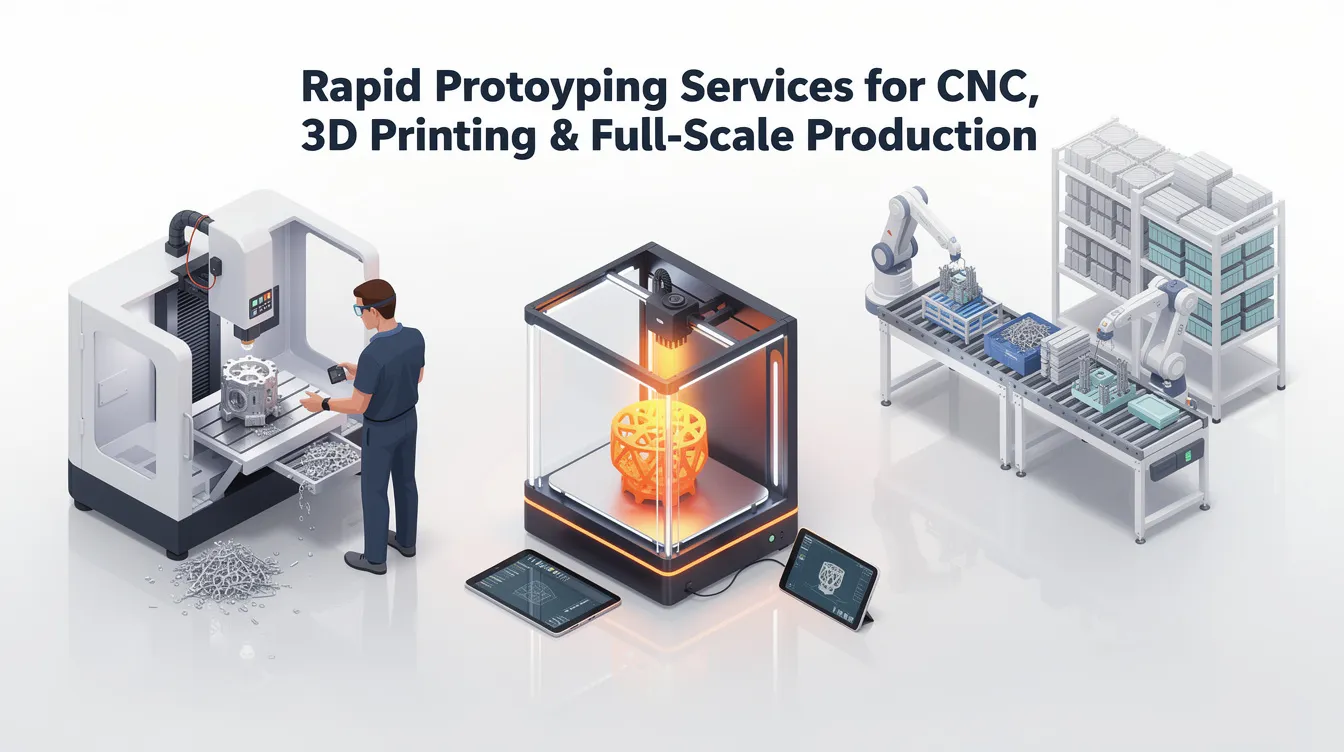
Rapid Prototyping Services for CNC, 3D Printing & Full-Scale Production
What Are Rapid Prototyping Services?
Rapid prototyping is the fast conversion of a digital CAD model into a physical part using advanced manufacturing technologies such as CNC machining, 3d printing, and sheet metal fabrication. Rather than waiting months for traditional tooling to deliver a single sample, engineers can now hold a functional part in their hands within days – sometimes hours – after finalizing a design in cad software.
These prototyping services cover a wide spectrum: from early stage concept models printed in basic plastic for concept validation, all the way to fully functional prototypes machined from production-grade aluminum or stainless steel that mirror the material properties and tighter tolerances of final production parts. Rapid prototyping uses technologies like 3d printing and CNC machining, and 3d printing is the most common rapid prototyping process in use today. The specific process selected – whether fused deposition modeling fdm, hp multi jet fusion, selective laser sintering, CNC milling, or 5-axis machining – depends on the part’s required tolerance, material, geometry, and stage in the development process.
The concept has roots in the early 1980s, when Hideo Kodama in Japan first described layer-by-layer photopolymer methods. Chuck Hull then invented stereolithography in 1984 and released the first commercial SLA machine in 1987. Fused deposition modeling and selective laser sintering followed in the late 1980s and early 1990s. Today, digital factories combine additive and subtractive methods under one roof, enabling rapid prototyping solutions that would have been unthinkable a generation ago. For example, a robotics startup can print an ABS gripper concept on Monday, machine an aluminum structural bracket by Thursday, and have both assembled for testing form and function before the week ends.
Anebon Metal Products Limited provides rapid prototyping from Dongguan, Guangdong, China, serving overseas OEMs with ISO 9001:2015 and ISO 14001:2015 certifications. With capabilities spanning CNC machining, die casting, sheet metal, and additive manufacturing, Anebon supports the full journey from prototype fabrication to mass production.
Why Rapid Prototyping Matters in Modern Product Development
In industries with compressed product development cycles – aerospace, medical devices, consumer electronics – being first to market faster with a validated design is often the difference between winning and losing. Rapid prototyping compresses design cycles from months to weeks by allowing teams to rapidly fabricate, test, and iterate on product concepts. It can reduce development costs by 30–50% compared to conventional approaches, and in some cases save 60–75% compared to traditional methods when tooling expenses are factored in.
The benefits of rapid prototyping are concrete. Tangible prototypes enhance collaboration among team members and stakeholders – a physical sample on a conference table communicates design intent far more clearly than a screen rendering. Early detection of design flaws helps avoid expensive changes later in product development, and real models allow for effective testing of functionality and ergonomics before committing to costly tooling. Multiple prototypes can be tested simultaneously to gather feedback on competing design variants.
Consider the difference: traditional methods involving machinist-made one-offs and custom tooling typically take 4–8 weeks for a single prototype and can cost tens of thousands of dollars. Digital rapid prototyping technologies deliver comparable parts in 3–10 days. Early plastic prototypes via 3d printing might arrive in 1–3 days at a cost of tens to a few hundred dollars, while full injection molding tooling can run tens of thousands. Rapid prototyping also enables complex geometries – internal channels, lattice structures, undercuts – without significantly increasing costs, features that would be prohibitively expensive or impossible with traditional manufacturing alone. Turnaround time and speed are major advantages of rapid prototyping services, and rapid prototyping accelerates time to market significantly. Rapid prototyping reduces design cycle times compared to traditional methods across virtually every sector.
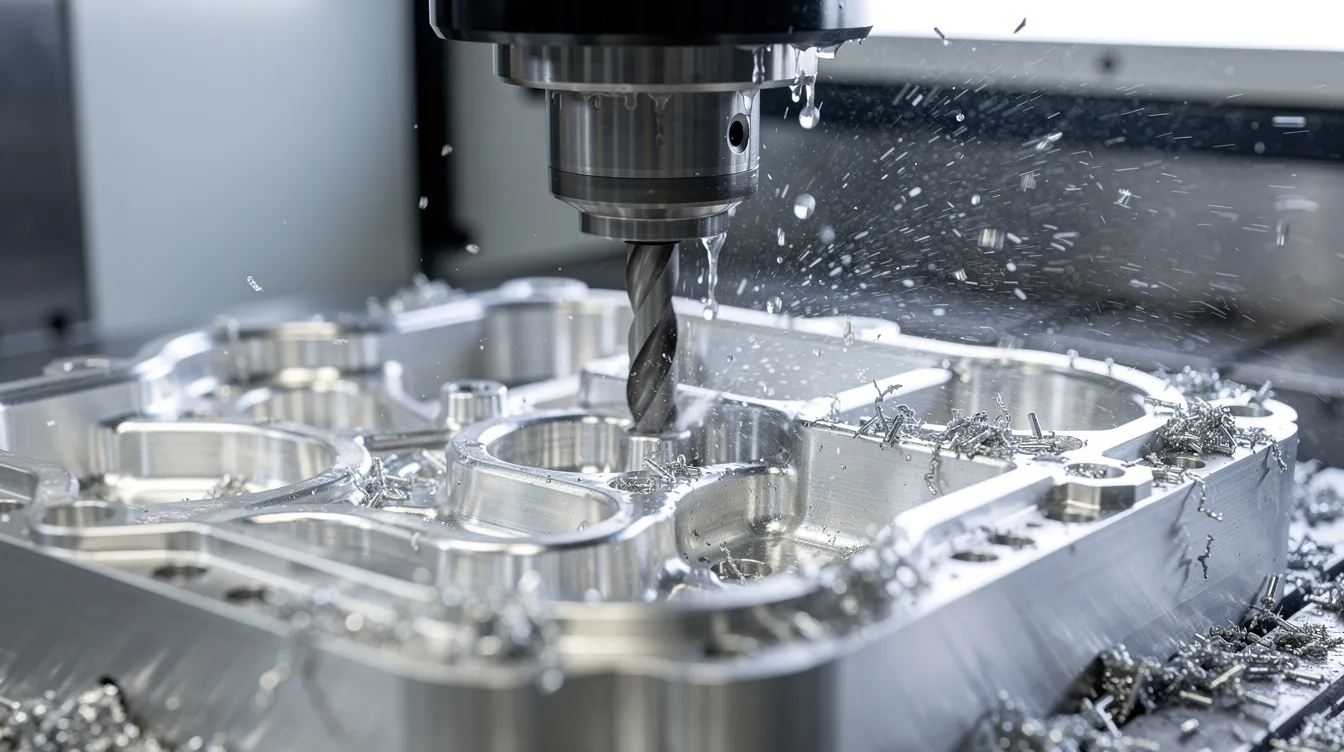
Core Rapid Prototyping Processes We Use
Anebon combines additive manufacturing, subtractive manufacturing, and sheet metal fabrication to cover the majority of prototype needs under a single roof. This section walks through each major process – 3d printing, cnc machining, sheet metal, and die casting with rapid tooling – so you can understand which approach fits your project.
Choosing the right prototyping process depends on required tolerance, material properties, quantity, and where you are in the development process. Anebon works directly from customer-supplied cad files in formats like STEP, IGES, and native CAD, and can advise on the best rapid prototyping path for each part.
3D Printing & Additive Manufacturing for Rapid Prototyping
The additive manufacturing process builds parts layer by layer from a digital file, enabling geometry freedom that subtractive methods cannot match – internal voids, lightweight lattices, and deep undercuts are all fair game. This additive manufacturing expertise makes 3d printing rapid prototyping ideal for early-stage exploration and increasingly for functional end-use parts.
Fused deposition modeling (FDM) extrudes thermoplastic filament – typically ABS, PLA, or TPU – making it a cost-effective option for early concept models and large parts. FDM uses thermoplastic filament for affordable functional parts and can produce parts up to 36 inches in a single piece. Typical lead times are 1–3 days, and many prototypes can be produced in 1–2 days. Surface finish is rougher with visible layer lines, but speed and low cost make it ideal for quick iterations.
HP multi jet fusion (MJF) and selective laser sintering (SLS) are versatile methods for rapid prototyping that use powdered nylon (PA12 or PA11) to produce parts with real mechanical strength. Multi jet fusion mjf and SLS are workhorses for functional prototypes of brackets, housings, and clips – parts that need to survive snap-fit assembly or moderate loads. 3d printed prototypes can be ready in 24–48 hours for straightforward geometries, and expedited 3d printing services are available for select projects requiring even faster delivery. Prototyping can be completed in as little as 1–2 days with these methods.
Stereolithography (SLA) cures liquid resin with UV light, delivering high-resolution parts with smooth surfaces. SLA offers the best surface finish among 3d printing methods and produces smoother, more detailed parts than FDM, making it the go-to for cosmetic prototypes of consumer electronics enclosures and medical device handpieces. Anebon can produce single prototypes or low-volume batches, and 3d printing often precedes CNC machining or die casting as part of a combined rapid prototyping strategy.
CNC Machining for Precision Functional Prototypes
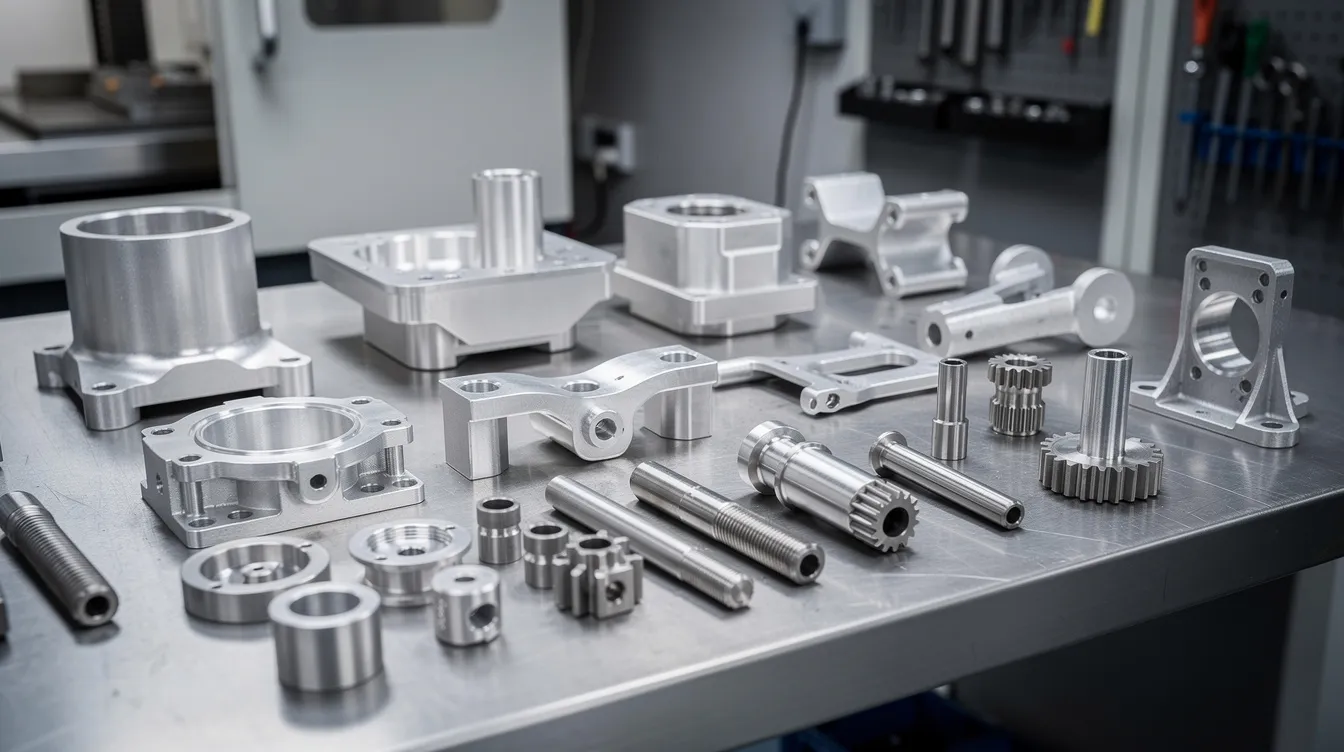
CNC machining – milling, turning, and 5-axis machining – is the primary method for metal and high-accuracy plastic prototypes built in final production materials. When a prototype must withstand thermal cycling, fatigue loading, or pressure testing, subtractive machining in the actual production alloy is irreplaceable.
Anebon supports tolerances as tight as ±0.002 mm where geometry and material allow, with 5-axis positional accuracy of ±0.013–0.025 mm between features machined in a single setup. Common materials include aluminum 6061 and 7075, stainless steel 304 and 316, titanium, brass, and engineering plastics like POM and PEEK. Dimensional accuracy and tolerance are essential for ensuring prototypes meet specifications, particularly for gearbox housings, structural brackets, and medical device components.
CNC machined metal prototypes typically take 1–2 weeks, and CNC machining can produce prototypes in 1–2 weeks for most geometries. Simple aluminum parts often ship in 3–7 days. Anebon machines parts directly from customer cad files, including complex 5-axis geometries that reduce setups and improve accuracy. This process is particularly valuable for rigorous testing – thermal, fatigue, or pressure – in the exact material specified for full scale production.
Sheet Metal Fabrication & Bending for Enclosures
Sheet metal rapid prototyping is the go-to approach for enclosures, brackets, chassis, and panels in steel, stainless steel, and aluminum. Aluminum 5052 is the most common sheet metal material for rapid prototyping, prized for its formability and corrosion resistance.
Typical processes at Anebon include laser cutting, CNC punching, bending, welding, and hardware insertion, with prototype lead times often under one week. These prototypes enable fast evaluation of fit, cable routing, and mounting patterns for industrial machinery and consumer electronics cabinets. Anebon applies surface treatments like powder coating, anodizing, and brushing to simulate production aesthetics for demos and investor presentations. Sheet metal fabrication is well suited to low volume production batches of 10–200 units for pilot runs and field trials.
Die Casting & Rapid Tooling for Pre-Production Prototypes
Rapid die casting bridges the gap between machined prototypes and mass production. Using simplified rapid tooling – soft aluminum or pre-hardened steel dies – Anebon can produce aluminum, zinc, or magnesium parts in 2–5 weeks instead of the months required for full hard tooling. For context, injection-molded prototypes take 2–4 weeks to produce, while full production injection molding or die casting tooling can take 6–12 weeks.
Typical use cases include automotive housings, LED lighting bodies, and electronics heat sinks where casting behavior, shrinkage, and thermal dissipation must be validated. Anebon designs and produces prototype dies in-house in Dongguan, enabling faster DFM feedback and iteration. Early die-cast prototypes can be machined post-casting to critical dimensions, combining casting realism with CNC precision. Customers test assembly fit, thermal performance, and structural integrity under near-production conditions using these bridge tooling prototypes.
Types of Prototypes Across the Development Cycle
Not all prototypes serve the same purpose. Anebon supports a clear progression – from early visualization to engineering validation for final production – with each stage matched to the right process.
The main categories are proof-of-concept, looks-like, works-like, engineering prototypes, and pilot production runs. 3d printing dominates early models; cnc machining and sheet metal handle functional prototypes; and rapid tooling covers near-production runs. Timelines range from 1–2 weeks for early stages to up to 6 weeks for complex engineering builds with post processing and finishing.
Proof-of-Concept & Early Design Prototypes
Proof-of-concept prototypes are usually produced in 1–2 weeks using low-cost 3d printing (often FDM) or simple machined blocks to verify basic form, ergonomics, and assembly ideas. These parts may not use final materials or tight tolerances, but must roughly match envelope dimensions and interfaces.
Think of a handheld consumer electronics shell or a robotic gripper concept printed in ABS or PLA. Anebon can turn around multiple iterations from the same CAD family to help teams decide between alternatives quickly. At this stage, surface finish and cosmetic quality are less critical than speed and cost efficiency.
Looks-Like & Aesthetic Prototypes
Looks-like prototypes appear in design reviews, marketing photos, trade shows, and investor presentations where appearance is everything. Anebon uses high-resolution 3d printing (SLA), carefully finished CNC or sheet metal parts, plus painting, texturing, and logo marking to match industrial design intent.
Typical lead times run 1–3 weeks depending on finishing steps – sanding, clear-coating, color-matching to brand standards. An example might be a polished aluminum and plastic prototype of a medical device handset with precise button and display openings, or a consumer electronics enclosure with complex surfaces ready for photography. Tolerances are moderately tight, but the focus is on form, surface quality, and perceived quality.
Works-Like & Functional Prototypes
Works-like functional prototypes must perform mechanical, thermal, or electrical functions close to the final product. They are built with cnc machining, functional 3d printing (MJF, SLS), and production-grade sheet metal. Anebon often combines multiple processes in one assembly – machined metal frames, printed plastic housings, and off-the-shelf fasteners.
These prototypes support life testing, drop testing, thermal cycling, and regulatory pre-testing in diverse industries like automotive, aerospace, and robotics. Functional testing at this stage validates that the design works under real-world conditions. Timeframes of 2–4 weeks allow for machining, assembly, and any required post processing like anodizing or heat treatment. This is where design for manufacturability feedback becomes critical for scaling toward full scale production.
Engineering Prototypes & Pilot Production Runs
Engineering prototypes and pilot runs use near-final processes and materials: CNC machining from production alloys, die casting with prototype tools, and sheet metal built to production drawings with full inspection reports. Anebon can produce dozens to hundreds of units in 3–6 weeks for real field trials and limited customer deployments.
For example, a batch of 100 aluminum 6061 CNC-milled housings for an industrial sensor system – including anodizing and laser marking for traceability – represents a typical engineering build. Data from this stage – test failures, assembly feedback, and supply-chain performance – feeds directly into the final production release decision. These are production quality parts built to production tolerances.
How Anebon’s Rapid Prototyping Service Works
Anebon follows a straightforward end-to-end workflow: cad files submission, DFM review, quoting, manufacturing, quality inspection, and global shipping. The emphasis is on responsiveness and engineering support rather than black-box processing.
From CAD File to DFM Feedback
The prototyping process starts when a customer uploads a cad drawing or 3D file along with any associated drawings, BOMs, or requirement notes. Anebon’s engineers review the design for manufacturability – checking wall thicknesses, draft angles, minimum radii, and tolerance stack-ups, especially for cnc machining and die casting.
Suggestions might include adjusting fillets, changing thread types, or splitting complex geometries into simpler subcomponents for better cost and reliability. DFM feedback is typically shared within 24–48 hours so the customer can revise the CAD file before quoting. This stage helps avoid costly design issues before committing to full scale production tooling.
Quoting, Lead Times & Order Confirmation
Quoting is transparent: each quote lists material, process (e.g., CNC machining vs. hp multi jet fusion), surface finish, quantity, unit price, tooling costs if any, and estimated lead time. Anebon can quote multiple process alternatives for the same cad files – comparing a machined aluminum part to a 3d-printed nylon version, for instance.
Concrete lead times: 3–5 working days for simple machined parts, 2–7 days for 3d printing, and 2–5 weeks for rapid die casting tools plus first shots. Competitive pricing is crucial when selecting a prototyping company, and Anebon provides itemized breakdowns so customers understand exactly where costs fall. Urgent projects can sometimes be expedited subject to material availability and capacity.
Manufacturing, Inspection & Global Shipping
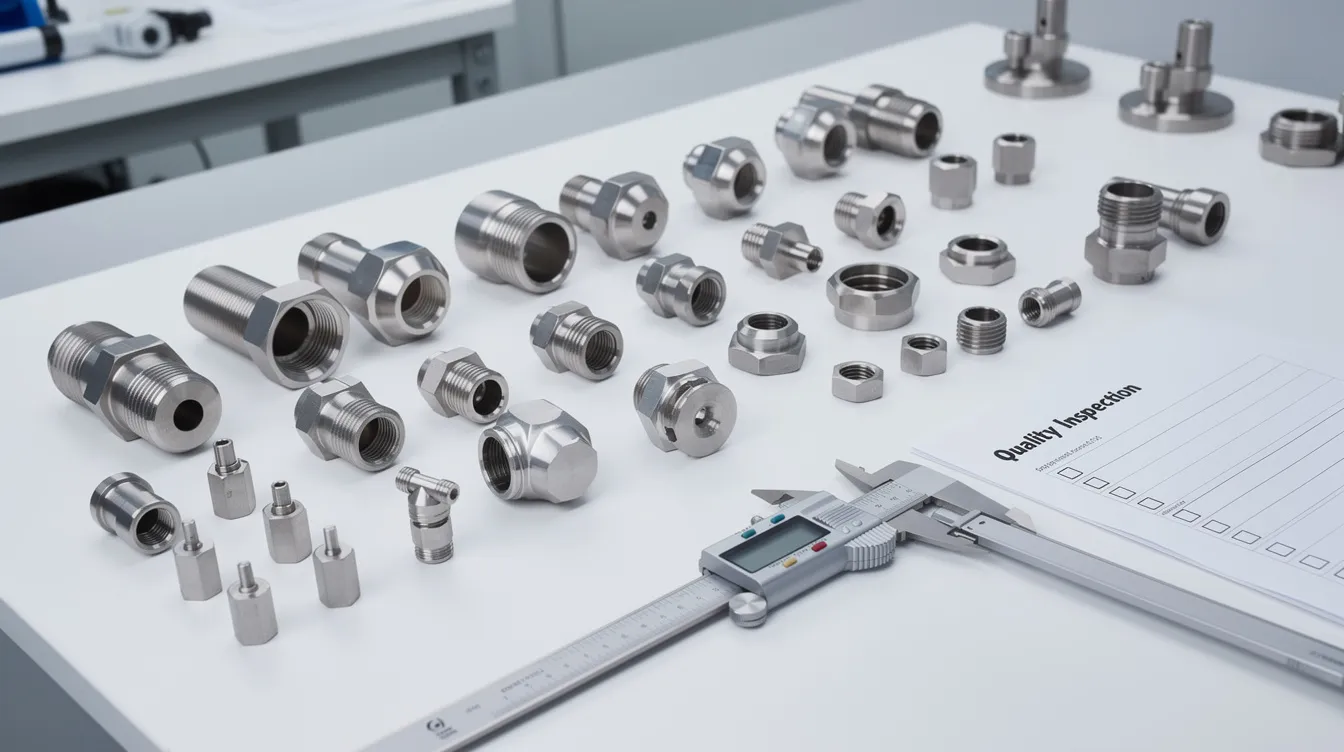
Manufacturing execution covers CAM programming, machine setup, and in-process checks for cnc machining; slicing and build preparation for additive manufacturing; and cutting, forming, and assembly for sheet metal. Anebon follows ISO 9001:2015 quality procedures, performing dimensional inspection with calipers, micrometers, CMM, or optical measurement depending on tolerance requirements.
Customers can request inspection reports – FAI reports, dimensional summaries – for critical functional prototypes or pre-production runs. Anebon regularly ships prototypes to North America, Europe, and other regions with typical transit times of 3–7 days. Tracking information is provided, and consolidated shipments are available when multiple prototype batches are produced in parallel.
Materials & Surface Finishes for Realistic Prototypes
Realistic rapid prototyping requires the right materials and finishes to simulate final production behavior and appearance. Material selection is critical for matching the prototyping method to specific needs, and prototyping methods must align with specific material needs and project requirements.
Anebon offers a diverse range of metals – aluminum, stainless steel, carbon steel, titanium, brass – and plastics like ABS, PC, POM, PEEK, and nylon suitable for CNC machining, 3d printing, and sheet metal work. For reference, leading material suppliers like Stratasys Direct offer over 50 engineering-grade materials for prototyping; Anebon’s in-house material versatility covers the most commonly requested alloys and polymers, with special alloys or engineering polymers sourced on request for aerospace, medical, or high-temperature applications.
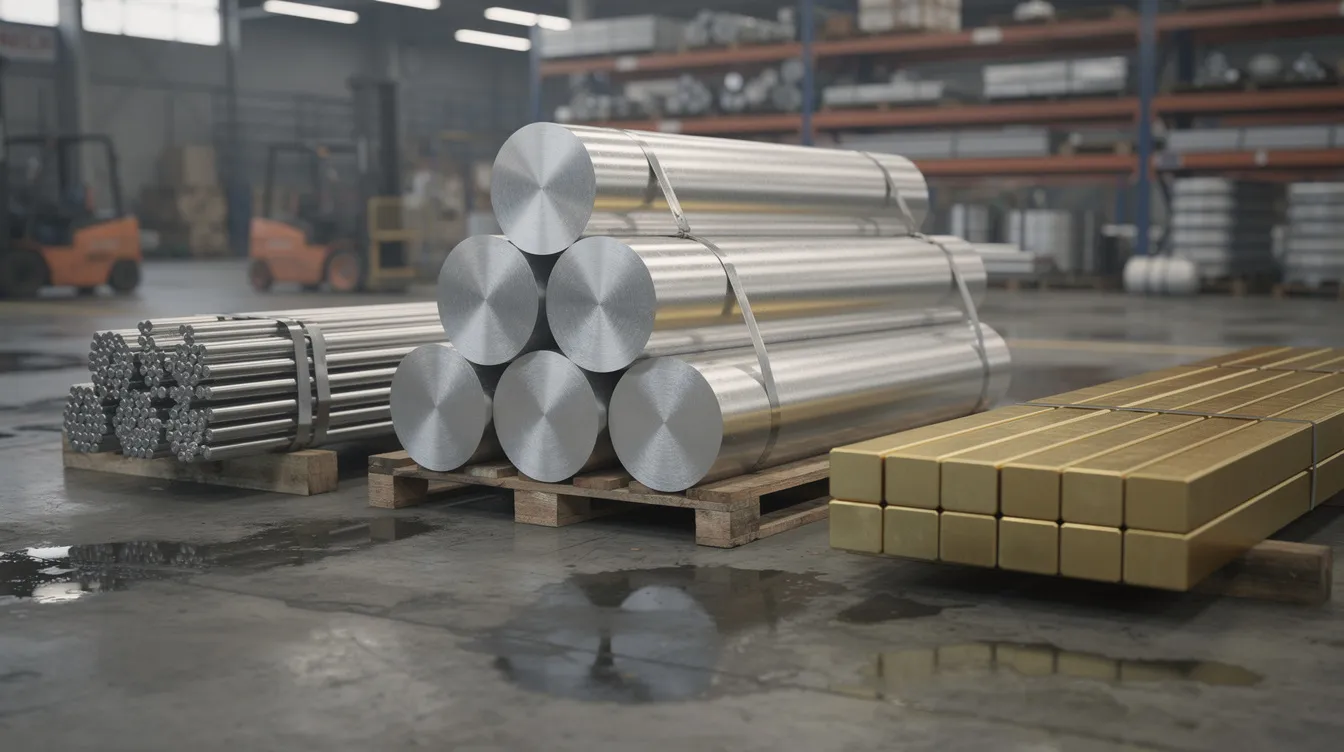
Metal & Plastic Options for Functional Prototypes
Common aluminum grades include 6061-T6 for general prototypes (brackets, heatsinks, housings) and 7075-T6 for high-strength aerospace-style parts. Stainless steels like 304 and 316 serve corrosion-resistant components in medical and food equipment, while tool steels handle wear-resistant inserts. For high performance materials, titanium serves demanding aerospace and medical applications.
Plastic machining options include ABS (general-purpose), PC (impact-resistant lenses and covers), POM (low-friction gears and bearings), and PEEK for high-temperature or chemically aggressive environments. In 3d printing, PA12 nylon (via MJF or SLS) and photopolymer resins (via SLA) are widely used. Anebon advises on material selection so that prototype data – strength, stiffness, thermal behavior – closely predicts final production performance.
Surface Finishes to Simulate Final Production
Typical finishes for aluminum prototypes include clear or colored anodizing, bead-blasted matte surfaces, and high-polish for decorative parts. Powder coating and wet painting serve steel and aluminum enclosures, with the ability to match RAL or Pantone colors for final product branding.
Mechanical finishes like brushing, polishing, and deburring address edges and visible surfaces on CNC and sheet metal parts. Plastic parts can be vapor-smoothed, painted, or textured to better match injection molding production parts. Anebon also applies laser engraving or silk-screen printing for logos, serial numbers, and interface markings – giving prototypes a production-ready appearance.
Industries & Applications for Rapid Prototyping
Rapid prototyping capabilities from Anebon support diverse industries with different regulatory requirements, mechanical demands, and cosmetic standards. Customers range from startups building first-generation products to established OEMs refining next-generation designs across regulated industries and high-volume consumer markets.
Consumer Electronics & Smart Devices
Anebon supports rapid prototyping of phone accessories, wearable devices, IoT sensors, and small consumer electronics enclosures. Common requirements include thin-wall housings, snap-fit features, precise cutouts for displays and connectors, and surface finish matching retail products.
3d printing (SLA and MJF) handles early form studies, while CNC machining and sheet metal enclosures serve functional beta units and pilot runs. A typical scenario: creating successive prototypes of an aluminum smartwatch housing to fine-tune antenna performance and water resistance, with fast iterations every 1–2 weeks helping teams converge on a manufacturable, attractive product.
Aerospace, Automotive & Robotics
These sectors demand high-strength metal components, weight reduction via complex geometries, and tight tolerance control. 5-axis CNC machining serves brackets, structural components, and housings, while 3d printing handles topology-optimized or lattice-structured industrial components.
Rapid prototyping enables functional validation under vibration, temperature extremes, and high loads before committing to production tooling. For example, prototyping an aluminum 7075 drone arm or a steel gearbox housing for a robotics application can be completed in under three weeks. Anebon’s ability to machine titanium and stainless steels supports the most demanding aerospace and automotive prototype projects.
Medical Devices & Industrial Machinery
Use cases include hand-held surgical tools, diagnostic device housings, pump components, and custom fixtures for industrial automation. Material choices like stainless steel 316 provide corrosion resistance and biocompatibility, while PEEK handles high-temperature sterilization environments. Anebon provides precise, repeatable prototypes for medical device validation builds and regulatory testing, including dimensional reports.
Rapid prototyping in this sector supports human factors studies, ergonomic testing, and integration with off-the-shelf electronics. Industrial machinery prototypes often involve welded sheet metal frames, machined parts for brackets, and custom mounting plates produced in parallel.
From Rapid Prototype to Full-Scale Production
Anebon’s engineering services extend beyond single prototypes to bridge tooling, low volume production, and production manufacturing of CNC, die-cast, and sheet metal parts. Using the same supplier from early prototypes through final production simplifies communication, preserves design intent, and reduces ramp-up risk.
Prototype data – failure modes, assembly feedback, machining times – refines process parameters and tooling for stable long-term manufacturing. Anebon supports annual volumes ranging from tens of units for specialized machinery to tens of thousands of pieces for OEM components, delivering on demand production that scales with customer needs.
Scaling Volumes: Bridge Builds & Final Production
Bridge builds are medium-volume runs using rapid tooling, CNC machining, or flexible sheet metal setups that cover the gap between prototype validation and full automation. Rapid injection molding or soft die casting tools can serve runs of several hundred to a few thousand parts while hard tooling is being finalized.
Anebon adjusts fixture strategies, tool choices, and inspection plans to handle increasing volumes while maintaining tight tolerances. Some customers choose to stay with CNC or additive methods for final production when annual volumes are modest or design changes are frequent. A concrete path might look like this: 5 machined prototypes → 200-piece pilot run → 5,000-piece annual die-cast production program. Anebon’s ISO-certified systems and long-term material sourcing support repeatable, stable production once designs are frozen.
How to Choose the Right Rapid Prototyping Partner
Selecting the right prototyping services partner requires evaluating several factors. Look for companies with relevant industry certifications – ISO 9001 for quality management is a baseline, and ISO 14001 matters for OEMs with ESG requirements. Technology and capabilities of a provider influence the choice of rapid prototyping services, so evaluate the range of services offered by prototyping companies. A key advantage of working with a provider like Anebon is the ability to handle CNC machining, die casting, sheet metal fabrication, and additive manufacturing under one roof.
Manufacturing capacity varies among rapid prototyping companies – some focus on quick turn prototyping for single units, while others like Anebon scale from one piece to thousands. Cost should be weighed alongside reliability and engineering support, as poor-quality prototypes cause delays and redesigns that far exceed any initial savings. Rapid prototyping can reduce development costs by 30–50%, but only when the supplier delivers accurate, on-spec parts the first time.
Questions to Ask Before You Place an Order
Before placing an order, ask targeted questions to accelerate product development and avoid surprises:
-
What tolerances can you reliably hold on this geometry and material?
-
Which rapid prototyping technologies do you recommend for my part, and why?
-
What are your lead times, and can you expedite if my schedule shifts?
-
What inspection methods do you use, and can you provide FAI reports?
-
Can the same processes and fixtures scale for later production runs?
-
How do you handle IP protection, file security, and data retention for sensitive cad files?
Start with a small initial order to evaluate quality, communication, and adherence to promised timelines before committing to larger volumes.
Start Your Rapid Prototyping Project with Anebon
Anebon offers end-to-end rapid prototyping services: 3d printing, cnc machining, die casting, and sheet metal fabrication from Dongguan, Guangdong, China. With rapid prototyping technologies spanning every stage from early concept to full scale production, and rapid turnaround times backed by ISO-certified quality systems, Anebon helps design engineers and R&D teams produce parts that meet real-world requirements.
Prepare your cad model, define your tolerance and material requirements, and specify target quantities – then reach out for a quote. Anebon’s engineering team provides DFM suggestions and process recommendations tailored to your timelines and budgets. Whether you need a handful of functional prototypes or a path to on demand production at scale, the next step is the same: send your files and let’s get building.