Top Precision Sheet Metal Fabrication Companies in China
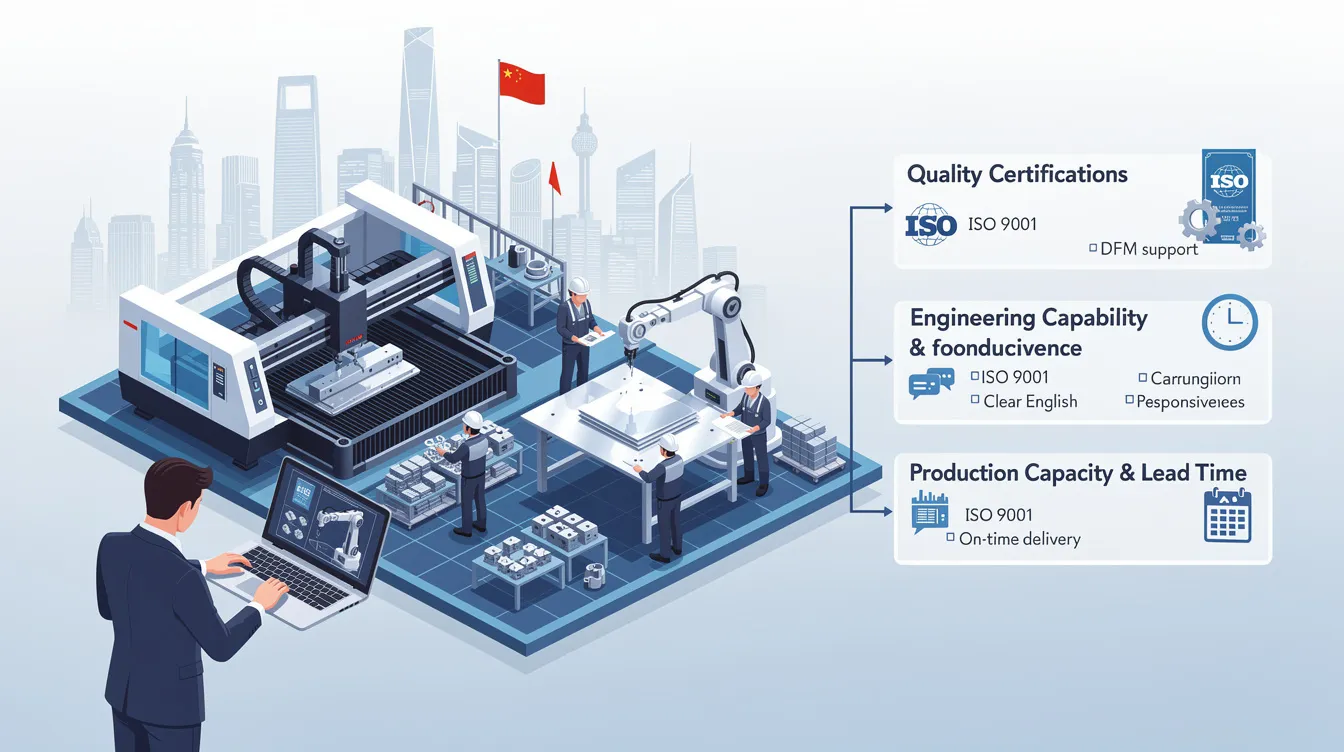
Precision Sheet Metal Fabrication Companies in China: How to Choose the Right Partner
Finding a reliable precision sheet metal fabrication partner in China can make or break your product program. With hundreds of suppliers advertising tight tolerances and modern equipment, the real challenge is separating genuinely capable manufacturers from those that simply quote well. This guide walks you through exactly what to look for, what to test, and how to evaluate Chinese sheet metal fabrication companies before committing to production.
Quick Answer: How to Find a Reliable Precision Sheet Metal Partner in China
China is a global hub for precision sheet metal fabrication, home to thousands of factories equipped with fiber lasers, multi-axis press brakes, and robotic welding cells. Many Chinese fabricators focus on high-quality manufacturing standards, but capability varies widely between regions and individual shops. Your job is to filter for the suppliers that can actually deliver on their claims.
Here is what to prioritize when shortlisting partners:
-
Proven export experience to North America, Europe, or other regulated markets, ideally since at least 2010
-
Valid ISO 9001:2015 and ISO 14001:2015 certifications with clearly defined process scopes
-
In-house capabilities covering laser cutting, CNC bending, welding, and surface finishing, not subcontracted
-
Ability to support both prototypes and mass production under the same roof
-
Recent dimensional inspection reports such as 2023–2024 PPAP or FAI data on parts similar to yours
-
Willingness to ship 5–10 sample parts before you commit to a production order
Anebon Metal Products Limited, founded in 2010 in Dongguan, Guangdong, is one example of a precision sheet metal and CNC machining supplier built specifically for overseas OEMs. With ISO 9001:2015 and ISO 14001:2015 certifications, Anebon handles everything from rapid prototyping to full-scale production across 47 countries.
Overview of Precision Sheet Metal Fabrication in China
China’s position as the world’s largest manufacturer of metal products is backed by hard numbers. In 2023, China exported roughly 90.264 million metric tons of steel products, a 36.2% year-over-year increase. This massive base of raw material availability feeds directly into downstream sheet metal fabrication services, giving Chinese fabricators access to competitively priced aluminum, stainless steel, and carbon steel stock.
Chinese precision sheet metal fabrication companies are recognized for skilled engineering and cost efficiency. Key manufacturing clusters drive this: the Pearl River Delta (Dongguan, Shenzhen, Guangzhou), Yangtze River Delta (Shanghai, Suzhou, Ningbo), and Bohai Rim (Tianjin, Qingdao). Anebon operates from Dongguan in the Pearl River Delta, one of the strongest bases for export-focused precision work.
Precision sheet metal fabrication supports different industries including automotive, medical devices, electronics, robotics, and aerospace. Unlike general sheet metal work that may tolerate ±0.1 mm or wider, precision fabrication demands tighter tolerances (often ±0.05 mm on cut features), documented quality systems, and advanced equipment capable of repeatable output across thousands of parts.
What Counts as Precision Sheet Metal Fabrication?
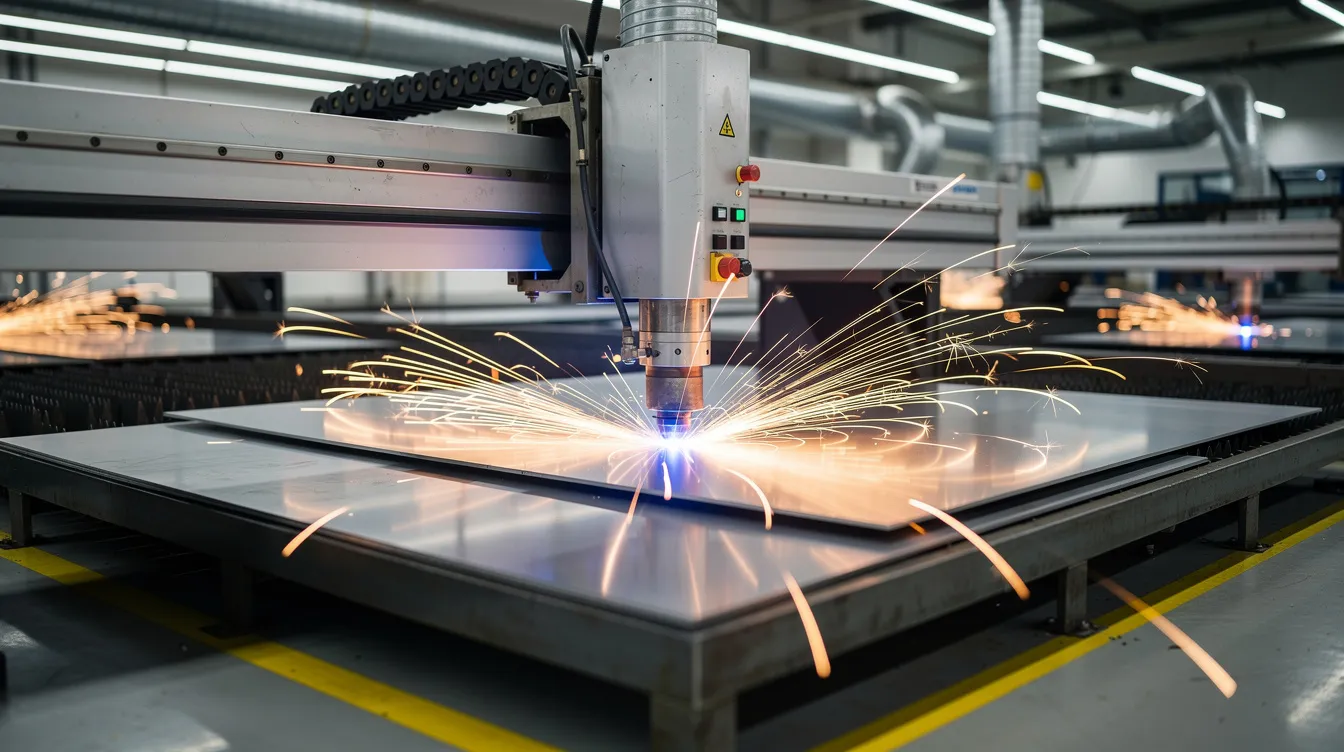
The term “precision” in sheet metal fabrication carries specific meaning. It refers to work where tolerances are tightly controlled, processes are documented, and consistency is verified through inspection at every stage. Precision sheet metal parts typically hold ±0.05 mm on laser-cut edges and hole locations, with ±0.002 mm achievable on mated CNC machined components through secondary operations like reaming.
Five common sheet metal operations are cutting, bending, punching, stamping, and welding. Sheet metal fabrication includes cutting, bending, and welding processes, but precision work extends further into hardware insertion, tapping, grinding, deburring, and surface finishing. Each operation has its own tolerance contribution, and controlling the stack-up across all of them is what separates precision from general fabrication.
Custom sheet metal fabrication projects for OEM customers typically involve enclosures, brackets, frames, and intricate assemblies. These sheet metal components require not just accurate individual parts, but controlled relationships between features across multiple operations. This is where the combination of capable equipment, trained operators, and robust quality control becomes non-negotiable.
Core Processes Used by Chinese Precision Sheet Metal Companies
Competitive Chinese sheet metal suppliers invest in modern equipment to maintain precision and efficiency. Major Chinese fabricators often leverage advanced technology like laser cutting and robotic welding. Chinese manufacturers use advanced machinery and equipment such as CNC laser cutting and robotic welding to handle both high mix and high volume production demands.
Laser cutting using fiber lasers (typically 3 kW–12 kW) delivers ±0.05 mm accuracy on steel, stainless steel, and aluminum. Auto material loaders reduce handling time and improve throughput. Komaspec, for example, operates 190,000 sq ft across 6 buildings with 12 kW fiber laser cutters, producing over 6 million precision parts annually for global OEMs. Komaspec adheres to rigorous quality control measures across its operations.
CNC punching and nibbling is preferred for repeated holes, louvers, and embosses, typically on steel up to 6 mm and thinner aluminum. CNC bending and forming uses multi-axis press brakes (up to 8–9 axes) with automatic angle correction systems to maintain tight bend angles, compensating for springback in stainless steel and higher-strength materials. Sheet metal bending and sheet metal forming accuracy depends heavily on these systems.
Robotic welding cells handle repeat production with consistent weld quality, while manual TIG and MIG welding serves cosmetic or specialty joints on stainless steel and aluminum. Spot welding is common for enclosed assemblies. Secondary processes include hardware insertion (PEM fasteners), grinding, auto-deburring lines, metal stamping operations, and final assembly of sheet metal products into sub-systems with CNC machined parts.
Capabilities You Should Expect from a Top-Tier Chinese Sheet Metal Fabricator
Overseas OEMs should expect more than simple cutting and bending from a supplier claiming “precision.” Turnkey solutions from design to final assembly are a common offering in Chinese manufacturing, and Chinese fabrication companies typically offer end-to-end manufacturing solutions including welding and surface finishing.
What to look for:
-
Custom sheet metal fabrication from prototype to mass production under one roof
-
Design-for-manufacturing (DFM) feedback on 2D and 3D files, not just passive quoting
-
Engineering support during R&D, including material and thickness recommendations
-
Ability to handle complex assemblies involving sheet metal, CNC machined parts, and die cast components
-
Precision tolerances achievable by some Chinese manufacturers can be as tight as ±0.002 mm on critical machined features
-
Flexible volumes: one-off sheet metal prototypes and pilot runs (10–100 pcs) through to high volume production (thousands of custom metal parts per month)
Tolerance control across flatness, perpendicularity, and hole position for assemblies requires SPC and traceability from raw material to final inspection, not just a good laser cutter.
Industries Served by Precision Sheet Metal Fabrication Companies in China
Precision sheet metal companies in China now serve high-value, regulated markets. Key industries served by Chinese metal fabricators include automotive, renewable energy, and medical devices.
-
Medical devices: Equipment frames, diagnostic machine enclosures, and stainless steel components meeting cleanliness and finish standards
-
Automotive and EV: Battery enclosures, brackets, busbars, and underbody shields for Tier 1 and Tier 2 suppliers
-
Aerospace and aviation: Low-volume, high-reliability brackets, avionics housings, and ground support equipment. KDM Fabrication specializes in precision sheet metal for aerospace applications
-
Electronics and telecommunications: Precision sheet metal chassis for servers, telecom cabinets, 5G base station housings, and metal enclosures for consumer electronics
-
Robotics and industrial machinery: Robot base frames, control cabinets, safety guards, and linear-axis covers for industrial equipment
Anebon focuses on overseas OEMs across many of these segments, providing assembly services that combine sheet metal parts with precision CNC machining and die casting in single projects.
Materials and Thickness Ranges Commonly Used
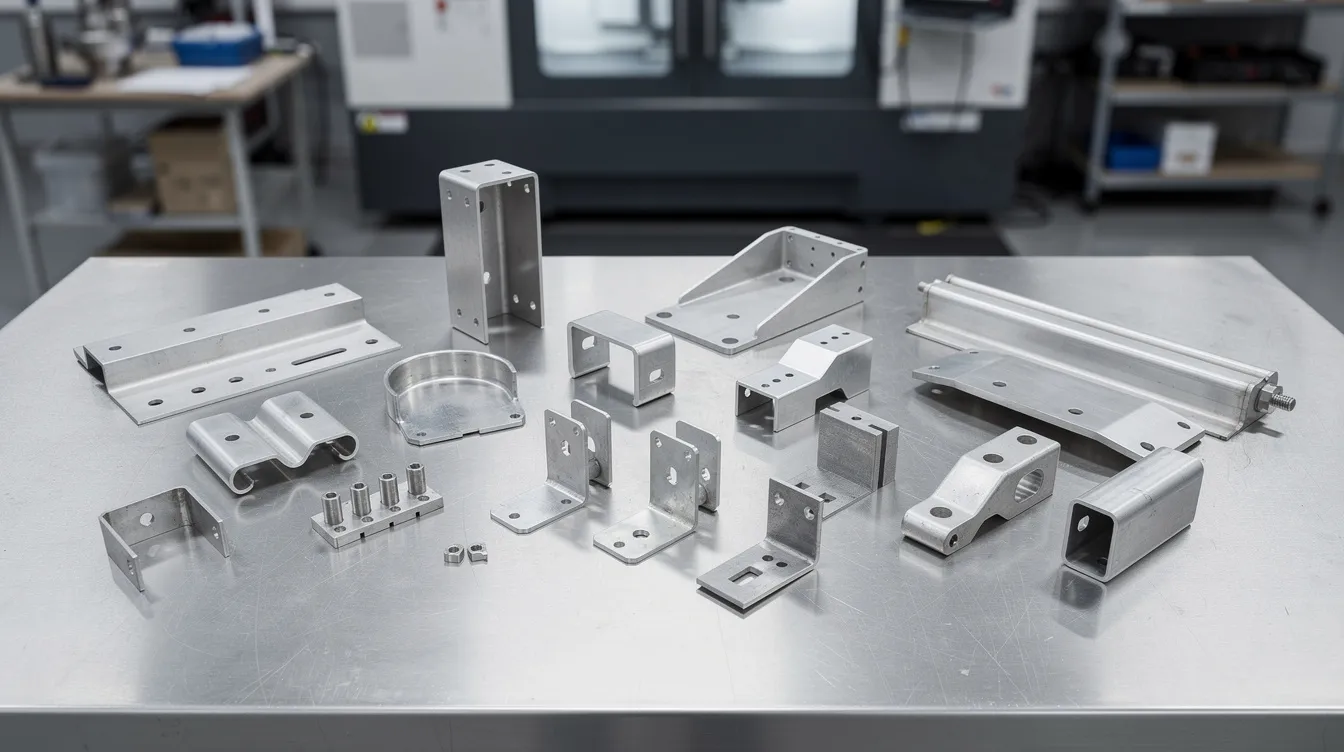
Sheet metal fabrication commonly uses aluminum, stainless steel, and carbon steel. Here is how each material serves different applications:
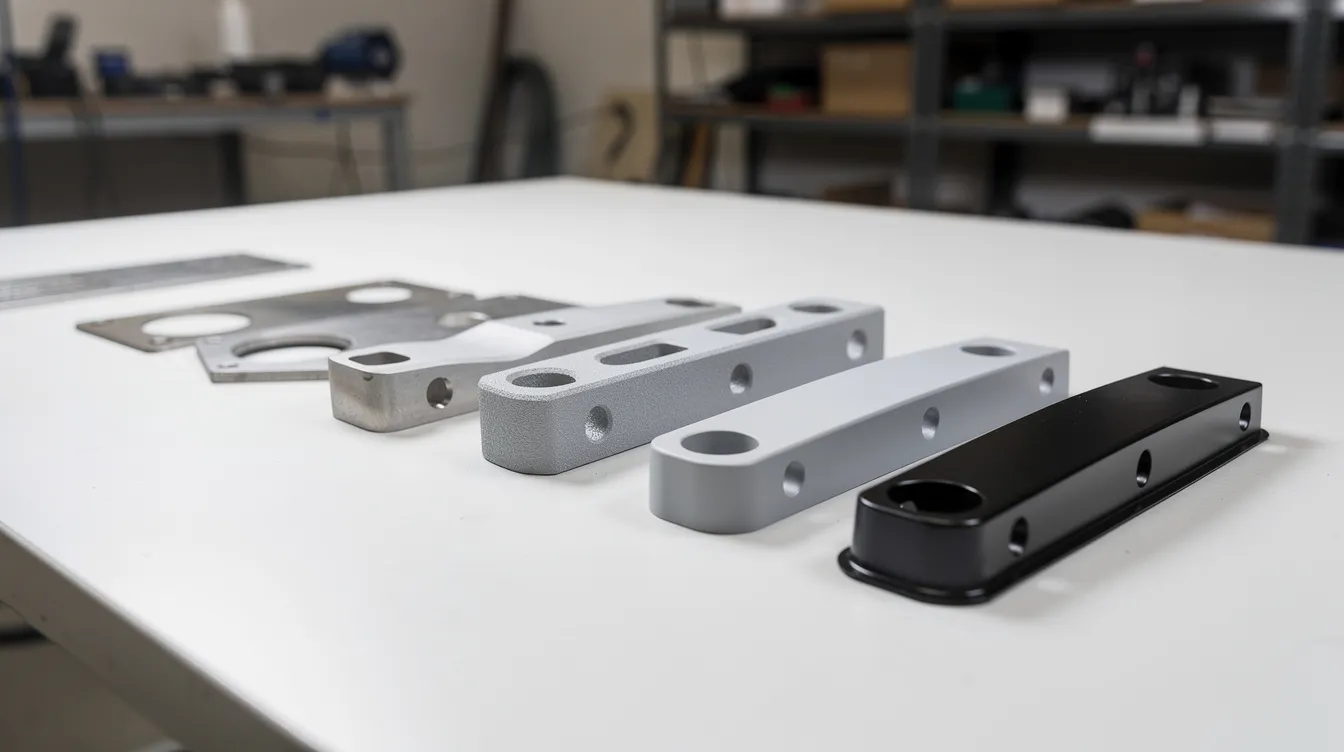
Aluminum (grades 5052, 6061) is preferred for lightweight aerospace and automotive applications. Typical thickness ranges from 0.5–6.0 mm. Surface treatment options include anodizing, powder coating, and brushed finishes. Aluminum is a lightweight option for aerospace and automotive work where weight savings matter.
Stainless steel (304, 316L) provides corrosion resistance for various applications, especially medical devices and outdoor equipment exposed to moisture. Weld appearance, grain direction, and polished or brushed finishes are key requirements. Stainless steel provides corrosion resistance for moisture-exposed applications specifically.
Carbon steel offers strength and affordability for structural components like cabinets, racks, and industrial housings. Carbon steel is used for strength in structural components where weight is less critical. Powder coating and painting provide long-term durability.
Galvanized steel has a protective zinc coating for outdoor applications, making it corrosion resistant for exposed industrial equipment and enclosures.
Leading firms like Anebon also combine precision sheet metal with machined titanium, brass, and engineering plastics when projects require mixed-material assemblies, supporting custom metal fabrication across 75+ metals and plastics.
Quality Assurance, Certifications, and Traceability
Quality systems are critical when sourcing precision sheet metal parts internationally. Without documented, auditable processes, tight tolerances on paper mean nothing in practice.
ISO 9001:2015 is a common certification for sheet metal suppliers and should be considered a baseline requirement. ISO 14001 certification indicates environmental management standards, increasingly expected by European and North American OEMs. Anebon Metal holds both certifications. For automotive work, look for IATF 16949. TUOFA, for instance, holds ISO 9001:2015 and IATF 16949 certifications, backed by over 15 years of fabrication experience.
In-process inspection methods include first-article inspection (FAI), PPAP for automotive programs, CMM verification, and height gauge checks using calibrated tools. Material certifications are often necessary for various materials used in manufacturing, with mill certificates, RoHS, and REACH compliance documentation shipped alongside orders.
Traceability systems using batch numbers, barcodes, or QR codes link finished precision sheet metal stamping parts and other sheet metal components back to material lots and machine programs, providing the audit trail international buyers need.
Digitalization, Robotic Welding, and Smart Manufacturing
Between 2020 and 2025, advanced Chinese sheet metal shops have adopted smart manufacturing methods aligned with Industry 4.0 principles. This shift directly benefits international buyers through better lead time accuracy and production visibility.
ERP and MES systems now schedule laser cutting, CNC bending, and welding cells in coordinated workflows. Real time monitoring of production progress and quality metrics gives project managers upstream visibility into order status. Robotic welding applications have expanded to handle repeated enclosure welds, steel frames, and thick-section joints where consistent quality is critical for export customers.
CAD/CAM integration allows fast programming directly from customer 3D models, supports automatic nesting to reduce material waste, and shortens quoting times. Companies like Anebon combine digital workflows with live DFM reviews, allowing engineers to receive manufacturability feedback within 24 hours of CAD upload. This advanced technology layer transforms what was once a black-box manufacturing process into a transparent, trackable operation.
From Rapid Prototyping to Mass Production
Many Chinese sheet metal fabricators support rapid prototyping alongside various production scales. A modern precision sheet metal fabrication factory typically covers the full product lifecycle.
Rapid prototyping turnaround runs 3–7 working days using laser cutting, CNC bending, and manual welding for early functional samples. Rapid prototyping reduces time from design to production significantly. Rapid prototyping allows for quick adjustments based on testing feedback, saving weeks compared to traditional tooling-first approaches. Companies like RapidDirect specialize in rapid prototyping services for various industries (founded in 2009 with 20,000 m² of factory space), while 3ERP focuses on rapid prototyping and low-volume production runs.
Pilot runs of 50–500 pieces serve as bridge builds for design validation, process tuning, and testing fixtures. Prototyping services help validate designs before mass production, catching issues that only appear under real manufacturing conditions.
Mass production scales to thousands of parts per month with dedicated jigs, work instructions, and shift-based capacity planning. Anebon’s combination of sheet metal fabrication, CNC machining, and die casting means multi-process projects move from prototype to production without switching suppliers.
How Export Experience Affects Your Project
Export experience is as important as fabrication skill when choosing a Chinese supplier. A factory that builds excellent parts but packages them poorly or mishandles customs documentation creates downstream headaches that erase any cost savings.
Look for suppliers with long-term export experience to Europe, North America, and other regulated regions. They should demonstrate familiarity with INCOTERMS, customs documentation, and export packaging standards including fumigation-free pallets, foam inserts, moisture barriers, and proper labeling.
Anebon has been exporting precision sheet metal, CNC machined parts, and die castings since the early 2010s, with project references spanning automotive, medical devices, and industrial machinery across 47 countries. Ask any prospective supplier for sample shipping documents, reference customers, and photos of export packaging from recent shipments.
Key Factors to Evaluate When Comparing Chinese Sheet Metal Companies
Not all sheet metal suppliers in China deliver the same level of precision, service, or reliability. Effective communication and engineering support are critical for successful overseas manufacturing projects. Here is what to compare:
-
Technical capability: Maximum sheet size, thickness, tolerances, welding capabilities (including robotic welding), and surface finishing options like powder coating, anodizing, and plating
-
Engineering support: Suppliers that actively provide DFM, material recommendations, and cost-optimization ideas rather than only quoting drawings as-is
-
Quality and certifications: Valid ISO 9001:2015, ISO 14001:2015, and any sector-specific certifications (IATF 16949, ISO 13485)
-
Lead time and capacity: Standard lead times for prototypes versus production; capacity availability during peak seasons
-
Communication: Responsiveness, technical English proficiency, and ability to work across time zones for complex custom sheet metal fabrication
-
Cost transparency: Itemized quotes covering material, processing, finishing, and tooling. Avoid unrealistically low pricing that might compromise quality or hide subcontracted operations
Practical Steps to Vet a Precision Sheet Metal Supplier Before Ordering
Structured vetting reduces project risk and surprises. Follow these steps before placing a production order:
-
Request and review samples: Order 5–10 sample parts. Check dimensions, cosmetic quality, weld consistency, and coating adhesion against your specifications.
-
Check certifications and audit reports: Ask for scanned ISO certificates, audit summaries, and calibration records for key equipment like CMMs and laser cutters.
-
Factory audit or video tour: Arrange either a third-party audit in China or a detailed live video walkthrough covering laser cutting, bending, welding, inspection, and packing areas.
-
Trial order: Run a small initial batch (50–200 pieces) to validate quality and logistics under real conditions before scaling.
-
Payment and IP terms: Standard terms often run 30% deposit, 70% before shipment. Secure NDAs, drawings ownership clauses, and tool ownership definitions before sharing proprietary designs.
The cost of a proper vetting process is a fraction of the cost of a failed production run. Invest the time upfront.
Anebon Metal Products Limited: Our Precision Sheet Metal and CNC Machining Services
Anebon Metal Products Limited is a Dongguan-based OEM manufacturing partner founded in 2010, purpose-built for overseas customers who need high precision parts across multiple processes.
Our core services include precision sheet metal fabrication, CNC milling and turning, 5-axis machining, die casting, and rapid prototyping. We combine these under single project teams, so mixed-process assemblies do not require multiple suppliers. Our facility holds ISO 9001:2015 and ISO 14001:2015 certifications, with a quality lab supporting tolerances down to ±0.002 mm on machined features.
We specialize in custom sheet metal projects that integrate CNC machined inserts, brackets, and heat sinks, making us well suited for medical devices, robotics, and electronics housings. Our engineering team provides DFM feedback within approximately 24 hours of CAD upload, helping optimize designs for cost and manufacturability before cutting any metal.
Typical Precision Sheet Metal Projects We Handle
Here are the common types of sheet metal and multi-process projects we manufacture for overseas OEMs:
-
Enclosures and housings: 19-inch rackmount chassis, IP-rated outdoor telecom cabinets, and compact housings for medical diagnostics equipment (typical batches: 50–2,000 pcs)
-
Brackets and structural components: Battery support brackets for EV applications, robot arm mounting plates, and machine frames combining laser-cut plates with welded tubes
-
Medical and lab equipment: Stainless steel worktops, instrument panels, and operator console frames built to high cosmetic and hygiene standards
-
Mixed-process assemblies: Sheet metal parts welded or fastened to CNC machined parts or die castings, delivered as ready-to-install subassemblies (100–5,000 pcs per batch)
Each project benefits from our cnc machining services, metal casting capabilities, and precision CNC machining working in coordination with our sheet metal operations.
Working with Anebon: From RFQ to On-Time Delivery
Our process is designed for overseas OEM engineers, purchasers, and R&D teams who need precision parts without the guesswork.
-
RFQ and DFM: Send 3D CAD and 2D drawings. We reply with costing and DFM suggestions, typically within 24 hours on working days.
-
Sampling: Prototype or pre-production samples are produced, inspected, and shipped with detailed inspection reports and photos for your design validation.
-
Production and quality control: Process control plans, in-process inspections, and final inspections ensure consistent quality on every batch of metal stamping parts, sheet metal parts, and CNC machined parts.
-
Packing and logistics: Export-ready packaging (foam, corner protectors, labeled cartons, fumigation-free pallets) ships via express, air freight, or sea freight with full tracking.
Is Sourcing Precision Sheet Metal from China Right for You?
China offers compelling advantages: lower production costs, deep capacity, advanced sheet metal fabrication equipment, and export experience spanning different industries. For complex assemblies, recurring production, or projects that need metal fabrication plus CNC machining and die casting in one supply chain, Chinese suppliers deliver an industry leader level of capability.
However, local or regional suppliers may still be better for urgent same-week parts, extremely small quantities with frequent engineering changes, or projects requiring on-site support. Use the evaluation and vetting steps outlined above to determine whether a Chinese partner fits your technical, lead time, and risk profile.
Next Steps: Start Your Precision Sheet Metal Project with Anebon
If you need precision sheet metal, CNC machined parts, or combined-process metal products, we are ready to help. Prepare your 3D and 2D files, quantity estimates, target delivery dates, material and surface finish requirements, and any applicable standards.
Upload your CAD data and receive a detailed quotation within 24 hours on business days. You can also request sample parts, schedule a video factory tour, or arrange a third-party audit. We are built for transparency and long-term cooperation.
Whether you need advanced sheet metal fabrication for a single prototype or high precision sheet metal for tens of thousands of units, Anebon combines fabrication services, engineering support, and proven export experience to deliver unmatched precision for global OEM customers.