Top Precision Metal Products for High-Quality Manufacturing Solutions
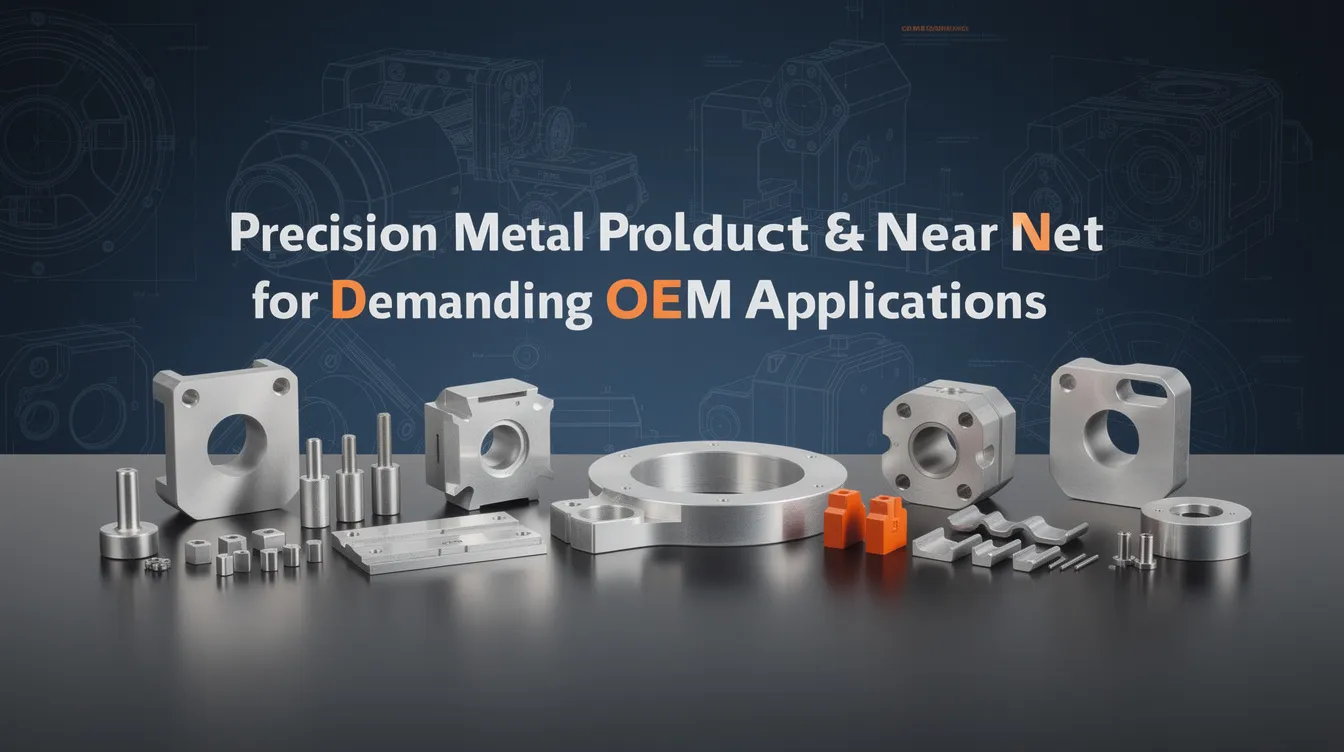
Precision Metal Products & Near Net Components for Demanding OEM Applications
Overview of Precision Metal Products and Anebon’s Capabilities
Precision metal products are custom-manufactured components held to tight dimensional tolerances-often ±0.01 mm on critical features and as precise as ±0.002 mm on the smallest datum surfaces-with controlled surface finishes, verified material properties, and part-to-part repeatability sufficient for safety-critical and high-performance assemblies. These are not commodity parts. They are CNC-machined, die cast, or sheet metal formed components engineered to fit within complex, often automated assemblies where a deviation of a few microns can mean the difference between function and failure.
Anebon Metal Products Limited, founded in 2010 and located in Dongguan, Guangdong, China, is a B2B OEM manufacturing services company built to serve overseas customers who need exactly this level of control. The company holds both ISO 9001:2015 and ISO 14001:2015 certifications-ISO 9001 certification ensures quality management standards across every production step, while ISO 14001 certification focuses on environmental management systems governing waste, emissions, and resource use. These ISO certifications enhance credibility in precision metal manufacturing and signal to global buyers that Anebon operates under globally recognized frameworks.
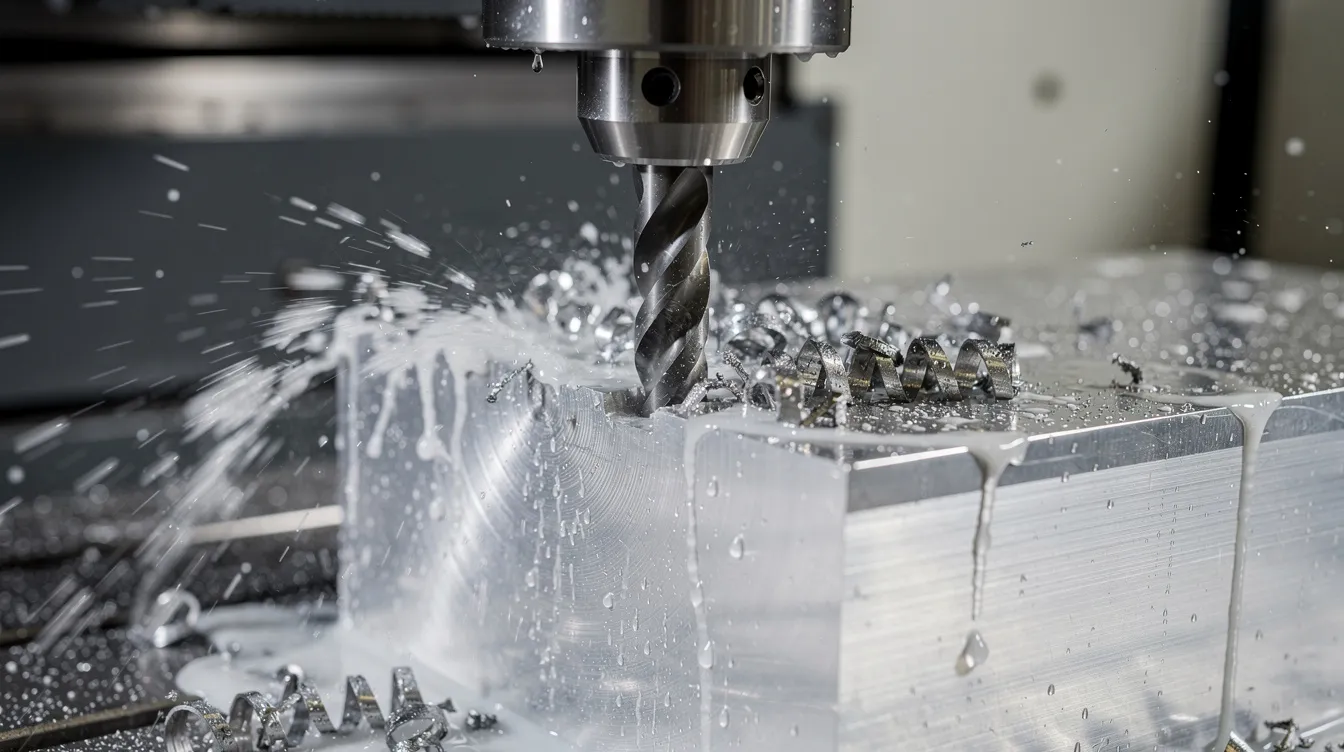
Core capabilities span the full spectrum of precision metal fabrication. Anebon’s operations cover CNC milling (3-axis and 5-axis), CNC turning with live tooling, aluminum and zinc die casting, sheet metal fabrication (laser cutting, CNC bending, stamping, hardware insertion), and a complete suite of surface treatments. The company offers services from rapid prototyping-which accelerates product development cycles by allowing quick iterations and design modifications-through to full-scale production runs of tens of thousands of units.
These precision metal products serve industries where dimensional tolerance and surface finish are not negotiable: aerospace defense, medical devices, automotive and e-mobility, electronic systems, robotics, and industrial machinery. Precision Metal Products uses various metals for fabrication, and materials include aluminum, titanium, plastics, and stainless steel, giving engineers the flexibility to meet a wide range of functional and regulatory requirements.
A key concept running through Anebon’s approach is near net manufacturing. Near net metal components are parts produced by a forming process-die casting, forging, or powder metallurgy-that are already close to their final geometry, requiring only minimal CNC finishing on critical surfaces. This dramatically cuts machining time and material waste while still reaching the tight tolerances OEM applications demand. Rapid prototyping supports tight tolerances of ±0.002 mm, making it essential for high-precision custom metal parts even during the earliest development stages.
Anebon’s main differentiators at a glance:
-
Precision CNC machining offers tolerances as precise as ±0.002 mm on critical features
-
Broad materials range: aerospace-grade aluminum, stainless steels, titanium, engineering plastics, copper alloys
-
Near net die casting and machining under one roof for faster turnaround and lower cost
-
ISO 9001:2015 and ISO 14001:2015 certified quality and environmental management
-
Rapid prototyping (often 7–10 working days) scaling to full production
-
Dedicated engineering team providing DFM feedback before production begins
If you are a design engineer or buyer developing your next product, send your CAD files and drawings to Anebon’s team for a detailed manufacturability review and quote. A short email with your 3D model is often enough to start the conversation.
Precision Metal, Near Net Metal Components, and Manufacturing Processes
What makes a metal product “precision”? It is not a single attribute but a convergence of several: geometric tolerances (flatness, roundness, true position), dimensional tolerances held part to part across hundreds or thousands of units, surface roughness targets (commonly expressed as Ra values), verified material properties, and the ability of each component to fit within its intended assembly without rework. Precision metal products require consideration of dimensional tolerance and surface finish at every stage-from material selection and fixturing through final inspection. The choice of precision metal components determines thermal stability and rigidity of the finished assembly, which is why CNC projects often prioritize machinability, strength, and corrosion resistance.
The machines that produce these results matter just as much. ABEC-7 precision spindle bearings maintain tight rotational tolerances with minimal runout, while precision linear guide rails translate rotational motion into linear motion with minimal friction. Hardened and ground alloy steel ways resist wear and ensure linear guide rails maintain repeatability over millions of cycles. When a shop machines precision net shapes on equipment like this, the results are measurable and consistent.
Near Net in Practice
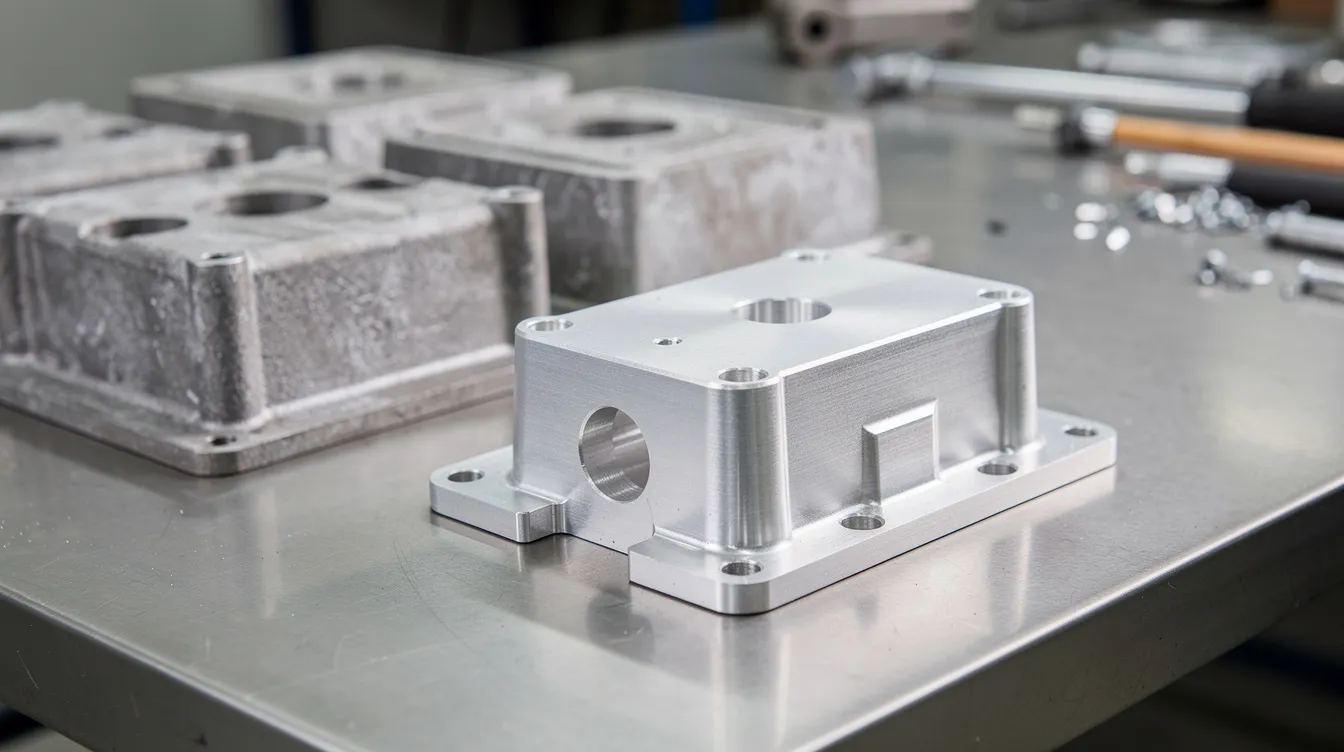
Consider a real-world scenario: an aerospace defense housing traditionally machined from a solid block of 7075 aluminum. Machining from billet means removing 70–90% of the raw material, generating enormous scrap, consuming tooling, and requiring hours of cycle time per part. The near net alternative uses aluminum die casting to produce the housing with internal cavities, bosses, and wall geometry already formed-leaving only critical mating surfaces and bearing bores for CNC finishing. This approach can reduce machining time by 40–60%, lower material consumption dramatically, and decrease tool wear. Products range from under 1 lb. to 100 lbs. in net weight, covering everything from small electronic enclosures to large structural brackets.
CNC Machining Capabilities
Anebon’s CNC machining services cover 3-axis milling for standard geometries and 5-axis CNC machining, which allows complex geometries to be machined in a single setup-eliminating re-fixturing errors and reducing total cycle time. CNC turning with live tooling combines turning and milling operations in one clamping, improving coaxiality on features like shafts, valve stems, and connector bodies. CNC machining produces parts weighing from under 1 lb. to 100 lbs., and CNC machining can create complex geometries for custom parts that would be impractical or impossible with conventional methods.
Typical tolerance ranges break down as follows:
-
Non-critical features: ±0.05 mm
-
Precision features (holes, datums, true position): ±0.01–0.02 mm
-
Critical or cosmetic surfaces: ±0.005 mm or tighter
-
High-precision work on select features: down to ±0.002 mm
Batch sizes range from prototypes of 5–10 pieces to production runs exceeding 10,000 units. Lead time for prototypes is often 7–10 working days; production samples typically ship within 2–6 weeks depending on complexity, materials, and finishing requirements.
Die Casting for Near Net Parts
Die casting is Anebon’s primary method for producing near net metal components at volume. Aluminum alloys (A380, ADC12) and zinc alloys are cast into thin-walled shapes-as thin as 0.5 mm in some configurations-with internal features, ribs, and threaded bosses formed in the die. Per-piece cost drops significantly at volume because the casting cycle is measured in seconds to minutes, versus the minutes to hours required for full CNC machining from billet. Integrating die casting with in-house CNC finishing means Anebon’s team controls the entire chain from near net blank to final inspected part.
Sheet Metal Fabrication
For precision metal products like chassis, brackets, enclosures, and panel assemblies, Anebon’s sheet metal fabrication services include fiber laser cutting (profile tolerances of ±0.12–0.25 mm), CNC press brake bending (±0.5° to ±1.0° angle tolerance), stamping, forming, welding, and hardware insertion (PEM fasteners, rivets). All processes run under ISO-certified quality controls.
Materials Range
Selecting the right precision metal depends on functional requirements such as strength and machinability. Anebon routinely works with:
-
Aluminum 6061-T6, which offers an exceptional strength-to-weight ratio and good corrosion resistance, making it one of the most versatile alloys for machined and formed parts
-
Aluminum 7075-T6, which provides high strength while remaining lightweight and is slightly harder to machine than 6061-preferred for aerospace-grade aluminum applications requiring high strength-to-weight ratio
-
Stainless steels 304, 316 (stainless steel 316 offers superior resistance to salt and chemical corrosion for harsh environments), and 17-4 PH for heat-treatable strength
-
Titanium alloys, notably Ti-6Al-4V, which provide high strength and low weight suitable for specialized applications in aerospace and medical implant work
-
Tool steels that feature extreme wear resistance and dimensional stability after heat treatment, used for wear surfaces and mold tooling
-
Certified Meehanite Cast Iron, which provides exceptional vibration dampening and high compressive strength-valuable for machine bases and fixturing
-
Engineering plastics: PEEK (continuous use to ~250 °C), Delrin (acetal), and Ultem (PEI) for electrical isolation, chemical resistance, and lightweight assemblies
-
Copper alloys and bronzes for thermal and electrical conductivity
Surface Treatments and Finishes
Precision metal products are incomplete without the right surface treatment. Anodizing aluminum enhances its corrosion resistance and appearance-Type II for decorative and protective applications, Type III hard anodizing for wear-critical surfaces. Other finishes include nickel and chrome plating (per AMS/ASTM specifications), powder coating, passivation for stainless steels, bead blasting, brushing, and laser engraving for traceability and serialization. Precision grinding and lapping achieve mirror-like surface finishes and strict tolerances on mating or sealing surfaces, with Ra values below 0.8 µm where required.
Why Engineers Choose Near Net Metal Components
-
Less machining time: only critical surfaces need CNC finishing
-
Reduced scrap: near net forming uses a fraction of the raw material compared to billet machining
-
Lower tool wear: less material removal means longer cutter life
-
Easier scaling: die tooling amortizes across large production volumes
-
Cost-effective prototyping to production transition
Applications in Aerospace Defense, Medical, Automotive, and Electronics
Anebon operates as a cross-industry partner, producing precision metal products for applications where failure is not an option and consistency across thousands of parts is the baseline expectation. CNC machining is used in industries like aerospace and automotive, and rapid prototyping is used in aerospace and medical device industries to validate designs before committing to full-scale tooling.
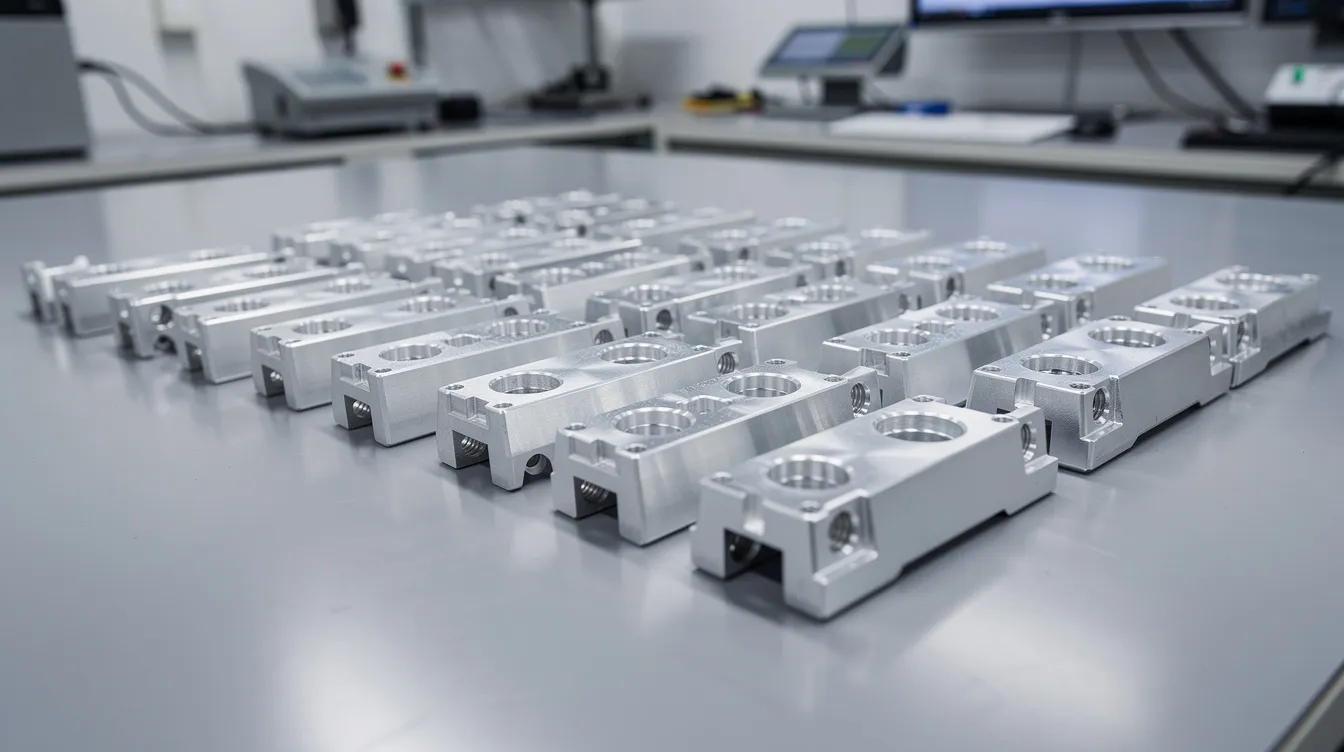
Aerospace defense applications include machined aluminum and titanium structural brackets, radar and avionics housings, and connector bodies. Every part ships with documented material traceability-mill test reports, heat numbers, chemical composition, and mechanical property data per AMS and ASTM specifications. Anebon’s aerospace machining capabilities cover the tight GD&T callouts and CMM inspection reports that defense programs require.
Medical device components demand burr-free edges, biocompatible materials (316L stainless, titanium, PEEK), and ultra-fine surface finishes-often Ra below 0.8 µm for fluid-contact surfaces. Anebon machines surgical tool parts, precision aluminum frames for diagnostic equipment, and small turned parts for pumps and valves, all designed to survive sterilization cycles.
Automotive and e-mobility parts include die cast and machined housings for power electronics, battery module hardware, and precision turned shafts or bushings. Consistency is the challenge here: fit and finish must be identical across high-volume runs of thousands of units, with thermal management often driving material and geometry decisions.
Electronic and industrial machinery components include heat sinks, RF shield enclosures, motor mounts, and precision gears or pulleys with controlled concentricity and surface roughness. It is essential for high-precision custom metal parts like these that engineering specifications translate directly to shop-floor reality.
Key industry applications at a glance:
-
Aerospace defense: Titanium brackets, radar housings, avionics enclosures – full material traceability, AMS/ASTM compliance
-
Medical: Surgical instruments, diagnostic frames, pump components – biocompatible metals, sterilization-safe finishes
-
Automotive / e-mobility: Battery module brackets, powertrain shafts, electronic housings – high-volume consistency, thermal stability
-
Electronics: Heat sinks, RF enclosures, connector bodies – tight concentricity, controlled surface roughness
-
Industrial machinery: Motor mounts, gears, pulleys – wear-resistant alloys, precision ground surfaces
-
Robotics: Structural frames, actuator housings, sensor mounts – lightweight alloys, multi-axis machined features
It is worth noting that while some well-known precision metal manufacturers are located in the USA-Precision Metal Products (PMP), Inc., for example, has been operational since 1961, has been ISO 9001 certified since 1983, and has supplied the fire sprinkler industry since 1983 from its base in El Cajon, California-Anebon serves the same global customer base from Dongguan, China. The company routinely ships precision and near net metal products to OEM customers across North America, Europe, and APAC, meeting the same internationally benchmarked quality standards that buyers in the USA expect.
Quality Assurance, Project Workflow, and Partnering with Anebon
Precision metal products only deliver value when backed by rigorous quality assurance and clear project communication. A beautifully machined part that ships without inspection data, material certification, or dimensional verification is a liability, not a product. Acquiring material certification is essential for precision CNC work to ensure quality-every alloy lot, every heat treatment batch, every plating run must be documented and traceable.
Quality System
Anebon’s quality management system is built on ISO 9001:2015 and ISO 14001:2015 foundations. Effective quality management systems continuously improve product quality through incoming material inspection (verifying alloy grade, temper, and certification against purchase orders), in-process checks (dimensional spot-checks, surface roughness measurement, tool wear monitoring), and final inspection using coordinate measuring machines (CMMs), height gauges, and surface roughness testers. Quality assurance improves product reliability in manufacturing processes and directly leads to customer satisfaction and trust. For production batches, statistical process control (SPC) tracks critical dimensions across the run to catch drift before it produces non-conforming parts.
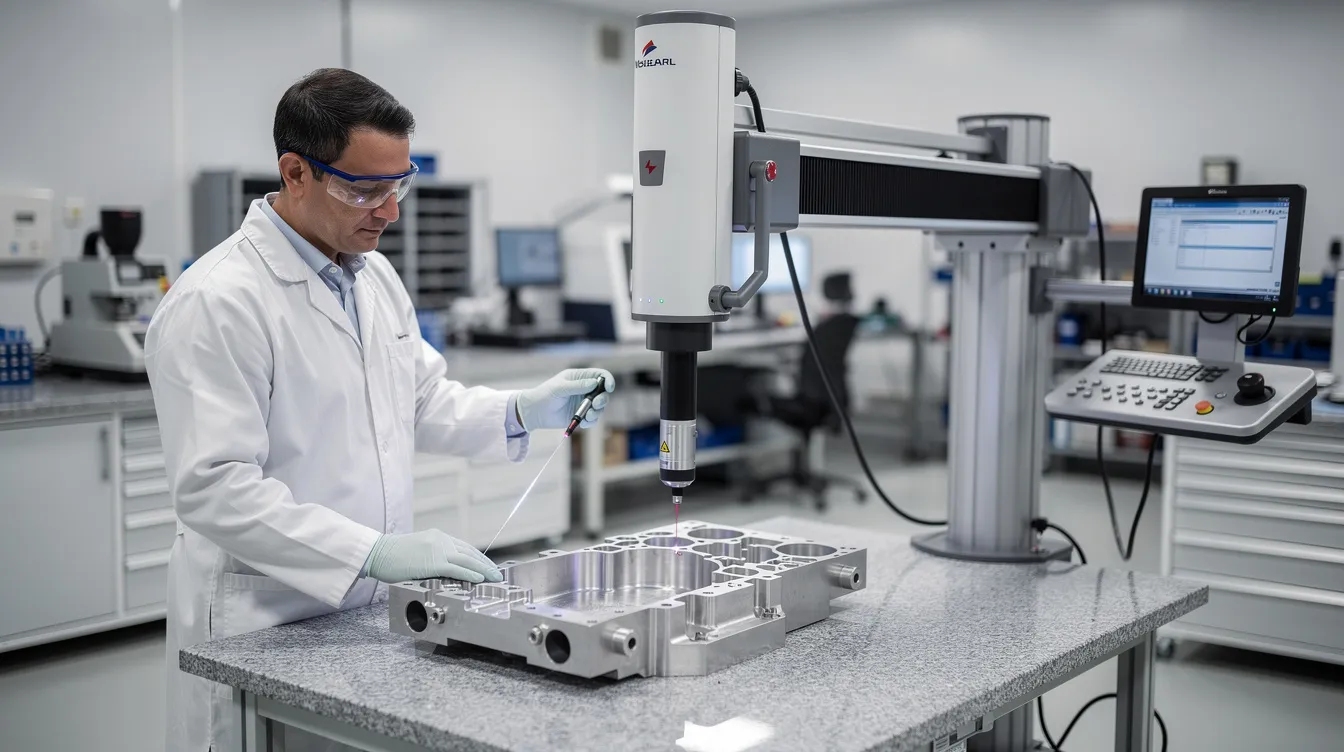
DFM Feedback and Engineering Support
Anebon’s engineering team supports design engineers early in the development cycle through DFM (Design for Manufacturability) feedback. This means reviewing 3D models and 2D drawings before quoting, suggesting tolerance optimization (tightening only where function demands it), recommending fillet radii and draft angles for castings, and advising when to switch from full machining to near net metal components such as die cast or forged blanks. This engineering collaboration often reduces cost and lead time before a single chip is cut.
Typical Project Workflow
A typical engagement follows a structured path:
-
RFQ submission: The customer sends CAD files (STEP, IGES, or Solidworks) and 2D drawings with GD&T callouts, material specifications, and quantity targets.
-
Engineering review: Anebon’s team reviews the design, identifies manufacturing risks, and provides DFM suggestions-often within 24–48 hours.
-
Quotation and lead time confirmation: A detailed quote covers material, machining, finishing, inspection, and shipping. Lead time is confirmed based on current capacity.
-
Rapid prototyping: Prototype parts are typically delivered within 7–10 working days, allowing quick iterations and design modifications before production tooling is committed.
-
Validation: Prototypes are measured, tested, and approved. First article inspection (FAI) reports document every critical dimension.
-
Production ramp-up: Once validated, production scales with PPAP documentation where required, in-process SPC, and batch inspection reports.
Documentation and Traceability
For aerospace defense and medical projects, documentation goes beyond standard practice. Anebon provides material certificates (MTRs with heat numbers and chemical composition), process logs (machining parameters, heat treatment records), full dimensional inspection reports, and serialization or laser-marked IDs on parts. This level of traceability is non-negotiable in regulated industries and reflects the excellence that engineering teams at OEMs demand from their supply chain.
Collaboration and Communication
Every project is assigned a dedicated project engineer who serves as the single point of contact. Regular progress updates, photos of work in process, and flexibility to adjust order quantities or accommodate engineering changes during development cycles keep the customer in control. Anebon’s experience working across time zones with North American and European customers means communication cadences are designed to meet the pace of fast-moving product development programs.
Key reasons to partner with Anebon for precision metal and near net metal components:
-
Global OEM focus: proven experience shipping to customers across industries and continents
-
Tight tolerances: ±0.002 mm on critical features, verified by CMM
-
Broad material and process range: metals, alloys, engineering plastics, die casting, sheet metal, CNC machining
-
Fast lead times: prototypes in 7–10 days, production in 2–6 weeks
-
Strong quality culture: ISO 9001:2015 and ISO 14001:2015 certified, with full traceability documentation
-
Engineering partnership: DFM feedback, tolerance optimization, and process recommendations before production begins
Start Your Next Project
Every precision metal product begins with a conversation about geometry, material, and timeline. Whether you need 10 prototype brackets or 10,000 production housings, Anebon’s team is ready to continue that conversation. Send your latest project files-CAD models and drawings-via email for a detailed quote and manufacturability review. Join the growing network of OEM customers who rely on Anebon to meet their most demanding precision metal needs, and experience the difference that integrated near net manufacturing and rigorous quality assurance make at every stage of production.