Top Precision Machining Service: Enhance Your Manufacturing Efficiency
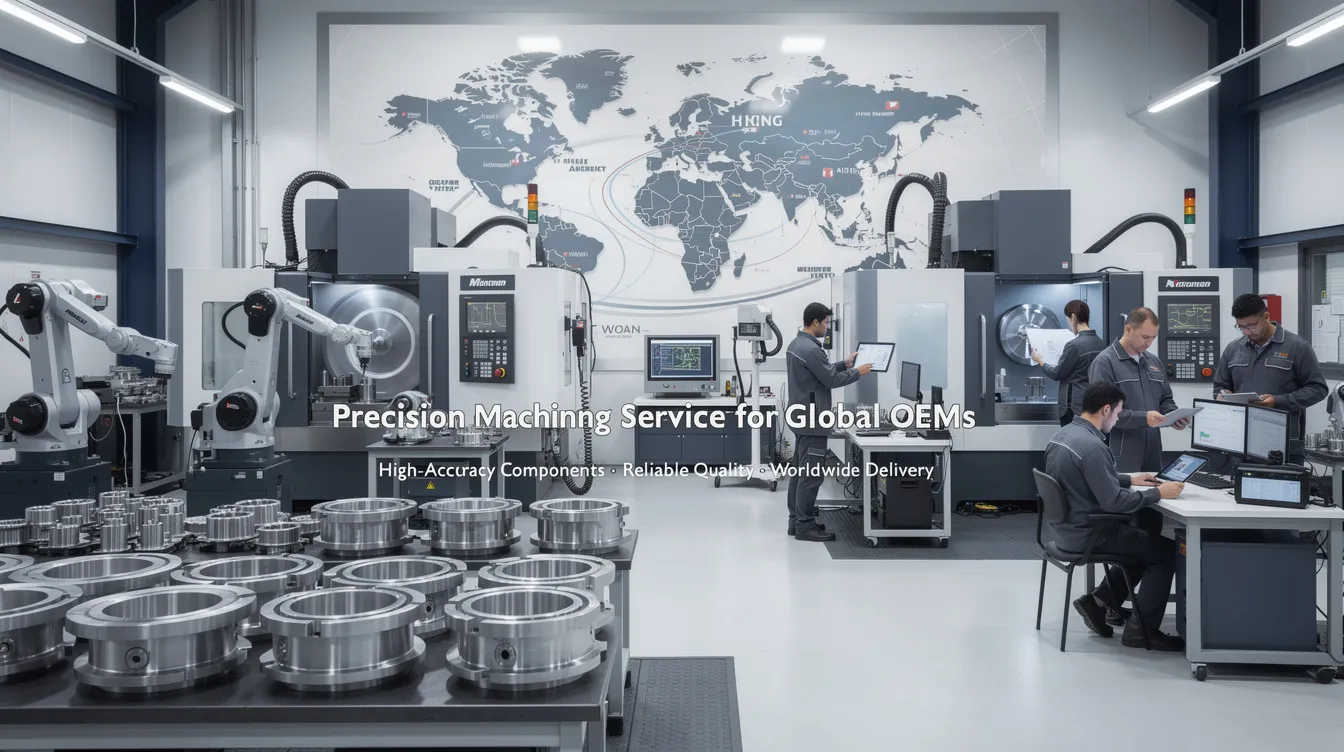
Precision Machining Service for Global OEMs
Introduction to Precision CNC Machining Services
Every component in a jet engine bracket, a surgical instrument, or a smartphone frame starts as raw material stock and must be transformed into a finished part that meets exact drawing specifications. Precision machining services create high-precision components by removing material from a workpiece using computer numerical control, and for OEMs in aerospace, medical devices, automotive industries, and consumer electronics, the difference between a reliable supplier and a costly mistake often comes down to microns.
Anebon Metal Products Limited, founded in 2010 in Dongguan, China, provides precision cnc machining services spanning the full product lifecycle-from rapid prototyping to scale production. With tight tolerances down to ±0.002 mm on critical features and cnc machining capabilities covering over 50 metal and plastic materials, Anebon supports overseas OEM clients who cannot afford dimensional surprises. Core services include cnc milling, cnc turning, 5 axis cnc machining, die casting, and sheet metal fabrication, all under one roof and backed by ISO 9001:2015 and ISO 14001:2015 certifications.
What Is Precision CNC Machining?
Precision cnc machining is the controlled, programmable removal of material from a solid block of metal or plastic to produce parts with very tight dimensional, geometric, and surface finish requirements. Unlike general-purpose machining-where tolerances might sit around ±0.02 mm to ±0.05 mm-precision machining targets ±0.005 mm or tighter, with leading shops reaching ±0.002 mm on functional or mating surfaces. The cnc machining process relies on digital instructions (G-code) generated from CAD/CAM software, which tell the machine tools exactly where to move and how fast to cut.
The most common processes fall into two categories. CNC milling uses a multi-point rotating tool to remove material as the workpiece is held on a table, creating complex shapes, pockets, slots, and contoured surfaces. CNC turning employs a single-point cutting tool on a rotating workpiece, producing cylindrical features like shafts, bores, and custom threads. Beyond these, drilling, tapping, boring, and reaming create precise holes, while finishing operations like polishing and grinding refine the surface finish to the required Ra value.
Machine configurations matter. Standard cnc machines with three axes handle straightforward geometries, while 4-axis and 5-axis machining centers allow movement along additional rotational axes-five axes simultaneously in the case of full 5-axis-enabling machining of multiple faces in a single setup and drastically reducing repositioning errors. Multitasking mill-turn centers combine turning and milling, further cutting setup count and improving concentricity on complex rotational parts.
Our Precision Machining Capabilities
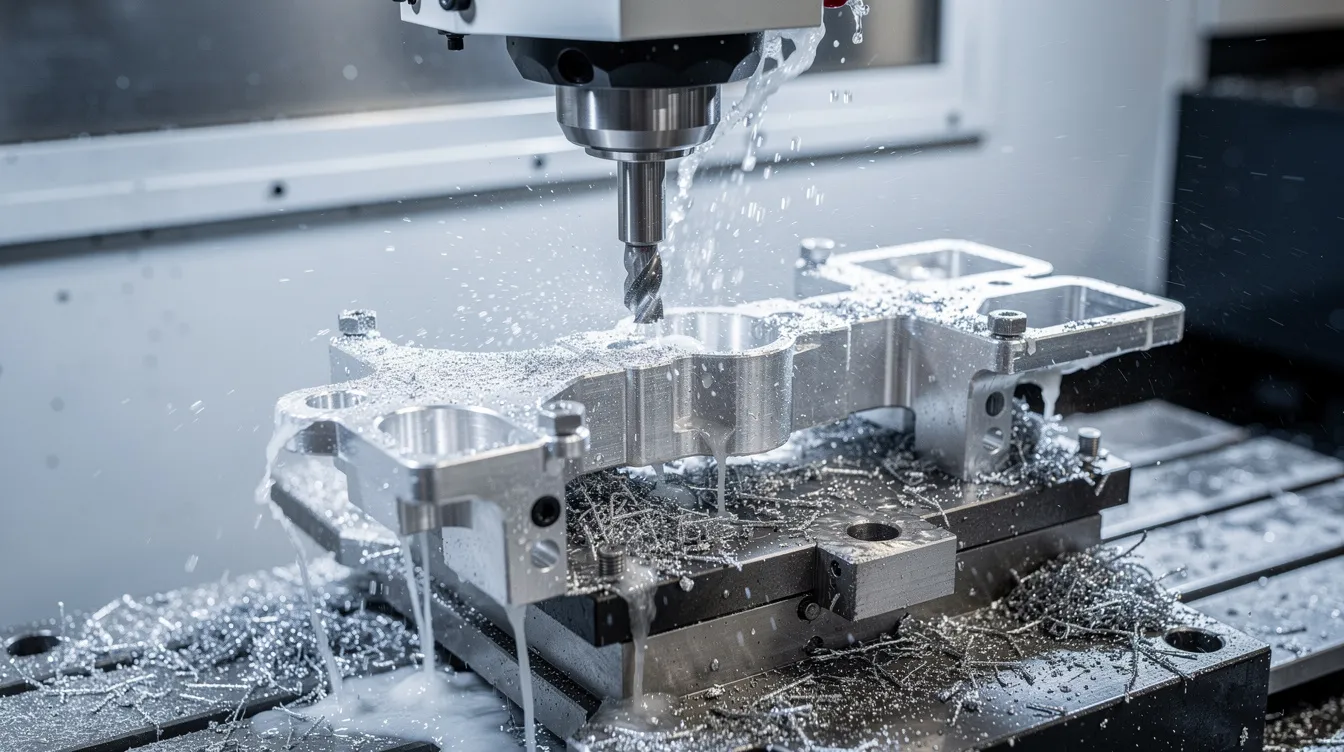
Anebon’s cnc machining service is built around the needs of B2B and OEM customers who demand repeatable accuracy, material traceability, and production run flexibility necessary for managing different stages of the product lifecycle. ISO 9001:2015 and ISO 14001:2015 certifications underpin every project, whether it involves a single prototype or an ongoing production contract. CNC machines can operate 24/7 for continuous production, and Anebon’s capacity supports high-volume production runs exceeding 10,000 units as well as short-run prototyping. In fact, cnc machining services can scale production from 1 to 100,000 parts depending on the project.
Secondary operations-including finishing, heat treating, anodizing, powder coating, and basic mechanical assembly-are managed in-house or through tightly controlled local partners, reducing the number of vendors an OEM must coordinate.
CNC Milling: From Prototype to Production
Anebon operates 3-, 4-, and 5-axis CNC mills for custom cnc milling services covering frames, housings, brackets, heat-sink structures, and any part geometry requiring multi-face machining. Typical work envelopes accommodate parts up to roughly 1000 × 600 × 500 mm, with both aluminum alloys and stainless steel handled routinely. Multi-axis milling reduces the number of setups needed, which directly improves consistency on features like aligned bores and multi-face hole patterns that would otherwise accumulate error across refixturings.
For OEMs launching new products, this means cnc prototypes and first-run production parts can come off the same machines and fixtures, so dimensional data from prototyping carries forward into volume manufacturing without surprises.
CNC Turning and Mill-Turn Precision
Lathe-based cnc machining on CNC turning centers and cnc lathes produces cylindrical parts such as shafts, connectors, valve components, and threaded fittings. Anebon’s turning equipment achieves tight concentricity, smooth surface finishes down to approximately Ra 0.8 µm, and complex threading including custom threads and multi-start forms.
Where parts require cross-holes, flats, keyways, or other milled features on a turned body, mill-turn centers with live tooling and Y-axis capability handle everything in a single clamping. This eliminates the error introduced by transferring a part between a lathe and a milling machine, which is particularly important for machine components used in robotics, pneumatic systems, and industrial automation.
Materials for Precision CNC Machined Parts
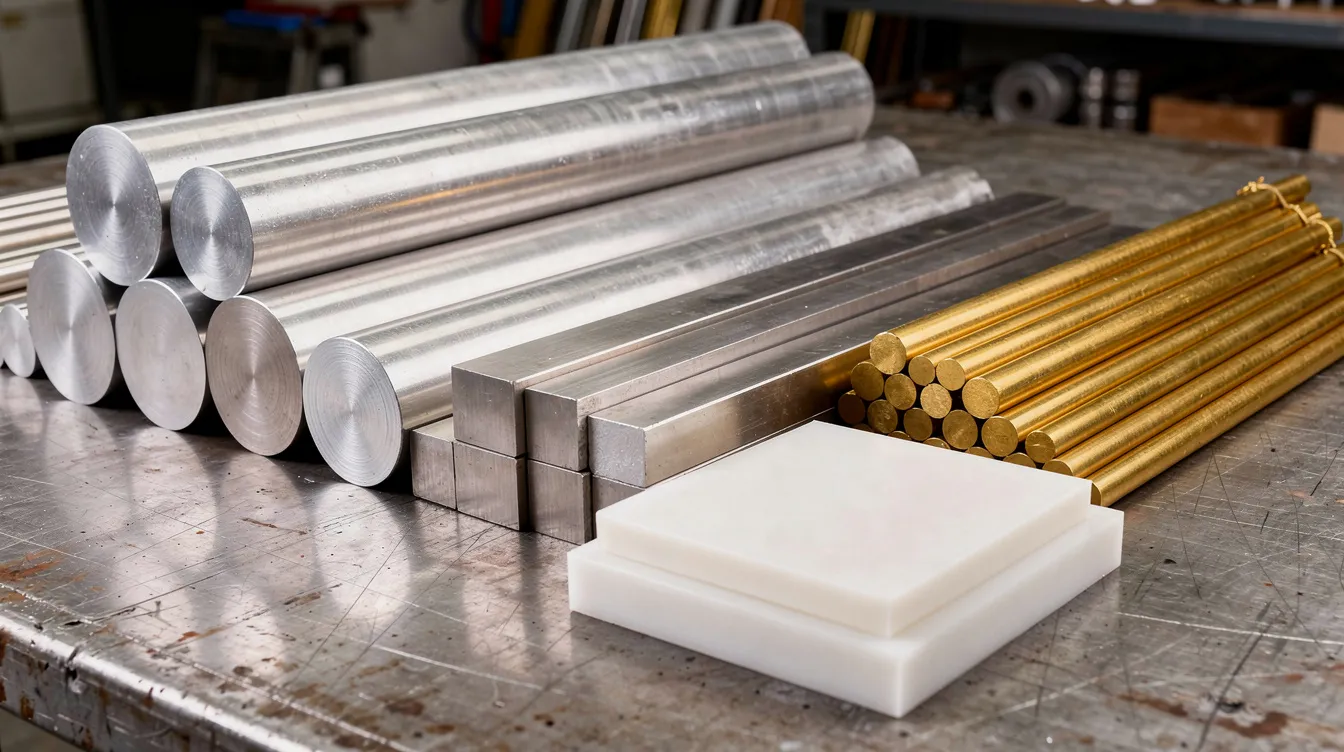
Anebon supports a wide range of metals and engineering plastics-CNC machining can handle over 50 different materials-allowing OEM customers to select exactly the right combination of mechanical properties, chemical resistance, weight, and cost for their application.
Metals for High-Precision Applications
Aluminum alloys like 6061 and 7075 are commonly used across consumer electronics and automotive applications. 6061-T6 offers good machinability, corrosion resistance, and a tensile strength around 310 MPa, making it a go-to for housings, brackets, and heat sinks. 7075, with tensile strength exceeding 500 MPa, serves structural aerospace parts where strength-to-weight ratio is paramount. Cutting speeds for aluminum can reach 250–600 m/min, keeping cycle times short and cnc machining service cost competitive.
Stainless steel grades such as 303, 304, 316L, and precipitation-hardened 17-4PH deliver corrosion resistant performance for medical device fixtures, food-processing equipment, and marine hardware. Titanium is known for its strength-to-weight ratio and corrosion resistance, making it the material of choice for implant-grade medical and aerospace parts-though its low thermal conductivity demands rigid machines, sharp tooling, and slower feed rates (40–90 m/min). For wear-critical applications, alloy steel grades like 4140 and 4340 provide toughness and fatigue resistance, while tool steel is selected for long-service-life dies, molds, and industrial fixtures. Spring steel and mild steel round out the carbon-steel family for functional mechanical parts. Brass and copper serve connectors and fittings where electrical conductivity and thermal performance matter.
Engineering Plastics for Precision Components
For functional prototypes and light-duty precision cnc parts in electronics, ABS, polycarbonate, and nylon are frequently machined. Nylon has high tensile strength and low moisture absorption (though conditioning may be required for critical dimensions), making it practical for gears, bushings, and structural inserts. POM (Delrin) delivers dimensional stability and low friction for sliding mechanisms. Materials like pvc polyvinyl chloride and epoxy resin serve specialized insulation and encapsulation roles, while carbon fiber composites are machined for lightweight structural panels.
For extreme environments, PEEK tolerates continuous service temperatures up to approximately 250 °C and offers broad chemical resistance, suitable for aerospace and oil & gas components. PTFE is known for its non-stick and low-friction properties, making it ideal for seals, gaskets, and bearing surfaces in laboratory and industrial equipment. Anebon maintains dimensional control on plastic parts through optimized toolpath strategies, dedicated fixturing, and stress-relief practices that minimize warping or distortion after the cutting tool disengages.
Industries and Precision CNC Machining Applications
Precision machining is used in aerospace, medical devices, automotive, defense, heavy vehicles, appliances, and marine industries-and Anebon serves overseas OEMs across all of these sectors. The defense industry requires extreme accuracy and reliability in specialized parts, while automotive and heavy-vehicle manufacturers prioritize batch consistency and competitive price points.
Aerospace. Aerospace components must meet strict safety and performance standards, and industry certifications like AS9100D are crucial for aerospace cnc machining quality. Anebon machines brackets, sensor mounts, structural fittings, and actuation housings from aluminum alloys, titanium, and alloy steel. Components related to systems like helicopter rotor blades demand exceptional accuracy, full material traceability, and documented inspection at every stage.
Automotive. Precision cnc machining supports automotive industries through engine components, transmission housings, suspension brackets, and EV battery enclosures. High-volume repeatability and good mechanical properties across temperature cycles are non-negotiable.
Industrial and Robotics. End-effectors, gear housings, pneumatic manifolds, and custom fixtures for production automation rely on consistent tolerances and fast cnc machining capabilities to keep integration schedules on track.
Medical Devices and Life Sciences
Medical devices depend on high accuracy for manufacturing components-a surgical instrument with a bore 5 µm out of spec can compromise function in an operating room. ISO 13485 certification is essential for medical device cnc machining, and while Anebon currently holds ISO 9001:2015, its quality infrastructure supports the documentation demands typical of medical supply chains: material certificates, batch-level inspection reports, and full traceability.
Typical medical cnc machined parts include stainless steel instrument handles with mirror-polished grips, aluminum diagnostic device housings anodized for cleanability, and PEEK components for sterilizable assemblies used in laboratory or surgical settings. Surface roughness on sealing and bearing surfaces regularly targets Ra 0.8 µm or better, verified by stylus-based roughness testers.
Consumer Electronics and High-Tech Devices
In consumer electronics, cnc milling and custom cnc machining create precise unibody shells, frames, bezels, and structural parts for smartphones, laptops, cameras, and IoT devices. Cosmetic surfaces must be flawless before anodizing or other surface finish treatments, and the fit between mating parts often demands positional tolerances under ±0.01 mm.
Development cycles in this sector are short. Rapid prototyping and bridge production allow OEMs to validate designs quickly, iterate, and ramp to volume without switching suppliers. Anebon’s integrated capabilities-machining, die casting, and sheet metal-let product teams consolidate their manufacturing network into a single partner.
Quality Assurance and Tolerances in Precision Machining
Quality assurance standards are critical in precision machining, and Anebon’s quality system is anchored by ISO 9001:2015 certification, which ensures quality management in cnc machining across every project stage. ISO 14001:2015 covers environmental management. For customers in regulated sectors, Anebon supports the documentation frameworks required by AS9100D (aerospace) and ISO 13485 (medical devices), including first article inspection reports, material mill certificates, RoHS/REACH declarations, and traceability records.
CNC machining can achieve tolerances of +/-0.001″ to +/-0.005″ (approximately ±0.025 mm to ±0.127 mm in metric). Anebon’s precision cnc capability goes further, reaching ±0.005 mm as standard on critical features and ±0.002 mm where machines, fixturing, and environmental conditions support it. General dimensions on non-critical surfaces typically hold ±0.02–0.05 mm.
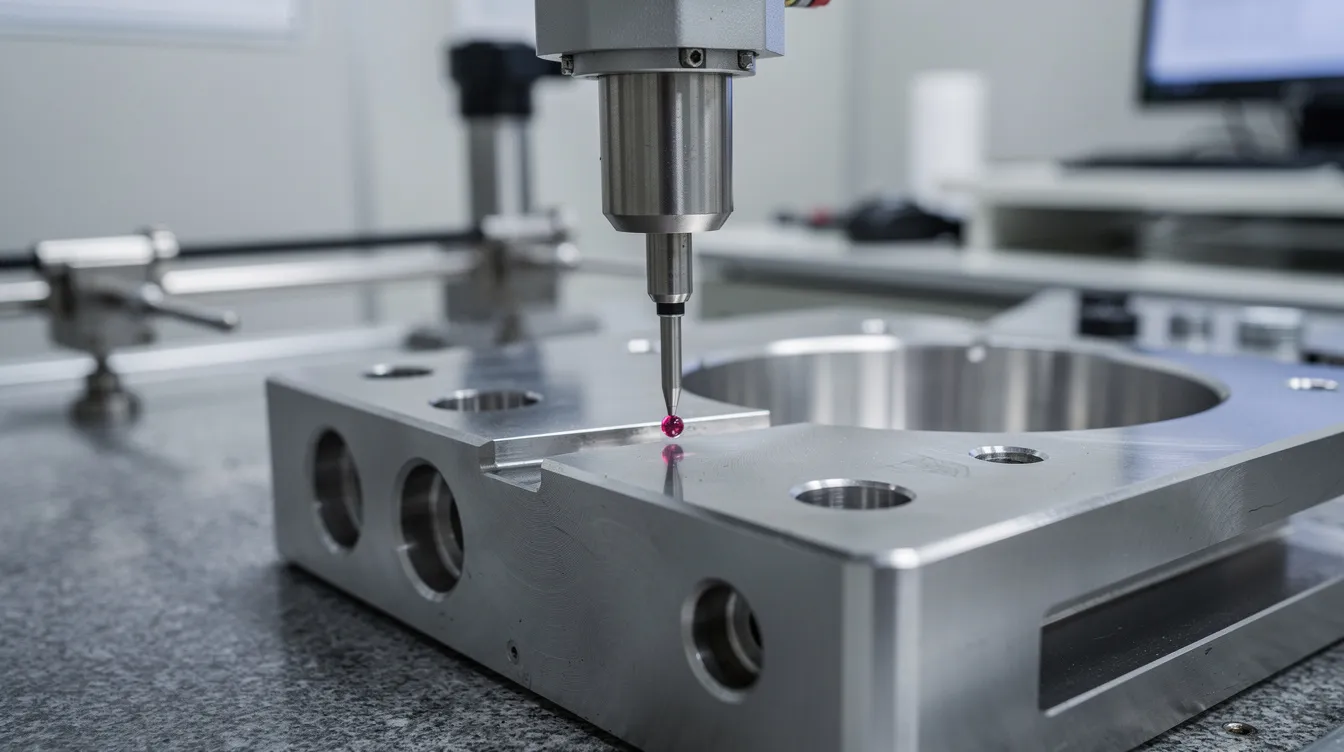
Inspection protocols may include Coordinate Measuring Machines (CMM) and non-destructive testing. Anebon’s precision manufacturing facility uses shop-floor CMMs accurate to ±0.003–0.005 mm, optical measurement systems, height gauges, surface roughness testers, and go/no-go gauges. CNC machining facilities often use advanced inspection tools like CMMs, and Anebon’s metrology area is temperature-controlled at 20 °C ±1–2 °C to prevent thermal expansion from skewing measurements on soft metals.
In-process inspection catches issues early, first article inspection validates the setup before a batch runs, and final inspection confirms every shipment meets drawing specifications before packaging.
Understanding and Specifying Tolerances
Not every dimension on a part needs to be held to ±0.002 mm. Skilled machinists and manufacturing engineers know that applying the tightest limits only to functional and mating features is the fastest way to balance cost and manufacturability. A housing bore that accepts a bearing genuinely needs ±0.005 mm; the outer envelope of the same housing might be perfectly functional at ±0.05 mm.
The cost impact is real: moving from ±0.05 mm to ±0.005 mm on a feature can double the machining process time on that operation due to slower feeds, additional finishing passes, and more frequent in-process measurement. Moving to ±0.002 mm may add specialized fixturing and dedicated metrology time. Lead time increases accordingly.
Anebon encourages early DFM collaboration. Send your 3D models and technical drawings before finalizing tolerances-Anebon’s engineers will review part geometry, flag features where tolerance relaxation saves cost without affecting function, and suggest design tweaks (such as replacing sharp internal corners with fillets matching standard endmill radii) that simplify the machining process.
Advanced Technology and Digital CNC Machining Workflow
Anebon leverages advanced technology across its production floor: modern CNC mills and lathes, 5-axis centers, integrated CAD/CAM programming, and digital production management systems that track every job from quote through shipment.
The workflow from CAD file to finished cnc parts follows a clear sequence. First, an engineer reviews the submitted 3D model and technical drawings for manufacturability-checking wall thicknesses, tool access, material selection, and tolerances. Next, CAM programmers generate toolpaths, simulate the metal cutting process virtually to catch collisions or inefficiencies, and select the optimal cutting tool sequence. Setup sheets are created for the shop floor, specifying fixtures, workholding, and inspection checkpoints. Machining begins, with in-process probing verifying critical dimensions before the part leaves the machine. After machining, parts move through any required secondary operations, final inspection, and protective packaging.
This digital workflow supports online cnc machining-style interactions: OEMs submit files by email or portal, receive quotations quickly, and track project status digitally. CNC machining can produce parts in as fast as 1 day for urgent prototypes, though typical production timelines depend on complexity, batch size, and finishing requirements.
From Online Quote to Production
Overseas OEMs can submit STEP, STP, IGES, or native CAD files along with technical drawings to Anebon for review and quotation. For most projects, quotes are returned within 24–48 hours-competitive with any online cnc machining platform but backed by direct engineering communication rather than automated pricing alone.
During the internal DFM review, Anebon’s engineers check manufacturability, confirm material stock availability, validate that specified tolerances are achievable on the intended machines, and suggest improvements. This step is especially valuable for custom cnc machining projects involving complex geometries or exotic materials where a small design change can significantly reduce cnc machining service cost.
Once a purchase order is issued, the job enters scheduling. Tooling preparation, CNC programming, and first-article setup proceed in parallel to compress lead time. For rapid prototyping orders of 1–10 pieces, first parts can ship within 5–10 business days depending on material and complexity.
Design Tips to Get the Most from Precision Machining Services
Thoughtful design choices improve cost, lead time, and reliability of cnc machined parts without sacrificing performance. The following principles apply whether you are designing production parts or cnc prototypes.
Simplify geometries where possible. Every additional feature-pocket, boss, undercut-adds tool changes and machining time. If a feature does not serve a functional purpose, consider removing it. Avoid unnecessarily deep pockets with high depth-to-width ratios that require long, slender endmills prone to deflection and chatter.
Choose fillets that match standard endmill radii. Internal corners must have a radius equal to or larger than the cutting tool radius. Specifying sharp internal corners forces EDM or specialized machining techniques that inflate cost and lead time. A 1 mm or 2 mm internal fillet typically aligns with standard tooling.
Select materials appropriate to actual requirements. Over-specifying titanium or PEEK when 6061 aluminum or POM would meet load, temperature, and certification needs wastes material and machining time. Additive manufacturing may be a better fit for extremely organic geometries where metal cutting would waste most of the material stock.
Use standard hole and thread sizes. Non-standard bores and custom threads require special tooling and extend setup time in cnc milling and cnc turning operations. Stick to ISO or ANSI standard sizes wherever possible.
Maintain consistent wall thickness and ensure tool access. Thin walls flex under cutting forces, causing dimensional drift. Walls below 0.8 mm in aluminum or 1.0 mm in steel should be discussed with your machining service provider before committing the design. Also ensure that the cutting tool can physically reach every feature without collision-deep cavities with small openings are a common source of cost escalation.
Collaborating with Anebon for DFM and Cost Optimization
Anebon’s engineering team reviews early-stage CAD models and drawings to propose geometry, tolerance, and material optimizations before any metal is cut. This collaboration often uncovers cost savings of 15–30% on complex parts simply by adjusting non-critical radii, relaxing cosmetic-only tolerances, or switching to a more machinable alloy with equivalent mechanical properties.
Share your intended application, expected volumes, and product lifecycle plans so Anebon can recommend the best mix of precision, cost, and scalability. For example, a medical device housing that will eventually move to die casting at high volumes might be prototyped and bridge-produced via custom cnc parts, with the CNC design intentionally aligned to future casting draft angles-saving a full redesign later.
This early-supplier-involvement approach is particularly valuable in medical devices, consumer electronics, and robotics where iterative prototyping is the norm and time to market is a competitive advantage.
Why OEMs Choose Anebon for Precision Machining Services
Anebon combines precision cnc machining, die casting, and sheet metal fabrication under one management system-a breadth of cnc services that most competitors segment across multiple facilities or subcontractors. For OEM customers, this integration means fewer suppliers to manage, shorter communication loops, and reduced alignment errors when a part requires casting followed by precision secondary machining.
Manufacturing in Dongguan, China, provides access to one of the world’s most developed precision manufacturing supply chains. Raw materials, surface treatments, heat treatment facilities, and logistics infrastructure are all within close proximity, keeping lead time and cost competitive for customers in North America, Europe, and across Asia-Pacific. Anebon delivers at a competitive price without compromising on the cnc machining applications and machining techniques demanded by regulated industries.
Since 2010, Anebon has built experience across demanding sectors-aerospace brackets requiring full traceability, medical instrument components with sub-micron surface finish requirements, and high-volume automotive parts that must hold tolerance across tens of thousands of cycles. CNC machining is widely used in aerospace, automotive, and medical industries, and Anebon’s longevity in serving these markets reflects its ability to deliver quality cnc machined parts consistently.
Production run flexibility is a hallmark: whether you need five cnc prototypes to validate a concept, 500 bridge-production units to support a product launch, or 50,000 annual production parts under a blanket order, Anebon’s capacity and scheduling systems accommodate the full lifecycle. CNC machining is suitable for high-volume production runs exceeding 10,000 units, and equally capable at lot sizes of one.
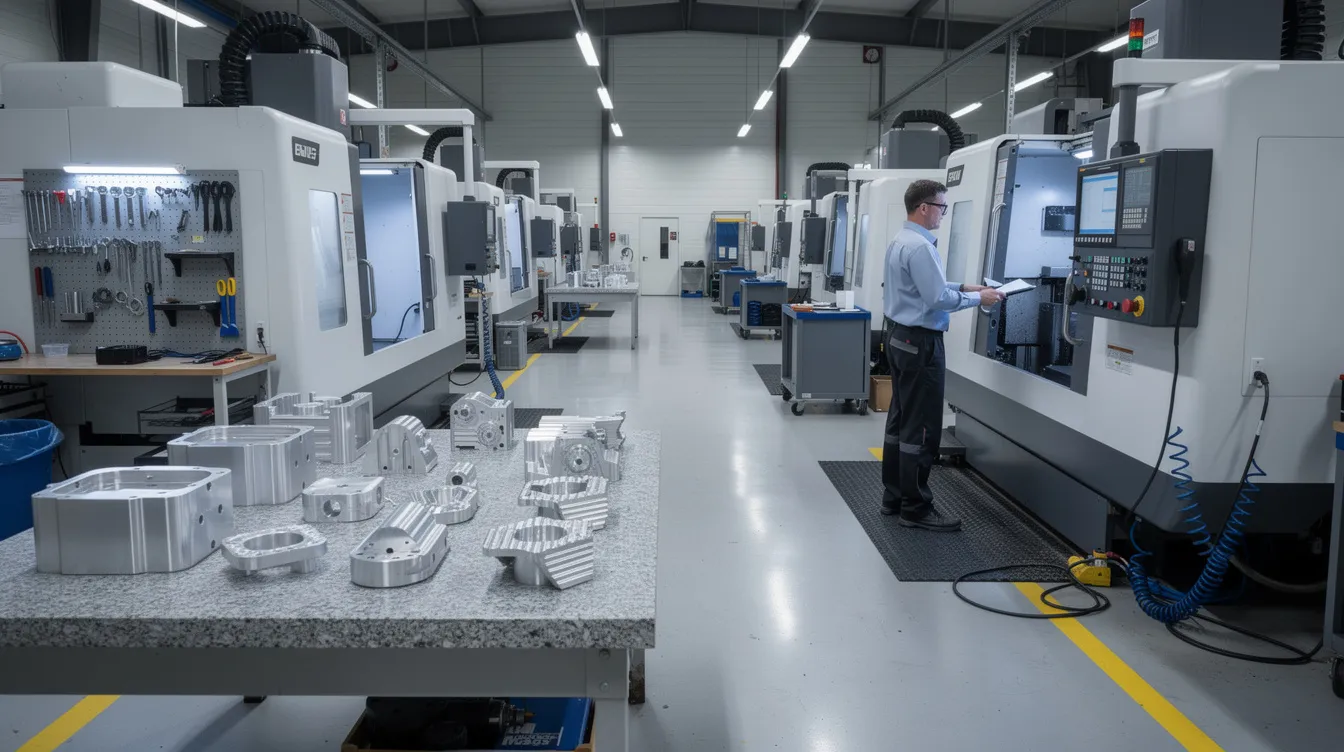
Getting Started with a Precision Machining Project
The fastest way to begin is to send your 3D CAD files (STEP, STP, or native format) and technical drawings to Anebon’s engineering team. Include target quantities-whether prototype or production-required materials, critical tolerances, surface finish specs, and any industry standards your parts must meet (such as AS9100D for aerospace or ISO 13485 documentation for medical). The more context you provide about the end-use application and high temperatures, chemical exposure, or mechanical loading the part will face, the more precise the DFM feedback will be.
Anebon’s team communicates in English, provides proactive project updates, and supports overseas engineering teams across time zones. Whether your cnc machining needs involve a single custom cnc part or a multi-year production program, the process starts with a conversation-and a quote typically follows within 24–48 hours.
Ready to move forward? Contact Anebon Metal Products Limited with your next project files and let the team show you what exceptional accuracy, fast cnc machining capabilities, and genuine engineering collaboration look like in practice.