Top Precision CNC Prototyping Companies with ISO Certification
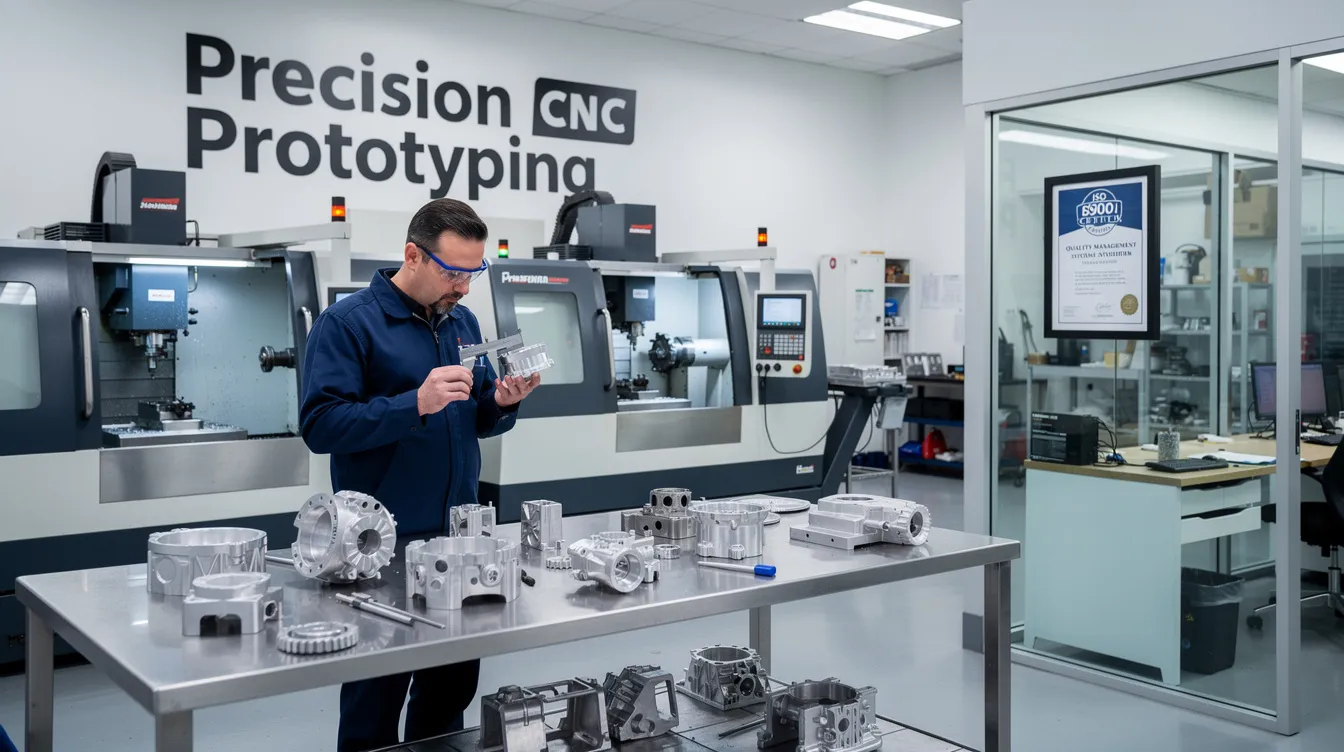
Precision CNC Prototyping Companies With ISO Certification
Development cycles are shorter than ever in 2026. Regulatory pressure across medical, aerospace, and automotive sectors keeps tightening. And global sourcing means your prototype supplier’s quality management system directly impacts your product timeline. Choosing an ISO-certified precision CNC prototyping partner is no longer optional for serious engineering teams-it’s the difference between a smooth path to production and months of costly rework.
This guide covers how to evaluate precision cnc prototyping companies with iso certification, what certifications to demand, how processes and materials affect outcomes, and how to balance cost against quality for your next project.
Answer First: How to Choose an ISO-Certified CNC Prototyping Partner in 2026
Key considerations for choosing a CNC partner include quality certifications and turnaround time. Here’s a concrete checklist to narrow your search fast:
-
Certifications: ISO 9001 2015 is baseline. Add ISO 13485 for medical device work, IATF 16949 for automotive, AS9100D for aerospace, and ISO 14001 for environmental compliance. Require ITAR registration for US defense-controlled designs.
-
Tolerance capability: Can the shop reliably hold precision tolerances down to ±0.002 mm on critical features? CNC machining tolerances can achieve precision as tight as ±0.001 inches on the right machine type with proper fixturing.
-
Lead times: Look for prototype delivery in 5–10 working days for standard complexity. Rapid prototyping can produce parts in as fast as 1 day for simple geometries. Protolabs, headquartered near Maple Plain, Minnesota, can deliver CNC prototype parts in 1–3 business days for straightforward work. Xometry’s standard lead time for prototypes is 3 business days.
-
Processes supported: Confirm availability of cnc milling, cnc turning, 5-axis machining, wire edm, and surface grinding under one roof.
US vs. China comparison for prototypes:
-
China-based ISO shops typically offer 35–55% cost savings. Three-axis milling rates in China range roughly $20–$60/hr versus $75–$150/hr at US shops. Five-axis work runs $60–$140/hr in China versus $110–$250+ in the US.
-
Lead times range similarly for machining itself (3–7 days), but add 3–7 days of air freight from China. US shops eliminate transit time but charge more per machine hour.
-
The US cnc machining market is the largest globally, and ISO 9001 and AS9100D are standard certifications for US shops. For non-ITAR prototypes, overseas ISO-certified shops offer compelling value. For ITAR-controlled work, itar registered US facilities are non negotiable.
What Makes a “Precision CNC Prototyping Company” in 2026?
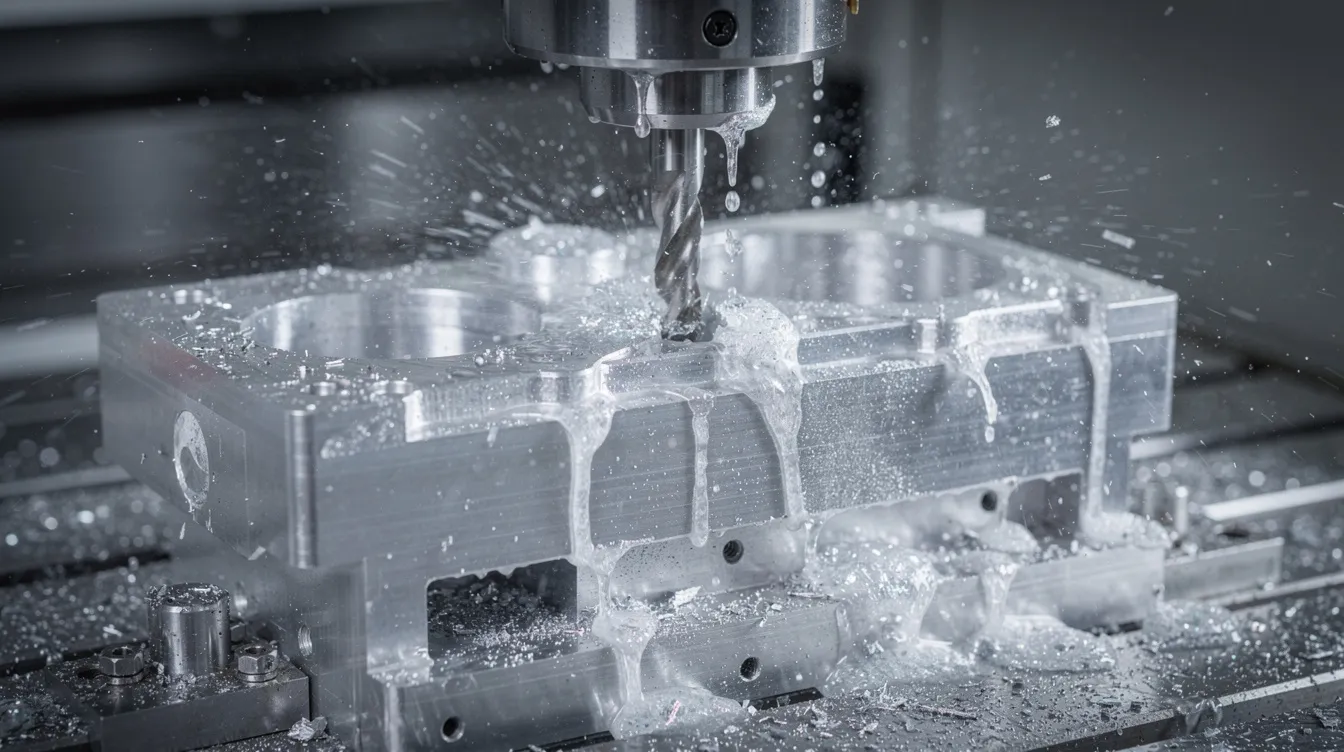
Precision CNC prototyping means low-volume cnc machined parts (typically 1–50 pieces) built from production-grade materials with tight tolerances and repeatability for functional testing, not just concept models.
-
Processes: CNC machining includes 3-axis, 4-axis, and 5-axis techniques. Swiss turning handles small-diameter shafts. Wire EDM cuts sharp internal corners in hardened materials. Surface grinding achieves fine flatness.
-
Tolerance bands: Standard prototype features use ±0.005 in (~±0.13 mm). High precision features require ±0.002 in (~±0.05 mm). Ultra-tight tolerances (±0.0005 in) apply to engine sealing surfaces, bearing seats, and aerospace fittings-reserve these for function-critical features to control cost.
-
DFM feedback role: Strong prototyping companies provide design feedback at the quoting stage, flagging thin walls, sharp internal corners, over-specified tolerances, and missing datums. This cuts rework cycles and speeds iterations for product developers.
CNC prototypes use the same materials as production parts, which is what separates precision machining prototypes from 3D-printed concept models.
Why ISO and Related Certifications Matter for CNC Prototyping
ISO certifications indicate quality assurance in cnc machining-not just on paper, but in daily practice on the shop floor.
-
ISO 9001 emphasizes systematic quality management across industries: documented processes, calibrated equipment, traceability, and corrective action procedures (CAPA). ISO certifications enhance a company’s credibility and competitive edge when competing for serious OEM contracts.
-
For regulated sectors, certifications are stringent requirements. Medical implant prototypes need ISO 13485. Aerospace actuator brackets require AS9100 certification, which is crucial for aerospace cnc machining. Automotive EV enclosures demand IATF 16949.
-
ISO certifications reduce the likelihood of component failures by enforcing process consistency, incoming material inspection, and documented nonconformance handling.
-
Traceability, calibrated inspection equipment, and CAPA procedures are direct benefits of working with a certified machine shop-even for a five-piece prototype run.
ISO certifications signal compliance with international quality standards set by the international organization for standardization, which is why procurement teams at major OEMs treat them as mandatory.
Key Certifications to Look For in Precision CNC Prototyping
-
ISO 9001:2015 – Baseline quality management for any cnc machine shop. ISO 9001 2015 is a baseline certification for CNC machining. Applicable across all industries.
-
ISO 13485 – Medical device quality system. Required for surgical instruments, implants, diagnostic housings.
-
IATF 16949 – Automotive quality. Required by Tier-1 OEMs and EV component suppliers. Covers PPAP, control plans, lot traceability.
-
AS9100D – Aerospace. Adds risk management, first article inspection (FAI per AS9102), counterfeit parts prevention.
-
ISO 14001:2015 – Environmental management. Increasingly required for ESG compliance.
-
ITAR registration – Mandatory for US defense or export-controlled parts.
To verify: request the actual certificate, check the expiry date, confirm the scope covers machining (not just assembly), and cross-reference via registries like IAQG OASIS for aerospace or accredited certification bodies. A certified machine environment means calibration schedules, controlled documents, and lot traceability are maintained even for small batches.
Global CNC Machining Market for Prototypes in 2026
The global cnc machining market is projected to grow from roughly USD 79.2 billion in 2025 to USD 194.3 billion by 2034, with Asia-Pacific already accounting for about one-third of revenues. The US cnc machining market remains the largest globally, though wage inflation and energy costs push hourly rates higher each year.
-
US 3-axis milling: ~$75–$150/hr. US 5-axis: ~$110–$250+/hr.
-
China 3-axis: ~$20–$60/hr. China 5-axis: ~$60–$140/hr.
-
High-end machine tools (5-axis centers, CMMs, automation cells) drive overhead at precision machine shops regardless of geography.
Digital platforms like Xometry-which connects buyers to over 10,000 vetted suppliers, with operations extending to cities like San Francisco-and Protolabs offer speed and instant pricing. But dedicated ISO-certified cnc manufacturing services typically deliver deeper DFM, consistent quality control, and stronger documentation than connecting buyers through volume marketplaces alone.
Processes: CNC Milling, Turning, and 5-Axis for High-Precision Prototypes
Choosing the right process depends on geometry, tolerance, and material.
-
CNC milling handles prismatic blocks, housings, brackets, and pocketed parts. CNC milling can achieve tolerances as tight as ±0.001 inches on properly fixtured features.
-
CNC turning is used for producing cylindrical parts efficiently-shafts, bushings, pins, and connectors. Swiss turning excels at small diameters and high aspect ratios.
-
5-axis machining allows for complex geometries and reduced setups, eliminating repositioning error on aerospace brackets and medical components.
-
Wire EDM: for sharp internal corners, thin walls, and hardened materials where milling tools can’t reach.
Achievable surface finishes: Ra 0.8 µm is standard; grinding or polishing can push to Ra 0.4 µm for sealing faces. Modern CNC machine tools with probing and tool monitoring support high precision even on short prototype runs. CNC machining can work with over 50 industrial-grade materials, giving engineers broad range in design choices.
Material Options for Precision CNC Machined Prototypes
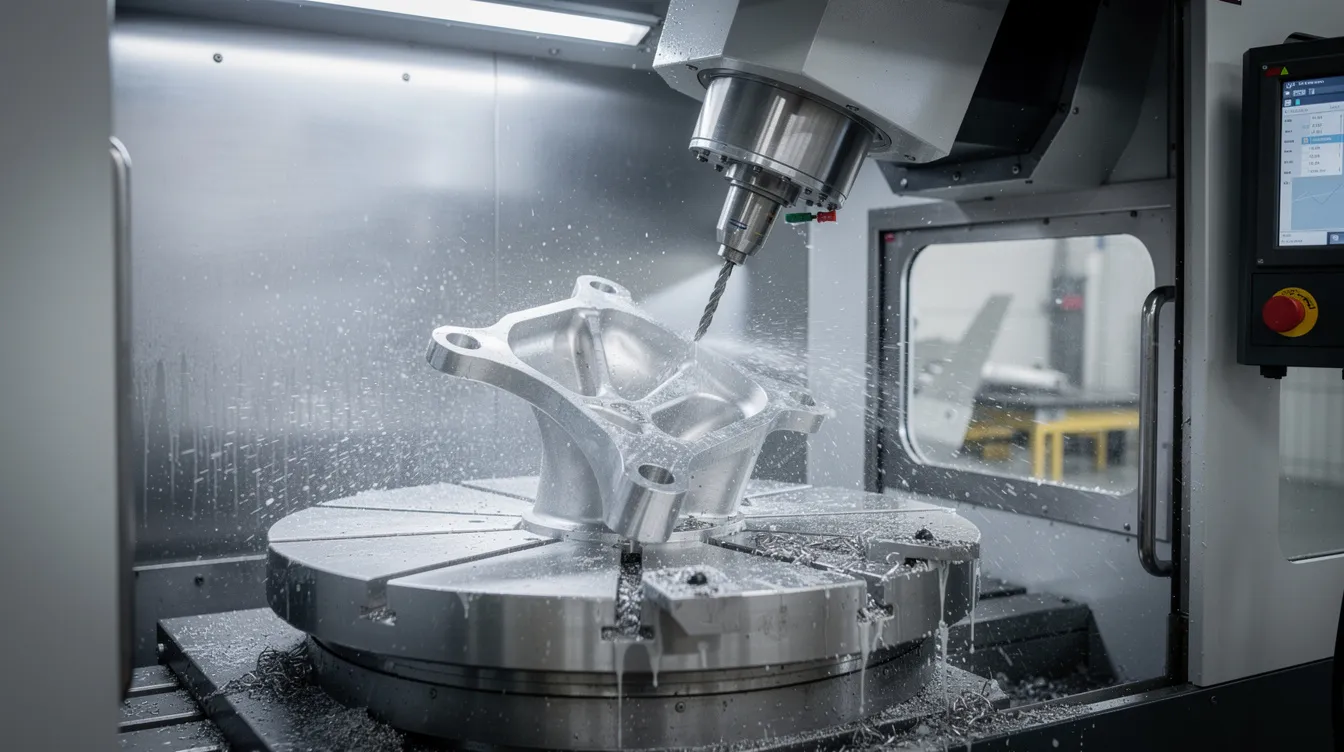
CNC machining can use over 50 industrial-grade metals and plastics. Common metals for CNC machining include aluminum, stainless steel, and titanium.
-
Aluminum: 6061 is a popular choice for CNC machining due to its versatility. 7075 offers higher strength for structural prototypes.
-
Stainless steels: 304 and 316 for corrosion resistance; 17-4PH for high-strength applications.
-
Tool steels: D2, A2, H13 for wear-resistant prototypes and mold inserts.
-
Titanium: Ti-6Al-4V for aerospace and medical where strength-to-weight ratio is critical.
-
Engineering plastics: PEEK is often used as a lightweight substitute for metal parts. POM (acetal), nylon 6/6, PC, PTFE, ULTEM, and ABS each serve specific thermal, chemical, or mechanical needs.
Material selection impacts machinability, achievable tolerances, cost, and lead time. ISO-certified shops maintain material traceability with mill certificates (EN 10204 3.1) and controlled storage, which is essential for medical and aerospace audits.
From Rapid Prototyping to Production: Why Scalability Matters
Scalability is an important factor for transitioning from prototype to production in CNC machining. The same ISO-certified shop that machines your 5-piece proof-of-concept should be able to handle 5,000-piece production runs without a supplier change. CNC services can handle production runs from single units to over 10,000.
-
Design prototypes with production constraints in mind: tool access, workholding, consistent datum strategies.
-
Shops offering die casting and sheet metal fabrication alongside cnc machining support hybrid prototype-to-production routes-for example, CNC-machined soft tooling evolving into injection molding or die-cast production parts.
-
Rapid prototyping supports low-volume production of functional parts, bridging the gap between design validation and volume ramp.
-
Consistent process control and documentation in prototypes reduce risk during scale-up. Automotive EV enclosures and medical device housings are prime examples where this transition is critical.
How ISO-Certified Shops Handle Quality for Prototypes
In-house quality control capabilities are critical for CNC manufacturing shops. Companies often use cmm inspection for quality assurance in cnc machining.
-
Incoming material inspection: verify grade, certificates, and physical dimensions.
-
In-process checks: probing or manual measurement during machining of critical features.
-
First-article inspection (FAI): every dimension on the first piece checked against the drawing.
-
Final inspection: CMM reports, surface roughness measurements, hardness testing for heat-treated machined parts.
-
Documentation: dimensional reports, material certificates, certificates of conformity.
Equipment includes coordinate measuring machines, optical comparators, height gauges, profilometers, and calibrated micrometers. Even low-volume cnc machined parts receive documented inspection plans under ISO 9001 and ISO 13485 environments. Non-conformance reports (NCRs) and corrective actions drive continual improvement and prevent repeat issues between prototype iterations-supporting continuous improvement across the quality management system.
Design for Manufacturability (DFM) Feedback in Precision CNC Prototyping
DFM feedback means engineering input on wall thicknesses, radii, tolerances, thread depths, and datum schemes before machining starts-a concrete deliverable, not a buzzword.
-
Automated instant dfm feedback on digital quoting platforms catches basic red flags. Engineer-to-engineer DFM from a focused cnc machine shop addresses function, fit, and industry-specific demands.
-
Example: changing a sharp internal corner to a 2 mm radius compatible with a 6 mm end mill, or loosening non-critical tolerances from ±0.005 mm to ±0.05 mm, can cut machining hours by 30%.
-
For a medical device housing, DFM review improved wall thickness on plastic ribs and rationalized tolerances on non-critical external features-reducing prototype iterations and shortening validation by weeks.
Early DFM reduces scrap, rework, and lead times for each prototype revision, which is especially valuable for us engineers and overseas engineering teams iterating under tight deadlines.
Case Study Snapshot: Medical Device Prototypes With ISO 13485
A 2024–2025 medical startup needed cnc machined prototypes for a handheld diagnostic device: polycarbonate housing, aluminum end-caps, internal features for electronics.
-
Problem: Initial prototypes had tolerance stack-up causing seal leaks and misaligned screw holes. Parts arrived without full material test reports. Burrs and inconsistent finish on plastic inserts.
-
Certified solution: An ISO 13485 and ISO 9001 certified shop provided full GD&T drawings, material certificates, surface finish specs (Ra 0.8 µm), and CMM reports. DFM feedback improved rib wall thickness and loosened non-critical tolerances.
-
Results: Prototype iterations reduced from 5 to 3, shaving approximately three weeks off validation. Custom parts achieved full functionality for regulatory testing. Documented inspection reports fed directly into FDA design-history files.
High precision CNC machining is vital for industries like medical devices where patient safety depends on part accuracy.
Case Study Snapshot: Automotive & EV Components With IATF 16949
An EV powertrain team prototyped a battery cooling plate and sensor enclosure between 2023 and 2025, requiring IATF 16949 and ISO 9001 certification from their cnc machining partner.
-
Quality tools: Control plans, capability studies (Cp/Cpk), and dimensional reports tied to critical-to-quality features. Sealing surfaces held ±0.005 mm; bolt hole patterns held ±0.02 mm.
-
Inspection: CMM dimensional checks, leak testing, material certificates with lot traceability.
-
Result: Because the partner already operated under automotive-grade practices, the prototype matched production drawings closely. PPAP submission was smoother, and time from prototype to qualification shrank by roughly 20%.
Precision CNC machining serves various industries including automotive and electronics, and early use of certified shops reduces redesign risk during tool-up.
Anebon Metal Products Limited: Our Role in ISO-Certified Precision Prototyping
Anebon Metal Products Limited, based in Dongguan, Guangdong, China, was founded in 2010 and serves overseas OEMs and R&D teams across aerospace, medical, automotive, robotics, and electronics.
-
Certifications: ISO 9001:2015 and ISO 14001:2015-combining quality assurance with environmental responsibility.
-
Core services: Multi-axis cnc machining (milling and turning), die casting, sheet metal fabrication, and rapid prototyping through to full production.
-
Precision: Tolerances as precise as ±0.002 mm on critical features. Broad materials portfolio: aluminum, stainless steel, titanium, tool steel, and engineering plastics.
-
Lead times: 5–10 working days for standard-complexity prototypes; expedited options available for simpler parts when material is in stock. Rapid prototyping can be completed in as little as 1–3 business days for straightforward geometries.
Our CNC Machining Capabilities for High-Precision Prototypes
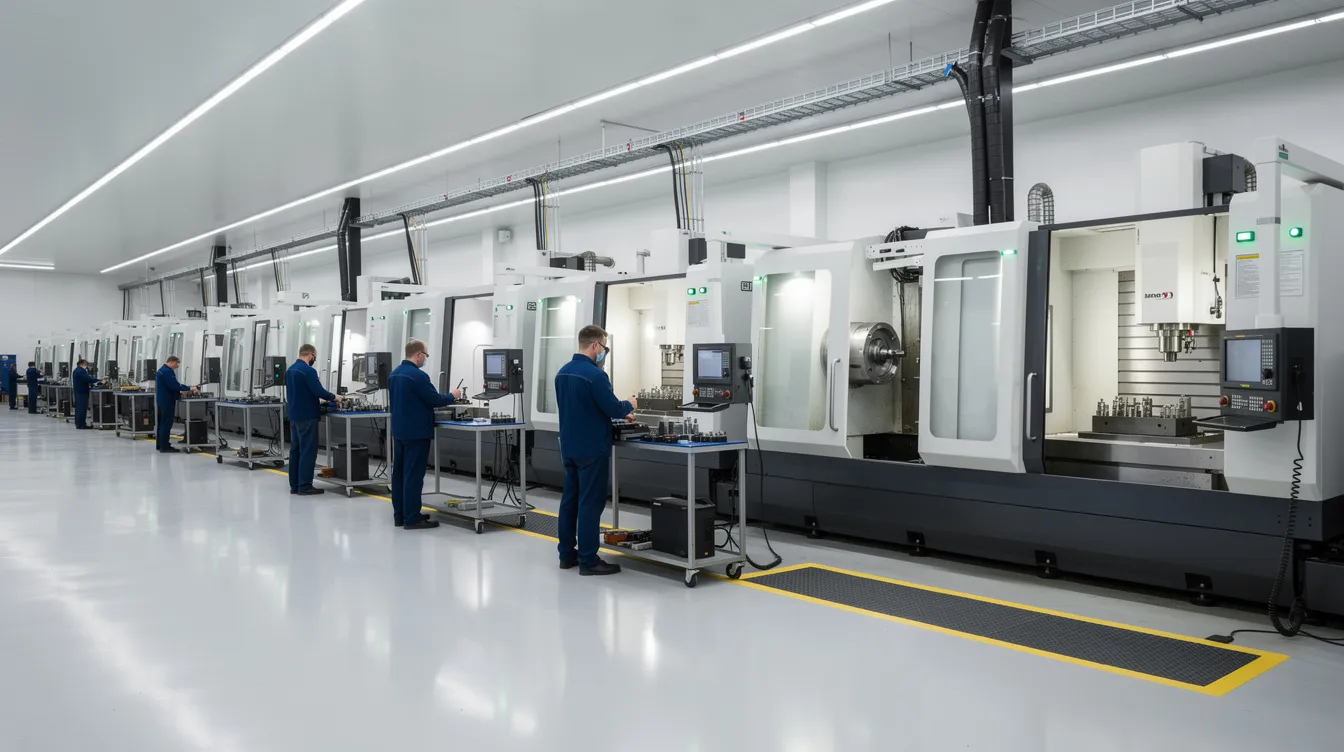
Anebon operates 3-, 4-, and 5-axis milling centers, CNC turning centers, and supporting equipment for both metal and plastic precision components.
-
Handle small prototype batches and bridge-to-production runs across a broad range of geometries.
-
Tight tolerance work (up to ±0.002 mm) supported by climate-controlled inspection, in-machine probing, and regular calibration.
-
Typical scenarios: robotics component brackets in aluminum requiring tight flatness and positional tolerances, aerospace brackets in titanium, and precision jigs and fixtures for final assembly validation.
-
Prototype turnaround: 5–10 working days for standard complexity, with faster options where feasible. CNC machining can produce parts from over 50 materials including metals and plastics.
Supporting Services: Die Casting and Sheet Metal for Prototype Assemblies
Anebon complements cnc machining with die casting and sheet metal fabrication to build complete prototype assemblies. Die casting is a service offered in precision metal fabrication alongside machining. Sheet metal fabrication is part of the CNC machining services offered.
-
CNC-machined prototypes of parts that will later be die-cast allow form-fit-function testing before tooling investment.
-
Hybrid assemblies combine machined billets with bent sheet metal enclosures under one quality system.
-
Early prototypes can evolve into low-volume castings or laser-cut/bent assemblies using the same engineering team.
-
Using one ISO-certified supplier across processes simplifies logistics, quality control, and DFM for multi-part systems. Secondary finishing includes anodizing, plating, heat treatment, and powder coating.
How We Deliver DFM Feedback and Engineering Support
Anebon’s workflow starts with receiving a cad file-typically a step file in STEP or Parasolid format-plus 2D drawings with GD&T. Our engineers then perform a manufacturability review and return annotated feedback.
-
DFM topics covered: minimum feature sizes, allowable wall thickness, thread standards, tolerance rationalization, and material substitutions where appropriate.
-
Early DFM review shortens prototype cycles for overseas OEMs and reduces design revisions.
-
Communication channels: email, conference calls, and annotated PDFs. English-language engineering support tailored to North American and European clients.
-
This design feedback benefits engineering teams in aerospace, medical, and robotics who need both speed and reliability from their cnc manufacturing services.
Inspection, Reporting, and Traceability for Prototype Parts
-
CMM measurements, first-article reports, and full dimensional inspection available for critical prototypes.
-
Standard documentation: material certificates, RoHS/REACH compliance statements, and basic or advanced inspection reports.
-
ISO 9001:2015 procedures govern lot tracking, instrument calibration, and handling of non-conforming parts, driving customer satisfaction through consistent quality.
-
Even small prototype batches ship with documentation sufficient for internal validation or third-party audits.
Lead Times, Logistics, and Shipping for Overseas OEMs
From Dongguan to North America or Europe, parts ship via air freight partners (DHL, FedEx, UPS), adding 3–7 days transit to machining time.
-
Realistic door-to-door: 7–14 calendar days for typical mid-complexity prototypes including machining, inspection, and transit.
-
Customs documentation and HS codes handled as part of the service.
-
Weekly or bi-weekly shipping cycles make Anebon a practical partner for iterative prototyping programs where engineers need consistent delivery windows.
-
CNC machining is widely used in aerospace and medical industries where meeting tight delivery windows is as important as meeting tight tolerances.
Cost Considerations: Balancing Precision, Speed, and Budget
Primary cost drivers for precision CNC prototyping are part complexity, material choice, tolerance levels, and finishing requirements.
-
Simple prototypes (Al 6061, 3-axis, standard tolerances): ~$20–$50/part from a China-based ISO shop vs. $150–$400+ from us shops.
-
Complex prototypes (5-axis, titanium, tight tolerances): China offers 40–60% savings, but absolute costs may reach $100–$250+ per piece.
-
The trade off between ultra-tight tolerances and price is real. Reserve ±0.002 mm for function-critical features; use standard tolerances elsewhere.
-
Anebon’s China-based operations enable competitive pricing for overseas OEMs, especially for non-ITAR work where export control is manageable.
-
Minimum order quantity for prototype cnc machining is typically one piece-no need to over-commit during validation.
Industries That Benefit Most From ISO-Certified CNC Prototyping
-
Aerospace: AS9100 certification required. Prototype parts include structural brackets, turbine components, manifolds. Stringent requirements for traceability and FAI.
-
Medical devices and diagnostics: ISO 13485 needed for surgical instruments, implant prototypes, diagnostic housings.
-
Automotive and EV: IATF 16949 for battery enclosures, sensor housings, power electronics cooling plates.
-
Industrial robotics: Tight precision on motor mounts, joint housings, end-effector components.
-
Electronics enclosures: Fine features, mounting alignment, EMI shielding details.
Anebon’s certifications and process controls align with expectations across these industries for production parts and prototypes alike.
Comparing Instant-Quote Platforms vs. Dedicated ISO-Certified Shops
Digital platforms excel at speed, broad capacity, and instant pricing for early, low-risk prototypes. Xometry connects buyers to over 10,000 vetted suppliers. Protolabs can deliver parts in as fast as 1–3 business days.
-
But variable supplier quality, communication gaps, and inconsistent DFM depth are real risks on marketplaces.
-
Dedicated ISO-certified machine shops offer deeper engineering collaboration, stable processes, consistent quality, and full documentation.
-
For critical prototypes in medical, aerospace, or automotive, working with a focused partner is the safer path.
-
Anebon positions as a dedicated, engineering-centric partner rather than a volume marketplace-emphasizing precision, consistency, and direct communication.
How to Vet a Precision CNC Prototyping Partner
Use this checklist when choosing the right CNC machining supplier:
-
Verify iso certification copies. Check expiry dates and scope.
-
Request sample inspection reports from similar projects.
-
Ask about maximum and minimum tolerances achieved on comparable features.
-
Assess CNC machining capacity: machine types, axis counts, shifts, automation.
-
Evaluate communication quality and DFM depth during the quoting process.
-
Confirm material traceability and documentation standards.
-
Start with a pilot prototype batch to validate quality and logistics before committing to larger volumes.
How Anebon Works With Overseas Engineers and R&D Teams
Anebon’s engagement model follows a clear path: NDA signing, file exchange, engineering review, quoting with DFM feedback, prototype build, feedback loop, and scale-up.
-
Time zone coordination and English-language project management tailored to North American and European clients.
-
Experience collaborating with product developers and R&D teams who iterate quickly and need consistent, high precision custom parts.
-
Continuous communication during machining and inspection reduces surprises at delivery, building long-term customer satisfaction and supporting the industry’s demands for transparency.
Frequently Asked Questions About Precision CNC Prototyping and ISO Certification
Do prototype parts really need ISO-certified suppliers? If your prototype feeds a regulatory submission (FDA, CE, automotive PPAP, aerospace qualification), yes-it’s non negotiable. For early proof-of-concept on a tight budget, non-certified shops may work, but downstream risk of redesign and scrap increases.
What tolerances are realistic for CNC machined prototype parts? Standard: ±0.005 in (~±0.13 mm). Precision: ±0.002 in (~±0.05 mm). Extreme: ±0.0005 in (~±0.0127 mm). CNC milling can achieve tolerances as tight as ±0.001 inches on properly fixtured features.
How many iterations can I complete in a month with overseas shipping? For simple aluminum prototypes with air freight, 2–3 iterations are feasible. Complex or exotic-material parts may allow 1 full iteration plus adjustments.
What about ISO 13485 and medical prototypes? Medical device prototypes typically require ISO 13485-certified facilities to generate documentation for design history files and regulatory filings-even at the prototype stage.
What about IATF 16949 and automotive prototypes? If the prototype feeds into PPAP or APQP submission for a Tier-1 OEM, IATF 16949 ensures the shop’s processes and documentation meet automotive quality standards from day one.
What is the minimum order quantity? Most precision cnc machine shops accept single-piece orders for prototypes. Anebon has no minimum order quantity for prototype machining.
Getting Started: Requesting a Quote From Anebon
Prepare the following before requesting a quote:
-
3D CAD files (step file or Parasolid) and 2D drawings with GD&T
-
Material specifications, quantities, and target lead times
-
Any required certifications or documentation (ISO 13485, IATF 16949, etc.)
Anebon typically returns quotes within 24–48 hours for most prototype enquiries. DFM feedback is included with the quote at no extra charge, especially for complex geometries and tight tolerance features. Start with a prototype batch to validate fit, function, and quality before moving into bridge or full production runs.
Conclusion: Building Reliable Products With Precision CNC Prototyping
The central takeaway is straightforward: combining precision cnc machining, verified iso certification, and strong dfm feedback is essential for prototypes that perform in testing and scale into manufacturing. Insist on ISO 9001, ISO 13485, IATF 16949, or AS9100D even in early-stage development when your industry demands it.
Anebon supports projects from first prototype through volume production with consistent quality, broad process capability, and competitive pricing from our Dongguan facility. When selecting a precision CNC prototyping company, balance speed, cost, and certification needs-and start with a pilot batch to prove the partnership before scaling.