Top Precision CNC Prototyping Companies ISO Certified for Quality Results
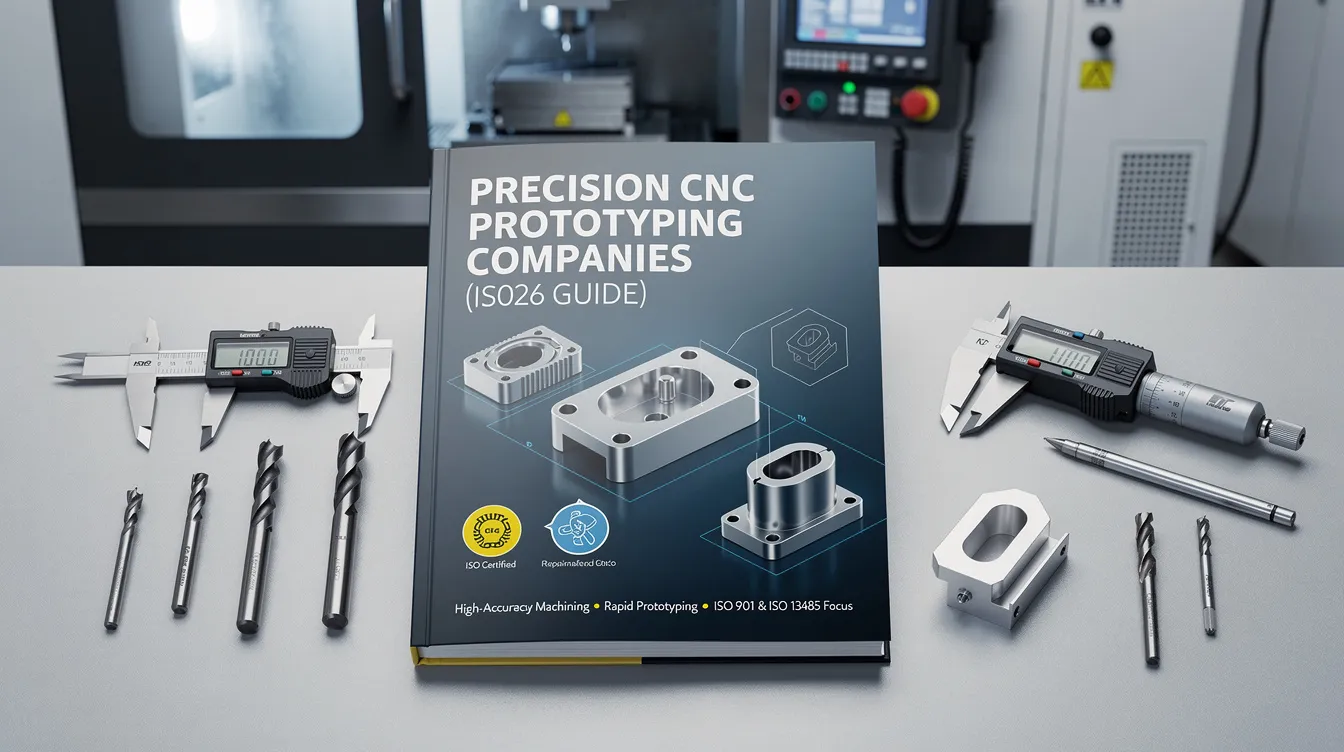
Precision CNC Prototyping Companies ISO Certified (2026 Guide)
Finding a precision CNC prototyping company with the right ISO certifications can make or break your product development timeline. Whether you’re validating a new aerospace bracket, a medical implant, or an EV motor housing, the shop you choose needs to deliver repeatable quality, full traceability, and the ability to scale. This 2026 guide walks you through exactly what to look for, how to verify credentials, and which capabilities matter most.
Fast Answer: How to Pick an ISO-Certified Precision CNC Prototyping Company
If you need a quick answer: look for a precision cnc machining partner with at least ISO 9001:2015 certification, then layer on industry-specific standards based on your end use. Confirm the shop can hold the tolerances your design demands, and verify their certificates aren’t expired or scoped to a different facility.
-
Start with ISO 9001:2015 as the baseline. This is a baseline certification for CNC shops and covers process control, corrective actions, and continual improvement. Add ISO 13485 for medical devices, IATF 16949 for automotive, AS9100D for aerospace and defense applications, and ISO 14001:2015 for environmental management.
-
Demand specific tolerance benchmarks. High precision cnc machining shops routinely hold ±0.005 mm on critical features. Tolerances of ±0.002 mm are achievable in CNC machining for the most demanding applications-this level of accuracy directly affects whether your prototype data translates to production.
-
Consider Anebon Metal Products Limited as a proven option. Founded in 2010 in Dongguan, China, Anebon is ISO 9001:2015 and ISO 14001:2015 certified, specializing in precision cnc milling, cnc turning, die casting, and sheet metal fabrication with tolerances down to ±0.002 mm.
-
Confirm documented quality systems. Ask about minimum order quantity policies-many shops now support single-piece prototypes with minimum order quantities typically ranging from US$150 to US$300. Expect quote responses within 24–48 hours.
-
Use this quick checklist:
-
Certifications held (ISO 9001, industry-specific)
-
Tolerance capability (general vs. critical features)
-
Materials and finishing options
-
Inspection and reporting (cmm inspection, FAI, material certs)
-
Lead time for prototypes and repeat orders
-
Scalability from prototype to production parts
-
Understanding ISO Certification for Precision CNC Machining
ISO standards, developed by the International Organization for Standardization, provide globally recognized frameworks for quality management system implementation. For any cnc machine shop offering precision machining services, ISO certification means documented, auditable processes that directly affect the reliability of every part that leaves the shop floor.
-
ISO 9001:2015 is a baseline certification for quality management. It requires documented procedures for design review, production, and inspections-covering process control, corrective actions, document control, customer satisfaction monitoring, and continual improvement. Every serious precision machine shop should hold this at minimum.
-
ISO 13485 is critical for medical device manufacturing and emphasizes design control and risk management. It adds strict traceability (material lots, device history records) and control of biocompatible materials-requirements that apply even during early stage prototyping for regulatory submissions.
-
IATF 16949 is the gold standard for automotive production focusing on defect prevention. It extends ISO 9001 with PPAP, APQP, SPC, and measurement system analysis-essential for any shop making custom cnc machined parts destined for vehicle platforms.
-
AS9100D focuses on quality in aerospace and adds regulations for counterfeit prevention, configuration management, product safety, and formal risk management. Certified suppliers are often required in highly regulated industries like aerospace.
-
ISO 14001:2015 covers environmental management systems-handling of coolants, waste, and energy. While not about dimensional accuracy, it signals responsible manufacturing and satisfies ESG requirements from large OEMs.
-
Certification auditing is performed by third-party bodies like TÜV, SGS, or BSI, with full audits at initial certification, surveillance audits annually, and recertification every three years. ISO certifications require continuous improvement and regular audits.
-
Non-conformance example: If a cnc prototype hole comes out +0.01 mm beyond a ±0.005 mm specification, an ISO-certified shop logs the deviation, identifies the root cause (tool wear, thermal drift, fixturing error), initiates corrective action, updates the control plan, and records the outcome. These records are maintained for customer and registrar audits-vital when transitioning from prototype to volume production.
Why ISO Certification Matters for Precision CNC Prototyping
ISO certification increases confidence in consistent execution and traceability across every prototype iteration. For R&D teams running custom cnc machining projects, this translates directly into reduced risk during design validation and faster supplier qualification for your supply chain.
-
ISO 9001 quality systems stabilize the machining process-monitoring tool wear, managing thermal variation, and controlling feeds and speeds-so that tolerances and surface finishes remain predictable across multiple prototype rounds. ISO certification improves consistency and minimizes rework in CNC prototyping.
-
Documented procedures including incoming material inspection, in-process checks, and final cmm inspection lower scrap rates on tight tolerance prototypes. Process discipline in certified shops helps reduce errors in prototyping.
-
Material traceability is essential in regulated industries like medical and aerospace. ISO-certified shops provide detailed inspection records and traceability documentation covering heat lots, material certificates, and full dimensional data. Certified companies follow documented workflows and strict material traceability.
-
ISO-based change control prevents a common 2026 R&D problem: machining begins on an outdated CAD revision. Controlled revision numbering, approval sign-offs, and communication protocols ensure the correct version is always on the shop floor.
-
Working with an ISO-certified partner simplifies internal audits for OEMs. Quality certifications help in supplier qualification in high-stakes industries, especially when quality, engineering, and purchasing departments all need to sign off on a new supplier. Certification proves a shop follows strict international standards reducing defects.
Core Capabilities of Precision CNC Prototyping Companies
Not all cnc machining services are equal. A machine shop calling itself “precision” should back that claim with specific equipment, processes, and measurable results. Here’s what a serious prototyping partner should offer.
-
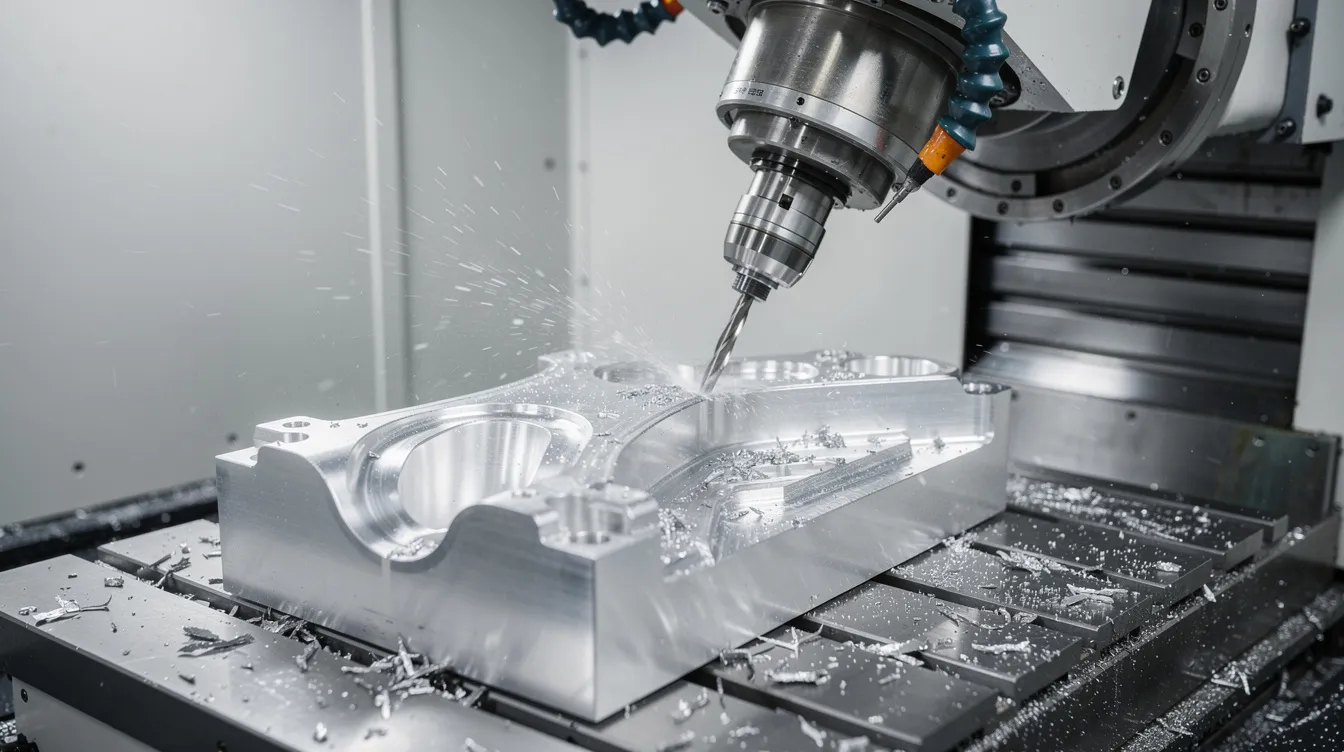
Core machining services: 3-axis and 4-axis cnc milling, precision cnc milling on 5-axis machines, cnc turning for cylindrical parts, drilling, tapping, thread milling, and boring across both metal materials and engineering plastics.
-
Advanced cnc machining capabilities: 5-axis CNC machining allows for complex geometries and tighter tolerances-critical for aerospace brackets, turbine housings, and medical implants. CNC turning is ideal for producing cylindrical parts efficiently, while CNC milling achieves tolerances down to ±0.001 in. Multi-axis capability also handles thin-wall features, micro-features, and simultaneous contouring.
-
Anebon’s capabilities: 3- and 5-axis CNC machines, precision cnc machining services with tolerances as tight as ±0.002 mm on critical dimensions, plus die casting and sheet metal fabrication for hybrid prototype builds. Advanced equipment includes Japanese machine tools, surface grinders, wire and sinker EDM.
-
Prototype envelope sizes: Capable shops handle parts up to ~1,000 mm in length, maintaining consistent tolerances across multiple setups using calibrated fixturing and periodic machine calibration.
-
Integrated services: Parts deburring, basic assemblies, threaded insert installation, and test-fit of subassemblies before shipment. CNC machining is preferred for functional prototypes over 3D printing when dimensional accuracy and material properties must match the final product, though additive manufacturing plays a complementary role in concept validation.
Key Industries Relying on ISO-Certified CNC Prototyping
In 2026, ISO iso certification is often a prerequisite for prototype work-not just production-because regulatory frameworks and OEM supplier qualification programs demand it even at the development stage.
-
Aerospace: Aerospace cnc machining demands tolerances down to ±0.005 mm on critical features like bearing seats and mating surfaces. Common materials include aluminum alloys (7075-T651, 6061-T6), titanium for structural aerospace components, and Inconel for high-temperature zones. AS9100D and robust quality systems are standard expectations.
-
Medical devices: Surgical instrument and implant prototypes require biocompatible materials-316L stainless steel, titanium Grade 5, PEEK-and often ISO 13485-level documentation even at prototype stage. Medical device manufacturing prototypes feed directly into regulatory submissions, making traceability non-negotiable.
-
Automotive and EV: Prototypes for battery housings, motor brackets, drivetrain parts, and sensor mounts anticipate IATF 16949 production requirements. Automotive manufacturing teams expect PPAP-ready documentation and SPC data from day one.
-
Electronics and robotics: Cnc milling of aluminum heat sinks, precision housings, and mounting plates requires flatness and positional accuracy supporting PCB and sensor assemblies in electronics sectors. Consistency across small batches is essential.
-
Anebon’s reach: Serving overseas OEMs across aerospace, medical, automotive, electronics, and industrial machinery. The advantage of one ISO-certified supplier supporting multiple product lines means industrial customers avoid managing separate qualification processes for each division.
Precision, Tolerances, and Inspection in CNC Prototyping
Prototype performance in 2026 often depends on micron-level accuracy. An ISO-certified precision manufacturing partner proves this capability through equipment, process controls, and documentation.
-
Realistic tolerance bands: General prototype machining sits at ±0.01 mm; precision features (bearing interfaces, optical surfaces) target ±0.005 mm; high precision cnc machining pushes to ±0.002 mm. CNC machining tolerances can achieve ±0.001 in for prototypes on controlled features. Anebon achieves tolerances down to ±0.002 mm on critical dimensions. ISO-certified machines often provide tighter tolerances than non-certified shops because calibration, process controls, and corrective action loops are enforced systematically.
-
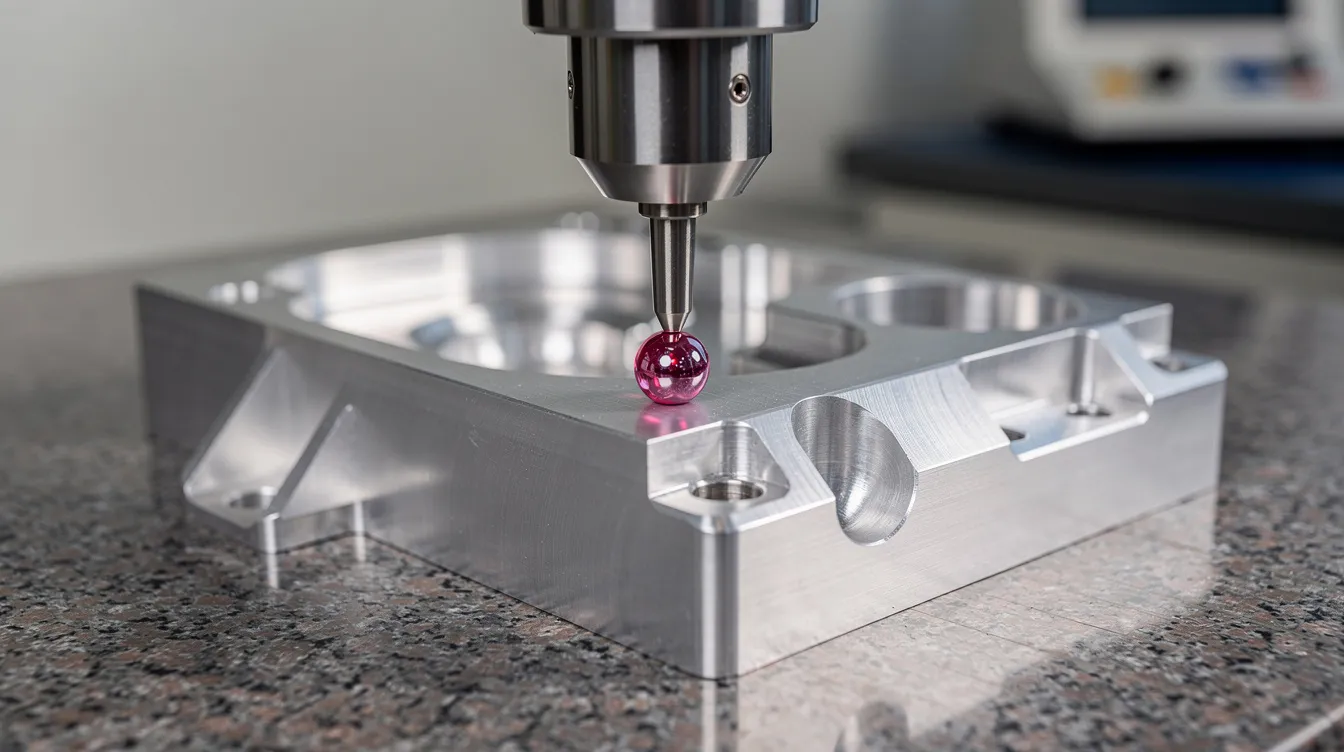
Inspection equipment: Many ISO-certified CNC shops invest in calibrated inspection equipment to verify tight tolerances. This includes CMMs with full 3D capability, height gauges, pin gauges, optical comparators, surface roughness testers, and in-process probing at the cnc machines. Advanced machines enable real-time temperature compensation and predictive metrology.
-
GD&T for critical parts: Flatness, true position, cylindricity, and perpendicularity callouts are standard on aerospace and medical parts. ISO quality systems ensure these callouts are understood, manufactured correctly, and measured with appropriate methods.
-
Documentation delivered: Quality control in certified companies includes first article inspection reports and dimensional checks. Customers receive FAI reports, full dimensional inspection reports, Certificates of Conformance, and material test certificates. CNC prototypes can be produced in 1–3 business days for simple geometries with standard documentation.
-
Visual evidence: Measurement screenshots, surface finish micrographs, and annotated inspection photos are increasingly expected by engineering teams evaluating prototype data.
Materials Used in ISO-Certified CNC Prototyping
Material selection in cnc machining prototypes directly affects mechanical behavior, cost, machinability, and lead time. Choosing production-representative materials early improves the predictive validity of your test data.
-
Common metals: Aluminum alloys like 6061-T651 are commonly used in CNC machining for housings and structural parts-aluminum is cheaper and easier to machine than titanium, making it ideal for rapid iterations. Stainless steel (303, 304, 316L, 17-4 PH) is known for its excellent machinability and uniformity, plus corrosion resistance for medical industries and food contact. Alloy steels (4140, 4130) deliver high strength for drivetrain and tooling applications. Copper is extremely electrically conductive and corrosion resistant, used for connectors and thermal components. Brass and bronze serve custom tooling and fluid-handling parts.
-
Aerospace-grade materials: Titanium has an excellent strength-to-weight ratio and corrosion resistance, making it essential for aerospace components and medical implants. Inconel 718 and other nickel superalloys require specialized tooling, slower feeds, and extended cycle times.
-
Engineering plastics: ABS for low-cost housings, POM/Delrin for gears and bushings, nylon is highly durable with low friction and wear resistance for moving parts, PC and PMMA for transparent components, and PEEK/Ultem (PEI) for high-performance prototypes requiring chemical resistance and high-temperature stability. Even pvc polyvinyl chloride finds use in specific industrial applications.
-
Anebon’s material range: Machines both metals and plastics, enabling customers to compare metal vs. plastic versions of the same design before committing to production.
|
Material |
Typical Application |
Achievable Surface Finish (Ra) |
|---|---|---|
|
Aluminum 6061-T6 |
Housings, brackets, heat sinks |
0.8 µm (fine milled) |
|
Stainless Steel 316L |
Medical, food contact, marine |
0.4–0.8 µm (electropolished) |
|
Titanium Grade 5 |
Aerospace, implants |
0.8–1.6 µm |
|
PEEK |
High-temp/chemical-resistant parts |
0.8–1.6 µm |
|
Brass |
Connectors, fluid components |
0.4–0.8 µm |
Surface Finishes and Post-Processing for CNC Prototypes
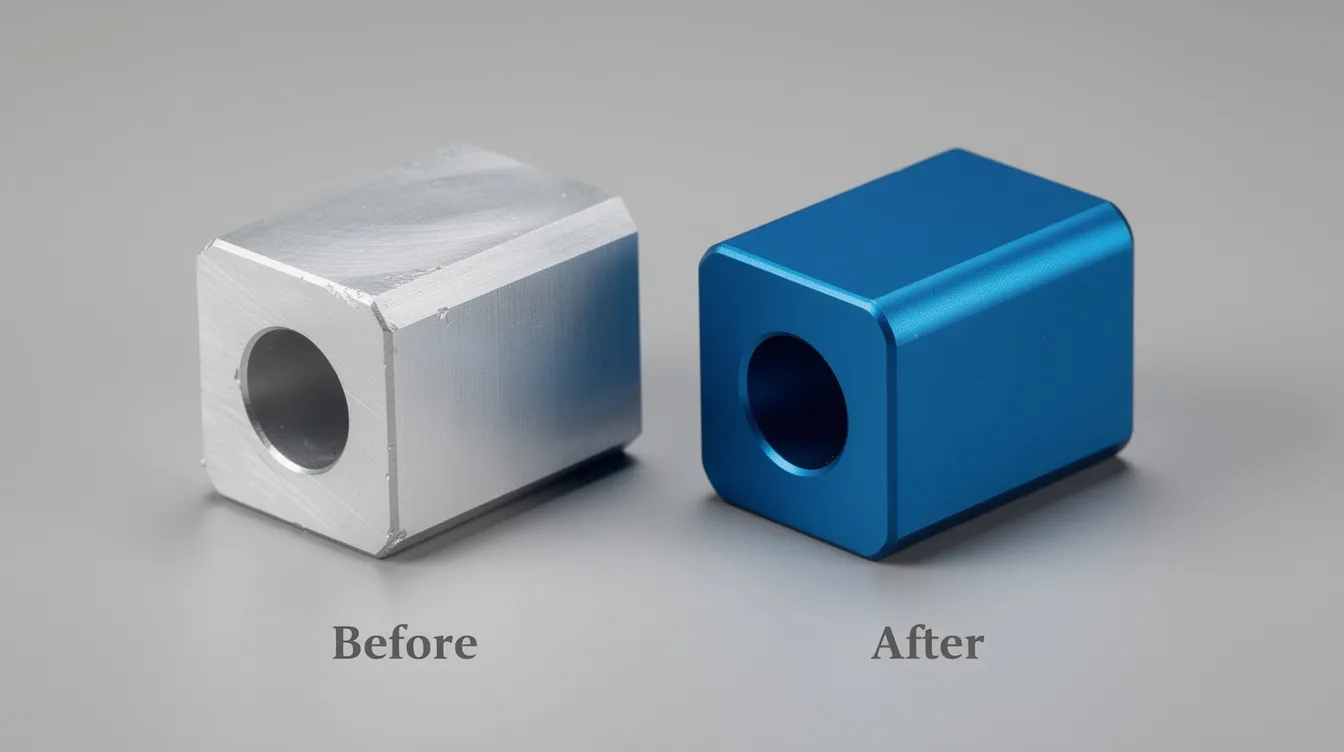
Surface finishing transforms a cnc prototype from a raw machined part into something production-representative in both appearance and performance. Secondary finishing options include anodizing and powder coating among many others.
-
Aluminum finishes: Clear and colored anodizing (Type II) for corrosion resistance and paint adhesion. Hard anodizing (Type III) adds wear resistance for functional surfaces. Bead blasting creates a uniform matte texture.
-
Steel and stainless finishes: Passivation for corrosion resistant stainless steel surfaces, black oxide for mild steels, zinc/nickel plating for environmental protection, and electropolishing for medical and food-contact components where surface smoothness reduces bacterial adherence.
-
Powder coating and painting: Standard powder coating thickness of 40–80 µm, with RAL or Pantone color matching for housings and enclosures. Wet painting available for specialty colors or low-volume parts.
-
Traceability in finishing: ISO-certified shops like Anebon work with audited finishing partners to maintain lot-level traceability and environmental compliance under ISO 14001:2015. ISO 14001 certification focuses on environmental management systems, covering chemical waste, coolant handling, and energy use in finishing operations.
From Prototype to Production: Scaling with an ISO-Certified CNC Partner
The typical 2026 development path moves through concept prototype, functional prototype, pilot run, and full production. Choosing an ISO-certified company facilitates easier transition from prototype to production because the quality infrastructure is already in place.
-
Single-source advantage: Using the same ISO-certified cnc manufacturing company across each phase reduces re-qualification work and avoids tolerance shifts between suppliers. Control plans, work instructions, and proven toolpaths established during prototyping evolve into stable production documentation.
-
Anebon’s model: Rapid prototyping through cnc machining, bridge builds via soft tooling or die casting, then scaling to sheet metal fabrication and high volume production. Their quality systems support this full arc.
-
Consistency matters: The same tooling, fixtures, and material sources maintain dimensional consistency from 1–50 pieces to 1,000+ pieces. A CNC partner should support rapid prototyping and low volume production as a unified service, not separate capabilities. ISO certifications ensure high precision and uniformity in CNC parts across the entire production lifecycle.
-
Process migration: SPC data, measurement system analyses, and control plans developed during prototyping provide the foundation for an automated manufacturing process at scale, reducing validation time significantly.
Minimum Order Quantity, Lead Times, and Cost Drivers
Modern precision cnc prototyping companies have adapted their business models for the speed and flexibility that 2026 R&D teams demand. Here’s what to expect.
-
MOQ: Many shops, including Anebon, support single-piece prototypes. Minimum order quantities typically range from US$150 to US$300 as a minimum order value rather than strict part counts. This makes early stage prototyping accessible.
-
Lead times: Lead times for CNC prototyping range from 1 to 15 days depending on complexity. Simple cnc milling parts in aluminum take 3–5 business days. Complex multi-axis assemblies with special finishes or certification documentation run 7–10 days. Protolabs can deliver parts in as fast as 1 day for quick turn cnc machining on standard geometries.
-
Primary cost drivers:
-
Material choice: titanium and Inconel cost significantly more than aluminum alloys in both raw stock and tooling wear
-
Geometric complexity: thin walls, deep bores, and multiple setups increase cnc machining cost
-
Tolerance tightness: tighter tolerances exponentially increase CNC machining costs due to slower feeds, more inspection, and higher reject risk
-
Finish requirements and documentation level (FAI, PPAP) add time and cost
-
-
Lights-out machining: Some shops operate unattended machining for stable, less complex parts in an automated factory environment, reducing labor costs. However, extremely tight tolerances typically require manual oversight and more frequent in-process checks.
-
Cost optimization tip: Relaxing non-critical tolerances from ±0.005 mm to ±0.01 mm, choosing aluminum over stainless steel, or reducing finishing steps can cut prototype costs by 30–50% without affecting functional performance.
DFM Feedback and Engineering Collaboration
Precision cnc prototyping in 2026 is as much about engineering support and collaboration as machine capability. The shops that accelerate product development are the ones that catch design issues before machining begins.
-
What DFM covers: Suggestions on wall thickness (avoid sub-0.5 mm walls that cause deflection), fillet radii (sharp internal corners require special tooling), hole depth-to-diameter ratios, tool access, and standardizing hardware sizes. Design for Manufacturability feedback reduces prototype iterations-often eliminating one or two full rounds of prototyping.
-
ISO-controlled revisions: Under ISO processes, DFM feedback, drawing revisions, and approvals are documented and controlled. Revision numbers, change orders, and sign-offs prevent confusion across multiple prototype iterations.
-
Anebon’s approach: Reviews CAD and 2D drawings for tolerance and material optimization, often proposing alternatives that reduce cycle time and cnc machining cost. Their engineering support includes material substitution analysis and toolpath simplification.
-
Real-world example: An R&D team designed an aluminum housing with 0.5 mm walls throughout. Anebon’s DFM review suggested increasing wall thickness to 0.8 mm with internal fillets-reducing machining vibration, improving tolerance control, lowering scrap, and saving 1–2 weeks on the project schedule.
Involve your cnc machining partner early in the design phase. Features requiring unnecessary setups, special tools, or EDM can often be eliminated with minor design adjustments, and cnc technology capabilities should inform your geometry decisions from the start.
Onshore vs. Offshore ISO-Certified CNC Prototyping
The decision between domestic and offshore precision cnc machining services comes down to balancing cost, speed, compliance, and communication.
-
Onshore advantages (U.S., EU): Faster shipping (1–3 days domestic), same time zone for real-time communication, simpler handling of ITAR or defense-related projects, and easier facility audits. Best for aerospace and defense applications with local-content requirements.
-
Offshore advantages: Regions like Dongguan, Guangdong offer 40–60% potential cost savings on labor and materials, large cnc machine capacity, mature export logistics, and dense supply chains for finishing and raw materials. Anebon exemplifies this model-serving overseas OEMs with competitive pricing and ISO-certified processes.
-
Risk management: Export controls, IP protection, and compliance require clear contracts and NDAs when sharing CAD models internationally. Manufacturing partners should provide NDA frameworks as part of onboarding.
-
When offshore works best: Many commercial aerospace, automotive, and electronics prototypes in 2026 are sourced offshore when no ITAR or local-content constraints apply, provided the supplier holds valid iso certification and can demonstrate vetted cnc shops quality standards.
-
Landed cost calculation: For multiple prototype rounds, balance landed cost (freight, customs, lead time buffer) against unit price. Express air freight for parts under 1 kg can narrow the cost gap significantly, so the savings equation shifts depending on part size and urgency.
Verifying a CNC Prototyping Company’s ISO Certification
An ISO logo on a website means nothing without verification. Supplier qualification in high-stakes industries demands that you confirm the certificate is current, correctly scoped, and issued by a legitimate registrar.
-
Request the certificate PDF. Check the standard (e.g., ISO 9001:2015), certificate number, scope of activities (should explicitly include precision cnc machining or similar wording), certified site address, and expiration date.
-
Verify with the registrar. Bodies like TÜV Rheinland, SGS, BSI, and DNV maintain online databases where you can search by certificate number or company name. Confirm the entry matches what the supplier provided.
-
Match site to facility. Ensure the certified address matches where your parts will actually be manufactured. Some companies hold certificates for one location but manufacture at another.
-
Anebon’s transparency: Provides ISO 9001:2015 and ISO 14001:2015 certificates openly, with scope covering precision cnc machining, die casting, and sheet metal fabrication at their Dongguan facility.
-
OEM best practice: Maintain an internal supplier file with certificate copies, audit notes, and periodic re-verification dates. This supports your own general quality management and quality assurance requirements during customer or regulatory audits.
Anebon Metal Products Limited: ISO-Certified Precision CNC Prototyping
For readers of this guide seeking a proven precision cnc prototyping company, Anebon Metal Products Limited represents a strong option backed by certifications, capabilities, and a track record serving global OEMs.
-
Founded: 2010, headquartered in Dongguan, Guangdong, China. Focused on precision cnc machining, die casting, and sheet metal fabrication for overseas OEMs across cnc machining applications in multiple industries.
-
Certifications: ISO 9001:2015 and ISO 14001:2015. Capable of supporting ISO 13485 and IATF 16949 requirements through customer-specific controls and robust quality systems.
-
Technical strengths: 3- and 5-axis cnc milling, precision cnc turning, tolerances down to ±0.002 mm, wide material range (aluminum, titanium, stainless steels, engineering plastics), and multiple finishing options including anodized aluminum parts. Their advanced machines include Japanese machine tools, wire and sinker EDM, and surface grinders.
-
Service model: Rapid prototyping often in 5–7 business days, low or no minimum order quantity for R&D, DFM feedback, and scalable cnc manufacturing services from bridge builds to high volume production. Repeatable quality is maintained through in-process inspections approximately every 2 hours and full dimensional CMM verification before shipment.
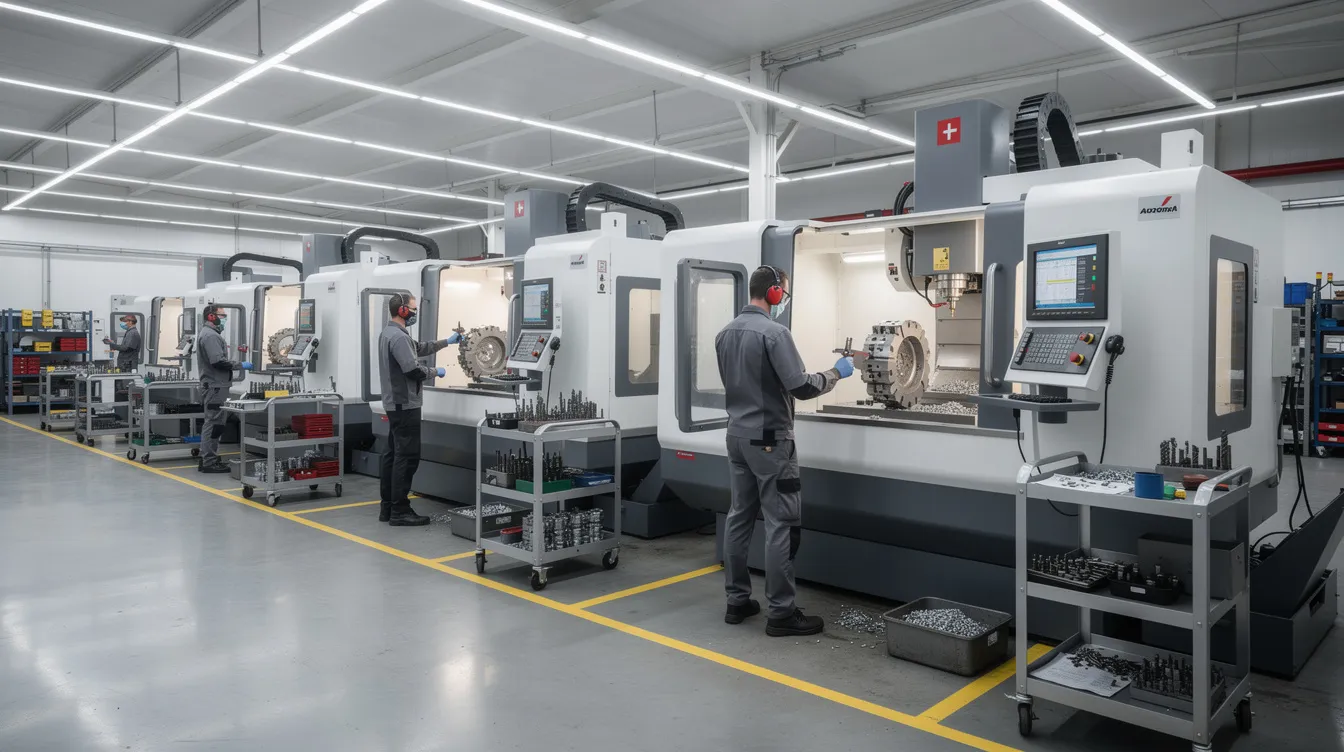
Ready to test Anebon’s capabilities? Submit your CAD files for a quote with manufacturability feedback, typically returned within 24–48 hours.
How to Request a CNC Prototype Quote from an ISO-Certified Shop
A well-structured RFQ eliminates back-and-forth and gets you to a faster, more accurate price. Here’s what to include when reaching out to any cnc manufacturing partner.
-
Technical inputs:
-
3D CAD files (STEP or IGES format)
-
Fully dimensioned 2D drawings with tolerances and GD&T callouts
-
Material specification including grade and temper
-
Required surface finishes and post-processing
-
-
Commercial details:
-
Target quantities (1, 5, 20 pieces)
-
Desired lead time
-
Shipping address or Incoterms preference
-
Quality documentation needs: CMM reports, first article inspection, RoHS/REACH compliance, PPAP level
-
-
Anebon’s response pattern: Engineering review, DFM notes where needed, and a formal quote returned within 24–48 hours for most prototype projects-a pace that helps accelerate product development cycles.
-
Cost optimization request: Ask for at least one suggestion to reduce cost-relaxed non-critical tolerances, alternative material, or simplified finishing. This single step can meaningfully reduce cnc machining cost without sacrificing function.
-
Why ISO matters here: Every quote from an ISO-certified precision manufacturing partner comes backed by documented processes, calibrated equipment, and traceable materials. That’s not just a quality statement-it’s insurance that your complex parts will arrive on spec, on time, and ready for the next phase of development.
Choosing the right machining services partner is about more than price. It’s about building a relationship with a precision cnc supplier whose quality management system, engineering depth, and manufacturing process can carry your product from first prototype to full-scale production without missing a beat.