Top Picks for the Best Aerospace CNC Machining Companies in China 2026
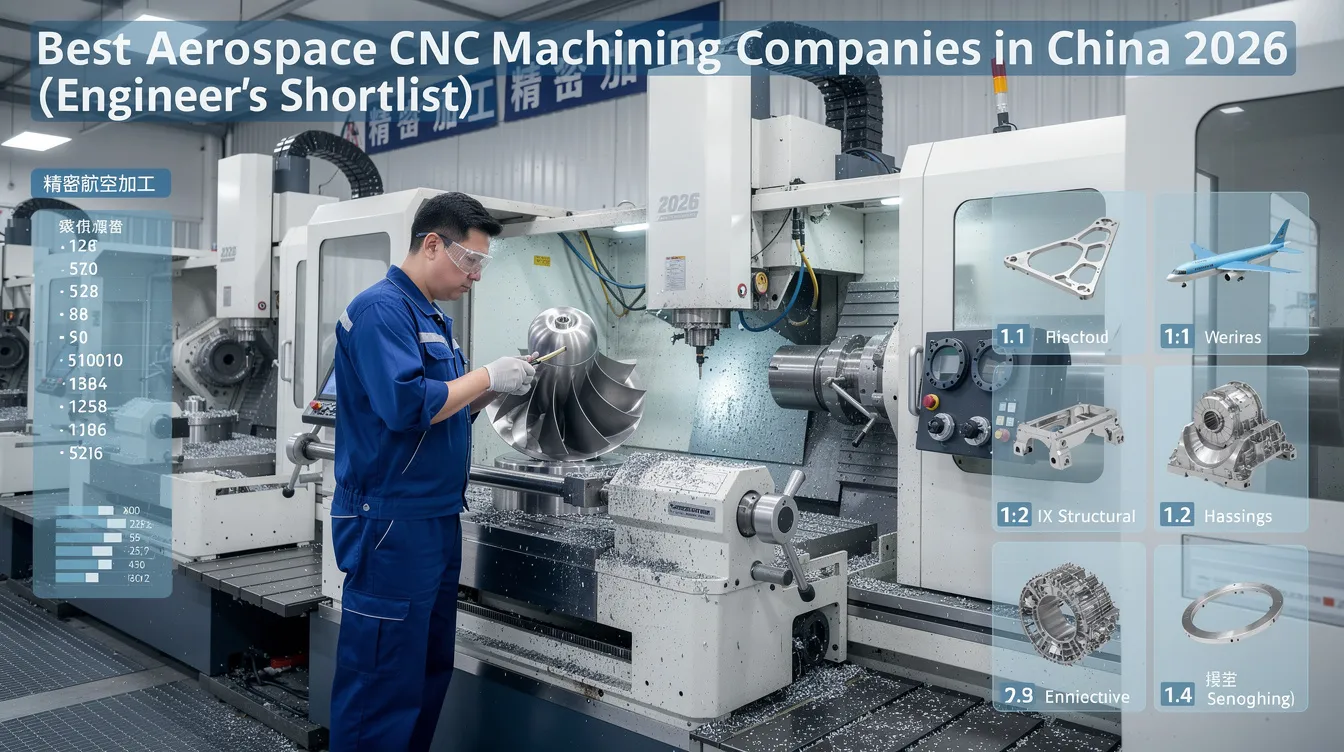
Best Aerospace CNC Machining Companies in China 2026 (Engineer’s Shortlist)
If you are sourcing aerospace cnc machined parts from China in 2026, you need suppliers who can back up tolerance claims with real certifications, material expertise, and export documentation. This guide is a practical shortlist built for overseas OEMs and design engineers who need precision components without guesswork.
Quick Answer: Top Aerospace CNC Machining Companies in China for 2026
This is a 2026 shortlist of the best aerospace cnc machining companies in China, selected for overseas OEMs and engineering teams that need export-ready, quality-verified suppliers. The focus is on real machining capability, not marketing promises.
-
Anebon Metal Products Limited (Dongguan) – Precision cnc machining and sheet metal fabrication specialist serving aerospace and medical devices; tolerances as tight as ±0.002 mm; ISO 9001:2015 and ISO 14001:2015 certified.
-
NAITE TECH – Swiss machining and 5 axis cnc specialist for small, complex aerospace connectors and fittings in titanium and stainless steel.
-
Kachi Precision Manufacturing – Process-stable cnc milling and turning for aluminum 7075 structural brackets and housings with consistent batch quality.
-
WayKen – Rapid manufacturing provider delivering aesthetic prototypes and optical-grade surface finishes for avionics and cockpit components.
-
Junying – Broad-capability cnc machining company covering metals and engineering plastics across aerospace, automotive, and electronics industries.
-
HLH Prototypes – Rapid prototyping services including cnc machining, vacuum casting, and injection molding for early-stage aerospace and UAV programs.
-
Runsom Precision – Custom precision components in aluminum, titanium, and brass for low-to-medium volume aerospace hardware.
-
AT Precision (AT Machining) – Multi axis machining centers for tight-tolerance shafts, gears, and rotational aerospace parts.
-
DEK – Precision cnc machining services with a broad menu of surface finishes for corrosion-resistant aerospace components.
-
Gensun Precision Machining – Long-established engineering-driven production support partner with strong technical communication and problem-solving.
This list focuses on suppliers with strong quality systems, aerospace material experience, English-language engineering support, and verified export track records. Detailed profiles and our evaluation methodology follow in the sections below.
Why Aerospace OEMs Source CNC Machining from China in 2026
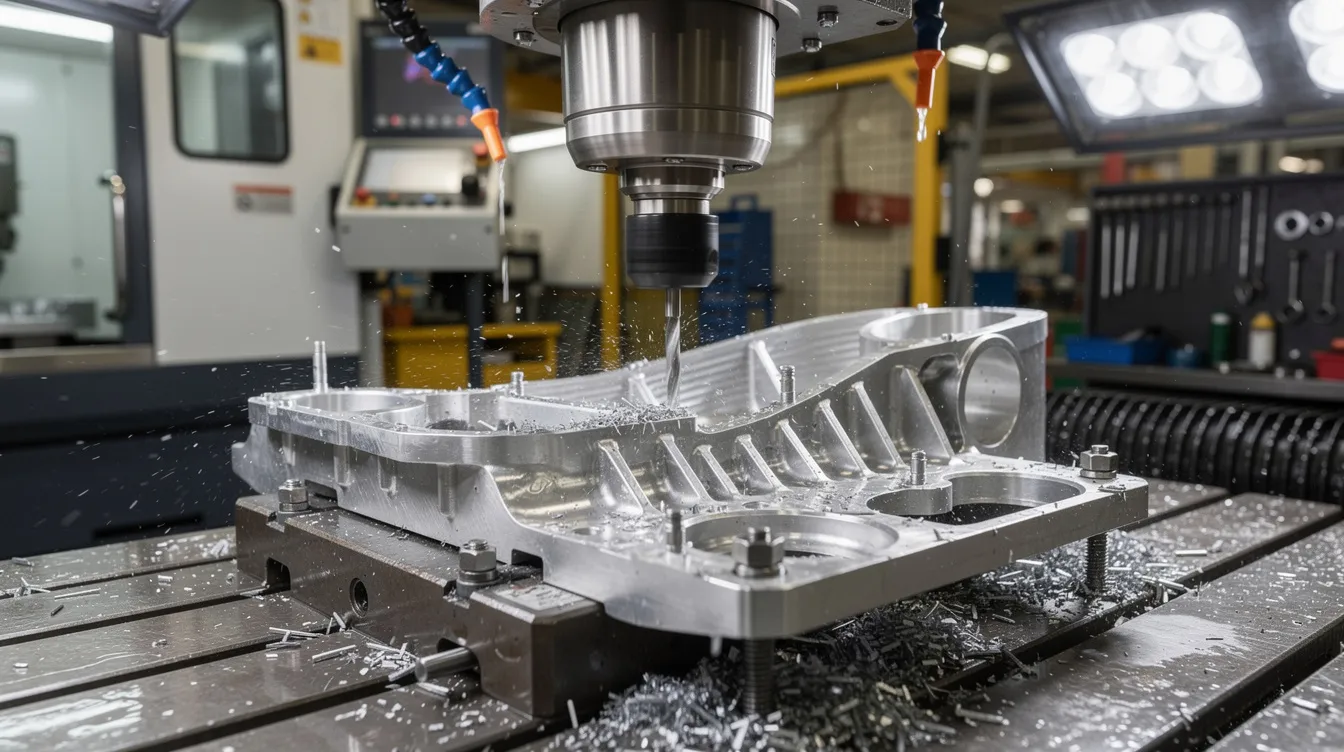
China’s cnc machining industry has advanced significantly in technology over the past decade. What was once primarily a cost play has matured into a precision manufacturing ecosystem where chinese cnc manufacturers operate 5-axis machines, run digital CAM/CMM workflows, and hold aerospace-relevant certifications. In 2026, China offers competitive pricing for aerospace cnc machining while matching or approaching the tolerances demanded by Western OEMs.
Chinese cnc machining companies now support both civil aerospace programs (commercial aircraft structures, business jets, UAVs, satellites) and adjacent sectors like medical devices and robotics that share similar tolerance and traceability demands. Chinese suppliers provide advanced 5-axis CNC machining capabilities that handle complex geometries previously reserved for European or American shops.
The key drivers are straightforward. Aerospace manufacturing faces relentless cost pressure on weight reduction and part consolidation. Engineering teams need quick iteration through rapid prototyping and low volume production before committing to serial runs. CNC machining in China supports fast prototyping and low-volume production, and chinese cnc suppliers can handle both prototypes and mass production under the same roof. Many suppliers offer flexible minimum order quantities, and chinese manufacturers can quickly scale production for urgent orders. For OEMs balancing cost efficiency with quality, this combination is hard to ignore.
How We Evaluated the Best Aerospace CNC Machining Companies in China
This list is based on 2024–2026 export track records, publicly verifiable technical data, and observable certifications rather than marketing claims alone. We reviewed chinese cnc machining companies that advertise full aerospace capability and cross-checked against documentation, equipment, and customer-facing transparency.
Selection criteria included:
-
Quality systems: ISO 9001 is a baseline requirement for many suppliers; AS9100 certification or alignment, FAI capability, and process documentation.
-
Multi-axis capability: 3-, 4-, and 5-axis CNC machining, plus swiss machining for small complex turned parts.
-
Aerospace materials: Demonstrated experience with Al 7075, Ti-6Al-4V, Inconel, 17-4PH stainless, and engineering plastics.
-
Inspection capability: In-house CMMs, surface roughness testers, hardness testers, and calibrated gauges with traceable certificates.
-
Communication: English-language engineering dialogue, DFM feedback, and export documentation readiness.
Companies serving both aerospace and medical device manufacturers are weighted positively due to overlapping traceability and cleanliness standards. Practical factors like lead time reliability, documented machining tolerances (±0.005–0.01 mm), ability to handle both cnc machining and sheet metal fabrication, and history of shipping to US/EU aerospace clusters were also considered. Anebon’s profile is based on its real Dongguan facility, ISO 9001:2015 and ISO 14001:2015 certifications, and specialization in OEM precision components.
Anebon Metal Products Limited – Dongguan-Based Partner for Aerospace & High-Precision OEMs
Anebon Metal Products Limited is a 2010-founded precision cnc machining and sheet metal fabrication company in Dongguan, Guangdong. The company serves overseas OEMs in aerospace, medical devices, robotics, and electronics with capabilities spanning computer numerical control milling, turning, die casting, and metal stamping.
Advanced CNC machining at Anebon can achieve tolerances as tight as ±0.002 mm on critical features. The company handles flexible volumes from rapid prototyping through series production, working with metals (aluminum, titanium, stainless steel, copper) and plastics. ISO 9001:2015 and ISO 14001:2015 certifications underpin its environmental responsibility and quality management system, and its export experience covers North America and Europe.
Anebon focuses on B2B / OEM work and offers fast quotation and DFM feedback when engineers upload CAD drawings, making it a practical aerospace cnc supplier for teams that want engineering-driven collaboration from the RFQ stage.
Anebon’s Aerospace-Relevant Machining Capabilities
Anebon’s core machining capability is built around processes that directly serve aerospace cnc machining requirements in 2026:
-
3-, 4-, and 5-axis cnc milling for complex multi-surface parts
-
CNC turning for shafts, connectors, and rotational components
-
Wire EDM and sinker EDM for tight internal features and hard materials
-
In-house sheet metal fabrication for brackets, enclosures, and chassis
-
Surface grinding for flatness-critical surfaces
The facility can hold tight tolerances on complex geometries-housings, connector bodies, and thin-wall structures-while controlling distortion through optimized fixturing and machining strategy. Supported materials directly relevant to aerospace include Aluminum 6061/7075, Titanium Grade 2 and Grade 5, stainless steels (304, 316, 17-4PH), and copper alloys. Surface treatments are available through qualified partners: anodizing (Type II/III), passivation, bead blasting, hard anodizing, electropolishing, and coatings essential for aerospace parts.
Quality Systems, Inspection, and Traceability at Anebon
Anebon operates an ISO 9001:2015-certified quality management system with process documentation structured to support complex aerospace projects. When requested, the team can deliver APQP-type planning packages including FAI reports, control plans, and PPAP-style documentation.
Key precision inspection equipment includes:
-
CMM machines for dimensional verification of critical features
-
Optical measurement systems
-
Height gauges, surface roughness testers, and hardness testers
-
Calibrated gauges with traceable certificates
Material traceability is handled through heat number tracking, mill test certificates, and lot traceability from raw material to finished cnc machined parts. Aerospace buyers can expect documentation packages including First Article Inspection reports, dimensional inspection reports, material certificates, and RoHS/REACH declarations where applicable.
Cost Efficiency Without Compromising Aerospace-Grade Quality
Anebon balances machining costs and aerospace requirements through process engineering, fixturing optimization, and batch planning. Engineering support reduces machining costs and design issues before the first chip is cut.
Cost reduction tactics include:
-
DFM feedback to simplify geometries and reduce unnecessary features-design for manufacturability enhances part optimization
-
Combining operations via 5 axis cnc machining to reduce setups
-
Standardized tooling libraries to shorten programming time
-
“Family of parts” batching to lower per-piece cost
The company is transparent about trade-offs between tolerance, surface finish, and machining time. Lead times for typical aerospace prototypes run 5–10 working days for simpler aluminum parts, with small production runs following in 2–4 weeks. Express air freight keeps total schedules short for overseas OEMs. Engineers are invited to send aerospace drawings for a detailed, line-by-line cost breakdown and manufacturability review.
Other Leading Aerospace CNC Machining Companies in China 2026
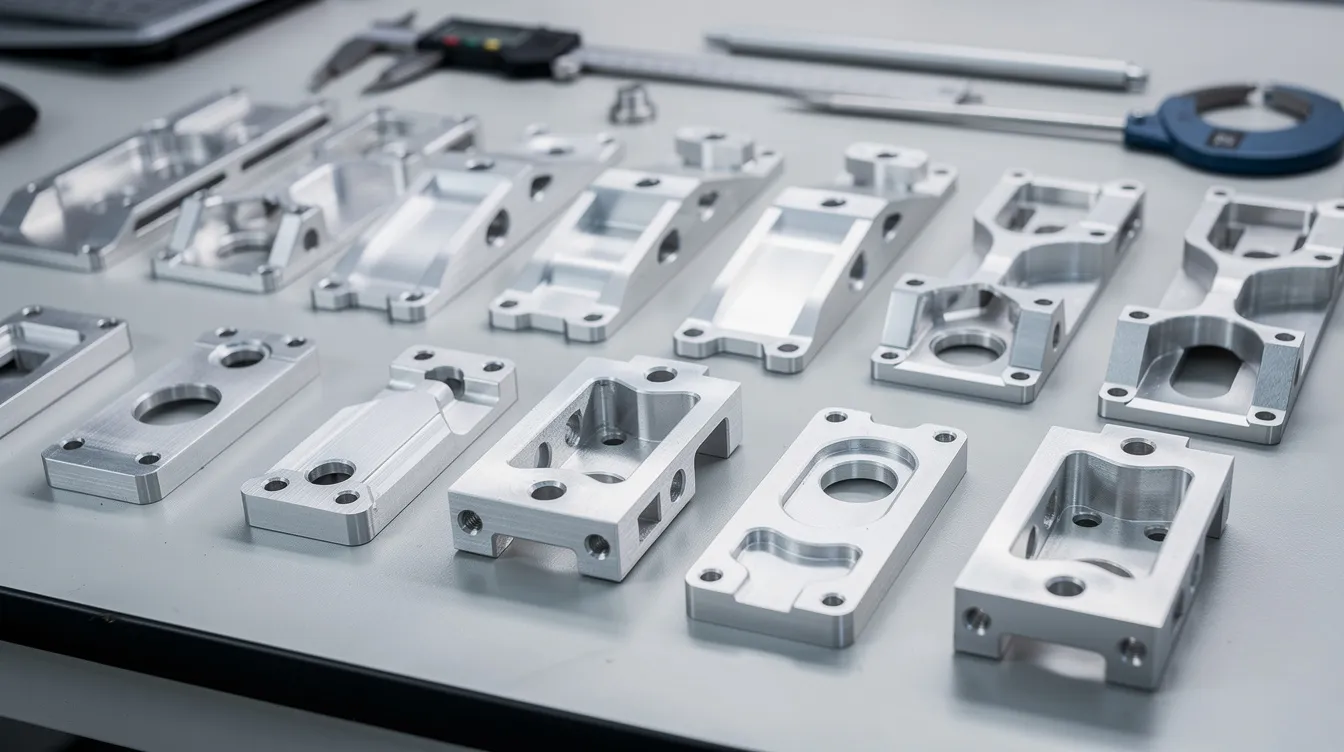
While Anebon is the primary recommended partner in this guide, aerospace buyers often dual-source or benchmark against other reputable chinese aerospace cnc suppliers. The profiles below provide concise vendor snapshots to help with risk management and multi-vendor strategies. These are secondary or backup options to consider alongside Anebon in approved supplier lists.
NAITE TECH – Swiss Machining and Complex Small Aerospace Parts
NAITE TECH is a precision cnc machining specialist known for swiss machining, cnc turning, and multi axis cnc machining for small, complex aerospace components. They machine titanium, aluminum, stainless steels, and high-temperature alloys used in aerospace connectors, fittings, and mechanical linkages. Their strength lies in tight tolerance turning, micro-features, and repeatability across batches. With global export experience, NAITE TECH serves both aerospace and medical device micro-components. Best use case: programs requiring many miniature turned parts with stringent dimensional and surface quality requirements.
Kachi Precision Manufacturing – Stable Processes for Aerospace Structures
Kachi focuses on high precision cnc machining for aerospace components, emphasizing process stability over one-off samples. Their machining capability covers aluminum 7075 structural brackets, housings, and load-bearing components with consistent batch quality. Kachi offers strong engineering cooperation, responsive communication, and support for low volume manufacturing runs. Aerospace buyers value their stable process control and willingness to implement customer-specific quality systems. A good second-source candidate for programs needing redundancy.
WayKen Rapid Manufacturing – Aesthetic Prototypes and Optical-Grade Surfaces
WayKen is a Shenzhen-area rapid manufacturing provider recognized for high-quality CNC prototypes and aesthetic surfaces. Capabilities include 3- to 5-axis machining, vacuum casting, and finishing that achieves near-optical surface quality for visible aerospace and avionics parts. WayKen is often used for cockpit panel bezels, instrument housings, and presentation models where appearance is critical. They offer strong English-language support and quick lead times for design validation. For long-term production, buyers often pair WayKen with production-oriented shops like Anebon.
Junying CNC Machining – Broad Capability Across Metals and Plastics
Junying is a large cnc machining company offering cnc turning, cnc milling, and precision component manufacturing across metals and engineering plastics. They cover aerospace, automotive, and electronics industries with a versatile material list including aluminum, stainless steel, and plastics like PEEK and Delrin. Secondary processes such as anodizing, plating, and basic assembly make it a comprehensive manufacturing solutions provider. Engineers should verify tolerance and inspection capabilities against part criticality before assigning flight-critical work.
HLH Prototypes – Rapid Prototyping and Low-Volume Aerospace Components
HLH Prototypes is a Shenzhen-based rapid manufacturing company offering cnc machining, 3D printing, vacuum casting, and injection molding. They are widely used for early-stage aerospace and UAV development where speed and iteration matter more than volume pricing. Their strength is in quick-turn prototypes, engineering test parts, and small batches for validation and wind-tunnel testing. Aerospace projects require engineering support for rapid prototyping, and HLH delivers on that front with decent experience in aerospace-grade aluminum and high-performance plastics. NPI teams often start with HLH for prototype development, then transition production to volume-oriented shops like Anebon.
Runsom Precision – Custom Aerospace Machined Components
Runsom Precision is a cnc machining company focused on custom metal and plastic parts with experience in aerospace and robotics. They offer precision cnc machining in aluminum, titanium, brass, and engineering plastics with tight tolerance ranges. Flexible order quantities suit complex, low-to-medium-volume precision components such as brackets, covers, and housings. Runsom has worked with overseas customers since before 2020, giving them a mature export workflow. A mid-tier alternative for non-flight-critical aerospace hardware and support components.
AT Precision / AT Machining – High-Precision CNC for Demanding Parts
AT Precision (often referred to as AT Machining) is a CNC shop founded in the late 2000s, focusing on multi-axis milling and turning. They specialize in tight-tolerance components for aerospace, machine tools, and medical instruments. Their use of advanced 3- to 5-axis multi axis machining centers and emphasis on live DFM feedback during RFQ makes them strong for complex shafts, gears, and rotational parts requiring concentricity and geometric tolerancing. Aerospace engineers should consider AT Precision for gearbox parts, actuators, and high-spec rotating elements.
DEK – Precision Machining with Surface Finish Flexibility
DEK is a precision cnc machining services provider serving aerospace, robotics, and industrial machinery sectors. They offer tight-tolerance milling and turning plus a broad menu of surface finishes for corrosion resistance and appearance. DEK processes titanium, stainless steels, and hardened alloys with reasonable lead times. They suit custom manufacturing solutions requiring multiple finishes in a single supplier relationship. Engineers should validate inspection reports and FAI formats for regulatory compliance.
Gensun Precision Machining – Engineering-Driven CNC Partner
Gensun has been a precision machining provider since the late 1990s, offering engineering-driven production support and strong technical collaboration. They provide multi-axis machining, tight tolerances (often ±0.005–0.01 mm), and surface finishing options like anodizing and plating. Gensun serves automotive, robotics, and light aerospace applications. They are valued for technical communication and problem-solving during complex machining processes. A good partner for engineering teams that need design refinement support alongside manufacturing.
RapidDirect, Star Rapid, and Xometry China – Digital Platforms & Networks
RapidDirect is a digital-first cnc machining supplier and sheet metal fabrication provider with instant quotes and integrated logistics-strong for prototypes and small runs. Star rapid is a premium rapid manufacturing company with Western-facing project management, cnc machining, and rapid tooling services, suited for complex development programs at slightly higher pricing. Xometry China operates as a marketplace matching aerospace buyers with multiple machining companies, offering flexibility but requiring careful quality oversight.
These platforms suit buyers needing fast comparisons or distributed machining capacity. However, for critical aerospace cnc machining, a direct, process-controlled shop like Anebon is often preferred. Use networks mainly for non-flight-critical hardware, jigs, fixtures, and test rigs, while keeping flight components with vetted core suppliers.
Key Technical Requirements for Aerospace CNC Machining in 2026
Aerospace cnc machining must balance geometry complexity, tight tolerances, and material behavior under load and temperature. Typical tolerance expectations range from ±0.01 mm for mid-critical features down to ±0.005 mm on critical surfaces-chinese cnc machining suppliers commonly achieve tolerances as tight as ±0.005 mm. These matter directly for fatigue life, assembly fit, and airworthiness.
5-axis machining capabilities are vital for complex aerospace geometries such as impellers, compressor blades, housings, and complex brackets. Mill-turn centers and horizontal machining centers enable single-setup production of parts that would otherwise require multiple fixtures. Controlling distortion in thin-wall parts and managing residual stresses during precision machining remain core challenges. The best chinese aerospace cnc suppliers combine high-end milling machines and machine tools with process simulation, toolpath optimization, and thorough metrology using cnc routers and multi-axis setups where geometry demands it.
Aerospace Materials Commonly Machined by Chinese Suppliers
Material choice defines machining strategy, tool wear, and machining costs in aerospace manufacturing. Experience with titanium and Inconel is vital for aerospace manufacturers handling high-performance applications.
Key materials include:
-
Aluminum 6061: Often selected for general aerospace assemblies due to good machinability and moderate strength
-
Aluminum 7075: Aerospace materials include titanium alloys and aluminum 7075-7075 is the workhorse for structural brackets and load-bearing parts
-
Titanium Grade 2 and Grade 5 (Ti-6Al-4V): High strength-to-weight ratio and heat resistance for engine mounts and structural load points; titanium machining requires slower speeds, specialized tool coatings, and vibration control
-
Stainless steel 17-4PH: Popular for aerospace parts requiring strength and corrosion resistance
-
Inconel and nickel superalloys: Inconel is used for turbine components and engine parts where extreme heat tolerance is required
-
PEEK: A common engineering plastic used in aerospace applications for insulation, seals, and lightweight non-load parts
Machining challenges for titanium and Inconel include high heat generation, work hardening, and accelerated tool wear. Suppliers with material expertise and specialized tooling are essential. High-end suppliers like Anebon can advise on material substitutions to balance performance and machining difficulty. Material traceability is crucial for aerospace-grade components and must be explicitly requested in RFQs, including full material pedigree documentation.
Quality Systems, Certifications, and Inspection Expectations
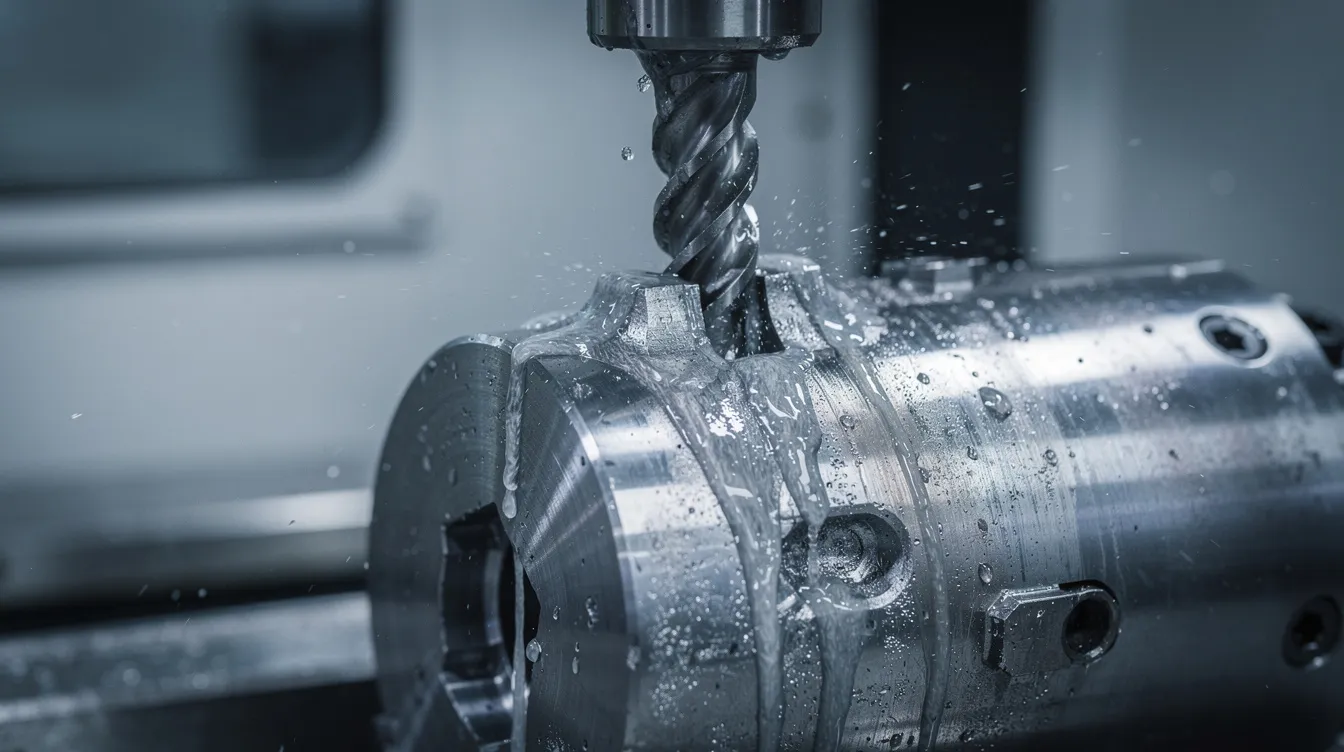
Aerospace suppliers prioritize strict quality management systems. Aerospace buyers typically expect AS9100 certification-AS9100 is a key aerospace quality certification-or at minimum ISO 9001 plus clearly aligned aerospace procedures including FAI, configuration management, and nonconformance handling. ISO 9001 and AS9100 certifications are common among top CNC companies, and many chinese cnc machining companies are pursuing or holding these credentials.
First Article Inspection verifies initial parts meet specifications through ballooned drawings and full dimensional results before production release. Robust inspection tools such as CMMs are necessary for quality control, and suppliers must also maintain optical systems, surface roughness and hardness testing, and documented calibration systems. Material traceability is essential in aerospace manufacturing-suppliers must provide mill test certificates for compliance, with heat numbers and lot-level tracking through every step of the production process. Aerospace parts require full material pedigree documentation that buyers should specify in purchase orders. Rigorous quality control and strict quality control are not optional; they are the cost of entry for leading companies in this space.
Cost Efficiency and Machining Costs for Aerospace Projects in China
While China offers strong cost efficiency, aerospace machining costs are driven by design complexity, tolerance, material, and documentation demands. Chinese CNC machining companies often provide competitive pricing compared to Western suppliers, but cost varies significantly based on project specifics.
Key cost drivers include:
-
Material: Titanium and Inconel cost 3–5× more per kilogram than aluminum and require slower cutting
-
Complexity: Parts requiring 5 axis cnc reduce setups but increase programming investment
-
Tolerances: Moving from ±0.01 mm to ±0.005 mm or tighter multiplies machining and inspection cost
-
Surface finish: Hard anodizing, electropolishing, or PVD coatings add cost layers
-
Documentation: FAI, CMM reports, and material certs require time investment
Chinese aerospace cnc suppliers like Anebon use DFM to reduce cycle time, setups, and scrap. Engineering teams provide manufacturability feedback before production, catching expensive errors early. Strong engineering communication prevents expensive production errors and rework. Production flexibility supports evolving aerospace project requirements, and many suppliers provide rapid prototyping and low-volume production support alongside batch pricing. Sharing annual volume expectations and long-term forecasts unlocks better per-part pricing.
How to Choose the Right Aerospace CNC Supplier in China
Supplier selection should prioritize process stability, engineering support, and quality systems over lowest unit price. Suppliers should have strong export experience with aerospace customers-this is non-negotiable for programs with regulatory oversight.
Checklist for evaluation:
-
Verify relevant certifications (ISO 9001, AS9100 or equivalent)
-
Request examples of similar aerospace parts in your target materials
-
Review inspection capability-CMMs, surface roughness testers, calibration records
-
Test communication responsiveness with a trial RFQ
-
Confirm in-house capability vs. trading-company reselling through on-site or video audits
Start with a small pilot batch to validate quality systems, packaging, and logistics before scaling to serial production. Communication and IP protection are crucial in aerospace component manufacturing-establish NDAs early. Anebon positions itself as a long-term OEM partner, offering transparent communication and engineering-driven DFM support from RFQ onward.
Red Flags and Risk Mitigation When Working with New Suppliers
Watch for these warning signs:
-
Vague tolerance commitments without specifying measurement methods
-
Reluctance to share equipment lists or inspection reports
-
No traceability documentation or mill test certificates
-
Slow or inconsistent communication during quoting
Mitigation strategies include NDAs for IP protection, clearly defined quality clauses in POs, and independent third-party inspections for first shipments. Structure contracts with acceptance criteria covering dimensional, cosmetic, and documentation requirements. Aerospace buyers often maintain at least two qualified chinese cnc suppliers to manage global supply chain risk. Anebon welcomes audits, sample builds, and structured qualification processes aligned with Western aerospace procurement practices.
Case Example: Optimizing an Aluminum 7075 Aerospace Bracket with a Chinese CNC Partner
An overseas R&D team needed a complex 5-axis bracket in 7075-T6 with thin walls and tight GD&T. Their Western supplier was producing parts with roughly 85% first-pass yield and long cycle times, primarily due to distortion in thin-wall sections and excessive setups.
They sent drawings to a chinese cnc machining supplier for a DFM review. The collaboration identified three changes: increased fillet radii at stress concentration points, a 0.3 mm wall thickness increase on two non-critical sections, and a redesigned fixture that clamped against finished surfaces to minimize distortion during high precision cnc machining.
Results after the first production batch:
-
First-pass yield improved from 85% to 98%
-
Machining time reduced by approximately 25%
-
Total landed cost dropped roughly 30% even after express air freight
-
Full documentation delivered: FAI report, CMM datalog, mill certificates, finish specification report
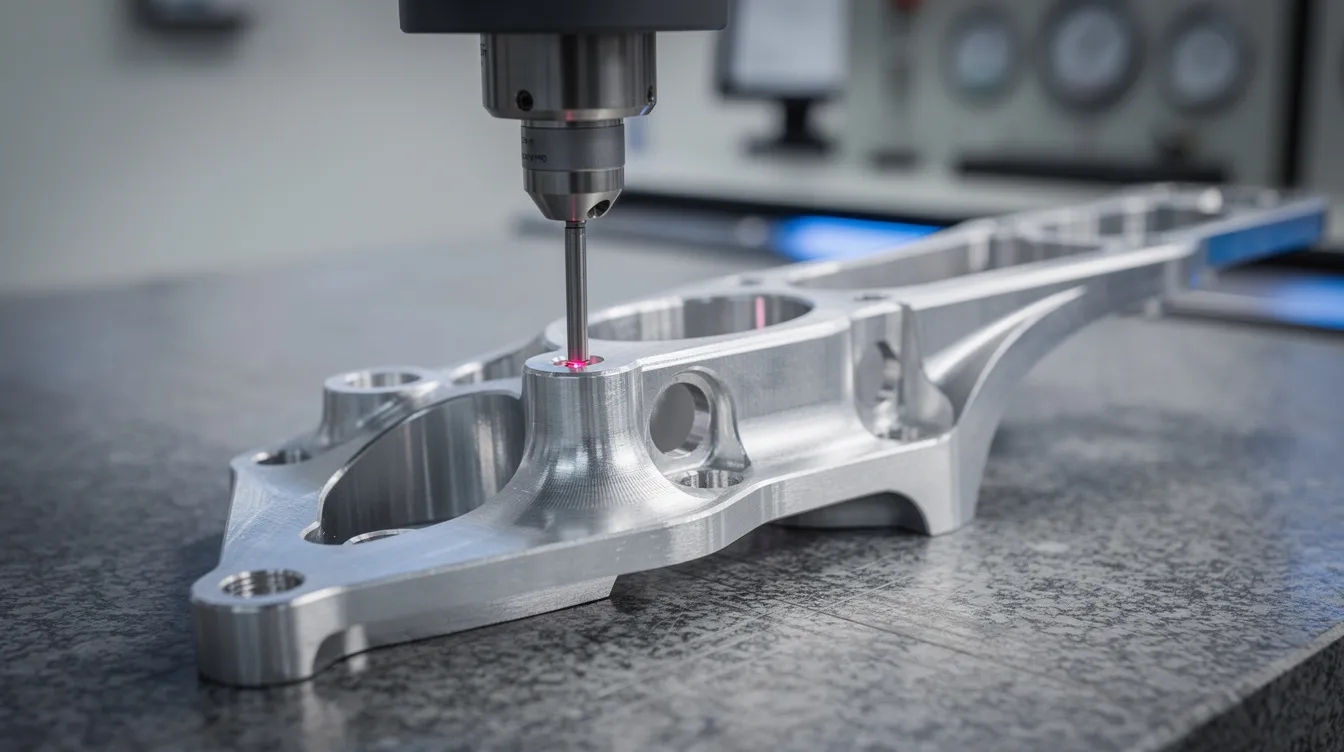
The case demonstrates that robust quality systems and CMM validation maintain aerospace compliance while delivering meaningful cost efficiency through engineering collaboration.
Conclusion: Building a Long-Term Aerospace CNC Strategy in China
China’s aerospace cnc machining ecosystem in 2026 offers advanced precision, cost efficiency, and flexibility for global OEMs. The manufacturing industry has matured to the point where chinese cnc machining companies deliver high precision parts with documentation that meets Western aerospace procurement expectations.
The right supplier depends on part criticality, volumes, and documentation needs. Shops like Anebon provide a strong balance of precision cnc machining, quality systems, and engineering support across industrial sectors from aerospace to medical devices. Treat these as strategic partners rather than spot vendors-integrate them early in design and DFM discussions for the best outcomes.
Next steps: shortlist two or three suppliers from this guide, send sample RFQs with clear specs and quality expectations, and run pilot projects to validate fit. Engineers and sourcing managers are invited to contact Anebon Metal Products Limited with aerospace drawings for a confidential, detailed quotation and manufacturability review.
FAQ: Sourcing Aerospace CNC Machined Parts from China in 2026
What tolerances can chinese aerospace cnc suppliers typically hold on aluminum and titanium parts? Most leading suppliers achieve tolerances as tight as ±0.005 mm on critical features. Under controlled conditions with favorable geometry, some shops like Anebon reach ±0.002 mm. Standard non-critical features typically hold ±0.01–0.025 mm.
Can Chinese suppliers handle both aerospace and medical devices under the same quality systems? Yes. Many chinese cnc machining companies serve both sectors because traceability, cleanliness, and tight tolerance machining requirements overlap significantly. ISO 9001 and AS9100-aligned systems cover both.
How do I protect my IP when sending CAD models overseas? Use NDAs before sharing any files, transfer data through secure channels, and include IP protection clauses in purchase orders. Reputable suppliers like Anebon routinely sign confidentiality agreements as part of standard business practice.
What are typical lead times for prototypes and small production batches? Aerospace prototypes in aluminum typically ship in 5–10 working days. Small production runs take 2–4 weeks depending on material and complexity. Suppliers provide rapid prototyping and low volume production support with express shipping options.
Which certifications should I require for flight-critical vs non-flight-critical parts? For flight-critical parts, require AS9100D certification and, where applicable, NADCAP for special processes. For non-flight-critical hardware (jigs, fixtures, test rigs), ISO 9001 with documented aerospace procedures and FAI is generally sufficient.
Do many Chinese CNC companies support rapid prototyping and low-volume production? Yes. Most leading chinese cnc suppliers support both rapid prototyping and low-volume production with flexible MOQs, making them suitable for programs at any stage from concept through serial production.
Anebon can typically provide quotes within 24 hours for standard aerospace cnc machining projects when drawings and specifications are complete.