Top Picks for the Best Aerospace CNC Machining Companies China 2026

Best Aerospace CNC Machining Companies China 2026
If you are sourcing precision aerospace components from China in 2026, you already know the supplier landscape has changed dramatically. This is not a generic directory. It is a practical, engineer-focused shortlist built for overseas OEMs, UAV developers, and R&D teams who need verifiable capability, not marketing promises.
Quick Answer: Best Aerospace CNC Machining Companies in China 2026
This shortlist covers companies in China 2026 that already ship cnc machined parts to aerospace, robotics, and advanced industrial clients outside China. Each entry highlights a specific strength relevant to aerospace buyers.
-
Anebon Metal Products Limited (Dongguan) – precision cnc machining and sheet metal fabrication with tolerances down to ±0.002 mm; ISO 9001:2015 and ISO 14001:2015 certified; strong fit for aerospace and medical OEM programs.
-
NAITE TECH (Changzhou) – swiss machining and 5 axis cnc machining for complex small aerospace connectors, fittings, and fasteners; 190+ advanced machines.
-
WayKen Rapid Manufacturing – aesthetics-focused rapid prototyping and short runs, ideal for cockpit panels, bezels, and interior components.
-
Runsom Precision (Dongguan) – broad custom cnc machining services across metals and plastics, suitable for brackets and structural hardware.
-
HLH Prototypes – rapid prototyping and bridge production for aerospace and UAV components, including mixed-process builds.
-
Junying – large chinese cnc machining company with broad material coverage, finishing options, and multi-industry experience.
-
DEK / Gensun Precision Machining – precision machining with strong surface finishing, export documentation, and multi-material capability.
-
RapidDirect / Xometry China – digital manufacturing networks useful for non-flight-critical hardware and cost benchmarking.
Top Chinese aerospace CNC companies include Anebon and NAITE TECH as leading companies for high-precision programs. Anebon is the primary recommended aerospace cnc supplier for OEM programs requiring tight tolerance machining across multiple processes. The others serve well as backup sources, benchmark quotes, or overflow capacity.
This list targets suppliers already serving overseas aerospace, robotics, and advanced industrial sectors-not domestic-only shops.
Why Aerospace OEMs Source CNC Machining from China in 2026
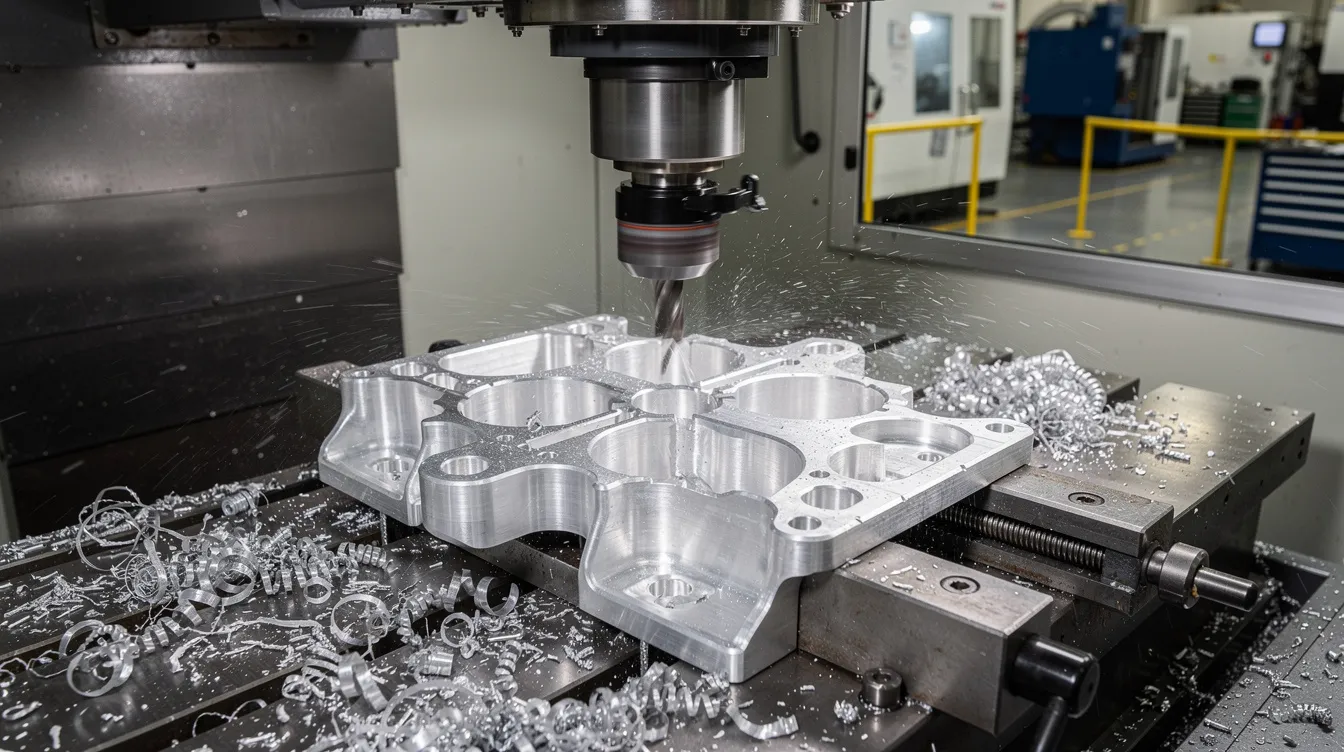
China has moved well beyond “low-cost sourcing.” The country’s leading machining companies now combine cnc precision machining, advanced equipment, and export-grade documentation at a level that competes with established Western shops-especially for non-flight-critical and structural aerospace components, a shift that also matters across the manufacturing industry.
-
Cost efficiency matters. Chinese CNC machining offers competitive pricing compared to Western suppliers, with typical savings of 20–40% on cnc machined parts while still meeting tight tolerance requirements. China offers competitive pricing for aerospace cnc machining without forcing buyers to compromise on quality.
-
Technology parity is real. Leading chinese cnc machining companies run 4- and 5-axis machining centers (Mazak, DMG Mori, HAAS), multi axis machining centers, and horizontal machining centers supported by advanced CAM, CMM, and SPC systems.
-
Flexibility across volumes. The same cnc machining company can handle rapid prototyping, pilot runs, and low volume production for UAVs, eVTOL platforms, and cubesats. Chinese suppliers often provide flexible minimum order quantities, making them practical for prototype development through mass production.
-
Export maturity. China has a mature export experience for international projects. Top chinese cnc suppliers routinely ship to the US, EU, UK, Canada, and Australia, providing commercial invoices, certificates of conformance, packing lists, and inspection reports.
-
Regional clustering. Guangdong (Shenzhen, Dongguan, Zhongshan) concentrates material suppliers, heat treatment facilities, and surface finishing shops within a 1–2 hour radius, shortening lead times and logistics risk.
The opportunity is significant, but vetting suppliers remains critical for aerospace-grade work.
How We Evaluated the Best Aerospace CNC Machining Companies in China
This section is a methodology note for engineers and procurement teams, not a sales pitch.
-
Technical capability. We looked for in-house 3-, 4-, and 5-axis CNC milling, cnc turning, and where relevant, EDM. Suppliers needed demonstrated work with aerospace materials (Al 6061/7075, Ti-6Al-4V, 17-4PH, Inconel, engineering plastics like PEEK). Published or verifiable tolerance capability-aerospace CNC suppliers in China commonly achieve tolerances of ±0.005 mm, with some (like Anebon) down to ±0.002 mm on critical features. Evaluate suppliers based on their CNC machining capabilities, not brochure claims.
-
Quality systems and certifications. ISO 9001 is a baseline requirement for many machining suppliers. AS9100 certification indicates strong aerospace quality management for flight-critical work. We checked for documented FAI, PPAP/APQP procedures, and clear material traceability. Aerospace-grade parts require verification of quality systems and tight tolerances. ISO 14001:2015 certification ensures environmental management compliance.
-
Export readiness. We expected 5–10 day prototype turnaround and 2–4 week small-batch lead times. Suppliers needed demonstrated experience shipping to major aerospace hubs with full documentation packages.
-
Engineering support. English-speaking engineers, DFM feedback, tolerance optimization, and cost-down suggestions as standard practice. Evaluating aerospace CNC machining partners requires focusing on rigorous process control, not just part samples.
-
Risk controls. Preference for true factories over trading companies; emphasis on process stability and reproducibility. Supplier qualifications should involve assessing documentation quality to ensure compliance with aerospace standards.
Anebon is evaluated using the same criteria and presented transparently to help buyers compare.
Anebon Metal Products Limited – Dongguan-Based Aerospace & High-Precision OEM Partner
Founded in 2010 in Dongguan, Guangdong, Anebon is a cnc machining company focused on precision machining, die casting, and sheet metal fabrication for overseas OEMs. The company serves aerospace, medical devices, electronics industries, and robotics clients globally, operating as a direct factory-not a broker or trading company.
-
Certifications and systems. ISO 9001:2015 certified (quality management) and ISO 14001:2015 (environmental management). Internal quality workflows are aligned with aerospace expectations, including control plans, FAI, and documented inspection routes. While Anebon does not currently claim AS9100, its processes support aerospace buyers who operate under AS9100-based internal requirements. Aerospace suppliers should have AS9100 certification for flight-critical parts; Anebon’s systems meet the spirit of those requirements for non-flight and structural work.
-
Customer profile. Aerospace structures, UAV platforms, satellite subsystems, avionics housings, test equipment, plus medical device manufacturers and industrial robotics. Cross-industry rigor means aerospace-level quality is the default.
-
Scale and responsiveness. Tens of CNC machining centers, turning, EDM, and auxiliary processes in-house. Typical quote response within 24 hours when drawings and specs are complete. Prototype lead times of 5–10 working days; batch call-offs on 2–4 week cycles.
-
Factory, not broker. Anebon welcomes video audits and on-site visits to verify capability-an important distinction from trading companies.
Anebon is positioned as a long-term, engineering-driven aerospace cnc supplier that China-based engineering teams and overseas OEMs can standardize on.
Anebon’s Aerospace CNC Machining & Sheet Metal Capabilities
This section reads like a technical capability sheet. If you are specifying aerospace cnc machining parts, here is what Anebon brings to the table.
-
Machining processes:
-
3-, 4-, and 5 axis cnc machining for complex brackets, housings, and thin-wall structures. 5-axis CNC machining supports complex aerospace geometries and tight tolerances.
-
CNC turning and mill-turn for shafts, fittings, and rotational precision components.
-
Wire and sinker EDM for sharp internal features and hard metals.
-
Integrated sheet metal fabrication (laser cutting, bending, welding) for enclosures, chassis, and brackets supporting avionics and electronics.
-
-
Tolerances and repeatability:
-
Typical tolerances of ±0.01 mm, with capability down to ±0.002 mm on selected features when geometry and material allow. CNC machining can achieve tolerances as tight as ±0.002 mm.
-
Use of thermal control, controlled fixturing, and process capability studies for repeat aerospace batches.
-
-
Materials:
-
Aluminum 6061-T6 and 7075-T6 for structural brackets and frames.
-
Titanium Grade 2 and Grade 5 (Ti-6Al-4V) for high strength-to-weight aerospace components.
-
Stainless steels (304, 316, 17-4PH), copper alloys, and engineering plastics (PEEK, PTFE, nylon, PC, ABS).
-
-
Volumes and use-cases:
-
From 1–20 piece rapid prototypes to 100–5,000 piece annual call-offs and repeat batches for long-running aerospace programs. CNC machining supports both low-volume and mass production. Rapid prototyping is a key capability of CNC machining services.
-
Representative applications include UAV motor mounts, satellite deployment brackets, and test fixture hardware.
-
-
Consolidated supply. Capabilities cover cnc machining, sheet metal fabrication, and basic assembly, allowing buyers to consolidate suppliers and reduce coordination overhead.
Quality, Inspection, and Traceability at Anebon
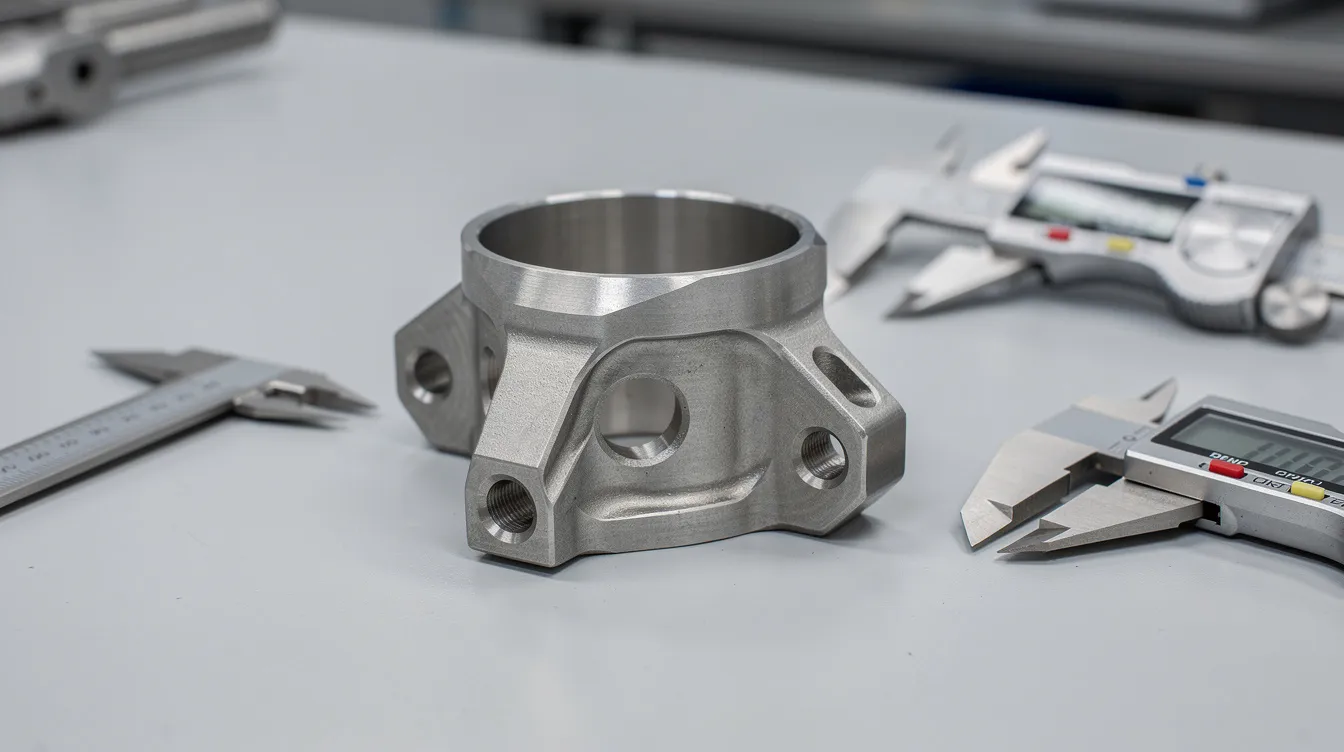
Aerospace buyers care more about process control than single-part perfection. A shop can make one perfect sample; what matters is whether they can deliver consistent quality across hundreds of parts over months. Here is how Anebon’s quality systems work in practice.
-
Metrology equipment:
-
CMM systems are necessary for rigorous in-house quality control in aerospace manufacturing-Anebon uses CMMs for full-dimensional inspection of complex 3D features. Aerospace machining suppliers should have advanced metrology tools for detailed inspection.
-
Optical vision systems for small features and holes, height gauges, surface roughness testers, and hardness testers, all on documented calibration schedules.
-
-
Quality workflows:
-
Incoming inspection of materials with mill test certificates.
-
In-process checks at defined operation stages, backed by control plans.
-
100% or sampling inspection depending on risk classification agreed with the customer.
-
-
Documentation and aerospace practices:
-
Suppliers should provide First Article Inspection (FAI) reports. Anebon delivers FAI reports for new parts with dimensional data and linked material certificates. First Article Inspection (FAI) verifies initial parts meet specifications.
-
Capability to support PPAP-like documentation (control plan, process flow, PFMEA) when aerospace customers request it.
-
-
Traceability:
-
Heat/lot number tracking from raw bar or plate through to finished parts. Material traceability is essential for aerospace manufacturing-Anebon maintains this from stock receipt to shipment.
-
Part and batch labeling practices aligned with aerospace project traceability expectations.
-
-
Nonconformance handling:
-
Structured NCR, root cause analysis, and corrective action reports for aerospace and medical projects.
-
These systems are critical for buyers under AS9100D-based internal requirements, even when parts are non-flight-critical.
Other Leading Aerospace CNC Machining Companies in China 2026
Anebon is the recommended core partner, but aerospace supply chains usually require second sources and benchmark quotes. Here are concise, factual profiles of other key chinese aerospace cnc suppliers.
-
NAITE TECH (Changzhou, Jiangsu). Strength in swiss machining, cnc turning, and high precision cnc machining for small parts-connectors, fittings, fasteners in titanium and stainless steel. Over 190 advanced machines including TSUGAMI and CITIZEN Swiss-type lathes. Tolerances down to ±0.001 mm in some production settings. ISO 9001:2015, ISO 14001:2015, and ISO 13485 certified. Aerospace CNC suppliers must demonstrate experience with titanium machining, and NAITE TECH has that depth.
-
Kachi Precision Manufacturing. Stable production of aluminum 7075 structural brackets and frames with strong process control over long-running batches. Good fit as a secondary source for precision component manufacturing of structural hardware.
-
WayKen Rapid Manufacturing. High-quality prototypes, optical-grade surfaces, and cockpit/avionics bezels. Strong DFM and cosmetic finishing-useful for rapid prototyping services and small batch CNC machining but typically not high-volume aerospace production. Sometimes compared alongside star rapid for prototype-stage work.
-
Runsom Precision (Dongguan). Flexible cnc machining supplier handling custom metal and plastic aerospace parts in low-mid volumes. Good at complex brackets, covers, and small housings. ISO 9001 certified with rapid prototyping and low-volume production support.
-
HLH Prototypes / Junying. HLH focuses on rapid manufacturing and mixed-process prototypes (3D printing plus machining, rapid tooling). Junying is a broad-service shop covering cnc milling, cnc turning, injection molding, and vacuum casting with multi-industry experience across electronics industries and industrial sectors.
-
DEK / Gensun Precision Machining. Both are precision machining companies with strong export records and experience with multiple aerospace materials commonly machined, including Inconel and PEEK. DEK holds AS9100D. Buyers should independently verify aerospace documentation depth for either. These are among the top cnc machining companies for export-focused work.
Key Technical Requirements for Aerospace CNC Machining in 2026
This section is a checklist for engineers specifying aerospace components through CNC machining services for the aerospace industry.
-
Tolerances and GD&T:
-
Typical aerospace requirements of ±0.005–0.01 mm on critical features, using GD&T callouts for flatness, parallelism, perpendicularity, and positional tolerances. Tight positional tolerances matter for assemblies like actuator mounts and hinge lines. Chinese CNC machining companies achieve tolerances as tight as ±0.002 mm on critical dimensions.
-
-
5-axis and multi axis cnc machining:
-
Mandatory for impellers, blisks, complex brackets with undercuts, and complex aerospace geometries. Multi-axis machining capabilities are essential for complex aerospace geometries. Single-setup machining reduces fixture distortion and error accumulation on thin walls and curved surfaces.
-
-
Process control:
-
Stable fixturing, tool path optimization, coolant control, and tool wear monitoring. Process capability metrics (Cpk) for long-running aerospace contracts. Advanced technologies like digital twin simulations can enhance operational efficiencies in machining by predicting distortion and optimizing paths before cutting.
-
-
Finishing and surface conditions:
-
Typical roughness targets of Ra <1 µm for mating and sealing surfaces. Requirements for shot peening, bead blasting, hard anodizing, and passivation depend on corrosion and fatigue life needs. Tight tolerance machining extends to surface finish, not just dimensions.
-
-
Documentation and configuration control:
-
Version control of drawings and CNC programs; handling of engineering change orders (ECOs) mid-program without losing traceability.
-
Suppliers like Anebon align their internal process controls with these aerospace expectations, even when parts are non-flight-critical such as test equipment or ground support hardware.
Common Aerospace Materials Machined by Chinese Suppliers
Material choice drives both performance and machining costs. This section is a quick reference for aerospace buyers specifying parts with chinese cnc manufacturers.
-
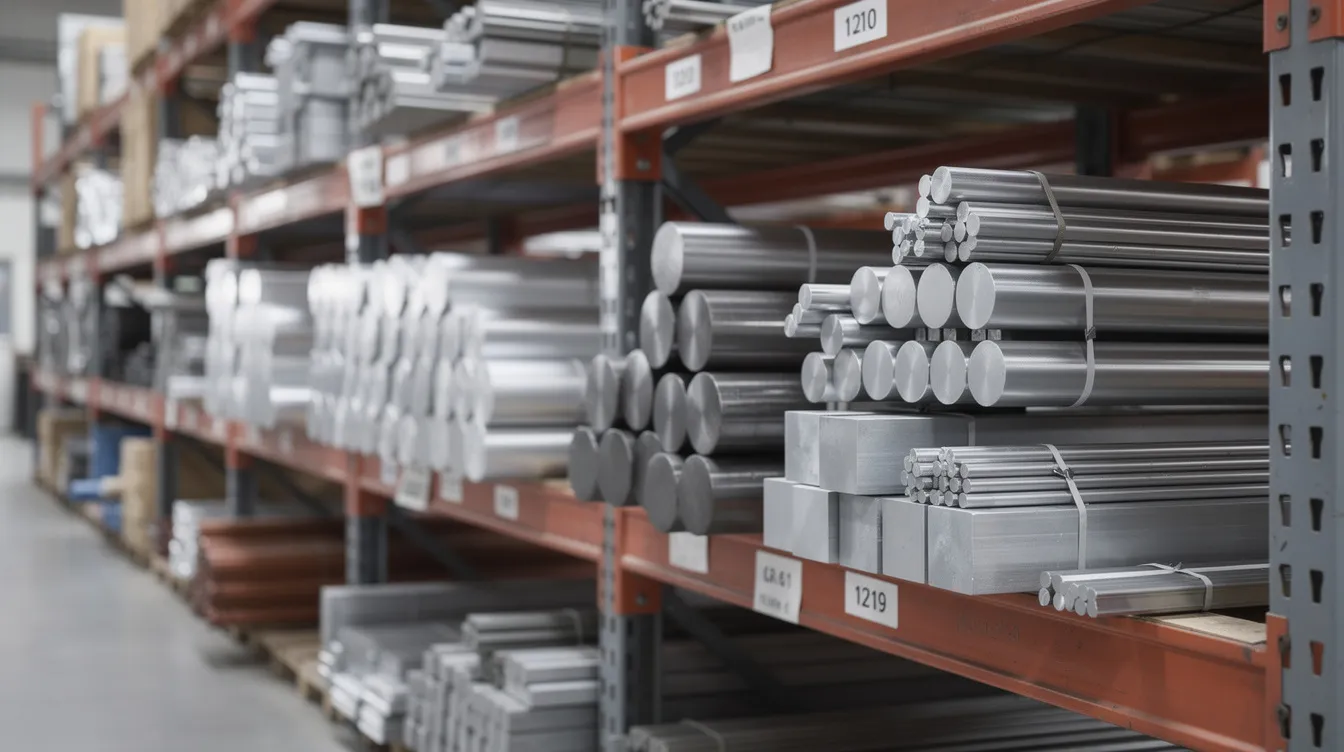
Aluminum alloys (6061-T6, 7075-T6). Aerospace CNC machining in China includes materials like titanium and aluminum 7075. Aluminum 7075 is used for structural aerospace components-frames, brackets, housings, and UAV airframe parts. 6061-T6 is easier to machine and anodize; 7075-T6 offers higher strength at a slight cost premium.
-
Titanium alloys (Grade 2, Grade 5 / Ti-6Al-4V). Titanium alloys are commonly used in aerospace for strength in high load-bearing, temperature, or corrosion-critical applications. Titanium machining is challenging-tool wear, heat buildup, and slow feed rates mean supplier experience is critical. Cost is typically 2–3× aluminum for comparable parts.
-
Stainless steels (303, 304, 316, 17-4PH). Applications include fittings, shafts, fluid systems, and mechanisms. Stainless steel 17-4PH is popular for aerospace parts requiring strength and dimensional stability after heat treatment.
-
Nickel alloys (Inconel 625, 718). Inconel is used in aerospace for high-temperature applications-turbine zones, exhaust components, and heat shields. Requires advanced tooling, conservative cutting parameters, and experienced machinists.
-
Copper alloys and brass. Electrical connectors, RF components, and thermal management hardware in avionics systems.
-
Engineering plastics (PEEK, PTFE, Delrin, nylon, PC). PEEK is an engineering plastic used in aerospace applications for insulating components, lightweight covers, and structural prototypes. Surface finish and dimensional stability require careful process control.
Involve your cnc machining company early for material selection support. Anebon can recommend cost/performance trade-offs based on prior aerospace and medical projects.
Machining Costs for Aerospace CNC Projects in China
This section covers practical cost drivers, not price lists. The goal is to help engineering teams design for both performance and cost efficiency.
-
Primary cost drivers:
-
Material type: aluminum is cheapest to machine; titanium and Inconel can be 2–3× the machining costs of comparable aluminum parts due to slower speeds and higher tool wear.
-
Geometric complexity: 5 axis cnc setups cost more than 3-axis but can reduce total cost by eliminating multiple setups.
-
Tolerance levels and inspection intensity: ultra-tight tolerances (±0.002 mm) can add 30–100% versus standard tolerances due to slower speeds, more frequent inspection, and tighter thermal control.
-
-
Process-related costs:
-
Setup and programming time for new aerospace parts, especially those requiring FAI and detailed documentation.
-
Fixturing complexity: multi-setup parts cost more. Consolidating to single 5 axis cnc setups can cut per-part cost significantly.
-
-
Finishing and compliance:
-
Aerospace-grade anodizing, passivation, NDT (if required), and packaged inspection reports add cost.
-
Documentation packs (FAI, PPAP, traceability reports) add engineering hours. Necessary, but budget for it.
-
-
Relative comparisons:
|
Factor |
Approximate Impact |
|---|---|
|
Titanium vs aluminum (same geometry) |
2–3× material and machining cost |
|
±0.002 mm vs ±0.01 mm tolerance |
+30–100% machining cost |
|
5-axis single-setup vs 3× 3-axis setups |
Often net savings of 15–25% |
|
Full FAI + PPAP documentation |
+5–15% of part cost in engineering time |
-
How Anebon helps reduce costs. Proactive engineering support includes providing Design for Manufacturability feedback to improve production efficiency. Anebon’s DFM reviews can relax non-critical tolerances, adjust wall thicknesses, cluster part families, and standardize finishes-reducing machining time and scrap for aerospace brackets and housings. Chinese CNC machining offers competitive pricing compared to Western suppliers when combined with smart DFM.
How to Choose the Right Aerospace CNC Supplier in China
Choosing the right aerospace cnc supplier is about risk reduction, not just price. Here is a step-by-step decision framework for engineers and sourcing teams.
-
Verify industry experience. Ask for example parts, case studies, or references in aerospace, UAV, or space hardware. Confirm comfort with aerospace documentation, not just generic cnc machining. Chinese suppliers support both rapid prototyping and low-volume production, but not all have aerospace depth.
-
Match technical and capacity fit. Align your geometry and volume needs (complex impellers vs simple plates; 10 prototypes vs 1,000 pcs/year) with the supplier’s core machining capabilities. Ensure they handle cnc machining and, if needed, sheet metal fabrication, die casting, or assembly under one roof for comprehensive manufacturing solutions.
-
Check quality and certifications. Review ISO 9001 certificate details. For flight-critical parts, ask about AS9100 and NADCAP accreditation-NADCAP accreditation is important for special process controls relevant to aerospace components such as heat treatment and NDT. Review sample FAI reports and CMM data before committing major programs. Communication skills can significantly impact project success in aerospace manufacturing, so evaluate responsiveness and technical clarity.
-
Test communication and project management. Assess responsiveness, willingness to push back on risky tolerances, and clarity of questions. Recommend a small trial order to test communication, packaging, and logistics before scaling up.
-
Protect supply chain and IP. Confirm parts are made in-house via video tours and equipment lists. Use NDAs, controlled file exchange, and clear PO quality clauses. Anebon is familiar with these requirements and supports engineering driven production support as standard practice.
A well-chosen aerospace cnc supplier in China becomes a long-term strategic partner, not a transactional vendor.
Risk Red Flags and How to Mitigate Them
Engaging chinese aerospace cnc suppliers for the first time-or changing vendors mid-program-carries real risk. Here is what to watch for and how to protect your programs.
-
Red flags to watch:
-
Supplier refuses to share factory photos or arrange a live video walkthrough.
-
Vague statements about tolerances (“high precision”) without published data or sample reports.
-
Reluctance to issue FAI reports, material certificates, or to discuss traceability.
-
No redlines or questions returned on complex drawings-this usually means they did not review them carefully.
-
-
Pricing and lead time traps:
-
Quotes far below market averages or unrealistically short lead times for complex aerospace cnc machining. This often indicates subcontracting to unknown shops or corner-cutting on inspection, which undermines rigorous quality control.
-
-
Documentation and communication issues:
-
Inconsistent answers on material grades, finishes, or inspection methods.
-
Poor English engineering support with no dedicated contact person for your program.
-
-
Mitigation strategies:
-
Start with a tightly specified prototype order including CMM reports and photos; inspect on receipt using your own precision inspection equipment.
-
Add explicit clauses in POs about documentation, rework, and nonconformance handling.
-
Keep at least two qualified suppliers for critical programs to avoid single-source risk. Chinese manufacturers provide advanced 5-axis CNC machining capabilities, but verify individually.
-
Anebon supports audits, sample inspections, and transparent sharing of inspection records to reduce onboarding risk. Buyers can also leverage AI-driven adaptive control insights for evaluating supplier process sophistication.
Case Snapshot: Optimizing an Aluminum 7075 Aerospace Bracket with a Chinese CNC Partner
This is an anonymized but realistic example illustrating how collaboration with a capable chinese cnc machining supplier can cut cost and risk on a typical aerospace program.
-
Initial situation. An overseas OEM had a 5-axis machined Al 7075-T6 bracket with thin walls and tight positional tolerances. Their existing supplier was delivering 15–20% scrap due to distortion and inconsistent hole alignment. Schedule pressure was mounting. The production process was failing on repeatability.
-
Joint engineering review. Anebon performed a DFM review: adjusted fillet radii to reduce stress concentrations, increased local wall thickness where it did not affect assembly, and optimized clamping points to minimize fixture-induced distortion. Recommended minor tolerance relaxations on non-critical faces while keeping critical interfaces at ±0.005 mm. This engineering support helped the OEM achieve tolerances that mattered without paying for unnecessary precision.
-
Process changes. Switched from multiple 3-axis setups to a single 5-axis setup, eliminating datum transfer errors. Introduced pre-machining stress relief and optimized tool paths and coolant strategy for stable cutting of custom precision components.
-
Outcomes. First-pass yield improved to over 97%. Machining time per part was cut by approximately 25%. Overall landed cost dropped by around 25–30%, even including express air freight to North America. The production process became predictable and repeatable.
-
Documentation. Anebon delivered full FAI, CMM reports, and mill certificates. The OEM adopted these package formats as the template for future aerospace cnc machining RFQs-demonstrating that precision manufacturing in China can meet Western documentation standards.
Conclusion: Building a Long-Term Aerospace CNC Strategy in China
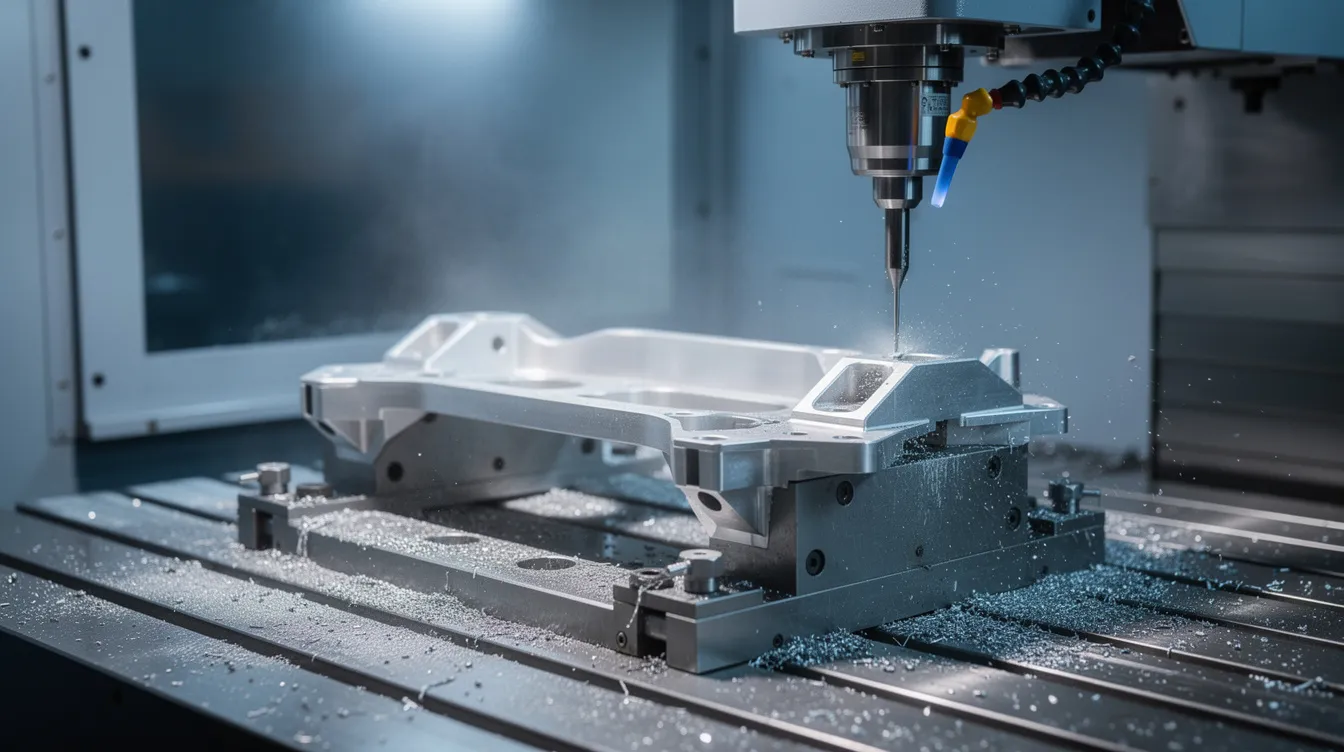
By 2026, leading chinese cnc machining companies combine precision, cost efficiency, and export-grade documentation. For aerospace manufacturers, China is a strategic sourcing base-not a compromise.
-
Anebon stands out by combining precision cnc machining, die casting, and sheet metal fabrication under one roof. Tolerances reach as tight as ±0.002 mm on critical features. ISO 9001:2015 and ISO 14001:2015 certifications, aerospace-aligned quality workflows, and strong DFM support make Anebon a custom manufacturing solutions partner, not just a parts vendor.
-
For buyers, the playbook is clear:
-
Build a shortlist with one primary and one to two backup suppliers.
-
Run structured pilot projects to validate capability before scaling.
-
Standardize documentation and quality requirements across all suppliers.
-
Engage your cnc machining supplier early in design to balance performance, machinability, and machining costs.
-
-
Next step. Send your CAD files and technical requirements to Anebon for a confidential, no-obligation DFM review and quote. Typical response time is within 24 hours for standard aerospace components. Whether you need rapid prototyping, low volume production, or long-running batch programs, Anebon’s precision manufacturing capability is ready.
The right chinese aerospace cnc supplier becomes part of your engineering team-not just a line on a purchase order.