Top Picks: Best ISO Certified Precision Metal Manufacturers for 2026
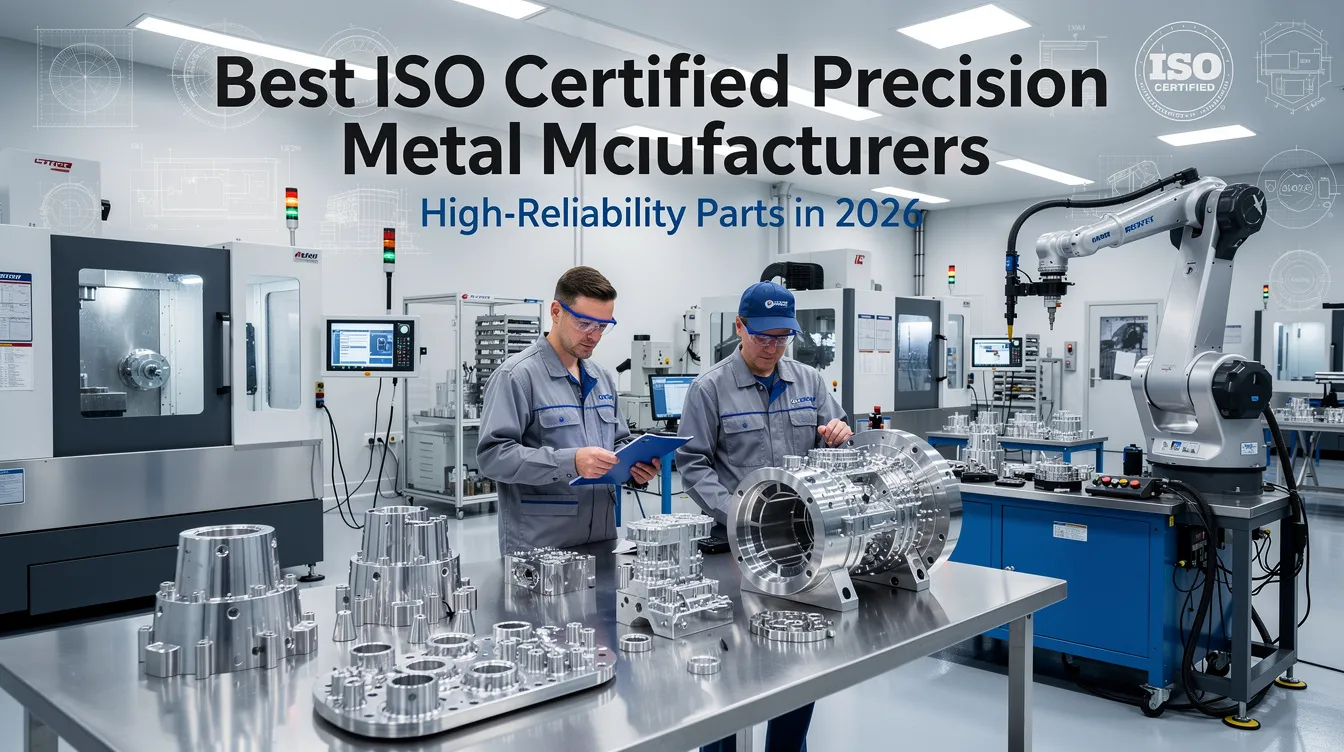
Best ISO Certified Precision Metal Manufacturers for High-Reliability Parts in 2026
Aerospace OEMs, medical device companies, and EV manufacturers face a shared problem in 2026: supply chain failures that delay programs, inflate costs, and put product integrity at risk. The best ISO certified precision metal manufacturers solve this by combining process discipline, material traceability, and vertical integration under one quality system. This guide breaks down what to look for, how ISO 9001:2015 certification works on the shop floor, and why Anebon Metal Products Limited has built its operations around these exacting standards.
Why ISO-Certified Precision Metal Manufacturers Matter in 2026
Precision metal components are crucial in high-stakes environments like aerospace and medical devices. Since 2020, supply chain disruptions have made consistent quality, lead time predictability, and full traceability board-level priorities for aerospace OEMs, defense projects, and industrial customers building robotics or EV platforms.
ISO 9001:2015 certification is now a minimum requirement for suppliers in these sectors. According to the ISO Survey 2024, there are 1,474,118 valid ISO 9001:2015 certificates globally, with 26,896 in the basic metal and fabricated metal products sector alone. ISO certified manufacturers benefit from consistent product quality through standardized procedures, which directly reduces program risk and total cost of ownership. Choosing ISO-certified suppliers helps ensure regulatory and industry compliance across a broad range of applications.
Integrated manufacturers that handle CNC machining, sheet metal fabrication, and die casting under one ISO-certified quality framework eliminate the risks of using multiple vendors: variation in standards, mismatched documentation, and hidden rework costs. For procurement teams evaluating a manufacturing partner, this integration often matters more than the lowest unit price.
What ISO 9001:2015 Really Means for Precision Metal Manufacturing
ISO 9001:2015 is an international quality management system standard that governs how organizations plan, execute, and improve their manufacturing process. Launched in 2015, ISO certification indicates adherence to strict international standards for quality management. ISO 9001:2015 certification is a minimum requirement for precision metal manufacturers serving aerospace applications, medical devices, and defense applications.
The 2015 revision introduced three changes that matter for precision metal fabrication:
-
Risk-based thinking at every planning stage, replacing reactive fixes with proactive risk management
-
Leadership accountability, requiring top management to own quality policy and objectives
-
Process discipline, mandating that every step from raw material receipt to final assembly follows documented, auditable procedures
On the shop floor, this translates to incoming material inspection (mill test certificates, chemical composition checks), in-process checks at CNC machining cells, first article inspection before production runs, final inspection with CMM data and GD&T conformance, and CAPA systems to address nonconformances.
Buyers should verify that the scope of an ISO 9001:2015 certification covers the specific processes their parts require: CNC machining, precision sheet metal fabrication, die casting, precision welding, special processes like heat treatment or powder coating. A certificate that only covers administrative functions provides no quality assurance for the parts themselves.
How ISO Certification Protects High-Reliability Programs
ISO certification helps reduce rework and scrap costs in manufacturing. At Rayloc’s Memphis plant, implementing ISO certification cut scrap by 35% and halved machine downtime. ISO certification reduces non-conforming reports by about 47%, according to industry benchmarks. These are measurable outcomes, not marketing claims.
ISO certified manufacturers typically maintain documentation for nonconforming parts, lot-level traceability, and material certifications that satisfy audits from aerospace primes, medical regulatory bodies, and automotive OEM quality teams. ISO certification enhances traceability and accountability in the manufacturing process, creating audit trails from raw stock through finished components.
ISO 9001:2015 mandates corrective and preventive action systems for continuous improvement. Certified manufacturers often have a culture of continuous improvement to enhance processes, tracking metrics like PPM defect rates, on-time delivery percentages, and internal audit findings. Over two to three years of disciplined implementation, defect rate reductions of 50% are common among aerospace-tier suppliers. This means more predictable lead times and lower total program cost for OEMs running long programs.
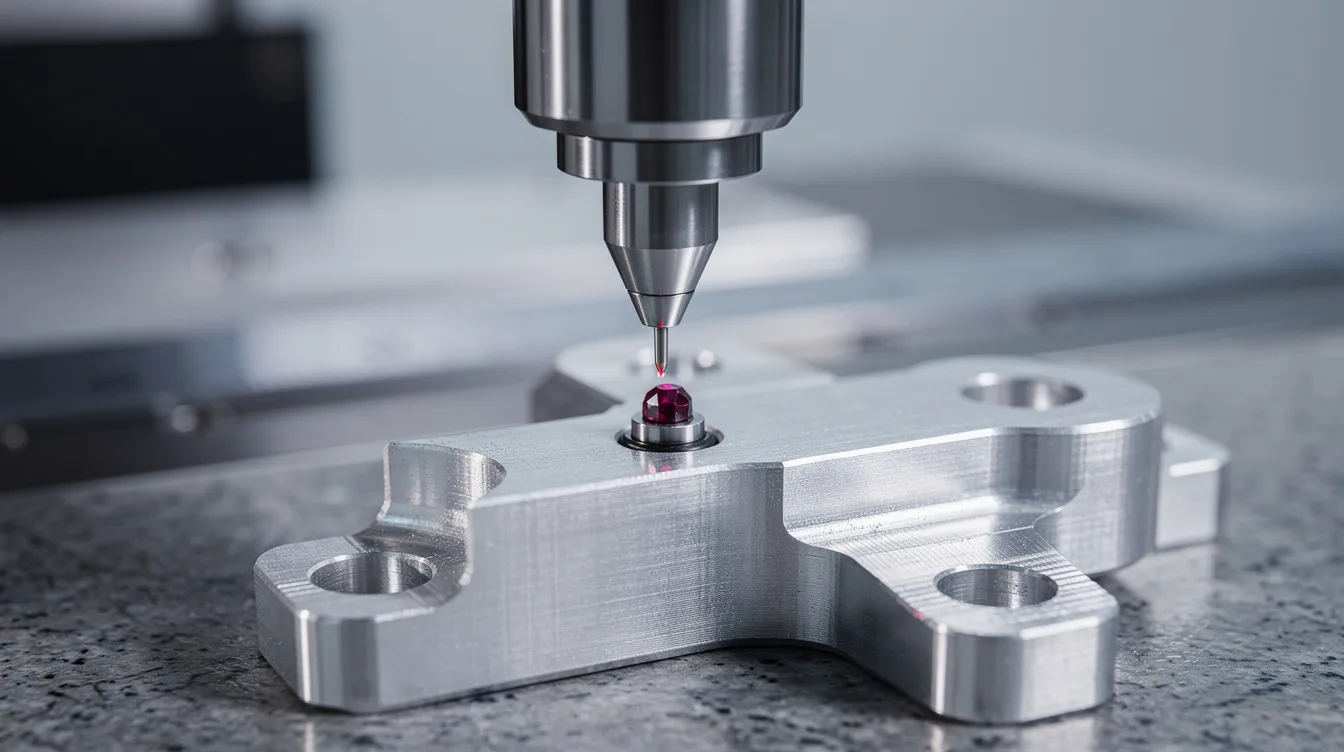
Anebon Metal Products Limited: ISO-Certified Precision Metal Manufacturing Partner
Anebon Metal Products Limited is a precision metal manufacturer founded in 2010 in Dongguan, Guangdong, China. The company holds ISO 9001:2015 and ISO 14001:2015 certifications, with the ISO 9001:2015 certificate issued on November 21, 2019. Anebon maintains ISO 9001:2015 certification through regular third-party audits on an ongoing surveillance and recertification cycle.
Core technical capabilities include:
-
Multi-axis CNC machining (3-, 4-, and 5-axis milling plus CNC turning)
-
Precision sheet metal fabrication (laser cutting, bending, welding, hardware insertion)
-
Die casting in aluminum and zinc alloys
-
Assembly services and surface treatments (28+ finish options)
-
Rapid prototyping through full production runs
Anebon serves aerospace OEMs (structures and housings), medical device manufacturers, automotive and EV hardware programs, electronics enclosure producers, and robotics and industrial machinery builders. The company reports serving customers across 47 countries and over 1,100 companies.
Anebon positions itself as a long-term manufacturing partner for overseas engineers and procurement teams that prioritize tight tolerances, material traceability, and documented quality over lowest-bid sourcing. Customer satisfaction is driven by engineering support, excellent customer service, and on-time delivery rather than price competition alone.
Inside Anebon’s ISO 9001:2015 Quality and Compliance Systems
Anebon’s quality and compliance systems extend beyond the certificate into daily shop-floor controls. ISO certifications improve compliance and documentation in manufacturing, and Anebon implements this through a structured quality system that touches every production stage.
Contract review and drawing control: Every work order requires the latest 2D/3D drawings with GD&T annotations, revision levels, and material specifications. Configuration control and configuration management procedures prevent obsolete designs from reaching machining cells.
In-process controls: ISO 9001:2015 requires documented inspection reports for quality assurance. First-piece verification is part of in-process checks under ISO 9001:2015. Anebon uses control plans, SPC on critical dimensions, and final inspection reports backed by CMM data. ISO frameworks require rigorous tracking of materials for full part traceability, from mill certificates and lot numbers through processing records to finished parts and packing.
Quality metrics: PPM defect rates, on-time delivery percentages, corrective actions, and nonconformance rates feed into management reviews. Root cause analysis is triggered when defects exceed set thresholds. These established quality systems drive continuous improvement across programs.
Precision Capabilities Under One Roof: CNC Machining, Metal Fabrication, and Die Casting
Anebon operates as an integrated precision metal work facility, not a single-process job shop. Vertical integration means fewer vendor handoffs, compressed lead times, and consistent quality under one management system.
CNC machining: Anebon runs 3-axis, 4-axis, and 5-axis milling plus CNC turning. CNC machining supports multi-axis operations for precision parts across complex geometries. Standard tolerances in CNC machining sit at ±0.05 mm. Precision work can reach tolerances of ±0.01–0.02 mm, and tolerances can be as tight as ±0.002 mm for critical features. Anebon offers CNC machining with tolerances as tight as ±0.002 mm for aerospace and medical applications. Aluminum 6061/7075 is a common material in CNC machining; 6061 aluminum is often used in aerospace applications, and titanium alloys are selected for aerospace structural components. Stainless steel grades are also used in aerospace metal fabrication.
Sheet metal fabrication: Precision sheet metal fabrication includes cutting, bending, and welding services. Anebon handles laser cutting (an advanced cutting process), bending, precision welding, hardware insertion, and finishing for complex assemblies, brackets, chassis, and enclosures. Aerospace sheet metal fabrication commonly uses aluminum alloys, making Anebon a capable aerospace sheet metal fabricator. High-volume precision stamping requires tight tolerances to fit into assembly lines, and Anebon supports this with dimensional accuracy controls across production capacity.
Die casting: Die casting produces complex shapes in aluminum and zinc alloys. Die casting often uses aluminum and zinc alloys for complex shapes, with secondary operations including CNC machining, deburring, and surface treatments to deliver ready-to-assemble components.
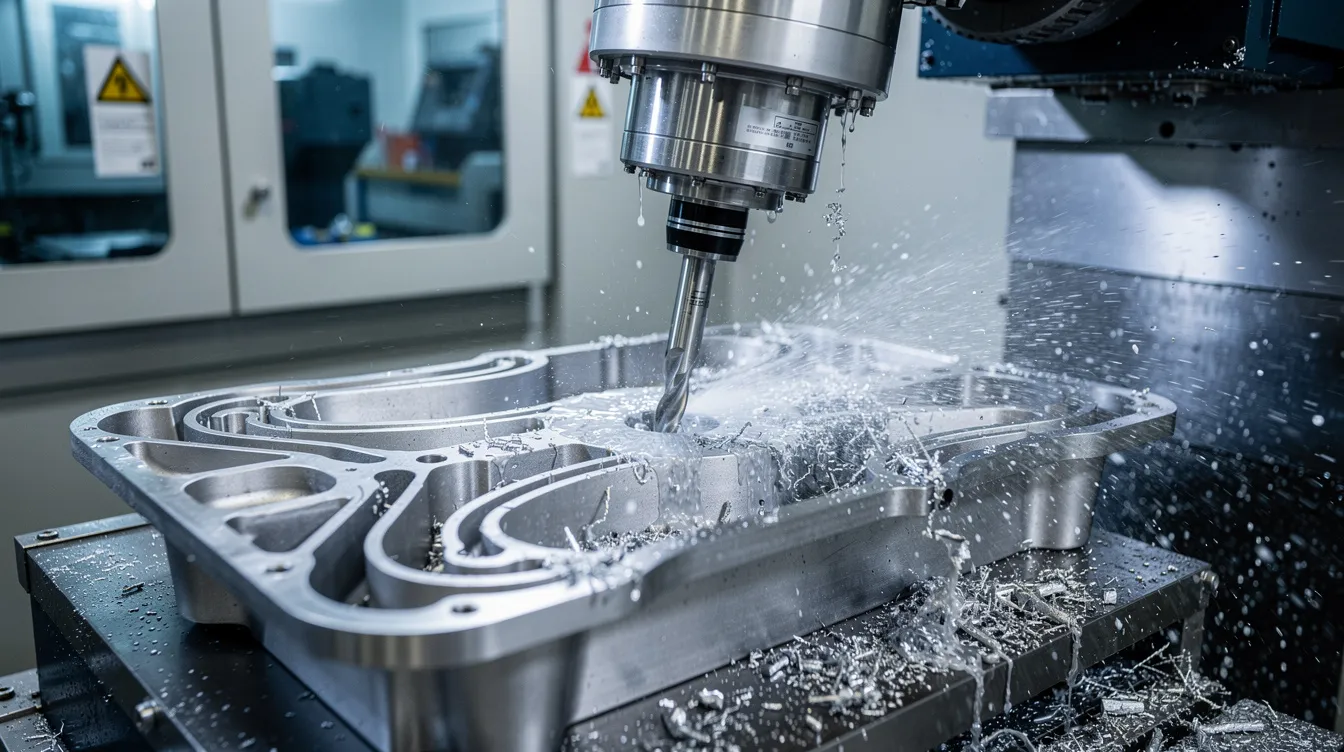
From Rapid Prototyping to Full Production: Scaling with ISO Support
Anebon supports projects across the full lifecycle: concept validation, rapid prototyping, pilot runs, and ongoing production, all under the same ISO framework. Anebon provides rapid prototyping through full production runs, making it possible to lock in process parameters early and carry them forward.
Rapid prototyping supports quick-turn capabilities for product development. Prototyping workflows include fast DFM feedback on uploaded CAD files, allowing engineers to optimize part geometry, reduce cost, and anticipate manufacturing risks before committing to tooling. Rapid prototyping helps maintain quality during volume increases because the same inspection plans, fixture designs, and process parameters captured during prototyping transfer directly to production. Rapid prototyping is essential for low-volume production needs where design iterations are still expected.
Other companies in the space operate differently. Protolabs specializes in rapid prototyping with fast quoting, and Geomiq offers rapid prototyping for aerospace components. Anebon differentiates through its integrated approach: prototyping, CNC machining, metal fabrication, and die casting all run under aligned procedures with shared quality gates.
Engineering change management at Anebon uses revision control, ECNs, and updated inspection plans to ensure old and new versions are never mixed. This level of configuration management shortens design-to-launch timelines for overseas OEMs.
Lead Times and On-Time Delivery Expectations with ISO Certified Manufacturers
Predictable lead times matter more than the fastest theoretical cycle time for high-reliability parts. A three-day quote that ships late by two weeks costs more than a ten-day quote that arrives on schedule.
Anebon’s typical lead times:
|
Service |
Typical Lead Time |
|---|---|
|
Quick-turn CNC prototypes |
~5 business days |
|
Sheet metal assemblies |
~2 weeks |
|
Die-cast tooling + first shots |
4–6 weeks |
Production planning, capacity management, and risk analysis, all required by ISO 9001:2015, support on-time delivery performance. Anebon claims delivery reliability above industry averages for aerospace and medical class orders. Vertical integration and in-house finishing reduce schedule risk compared with fragmented supply chains relying on multiple subcontractors for secondary operations like coatings or heat treatment.
Environmental and Industry Certifications: ISO 14001 and Beyond
Environmental performance now factors into OEM sourcing decisions alongside quality and cost, particularly for automotive and EV programs tracking carbon footprint per part.
ISO 14001:2015 governs waste handling and emissions. Anebon’s ISO 14001:2015 environmental management system covers resource efficiency across CNC machining, sheet metal, and die casting operations. The company supports RoHS, REACH, and conflict minerals declarations, meeting project requirements for customers with ESG and regulatory compliance needs. Geographic diversification of supply chains has also pushed OEMs to evaluate environmental practices at every tier.
ISO 9001:2015 forms the foundation for layering program-specific international standards. AS9100D is an enhanced standard required for aerospace and defense manufacturing. ISO 13485 has specialized quality control requirements for medical devices. Anebon is not yet AS9100 certified but aligns internal processes with AS9100 Rev D expectations, covering traceability, first article inspection, and risk mitigation protocols.
How to Evaluate the Best ISO-Certified Precision Metal Manufacturers
ISO certifications signal maturity in quality and compliance systems, but a certificate alone is not sufficient. Use this checklist when evaluating ISO certified precision metal manufacturers:
-
Verify the certificate: Confirm issue date, registrar, scope (which processes and sites), and date of last surveillance audit. A certificate that excludes machining or casting from its scope is a red flag.
-
Match technical capabilities to project requirements: CNC machining axis count, tolerance windows, materials expertise (aluminum alloys, titanium, stainless steel, engineering plastics), surface treatments, and advanced technology on the shop floor.
-
Request sample documents: Material certifications, first article inspection reports, control plans, calibration records. These reveal whether the quality system produces high quality results or just paperwork.
-
Assess delivery and defect history: Ask for actual on-time delivery rates and PPM data. Evaluate how the supplier plans production capacity and manages subcontracted special processes.
-
Test communication and engineering support: Quote turnaround speed, DFM feedback depth, revision control rigor. A responsive partner reduces total cost through fewer iterations and faster supplier qualification.
Integrated ISO-Certified Manufacturers vs Fragmented Supply Chains
An integrated, ISO certified metal fabricator like Anebon manages CNC machining, sheet metal fabrication, die casting, final assembly, and finishing under one quality system. A fragmented supply chain splits these across three or four shops, each with its own (or no) quality system, documentation standards, and shipping schedules.
A single management system reduces quality variation, simplifies audits, and maintains material traceability across complex assemblies. Integration also cuts hidden costs: fewer freight legs, less rework from mismatched standards between vendors, and faster resolution of technical issues because engineering, machining, and inspection teams share the same floor.
While piece prices from separate shops may appear similar, total program cost including engineering time, logistics overhead, quality risk, and risk mitigation is often lower with an integrated partner. This is why procurement teams evaluating total cost increasingly favor comprehensive services under one roof.
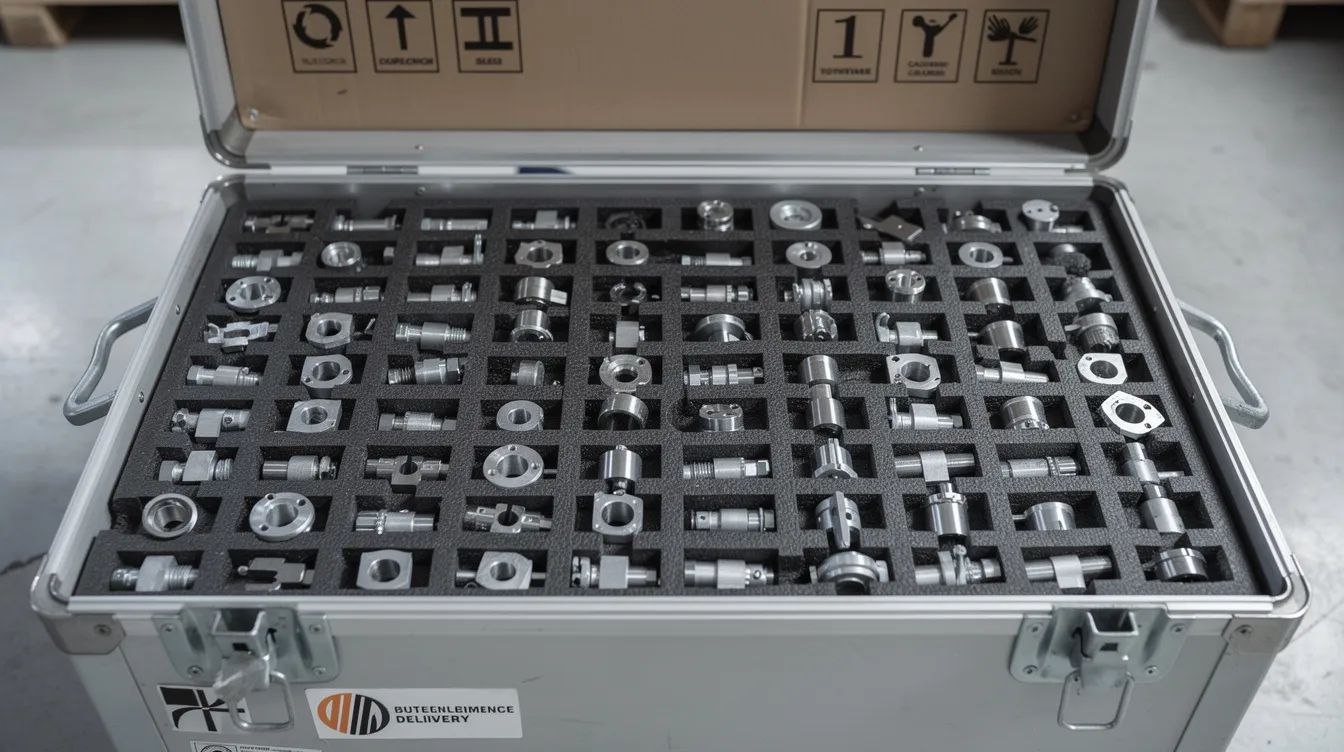
Next Steps: Engaging Anebon as Your ISO 9001:2015 Precision Metal Manufacturing Partner
Anebon Metal Products Limited holds ISO 9001:2015 and ISO 14001:2015 certifications and offers CNC machining, precision sheet metal fabrication, and die casting from its facility in Dongguan, China. The company delivers the highest quality through documented process controls, material traceability, and continuous improvement practices.
To get a meaningful quote, prepare:
-
3D models (STEP, IGES, or SolidWorks) and 2D drawings with GD&T
-
Annual volume estimates and target lead times
-
Special compliance needs (FAI, PPAP, material certifications, defense project documentation)
-
Critical factors like tolerance classes, surface finish requirements, and assembly needs
Anebon’s engineering team provides early DFM input to optimize manufacturability, cost, and quality before tooling or full production begins. Contact Anebon to discuss your project requirements, request a quote, or schedule a technical review. For programs that cannot tolerate quality failures or schedule slips, Anebon operates as a long-term, ISO-certified precision metal manufacturing partner built around the disciplines that high-reliability programs demand.