Top Online CNC Quotes: Your Guide to Competitive Pricing and Quality
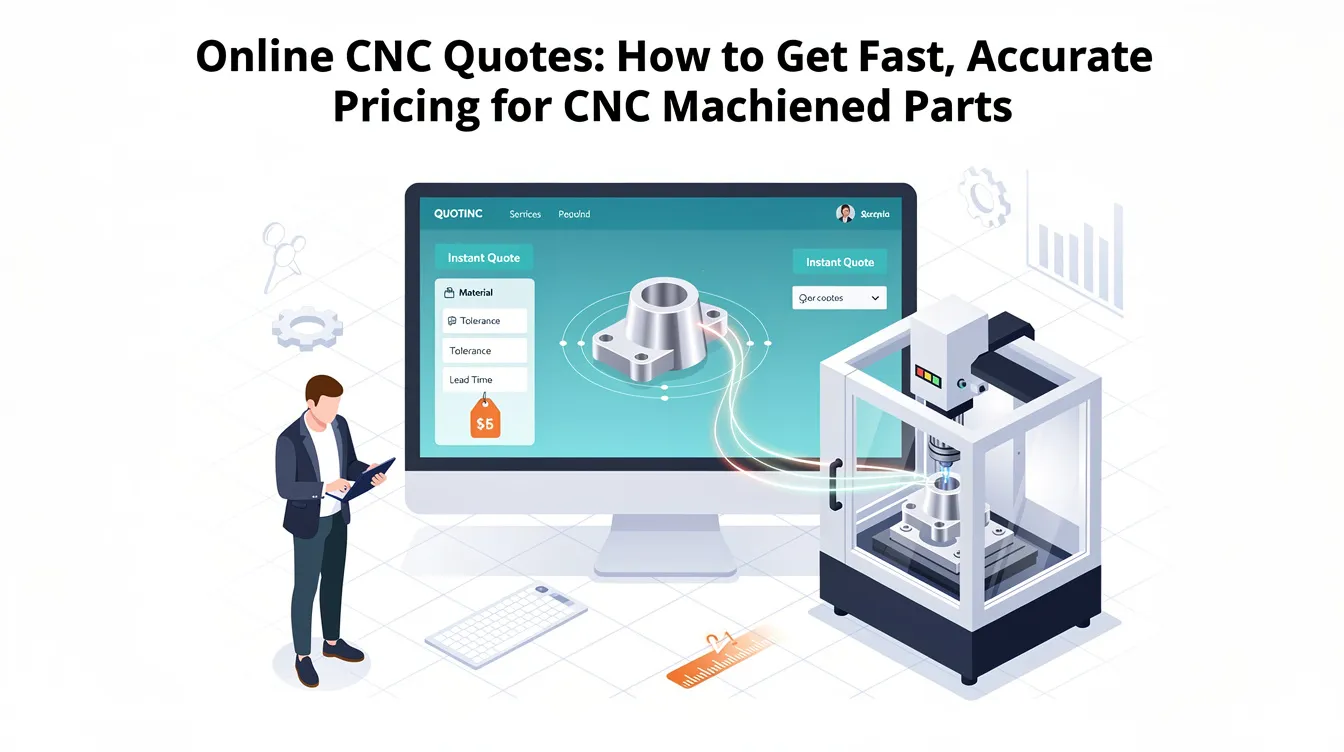
Online CNC Quotes: How to Get Fast, Accurate Pricing for CNC Machined Parts
Getting reliable pricing for custom CNC parts used to mean weeks of back-and-forth emails, phone calls, and site visits. In 2026, online CNC quotes have changed the game entirely. Whether you need a single rapid prototyping run or thousands of production parts, you can now upload a CAD file and receive a cost estimate without leaving your desk.
This guide breaks down how online CNC quoting works, what drives cost and lead time, and how to make sure the price you see is the price you pay.
What Are Online CNC Quotes and Why They Matter for Your Next Project
Online CNC quotes are pricing estimates generated when a buyer uploads 3D CAD files and technical drawing specifications to a digital platform or a machine shop’s portal. The system-or a human engineer-analyzes the geometry, material, tolerances, and finish requirements, then returns a cost and delivery estimate for cnc machining, cnc milling, or cnc turning operations.
These quotes have become the standard way to source cnc machined parts. Online CNC quoting platforms provide instant pricing based on CAD files, letting design engineers and OEM buyers compare options, validate budgets early in the design phase, and avoid costly surprises once tooling is committed. The result is a faster, more predictable manufacturing process for everyone involved.
Not all online quotes are equal, though. Instant algorithmic quotes give you a number fast, but engineer-reviewed quotes deliver higher reliability-especially for complex geometries, tight tolerances, or unusual materials. The difference between the two can mean the gap between a smooth product launch and a cascade of re-quotes, scrap, and missed deadlines.
Anebon Metal Products Limited has provided online cnc machining quotes to overseas OEMs since its founding in 2010, operating from Dongguan, China with ISO 9001:2015 and ISO 14001:2015 certifications.
How Online CNC Machining Quotes Work Step by Step
The quoting workflow is straightforward once you understand the steps. Here’s what happens from the buyer’s perspective.
First, you prepare and upload your 3D CAD model-typically in STEP, STP, or SLDPRT format-along with any 2D drawings in PDF or DWG that capture dimensions, GD&T callouts, and surface roughness requirements. These files define the part geometry that the cnc machining process will follow using automated cutting tools for precision manufacturing.
Second, you specify your requirements: cnc machining materials, quantity, tolerances, surface finish, and any secondary operations like heat treatment, anodizing, or plating. You also include business details such as delivery destination, target ship date, and any inspection documentation needed.
Third, the supplier’s system or engineering team analyzes the geometry. CAM engineers or quoting software determine whether the part is better suited to cnc turning (for rotationally symmetric features) or cnc milling (for prismatic shapes), how many setups are required, estimated cycle time, fixturing complexity, and tool access. They assess whether standard cnc machines can handle the work or if 5-axis machining is necessary.
Fourth, the supplier factors in raw material cost, tool wear, finishing time, inspection requirements, and packaging. If the shop offers DFM feedback, an engineer may suggest changes-adjusted radii, alternate materials, or simplified features-that reduce cost or risk.
Anebon combines software-based cost estimation with human engineering review to refine online CNC quotes within 24–48 hours for most RFQs. This hybrid approach catches issues that purely algorithmic systems miss, such as fixturing challenges on a part carved from a solid block or cycle time underestimates on deep-pocket geometries.
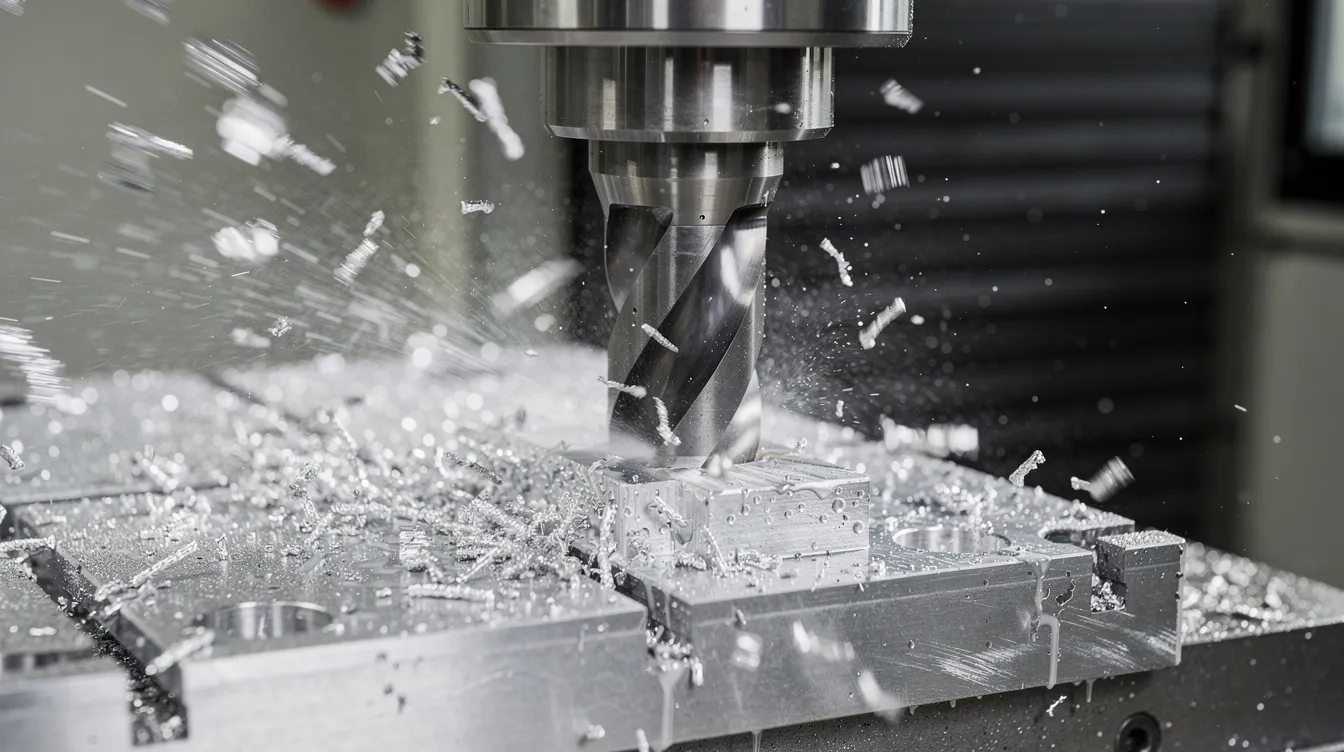
Instant Quote vs. Engineer-Reviewed Quote: Which Is Better?
The short answer: it depends on your part. Instant algorithmic platforms and traditional engineer-reviewed quotes serve different purposes, and different suppliers may have varying algorithms for calculating CNC machining quotes.
Here’s how they compare:
-
Speed: Instant quotes return pricing in seconds to minutes. Engineer-reviewed quotes typically take 24–48 hours. If you need a rough budget number today, instant platforms win.
-
Accuracy: Instant quotes may not reflect final costs due to additional fees for complexity, fixtures, or finishes not fully captured by the algorithm. Engineer-reviewed quotes account for real-world manufacturing considerations and tend to hold closer to the final invoice.
-
Risk: Instant platforms work well for simple geometries-RapidDirect, for example, provides quotes for simple aluminum prototypes with standard tolerances. But for parts with tight tolerances, multi-axis cnc milling, or alloy steel with specific temper requirements, a human review catches what software misses.
-
DFM feedback: Most instant-quote systems offer limited or generic design feedback. Engineer-reviewed quotes often include specific suggestions that lower cost or improve manufacturability.
Anebon emphasizes rapid but engineer-validated quotes to avoid re-quotes, scrap, and schedule slips on cnc prototypes and production runs. The goal is to give you the speed of an instant platform with the accuracy of a skilled machinists’ review.
You can leverage automated quoting platforms for rapid prototypes and DFM feedback on simple parts, then switch to engineer-reviewed processes for anything with critical features or regulatory requirements.
Key Information You Must Include to Get an Accurate Online CNC Quote
The quality of your quote depends directly on the quality of your RFQ. Missing information forces suppliers to make assumptions-and those assumptions rarely work in your favor.
Here’s what to include:
-
3D CAD files in STEP, STP, or IGES format, plus 2D drawings (PDF) with all key dimensions, GD&T references, and surface roughness callouts. Standardizing CAD files is crucial for comparing CNC machining quotes across suppliers.
-
Tolerances on every critical feature. General tolerances (e.g., ISO 2768-m) cover non-critical dimensions, but critical-to-function surfaces need explicit callouts. Include any drawing specifications for threads, tapped holes, press-fit inserts, or other special features.
-
Material requirements with grade and temper (e.g., 6061-T6, not just “aluminum”). Note if the material falls under export controlled items with specific traceability needs.
-
Surface finish and coating specifications: as-machined, bead blasted, anodized, conversion coating, or plating. Reference applicable standards (MIL-DTL, ISO) wherever possible.
-
Target quantities-whether it’s low volume prototypes, a pilot batch of 50, or a recurring order of 5,000 pieces. Requesting quotes for multiple quantities will provide insight into scaling costs.
-
Required delivery date, shipping destination, and any inspection documentation such as FAI, CMM reports, or material certifications.
The more complete the information, the closer the first online CNC quote will be to the final invoice-and the fewer change orders you’ll deal with downstream.
Typical Cost Drivers in Online CNC Machining Quotes
Online CNC quotes break down cost into four categories: material, machining, finishing, and quality control. Understanding each helps you make smarter design and sourcing decisions.
Material type is the first lever. Aluminum alloys like 6061-T6 are soft, fast-cutting, and widely stocked, keeping raw stock cost and cycle time low. Stainless steel (304, 316L) costs roughly 2–3× more than 6061 aluminum and machines significantly slower due to low thermal conductivity and work hardening. Low alloy steel grades like 4140 fall somewhere in between. Material costs and certifications impact the total cost of CNC machining, particularly when traceability documents or specific tempers are required.
CNC machining costs can increase with part complexity. Deep pockets, thin walls, and features requiring 5-axis cnc milling drive up cycle time, setup count, and fixture cost. The difference between holding ±0.1 mm and ±0.01 mm on a feature can double or triple the machining time for that operation. Critical tolerances can drastically affect machining costs and quality.
Secondary operations add their own line items: deburring, bead blasting, conversion coating, anodizing, powder coating, and assembly all appear as separate costs. Even seemingly minor steps like removing potentially sharp edges or applying a uniform nickel coating carry time and material charges.
Anebon can often reduce cost by suggesting DFM changes such as radius adjustments, standardized hole sizes, or switching processes where appropriate. A single prototype aluminum bracket at low complexity typically runs USD 100–150, while complex stainless steel or titanium one-offs can exceed USD 1,000.
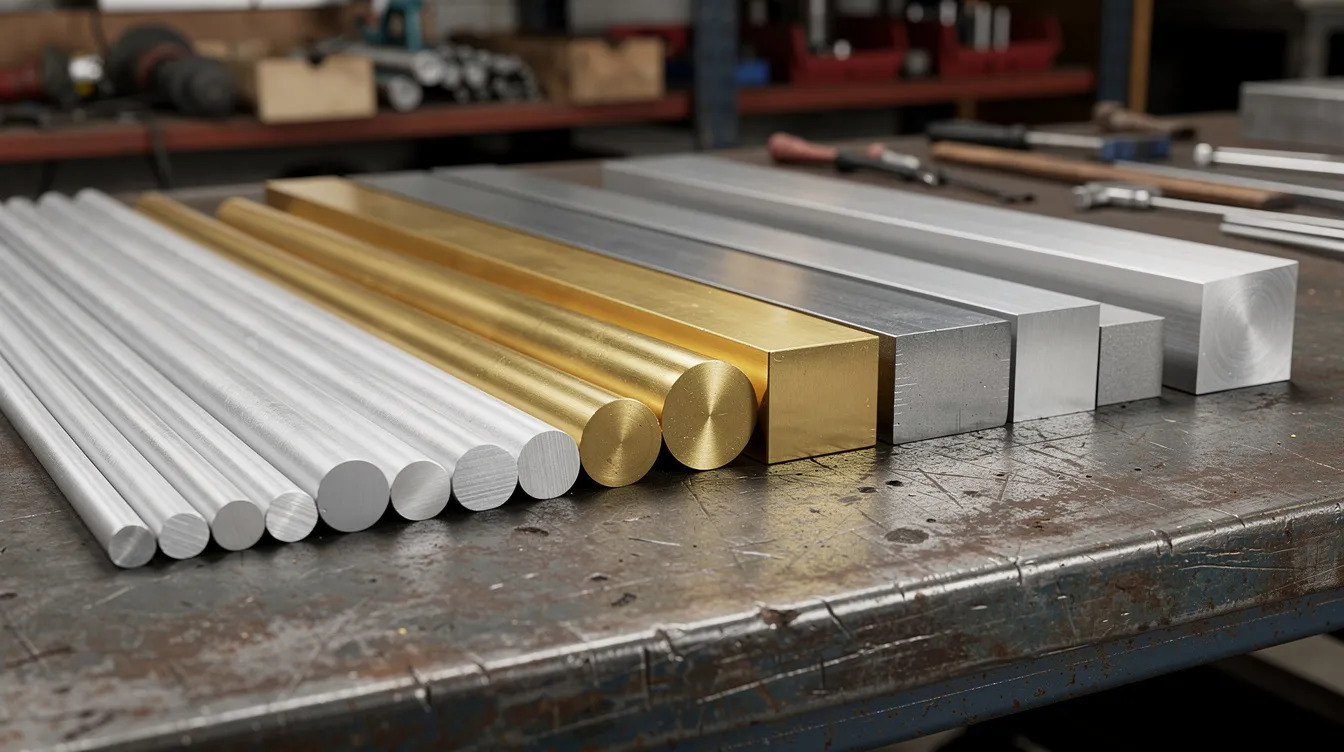
Materials Commonly Quoted Online for CNC Machining
CNC machining can process over 50 industrial-grade metals and plastics. Here are the most frequently requested cnc machining materials in online quotes.
Among metals, aluminum alloys dominate. Aluminum 6061 is commonly used for CNC machining thanks to good mechanical properties, excellent dimensional stability, and cost efficiency. 7075-T6 offers higher strength but costs 2–3× more and machines slower. Stainless steel 316 offers excellent corrosion resistance, making it a go-to for medical device manufacturing and marine applications where corrosion resistant metal parts are essential. Alloy steel grades such as 4140 deliver excellent wear resistance and good dimensional stability after heat treatment, serving automotive and industrial machinery. Brass is easy to machine and corrosion-resistant, often chosen for electrical conductivity applications and decorative fittings. Copper provides outstanding resistance to electrical loss but poses chip-control challenges during turning.
For plastics, ABS and Nylon are workhorses-Nylon in particular has high tensile strength and low friction properties, making it a staple for gears and bushings. PEEK is ideal for high-temperature CNC machining applications where heat resistance and chemical resistance matter, such as components exposed to elevated temperatures in aerospace or medical sterilization. Acetal (Delrin) delivers excellent dimensional stability and low friction for precision mechanisms. Polycarbonate (PC) and even PVC polyvinyl chloride appear in quotes for electronics housings and industrial fixtures. These plastics exhibit a crystalline structure (in the case of PEEK and Acetal) or amorphous structure that affects machinability and tolerance stability.
Each material influences achievable tolerances, surface roughness, and lead time differently. Anebon’s engineering team helps overseas OEMs choose appropriate metals or plastics based on end-use conditions-whether the part needs heat resistant performance, outstanding resistance to chemicals, or simply cost-effective machinability.
Choosing Between CNC Milling and CNC Turning in Your Quote
The distinction between cnc milling and cnc turning directly impacts your quote because each process has different cycle times, setup requirements, and fixture costs.
CNC turning spins the workpiece against a stationary cutting tool, making it the natural choice for rotationally symmetric parts-shafts, bushings, pins, and threaded connectors. It’s typically faster and less expensive for these geometries because the part can often be completed in a single setup.
CNC milling uses rotating cutters against a fixed workpiece to create prismatic features: housings, brackets, enclosures, and complex assemblies with pockets, slots, and angled surfaces. Custom cnc milling services handle everything from simple 3-axis work to full 5-axis contouring for aerospace components like helicopter rotor blades or turbine fittings.
Hybrid parts-a cylindrical body with milled flats or cross-drilled holes-require both processes, increasing setup counts and potentially requiring multiple machines. When both turning and milling features can be machined in the same setup on a mill-turn center, fixture changes drop and accuracy improves.
Anebon operates multi-axis CNC machine centers capable of both milling and turning, reducing fixtures and total program cost for complex custom cnc parts.
From CNC Prototypes to Production: How Quotes Change as You Scale
Most buyers start with cnc prototypes for design validation, then graduate to pilot and production volumes. The economics shift at each stage.
Per-unit pricing in online CNC quotes typically drops significantly when moving from 1–10 pieces to 100–5,000 pieces. Setup and fixture costs, CAM programming, and first-article inspection are amortized over more units. Xometry, for instance, offers cheaper pricing per part at higher quantities, and the same principle applies across the industry. Rapid prototyping uses affordable materials like aluminum and plastics to keep early-stage costs manageable.
CNC machining is a common method for rapid prototyping, and rapid prototyping enables quick turnaround for product development. In some cases, prototyping can be completed in as little as one day when geometry is simple and material is in stock. As you scale into high volume production and mass production, the quoting focus shifts from speed and design validation toward repeatability, process capability (Cp/Cpk), and logistics planning.
The cnc machining process at prototype stage tolerates more variation. At production volumes, shops tighten process controls, run capability studies, and often require sample approval before full runs. Anebon supports continuous quoting across phases-rapid cnc prototypes, bridge builds, and long-term OEM production-with consistent pricing logic and documented process controls. This avoids the common headache of re-quoting every time you increase volume.
Industries That Rely on Online CNC Quotes in 2026
Online quoting has become standard across multiple high-precision industries. Rapid prototyping supports various industries including aerospace and automotive, and the list continues to grow. CNC machining is widely used in aerospace, automotive, and medical industries, each with distinct cnc machining applications and documentation demands.
-
Aerospace: production parts often require AS9100D certification for aerospace quality management, strict material traceability, and first article inspection. Components range from structural brackets to fuel system fittings, and even elements of helicopter rotor assemblies demand outstanding resistance to fatigue and high temperatures.
-
Medical devices: ISO 13485 applies to medical device manufacturing, governing everything from surgical instruments to implantable components. Materials like titanium and medical-grade stainless steel dominate, requiring corrosion resistance and biocompatibility.
-
Automotive: IATF 16949:2016 is specific to automotive quality management. OEMs request PPAP documentation and demand cost efficiency at scale. The shift toward EV components has increased demand for lightweight aluminum and copper parts with high electrical conductivity.
-
Robotics and industrial machinery: complex assemblies with wear resistance requirements, often in small to medium volumes. High temperature environments and repeated mechanical cycling drive material selection toward alloy steel and hardened surfaces.
-
Electronics: heat sinks, EMI enclosures, and connector housings require fine surface finish and sometimes laser engraving for part marking. Plastics for insulation sit alongside metals for shielding.
ISO 9001:2015 is a quality management standard that applies broadly, while ISO 14001:2015 focuses on environmental management systems. Anebon’s certifications in both, plus the ability to hold tolerances down to ±0.002 mm, support these regulated sectors.
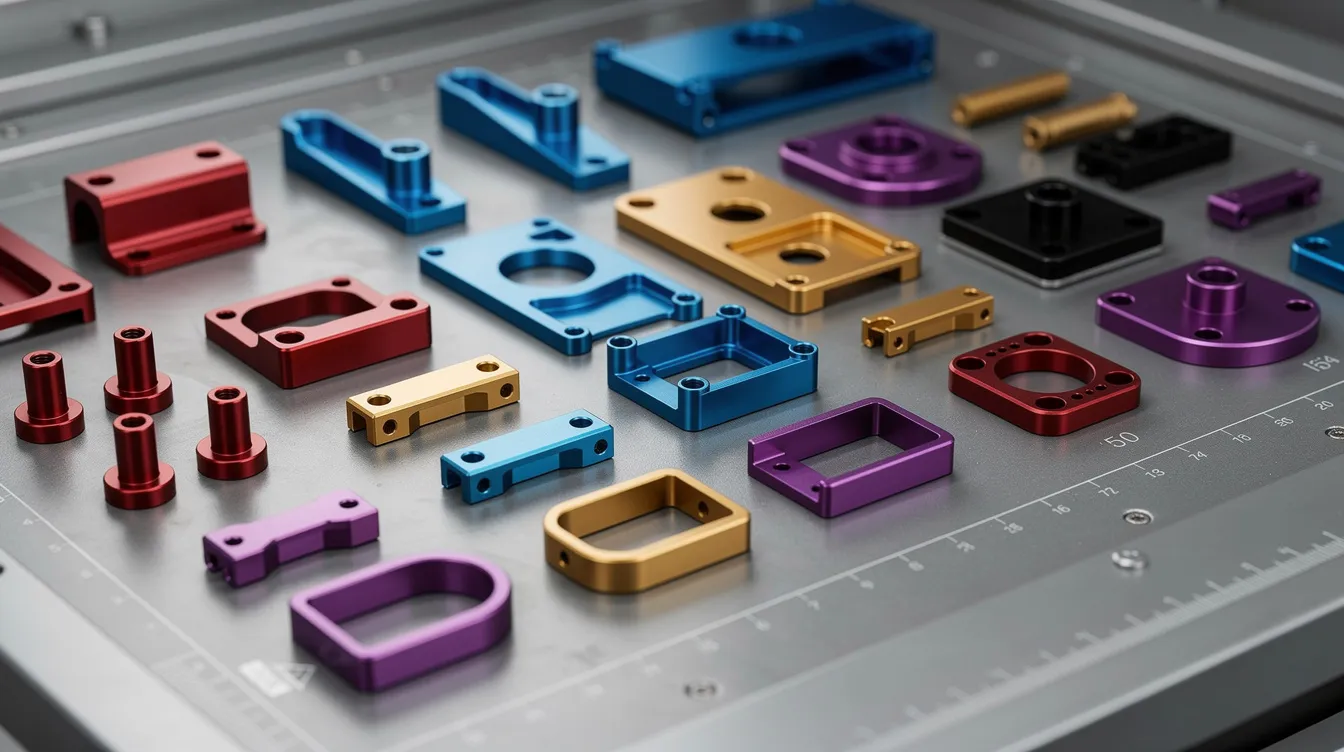
Surface Finishes and Conversion Coatings in Online Quotes
Finishes can significantly affect price, lead time, and performance of cnc machined parts. Specifying them clearly at the RFQ stage prevents costly rework.
Common finish options in online CNC quotes include as-machined (which may show visible tool marks), bead blasting for a uniform matte texture, brushing, and polishing for cosmetic or sealing surfaces. A standard conversion coating such as chem film (MIL-DTL-5541) on aluminum alloys improves corrosion resistance and serves as a paint primer.
Beyond these basics, anodizing (Type II for decorative and moderate wear, Type III hardcoat for excellent wear resistance at elevated temperatures), powder coating for color and environmental protection, nickel or chrome plating for a uniform nickel coating or decorative chrome layer, and passivation for stainless steel are typical line items. Each adds both cost and processing days to the schedule.
Specifying exact standards during quote submission-MIL-DTL references, ISO equivalents, or customer-specific specs-avoids ambiguous pricing. A quote that says “anodize” without specifying type, thickness, or color will almost certainly need revision later.
Anebon’s ability to combine machining and surface finishing in-house or via audited partners delivers one-stop cnc machining services. Fewer hand-offs mean tighter schedule control and less risk of parts sitting in a queue at an external coating house.
Lead Times: What “Fast” Really Means in Online CNC Quotes
Lead time is one of the most misunderstood elements of online CNC quotes. Here’s what realistic timelines look like in 2026.
CNC machining can produce parts in as little as 1 day for very simple geometries with in-stock material. Rapid cnc prototypes with standard aluminum or plastic, moderate complexity, and no secondary finishes typically ship in 3–5 business days. Standard prototype runs with multiple setups and finishes land in the 7–15 business day range. Larger production batches-100 to 500+ pieces with finishing, heat treatment, and inspection documentation-generally require 3–6 weeks.
Several factors extend or compress these windows:
-
Material availability: exotic alloys or specific tempers may need to be ordered, adding days or weeks.
-
Heat treatment and finishing: outsourced anodizing, plating, or metal coating steps can each add 3–7 business days.
-
Inspection and documentation: FAI or full CMM reports add 1–3 days for prototypes, more for production batches.
-
Shipping: sea freight from Asia to North America takes 2–4 weeks; air freight cuts that to days but increases cost.
Anebon’s location in Dongguan-at the heart of southern China’s mature material supply chains-and established logistics channels enable competitive lead times and predictable shipping to North America and Europe.
Comparing Online CNC Platforms, Marketplaces, and Direct CNC Shops
There are three main sourcing models for online cnc machining, and each suits different buyer profiles. CNC machining pricing varies substantially between shops, so understanding the trade-offs matters.
Instant-quote marketplaces like Xometry and RapidDirect aggregate a broad network of suppliers. Xometry’s quality management system is ISO 9001:2015 certified, and RapidDirect’s CNC machining facilities are ISO 9001 certified. These platforms provide fast turnaround, wide material options, and convenience. Xometry offers optional First Article Inspection (FAI) services and provides inspection reports for CNC machining orders. Protolabs maintains a 90% first-pass yield for CNC machined parts. However, platforms can differ in specialized capabilities for sheet metal and CNC machining, and quality consistency can vary because work is distributed across a manufacturing network of different shops with different production capabilities.
Broker platforms aggregate bids from multiple suppliers. They may offer competitive pricing but often lack direct engineering interaction, and tolerance consistency between suppliers can be unpredictable.
Direct CNC machine shops like Anebon handle quoting, engineering review, production, and quality control through an integrated team. This model delivers more consistent quality cnc machined parts, deeper DFM feedback, and stable processes for repeat orders. The trade-off is that a single shop may have capacity constraints during peak periods.
When choosing a supplier, evaluate tolerance requirements, regulatory compliance needs, volume, frequency of orders, and whether you need ongoing design collaboration. For quality-critical production parts, a direct partner typically produces fewer surprises than routing work through a marketplace.
Design for Manufacturability (DFM) and Its Impact on Your Online Quote
DFM can significantly reduce cost and lead time for cnc machined parts without sacrificing function. CNC machining services often include design feedback to ensure manufacturability, but the depth of that feedback varies widely.
Practical DFM improvements that lower your quote:
-
Increase wall thickness to avoid chatter and deflection during milling-thin walls below 0.5 mm in aluminum or 1.0 mm in steel dramatically increase scrap risk.
-
Standardize hole diameters to use off-the-shelf drills and reamers rather than custom tooling.
-
Add fillets and radii to internal corners instead of demanding sharp edges, which require smaller tools, slower feeds, and more passes. Note that sharp edges and potentially sharp edges also create stress risers in the finished part.
-
Avoid unnecessarily tight tolerances on non-critical features. Apply precision only where function demands it.
Many instant-quote tools don’t give deep DFM feedback, while Anebon’s engineers review drawings and propose optimizations before finalizing quotes. This is especially valuable on complex 5-axis or multi-part cnc assemblies.
Design engineers should engage suppliers early-while the design is still flexible-to lock in realistic online CNC quotes rather than discovering manufacturability issues after drawings are frozen. Compared to making changes in additive manufacturing, where geometry freedom is broader, CNC demands more attention to tool access and fixturing constraints.
Quality Assurance, Tolerances, and Documentation in Online CNC Quotes
Tolerances and QA expectations must be clear at the quote stage to avoid disputes later. If your RFQ is vague on inspection requirements, the quote will either underestimate QA cost or build in excessive contingency.
CNC machining services can achieve tolerances as tight as ±0.001 inches (approximately ±0.025 mm), and CNC machines can achieve tolerances as tight as ±0.001 inches on critical features with proper process controls. General tolerances following ISO 2768-m cover non-critical dimensions, while feature-specific callouts (using GD&T with datum references) govern mating surfaces, bearing bores, and sealing interfaces.
Common inspection options that appear in online CNC quotes:
-
In-process checks by skilled machinists during production
-
Full dimensional reports on all features
-
CMM reports on critical dimensions
-
First article inspection (FAI) per AS9102 for aerospace applications
-
PPAP documentation for automotive production parts
Anebon’s ISO-certified quality management system and modern inspection equipment-including CMMs and optical measurement systems-support tight tolerance cnc machining services for overseas OEMs. Computer numerical control combined with rigorous inspection ensures that each part matches its technical drawing before shipping.
How Anebon Handles Online CNC Quotes for Overseas OEM Clients
At Anebon, every online CNC quote follows a structured workflow designed to eliminate surprises between quoted price and final invoice.
The process begins when our team receives your RFQ-CAD files, drawings, material specs, and quantities. Within the first few hours, our engineers conduct a DFM review, flagging geometry that could increase cost or risk and suggesting alternatives where possible.
Next, process routing is determined: cnc milling, cnc turning, 5-axis machining, or a combination. Material sourcing is confirmed against current stock availability and supplier lead times. Our quoting system then generates a formal quotation that includes unit pricing, tooling and fixture costs, finishing line items, inspection scope, and estimated delivery date.
Key strengths in our quoting process:
-
Deep experience with alloy steel, aluminum alloys, and engineering plastics, plus the ability to hold tolerances as precise as ±0.002 mm where required.
-
Custom cnc milling services and turning capacity on the same floor, reducing hand-offs and logistics complexity.
-
Support for one-off cnc prototypes, pilot runs, and ongoing production with consistent pricing logic and documented process controls.
-
Surface finish options from as-machined through anodizing, plating, and powder coating, managed in-house or through audited partners.
Our production capabilities extend across rapid prototyping, bridge production, and long-term OEM supply, all backed by ISO 9001:2015 and ISO 14001:2015 certifications. Whether the application calls for parts with good mechanical properties in high temperature environments or cost-effective aluminum brackets, the quote reflects real manufacturing conditions. Injection molding and other processes may be recommended where they offer better cost efficiency for very high volumes.
Practical Tips for Getting Better Online CNC Quotes in 2026
Here’s a concise checklist to help you get faster, more accurate online CNC quotes:
-
Clean up your CAD models before submitting. Remove unnecessary cosmetic features, construction geometry, and duplicate bodies. Ensure the model matches your 2D technical drawing exactly.
-
Clearly mark critical dimensions and surface roughness requirements on your 2D drawing. Features without callouts will be quoted to general tolerances-which may not match your functional needs.
-
Send realistic annual volume forecasts and preferred batch sizes. This helps suppliers offer volume pricing and plan material procurement, unlocking better cost efficiency.
-
Specify materials precisely: grade, temper, and any certification requirements. Vague callouts like “steel” or “plastic” force assumptions that lead to re-quotes.
-
Consolidate machining, finishing, and basic assembly with a single partner like Anebon to reduce logistics costs and quote complexity. Fewer vendors mean fewer hand-offs and shorter total lead time.
-
For complex cnc machining applications-multi-axis parts, complex assemblies, or anything requiring surface finish beyond standard-schedule a technical call with the supplier’s engineering team rather than relying solely on automated outputs.
-
Ask about the supplier’s approach to handling design changes mid-production. Understanding change-order policies upfront prevents budget surprises on production parts.
Getting accurate online CNC quotes comes down to preparation, clear specifications, and choosing a partner who reviews your design as carefully as you do. The more detail you put into your RFQ, the fewer surprises you’ll face when parts arrive at your dock.
Ready to get started? Submit your CAD files to Anebon for an engineer-reviewed quote, and see what a decade of serving overseas OEMs can do for your next project.