Top Metal Stamping Service for Precision Parts and Quality Solutions
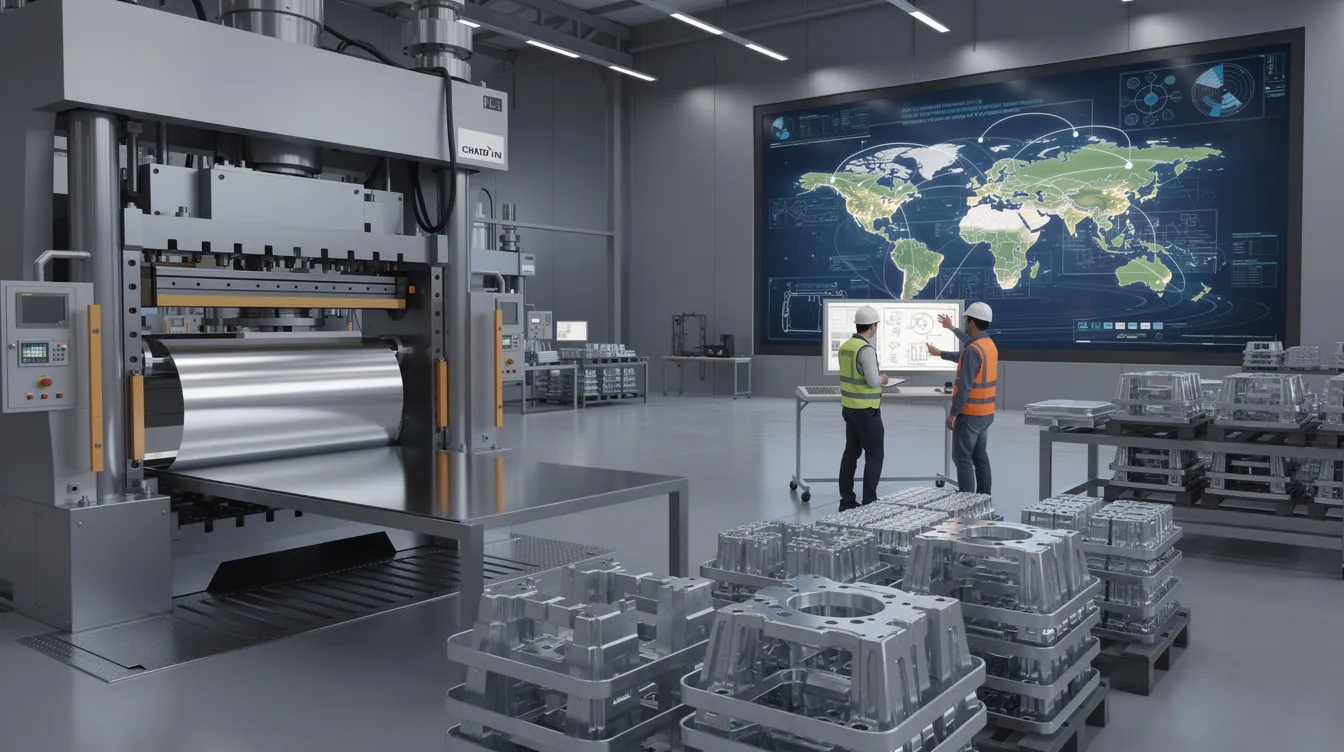
Metal Stamping Services for Global OEMs
Metal stamping is a high-speed, high-precision manufacturing process that facilitates fast, cost-effective manufacturing of durable metal components. For OEMs seeking reliable production partners, choosing the right metal stamping service can determine whether your project hits cost targets and delivery windows-or misses both.
Fast Answer: What Our Metal Stamping Service Delivers
Anebon Metal Products Limited provides comprehensive metal stamping services for overseas OEMs, covering everything from rapid prototyping to high volume production. Founded in 2010 in Dongguan, Guangdong, China, and holding both ISO 9001:2015 and ISO 14001:2015 certifications, Anebon is committed to delivering precision metal parts that meet exacting global standards.
Here is what we deliver:
-
Precision metal stamping using progressive dies, compound dies, transfer dies, and deep drawn stampings
-
Integrated CNC machining, sheet metal fabrication, die casting, and laser cutting under one roof
-
Tolerances as precise as ±0.002 mm on critical stamped features-a benchmark also maintained by industry leaders like AMG Industries
-
Metal stamping services that produce parts requiring high accuracy and cost efficiency for aerospace, medical devices, automotive, electronics, and robotics
-
Full lifecycle management from engineering design to high-volume production
Companies often outsource metal stamping to specialized manufacturers for high production speed and consistent quality. If that describes your metal stamping needs, send us your 3D files or drawings for a same-day quote.
About Anebon Metal Products Limited
Since 2010, Anebon has served as a dedicated B2B precision metal manufacturer for overseas OEMs, design engineers, and R&D teams. Our Dongguan, Guangdong manufacturing base houses modern equipment across stamping, machining, and fabrication disciplines, all focused on producing high precision components and quality metal stampings.
Our ISO 9001:2015 certification ensures systematic process control and traceability, while ISO 14001:2015 demonstrates environmental responsibility. We specialize in custom metal stamping services combined with CNC machining, die casting, and sheet metal fabrication-so clients receive complete metal parts, not isolated operations. Our primary export markets include North America, Europe, and Australia, serving mechanical engineers, sourcing managers, and project engineers.
Our Metal Stamping Capabilities
Anebon offers precision metal stamping for everything from simple brackets to complex, tight-tolerance connectors and housings. Metal stamping combines several mechanical operations into a single or multi-stage sequence, and our capabilities span the full range of stamping processes:
|
Capability |
Details |
|---|---|
|
Press tonnage |
25–300+ tons across multiple presses; industry peers like ITD Precision use punch presses ranging from 100 to 400 tons, while Valco uses presses with capacities from 5 to 200 tons |
|
Die types |
Progressive die stamping, transfer stamping, single-hit stamping, deep drawn components |
|
Material thickness |
From .010″ to .250″ thick (approximately 0.25 mm to 6.35 mm) |
|
Core processes |
Blanking cuts the initial flat outline from sheet metal; bending forms angles along a straight axis; punching creates holes, cutouts, or slots; coining squeezes metal under high pressure to imprint patterns; deep drawing stretches a metal sheet into a 3D shape through a die cavity |
|
Press types |
Mechanical presses for high-speed tasks and hydraulic presses for larger, complex shapes |
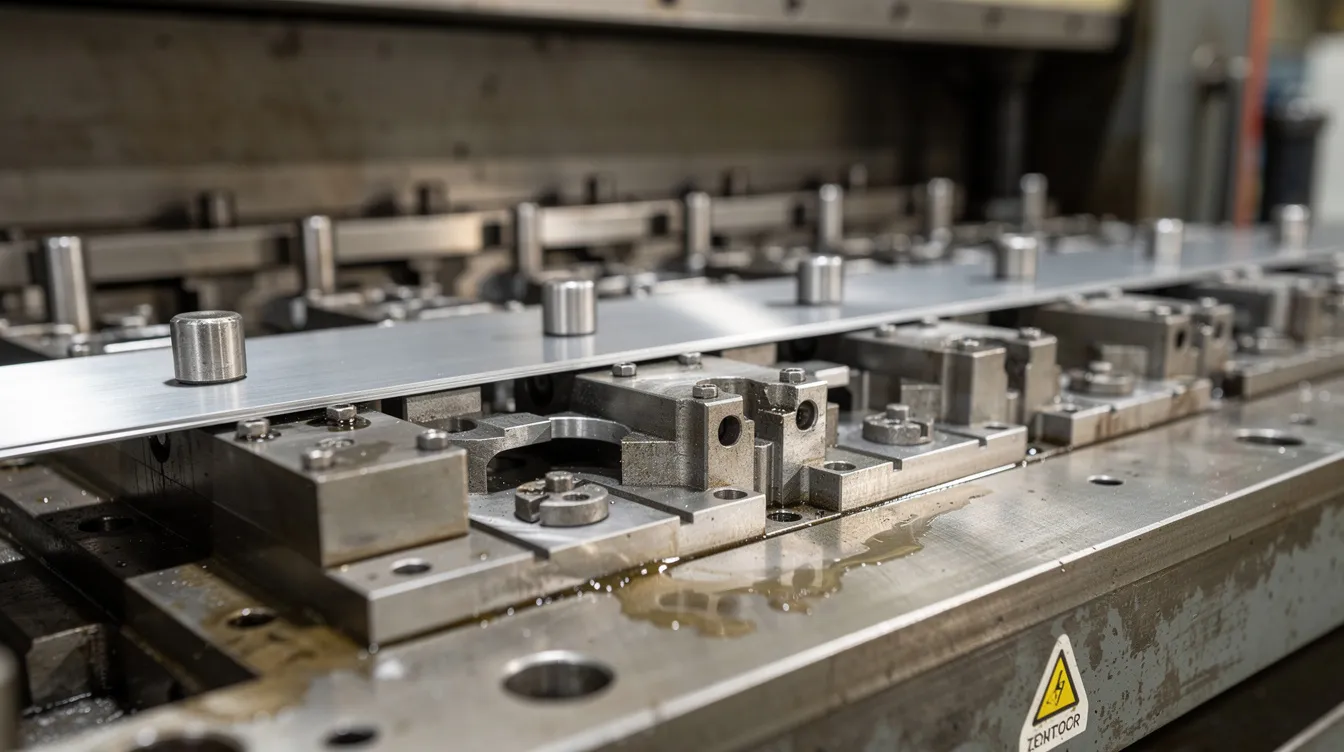
Metal stamping manufacturers often use high-pressure presses and custom dies to create intricate parts for various industries. Tool steel is used to make durable stamping dies that withstand millions of cycles. Achievable tolerances on critical dimensions depend on geometry, but our engineering team works with each customer to define practical limits-maintaining tight tolerances where they matter most while controlling cost elsewhere. Precision metal stamping is fundamental in high volume production due to its efficiency, and we can supply stamped parts as loose pieces, on carrier strips, or in reels for highly automated assembly lines.
Custom Metal Stamping Services & Engineering Support
Anebon operates as an engineering partner for custom metal stamping projects, not simply a parts supplier. Design for manufacturability feedback is important for optimizing part geometry in stamping, and our engineering team reviews 2D drawings and 3D models (STEP, IGES) to suggest changes that improve formability, tool and die life, and overall cost.
For early-stage prototyping, we offer soft tooling, laser cutting plus forming, or low-volume tooling to validate stamped parts before committing to hard progressive dies. Custom stamping reduces production time significantly, enhances precision in part manufacturing, allows for high-volume production, can produce complex shapes efficiently, and improves cost-effectiveness for large runs.
Our custom metal stamping solutions can integrate tapped holes, embossing, ribs, lances, and forms to reduce downstream CNC machining and welding operations. When metal stamping alone cannot meet all features or tolerances, our stamping, machining, and die casting teams collaborate on hybrid processes. We assist both short runs for R&D pilots and full-scale production runs for long-term OEM programs.
Materials, Processes, and Complementary Services
Material versatility in stamping includes working with metals like stainless steel, aluminum, and copper-all under one roof alongside complementary processes. Common stamping materials include:
-
Carbon steel (1008, 1010), cold rolled steel (frequently used in metal stamping processes), and hot rolled steel for structural applications
-
Stainless steel (304, 316) for corrosion resistance and medical devices
-
Aluminum alloys (5052, 6061) for lightweight aerospace and electronics parts
-
Copper, brass, and beryllium copper for electrical conductivity and precision metal alloys in connectors
In-house complementary services include CNC milling and CNC turning for tight-tolerance features, tapping, countersinking, and secondary machining. Laser cutting handles thicker plates, complex profiles before forming, or situations where volumes do not justify custom tooling. Additional metal fabrication options such as bending, spot welding, and small welded assemblies allow stamped parts to be joined into subassemblies.
Surface treatments include deburring, tumbling, anodizing, plating (zinc, nickel, tin), powder coating, heat treating, and passivation-delivering the appearance, corrosion resistance, and electrical performance your project demands.
Quality Assurance and Zero-Defect Mindset
Quality assurance is critical in metal stamping processes. Our ISO 9001:2015 system drives a disciplined approach to every production run, aligning with the concept that quality management systems in metal stamping often adhere to ISO 9001 standards. For context, ITD Precision has over 70 years of experience in quality assurance and employs a “Zero Defect” quality system-a standard we hold ourselves to as well.
Our quality process includes:
-
Incoming material inspection verifying material certificates and mechanical properties for all coils and sheets
-
First-article inspection and in-line dimensional checks using gauges, CMM measurement, and SPC for critical features
-
Control plans, PFMEA, and standardized work instructions to minimize variation
-
Full traceability through lot numbers, inspection records, and retained samples
-
PPAP, FAIR, and other documentation for automotive, aerospace, and medical device customers
We are proud of our ability to exceed expectations on detail and consistency, delivering high quality results batch after batch.
Industries and Applications We Serve
Metal stamping is widely used in automotive, electronics, aerospace, medical, and construction industries. Our versatile capabilities span these sectors and more:
-
The automotive industry relies heavily on metal stamping services-automotive stamping produces engine components and body panels at speed and scale
-
Medical devices require precision metal stamping for components used in imaging equipment and surgical instruments
-
The aerospace industry demands high-quality metal stampings for safety-critical brackets and structural parts
-
Electronics applications include aluminum shields and EMI covers for consumer devices and electronics components
-
The agriculture industry utilizes custom metal stampings for equipment parts, and heavy equipment manufacturing uses metal stamping for structural parts
-
Industrial machinery components such as encoder rings, sensor brackets, and custom mounting plates for robotics
We support both established OEM production lines and fast-moving startups needing rapid prototyping and fast design iterations, with packaging and labeling coordinated to feed directly into automated supply chains.
From RFQ to Delivery: How Our Process Works
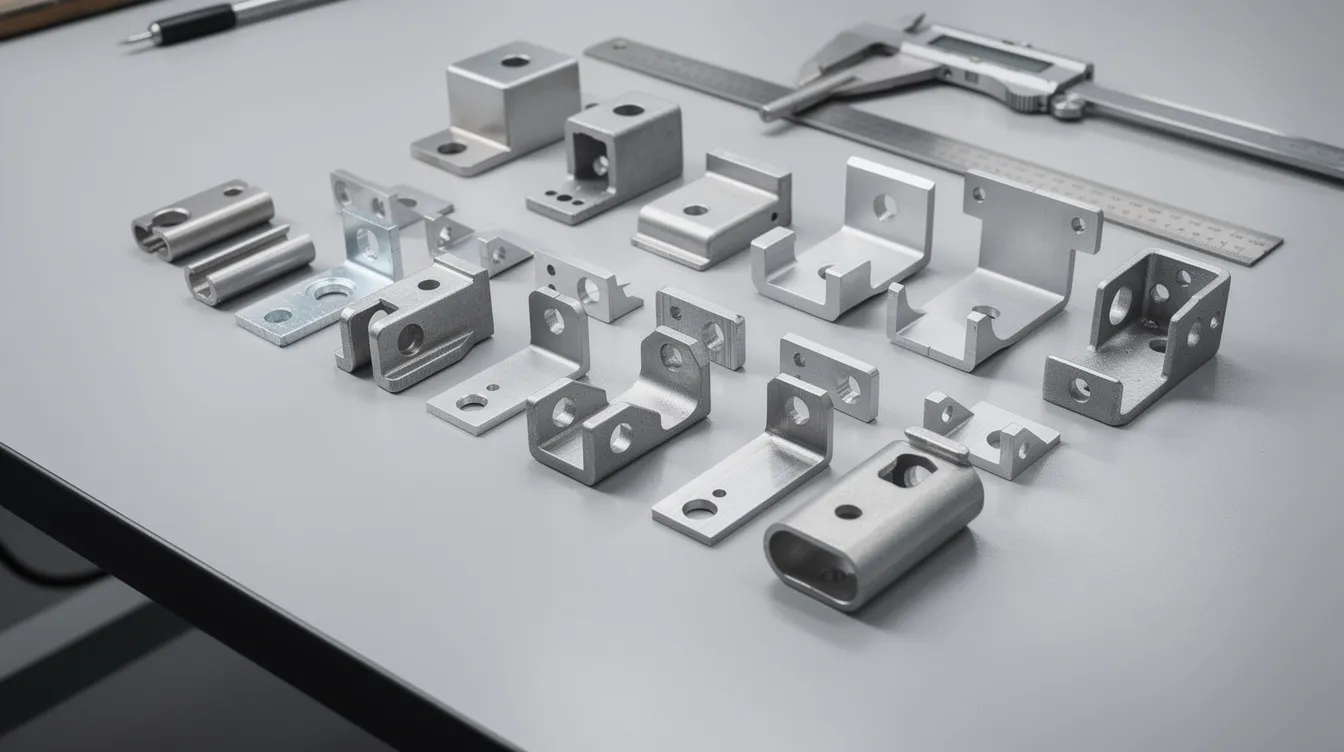
Every metal stamping project at Anebon follows a transparent process from first contact to shipment. Metal stamping services manage the full lifecycle from engineering design to high-volume production, and AMG Industries has over 100 years of metal stamping experience setting the standard we measure against. Here is how our process flows:
-
RFQ submission – Customers share 2D drawings, 3D models, annual volume estimates, target lead time, and any standards (RoHS, REACH, industry specs)
-
Engineering review – Our team performs process selection (progressive die vs. single-hit, need for CNC machining or laser cutting), cost breakdown, and tooling lead time estimate
-
Tooling build – Creation of progressive or single-stage dies using dedicated resources, trial runs, and sample part submission for approval
-
Production – Once tooling is approved, typical lead times run 30–45 days for production orders, with options for safety inventory or Kanban-style deliveries
-
Shipping – Coordinated logistics with labeling and barcoding for global supply chains
No matter the skills or expertise your business requires-whether you need complex parts for energy systems or simple construction brackets-contact Anebon Metal Products Limited with your metal stamping needs. Our team stands ready to assist with prompt engineering feedback and transparent communication from concept through delivery.