Top Machining Vendors: Your Guide to Precision and Quality Services
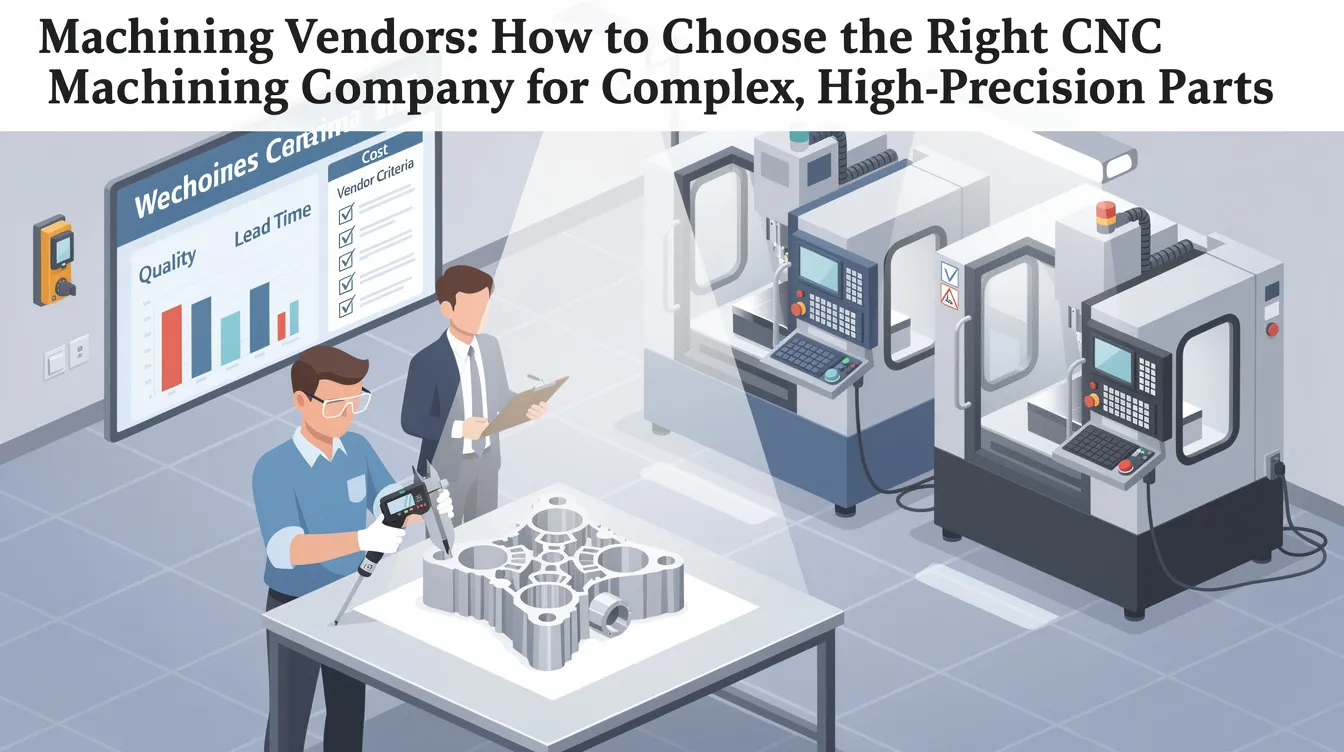
Machining Vendors: How to Choose the Right CNC Machining Company for Complex, High-Precision Parts
CNC machining services generate $46.3 billion in the U.S. market alone. Thousands of machining vendors compete for that spend, each claiming tight tolerances, broad material ranges, and fast delivery. For OEM engineers and procurement teams sourcing custom parts, the challenge is not finding a vendor; it is finding the right one. This guide walks through the concrete criteria, processes, and trade-offs that separate a reliable CNC machining company from a costly mistake.
Quick Answer: What to Look for in Machining Vendors (Summary for Busy Buyers)
Buyers of CNC parts often operate under deadline pressure and need fast, concrete criteria to shortlist machining vendors. The term “machining vendors” refers to contract CNC machining companies and precision machining services providers that produce parts from customer-supplied CAD files and technical drawings. These are not CNC machine builders like Haas or Mazak; they are service providers that cut metal and plastic to your specifications.
Before sending a single RFQ, verify these criteria:
-
Axis count: Does the vendor offer 3-axis, 4-axis, and 5-axis CNC milling, plus CNC turning or mill-turn centers?
-
Tolerances: Can the shop hold the tolerances your part geometry demands? CNC machining can achieve tolerances as tight as ±0.0001 inches (±0.002 mm) on critical features.
-
Certifications: ISO 9001 is a baseline certification for CNC machining companies. Depending on your industry, you may also need AS9100, IATF 16949, or ISO 13485 compliance.
-
Materials and finishes: Confirm the vendor machines your required alloys and plastics, and can coordinate surface finishing.
-
CNC machining applications: Look for documented experience in your specific industry, whether aerospace components, automotive parts, or medical devices.
-
Complex geometries: Verify 5-axis capability and CAM simulation for undercuts, freeform surfaces, and multi-angle features.
-
Scalability: The vendor should produce one-off prototypes through high volume production runs without quality degradation.
Anebon Metal Products Limited, founded in 2010 in Dongguan, China, is one example of a global OEM-focused CNC machining company. With ISO 9001:2015 and ISO 14001:2015 certifications and tolerances down to ±0.002 mm, Anebon serves overseas customers in aerospace, automotive, medical devices, electronics, and industrial equipment sectors.
What Are Machining Vendors? (Definitions and Vendor Types)
Machining vendors are CNC machining companies that provide machining services on a contract basis. OEMs and design engineers send CAD models and drawings; the vendor programs machines, cuts material, inspects parts, and ships finished custom parts back.
The distinction matters: a CNC machining company (service provider making custom CNC parts) is not the same as a CNC machine manufacturer (builder of equipment). When this article says “machining vendors,” it means service providers.
Typical services under the machining vendor umbrella include CNC milling, CNC turning, 5-axis machining, grinding, wire EDM, and secondary operations like powder coating, anodizing, heat treatment, and electroless nickel plating.
Vendors fall into three categories:
-
Local job shops: Small batch work, quick turn CNC machining, personal service, but often limited automation and fewer machine types.
-
Specialized precision machining services providers: Focused on tight tolerances and regulated industries. They maintain certified quality systems, traceability, and documented inspection processes.
-
Large global contract manufacturers: Multiple plants, high volume production capability, integrated finishing, and broad material sourcing. Often located in regions with competitive labor costs.
Engagement models vary. Some buyers work project-by-project with instant pricing on digital platforms. Others sign long-term supply agreements with price tiers, or set up VMI/kanban systems for recurring CNC parts in their supply chain.
Core Capabilities You Should Expect from Modern CNC Machining Vendors
Before shortlisting any CNC machining company, confirm its technical capabilities match your project requirements. Multi-axis machining includes 3-, 4-, and 5-axis capabilities, and you should confirm whether the vendor has the right configuration for your part geometry.
Core machining processes to verify:
-
CNC milling (3-, 4-, 5-axis): 3-axis handles prismatic parts. 5-axis machining allows for complex geometries and tight tolerances by reaching undercuts and angled faces in a single setup.
-
CNC turning and mill-turn: For shafts, housings, cylindrical features. Swiss turning and live tooling expand what a lathe can do, enabling off-axis holes, flats, and cross-drilled features without a second operation.
-
Grinding, wire EDM, and surface finishing: For fine detail on hardened materials or features below standard milling resolution.
Multi-axis machines reduce the need for part repositioning, which cuts setup time and stacking tolerance errors. A single 5-axis setup can replace three or four setups on a 3-axis mill. Multi-axis machining can handle production runs exceeding 10,000 units while maintaining the consistency needed for production parts. This capability also improves part performance by simplifying logistics and eliminating inter-operation handling damage.
Capacity indicators buyers should ask about: number and types of CNC machines, shift schedule (single vs. 24/7), automation level (pallet changers, robotic loading), and maximum work envelope size.
As a benchmark, Anebon holds tolerances down to ±0.002 mm on high-precision features, following ISO 2768 general tolerances for less critical dimensions.
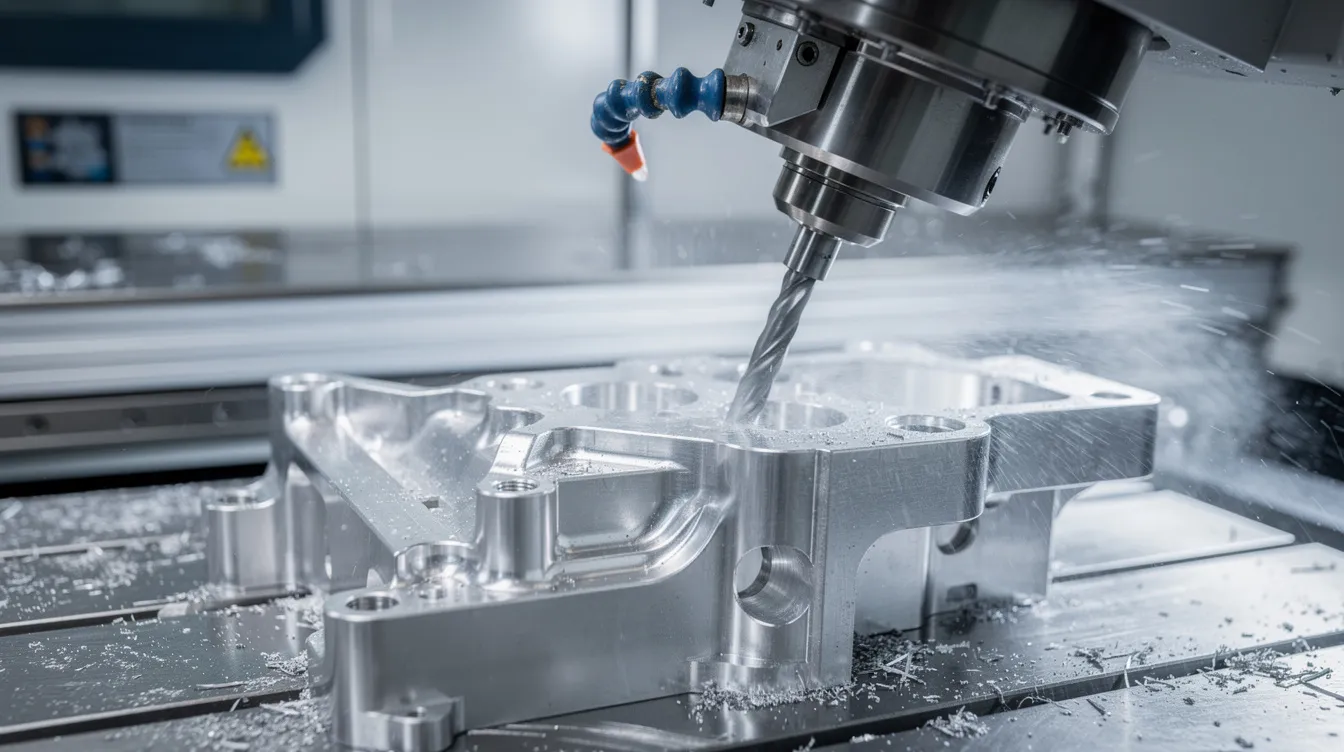
Precision Machining Services: Tolerances, Inspection, and Quality Control
Precision machining services produce parts where dimensional accuracy, repeatability, and traceability are non-negotiable. The machining process must be controlled from raw stock to final inspection. Vendors should demonstrate a repeatable process for producing parts conforming to specifications, run after run.
Typical tolerance ranges buyers encounter:
|
Tolerance Class |
Range |
Typical Applications |
|---|---|---|
|
General commercial |
±0.05 to ±0.10 mm |
Non-critical housings, covers |
|
Precision OEM |
±0.01 mm (±0.0004 in) |
Mating surfaces, interface fits |
|
Ultra-precision |
±0.002 mm (±0.0001 in) |
Medical implants, fluid metering |
Inspection methods to look for:
-
CMM inspection (coordinate measuring machines) for dimensional, location, and geometric verification. Vendors should use inspection equipment like CMMs for verification of parts.
-
Optical measurement systems for edge profiles and surface features.
-
Surface roughness testers for Ra values (e.g., 3.2 µm standard as machined finish; 0.8 µm for aerospace mating surfaces).
-
Documented reports: First Article Inspection (FAI), PPAP for automotive, and full material certificates traceable to the mill.
Quality checks should be integrated directly into the production workflow rather than applied only at the end. In-process gauging, SPC charts, and intermediate CMM checks catch drift before it creates scrap.
ISO 9001:2015 is a baseline certification for quality management. ISO 14001:2015 covers environmental practices. Anebon holds both and routinely works under customer-specified quality plans that align with AS9100 and ISO 13485 expectations for aerospace and medical projects.
Materials and Surface Finishes Offered by Machining Vendors
The best CNC machining companies support a wide range of CNC machining materials and finishing services, delivering parts ready for assembly. Buyers should assess whether vendors can handle secondary operations and finishing processes either in-house or via audited partners.
Common metals:
-
Aluminum alloys (6061, 7075): Aluminum 6061 is used for its strength, low density, and machinability. 7075 adds higher fatigue strength for aerospace components.
-
Stainless steel (304, 316, 17-4PH): Stainless steel offers excellent corrosion resistance and machinability. 316L is corrosion resistant and biocompatible for medical devices.
-
Steel alloy grades (4140, 4340): Excellent wear resistance after heat treatment; high stiffness for industrial equipment.
-
Titanium (Ti-6Al-4V): Titanium has a high strength-to-weight ratio and corrosion resistance, making it a default for medical implants and aerospace.
-
Copper, brass: High electrical conductivity for electrical components and thermal management.
Common plastics:
-
ABS: A low-cost plastic known for its impact resistance and strength.
-
Nylon: Low friction, good wear resistance, and low moisture absorption make it suitable for bushings and gears.
-
PEEK: Used in high-temperature applications due to its thermal resistance and excellent chemical resistance. An excellent electrical insulator in harsh environments.
-
PTFE: Low coefficient of friction for seals and sliding surfaces.
-
HDPE (high density polyethylene): UV resistance and chemical resistance for outdoor and chemical handling parts.
-
PVC (polyvinyl chloride): Electrical insulation and corrosion resistance for fluid handling.
-
Polycarbonate (PC): Impact resistance and optical clarity for consumer electronics housings.
-
Epoxy resin composites: High stiffness for creating fixtures and tooling.
Finishing processes:
-
Anodizing (Type II, Type III hard-coat) for aluminum
-
Zinc plating, nickel plating, gold, silver for corrosion or conductivity
-
Powder coating for durable cosmetic finishes
-
Passivation, electropolishing, bead blasting, painting, silk-screening
Anebon coordinates finishing through audited partners, delivering CNC parts with surface treatments applied so buyers receive parts ready for assembly.
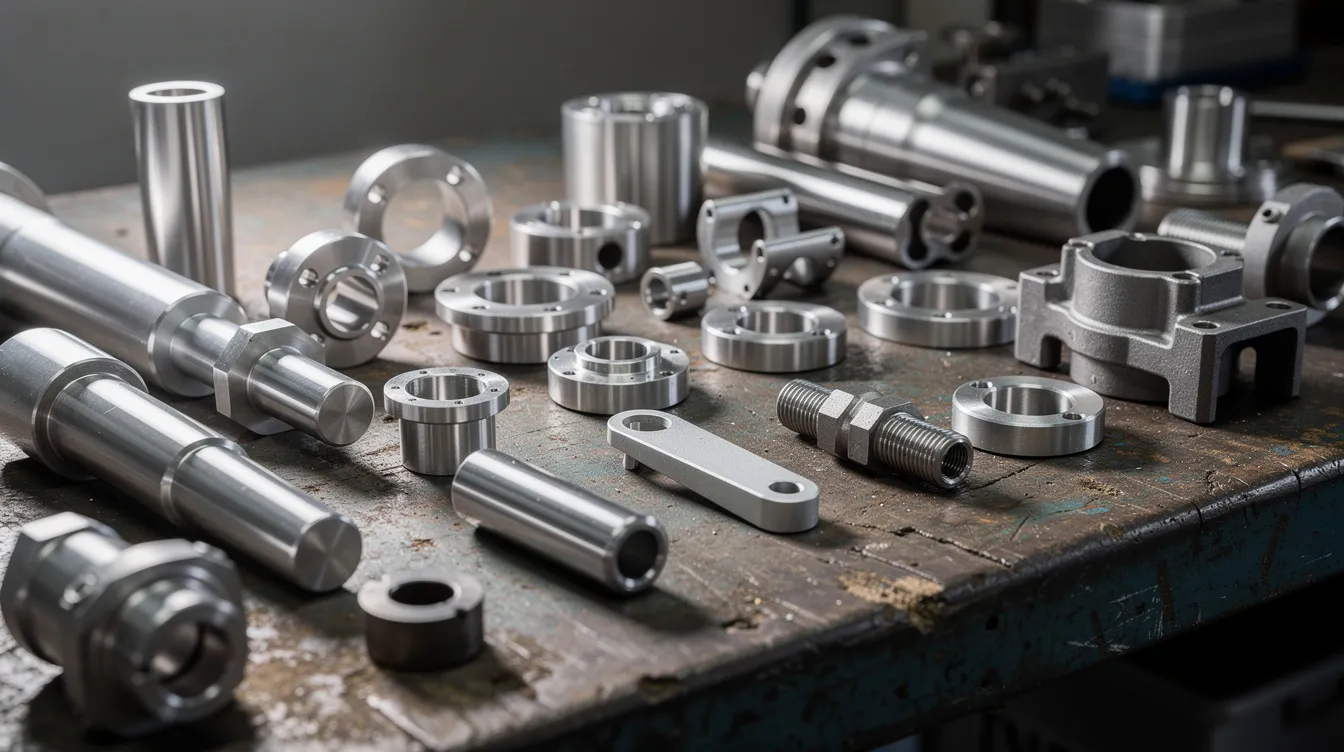
Common CNC Machining Applications Across Industries
CNC machining is widely used in aerospace, automotive, and medical industries; selecting vendors with domain experience in your sector lowers project risk because they already understand the material requirements, tolerances, and documentation expectations.
Industries served and typical parts:
-
Aerospace and defense: Structural brackets, housings, and engine components. These parts require tight tolerances, high fatigue strength materials (titanium, Inconel), and full traceability. Vendors need 5-axis milling for multi-angle features on a single workpiece.
-
Automotive and EV: Drivetrain components, battery housings, jigs, and fixtures for high-volume lines. Automotive parts demand consistent quality across batches and often require PPAP documentation.
-
Medical device manufacturing: Surgical instruments, orthopedic implants, and diagnostic equipment parts. Biocompatibility, sterilization compatibility, and ISO 13485-style controls are table stakes.
-
Electronics and robotics: Heat sinks, sensor mounts, housings, and small precision metal parts in aluminum and plastics. Consumer electronics demand tight cosmetic finishes alongside dimensional accuracy.
-
Industrial machinery and energy: Pump components, manifolds, turbine parts, and precision gears for harsh environments with high temperature and chemical exposure.
Anebon serves OEM clients across all five sectors, from rapid prototyping through series production, and advises on material and finish choices based on application-specific requirements.
Custom CNC Machining vs. Standard Parts: When You Need a Machining Vendor
Off-the-shelf components (standard fasteners, bearings, extruded profiles) work for generic applications. But when performance, packaging constraints, or regulatory requirements push beyond catalog options, OEMs turn to custom CNC machining.
Typical triggers for engaging a machining vendor:
-
New product introduction (NPI): Unique geometry, tight packaging, or performance specs that no catalog part satisfies.
-
Legacy parts: The original supplier no longer exists, or tooling has worn out.
-
Design revisions: Material changes, interface modifications, or tighter tolerances on revised custom parts.
-
Specific finishes: Requirements like hard anodize, powder coating, or passivation that standard parts do not include.
Rapid prototyping is essential for testing and validating designs before committing to production tooling. CNC machining enables rapid prototyping with various materials, meaning engineers can test in the actual production alloy rather than a 3D-printed approximation. Rapid prototyping reduces product development time because functional parts can be cut, tested, and revised in days rather than weeks. Prototyping can be completed in as little as one business day for simple geometries. Rapid prototyping supports complex geometries and tight tolerances, so even 5-axis features can be validated early.
Example scenario: A robotics startup needs 100 aluminum 7075 brackets with 5-axis pockets and a black powder coat finish. A small batch CNC machining vendor like Anebon can cut prototypes, validate fit, then scale to 10,000 units per year without changing suppliers.
How to Evaluate and Compare CNC Machining Companies
The global market includes thousands of CNC machining companies. Choosing the right machining vendor requires evaluating technical capabilities and quality systems against your project’s actual requirements, not just comparing unit price.
Use these evaluation points:
-
Technical capabilities: Axis count, machine list, tolerance ranges, and experience with your materials. Confirm whether the vendor has multi-axis capabilities depending on your part geometry requirements.
-
Certifications: ISO 9001:2015 minimum. Look for recognized quality certifications like ISO 9001 or AS9100 depending on the industry.
-
Quality and inspection: CMM availability, documented inspection procedures, sample reports, and capability studies (Cpk data).
-
Scalability: Ensure the vendor has adequate capacity to scale production volume in response to project demands, from prototypes to tens of thousands of units per year.
-
DFM and engineering support: Willingness to suggest geometry or tolerance changes that reduce cost. Ensuring communication and engineering support is critical for effective partnership and project management.
-
Financial health: Evaluate the vendor’s financial health and ongoing investments in machinery and automation. A vendor that stopped buying new equipment three years ago is a risk.
-
On-time delivery: A vendor’s historical on-time delivery metrics should maintain performance rates above 95%. Ask for this data.
-
Lead times and capacity: It is critical to assess lead times and capacity before selecting a machining partner, because delays at one vendor cascade through your entire supply chain.
Build a weighted scorecard. Assign points to each criterion based on your project’s priorities, then score each vendor. This makes the decision transparent to internal stakeholders and removes pure price bias.
The Vendor Selection Process: From RFQ to Approved Supplier
A structured process keeps vendor selection consistent and auditable. Using a structured vendor qualification process helps evaluate and select reliable suppliers rather than defaulting to whoever responds first.
Step-by-step approach:
-
Define technical requirements: Prepare CAD models, 2D drawings with GD&T, material callouts, finish specs, and inspection level (FAI, PPAP, or standard dimensional report).
-
Shortlist 3-5 machining vendors based on capabilities, certifications, and industry experience. Use guides like choosing the right machined parts manufacturers to narrow the field.
-
Send RFQs with clear annual production volumes, delivery schedules, and quality expectations.
-
Review quotes on total cost of ownership: unit price, tooling, shipping, inspection cost, MOQ, and lead times. Comparing total costs beyond unit prices is important to ensure quality over the life of the project.
-
Request sample parts or a pilot build. Evaluate dimensional reports, surface quality, and material certificates. Material traceability is essential for ensuring compliance with specific standards and quality controls.
-
Perform supplier audits (remote or on-site) focused on process control, traceability, and environmental practices.
Anebon typically signs NDAs when requested, provides DFM feedback within a few business days, and offers prototype lead times competitive with U.S. and EU shops. CNC machining can produce parts in as little as one day for urgent prototypes.
Design for Manufacturability (DFM) with Machining Vendors
Collaborating with machining vendors early in the design phase reduces cost, lead times, and scrap rates. Proactive Design for Manufacturability (DFM) feedback can help optimize part design and reduce costs before a single chip is cut.
DFM topics vendors commonly advise on:
-
Minimum wall thickness: Aluminum can go thinner than titanium before deflection becomes a problem. Specify material-appropriate minimums.
-
Fillet radii and tool access: Sharp internal corners require EDM or very small end mills with slow feeds. Adding a 1 mm radius to an internal corner can cut cycle time by 30% or more.
-
Tolerance relaxation: Not every face needs ±0.002 mm. Relaxing non-critical dimensions to ±0.02 mm reduces grinding and secondary operations.
-
Milling vs. turning: A cylindrical feature on a prismatic part may be faster on a lathe than a mill. The vendor should flag this.
-
Fixturing and datum selection: Grouping datum surfaces and defining clear reference planes reduces cumulative error across multi-operation setups.
Share full 3D models plus annotated 2D technical drawings. Be open to vendor suggestions. Anebon’s engineers routinely provide DFM feedback as part of the quoting process at no additional cost.
Global vs. Local Machining Vendors: Cost, Lead Time, and Risk
Buyers face a real trade-off between local CNC machining companies and global vendors like Anebon in China.
Local vendors (U.S./EU):
-
Same time zone, easier communication, faster shipping for small batches
-
Typical delivery: 5-14 working days
-
Higher hourly machining rates; limited capacity during demand spikes
Global vendors (China-based):
-
30-50% lower unit costs for production orders compared to U.S./EU counterparts
-
Machining time of 7-14 days plus 3-10 days air shipping (10-25 days total landed)
-
Large machine counts, 24/7 operations, broad material sourcing
-
Requires strong quality documentation and remote audit capability
Considerations when sourcing overseas:
-
International shipping, customs duties (e.g., Section 301 tariffs for parts entering the U.S.)
-
IP protection through contracts and NDAs
-
Time zone offset requires clear documentation and structured communication
A hybrid strategy works well: prototype locally for speed on one-off prototypes, then transition mature designs to a global CNC machining company like Anebon for large-scale production. Verify certifications and request sample inspection reports when sourcing overseas to mitigate perceived risk.
Machining Vendors for Regulated Industries (Aerospace, Automotive, Medical)
Regulated sectors demand more than basic machining capability. Vendors must meet strict quality, traceability, and documentation standards.
Aerospace and defense:
-
AS9100 is essential for aerospace industry compliance. ITAR registration is mandatory for defense-related machining services.
-
Full material traceability, FAI reports, and process validation are required.
-
Parts often involve titanium, Inconel, and complex geometries machined on 5-axis centers.
Automotive and EV supply chains:
-
IATF 16949 is required for automotive OEM supply chains, covering APQP, PPAP, and ongoing process capability tracking.
-
High-volume, repeatable machining services with automation (robotic loading, in-line gauging) are standard expectations.
Medical devices:
-
ISO 13485 certification is crucial for medical device manufacturing. Vendors need clean processing environments, biocompatible materials (316L stainless, titanium, PEEK), and batch traceability.
-
Sterilization-compatible surface finishing and validation documentation for medical implants and surgical instruments.
Anebon holds ISO 9001:2015 and ISO 14001:2015 certifications and routinely manufactures parts for aerospace, automotive, and medical equipment OEMs under customer-specified quality plans and documentation packages.
Working with Machining Vendors on Complex Geometries
Complex geometries often drive vendor selection more than simple flat or turned parts. A CNC shop that handles basic prismatic work may not have the equipment, programming, or fixturing expertise for parts with deep pockets, thin walls, undercuts, freeform surfaces, internal channels, or multi-angle features.
Equipment required:
-
5-axis CNC machines that reach non-orthogonal surfaces without multiple setups
-
High-speed spindles for small tools on thin-wall features
-
Advanced CAM software with collision simulation for multi-axis paths
Early vendor involvement is critical. The machining vendor should review part geometry during the RFQ stage and suggest modifications: split-lines, draft angles, or feature simplifications that make the part manufacturable without exotic setups.
Concrete example: A multi-port aluminum manifold with internal coolant channels requires 5-axis milling plus wire EDM for intersecting internal passages. An experienced CNC machining company can optimize setups, maintain tolerances across 12+ critical bores, and reduce machining time by 20-30% compared to a shop that plans the job in sequential 3-axis operations.
Cost Drivers and Quoting Practices in CNC Machining
Understanding cost drivers helps buyers interpret and compare quotes from machining vendors without defaulting to the lowest number.
Major cost components:
|
Cost Driver |
Impact |
Notes |
|---|---|---|
|
Machine time |
Largest share |
Spindle hours on CNC milling or turning centers; 5-axis costs more per hour than 3-axis |
|
Setup and fixturing |
High on prototypes |
Dedicated fixtures for volume reduce per-piece cost |
|
Raw materials |
Variable |
Titanium and Inconel cost 5-10x more per kg than aluminum 6061 |
|
Tooling and consumables |
Scales with hardness |
Carbide inserts wear faster on hardened steel alloy and superalloys |
|
Finishing and inspection |
Additive |
Powder coating, anodizing, electropolishing each add cost; FAI reports add inspection time |
Common quoting models:
-
Per-piece pricing with price breaks at volume thresholds
-
Blanket orders with scheduled releases for recurring production parts
-
Expedited charges for rush prototypes
Share realistic annual volume forecasts and quality expectations. This lets vendors like Anebon set up tooling and programming upfront, producing parts at lower per-unit cost over the life of the order.
Long-Term Partnerships with Machining Vendors (From Prototype to Production)
The most successful OEM programs treat machining vendors as long-term partners rather than interchangeable suppliers. The relationship develops in phases:
-
Rapid prototyping and engineering samples: Fast design validation using CNC machining with advanced capabilities to test fit, form, and function.
-
Pilot builds: Process parameters, inspection plans, and work instructions are finalized. Quality checks become part of the production workflow.
-
Full production: Stable processes, documented instructions, continuous improvement, and possible stocking programs.
Long-term partnerships yield concrete benefits: deeper DFM collaboration, reduced changeover times, improved yield, and better pricing terms. The vendor learns your functional requirements and catches potential issues before they become scrap.
Anebon positions itself as a long-term OEM partner, providing CNC machining, die casting, and sheet metal fabrication under one roof. Consolidating vendor count simplifies supply chains and reduces coordination overhead.
How Anebon Metal Products Limited Supports OEMs as a Global Machining Vendor
Anebon Metal Products Limited is a precision CNC machining, die casting, and sheet metal fabrication company founded in 2010 in Dongguan, Guangdong, China.
Key credentials:
-
ISO 9001:2015 and ISO 14001:2015 certified
-
Tolerances as tight as ±0.002 mm on critical features
-
Serves overseas OEMs in aerospace, medical devices, automotive, electronics, robotics, and industrial machinery
Capabilities:
-
CNC milling, CNC turning, and 5-axis machining for complex geometries
-
Rapid prototyping through full-scale production, including die casting and sheet metal
-
Broad material range (aluminum alloys, stainless steel, titanium, copper, brass, engineering plastics) plus coordinated finishes including anodizing, plating, and powder coating
Service approach:
-
Engineer-led DFM feedback on every RFQ, at no additional cost
-
Transparent quality assurance with CMM inspection reports, FAI, and material certificates upon request
-
English-language support for design engineers and sourcing teams in North America and Europe
Prepare your CAD files and annotated drawings, then request a quote from Anebon for your next custom CNC machining project. Whether you need a single prototype or a 10,000-unit annual run, Anebon’s team can provide pricing, DFM feedback, and a clear production timeline within days.