Top ISO Certified CNC Manufacturers in China for Quality Machining
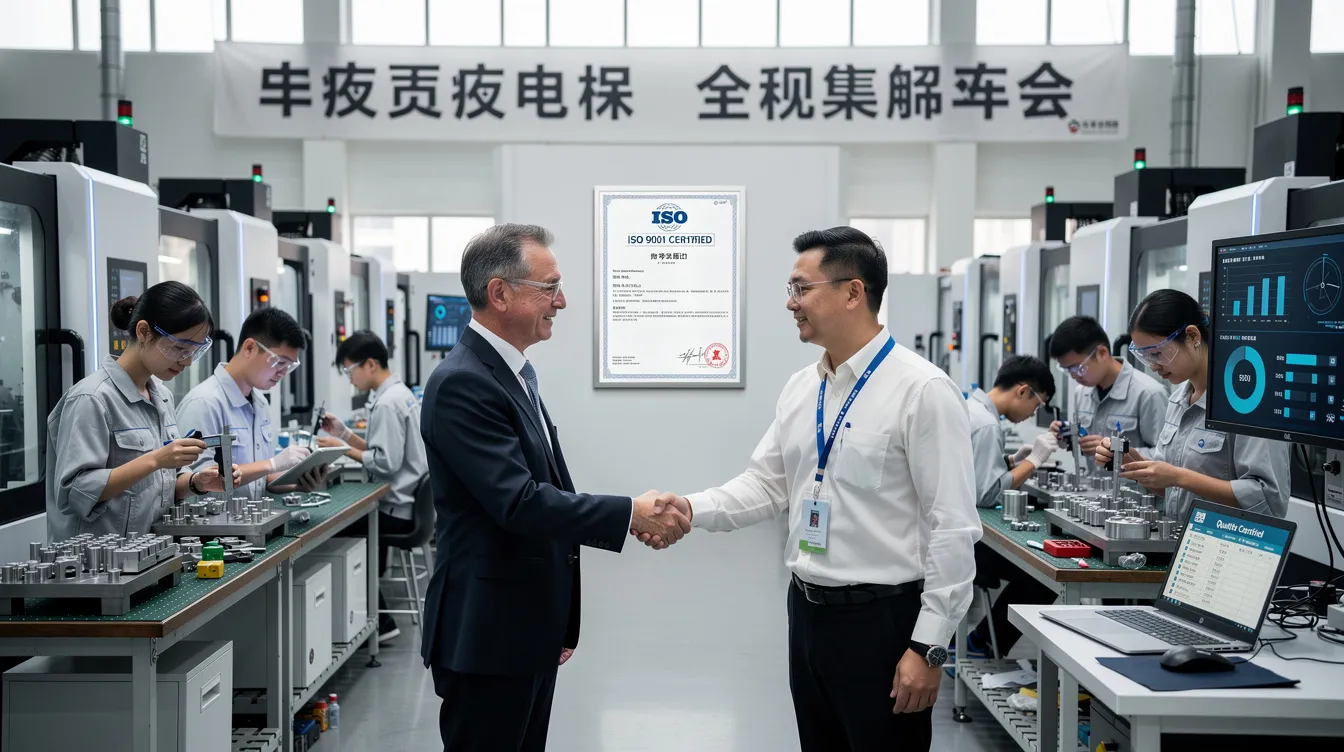
ISO Certified CNC Manufacturers in China: How to Choose the Right Partner in 2026
Introduction: Why ISO-Certified CNC Manufacturers in China Matter in 2026
Overseas OEMs and design engineers are sourcing more cnc machined parts from China than ever before. The numbers tell the story: China exported $11.267 billion in machine tools in 2024, and Western buyer searches for china cnc machining rose by 212% in North America between 2023 and 2025. That trajectory has only accelerated into 2026. Top CNC manufacturers in China serve industries like aerospace and automotive with tolerances, documentation, and delivery timelines that rival any Western shop.
This article focuses on what ISO 9001 and related certifications actually mean for your projects – from tolerances and traceability to real cost savings – and how to evaluate iso certified cnc manufacturers in china before committing a purchase order. Anebon Metal Products Limited, an ISO 9001:2015 and ISO 14001:2015 certified precision cnc machining partner based in Dongguan, China, serves as a reference point throughout.
-
The guide covers certification verification, technical capabilities, cost benchmarks, and common sourcing pitfalls.
-
Every recommendation is grounded in current industry data and real manufacturing workflows.
-
The goal is to help you confidently select a partner that reduces risk while keeping costs competitive.
What Is an ISO-Certified CNC Manufacturer? (And Why It’s Different from a Generic Shop)
An ISO-certified CNC manufacturer operates under an audited management system – not just a quality poster on the wall. ISO certifications ensure standardized quality management systems in manufacturing, meaning every step from raw material intake to final shipment follows documented, repeatable procedures subject to continual improvement.
-
Certification is granted by independent third-party bodies such as SGS, TÜV, or BSI. ISO certifications include verification measures like third-party audits and inspection reports that confirm ongoing compliance.
-
Certificates are valid for three years, contingent on successful annual surveillance audits. At the end of three years, a full re-certification audit is required.
-
Key standards relevant to cnc machining companies include ISO 9001 (quality management), ISO 14001 (environmental management), IATF 16949 (automotive), AS9100 (aerospace), and ISO 13485 (medical devices).
-
In practice, these standards translate into fewer defects, consistent tolerances across production runs, traceable materials, and formal corrective action processes when something goes wrong. ISO certifications ensure reliable manufacturing processes in cnc machining.
-
A generic shop might deliver good parts on a given day. An ISO-certified factory delivers good parts consistently because the system behind those parts is designed, documented, and audited.
Core ISO Standards That Matter for CNC Machining in China
-
ISO 9001:2015 is the foundational quality management standard. Many Chinese CNC manufacturers hold ISO 9001:2015 certification, and nearly all serious export-facing cnc machining factories maintain it. It mandates documented process control, nonconformance reporting, and customer satisfaction tracking.
-
ISO 14001:2015 demonstrates a manufacturer’s environmental management practices, covering waste disposal, coolant handling, and emissions controls. This is increasingly required by European and North American OEMs.
-
IATF 16949 is essential for automotive component manufacturers, emphasizing defect prevention, variation reduction, and waste elimination in the automotive supply chain. IATF 16949 certification is prevalent in automotive CNC manufacturers.
-
AS9100 targets aerospace. Buyers sourcing turbine brackets, structural fittings, or aerospace components should insist on AS9100-certified suppliers or those demonstrating equivalent traceability systems.
-
ISO 13485 is crucial for manufacturers in the medical device industry, covering surgical instruments, implant housings, and diagnostic equipment. ISO 13485 certification is common among medical device manufacturers.
-
Manufacturers serving specialized industries often hold multiple certifications beyond ISO 9001. Leading chinese cnc machining companies combine two or more standards to serve mixed-industry portfolios.
-
Anebon is ISO 9001:2015 and ISO 14001:2015 certified and regularly works to customer-specific requirements like PPAP or FAI documentation when requested.
Key Advantages of Choosing ISO-Certified CNC Machining Companies in China
Choosing an ISO-certified partner is not about collecting logos – it is about building a supply chain you can trust. Here are the concrete advantages that matter:
-
Quality consistency: Documented procedures, calibrated equipment, and CAPA records ensure that part number 1 and part number 10,000 meet the same specification. Top CNC factories in China often comply with international quality standards that enforce this repeatability.
-
Full traceability: Material traceability is critical in cnc machining to ensure quality and compliance. ISO-certified shops maintain material certificates, heat lot records, and inspection data from incoming raw stock through finished parts.
-
Cost-effectiveness: CNC machining in China often costs 30% less than Western countries, and Chinese CNC manufacturers achieve cost savings through optimized production workflows. The cost advantage holds even with ISO-level quality controls in place.
-
Advanced equipment: About 38.8% of audited factories in China now operate 5-axis advanced cnc machines from brands like DMG MORI, Mazak, and Makino. ISO documentation ensures these machines are properly maintained, calibrated, and programmed.
-
Scalable capacity: Chinese CNC companies can produce up to 5 million parts annually, yet many cnc machining factories accept small orders or test pieces just as readily. ISO systems allow scaling from prototype to full production without rebuilding processes.
-
Integrated inspection: Leading china cnc shops integrate cnc machines with CMM inspection and statistical process control, catching deviations before they reach shipping.
-
Competitive pricing: Chinese CNC companies provide competitive pricing without compromising quality, supported by dense supply chains and lower overhead structures.
Why Dongguan, Shenzhen, and Other Chinese Manufacturing Hubs Lead in ISO CNC
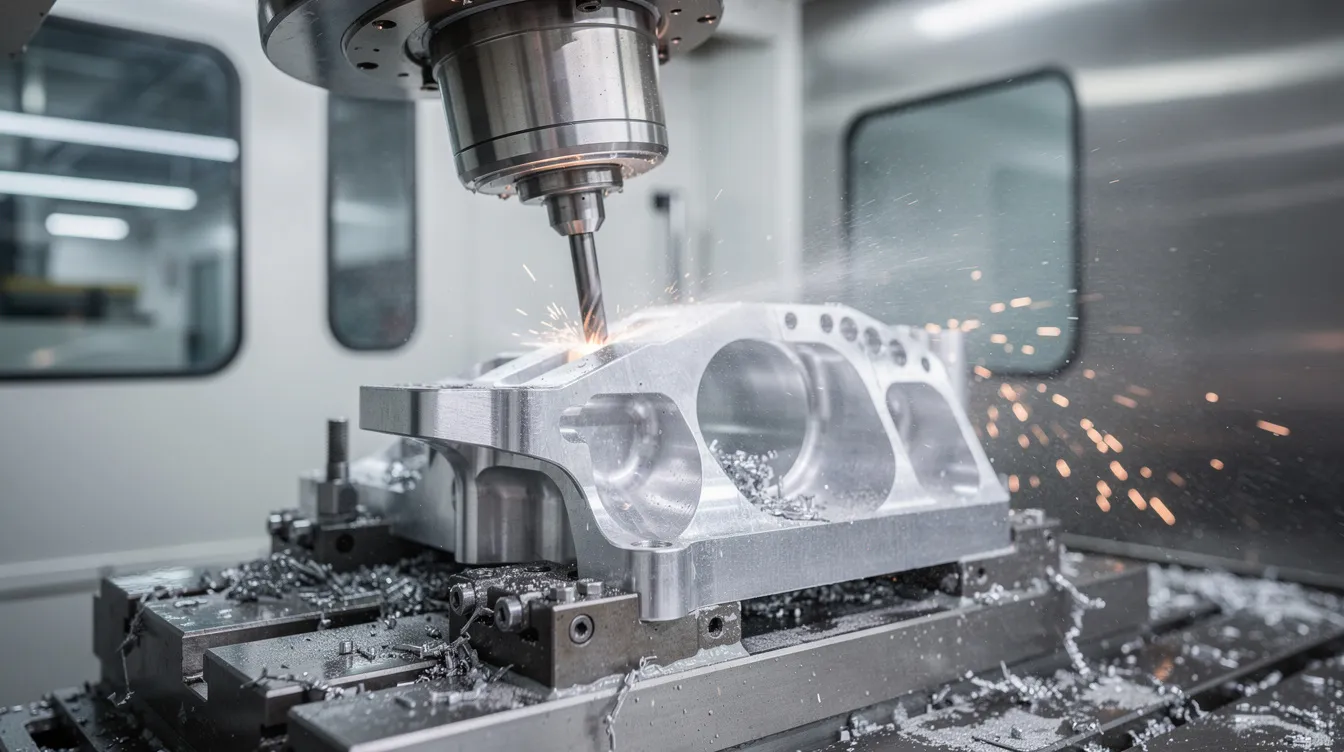
China’s cnc machining manufacturers are not evenly distributed. Specific regions have developed dense industrial ecosystems that make high precision cnc machining efficient and cost-effective. A 2026 industry report based on 456 audited factories found that 82.2% of CNC machining capacity sits in Guangdong, Jiangsu, and Zhejiang provinces.
-
Dongguan is one of the highest-density precision cnc machining hubs globally. Raw materials suppliers, heat treatment facilities, anodizing lines, plating shops, and laser cutting services all operate within a 50 km radius, dramatically reducing logistics time and cost. This is Anebon’s home base.
-
Shenzhen specializes in electronics-grade machining centers, prototyping, and consumer product components. Proximity to Shenzhen Bao’an International Airport makes air freight fast and accessible.
-
Guangzhou, Suzhou, Shanghai, and Ningbo each add specialized capacity in automotive, industrial machinery, and heavy metal fabrication.
-
Local government and industry investment in smart manufacturing continues to grow. Chinese factories use AI for quality inspections with less than 0.2% defect rates, and cnc machining companies in China utilize robots and IoT for efficiency across the production process.
-
Anebon’s Dongguan location provides proximity to both Shenzhen and Guangzhou ports, enabling efficient logistics for global shipments by air or sea.
How ISO Certification Affects Quality and Precision of CNC Machined Parts
ISO 9001 is more than a paper certificate. It drives specific quality controls that directly impact the precision parts you receive.
Quality management systems involve processes for incoming material inspection and in-process controls. Here is what that looks like in practice at an ISO-certified cnc machining factory:
-
Incoming material inspection: Every batch of aluminum, stainless steel, titanium, or engineering plastic is checked against purchase specifications and material certificates before entering the shop floor.
-
In-process checks: Operators verify critical dimensions at defined intervals during machining using calibrated gauges, micrometers, and go/no-go fixtures.
-
Final inspection: Completed parts undergo full dimensional verification on equipment like coordinate measuring machines (CMM), optical projectors, surface roughness testers, and hardness testers.
-
Nonconformance handling: When a part falls out of specification, ISO systems require documented root cause analysis, corrective action, and verification that the fix works before production resumes.
-
First article inspection (FAI): First Article Inspection is a common quality control practice in CNC manufacturing. Before a production run begins, initial samples are fully measured and compared to the drawing. This catches programming or setup errors before they multiply.
-
Achievable tolerances: China’s CNC companies often achieve tolerances as tight as ±0.001 mm. Many top shops routinely hold ±0.005 mm to ±0.01 mm on critical features, while Anebon offers tolerances as tight as ±0.002 mm under controlled conditions.
Typical Capabilities of ISO-Certified CNC Machining Factories in China
Precision CNC machining includes capabilities like CNC milling, turning, and 5-axis machining. Here is a capability snapshot of what leading ISO-certified shops offer:
-
CNC machine tool types: 3-axis, 4-axis, and 5-axis machining centers; CNC turning centers with live tooling; swiss-type cnc lathes for small-diameter precision parts; surface and cylindrical grinding machines; and horizontal machining centers for high volume production runs.
-
CNC milling machines excel at creating complex geometries, while CNC turning machines create cylindrical parts with high precision. Five-axis machining allows for complex designs with micron-level tolerances and complex shapes in a single setup.
-
Ancillary processes: Many ISO-certified shops offer or manage sheet metal fabrication, laser cutting, die casting, wire edm, injection molding, 3D printing, plasma cutting, laser marking machines, and surface finishing (anodizing, powder coating, plating, passivation). Cnc routers and laser machines handle large-format or non-metallic work.
-
Material capabilities: Aluminum alloys (6061, 7075), stainless steels (304, 316L), carbon steel, tool steels, titanium, brass, copper, and engineering plastics (ABS, POM, PEEK, PC, PA). For material selection guidance, resources on brass vs bronze help buyers make informed choices.
-
Integrated process routing: ISO-certified shops maintain structured routing that links multiple steps – for example, milling + turning + anodizing – under a single quality plan, ensuring consistency from first operation to final surface finishing.
Case Study Overview: Anebon Metal Products Limited (ISO 9001:2015 & ISO 14001:2015)
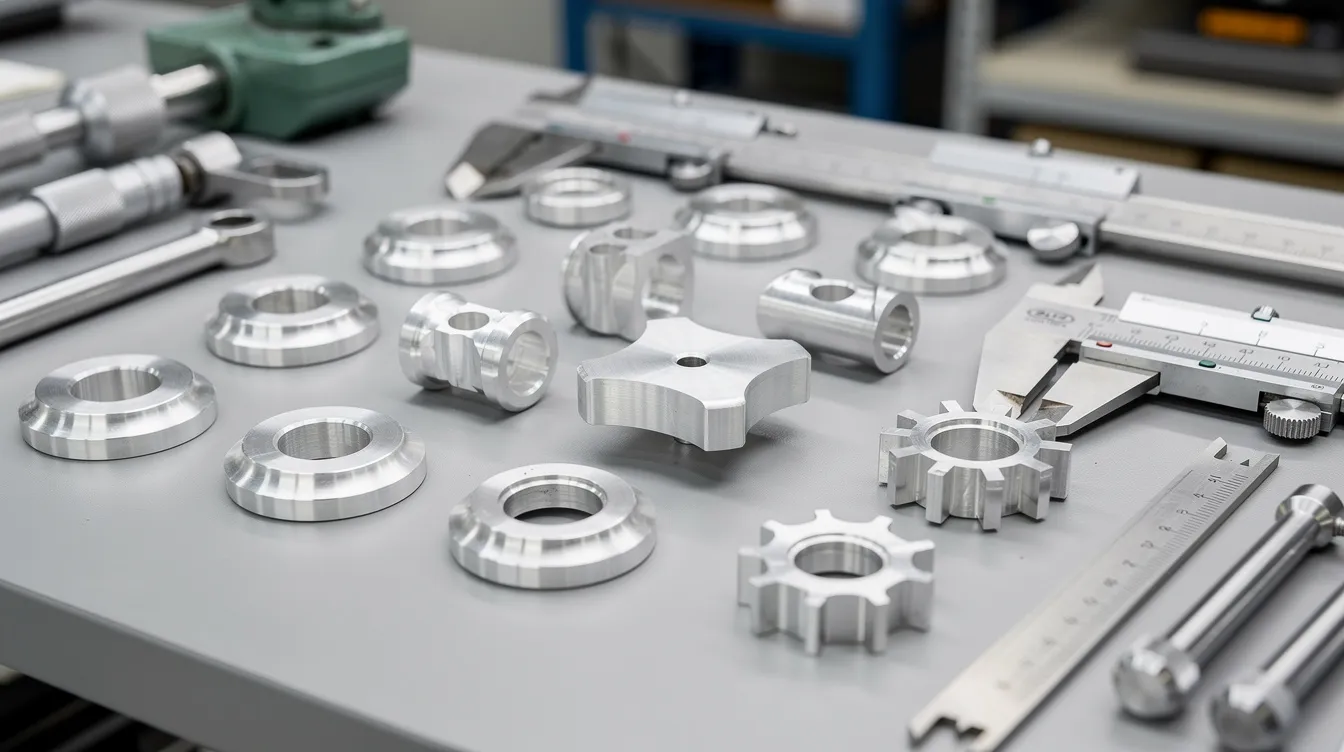
Anebon Metal Products Limited (Anebon Metal Products Co Ltd) is an ISO-certified cnc machining company in Dongguan, founded in 2010, serving overseas OEMs across multiple continents.
-
Facility: Approximately 3,000–5,000 m² of production space equipped with a mix of CNC milling, turning, and 5-axis equipment, plus advanced equipment for secondary operations.
-
Core services: Precision cnc machining, die casting, sheet metal fabrication, surface finishing, and assembly for aerospace industries, medical device manufacturing, robotics, electronics, and automotive applications.
-
Quality capabilities: Tolerances as tight as ±0.002 mm, full material traceability, PPAP/FAI support, and RoHS/REACH-compliant surface finishing on request. A skilled team of engineers provides DFM consulting and English-language technical support.
-
Certifications: ISO 9001:2015 and ISO 14001:2015, with rigorous quality control practices aligned to customer-specific requirements including IATF and AS9100 traceability expectations.
-
Export experience: Regular global shipments with established freight partnerships, customs documentation expertise, and flexible Incoterms.
How ISO Processes Support Rapid Prototyping and Mass Production
One of the biggest advantages of ISO-certified chinese cnc manufacturers is their ability to handle both ends of the volume spectrum under one quality system. Chinese manufacturers handle both prototypes and mass production using the same documented procedures, calibration records, and inspection protocols.
-
CNC machining in China supports low-volume prototyping efficiently. Industry data shows 43.3% of demand at audited factories is for prototype quantities of 1–5 units, confirming that many CNC factories accept small orders or test pieces.
-
Chinese manufacturers offer rapid prototyping services in 3–5 days for simple to moderately complex parts. Typical small-batch production runs (10–100 pieces) take 7–20 working days depending on complexity.
-
Hybrid CNC-3D printing technologies enable rapid prototyping capabilities, allowing shops to produce machined prototypes and functional test parts quickly before committing to full tooling.
-
Revision control and documented CNC programs reduce risk when designs change between prototype and production stages. ISO systems require formal change control, so modifications are tracked and validated rather than applied ad hoc.
-
Anebon provides Design for Manufacturability (DFM) feedback early in the process and maintains configuration control as projects scale from single prototypes to tens of thousands of production pieces. Chinese CNC manufacturers can handle low-volume prototyping and mass production under one roof.
Comparing ISO-Certified vs Non-Certified CNC Machine Shops in China
When evaluating chinese cnc machining companies, the gap between ISO-certified and uncertified shops shows up in tangible ways:
-
Documented vs ad-hoc inspections: ISO shops follow defined inspection plans with recorded results. Non-certified shops may check parts informally, with no traceable records.
-
Traceable vs untraceable materials: ISO-certified factories maintain material certificates tied to specific orders. Without this, you cannot verify that the 7075 aluminum you specified is actually 7075.
-
Formal vs informal complaint handling: When a defective part ships from an ISO shop, documented CAPA processes ensure root cause analysis and prevention. Non-certified shops may simply remake the part with no systemic fix.
-
Inconsistent output: Common problems at non-certified shops include variable tolerances batch to batch, inconsistent surface finishes, missing inspection reports, and schedule slippage without advance notice.
-
Risk assessment: Some uncertified shops produce good work, but ISO certification significantly reduces supplier risk – especially for regulated industries. Buyers with safety-critical applications such as medical implants or aerospace brackets should always prioritize ISO and sector-specific certifications.
-
Manufacturers should verify their ISO certification scope includes specific machining processes relevant to the project, not just general manufacturing.
How to Verify a Chinese CNC Manufacturer’s ISO Certification
Verification protects you from expired, forged, or irrelevant certificates. Here is a step-by-step approach for procurement and quality teams:
-
Request a copy of the ISO certificate. Check the standard and version (e.g., ISO 9001:2015), issue date, and expiry date. Certificates older than three years without re-certification are invalid.
-
Confirm authenticity through the certifying body’s online database. SGS, TÜV, DNV, and Intertek all offer certificate verification portals where you can search by certificate number or company name.
-
Check the scope of certification. The scope statement on the certificate should explicitly cover cnc machining services, die casting, or other processes relevant to your project. A certificate covering only assembly does not validate machining quality.
-
Ask for recent audit summaries. Serious chinese manufacturers will share surveillance audit results or quality manual excerpts upon request. Reluctance to share is a red flag.
-
Supplier verification should include checking equipment capability and measuring tools conditions during a factory visit or virtual audit. When choosing a partner, this guide to selecting machined parts manufacturers provides additional criteria.
Important Technical Criteria When Selecting an ISO CNC Manufacturer
Beyond certifications, technical capability determines whether a factory can actually make your parts. Use this checklist during evaluation:
-
Max part size and envelope: What is the largest workpiece the shop can handle on its machining centers? Ask for bed dimensions on milling machines and swing diameter on cnc lathes.
-
Achievable tolerances: CNC machines achieve tolerances as tight as ±0.001 mm in production under optimal conditions. Confirm whether the shop can hold your required tolerances consistently, not just on a single sample.
-
Surface roughness range: Standard surfaces typically fall between Ra 1.6–3.2 µm. If you need Ra 0.8 µm or finer (common for medical or fluid-bearing applications), confirm grinding or polishing capability.
-
Equipment brands: Shops using HAAS, Mazak, FANUC-controlled machine tools, Makino, or domestic high-precision brands like Jingdiao demonstrate investment in capability. Ask what cnc machining centers they operate.
-
5-axis machining: Five-axis machining provides superior precision for intricate components and reduces setups. ISO documentation ensures consistent setup and programming across operators and shifts.
-
Multi axis machines and advanced technology: Confirm the shop runs multi axis machines relevant to your part geometry, including plasma cutters for sheet metal work, cnc routers for larger non-metallic parts, or advanced machines for specialized operations.
-
Validation: Request sample CMM inspection reports on trial parts to verify claims before placing production orders. Ask for a machined prototype or first article with full dimensional data.
Service Scope: One-Stop ISO-Certified Machining Services vs Single-Process Shops
-
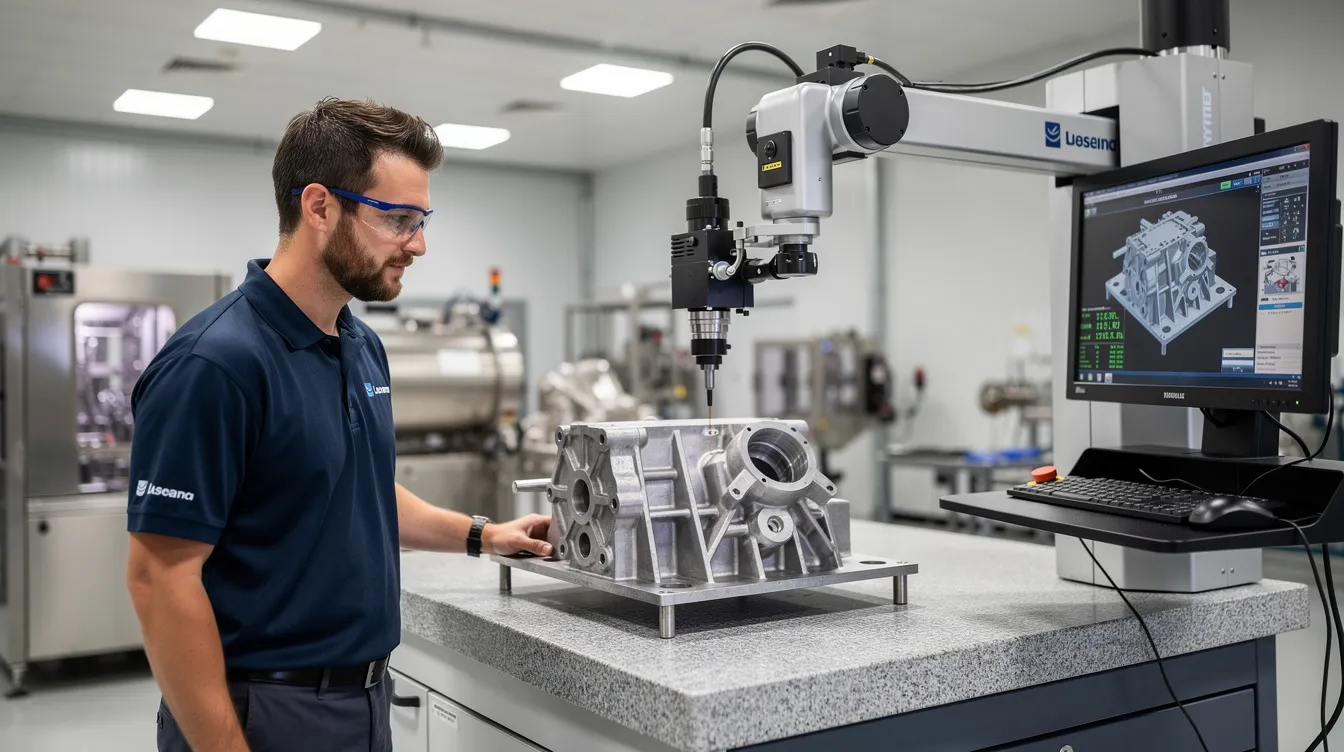
One-stop custom machining services integrate cnc machining, sheet metal fabrication, laser cutting, die casting, and surface finishing under a single ISO system. This means one quality plan, one point of contact, and unified traceability.
-
Single-process job shops may excel at one operation (e.g., cnc milling only) but require you to manage multiple vendors for turning, finishing, and assembly – each with its own quality system and lead time.
-
Complex assemblies or multi-process cnc parts – for example, a gearbox housing requiring machining + anodizing + laser engraving – benefit most from one-stop ISO partners who control the entire production process.
-
Anebon offers a one-stop path from cnc machining and die casting through anodizing, powder coating, and assembly for OEM clients, reducing the number of local suppliers you need to manage.
-
Fewer handoffs between vendors means fewer opportunities for miscommunication, dimensional drift, or documentation gaps.
Cost Efficiency of ISO-Certified CNC Machining in China
Chinese manufacturers deliver ISO-compliant precision parts at price points that surprise many first-time buyers. The cost structure is driven by several factors:
-
Labor and overhead: Lower labor costs in China contribute to overall cost-effectiveness in cnc machining. Combined with dense supply chains where raw material, heat treatment, and finishing are all nearby, logistics overhead stays low.
-
Quantified savings: Buyers typically see 30–60% savings versus equivalent EU or US quotes. CNC routers from China range from $2,580 to $150,000, lower than Western prices for comparable specifications. For a deeper breakdown, this guide to calculating CNC machining cost walks through the key variables.
-
ISO overhead is minimal: Certification adds a small percentage to operating costs but saves money long-term through fewer defects, less rework, and reduced delays. The net effect is consistently positive.
-
Total landed cost matters: Compare total landed cost – including freight, tariffs, import duties, and packaging – rather than only per-part pricing. A 40% unit cost advantage can shrink to 25% after logistics, but that is still significant for precision machined parts.
Lead Times, Logistics, and Export Experience
Understanding lead times from cnc machining manufacturers in China requires breaking the timeline into production and shipping segments:
-
Production: Chinese CNC factories can deliver prototypes in 3 to 5 days. Small batches of 10–100 pieces typically require 7–15 working days. Complex or high volume production runs with tight tolerances and multiple finishing steps may take 3–8 weeks.
-
Air freight: Express shipping from Guangdong hubs to North America or Europe takes 3–7 days.
-
Sea freight: Standard ocean shipping runs 18–35 days depending on port, routing, and customs clearance.
-
Incoterms and documentation: Experienced chinese manufacturers handle FOB Shenzhen, EXW Dongguan, or DDP arrangements and prepare commercial invoices, packing lists, and certificates of origin as standard.
-
ISO-driven scheduling: ISO-style planning and scheduling systems improve on-time delivery by requiring documented production plans, milestone tracking, and capacity planning.
-
Anebon regularly ships cnc machined parts globally and advises clients on the best freight options for prototypes versus production runs.
IP Protection and Data Security at ISO-Certified CNC Factories
ISO 9001 does not guarantee IP protection by itself, but it creates the document control infrastructure that supports confidentiality:
-
ISO-certified cnc companies typically maintain formal procedures for handling customer drawings, CAD files, and proprietary specifications.
-
Always sign NDAs before sharing technical data. Clarify in writing that drawings, CAD models, and CNC programs may be used only for your orders and may not be shared or reused.
-
Serious chinese cnc manufacturers implement restricted server access, non-public tooling storage, and clear separation between customer projects on the shop floor.
-
Ask potential suppliers these questions: Who has access to my files? Where is tooling stored between orders? Can you provide a signed confidentiality agreement before receiving drawings?
-
Anebon works with overseas OEMs and respects IP through NDAs and secure file handling processes as part of its standard onboarding.
Industries That Rely on ISO-Certified CNC Manufacturers in China
-
Automotive: IATF 16949-aligned work for transmission components, sensor housings, and gearbox parts. Precision machining in the automotive industry demands defect prevention at scale.
-
Aerospace: AS9100 suppliers produce turbine fittings, structural brackets, and aerospace components with full material traceability and FAI documentation.
-
Medical devices: ISO 13485-certified shops manufacture surgical tool handles, implant housings, and diagnostic enclosures with controlled surface finishing and biocompatible materials.
-
Electronics and robotics: Heatsinks, connector housings, sensor brackets, and drone frames requiring superior precision and consistent quality in aluminum and engineering plastics.
-
Industrial machinery: Precision fixtures, actuator bodies, and machine parts for automation, packaging, and semiconductor equipment.
-
Anebon’s main customer profile spans overseas OEMs and R&D teams across these sectors, handling a mix of metals and plastics with tight tolerances and flexible volumes.
How to Request a Quote from an ISO-Certified CNC Machining Company
Getting accurate quotes quickly starts with sending complete information. Here is your RFQ checklist:
-
Provide 2D drawings in STEP/IGES format plus a PDF with dimensions, tolerances, and GD&T annotations clearly marked.
-
Specify the material grade (e.g., aluminum 6061-T6, stainless steel 316L), surface finish requirement (e.g., Ra 1.6 µm, anodized), and any compliance needs (RoHS, REACH, material traceability).
-
State quantities for both prototype and production phases, plus your target lead time.
-
Request inspection documentation upfront: certificates of conformance (COC), CMM reports, and material certificates should be standard deliverables.
-
Anebon’s typical quoting process includes file review, DFM feedback within 24–48 hours, and a clear breakdown of machining, finishing, and shipping costs. Design for Manufacturability feedback helps optimize product designs for CNC production before metal is cut.
-
Send your designs directly to Anebon via their quote form or email for fast, detailed responses.
Common Pitfalls When Sourcing CNC Machining in China (Even from ISO Shops)
Even ISO-certified cnc machining factories can deliver problems if specifications are unclear. Watch for these issues:
-
Vague tolerance notes: Drawings that say “tight tolerance” without a number leave interpretation to the machinist. Use ISO 2768-m or ASME Y14.5 standards to define general tolerances explicitly.
-
Missing GD&T: Positional tolerances, flatness, and concentricity requirements must be called out. Without them, a part can be dimensionally correct but functionally wrong.
-
Unclear surface finish requirements: “Smooth” is not a specification. Specify Ra values and finishing methods (bead blast, anodize, polish).
-
Unspecified material variants: “Stainless steel” is not enough – 304 and 316L have different corrosion resistance and cost profiles.
-
No agreed inspection level: Define which dimensions are critical and require CMM measurement versus which can be checked with standard gauges.
-
Anebon actively provides DFM and clarification questions before machining begins, catching ambiguities that would otherwise cause rework or delays.
Sample Workflow with an ISO-Certified CNC Manufacturer in China
A typical end-to-end workflow with an ISO-certified partner follows these control points:
-
RFQ submission: Buyer sends 3D models, 2D drawings, material specs, quantities, and timeline requirements.
-
DFM review: Engineering team reviews designs and provides manufacturability feedback, flagging features that may increase cost or risk.
-
Quotation: Detailed quote issued with line items for machining, finishing, inspection, and shipping.
-
Order confirmation: Contract review per ISO requirements, confirming scope, tolerances, materials, delivery date, and payment terms.
-
Prototype / FAI production: First article produced, fully inspected, and documented. CMM data and photos provided for buyer approval.
-
Buyer approval: Customer reviews FAI report and approves or requests adjustments. Changes are documented under formal revision control.
-
Production run: Batch production begins with in-process inspection at defined intervals. SPC data collected on critical dimensions.
-
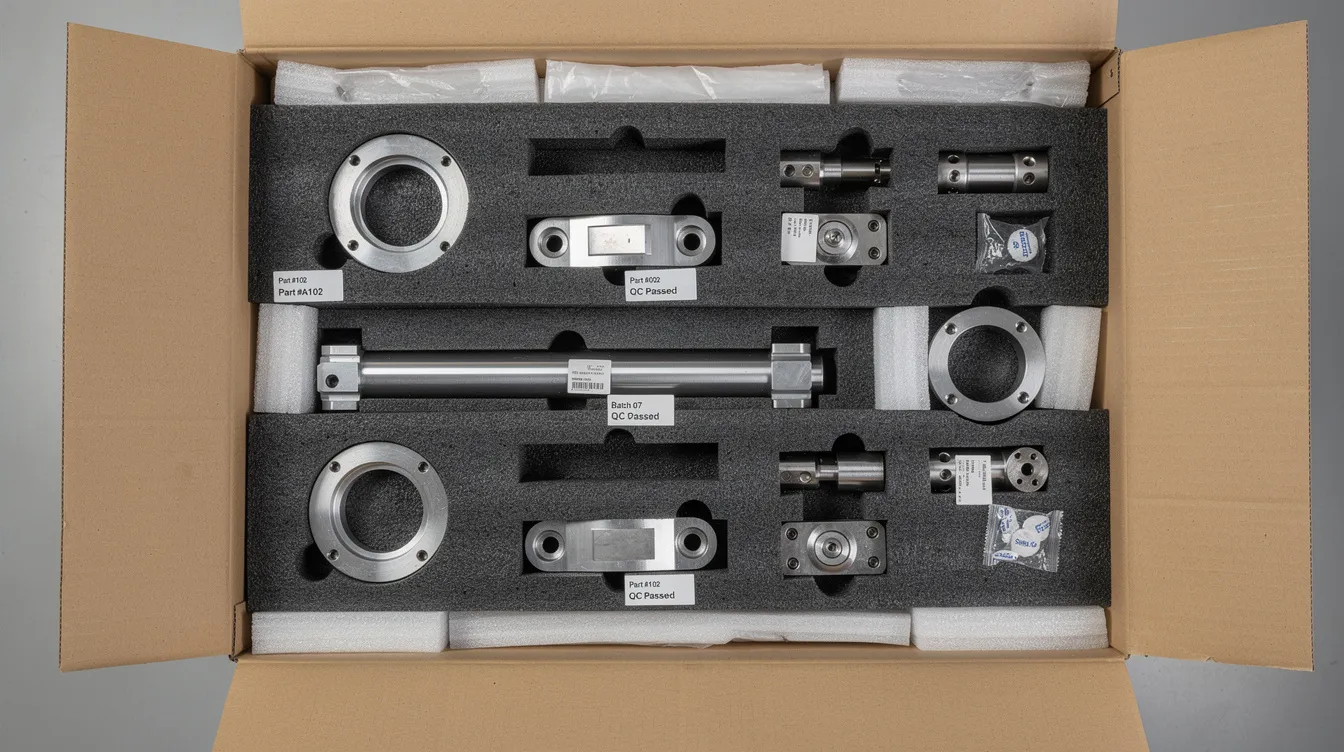
Final inspection, packing, and shipping: 100% final inspection on critical features, packaging per customer specs, and shipment with all quality documentation (COC, CMM reports, material certs).
Overseas OEMs can integrate their own quality approvals – such as PPAP level 3 or ballooned drawings – directly into the factory’s ISO system for seamless alignment.
FAQ: ISO-Certified CNC Manufacturers in China
Here are answers to the questions buyers ask most frequently:
-
How do I know if a cnc machining company in China really follows its ISO procedures? Request the certificate with issue and expiry dates, verify it on the certifying body’s website (SGS, TÜV, etc.), and ask for the most recent surveillance audit summary. Consider a factory visit or virtual audit to observe processes firsthand.
-
Can I start with one prototype part? Yes. Most ISO-certified cnc machining factories welcome prototype orders of 1–5 pieces. Industry data shows 43.3% of all RFQs at audited Chinese shops are for prototype quantities.
-
What inspection reports can I request? Standard deliverables include certificates of conformance, CMM dimensional reports, material certificates with heat/lot numbers, surface roughness measurements, and first article inspection reports. For regulated industries, PPAP packages can also be provided.
-
How fast can I receive cnc parts in the US or EU? Chinese CNC factories can deliver prototypes in 3 to 5 days of production time. Add 3–7 days for air freight or 18–35 days for sea freight. Total door-to-door for a prototype via air: roughly 7–12 days.
-
Do ISO-certified factories handle both metal and plastic cnc machined parts? Yes. Leading shops machine aluminum, stainless steel, titanium, brass, copper, carbon steel, and engineering plastics like PEEK, POM, ABS, and PC – all under the same ISO quality system.
-
What is the difference between ISO 9001 and industry-specific standards like IATF 16949 or ISO 13485? ISO 9001 is the foundational quality system. IATF 16949 adds automotive-specific requirements (defect prevention, APQP), while ISO 13485 adds medical device controls (risk management, biocompatibility traceability). Manufacturers serving specialized industries often hold multiple certifications beyond ISO 9001.
-
Does Anebon handle precision engineering for complex multi-material assemblies? Yes. Anebon provides cnc milling, turning, die casting, sheet metal, and finishing under one ISO system, supporting assemblies that combine metals and plastics with tight tolerances.
Why Anebon Is a Strong ISO-Certified CNC Partner for Overseas OEMs
Anebon Metal Products Limited combines verified certifications, deep technical capability, and over 16 years of export experience into a reliable machining services partner for global OEMs.
-
Certified quality: ISO 9001:2015 and ISO 14001:2015 certified with strict quality control and environmental management practices.
-
Precision engineering capability: Tolerances as tight as ±0.002 mm with a full range of cnc machining, die casting, and sheet metal fabrication under one roof.
-
Flexible volumes: From single machined prototypes through custom low-volume production to high volume production runs.
-
Industry coverage: Aerospace, medical, automotive, electronics, robotics, and industrial machinery – supported by a skilled team of English-speaking engineers.
-
DFM and support: Proactive design for manufacturability feedback, competitive pricing transparency, and consistent quality from prototype approval through full-scale delivery.
Contact Anebon for a quote or technical review of your next project.
Conclusion: How to Confidently Choose ISO-Certified CNC Manufacturers in China
Selecting the right ISO-certified china cnc manufacturer comes down to verifiable systems, proven capability, and clear communication. Outsourcing cnc machining to a certified partner dramatically reduces risk for high precision and regulated applications while unlocking significant cost advantages.
-
Verify ISO certificates directly with the certifying body. Check scope, expiry, and surveillance audit status.
-
Evaluate technical capabilities against your specific part requirements: tolerances, materials, machining centers, and finishing processes.
-
Compare total landed cost – not just unit price – across 2–3 shortlisted ISO-certified cnc machining manufacturers.
-
Prioritize factories with strong communication, DFM support, and documented export experience.
-
Shortlist Anebon alongside your other candidates, send identical RFQs, and compare the quality of responses, documentation, and engineering support.
Share your drawings with Anebon today for a detailed, ISO-compliant quotation backed by precision engineering and consistent quality.