Top ISO Certified CNC Manufacturers in China for Precision Machining
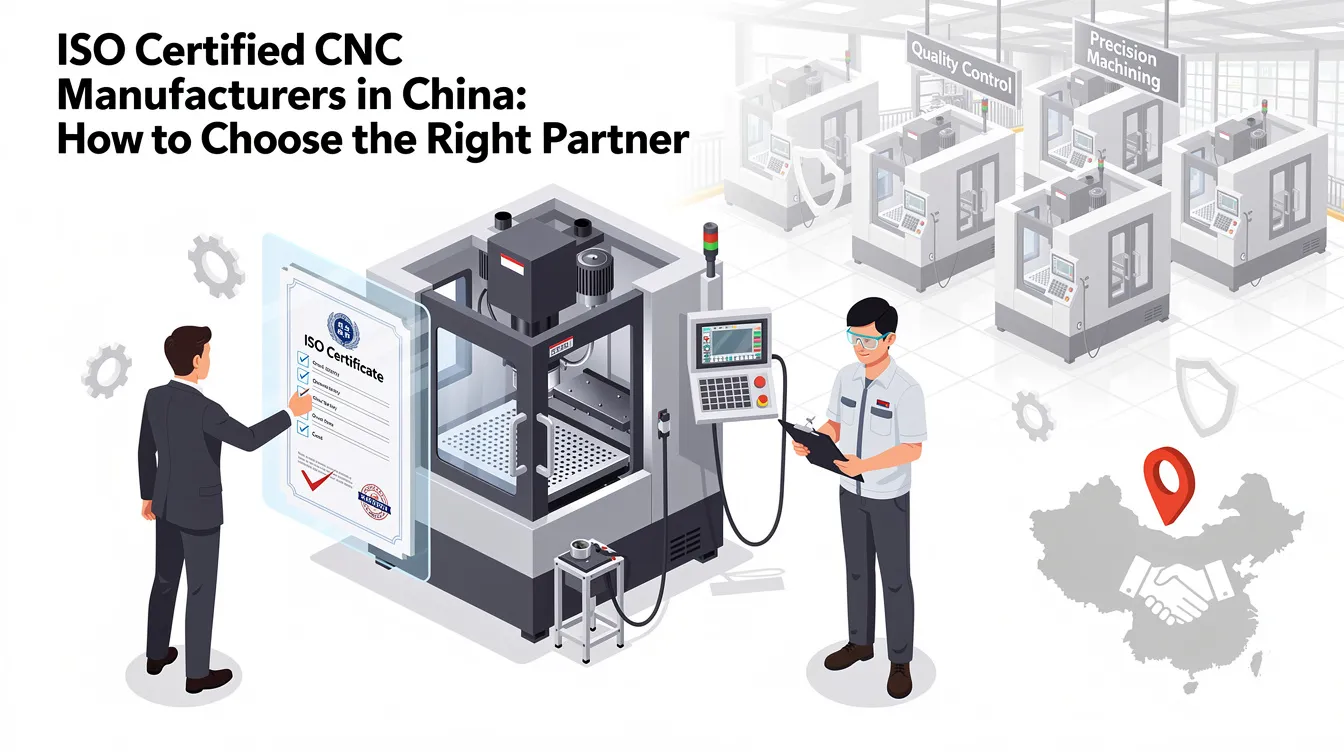
ISO Certified CNC Manufacturers in China: How to Choose the Right Partner
Introduction: Why ISO-Certified Chinese CNC Manufacturers Matter in 2025
China remains the world’s largest producer and consumer of machine tools, with domestic demand reaching roughly USD 157 billion in 2024. Cities like Dongguan, Shenzhen, Suzhou, and Ningbo have developed dense clusters of cnc machining companies that serve overseas OEMs across every major industry. For buyers sourcing cnc machined parts internationally, these hubs offer a combination of scale, speed, and cost efficiency that few regions can match.
But capability alone isn’t enough. ISO 9001:2015 and ISO 14001:2015 have become baseline requirements for serious chinese manufacturers supplying aerospace components, medical devices, automotive brackets, and electronics housings. Without these certifications, a factory is increasingly excluded from tender lists, regardless of its equipment or pricing.
This article provides a practical roadmap for evaluating iso certified cnc manufacturers in china. We start with a quick verification checklist, then go deeper into certifications, capabilities, costs, and logistics. We also examine Anebon Metal Products Limited-an ISO-certified cnc machining manufacturer in Dongguan-as a concrete case study of what to look for in a china cnc machining partner. Whether you need rapid prototyping or high volume production of precision parts, this guide will help you make a confident sourcing decision.
Quick Guide: How to Verify an ISO-Certified CNC Manufacturer in China
Before spending weeks on supplier evaluation, run through these checks in under 10 minutes:
-
Request the ISO 9001:2015 certificate. Confirm it lists the factory’s legal name, full address, effective and expiry dates, and scope (e.g., “precision CNC machining,” “die casting,” “sheet metal fabrication”).
-
Identify the issuing body. Reputable registrars include TÜV, SGS, BSI, DQS, and LRQA. Certification verification involves checking the registration number through official accreditation portals maintained by these bodies.
-
Match names and addresses. The factory name on the certificate should match the business license and your quotation documents. Mismatches often indicate brokers or trading companies, not direct factories.
-
Ask for a recent inspection report. Request at least one CMM dimensional report or material test certificate for cnc parts similar to yours. This proves the quality system is applied, not just documented.
-
Check for industry-specific certifications. If your parts are for aerospace, automotive, or medical industries, ask for AS9100, IATF 16949, or ISO 13485 certificates and verify those as well.
-
Request customer references. Ask for examples of overseas OEM projects, PPAP documentation, or customer audit results.
Understanding the Main ISO Standards for CNC Machining
ISO standards define consistent frameworks for process control, documentation, and continuous improvement in manufacturing. They don’t guarantee zero defects, but they standardize how cnc machining manufacturers identify, prevent, and respond to quality problems. Here’s what each major standard covers.
ISO 9001:2015 – Quality Management for CNC Machined Parts
ISO 9001:2015 ensures quality management in manufacturing processes by requiring documented procedures for every stage-from engineering review and first article inspection to final dimensional verification. In a cnc machining context, this means traceable raw material records, controlled work instructions for each operation, and corrective action systems when defects occur.
Specific examples include first article inspections using CMM to verify critical dimensions within tight tolerances of ±0.005 mm, in-process checks at defined intervals, and sign-off by quality engineers before shipment. Documented inspection procedures enhance the consistency of output in certified manufacturing processes. Most reputable cnc machining services in China, including Anebon, hold ISO 9001:2015 as a minimum, and overseas OEMs now treat it as a non-negotiable entry requirement.
ISO 14001:2015 – Environmental Management in CNC Machine Shops
ISO 14001 certification focuses on environmental management systems. For buyers with ESG commitments or those exporting to regions governed by the EU Green Deal, this standard matters. In practice, it controls coolant recycling, waste segregation of metal swarf and chemical byproducts, emissions from solvent vapors and dust, and proper handling of metals like aluminum, stainless steel, and titanium during surface finishing processes.
Anebon Metal Products Limited in Dongguan is certified to ISO 14001:2015, and many large OEMs now prefer cnc machining in china from suppliers that follow this standard to ensure regulatory alignment across their supply chains.
Industry-Specific ISO and Related Standards (AS9100, IATF 16949, ISO 13485)
Beyond the baseline, several sector standards sit on top of ISO 9001:
-
AS9100 – Adds aerospace-specific requirements for risk management, configuration control, and traceability of flight-critical parts.
-
IATF 16949 – IATF 16949 certification is specific to the automotive industry, requiring process capability studies (Cp/Cpk), PPAP documentation, and control plans. ISO certifications like IATF 16949 apply to automotive manufacturing processes with high consistency demands.
-
ISO 13485 – ISO 13485 certification is crucial for medical device manufacturing, covering cleanroom controls, biocompatible material validation, and batch-level traceability.
Many chinese cnc manufacturers focus on ISO 9001 alone, while a smaller subset also carry these higher-level certifications depending on their target industries.
Why Choose ISO-Certified CNC Machining in China?
ISO-certified chinese cnc machining companies combine cost advantages with repeatable process discipline. CNC machining companies in China export products to over 100 countries, demonstrating the maturity and global acceptance of the supply base. Here’s why this combination works.
Cost Advantage Without Sacrificing Process Control
CNC machining in China is 30–60% cheaper than Western prices for comparable tolerances and materials. Chinese CNC manufacturers offer lower labor costs and economies of scale that reduce per-part pricing, especially for multi-operation milling and turning jobs. Even CNC routers from China cost $2,580 to $150,000, much lower than Western models for similar specifications.
The key insight is that ISO-driven process discipline-setup sheets, tool life records, calibrated inspection plans-ensures quality is maintained despite lower labor costs. A 6061-T6 aluminum housing machined in Guangdong with ±0.025 mm tolerances and anodized finish can arrive at 40% less total landed cost than the same part made in Germany, with equivalent quality documentation.
Advanced CNC Machines and Automation in Chinese ISO Plants
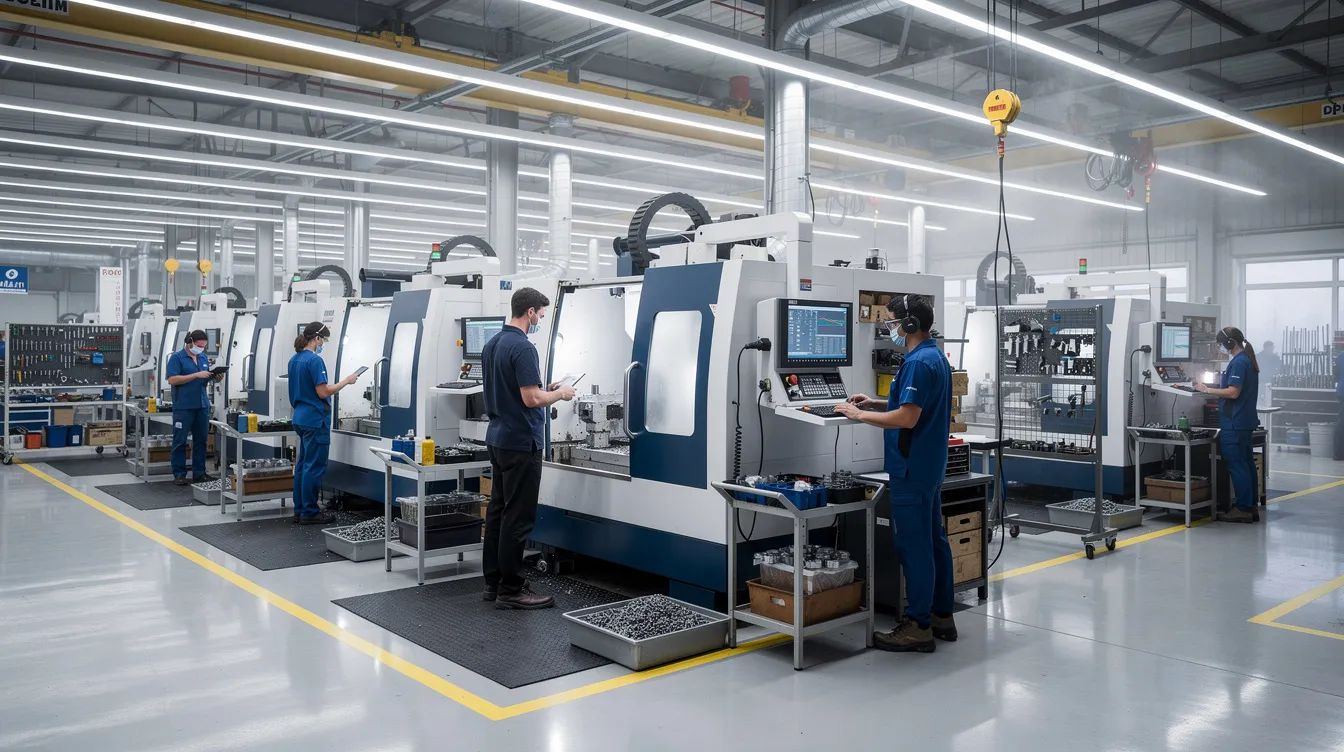
Modern ISO-certified factories operate various cnc machines including 3-axis, 4-axis, and 5-axis machining centers, cnc lathes with live tooling, Swiss-type turning machines, and EDM equipment. Advanced CNC equipment like Mazak, DMG MORI, HAAS, and Fanuc-controlled machining centers is common alongside strong Chinese brands like Haitian and Jingdiao. Advanced five-axis machining is commonly used in Chinese CNC manufacturing for complex geometries.
These plants combine advanced cnc machines with automation-robotic loading, pallet changer systems, and digital SPC monitoring-to keep defect rates low and throughput high. About 38.8% of verified Chinese factories now operate 5-axis machines, and 48.2% offer Swiss precision turning capabilities.
Global Export Experience and Compliance
ISO-certified cnc machining manufacturers in China routinely export to the US, Germany, the UK, Japan, and other markets with strict regulatory expectations. Effective communication and traceability are benefits of working with ISO-certified suppliers that maintain English-speaking engineering teams and documented processes for change control.
Concrete examples include providing RoHS and REACH compliance statements for electronics precision parts, PPAP documentation for automotive supply chains, and full material traceability for aerospace alloys. China’s CNC machining services often provide faster lead times than other countries due to integrated supply chains and dense supplier clusters.
Key Capabilities of ISO-Certified CNC Machining Manufacturers
Leading ISO-certified cnc machining services in China offer integrated production capabilities well beyond basic machining. Many factories-Anebon included-provide die casting, sheet metal fabrication, and surface treatments under one quality system. Chinese CNC firms provide one-stop services including design optimization and surface finishing, reducing logistics complexity for overseas buyers.
Typical tolerance tiers range from ±0.1 mm for general features to ±0.002 mm for critical precision features, with material options spanning metals and engineering plastics. CNC machining supports rapid prototyping and mass production across volume ranges from single prototypes to millions of units.
CNC Milling (3-Axis to 5-Axis)
ISO-certified shops use vertical and horizontal machining centers for prismatic parts such as housings, brackets, heatsinks, and mold components. CNC milling machines create complex geometries using rotating cutting tools, with 3-axis handling simpler shapes and 5-axis work enabling multi-face machining and undercut access.
Realistic tolerance ranges for top-tier chinese cnc milling providers:
|
Feature Type |
Typical Tolerance |
Surface Finish |
|---|---|---|
|
General features |
±0.05–0.1 mm |
Ra 1.6–3.2 µm |
|
Precision features |
±0.01–0.025 mm |
Ra 0.8–1.6 µm |
|
Critical/aerospace |
±0.005 mm |
Ra ≤0.8 µm |
CNC Turning and Mill-Turn
CNC turning machines produce cylindrical parts by rotating the workpiece against stationary or live tooling. Typical applications include shafts, bushings, connectors, and high-volume fasteners. ISO procedures apply to turning through tool offset management, in-process diameter checks, and statistical process control for large scale production runs.
Many china cnc machining factories combine turning and milling in one setup using mill-turn machines, reducing setup variation and improving efficiency for complex shapes. Concentricity tolerances of ±0.005–0.01 mm are standard on high precision turned features.
5-Axis & High-Precision Machining for Complex Parts
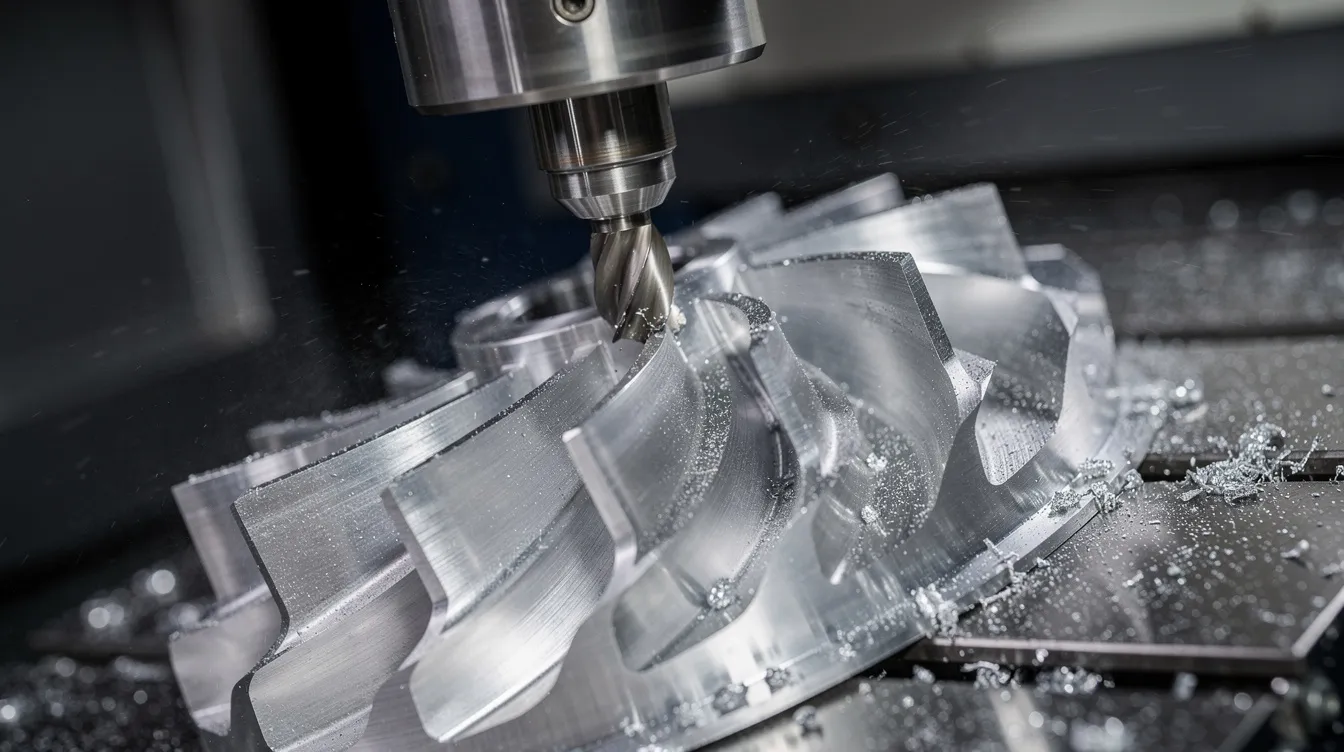
When parts demand multi-face machining in a single setup-turbine impellers, orthopedic implants, intricate optical housings-5-axis cnc machining becomes essential. CNC machining achieves tolerances as tight as ±0.001 mm on critical features in climate-controlled environments with high-stability machine setups.
Chinese CNC firms achieve tight tolerances of ±0.001 mm at competitive pricing, and tight tolerances of ±0.002 mm can be achieved in precision CNC machining services across a broader range of part types. When shortlisting suppliers for complex designs, ask specifically about 5-axis machine count, brands, spindle specifications, and sample projects demonstrating exceptional precision on similar geometries.
Additional Processes: Die Casting, Sheet Metal & Finishing
Many ISO-certified cnc machining manufacturers in China also provide die casting (aluminum, zinc), sheet metal fabrication (laser cutting, bending, welding), and secondary machining. CNC routers cut softer materials like wood and composites for specific applications. CNC laser machines cut and engrave materials with high precision for metal sheets and complex profiles. CNC plasma cutters use a plasma torch for cutting conductive materials like carbon steel in heavier gauge applications.
Common surface finishing options include anodizing, powder coating, sandblasting, chromate conversion, electroless nickel plating, and hard chrome plating-offered under one roof or via audited partners. OEMs benefit from choosing a one-stop ISO-certified supplier to simplify quality management and logistics across the full production process.
How ISO Standards Translate into Day-to-Day CNC Quality
The gap between holding a certificate and running a disciplined shop floor is where real quality lives. ISO requirements translate into checklists, job travelers, training records, and inspection procedures for each batch of cnc machined parts. Here’s what that looks like in practice.
Process Control, Work Instructions, and Setup Validation
ISO-certified shops document each cnc machining process with controlled work instructions covering operation sequences, tool lists, cutting parameters for precise cutting, and fixture drawings. Manufacturers often perform incoming material inspections and final quality verifications as bookend checks on every job.
First article inspection (FAI) procedures at the start of each new job validate all critical dimensions, tooling, and setup before production begins. Engineers and QC sign off on samples, and ISO-certified manufacturers maintain rigorous quality management systems to minimize defects throughout the run. This discipline ensures that repeat orders remain consistent over years of production.
Inspection Equipment and Measurement Routines
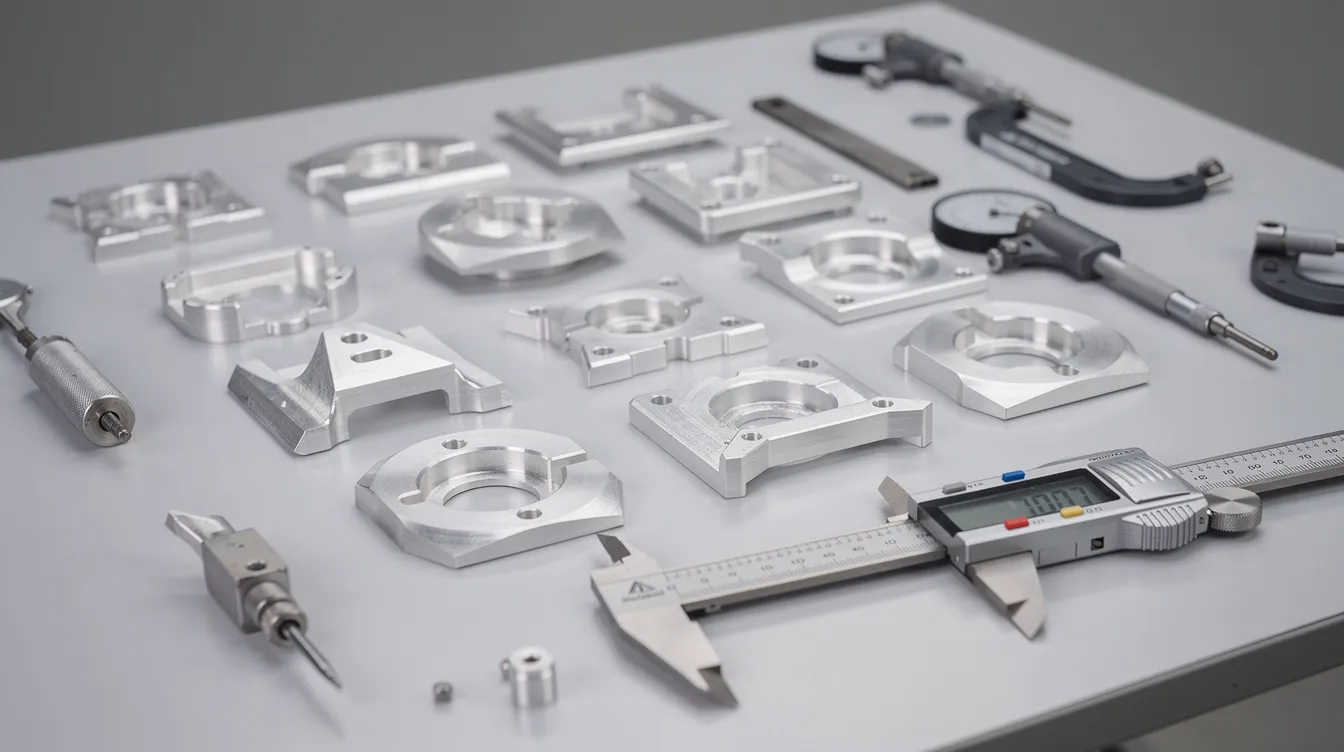
High-end chinese cnc companies use CMMs (Zeiss, Hexagon), optical projectors, height gauges, profilometers, hardness testers, and surface roughness testers for quality testing. ISO certifications indicate compliance with international quality standards and require calibration records, gauge R&R studies, and periodic verification of measurement accuracy.
Anebon, for example, uses CMM inspection to verify ±0.002 mm tolerances on medical and robotics components, with advanced equipment supporting rigorous quality control across every batch.
Traceability, Non-Conformance Handling, and Continuous Improvement
ISO certifications ensure manufacturers follow standardized processes for quality control, including full traceability. Each batch of machined parts links back to raw material heat numbers, machine IDs, operator records, and inspection results. Non-conforming parts are quarantined immediately, root causes analyzed using methods like 5-Why or fishbone diagrams, and corrective actions documented.
Regular internal audits and management reviews drive continuous improvement, pushing lower defect rates and more consistent quality for overseas customers over time.
How to Evaluate ISO-Certified CNC Suppliers in China
Beyond the certificate itself, a structured evaluation helps you choose the right machining vendor. Build a vendor scorecard covering certifications, technical capability, communication responsiveness, competitive pricing, and on-time delivery history.
Checking Certificates, Audits, and Real Compliance
Ask for soft copies of ISO certificates, scope statements, and the last audit summary. Verify that the scope explicitly covers cnc machining, die casting, or sheet metal-not just “general machining” or “assembly.” Encourage occasional third-party audits or on-site visits in hubs like Dongguan or Shenzhen to confirm that ISO processes are followed in practice, not just on paper.
Assessing Engineering Support and DFM Capability
Favor cnc machining services that provide Design for Manufacturing (DFM) feedback, not just quoting. Anebon’s engineers routinely review 3D models and drawings, suggesting adjustments for wall thickness, radii, tolerances, and surface finishes to improve manufacturability and reduce cost. Ask for sample DFM reports or examples of past design optimizations to compare engineering depth and the skilled team behind each supplier.
Evaluating Communication, Lead Times, and Flexibility
Clear English communication and fast RFQ turnaround (24–48 hours) signal a well-organized operation. Chinese CNC manufacturers can deliver prototypes in 3–5 days for urgent projects, with standard prototype lead times of 5–10 days and production lots in 2–4 weeks depending on complexity.
Ask about minimum order quantities, capacity for urgent orders, and how the supplier handles engineering changes during a project. Flexibility on custom machining services and revision management separates good suppliers from great ones.
Anebon Metal Products Limited: ISO-Certified CNC Manufacturing in Dongguan
Anebon Metal Products Limited is an ISO 9001:2015 and ISO 14001:2015 certified cnc machining manufacturer founded in 2010 in Dongguan, Guangdong. Positioned as a B2B/OEM partner for overseas customers, Anebon delivers precision machined parts, die castings, and sheet metal components to industries including aerospace, medical devices, automotive, electronics, robotics, and industrial machinery.
Company Background and Certifications
Since its founding in 2010, Anebon has expanded its cnc machinery, workforce, and quality systems steadily. The company achieved ISO 9001:2015 certification in November 2019 and also holds ISO 14001:2015, with scopes covering precision cnc machining, die casting, and sheet metal fabrication. All certificates are available on request and can be cross-checked with the issuing certification bodies.
Core CNC Machining and Fabrication Services
Anebon’s core cnc services include cnc milling, cnc turning, 5-axis machining, surface grinding, wire and sinker EDM, die casting (aluminum, zinc), and sheet metal fabrication with laser cutting, bending, and welding. CNC machining encompasses techniques like milling, turning, and 5-axis machining across the full product lifecycle. The company supports rapid prototyping through to full-scale production, including custom tooling and fixtures, with tolerance capabilities down to ±0.002 mm on precision cnc machined parts.
Materials, Surface Treatments, and Applications
Material options in CNC machining include metals like aluminum, titanium, and engineering-grade plastics. Anebon regularly machines:
|
Category |
Materials |
|---|---|
|
Aluminum alloys |
6061, 6082, 7075 |
|
Stainless steels |
304, 316, 17-4PH |
|
Other metals |
Tool steels, titanium, brass, copper, carbon steel |
|
Plastics |
POM, PEEK, ABS, PC |
Surface treatments include anodizing (Type II, Type III), powder coating, bead blasting, hard chrome, electroless nickel plating, passivation, and custom surface finishing through in-house processes and certified partners. Application examples span medical device housings, automotive brackets, drone structural parts, and electronics precision components.
Quality Assurance, Metrology, and Documentation
Anebon’s quality workflows include incoming material inspection with verified material certificates, in-process checks at defined intervals, and final inspection with CMM and optical measurement. Control plans and sampling plans based on ISO 9001 principles ensure consistent quality across batches.
Available documentation includes material certificates, RoHS/REACH declarations, full inspection reports, and customized quality agreements for strategic clients. Chinese CNC companies offer a wide range of material options paired with thorough documentation to support final assembly and regulatory compliance at destination.
Cost, Lead Time, and Logistics When Sourcing ISO CNC in China
Understanding total landed cost-not just unit price-is essential when outsourcing cnc machining to China. Typical Incoterms include EXW, FOB Shenzhen, CIF, and DDP, each shifting risk and cost differently between buyer and supplier.
Pricing Structure and RFQ Best Practices
Chinese cnc machining manufacturers typically build quotations from material cost, machining time, setup and fixtures, finishing, inspection, and packing. For clean apples-to-apples comparison, provide 3D models (STEP, IGES), fully dimensioned 2D drawings, expected quantities (prototype vs. annual usage), and required certifications.
ISO-certified factories may quote slightly higher than non-certified shops, but deliver lower total cost of ownership due to fewer defects, less rework, and faster approvals. Rapid prototyping is essential for testing new product designs before committing to large scale production.
Lead Times, Capacity Planning, and Scaling from Prototype to Production
Typical lead times for ISO-certified cnc machining services in China: machined prototypes in about 5–7 days (some suppliers deliver in 3–5 days for simpler parts), small batches in 10–15 days, and larger runs in 3–5 weeks. Rapid prototyping supports both low-volume and high-volume production ramps. Many CNC manufacturers in China can handle production runs from 1 to 5 million parts for high volume production programs.
Start with prototypes and pilot runs to validate quality, then scale to regular production orders. Align your forecast with the supplier’s capacity planning to secure machine tools time and avoid bottlenecks during product launches.
Shipping, Customs, and Documentation
Common shipping methods for cnc machined parts include express air (DHL, FedEx, UPS) for prototypes and urgent custom parts, and sea freight or consolidated air cargo for larger volumes. Key documents include commercial invoice, packing list, HS codes, certificate of origin, and test reports required by the destination country.
Factor in customs duties, VAT, and brokerage fees when comparing china cnc machining quotes to local suppliers. The price difference often remains substantial even after all import costs are included.
Protecting Designs and Managing Risk with Chinese ISO CNC Partners
Intellectual property protection and long-term reliability are legitimate concerns when working with any overseas supplier. ISO processes, NDAs, and controlled document systems provide layers of protection that reduce both IP and quality risks.
NDAs, IP Protection, and Controlled Access
Sign bilingual (English/Chinese) NDAs and clearly state ownership of CAD models, drawings, and tooling in supply agreements. Serious ISO-certified cnc machining manufacturers-like Anebon-restrict access to customer files using controlled servers and limited user permissions. For highly sensitive assemblies, consider dividing complex designs into subcomponents across multiple suppliers so no single factory holds the full product architecture.
Supplier Diversification, On-Site Audits, and Long-Term Relationships
Build a small panel of 2–3 ISO-certified cnc companies per critical part to reduce single-supplier risk. Periodic on-site visits in Dongguan, Shenzhen, or other hubs-or hiring third-party auditors-validate ongoing compliance with ISO and customer-specific requirements.
Stable, multi-year relationships with ISO-certified suppliers typically result in better pricing, priority scheduling, and continuous quality improvement through precision engineering collaboration.
Frequently Asked Questions About ISO-Certified CNC Manufacturers in China
What Certifications Should I Require from a Chinese CNC Manufacturer?
ISO 9001:2015 is the minimum for any credible cnc machining manufacturer. Add ISO 14001:2015 if environmental responsibility matters to your supply chain. For aerospace, require AS9100. For automotive, IATF 16949. For medical device manufacturing, ISO 13485. Anebon is ISO 9001:2015 and ISO 14001:2015 certified, suitable for high precision industrial and commercial applications across multiple sectors.
What Tolerances Can ISO-Certified CNC Shops in China Achieve?
Standard features typically hold ±0.05–0.1 mm. Precision features achieve tolerances of ±0.01–0.025 mm. Premium shops like Anebon can reach ±0.002 mm on critical features with appropriate design and process control, and Chinese CNC companies offer precision machining with tolerances as tight as ±0.001 mm for ultra-critical applications. Factors influencing achievable tolerance include material, geometry, part size, high speed cutting parameters, and surface finish requirements. Discuss tolerance stacks with the supplier’s engineering team during DFM review.
Can I Order Just a Few Prototype Parts from an ISO-Certified Factory?
Yes. Many ISO-certified china cnc machining companies, including Anebon, accept low-quantity prototype orders as low as 1–5 pieces. CNC companies in China offer rapid prototyping for various industries, and Chinese CNC firms utilize advanced technology for rapid prototyping to validate designs quickly. Prototype orders test both the design and the supplier’s capability before switching to higher-volume production. Share expected annual volumes to help the supplier quote more accurate prototype and production pricing.
How Do I Start a Project with Anebon Metal Products Limited?
The engagement flow is straightforward: send your RFQ with 3D files (STEP, IGES, STL) and/or dimensioned 2D drawings (PDF, DWG, DXF). Anebon’s engineering team responds within 24–48 hours with a quotation and DFM feedback. After reviewing custom solutions and confirming specifications, approve samples before mass production begins.
Whether you need a single machined prototype, injection molding consultation, or multi-axis machines for complex production runs, Anebon’s advanced capabilities and ISO-certified quality management system are ready to support your project. Send your 3D model and drawing today for an ISO-compliant quotation and technical review from Anebon’s precision engineering team.