Top High Precision Die Casting Suppliers Near Me for Quality Solutions
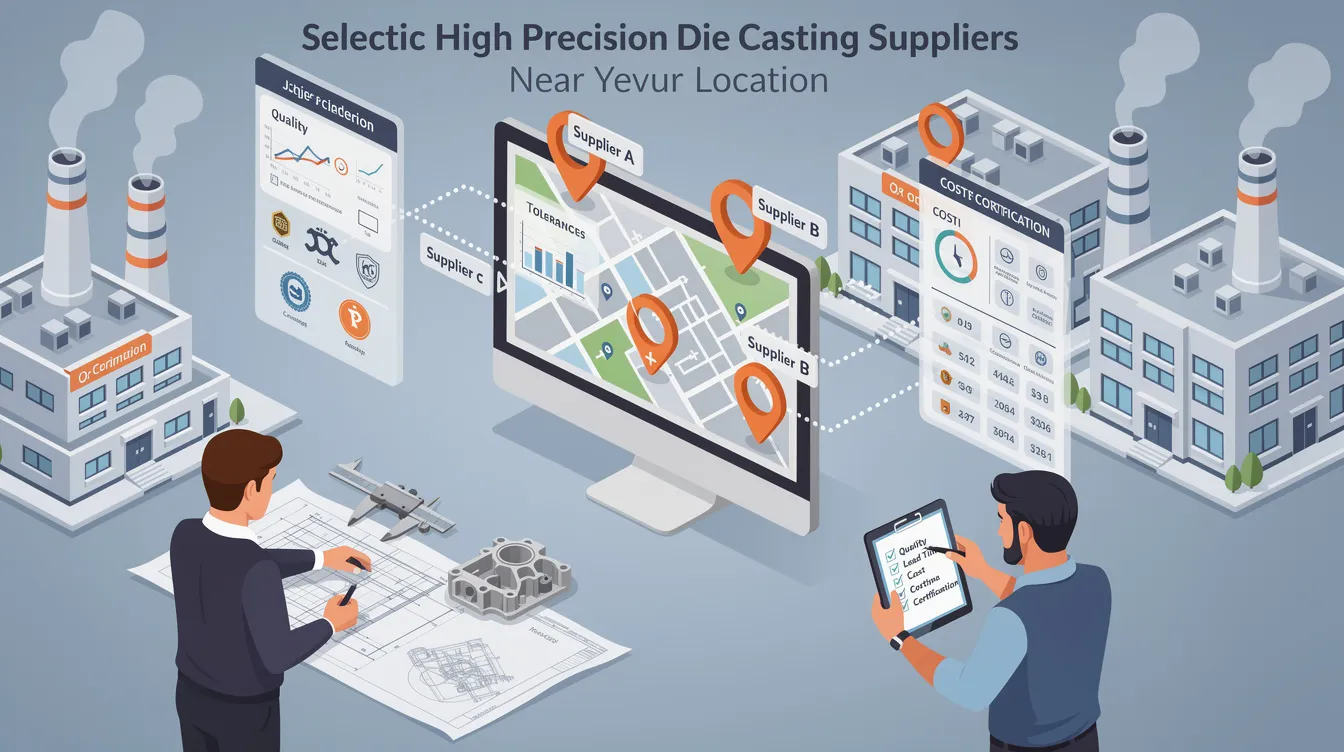
High Precision Die Casting Suppliers Near Me: How to Choose the Right Partner
When OEMs and design engineers search for high precision die casting suppliers near me, the results rarely tell the full story. In 2026, “near me” no longer means strictly local. It means the most capable, certified, and cost-effective partner you can reach with predictable logistics-whether that partner is across town or across the Pacific.
Buyers typically need aluminum die castings and zinc die cast components with tight tolerances, complex geometry, and demanding surface requirements for the automotive industry, aerospace, medical devices, and electronics. High-precision die casting suppliers deliver complex components for major industries, and die casting parts are often used in the automotive and aerospace industries where failure is not an option.
Anebon Metal Products Limited, a factory-direct precision casting company headquartered in Dongguan, China since 2010, serves customers in North America and Europe with high pressure aluminum die casting, cold chamber die casting, and integrated cnc machining. This guide walks you through how to evaluate casting services providers-local or overseas-by focusing on precision, certifications, and total landed cost rather than literal geographic distance.
What Makes a “High Precision” Die Casting Supplier?
High precision in the die casting process means dimensional tolerances held consistently across tens of thousands of shots, controlled porosity, and repeatable mechanical properties. It goes well beyond “close enough.”
Typical tolerances in die casting range from +/-0.003″ to +/-0.005″ per inch for standard as-cast features. For critical mating surfaces and bearing seats, die casting tolerances can be as tight as ±0.001 inches when secondary operations like CNC machining are applied. Anebon supports machining down to ±0.002 mm on features where precision aluminum performance is non-negotiable.
What separates an ordinary casting company from a true precision die casting operation?
-
Mold flow simulation and cavity balancing before cutting steel molds
-
Real-time process monitoring of injection pressure, die temperature, and cooling
-
Statistical Process Control that helps maintain tight tolerances throughout production
-
Coordinate measuring machines used for dimensional inspection on first articles and in-process sampling
-
Tool life management that tracks die wear, because it directly affects dimensional accuracy over time
Die casting can produce parts with complex geometries and thin walls-EV inverter housings, medical pump bodies, robotics gearboxes, and telecom heat sinks with fine fins for heat dissipation. These components demand an aluminum die approach with strict porosity and structural integrity controls.
A reliable supplier publishes process capability metrics (Cp, Cpk ≥ 1.33), maintains in-house metrology, keeps traceable quality records, and holds ISO certifications.
Cold Chamber Die Casting vs Other Processes
Cold chamber die casting is the dominant process for aluminum alloys and other higher melting point metals. In a cold chamber system, molten metal is melted in a separate furnace and ladled into the injection chamber for each shot, then forced into steel molds under high pressure. This prevents molten aluminum from attacking furnace components the way it would in a hot chamber setup.
Hot chamber die casting keeps the injection mechanism immersed in the molten bath. Die casting uses hot chamber for lower melting point alloys like zinc, and hot chamber processes are faster because the metal flows automatically into the shot chamber without ladle handling.
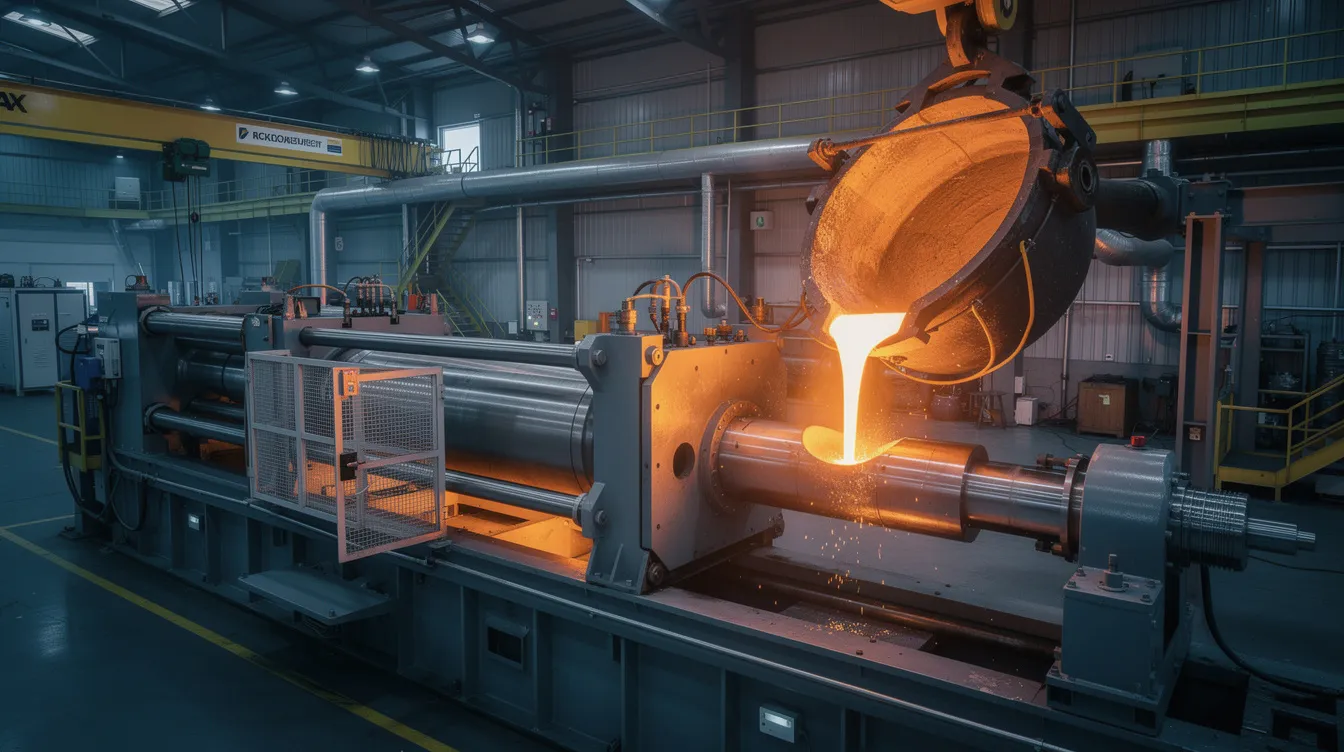
Here’s a practical comparison:
|
Feature |
Cold Chamber Die Casting |
Hot Chamber Die Casting |
|---|---|---|
|
Alloys |
Aluminum, brass, some magnesium |
Zinc, tin, lower melting point alloys |
|
Injection pressure |
Higher (up to 20,000+ psi) |
Moderate |
|
Cycle time |
30–90 seconds (aluminum) |
2–30 seconds (zinc) |
|
Best for |
Larger structural cast parts |
Small, high-volume zinc die cast components |
|
Machine tonnage |
250–2,500 tons |
Typically smaller |
Practical example: An automotive transmission housing produced via cold chamber die casting in A380 aluminum requires robust H13 steel tooling, multiple cavities, and extended cooling cycles. Meanwhile, a miniature zinc connector for electronics runs in a hot chamber system with ultra-high shot counts and zinc die casting solutions optimized for speed.
Aluminum offers good strength-to-weight and corrosion resistance. Zinc allows for intricate designs and has excellent finishing capabilities. Magnesium provides superior strength-to-weight but requires specialized handling. High-pressure die casting is used for intricate, high-volume parts regardless of which chamber die casting method is chosen, and die casting offers high strength-to-weight ratios with metals like aluminum.
Anebon configures its die casting machines across a range of tonnages to handle alloy grades like A380, A383, and ADC12 for cold chamber production-the exact setup buyers need when searching for precision cold chamber die casting suppliers.
Key Capabilities to Look for in Local and Overseas Suppliers
Location alone doesn’t guarantee quality. Buyers should vet capabilities across tooling, casting, machining, and finishing before committing. Here’s a capability checklist for any high precision casting services provider:
-
Custom die and tool design: DFM support, mold flow analysis, cooling layout optimization. Design for Manufacturability reviews identify manufacturability concerns before steel is cut, and Design for Manufacturing services help optimize part design before production.
-
Die casting machines range: Sufficient tonnage for your part size, both cold chamber and hot chamber options, and appropriate automation level.
-
Integrated CNC machining: 3-axis, 4-axis, and 5-axis capacity for critical surfaces-eliminating the need for a separate machine shop.
-
In-house finishing: Anodizing, powder coating, wet painting, plating, and other value-added services that include CNC machining and surface treatments.
-
Quality systems: ISO 9001 and IATF 16949 are important certifications for die casting suppliers. Process control is critical for managing venting in die casting and maintaining consistency.
Combining die casting and CNC machining under one roof reduces lead times and improves tolerance stack-ups. When you split work between a casting company and a separate machine shop, alignment errors and logistics delays multiply.
Anebon exemplifies this integrated model: founded in 2010 in Dongguan, factory-direct, with rapid prototyping through full production, ISO 9001:2015 and ISO 14001:2015 certified, and tight tolerance CNC machining all in house capabilities.
Evaluating “Die Casting Suppliers Near Me” vs Factory-Direct Overseas
When you weigh domestic options-say, american precision die casting companies or firms like ryobi die casting-against a specialized overseas factory like Anebon, several trade-offs emerge. Selecting a high-precision die casting supplier requires evaluating technical expertise, not just proximity.
|
Factor |
Local / Domestic |
Factory-Direct Overseas (e.g., Anebon) |
|---|---|---|
|
Lead times |
3–6 weeks tooling (simple molds) |
4–6 weeks tooling; 6–10 weeks complex |
|
Tooling cost |
Higher labor costs |
Typically 30–50% lower |
|
Part price |
Higher per-piece at volume |
Lower at scale; amortized shipping |
|
Communication |
Same time zone, in-person visits |
English-speaking engineers, digital tracking, weekly updates |
|
Verification |
Easier plant visits |
Virtual tours, export documentation, certifications |
Comparing total cost of ownership is vital when evaluating die casting suppliers. Factor in tooling amortization, part price, shipping, tariffs, and quality risk to calculate total landed cost.
Many “near me” search results are brokers or distributors, not actual die casting companies with their own cold chamber equipment. Always verify whether a supplier is factory-direct by asking for photos of their casting cells and CNC machining centers.
The most reputable suppliers vary by global footprint and casting materials. A practical hybrid approach works well: prototype locally when speed is critical, then scale to a high precision overseas partner like Anebon for mid range volume production and high volume production once the design is frozen.
How to Qualify a High Precision Die Casting Partner
Supplier qualification should be structured across four dimensions: technical, quality, commercial, and logistics.
Technical review:
-
Confirm alloy range (aluminum and zinc die casting materials, specialty alloys if needed), wall thickness capability, maximum shot size, and supported cold chamber machine tonnage.
-
Material expertise is essential when selecting die casting suppliers-ask about experience with your specific alloy.
Tooling review:
-
Who owns the custom die? How is maintenance handled? What’s the expected tool life for aluminum die castings and zinc parts?
-
Tooling quality directly affects part quality and tool life in die casting.
Quality review:
-
Request control plans, PPAP or FAIR samples, and recent CMM reports for similar cast parts.
-
X-ray inspection detects internal defects in die casting components-confirm your supplier has this capability.
-
Review certifications carefully. In the industry, Bunty LLC is AS9100D and ISO 9001:2015 certified. The Federal Group is certified under ISO 9001:2015 and Quality Systems Basics. Twin City Die Castings holds IATF 16949:2016 certification for automotive quality management. J&M Precision Die Casting is ISO 9001:2015 certified for quality management. California Die Casting is ISO 9001:2015 certified for quality management systems. A&B Die Casting is ISO 9001:2015 and IATF 16949:2016 certified. Quality assurance and certification is crucial for die casting suppliers.
Operational review:
-
Check automation level, secondary operations capacity (CNC, finishing), and shift patterns for peak demand.
Ask for 2–3 real reference projects with photos and measured data-not generic marketing. Anebon’s process includes DFM feedback within 24–48 hours, die design approval, T1 sample timing, and iterative optimization before mass production.
Custom Die and Tooling Considerations
Tooling decisions-custom die design, cavity count, steel selection-have the biggest impact on both part quality and tooling cost. Here are the key decisions to align on with your die caster:
-
Steel type: H13 hot work steel for high-volume aluminum (100,000+ shots); P20 for rapid or prototype tooling with shorter life. Rapid tooling uses cost-effective aluminum or soft steel molds when you need speed over longevity.
-
Cavity and slide design: Multi-cavity dies lower per-part cost at volume but raise complexity. Side actions enable undercuts in complex projects.
-
Gating, runner, and overflow design: Critical for porosity control, cosmetic surfaces, and structural integrity of the final production parts.
-
Provisions for changes: Modular inserts or family tools reduce cost for future engineering revisions.
A high precision partner uses simulation and DFM to refine the aluminum die before cutting steel-critical for thin-wall electronics housings, medical enclosures, or automotive brackets. Rapid prototyping allows for real die-cast parts before mass production, and prototyping can utilize standard alloys like A380 aluminum for form-and-fit validation.
Tooling lead times typically run 4–6 weeks for moderate complexity and 6–10 weeks for large structural molds. Die manufacturing at this level becomes cost-effective versus CNC-only production once volumes exceed roughly 1,000 parts.
Integrating CNC Machining with Die Casting
Many high quality aluminum die castings are produced as net shape or near-net-shape castings, then finished by CNC machining on critical features. This combination delivers delivering high quality parts at a fraction of the cost of machining from billet.
Features typically machined after casting include:
-
Tight-tolerance bores and bearing seats for mechanical assembly
-
Sealing faces and O-ring grooves for hydraulic or pneumatic components
-
Threaded holes and datum surfaces for assembly alignment
-
Flat mating surfaces requiring superior quality finish
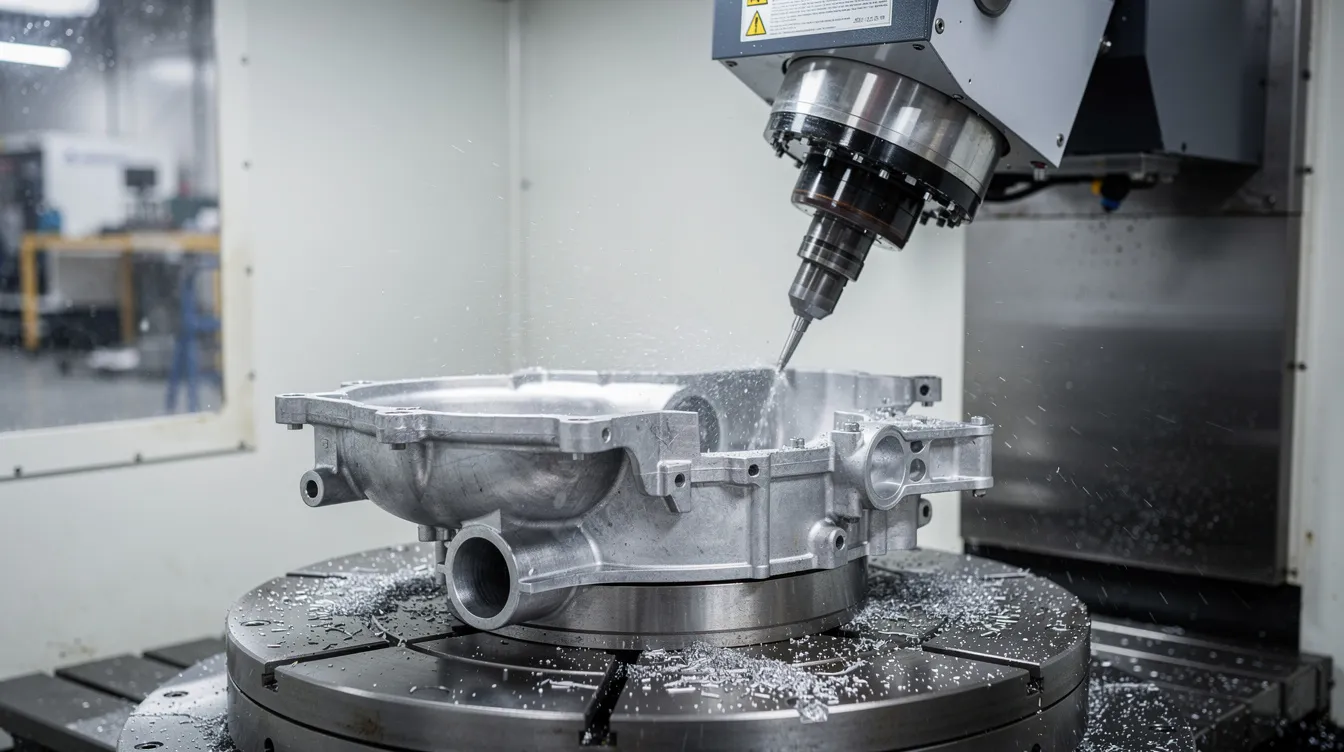
A supplier like Anebon, with advanced technology including 5-axis machining, can hold extremely tight tolerances on cast parts that would be impossible from casting alone. Aluminum die castings offer excellent strength-to-weight ratios, and combining them with precision machining unlocks performance that neither process achieves independently.
Recommend to your supplier which dimensions can be held “as cast” and which require machining. A capable engineering team will help define the optimal split to control cost and efficient production flow.
Surface Finishes and Post-Processing for Cast Parts
Precision die casting is about more than dimensions-corrosion resistance, appearance, and functional surfaces matter equally. Die casting can achieve surface finishes that protect against corrosion when paired with the right post-processing.
Common finishing options for modern aluminum castings:
-
Shot blasting or bead blasting for uniform matte surfaces
-
Anodizing (Type II or III) for corrosion protection and aesthetics
-
Powder coating and wet painting for brand colors and environmental protection
-
Plating (chrome, nickel) for wear resistance or decorative requirements
A full-service casting corporation can also offer impregnation for sealing porosity, heat treatment, deburring, and mechanical assembly-delivering ready-to-install cast components.
Example workflows: An electronics housing might receive bead blasting, anodize, then laser marking. An automotive bracket gets e-coating after casting and machining for maximum corrosion resistance in harsh environments. Anebon manages these finishing sequences as part of its integrated production processes.
Industries That Rely on High Precision Aluminum Die Castings
Virtually every modern sector uses high precision cast parts produced with cold chamber aluminum die casting or related methods. Here are the key industries and typical components:
-
Automotive and EV: Transmission housings, inverter housings for EV chassis, structural brackets, steering components
-
Aerospace and defense: Lightweight structural castings, avionics housings, drone frames (often compared against investment casting for cost and volume)
-
Medical devices: Pump bodies, imaging system frames, robotic surgery components
-
Industrial machinery and robotics: Gearboxes, motor housings, end-effectors
-
Electronics and telecom: Heat sinks with fine fins, base station enclosures, shielding components
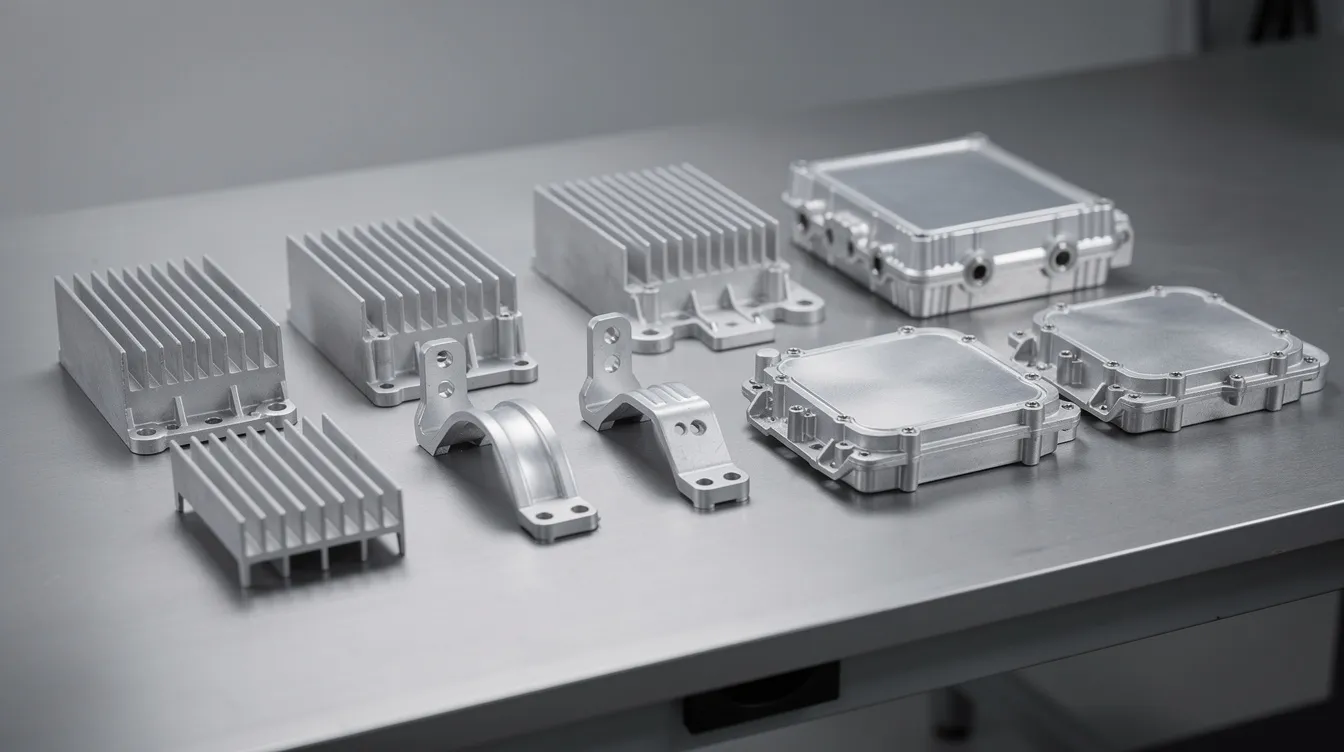
Anebon serves overseas OEMs and R&D teams across these sectors, handling both rapid prototypes and high volume production from a single digital thread. Regulatory expectations in these industries include full traceability, RoHS/REACH compliance, and material certificates-all standard deliverables from industry leaders in precision casting.
Cost, Lead Time, and Minimum Order Quantities
Die casting economics hinge on tooling investment versus per-part cost. High precision requirements may slightly increase both tool and processing costs, but the payoff at volume is substantial.
-
Tooling amortization: Custom aluminum die tools spread their cost over thousands of shots. Die casting is cost-effective for production runs over 1,000 units, and it is suitable for production runs of over 1,000 parts where per-piece economics outperform CNC-only approaches.
-
Lead times for 2026: DFM and die design (1–2 weeks), tool build (4–6 weeks moderate, 6–10 complex), T1 samples and correction (1–2 weeks), finishing and QA (1–2 weeks). Total: roughly 7–16 weeks from order to first delivered production parts.
-
Cycle time advantage: Cold chamber aluminum die casting cycle times run 30–90 seconds per shot at mass production scale-far faster than machining from billet for equivalent geometries.
Rapid prototyping can reduce lead times to as fast as 10 days using rapid casting approaches, and rapid prototyping supports form-and-fit validation for designs before committing to permanent mold tooling. While die casting shines from 1,000+ parts upward, Anebon can support bridging runs via hybrid casting and CNC strategies for volumes in the hundreds.
Request multiple volume break quotes (e.g., 500 / 2,000 / 10,000 units) to understand price curves and choose the right manufacturing partner and production strategy.
How to Search and Shortlist Suppliers “Near Me”
Turn a generic “high precision die casting suppliers near me” search into a focused shortlist with these tactics:
-
Use combined search terms: “aluminum die casting cold chamber + your city/region” or “precision die casting + ISO 9001 + [your industry]“
-
Differentiate factories from brokers by looking for real photos of high pressure die casting cells, cold chamber machines, and in-house CNC machining centers
-
Check for certifications, export experience, and published case studies with measured data-not generic marketing phrases from a proven track record claim
-
Look for evidence of custom aluminum capabilities and in house capabilities rather than resold cast parts
Send qualifying questions in your initial RFQ: tonnage range, typical alloys, capability to hold specific tolerances, experience with similar cast components, and whether they handle secondary operations and tool manufacturing internally.
Many successful OEMs now consider Asia-based partners like Anebon as part of the “near me” ecosystem because of predictable lead times, digital communication, and global logistics support.
Why OEMs Partner with Anebon Metal Products Limited
Anebon is a precision CNC machining and die casting specialist headquartered in Dongguan, Guangdong, China, serving overseas OEM clients since 2010. Here’s why buyers who start by searching for local options often end up choosing Anebon:
-
High precision aluminum die casting using cold chamber machines, plus zinc and magnesium die casting capabilities through integrated partner networks
-
Integrated CNC machining (3-axis, 4-axis, 5-axis) achieving tolerances as tight as ±0.002 mm on critical features
-
Rapid prototyping to production: support for one-off prototypes, bridge tooling, and high volume production from a single engineering team
-
ISO 9001:2015 and ISO 14001:2015 certified with robust quality assurance including CMM inspection, full traceability, and superior quality documentation
Anebon handles demanding industries-aerospace, medical, automotive, electronics, robotics-acting as a single-source casting corporation for die design support, tooling, casting, machining, and finishing. Even buyers specifically searching for american precision die casting often engage with Anebon once they compare capability, price, and lead times versus domestic options. The right manufacturing partner is the one delivering high quality parts consistently-not just the closest pin on a map.
Next Steps: Getting a Quote and Moving from Concept to Production
Ready to move forward? Here’s a simple engagement workflow:
-
Prepare your files: CAD models, 2D drawings with tolerance callouts, and expected annual usage for each cast part
-
Share functional requirements: Strength, weight, thermal performance, and operating environment so suppliers can recommend optimal alloys and die casting process selection
-
Request DFM feedback: On wall thickness, draft angles, fillets, and gating to reduce tooling risk and improve yield
-
Align on validation: T1/T2 samples, PPAP, capability studies before committing to final production tooling
Anebon typically responds to RFQs within 24–48 hours for most aluminum die castings, including DFM suggestions and a preliminary process route covering CNC machining and finishing. Whether you need custom die solutions for complex projects or straightforward high quality parts at volume, the most capable and reliable partner may not be the closest geographically-but it will be the one that earns your trust with precision, transparency, and results.
Submit your drawings to Anebon today for a detailed, factory-direct quotation and technical review.