Top High Precision Die Casting Suppliers in China You Should Know
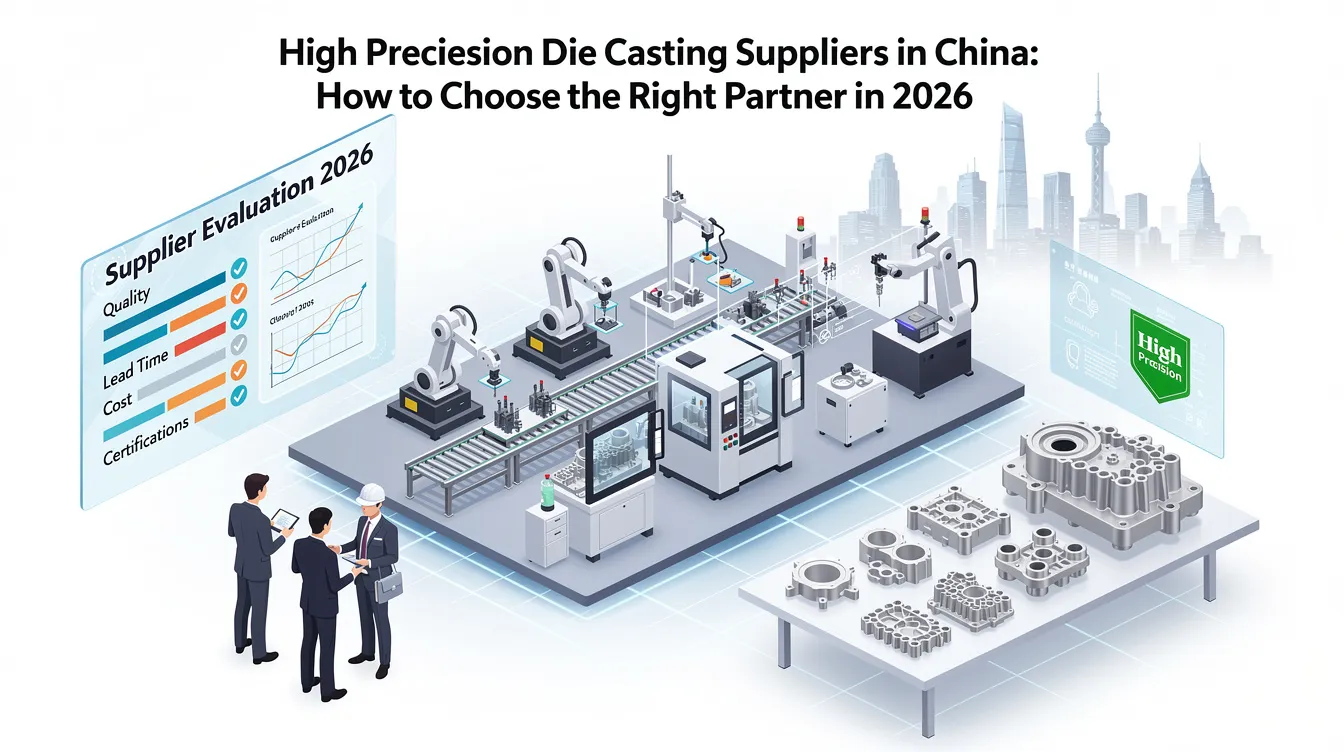
High Precision Die Casting Suppliers in China: How to Choose the Right Partner in 2026
Selecting the right die casting supplier can make or break your product program. China now accounts for an estimated 40–65% of global non-ferrous die casting output, and the country’s capabilities have advanced sharply over the past five years. This guide walks you through what “high precision” actually means in 2026, what to evaluate when choosing a casting manufacturer, and how to reduce risk when sourcing aluminum die casting parts from Chinese suppliers.
Overview: High-Precision Die Casting in China Today
High precision die casting goes beyond standard tolerances. It refers to a repeatable casting process that holds dimensional accuracy within ±0.05 mm as-cast and tighter after secondary machining, backed by documented process capability and traceability. China has become a global hub for this work thanks to scale, competitive tooling costs, and rapidly modernizing equipment.
The focus in this article is on aluminium high pressure die casting, supported by cnc precision machining, surface treatment, and heat treatment. Aluminum die casting is ideal for mass production of components across automotive, electronics, medical, and industrial sectors.
Anebon Metal Products Limited is an ISO 9001:2015 and ISO 14001:2015 certified OEM manufacturer in Dongguan, Guangdong. Founded in 2010, Anebon specializes in tight-tolerance die casting and precision machining for overseas clients who need everything from rapid prototypes to full-volume production.
If you are looking for a trusted die casting supplier in China, the sections below cover exactly what to evaluate, what “high precision” means in measurable terms, and how to structure a successful sourcing engagement.
What Makes a “High Precision” Die Casting Supplier?
Precision is not a marketing label. It is quantified through dimensional accuracy, process capability indices (Cpk ≥ 1.33 for standard features, ≥ 1.67 for critical ones), repeatability across production runs, and full traceability of alloy materials and process parameters. A demonstrated ability to maintain tight dimensional tolerances is crucial in die casting and separates capable suppliers from those who simply own machines.
-
As-cast tolerances in aluminium HPDC typically range from ±0.05 to ±0.10 mm on non-critical dimensions. After cnc machining, critical features can be held to ±0.005–0.01 mm. Anebon’s capability extends down to ±0.002 mm on critical CNC datum surfaces.
-
Die casting mold quality is foundational. Proper gating, venting, and thermal balance in the mold design minimize porosity, warpage, and shrinkage. Suppliers using mold flow simulation during die design can reduce air traps and porosity by up to 50%.
-
Automated high pressure die casting cells with real-time monitoring of die temperature, injection speed, and holding pressure deliver the consistency that precision demands. Controlled molten metal handling and temperature-regulated furnaces prevent alloy variation from shot to shot.
Real-world examples illustrate the stakes: EV inverter housings require sealing to IP67, with critical hole positions machined to ±0.01 mm. Medical pump bodies demand cosmetic finishes and sub-1% porosity for air-tight performance.
Key Capabilities to Look For in Chinese Die Casting Manufacturers
This is a practical checklist for sourcing teams and design engineers evaluating a potential die casting company.
-
Casting process range: Look for cold chamber die casting capability for aluminium, gravity casting for parts requiring lower porosity, and familiarity with other metal casting process options when your project demands it.
-
Casting equipment: Tonnage range matters. High-tonnage machines are essential in high-precision die casting for large components. Reputable foundries operate casting machines from 160T up to 1,650T. Production equipment should include modern die casting machines and robotic handling, automated ladling, vacuum die casting options, and real-time temperature and air pressure control.
-
Machining capabilities: In-house 3-, 4-, and 5-axis CNC machining centers plus CNC turning and grinding. Key factors in selecting a die casting supplier include mold tooling capabilities and machining integration under one roof.
-
Surface finishing: Anodizing, powder coating, wet painting, plating, passivation, shot blasting, and bead blasting-either in-house or through controlled subcontracting. Integrated services typically include mold design, die casting, CNC machining, and surface treatment.
-
Heat treatment: T5/T6 tempering for aluminium alloy die casting where strength and fatigue performance are critical.
-
Metrology: CMM, optical projectors, surface roughness testers, spectrometers, and hardness testing. High-precision die casting requires strict inspection protocols like X-ray and CMM to verify internal and external quality. Quality certifications relevant to die casting include ISO 13485 and AS9100 for specific industries, while IATF 16949 certification is essential for automotive-grade quality control.
Anebon Metal Products Limited – Your High Precision Die Casting Partner in Dongguan
Anebon Metal Products Co Ltd is a B2B OEM-focused die casting manufacturer and CNC shop founded in 2010 in Dongguan, Guangdong. The company holds ISO 9001:2015 and ISO 14001:2015 certifications and serves overseas OEMs across automotive, aerospace, medical, robotics, and electronics sectors.
Anebon offers a full chain of services: DFM consultancy, die casting tooling, high pressure die casting, cnc precision machining, surface treatment, assembly, and export packing. Typical project scopes range from rapid prototypes in small batches delivered within 1–2 weeks to full-production orders with annual volumes in the tens or hundreds of thousands. This end-to-end approach makes Anebon a reliable partner for OEMs who need accountability from a single source.
Core Die Casting Processes and Equipment at Anebon
High precision starts with the right die casting process and modern casting equipment. Modern die casting processes may include automated systems for consistency, and Anebon’s production floor reflects that philosophy.
-
Aluminium die casting focus: Cold chamber high pressure die casting machines in the 160–1,250T range handle housings, brackets, and structural parts. Aluminum die casting allows for complex shapes with smooth surfaces, making it suitable for everything from motor housings to electronic components enclosures.
-
Zinc alloy die casting: When tighter as-cast detail and thin walls are required for small metal components, zinc alloys deliver excellent dimensional accuracy and superior surface finish straight from the die casting machine.
-
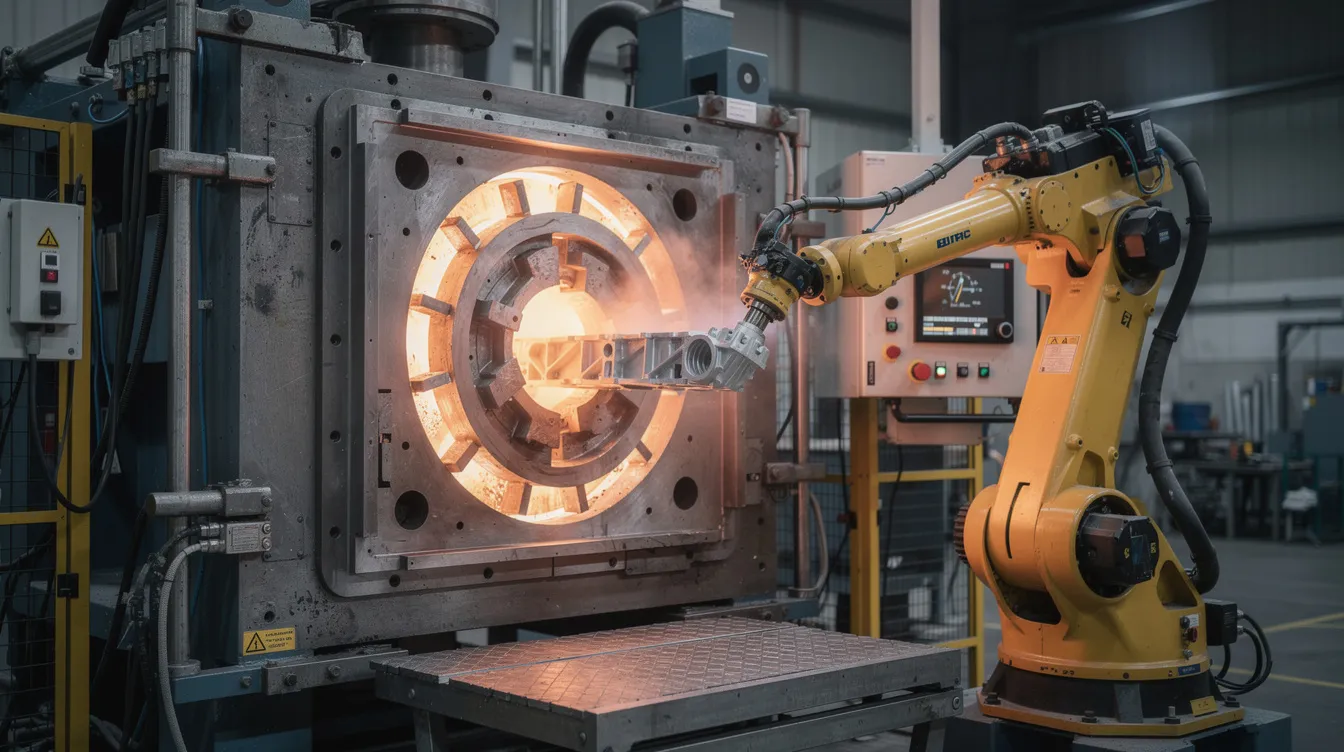
Auxiliary equipment: Temperature-controlled holding furnaces, automated ladles, robotic spray systems, and die temperature controllers stabilize the casting process and reduce shot-to-shot variation.
-
Wall thickness: Achievable minimums of 1.0–1.5 mm in aluminium and thinner in zinc support lightweight design for EVs, portable devices, and led lighting housings.
The production scale and equipment depth determine whether a supplier can consistently deliver die casting products at volume without quality drift.
Integrated CNC Precision Machining for Tight Tolerances
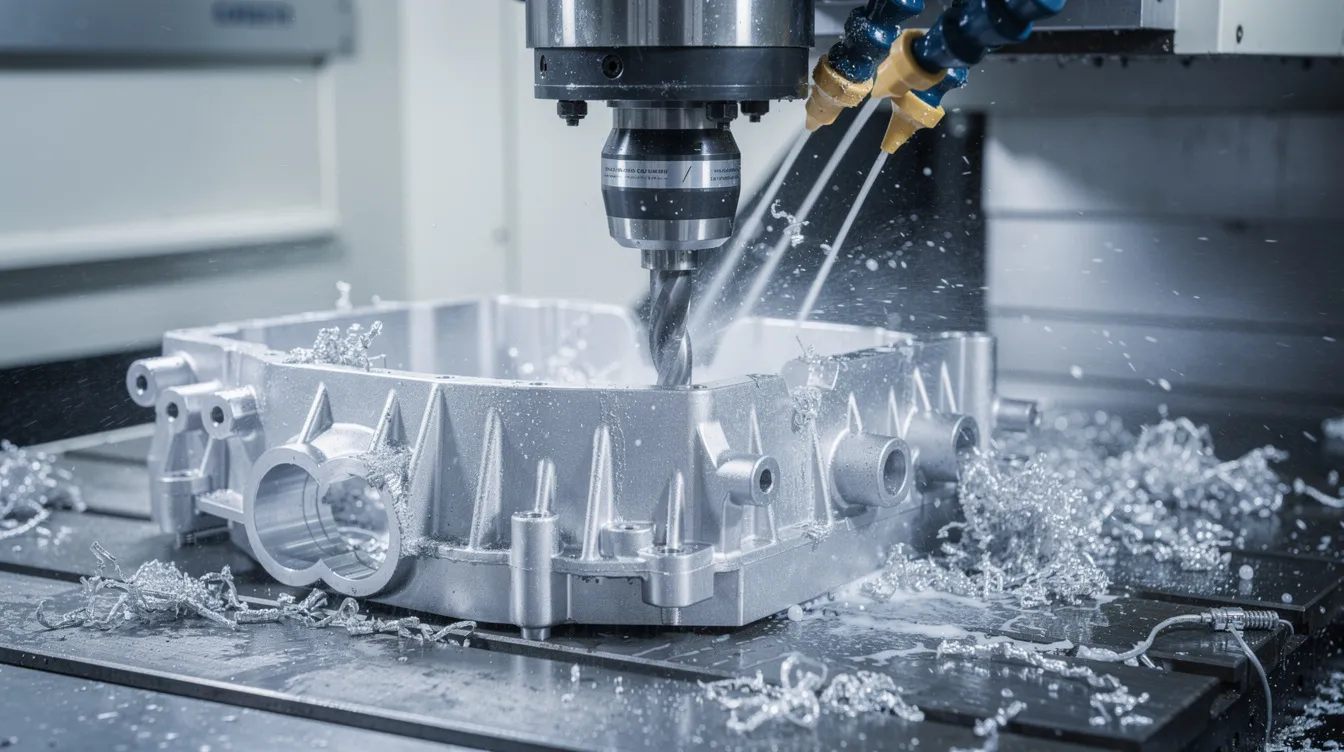
Post-casting cnc machining is where as-cast parts become high-precision finished components. Sealing surfaces, bearing bores, and datum features almost always require secondary machining to meet functional requirements. In-house CNC machining improves dimensional control and speeds up lead times compared to outsourcing.
-
Equipment: Multi-axis milling centers, CNC lathes, and 5-axis machining centers for complex geometries. High-speed spindles achieve fine surface finishes down to Ra 0.8 µm.
-
Tolerances: Up to ±0.002 mm on critical machined dimensions, with flatness, perpendicularity, and tight positional tolerance control on bolt circles and datum features.
-
Typical operations: Drilling, tapping, reaming, face milling, contouring, and precision boring on aluminum die casting parts.
-
Fixture engineering: Custom fixture design minimizes deformation of thin-walled castings during die casting cnc machining, preserving dimensional integrity.
For example, machining reference surfaces on an aluminium motor housing requires holding flatness within 0.02 mm across a 300 mm span while maintaining positional accuracy on multiple bolt holes-exactly the kind of work where integrated casting and machining under one roof pays off.
Surface Treatment, Heat Treatment, and Finishing Options
Final performance often depends on correct finishing, not just the casting itself.
-
Surface treatment options: Anodizing for aluminium, powder coating, wet painting, shot blasting, bead blasting, and selective plating where needed.
-
Functional benefits: Finishes improve corrosion resistance, wear resistance, electrical insulation, and cosmetics. Medical device housings may need passivation and clean-room packaging, while consumer electronics enclosures often require Type III hard anodize.
-
Heat treatment: Common aluminium tempering routes include T5 and T6. After T6 treatment, A356 aluminium can reach tensile strengths of 260–300 MPa with elongation of 7–9%, critical for structural automotive and industrial equipment applications.
-
Typical roughness values: Ra 1.6–3.2 µm after machining and blasting, improving to Ra 0.8 µm with fine machining and polishing.
Typical Materials and Alloys Used in High Precision Die Casting
Correct alloy selection balances strength, castability, dimensional stability, and cost. Primary operations in die casting involve aluminum, zinc, and magnesium materials.
-
Aluminium alloys: Aluminum is the most common die casting alloy. A380 aluminum alloy is widely used for die casting thanks to its good fluidity, pressure tightness, and corrosion resistance-common in automotive brackets and industrial equipment housings. A360 is preferred for pressure-tight applications, while ADC12 is popular across electronics and telecom. Aluminum die cast parts have high thermal conductivity and high thermal and electrical conductivity, making them ideal for heat sinks and enclosures. Aluminium die casting is lightweight yet withstands high temperatures.
-
Zinc alloys: Zinc die casting is ideal for intricate components. Zamak 3 and Zamak 5 deliver thin walls down to 0.5 mm with excellent as-cast surface quality-suited for connector housings and small mechanical parts.
-
Magnesium: Magnesium die casting is lightweight and strong, making it attractive for portable devices and aerospace brackets where every gram counts.
-
DFM-driven selection: Anebon advises customers on raw material selection during DFM, considering heat treatment compatibility, surface treatment requirements, and target mechanical properties.
Industries and Applications Served by Chinese High Precision Die Casting Suppliers
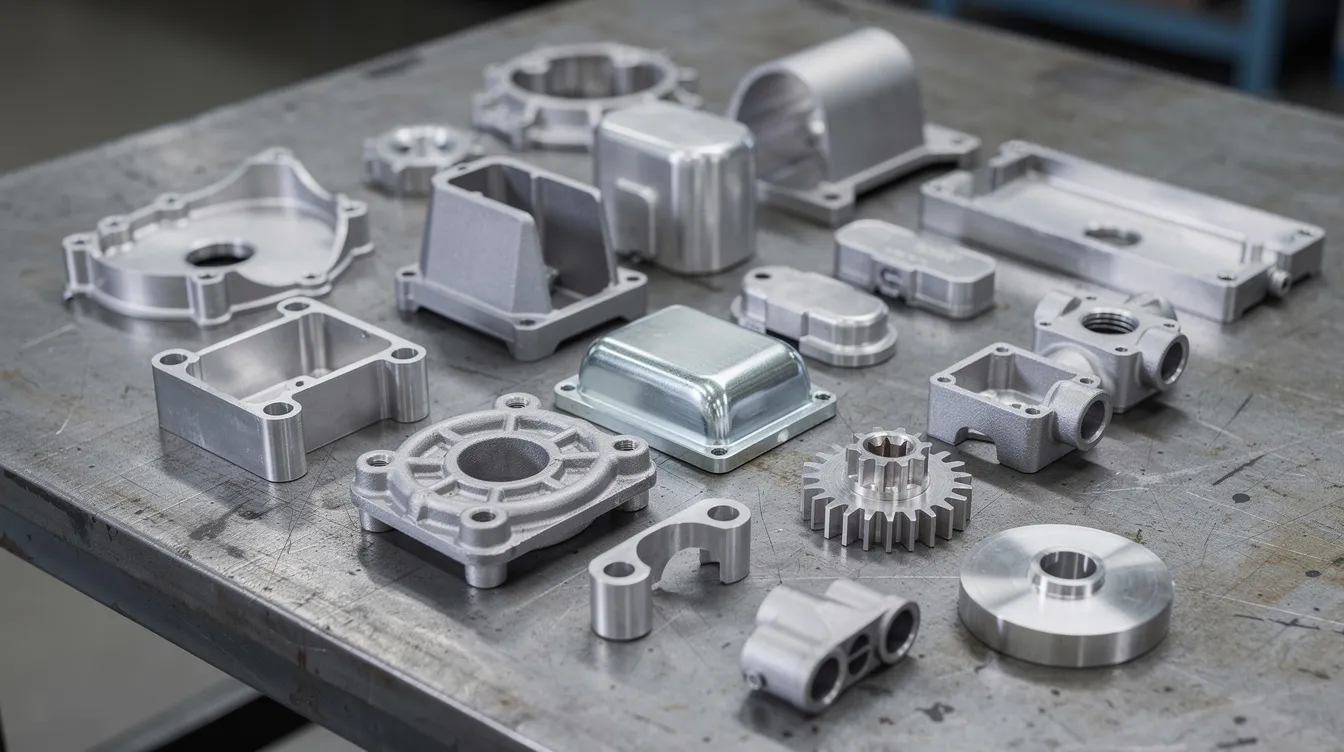
High-precision die casting underpins modern products across virtually every sector. High-precision die casting suppliers are critical for automotive and electronics industries, but the reach extends further. Aluminum die casting parts have high thermal and electrical conductivity, making them suitable for thermal management and EMI shielding.
-
Automotive and EVs: Inverter housings, motor housings, gearbox covers, and structural brackets. Demand for lightweight aluminium casting parts has surged since 2020.
-
Electronics and telecom: Heat sinks, 5G base station housings, EMI-shielded enclosures, and led lighting housings. Electrical conductivity and thermal management drive alloy choice.
-
Medical devices: Pump bodies, instrument frames, and brackets requiring clean surfaces and high reliability.
-
Industrial machinery and robotics: Gearbox housings, servo motor mounts, and structural frames with tight positional accuracy. This extends to construction machinery and agricultural machinery components.
-
Marine and specialty: Marine hardware, precision casting components, and other applications where corrosion resistance is non-negotiable.
Anebon’s customer base spans Europe, North America, and Asia-Pacific, primarily serving overseas OEMs and design houses.
How the High Pressure Die Casting Process Works (Engineer-Focused Overview)
For design engineers who want die casting process specifics, here is a step-by-step overview of how high pressure casting produces excellent dimensional accuracy.
-
Clamping: The two die halves are locked together under high tonnage.
-
Injection: Molten metal is forced into the die cavity at high pressure (typically 70–140 MPa) and high speed.
-
Solidification: The metal cools rapidly in the steel die, taking shape within seconds.
-
Ejection: The die opens and ejector pins push the solidified part out.
-
Trimming: Flash and overflows are removed.
Hot chamber vs. cold chamber: Hot chamber die casting uses a hydraulic piston to inject molten metal directly from a furnace-connected chamber-suitable for zinc alloys and low-melting-point metals. Cold chamber die casting requires separate heating of metal in an external furnace before ladling into the shot sleeve. Aluminium die casting almost exclusively uses cold chamber machines because aluminium’s high melting point would damage the hot chamber mechanism. Advanced casting machinery includes cold chamber machines for aluminum and hot chamber for zinc.
Multi-slide die casting allows for complex and accurate castings in smaller zinc and magnesium parts. Process parameters affecting precision include injection speed, holding pressure, die temperature, and cooling time. Advanced suppliers use real-time process monitoring to detect drift and maintain stable quality across production runs.
Design for Manufacturability (DFM) for High Precision Die Casting
Anebon provides early-stage design support to help OEM clients optimize parts before committing to tooling.
-
Wall thickness: Uniform walls between 1.5–3.0 mm for aluminium reduce sink marks, warping, and porosity. Abrupt thickness transitions should use gradual tapers.
-
Parting line and draft: Draft angles of 1–3° per side improve die life and ejection quality. Generous fillets and radii at internal corners reduce stress concentrations.
-
Gate and vent placement: Proper positioning controls flow, minimizes turbulence, and ensures gas evacuation-especially critical for pressure-tight applications like inverter housings.
-
Simulation: Anebon uses CAD/CAE and mold flow simulation to validate DFM recommendations, catching potential defects before any tooling investment.
Quality Assurance and Metrology: From Incoming Material to Final Inspection
Precision is the result of systematic quality assurance at every stage, not just good machines.
-
Material control: Certified ingot suppliers, spectrometer checks on every raw material batch, and full batch traceability with heat numbers. ISO 9001 certification ensures quality management systems are in place.
-
In-process control: First article inspection (FAI), process capability studies (Cpk), and statistical process control (SPC) on critical dimensions. ISO 13485 certification is specific to medical device manufacturing, while IATF 16949 is a common certification for automotive suppliers. VDA 6.1 certification is recognized in the automotive industry for quality management. ISO 45001 certification addresses occupational health and safety management.
-
Final inspection: CMM measurements, surface roughness checks, leak tests for pressure parts, and cosmetic inspections to agreed standards.
-
Environmental management: ISO 14001 certification focuses on environmental management practices, a growing requirement from global OEMs.
Comparing Chinese High Precision Die Casting Suppliers: Practical Checklist
When comparing casting companies across China’s die casting industry, use these evaluation criteria:
-
Certifications: ISO 9001:2015, ISO 14001, IATF 16949 where automotive-relevant. Suzhou Xiyi Trading, for example, holds ISO 9001, ISO 14001, and ISO 45001 certifications. Dongguan Xinghang Precision Hardware focuses on high-precision aluminum die casting with strong quality systems.
-
Capacity and equipment: Ask about die casting machine tonnage range, annual production capacity, and number of CNC centers. Wencan die casting produces over 40,000 tons of aluminum alloy die castings annually, reflecting an impressive annual production capacity. Zhejiang Yulong Vehicle Industry has a facility size of over 30,000 m², while Global Metal Plastic operates a facility of 5,000 to 10,000 m². Ningbo Yujun Mechanical Technology was established in 2014 and has grown rapidly.
-
Quality culture: Request sample inspection reports, PPAP or FAI documentation, control plans, and traceability records. Stable quality over thousands of parts matters more than a single golden sample.
-
Factory audits: Conduct onsite or remote video audits and run sample projects to validate claims before committing large tooling budgets.
Cost, Lead Time, and Tooling Considerations for OEM Projects
Buyers must balance cost with quality, speed, and risk. Short lead times are often required in high-volume production for die casting components.
-
Cost drivers: Die complexity, part size, alloy choice, machining content, surface finishing, and order volume. Sourcing from China can yield 30–50% cost savings compared to Western suppliers for equivalent quality.
-
Tooling lead times: New die casting tools in China typically take 4–8 weeks depending on complexity. Prototype or trial runs add 2–4 weeks for PPAP or sample approval.
-
Cost optimization strategies: Consolidate parts into a single die where possible, design for shared tooling, and minimize machining operations through DFM. A part redesigned from machined billet to die casting can reduce cost by 40–60% and weight by 30–50%.
From Rapid Prototyping to Full Production: Anebon’s Project Workflow
Anebon supports customers from early concept to mass production with a structured workflow.
-
Prototype stage: CNC machined prototypes or 3D-printed parts validate form and fit before tooling commitment.
-
Pilot runs: After T0/T1 sampling, dimensional reports and process tuning prepare for series production at production scale.
-
Scalable production: Multiple cavities, family molds, and capacity planning enable JIT or scheduled deliveries. Regular progress updates, digital reports, and online meetings keep remote collaboration smooth.
Risk Management: Defects, Porosity, and How Top Suppliers Control Them
Common concerns in the die casting field include porosity, warpage, and surface defects. Here is how top suppliers address them.
-
Defect types: Gas porosity, cold shuts, misruns, flash, and shrinkage can all compromise precision casting quality.
-
Prevention: Robust die design, vacuum die casting, controlled die temperature, and properly designed runners and vents. Suppliers using Moldflow simulation have reduced porosity by up to 50%.
-
Correction: Process parameter optimization, scheduled tool maintenance, and targeted machining to move porosity away from critical regions.
-
Quality tools: FMEA, control plans, and 8D problem-solving protocols mitigate risks on critical automotive and medical projects.
Comparing die casting to alternative metal casting process methods like sand casting, lost wax casting (also known as wax casting or investment casting), or permanent mold casting, HPDC offers superior cycle times and tighter as-cast tolerances at volume, though each process has its niche.
Sustainability and Environmental Compliance in Chinese Die Casting
Global OEMs increasingly evaluate suppliers on environmental performance alongside technical capability.
-
Anebon’s ISO 14001:2015 certification covers responsible waste management, alloy recycling, and emissions monitoring.
-
Energy efficiency measures include optimized furnace operation, insulation, and efficient casting cycle design to reduce energy per part.
-
Environmental compliance directly affects long-term supply chain stability and brand reputation for overseas clients who must meet RoHS and REACH requirements.
Case-Style Examples of High Precision Die Casting Projects
Robotics motor housing: An EU robotics OEM needed an aluminium die cast motor housing with pressure-tight requirements (leak test at 0.5 MPa) and positional tolerances of ±0.02 mm on bearing bores. Anebon used vacuum HPDC followed by 5-axis CNC machining, achieving Cpk > 1.67 on critical features with a sub-1% rejection rate across 15,000 pieces.
EV structural bracket: An automotive client redesigned a machined billet bracket into an aluminium die casting, reducing unit weight by 35% and piece cost by 45%. T6 heat treatment delivered tensile strength above 280 MPa. The advanced technology used in process monitoring ensured dimensional consistency across the annual production capacity of 80,000 units.
Medical device frame: A medical instrument frame required a multi-step surface treatment including bead blasting, passivation, and clear anodize. Full batch traceability and cosmetic inspection to AQL 1.0 were maintained across all die casting parts, meeting the OEM’s quality control requirements.
How to Start Working with Anebon: RFQ to First Shipment
Anebon’s engagement process is designed for overseas OEMs and engineers who need die casting services with minimal friction.
-
RFQ requirements: Provide 3D CAD files (STEP/IGES), 2D drawings with tolerances and critical-to-quality features, annual volume estimates, and required certifications.
-
What to expect: DFM feedback within a few working days, a cost breakdown covering tooling and piece price, and estimated lead times. Anebon uses cutting edge technology in quoting and simulation to accelerate this phase.
-
Logistics: NDA protection, sample approval process, Incoterms (FOB Shenzhen, CIF, etc.), and ocean or air freight options.
Contact Anebon’s engineering team today to request a detailed quotation or design review for your next die casting project.
High Precision Die Casting Trends in China Beyond 2026
The aluminum die casting industry continues to evolve. Here is what the next 3–5 years hold for buyers and suppliers.
-
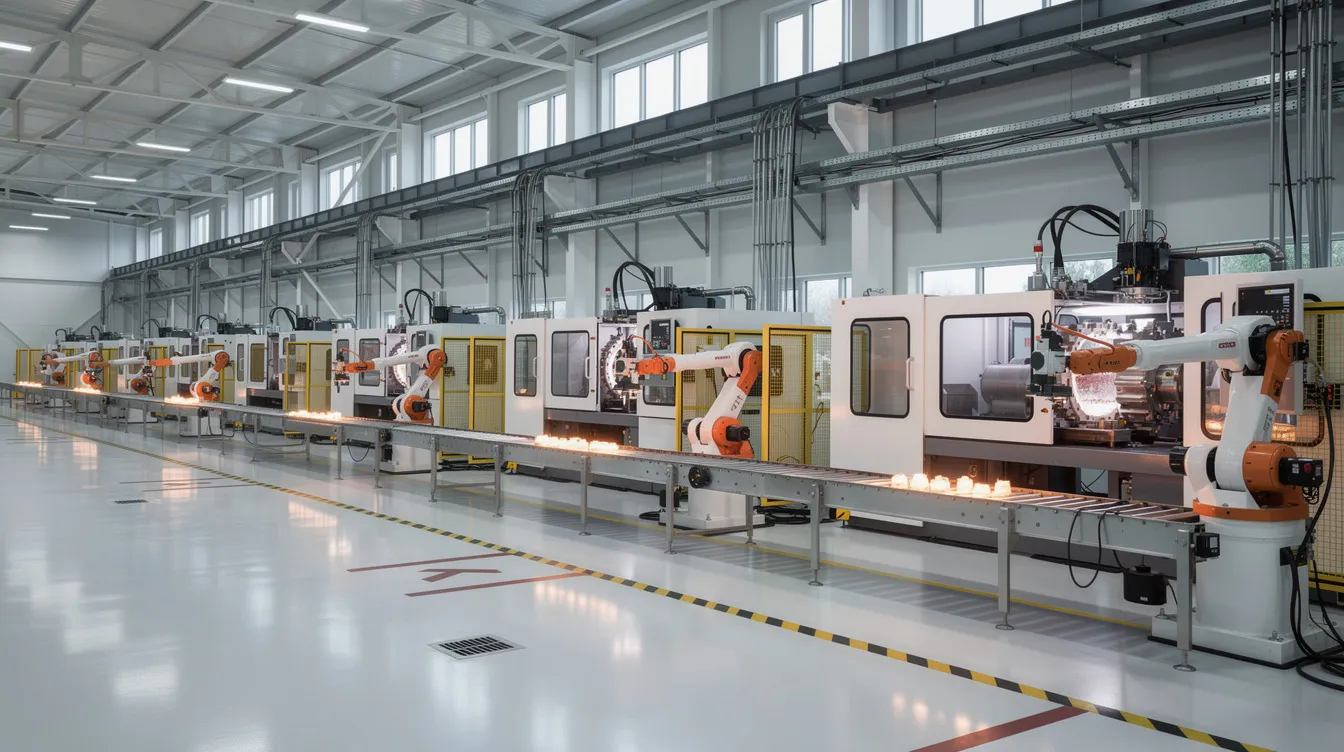
Automation and robotics: More foundries are deploying fully automated HPDC cells with robotic part extraction, trimming, and inspection, reducing labor variability and improving production processes.
-
Digitalization: Real-time process monitoring, cloud-based data collection, and AI-driven optimization are moving from pilot programs to standard practice. Predictive maintenance reduces unplanned downtime.
-
Structural castings: Growing demand for large, complex aluminium castings in EV, aerospace, and industrial automation is pushing suppliers toward higher-tonnage machines and more advanced alloy materials.
-
Anebon’s roadmap: Equipment upgrades, operator training, and process innovation will reinforce Anebon’s position as a trusted partner and trusted die casting manufacturer for global OEMs seeking a casting supplier in China.
Conclusion: Choosing a Trusted High Precision Die Casting Supplier in China
Choosing the right die casting supplier comes down to proven process control, integrated CNC machining, comprehensive surface finishing, and robust quality systems-not just price. Overseas OEMs should evaluate certifications, engineering support, and production processes alongside cost when selecting among high precision die casting suppliers in the China market.
Anebon Metal Products Limited brings together high precision aluminium die casting, tight-tolerance CNC machining, ISO-certified quality and environmental management, and a track record serving global OEMs across automotive, aerospace, medical, and electronics. Whether you need a feasibility assessment, rapid prototyping, or full-scale mass production, reach out to Anebon’s team to discuss your die casting needs and start building a partnership that delivers.