Top High Precision Die Casting Suppliers in China for Quality Parts
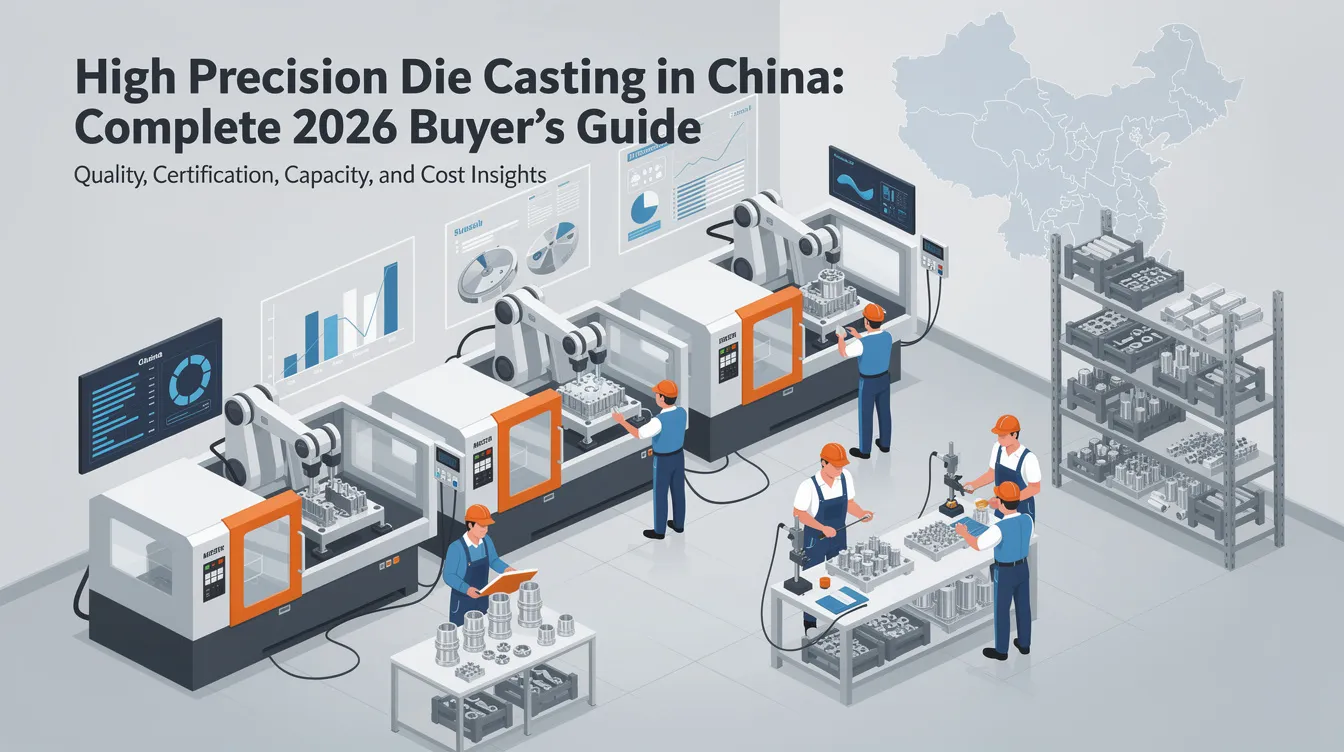
High Precision Die Casting Suppliers in China: Complete 2026 Buyer’s Guide
Introduction: Finding High Precision Die Casting Suppliers in China Fast
If you are an overseas OEM, design engineer, or sourcing manager searching for high precision die casting suppliers china can deliver, this guide is built for you. In 2026, “high precision” means more than just making parts that look right. It means achieving repeatable dimensional tolerances down to ±0.005–0.01 mm on cast features, near-zero porosity on safety-critical components, and integrated cnc machining that brings final dimensions even tighter. This guide covers the full landscape: how the die casting process works at a precision level, what capabilities separate a serious die casting manufacturer from a commodity shop, and how to evaluate and engage the right partner.
The focus here is on high pressure die casting of aluminum and zinc, combined with post-casting precision machining, surface finishing, and quality systems built for export. Anebon Metal Products Limited-a Co Ltd founded in 2010 in Dongguan, Guangdong-serves as a reference model throughout. Anebon represents the type of modern, ISO-certified, export-oriented die casting factory that overseas buyers should benchmark against.
Typical applications discussed include:
-
Aerospace brackets and sensor housings
-
Medical device housings and ventilator manifolds
-
EV motor housings and inverter enclosures
-
Robotics structural frames and joints
-
5G base station and telecom heat sinks
-
Led lighting housings and power tools enclosures
Key takeaways from this guide: how to define precision on your drawings, which die casting companies invest in the right equipment, how to audit quality control systems, what realistic lead times and costs look like, and how to request a quote that gets you accurate, comparable proposals from casting manufacturers in china.
Why High Precision Die Casting from China in 2026?
China remains the dominant global hub for aluminum die casting and high pressure die casting thanks to mature supply chains, deep alloy expertise, and massive installed capacity. China hosts over 20,000 die casting factories, and in 2024, overall casting output reached approximately 50.75 million tons, with aluminum and magnesium alloy castings rising to roughly 16.4% of that total. In 2025, China exported about 3.2 million tons of aluminum casting parts with export value exceeding US$18 billion-destinations led by the US (~25%), EU (~22%), Japan (~10%), and Southeast Asia (~12%).
Integrated die casting services-covering die design, tooling, casting, CNC post-machining, and surface treatment-reduce lead time and total landed cost for overseas OEMs. Suppliers who combine these under one roof eliminate the coordination risk of managing multiple vendors. Cost competitiveness remains strong: Chinese casting unit costs undercut US and EU equivalents by 30–70% in many cases.
This article focuses on suppliers who serve demanding industries with tight tolerances rather than basic commodity shops. Advantages of sourcing from China in 2026 include:
-
Integrated manufacturing process from mold design through finished part
-
Advanced technology in vacuum-assisted HPDC, simulation, and automated process control
-
Export compliance with ISO, IATF, and emerging CBAM carbon reporting
-
Production scale to support anything from prototypes to 500k+ parts per year
-
Alloy diversity across aluminum alloy families (ADC12, A380, A360), zinc alloys, and magnesium
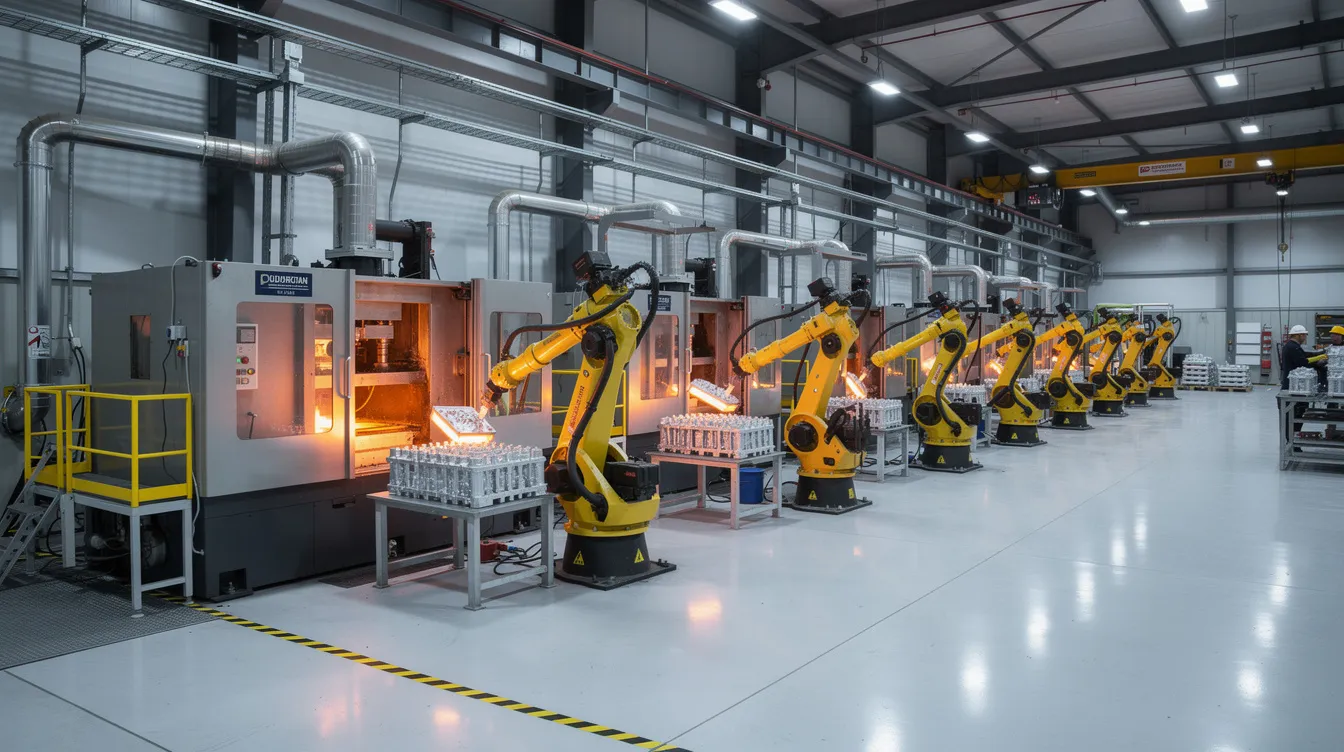
What “High Precision” Means in the Die Casting Process
Die casting uses high pressure to inject molten metal into molds at speeds that fill complex geometries in fractions of a second. In a high precision context, “precision” covers several dimensions:
-
Dimensional tolerance: as-cast aluminum features typically hold ±0.05–0.13 mm for small-to-medium dimensions; after CNC machining, suppliers achieve ±0.005–0.01 mm on critical features
-
Repeatability: consistent dimensions across tens of thousands of shots, maintained through stable die temperature, alloy chemistry, and filling parameters
-
Porosity control: minimal internal voids achieved via vacuum-assisted casting, optimized gating, and degassing-inspecting internal porosity is critical for high-stress components
-
Surface quality: as-cast Ra 1.6–3.2 µm; finer finishes via polished dies or secondary operations
Contrast this with generic aluminum die casting, which tolerates ±0.1–0.3 mm, uses loose alloy controls, and requires heavy stock removal. High precision casting eliminates much of that excess material and secondary work.
Concrete example: an aluminum telecom RF housing with 0.8 mm walls, flatness requirement <0.05 mm over a 200 mm face, and locator boss tolerances of ±0.01 mm after machining. Or an EV motor housing with bearing seats held to ±0.005 mm via 5-axis CNC.
When preparing drawings for Chinese suppliers, specify: linear dimension tolerances, flatness over defined areas, surface roughness targets (as-cast and machined), minimum wall thickness, porosity class or pressure-tightness requirements, and datum references for CNC.
Overview of Die Casting Types Used by Chinese Precision Suppliers
High precision export suppliers in China primarily focus on high pressure die casting because it produces parts with excellent dimensional accuracy and high production rates. Other metal casting process variants-gravity casting, permanent mold casting, sand casting, and low-pressure casting-serve different niches but generally offer looser tolerances and slower cycle times.
Key process comparisons:
-
High pressure die casting (HPDC): uses high pressure (typically 700–1,400 bar) to force molten metal into a hardened steel die cavity at high speed. Best for thin walls, complex shapes, and high volumes. Dominant for aluminum die casting parts and zinc die casting.
-
Cold chamber die casting: the molten metal is ladled into the shot sleeve externally. Cold chamber die casting is used for high melting point metals like aluminum (melting at ~660°C). Cold chamber machines from 160T to 3,000T+ are standard among top die casting companies, with some firms investing in advanced die casting machines above 6,000T for large structural castings.
-
Hot chamber die casting: the injection mechanism is submerged in molten metal. Hot chamber machines work for zinc alloys and magnesium die casting where melting points are lower. Not suitable for aluminum.
-
Gravity casting / permanent mold casting: metal flows under gravity into a reusable mold. Lower pressure, thicker walls, slower cycles. Used for heavier, non-structural parts.
-
Sand casting: uses expendable sand molds. Loosest tolerances, lowest tooling cost, suitable for very large or low-volume parts.
Unlike injection molding for plastics, die casting deals with metals at extreme temperatures and pressures, requiring robust tooling and precise process control.
Anebon Metal focuses on cold chamber high pressure die casting for aluminum and zinc, complemented by CNC machining and 5-axis milling for post-cast precision. High-pressure die casting is commonly used for aluminum parts across their production lines.
Key Capabilities of High Precision Die Casting Suppliers in China
Buyers should verify these core capabilities when evaluating any die casting supplier:
-
Die and mold design: in-house teams using SolidWorks, UG/NX, or CATIA with CAE simulation (MoldFlow, MAGMA) for gate, runner, overflow, venting, and cooling channel optimization
-
Toolmaking: H13 or SKD61 tool steel, multi-cavity dies, precision polishing, heat treatment of die components
-
HPDC casting: cold chamber machines spanning 160T to 2,500T+; vacuum-assisted systems; servo-controlled shot profiles
-
CNC machining: 3-, 4-, and 5-axis milling centers and turning-milling centers for precision machining of cast parts, achieving ±0.002 mm on critical features
-
Metrology and inspection: CMM machines, 3D scanners, X-ray or CT scanning for porosity, surface profilometers, leak testing
-
Surface finishing: anodizing, powder coating, e-coating, chromate conversion, polishing, shot blasting
Suppliers who combine die casting cnc machining under one roof provide the tightest process control and fastest turnaround. High-pressure casting produces parts with excellent dimensional accuracy, but CNC finishing transforms “good” into “mission-critical.”
Serious casting companies now use flow simulation and pressure optimization software to predict and prevent defects before cutting steel, reducing costly die revisions.
Anebon Metal Products Limited – One‑Stop High Precision Die Casting Partner
Anebon Metal Products Limited is a die casting manufacturer and precision CNC machining partner based in Dongguan, Guangdong, operating since 2010. Die casting services include design, prototyping, and production-covering aluminum die casting, zinc die casting, precision CNC machining, 5-axis machining, sheet metal fabrication, and assembly for OEM clients worldwide.
Anebon holds ISO 9001:2015 certification, which ensures quality management systems, and ISO 14001:2015 certification, which focuses on environmental management systems. The company serves export markets in the US, EU, Japan, and Asia-Pacific.
Anebon supports the full product lifecycle: rapid prototyping (CNC and 3D printing) within days, soft and bridge tooling for pilot runs, full production dies for mass production, and ongoing engineering change support. Die casting manufacturers offer rapid prototyping for custom parts, and Anebon delivers this alongside volume capability.
How Anebon Controls Quality for Zero‑Defect High Pressure Die Casting
Quality assurance processes are critical for die casting manufacturers. Anebon’s approach prioritizes prevention and real-time monitoring over final-sort inspection alone.
Key controls include:
-
Incoming material inspection: spectrometer verification of alloy chemistry on every heat
-
In-process checks: dimensional measurements at defined intervals, SPC on critical features, die temperature monitoring
-
100% visual inspection before packing
-
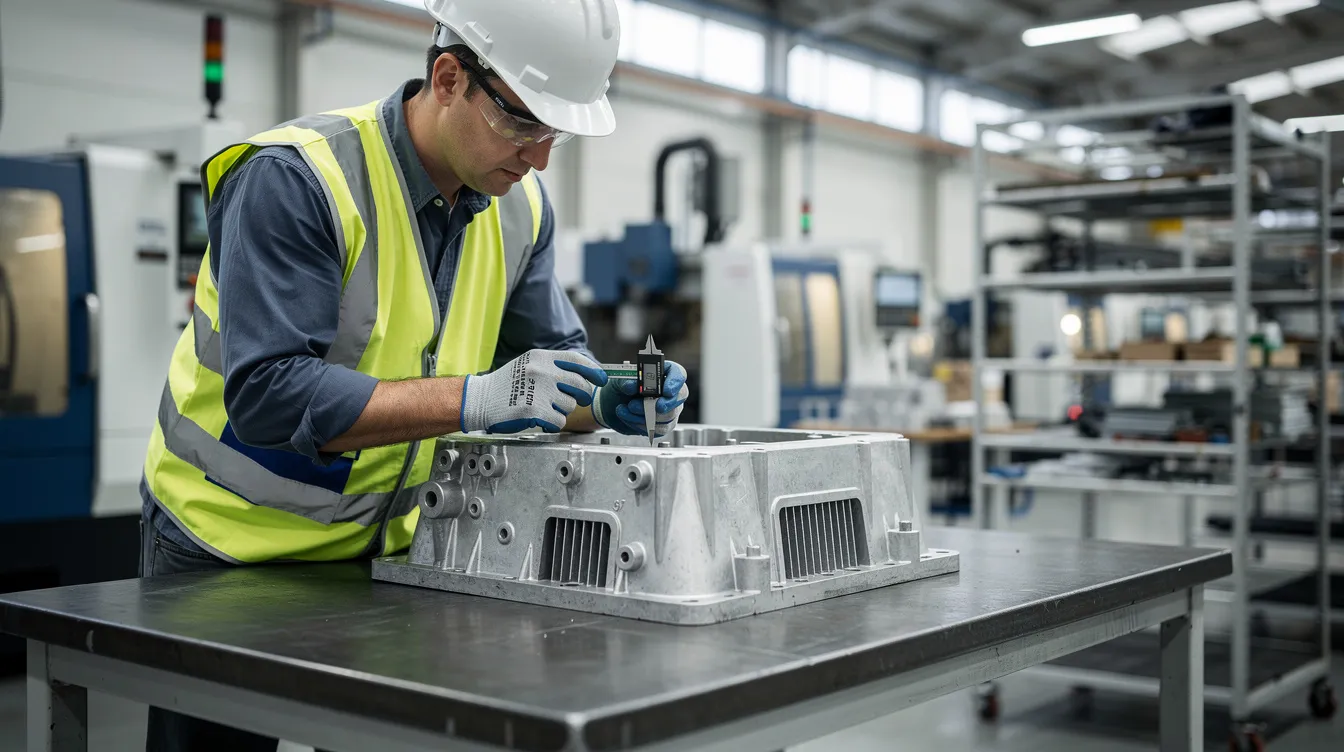
CMM and metrology: verification of inspection equipment like CMM and X-ray inspection confirms geometric accuracy and internal soundness
-
PPAP, FAIR, and Cp/Cpk capability studies for automotive or medical projects
-
X-ray or CT scanning for safety-critical structural aluminum die castings when required
Inspecting internal porosity is critical for high-stress components such as EV structural frames, brake system housings, and pressurized manifolds. Anebon uses X-ray and leak testing to validate these parts before shipment.
Die and Mold Design for High Precision Aluminum Die Casting
The quality of the die dictates final part precision. Top casting manufacturers in china offer in-house die design teams experienced with 3D CAD and CAE simulation to optimize every aspect of the die casting mold before steel is cut.
Critical mold design considerations:
-
Optimized draft angles (typically 1–3° for aluminum) to ensure clean ejection
-
Uniform wall thickness to prevent shrinkage and warpage
-
Generous fillets at intersections to improve metal flow and reduce stress
-
Gating, runner, and overflow design tuned via simulation to minimize air pressure entrapment and porosity
-
Cooling channel layout for uniform die temperature control
Anebon’s DFM process begins with early review of 3D models, identifying areas at risk for porosity or deformation, and suggesting geometry changes before tooling is cut. Evaluate the supplier’s mold design and DFM capabilities before committing-this single step prevents the majority of downstream quality issues.
Typical timing: die design 1–3 weeks; toolmaking 4–8 weeks depending on complexity and cavity count.
High Precision CNC Machining and 5‑Axis Milling after Die Casting
Post-casting CNC machining is essential for features where as-cast tolerances are insufficient: bearing seats, sealing faces, critical bores, and threaded holes. Aluminum die casting can produce parts with tight tolerances of ±0.002 mm when combined with CNC post-machining. Post-processing options include CNC machining and surface treatments tailored to each application.
Anebon’s CNC capabilities include:
-
3-, 4-, and 5-axis machining centers
-
Turning-milling centers for rotational features
-
Custom fixtures using cast locating bosses, soft jaws, and multi-station setups for repeatability
-
Removal of excess material with controlled tool paths to maintain casting integrity
Example applications: machining an EV inverter housing with multiple O-ring grooves held to ±0.01 mm, a robotic arm joint with coaxial bores requiring ±0.005 mm concentricity, or a ventilator compressor body with flatness <0.02 mm on mating surfaces.
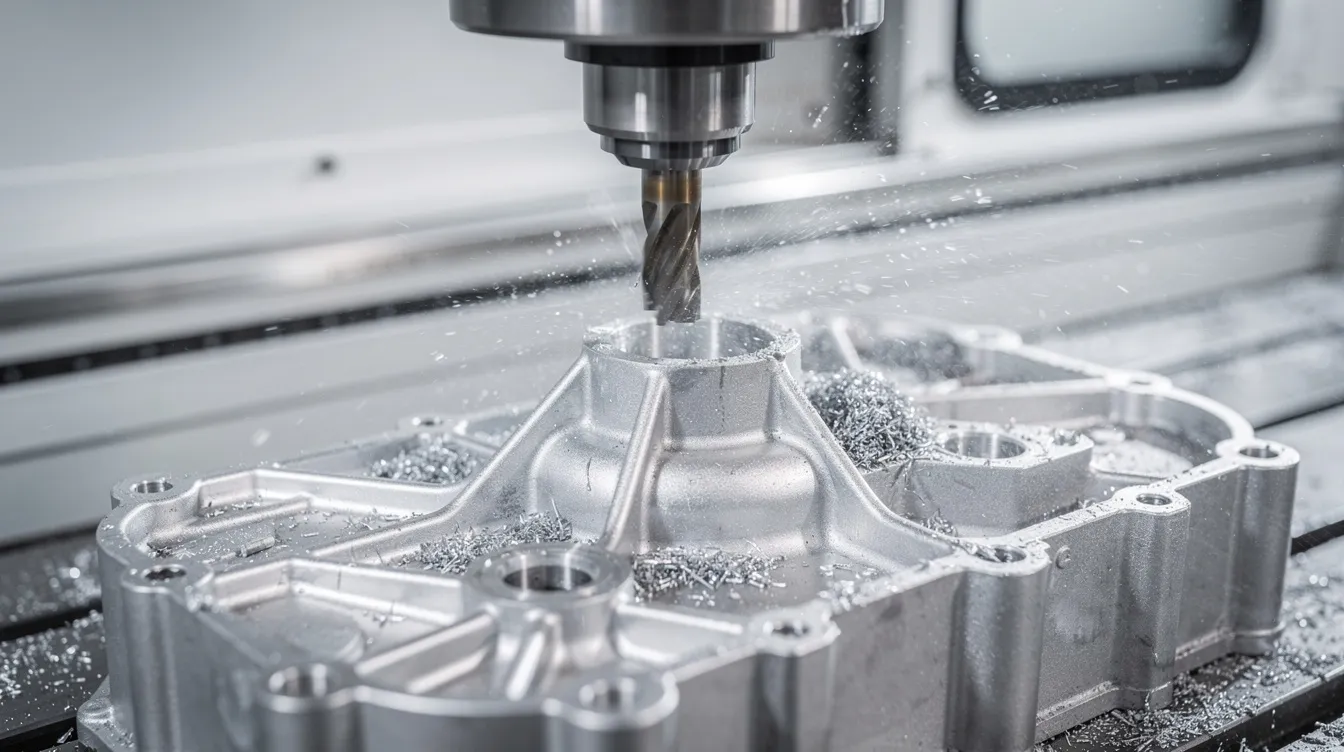
Surface Treatment and Finishing for High Precision Die Cast Parts
Common surface treatment options from Chinese die casting factories include:
-
Anodizing (Type II/III): corrosion resistance and aesthetics; common for electronics enclosures
-
Powder coating: durable finish for outdoor housings, industrial equipment, and led lighting fixtures; adds +40–80 µm thickness
-
E-coating: uniform coverage on complex geometries
-
Chromate conversion: corrosion resistance with maintained electrical conductivity
-
Shot blasting / sand blasting: surface preparation and uniform texture
-
Polishing: high-gloss cosmetic surface finishing
Tight dimensional tolerances must account for coating thickness. DFM discussions should include surface treatment from day one. Appearance samples and color standards (RAL, Pantone) should be agreed before production.
Anebon manages finishing through in-house and partner lines with controlled pretreatment, thickness monitoring, and adhesion testing via cross-hatch and salt spray methods.
Materials and Alloys Used by High Precision Die Casting Suppliers
Aluminum is the most common alloy used in die casting, and the aluminum die casting industry relies on several well-established families:
-
ADC12 (A383): excellent castability, good strength, most popular in Asia-Pacific production processes
-
A380: widely used for its corrosion resistance, good balance of mechanical properties; common for automotive components, power tools housings, and industrial equipment
-
A360: superior corrosion resistance and higher pressure tightness; used for fluid handling and marine applications
Aluminum die casting parts can withstand high operating temperatures, making them suitable for engine components and EV powertrains. Raw material selection impacts every downstream property.
Zinc alloys:
-
Zamak 3, Zamak 5: zinc die casting is ideal for intricate and detailed components-tighter as-cast tolerances, excellent surface finishing, lower melting point. Used for consumer electronics, connectors, and decorative hardware.
Magnesium alloys:
-
Magnesium die casting is lightweight yet robust for applications in aerospace, portable devices, and automotive structural parts. Requires hot chamber or specialized cold chamber machines.
Suppliers like Anebon help select alloys based on performance targets, surface finish requirements, and compliance (RoHS, REACH). YuanZhong specializes in aluminum, zinc, and magnesium die casting and represents one of the broader-alloy suppliers in the market.
Die Casting Equipment and Automation in Modern Chinese Factories
Manufacturers should have modern cold-chamber or hot-chamber die casting machines matched to their target alloys and part sizes. A typical modern die casting factory operates:
-
Cold chamber machines from 160T to 3,000T for standard parts; advanced die casting machines above 4,000T for large structural castings such as EV body components
-
Robotic ladling, automated spray systems, and robotic part extraction
-
Automatic trimming presses and deburring stations
-
Real-time monitoring of furnace temperature, shot speed, and die temperature via MES systems
Guangdong Hongtai operates 37 imported die casting machines, reflecting the scale of investment among top-tier Chinese manufacturers in china. Wencan Die Casting-specifically guangdong wencan die casting-produces over 40,000 tons annually, demonstrating impressive annual production capacity and annual production capacity at the high end of the casting industry. Guangdong wencan die casting remains a benchmark for production scale in the die casting field.
Anebon invests in modern automation and monitoring to deliver repeatable quality. Stable cycle times, controlled shot profiles, and barcode traceability reduce human error and ensure consistency across production runs-keeping pace with global manufacturing standards set by international players.
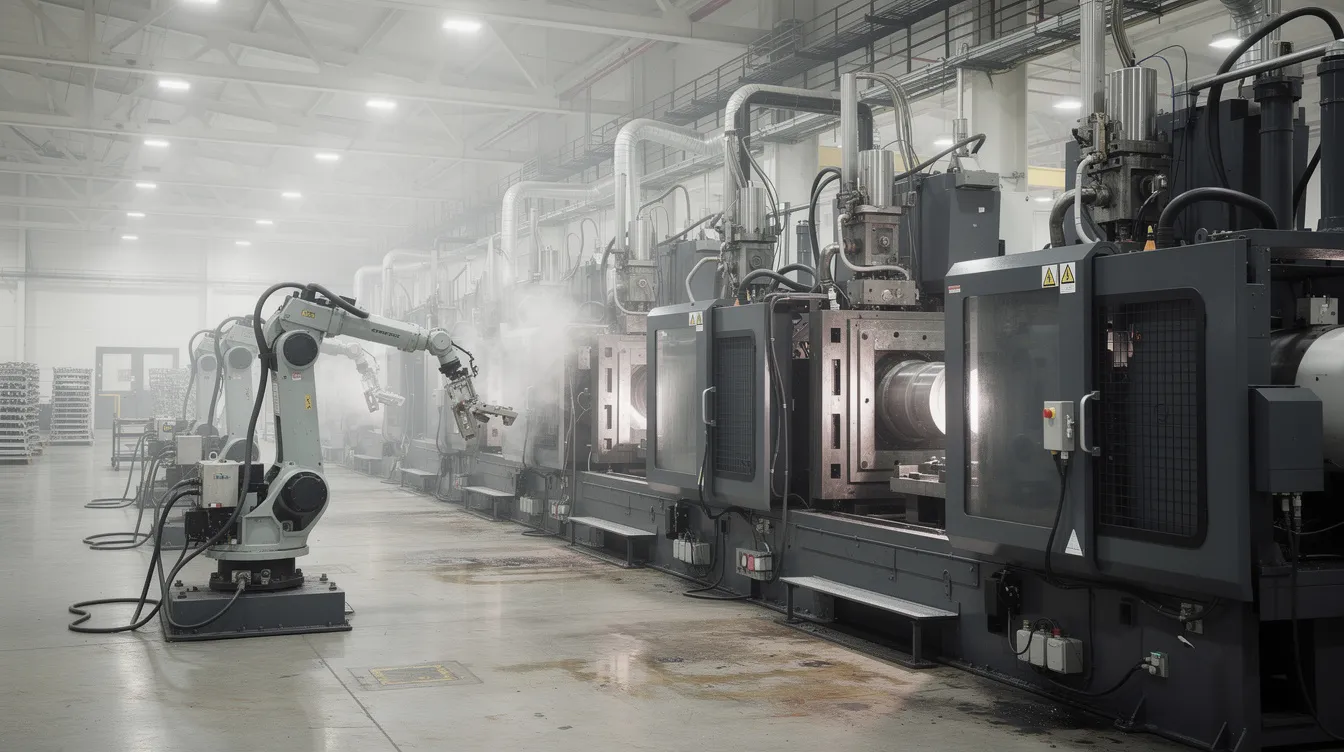
Industries and Applications Served by High Precision Die Casting China
Key industries relying on high precision die casting products from China:
-
Automotive and NEV: gearbox housings, EV structural frames, motor end-caps, inverter housings, automotive components requiring fatigue resistance
-
Aerospace: brackets, sensor housings, drone structural arms (weight and strength critical)
-
Medical devices: ventilator manifolds, pump housings, surgical instrument components (porosity-free, biocompatible finishes)
-
Robotics and industrial automation: joints, frames, actuator housings for industrial equipment
-
Consumer electronics and telecom: 5G base station heat sinks, EMI shielding enclosures
-
Led lighting housings, power tools bodies, and casting equipment components
These sectors demand weight reduction, thermal management, EMI shielding, corrosion resistance, and design freedom for complex shapes. Anebon supports overseas OEM programs from low-volume, high-mix R&D batches through scale-up to mass production.
How Anebon Supports the Full Product Lifecycle
The typical journey with Anebon follows a structured path:
-
DFM consultation: early design review, material and process recommendations
-
Rapid prototyping: CNC-machined or 3D-printed prototypes within days
-
Bridge tooling: soft or semi-hard tooling for pilot runs (50–500 pcs)
-
Production tooling: hardened dies for full-volume production
-
Trial shots and PPAP: T1 samples, dimensional reports, capability studies
-
Mass production ramp-up: stabilized casting process and volume delivery
-
Engineering changes: die modifications, insert changes, or added machining as designs evolve
Anebon manages logistics with flexible MOQs, batch scheduling, export-grade packaging, and freight coordination. This lifecycle support helps buyers maintain production scale from concept through SOP.
Trends Shaping High Precision Die Casting Suppliers in China
Several trends define the 2026 landscape:
-
EV lightweighting and gigacasting: larger-tonnage die casting machine platforms (>4,000T) produce single-piece structural castings, reducing assembly and improving stiffness
-
5G and data center thermal management: growing demand for heat sinks and enclosures with high thermal conductivity alloys
-
Robotics and automation growth: more complex, tight-tolerance aluminum die castings for actuators and frames
-
Digitalization: adoption of MES, predictive maintenance, AI-based defect prediction, and digital twins for casting cells-applying cutting edge technology to traditional manufacturing
-
Sustainability: increased recycled aluminum content (which carries ~5% of primary aluminum’s carbon footprint), energy-efficient furnaces, and scrap reduction through better process control using advanced technology
Buyers should choose suppliers investing in these trends rather than standing still. Inox Cast has over 20 years of aluminum die casting experience and represents the long-established players adapting to these shifts.
How to Evaluate High Precision Die Casting Manufacturers in China
A rigorous vetting process is essential for high-precision die casting suppliers. Use this checklist:
-
Certifications: suppliers should have IATF 16949 or ISO 9001 certifications; ISO 14001 for environmental management; IECQ certification indicates compliance with electronic component quality standards
-
Experience: suppliers must have experience in the relevant industry for accurate manufacturing-ask for references in your specific sector
-
Equipment verification: confirm casting machines (tonnage range, brand), CNC capacity, and inspection lab equipment
-
Sample evaluation: request sample parts with inspection reports rather than relying on sales promises
-
Die ownership and MOQ: consider the length of tooling ownership and minimum order quantity when choosing a supplier
-
Audit readiness: conduct remote or on-site audits verifying casting equipment, QC labs, and staff competence
-
Volume range: confirm support from prototypes to 500k+ pcs/year
Look for a trusted die casting partner with transparent documentation, not just a polished website.
Cost Drivers in High Precision Aluminum Die Casting
Main cost elements for die casting parts:
-
Die/mold cost: driven by part complexity, cavity count, and steel grade; ranges from US$3,000 for simple single-cavity dies to US$50,000+ for complex multi-cavity tools
-
Alloy cost: raw material price fluctuates; ADC12 and A380 are economical, specialty alloys cost more
-
Machine time: determined by cycle time, die casting machine tonnage, and shot weight
-
CNC machining time: number of setups, feature count, and tolerance requirements
-
Surface treatment: type and coverage area
-
Inspection requirements: standard vs. X-ray, CMM, leak testing
Cost optimization strategies: consolidate parts into one casting, optimize wall thickness and draft, simplify undercuts, and reduce unnecessary tight tolerances. Anebon provides DFM and cost-optimization feedback at the quoting stage to help OEMs hit target prices.
Typical Lead Times: From RFQ to Mass Production
Realistic timelines for a high precision aluminum die cast housing:
-
RFQ to quotation: 2–5 working days
-
DFM and die design: 1–3 weeks
-
Tooling fabrication: 4–8 weeks (depending on complexity)
-
T1 samples: ~1 week after tool completion
-
PPAP and approval: 1–2 weeks
-
Mass production ramp-up: 2–4 weeks after approval
Factors that extend timelines: high cavity count, required heat treatment or special coatings, certification paperwork (PPAP, FAIR), and Chinese holiday periods (Chinese New Year, Golden Week). Anebon manages schedules with project plans, milestone reviews, and regular updates to overseas clients.
Communication and Project Management with Chinese Suppliers
Clear technical communication is the single biggest risk reducer when working with any die casting factory in China. Best practices:
-
Share 3D models (STEP, IGES), fully dimensioned 2D drawings with GD&T, annual volume forecasts, and critical feature lists from day one
-
Use email, video calls, and secure file-sharing portals for all technical exchanges
-
Expect structured progress reports at key milestones (die design approval, T1, PPAP)
-
Ensure the supplier assigns a dedicated project engineer who understands your production processes and specifications
Anebon’s project management approach-dedicated engineers, change logs, and issue tracking-differentiates a professional die casting manufacturer from a basic factory.
Quality and Certification Requirements for Export Projects
Key certifications to verify:
-
ISO 9001:2015: quality management baseline-ensures quality management systems are documented and controlled
-
ISO 14001:2015: environmental management-important for EU-bound shipments and CBAM compliance
-
IATF 16949 / TS16949: TS16949 certification is for automotive quality management systems; required by most automotive OEMs
-
IECQ: IECQ certification indicates compliance with electronic component quality standards; relevant for electronics programs
-
Customer-specific: PPAP, FMEA, control plans, traceable lot numbers, especially in automotive and medical projects
Verify certification status through accreditation body databases, not just supplier-provided certificates. Assess whether systems are truly implemented-look for controlled work instructions, calibration records, and nonconformance logs during audits.
Case-Style Examples of High Precision Die Casting Projects
European Robotics OEM: A German robotics company needed high precision aluminum die cast actuator housings in A380, with bore concentricity of ±0.01 mm and surface finish Ra 1.6 µm. Anebon designed a two-cavity die with vacuum assist, followed by 4-axis CNC machining for critical bores. Scrap rate stabilized at 1.2% after T2 samples, and weight savings of 18% versus the previous machined-from-billet design were achieved.
US Medical Device Startup: A ventilator compressor body required zero-porosity pressure tightness to 6 bar, thin walls (1.2 mm), and cosmetic anodized finish. Using ADC12, Anebon optimized gating via MAGMA simulation, applied X-ray inspection to 100% of first-run parts, and reduced porosity rejects to <0.5%. The startup scaled from 200 prototypes to 15,000 units/year within 8 months.
Asian EV Component Program: An EV inverter housing in A360 required flatness <0.03 mm over 300 mm sealing faces and thermal conductivity for heat dissipation. Anebon used a 1,600T cold chamber machine, 5-axis CNC for seal grooves, and chromate conversion coating. Assembly time at the customer’s plant dropped 25% versus the previous two-piece welded design.
Risks and How to Mitigate Them When Sourcing Die Casting in China
Common risks and mitigations:
-
Unclear specifications: provide complete 2D/3D drawings with tolerances, materials, and test requirements upfront
-
Over-promising on tolerances: request Cp/Cpk data from pilot runs before committing to volume
-
Inadequate process control: audit SPC records, die maintenance logs, and calibration schedules
-
IP concerns: sign NDAs and manufacturing agreements before sharing designs; consider splitting critical assemblies across suppliers
-
Logistics disruptions: use export-grade packaging (foam trays, VCI bags, custom crates) and build 2–4 weeks of safety stock
-
Quality drift: implement periodic re-qualification and incoming inspection at your facility
A structured die casting supplier like Anebon minimizes these risks through documented production processes, transparent reporting, and proactive communication.
How to Request a Quote from Anebon and Other Chinese Die Casting Factories
Prepare the following for your RFQ:
-
3D models (STEP, IGES, or Parasolid)
-
2D drawings with all tolerances, GD&T, and surface finish callouts
-
Expected annual volume and lot sizes
-
Target price (if available)
-
Material and alloy preference
-
Surface treatment and color requirements
-
Special tests: pressure/leak test, salt spray, X-ray, air pressure testing
-
Any regulatory or certification requirements
Anebon’s RFQ process: engineering review within 2–5 days, DFM feedback with marked-up drawings, cost breakdown (tooling + unit price at multiple volume tiers), and suggested alternatives if the current design presents manufacturability challenges. A complete quote from a serious die casting services supplier includes tooling cost, amortization options, unit price tiers, lead time, and inspection scope.
FAQ: Working with High Precision Die Casting Suppliers in China
What are typical minimum order quantities for precision die cast parts? Most die casting companies set MOQs at 500–1,000 pieces for production runs after tooling is complete. However, suppliers like Anebon accommodate smaller pilot batches (50–200 pieces) during qualification. Consider the length of tooling ownership and minimum order quantity when evaluating total program economics.
How many die iterations are typical before final approval? Most projects require T1 and T2 sample rounds. Simple parts may freeze after T1; complex parts with multiple tight-tolerance features often need T2 or T3 with minor die corrections. Budget 1–3 iterations.
How is die warranty handled? Most Chinese casting manufacturers in china warrant dies for a defined shot life, commonly 80,000–150,000 shots for aluminum depending on part complexity and die steel grade. Refurbishment and replacement terms should be contractually defined.
How are design changes costed during a program? Minor changes (welding and re-machining die inserts) are typically quoted as one-time engineering charges. Major geometry changes may require new die cavities. Anebon provides change-impact assessments within 2–3 working days.
What about IP protection? Reputable suppliers sign NDAs and manufacturing agreements. Some buyers register designs or patents in China for additional legal protection. Splitting critical sub-assemblies across suppliers is another practical mitigation.
Can suppliers support long-term supply agreements? Yes. Established die casting manufacturers in china routinely sign multi-year supply agreements with fixed pricing formulas (often indexed to alloy price). Anebon supports blanket orders with scheduled releases.
What support is available for startups and R&D teams? Anebon offers smaller batches, mixed tooling approaches, and rapid CNC machining alternatives before committing to expensive die investment-ideal for teams iterating designs. Die casting needs vary widely, and flexible suppliers adapt accordingly.
Conclusion: Choosing the Right High Precision Die Casting Partner in China
China’s strengths in high precision die casting are clear: unmatched production scale, deep alloy expertise, integrated manufacturing from die casting to CNC to surface treatment, and cost competitiveness that the aluminum die casting industry in other regions cannot easily match. The difference between a top-tier die casting factory and a commodity shop comes down to engineering depth, certified quality systems, simulation-driven die design, and transparent project management.
Anebon Metal Products Limited represents this standard-an ISO-certified, one-stop die casting manufacturer and precision machining partner in Dongguan, serving global manufacturing programs across automotive, medical, aerospace, robotics, and electronics. Whether your program calls for 50 prototypes or 500,000 annual pieces, the path forward is the same: prepare your 3D models and toleranced drawings, define your critical features, and request a tailored quote.
Contact Anebon today to schedule a DFM review and receive a detailed proposal for your next high precision die casting program.