Top High Precision Die Casting Suppliers in China for Quality Parts
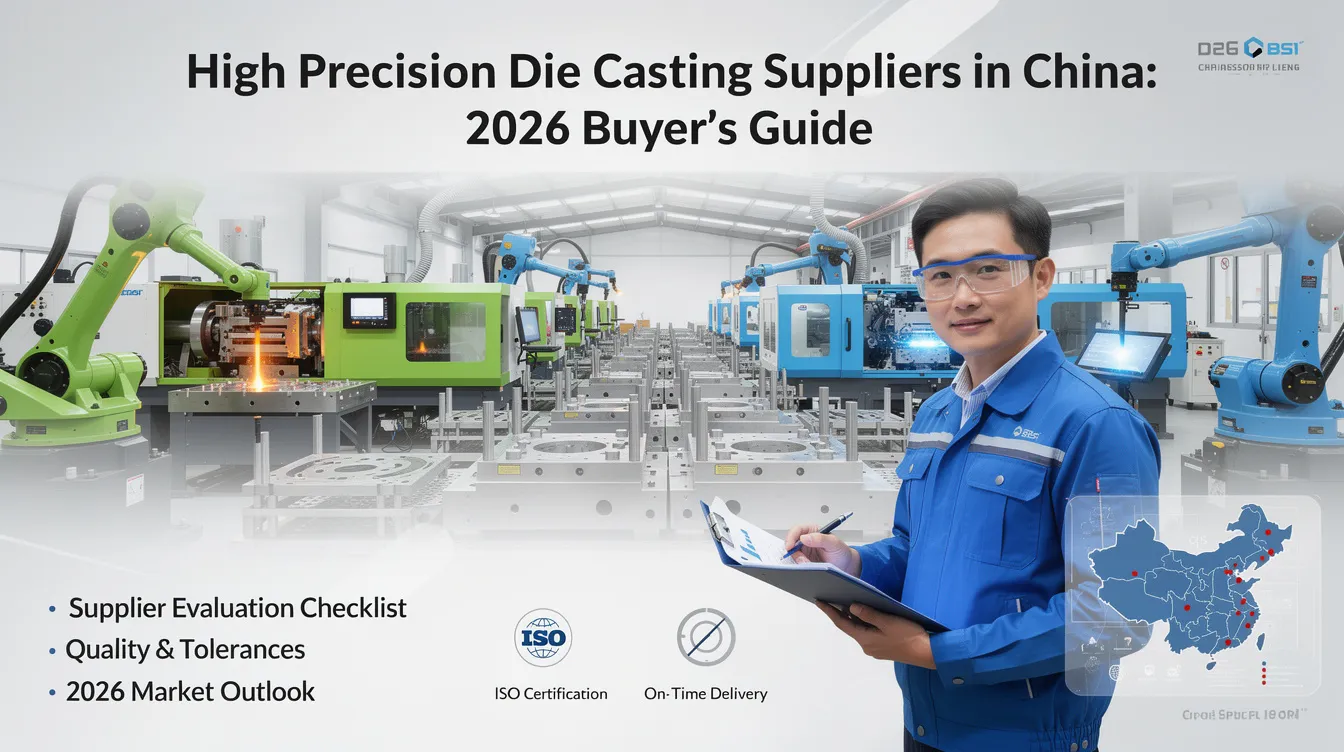
High Precision Die Casting Suppliers in China: 2026 Buyer’s Guide
Introduction: How to Find a High Precision Die Casting Supplier in China Quickly
In 2026, the phrase “high precision die casting suppliers China” describes a specific tier of manufacturer. These are factories capable of delivering as-cast tolerances around ±0.05 mm on small features, with post-machining accuracy reaching ±0.002 mm on critical dimensions. They combine the die casting process with cnc precision machining, in-house tooling, surface finishing, and rigorous quality assurance under one coordinated operation.
This article is written from the perspective of Anebon Metal Products Limited, an ISO 9001:2015 and ISO 14001:2015 certified die casting manufacturer and CNC machining specialist based in Dongguan, Guangdong, China, founded in 2010. We serve overseas OEMs across automotive, medical, aerospace, robotics, and electronics.
You will learn how to select a high precision die casting factory, what capabilities to demand, and how Anebon fits among casting manufacturers in china. We cover everything from aluminum die casting and high pressure die casting to die casting services, materials, costs, and quality systems so you can make an informed sourcing decision.
Why Source High Precision Die Casting from China in 2026?
China is the world’s largest die casting hub. In 2024, the country produced approximately 50.75 million tons of castings, with aluminum and magnesium alloy castings making up 16.4% of that total output. By 2025, China exported about 3.2 million tons of aluminum casting parts to global markets. In 2026, the aluminum die casting industry in China is valued at roughly USD 4.8 billion, fueled by demand from EVs, 5G infrastructure, and industrial equipment.
The cost case remains compelling. Chinese die casting costs are 30–70% lower than US/EU equivalents for comparable quality, depending on part complexity and volume. China hosts over 20,000 die casting factories, giving buyers access to a deep supply base for diverse die casting needs. The range spans small precision casting shops to large-scale die casting manufacturers with impressive annual production capacity running into tens of thousands of tons per year.
Integrated die casting services reduce lead time and total landed cost for OEMs by combining tool design, high pressure die casting, CNC machining, surface treatment, and assembly under one project. This is exactly where Anebon operates-focused on high-mix, medium-volume precision die casting parts rather than commodity castings, serving North America, Europe, Japan, and Australia with full documentation, PPAP capability, and RoHS/REACH compliance.
What “High Precision” Really Means in the Die Casting Process
Precision die casting is not a single number-it is a system of dimensional controls, surface quality standards, and metallurgical requirements working together.
High pressure die casting produces parts with excellent dimensional accuracy because it uses 700–1,400 bar pressure to force molten metal into hardened steel dies at high speed. Typical as-cast aluminum tolerances land in the ±0.05–0.13 mm range for features under 100 mm. When critical areas like bearing bores or sealing faces require tighter control, CNC machining can achieve tolerances of ±0.005–0.01 mm. On the most demanding features, precision tolerances can reach ±0.002 mm in die casting projects that combine vacuum-assisted HPDC with 5-axis machining.
Concrete examples help clarify what buyers should specify. Sealing face flatness below 0.03 mm, bore concentricity within ±0.01 mm for motor housings, and minimum wall thickness of 0.8–1.5 mm in aluminum die casting with proper die design are all achievable at capable Chinese factories. As-cast surface roughness typically falls between Ra 1.6–3.2 µm, while machined surfaces reach Ra ≤ 0.8 µm. Porosity control is critical for high-stress components, verified through X-ray or CT inspection for applications in automotive, medical, and aerospace.
Buyers must define their requirements clearly on drawings: GD&T datums, tolerance zones, porosity acceptance class, surface treatment allowances, and critical-to-function features. Specifying which dimensions are as-cast versus machined directly impacts cost and feasibility.
Core Die Casting Processes Used by High Precision Suppliers
Not every casting process delivers the same precision. Understanding the differences helps you match process to part.
High pressure die casting (HPDC) dominates the precision die casting field. In this metal casting process, casting machines force molten metal into steel dies under extreme pressure to fill complex shapes rapidly. Cold chamber die casting is used for high melting point metals like aluminum alloys-A380, ADC12, and A360 are standard. Cold chamber machines range from 160T to over 4,000T, with advanced die casting machines above 6,000T used for structural EV components. Aluminum is the most common alloy used in die casting, and HPDC is the process that unlocks its full potential for production scale.
Hot chamber die casting is suitable for zinc and magnesium alloys. The hot chamber process keeps the injection mechanism immersed in molten metal, enabling faster cycles and finer detail for small, intricate metal components like connectors, fasteners, and decorative hardware.
Beyond HPDC, some casting manufacturers in china offer gravity casting, sand casting, permanent mold casting, investment casting (also called lost wax casting or wax casting), and multi-slide die casting, which allows for complex and accurate castings in zinc alloys. These serve niches where HPDC is impractical due to part size, geometry, or low volume.
Anebon focuses on aluminum and zinc high pressure die casting paired with precision machining. When customers require alternative casting process types, we coordinate with vetted partners to deliver a single-source experience.
Key Capabilities to Look For in High Precision Die Casting Suppliers in China
When evaluating any die casting supplier or casting supplier in china, your capability assessment should cover four areas: tooling, production, downstream processing, and quality control.
In-house mold design and die making is non-negotiable. Reputable die casting suppliers typically confirm mold design is done in-house using 3D CAD/CAE tools with mold flow simulation. This simulation can reduce air traps and porosity by up to 50%, directly improving yield and part quality. Look for die casting mold construction in H13 or SKD61 tool steel, with multi-cavity and family molds available for higher volumes. Die tooling expertise is crucial for minimizing porosity and warpage in die casting.
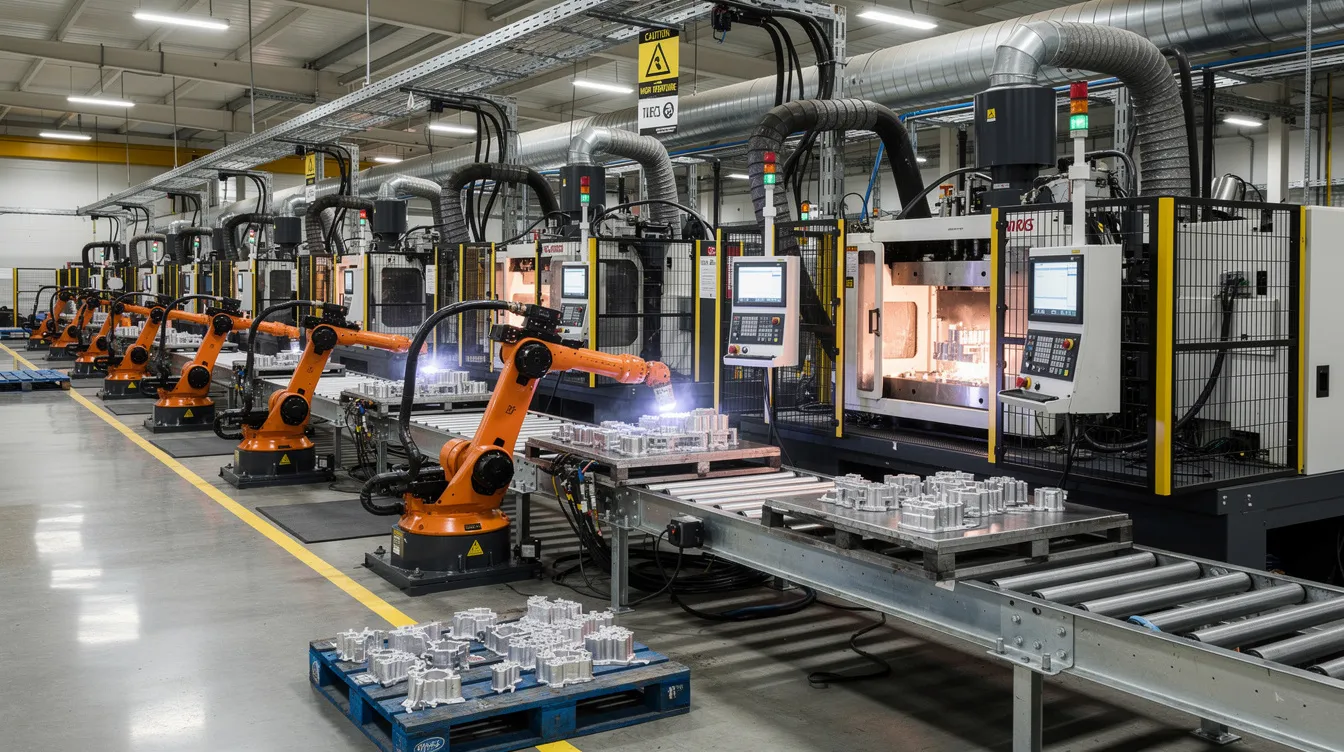
Production equipment should include a range of die casting machine tonnages-from 160T for small die casting products up to 2,500T or more for structural aluminum casting parts. Vacuum-assisted HPDC, robotic part extraction, and real-time process monitoring through advanced technology are markers of a serious casting manufacturer.
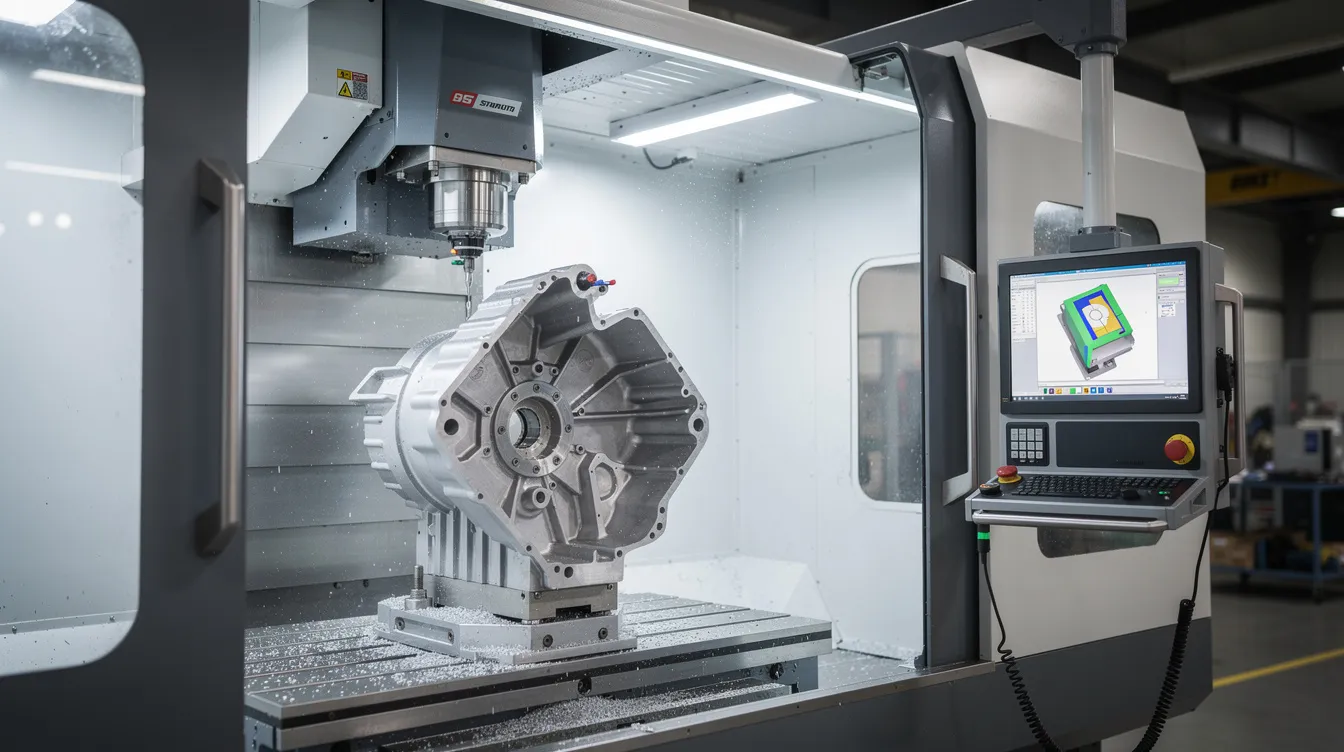
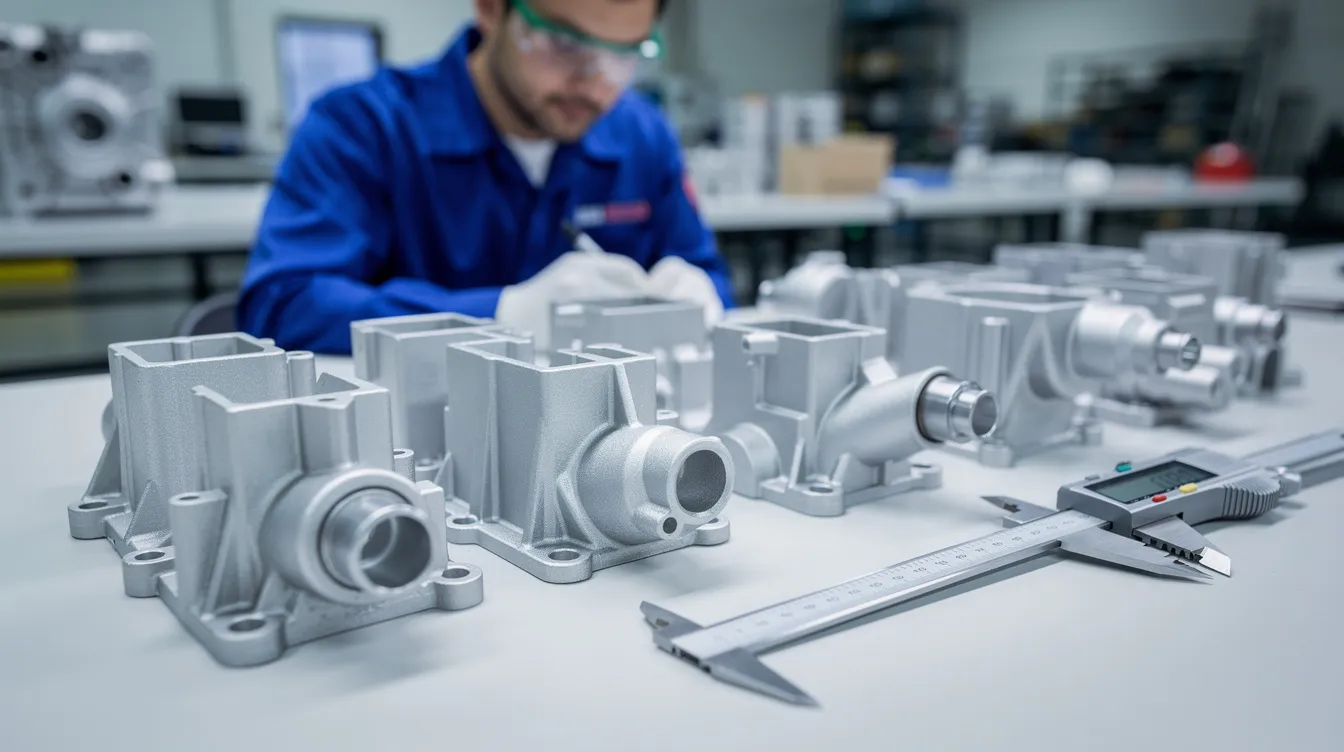
Downstream processing matters equally. A capable die casting supplier should offer in-house CNC machining to achieve tight tolerances, including 3-, 4-, and 5-axis milling, turning, automated deburring, and trimming. Reputable manufacturers should offer in-house tooling and advanced CNC machining as part of their standard service. Many also provide sheet metal fabrication and assembly for complete sub-assemblies.
Quality control rounds out the checklist. In-house testing equipment is necessary for quality control in high precision die casting. High-precision components require advanced inspection methods like X-ray and CMM testing, along with spectrometer analysis for alloy verification, leak testing, and SPC-driven process controls.
Anebon combines all of these capabilities in Dongguan, Guangdong, supported by a trusted local partner network for specialized surface finishing and heat treatment.
Anebon Metal Products Limited: Profile of a High Precision Die Casting Partner
Anebon Metal Products Limited, a co ltd based in Dongguan, Guangdong, was founded in 2010 as a precision CNC machining and die casting company serving overseas OEMs. Today Anebon is a casting company that specializes in aluminum die casting, zinc die casting, magnesium die casting, cnc machining, and sheet metal fabrication-from rapid prototyping to mass production.
Anebon holds ISO 9001:2015 and ISO 14001:2015 certifications, ensuring quality management systems are controlled and environmental responsibilities are met. Reputable suppliers of high precision die casting in China often specialize in aluminum, zinc, and magnesium alloys, and Anebon is no exception.
The facility houses cold chamber HPDC machines spanning 160T to 800T, multiple CNC machining centers (3-axis through 5-axis), and a dedicated inspection lab equipped with CMMs, spectrometers, and X-ray equipment for structural castings. Annual production capacity covers medium-volume OEM programs across aerospace, medical devices, robotics, industrial machinery, automotive, and electronics. Anebon delivers high quality aluminum die casting parts with stable quality across production runs.
Anebon’s business model is built around B2B/OEM one-stop service. English-speaking engineers handle DFM feedback, project management, and milestone reporting so overseas clients always know where their project stands. Effective communication and project management are essential for successful die casting project outcomes, and this is a core part of how Anebon operates.
From Design to Tooling: How Precision Die and Mold Design Is Done
The journey from RFQ to production-ready tooling follows a well-defined path at any credible die casting factory.
It starts with an engineering review. When Anebon receives 3D models and 2D drawings, our team delivers DFM feedback within 2–5 working days, identifying potential issues with draft angles, wall thickness uniformity, undercuts, and gating feasibility. Detailed die design then takes 1–3 weeks depending on part complexity, cavity count, and cooling requirements. Tool manufacturing itself runs 4–8 weeks for typical aluminum HPDC dies.
Die design engineering covers several critical considerations: draft angles of 1–3° on vertical faces for clean ejection, uniform wall thickness to prevent sink marks and hot spots, generous fillets and radii to improve metal flow, optimized gating and runner layouts for balanced filling, strategic venting to evacuate trapped air, cooling line placement for consistent die temperature, and overflow wells for porosity control.
Anebon’s engineers collaborate with overseas design teams via shared 3D models (STEP/IGES), online design reviews, and marked-up drawings. In a recent 2025 telecom enclosure project, this collaborative approach identified opportunities to reduce wall thickness variation by 15% and cut machining stock by 0.3 mm per side, lowering both cycle time and CNC cost significantly. That is what good die design support looks like in practice-catching problems before cutting steel, not after.
Die Casting Production, CNC Precision Machining, and Finishing Flow
Understanding the end-to-end production flow helps buyers set realistic expectations and identify where value is created-or lost.
Raw material receiving and melting: Incoming aluminum or zinc alloy materials are verified by spectrometer against the purchase specification. Ingots are melted in gas or electric furnaces, degassed, and held at controlled temperature before transfer to the casting equipment.
High pressure die casting: Cold chamber machines force molten metal into the die casting mold under 700–1,400 bar pressure. Cycle times for medium-complexity aluminum parts typically range from 30 to 90 seconds depending on wall thickness, part size, and cooling design. Robotic extraction removes the casting, and automated trimming presses separate runners and overflows.
CNC precision machining: This is where as-cast parts become precision die casting parts. Bearing bores, sealing faces, threaded holes, and alignment features are machined on 3- to 5-axis centers to achieve dimensional tolerances as tight as ±0.005–0.01 mm after CNC machining, and even ±0.002 mm on select features.
Surface treatment and finishing: Secondary processes such as surface finishing and heat treatment are important for die casting. Common treatments for aluminum die casting parts include anodizing, powder coating, chromate conversion, painting, and bead blasting. Each affects final dimensions and corrosion resistance, so tolerances must account for coating thickness.
Inspection and packing: Final parts pass through CMM verification, visual inspection, and where required, X-ray or leak testing before being packed for shipment.
Anebon coordinates these production processes for projects like EV motor housings and medical device manifolds, delivering ready-to-assemble metal components that meet print specifications out of the box.
Materials and Alloys Commonly Used by High Precision Die Casting Suppliers
Alloy selection shapes everything downstream-from die filling behavior to final part performance.
Aluminum alloys dominate. ADC12 is the workhorse of the Chinese aluminum die casting industry: it offers excellent castability, wide availability, and competitive cost. A380 aluminum alloy is widely used for its corrosion resistance and good balance of mechanical strength, making it a standard choice for automotive gearbox housings and industrial equipment enclosures. A360 provides better pressure tightness and thermal stability, suitable for components exposed to elevated service temperatures. Aluminum die casting parts can withstand high operating temperatures, which makes these alloys particularly valued in EV powertrain and led lighting thermal management applications.
Zinc alloys like Zamak 3 and Zamak 5 are ideal for intricate components that need fine detail and a smooth as-cast finish. Zinc die casting offers tighter as-cast tolerances than aluminum, making it the preferred choice for connectors, decorative hardware, and small mechanical die components where dimensional precision from the die is paramount. Zinc die casting is ideal for intricate and detailed components that would be difficult to achieve in aluminum.
Magnesium alloys are less common but serve lightweight structural applications where stiffness-to-weight ratio matters. Magnesium die casting requires careful melt management due to oxidation risks.
Alloy selection affects achievable minimum wall thickness, shrinkage behavior, machining speeds, and surface treatment compatibility. Anebon supports customers in choosing cost-effective alloy materials that meet both performance and compliance requirements such as RoHS and REACH. Sustainability trends include increased recycled aluminum content in die casting, and Anebon works with suppliers who track recycled content for environmentally conscious OEMs.
Industries and Applications Served by High Precision Die Casting in China
The casting industry serves a wide spectrum of sectors, each with distinct performance demands.
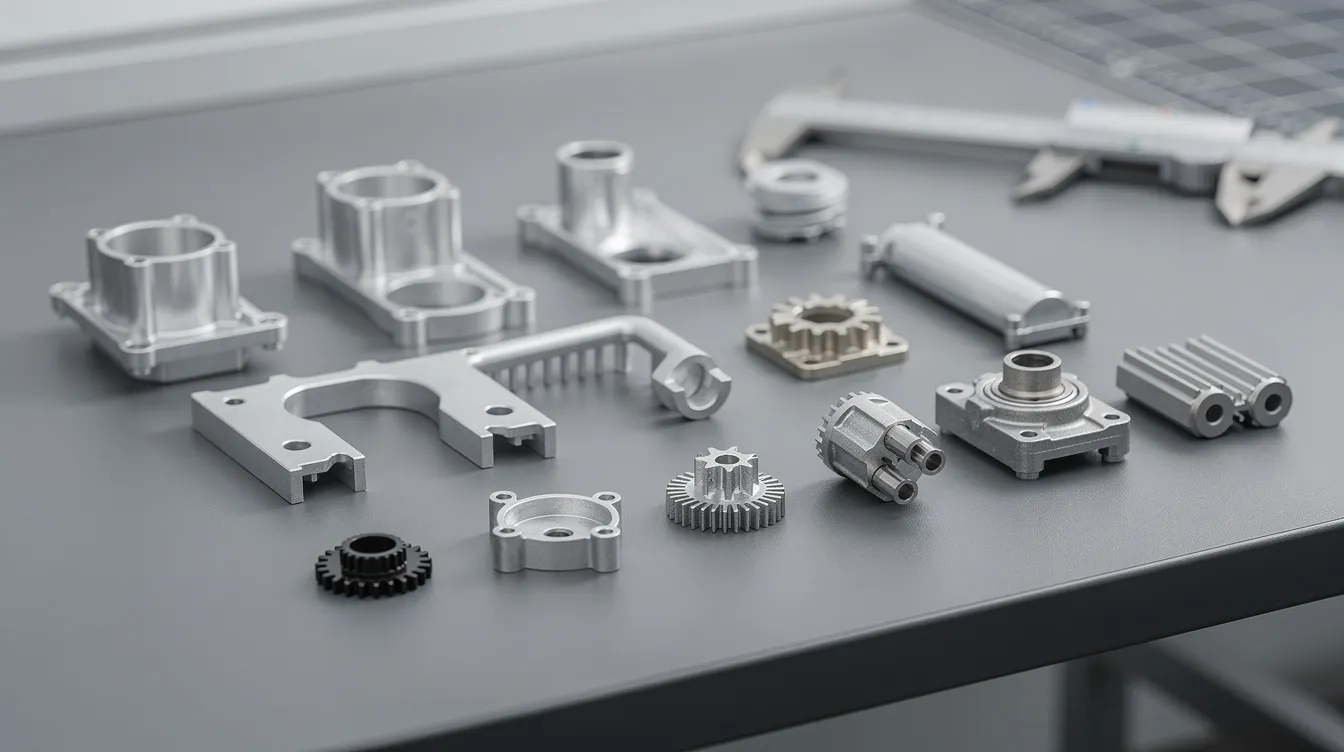
Automotive and new energy vehicles: High precision die casting is used in automotive components including inverter housings, motor end caps, transmission cases, and structural brackets. These parts require fatigue strength, excellent dimensional accuracy, and pressure tightness. The NEV sector is driving demand for ever-larger structural castings produced on high-tonnage machines.
Electronics and telecom: Consumer electronics use die casting for 5G base station heat sinks, EMI-shielded enclosures, and antenna housings where aluminum’s thermal conductivity and ability to form complex shapes are essential. These aluminum die casting parts serve in led lighting applications as well, dissipating heat in compact fixtures.
Medical devices: Medical devices utilize die casting for ventilator manifolds, pump housings, and imaging equipment components. Porosity-free, cleanable surfaces and stable dimensional performance across batches are critical.
Aerospace: Aerospace applications include brackets and sensor housings that must meet strict weight, strength, and traceability requirements. Precision casting combined with CNC machining delivers the tolerances and documentation these programs demand.
Robotics and industrial machinery: Robotics requires structural frames and joints from die casting. Robotic gearbox housings, actuator cases, and machinery components need rigid, lightweight, and accurately machined castings to perform under repetitive loading cycles.
Anebon’s customer base mirrors these sectors. We handle both prototypes and full-scale mass production for overseas OEMs, scaling production processes to match program requirements.
Quality Assurance, Certifications, and Traceability Expectations
Quality systems separate reliable die casting manufacturers from risky ones.
At baseline, buyers should expect ISO 9001:2015 certification, which ensures quality management systems are controlled. ISO 14001:2015 covers environmental management. For automotive-focused suppliers, IATF 16949 certification is essential for automotive quality management, and ISO 13485 applies for medical device production. Top die casting suppliers should hold certifications relevant to their industry and be willing to share audit reports.
Quality assurance includes incoming material inspection and in-process checks. Spectrometer analysis verifies alloy composition at receiving. In-process dimensional checks at the die casting machine and CNC stations catch drift early. Statistical Process Control charts can demonstrate consistent capability in production and are expected by automotive OEMs. Final inspection uses CMMs, optical measurement systems, and functional gauges.
For safety-critical parts, non-destructive testing is mandatory. Anebon uses X-ray inspection for safety-critical structural castings, and leak testing rigs validate pressure tightness on sealed components. Anebon’s quality systems rely on CMM and metrology for accuracy verification across every production lot.
Documentation and traceability round out the system. Material certificates, inspection reports, control plans, PPAP or FAIR packages for automotive and aerospace projects, and unique lot coding ensure full traceability from raw ingot to finished part. Digitalization in die casting includes AI-based defect prediction and process control, and leading die casting companies are beginning to deploy these tools to reduce scrap and improve first-pass yield.
Cost Drivers and Lead Times for High Precision Die Casting Projects
Understanding cost structure helps you budget accurately and avoid surprises.
Major cost elements include:
-
Die/mold fabrication: Simple single-cavity aluminum die casting molds start around USD 5,000–15,000 in China. Complex multi-cavity tools with vacuum systems, side cores, and conformal cooling can reach USD 50,000 or more. Die steel grade, expected mold life (typically 80,000–200,000+ shots for H13), and cavity count are the main drivers.
-
Alloy cost: Aluminum alloy prices fluctuate with LME markets. Shot weight and runner yield affect material consumption per part.
-
Machine time: Cycle time, machine tonnage, and automation level drive cost per shot. Larger die casting machine tonnages cost more per hour.
-
CNC machining hours: The number of machined features and their tolerances determine machining time. Fewer unnecessarily tight tolerances mean lower cost.
-
Surface treatment: Anodizing, powder coating, or chromate conversion each add cost. Complex masking or multi-step finishes add more.
-
Inspection intensity: X-ray, CMM sampling rates, and leak testing frequency all scale with quality requirements.
Design for manufacturability (DFM) is the most effective lever buyers have. Optimizing wall thickness, consolidating features, and specifying tight tolerances only where functionally necessary can reduce both tooling and per-part cost by 15–30%.
Realistic lead times in 2026 follow this pattern: quotation in 2–5 working days, DFM and die design in 1–3 weeks, tooling production in 4–8 weeks, T1 samples about 1 week after tool completion, PPAP or sample approval in 1–3 weeks, and mass production ramp-up in 2–4 weeks. Chinese public holidays, complex surface treatments, or large structural castings can extend these timelines. Early planning with Anebon helps mitigate delays.
For context on supplier scale, facilities vary widely-some die casting companies like Zhejiang Yulong Vehicle Industry operate in spaces over 30,000 m², while mid-size specialists like Anebon optimize for flexibility and responsiveness rather than sheer footprint. Others in the die casting field such as wencan die casting or EMP Tech Co Ltd have built operations specifically around automotive production scale with significant annual production capacity.
How to Evaluate and Engage High Precision Die Casting Suppliers in China
A structured evaluation process protects your investment and accelerates time to qualified parts.
Step 1: Capability and certification check. Verify ISO certifications, review the supplier’s casting services portfolio, and confirm they have the right machine tonnage range, in-house CNC machining, and inspection equipment for your parts. Ask for their equipment list and recent calibration records.
Step 2: Review sample parts or case studies. Request physical samples or detailed case studies showing similar die casting products in comparable alloys, tolerances, and volumes. Look at surface finish quality, dimensional reports, and how they handle complex shapes.
Step 3: Factory audit. Whether remote (video walkthrough) or on-site, evaluate cleanliness and organization, casting equipment condition, mold shop capability, CNC machining and inspection areas, and visible use of work instructions and process controls. A well-organized factory floor reflects disciplined production processes.
Step 4: Technical alignment. Share drawings, specifications, and QA requirements. Assess the supplier’s DFM feedback quality and responsiveness. This stage reveals engineering depth.
Step 5: Commercial negotiation and IP protection. Use NDAs, specify tooling ownership clearly in contracts, and consider splitting production of sensitive assemblies across suppliers if IP risk is a concern.
Anebon typically onboards new customers through an engineering review, DFM feedback session, sample plan, quality control plan, and clear milestone reporting across design, tooling, and production phases. This structured approach builds confidence before volume commitment. We provide transparent communication channels with English-speaking project engineers to keep every stage visible.
Case-Style Examples of High Precision Die Casting Projects with Chinese Suppliers
Real projects illustrate what “high precision” looks like in practice.
Example 1 – European Robotics OEM (Anebon, 2024–2025): A European robotics company needed aluminum motor housings with ±0.01 mm bore concentricity and flange flatness below 0.03 mm. Anebon used vacuum-assisted HPDC on a 500T cold chamber machine, followed by 5-axis CNC machining and full CMM inspection of every critical feature. The result: scrap rate held below 1.5%, on-time delivery across 12 monthly shipments, and a cost saving of approximately 40% versus the client’s previous European casting supplier in china alternative.
Example 2 – US Medical Device Startup (Anebon, 2023–2024): A US startup needed ADC12 ventilator manifolds with zero-porosity requirements on internal flow channels. Anebon delivered rapid prototypes within three weeks, moved to quick tooling, and implemented 100% X-ray testing for porosity control. Production scaled from 500 pieces in the pilot phase to 15,000 units per year within eight months, with consistent dimensional stability batch to batch.
Example 3 – EV Inverter Housing (General Chinese Supplier): An EV Tier 1 sourced A360 aluminum inverter housings from a Chinese die casting factory using a 1,250T machine. The precision casting project required pressure tightness to 3 bar, chromate conversion plus powder coating for corrosion resistance, and GD&T compliance on 14 machined features. The supplier achieved 98.5% first-pass yield and delivered a per-piece cost 35% below the incumbent European source.
How to Request a Quote from Anebon and Other Chinese Die Casting Factories
A well-prepared RFQ accelerates quoting and improves accuracy.
Before contacting Anebon or any die casting manufacturer, prepare the following:
-
3D CAD files (STEP or IGES format) and 2D drawings with full dimensions, GD&T, and tolerances
-
Expected annual volume and preferred batch sizes
-
Material/alloy specification
-
Surface treatment requirements (anodizing, powder coating, painting, etc.)
-
Quality requirements (inspection level, certifications, porosity class)
-
Target lead times and any regulatory standards (RoHS, REACH, IATF, etc.)
Include information on the final application and critical-to-function features so the supplier can tailor process windows and inspection plans accordingly.
Anebon’s typical quoting process works like this: our engineering team reviews your package within 2–5 working days. If DFM feedback is needed, we provide marked-up drawings with suggestions. You then receive a detailed quote covering tooling cost, piece price at different volume tiers, estimated lead times, and a proposed quality control plan.
Well-prepared RFQs reduce back-and-forth by 50% or more and help you compare die casting companies on an apples-to-apples basis.
Ready to get started? Send your drawings and requirements to Anebon for a no-obligation engineering review and customized quotation.
Conclusion: Choosing the Right High Precision Die Casting Supplier in China
Finding the right high precision die casting supplier in China comes down to verifiable capability, not marketing claims. The factors that matter are tooling expertise, casting equipment range, in-house precision machining, robust quality systems, and proven export experience.
In 2026, the bar for die casting manufacturers has risen. Buyers should expect not just competitive pricing, but engineering partnership: DFM feedback, mold flow simulation, vacuum-assisted HPDC, and comprehensive inspection including CMM and X-ray. The best die casting companies combine these with clear communication, documented traceability, and the flexibility to handle both prototyping and full production.
Anebon Metal Products Limited is an ISO-certified partner offering one-stop die casting services from DFM and rapid prototyping through full-scale production and assembly. We encourage buyers to apply the evaluation criteria discussed in this guide and to start with a pilot project or prototype run to validate fit before larger commitments.
The strongest supplier relationships are built on engineering depth, transparent communication, and continuous improvement-not one-off transactions. That is the standard Anebon holds itself to, and the standard you should demand from any casting company you evaluate.