Top High Precision Die Casting Suppliers in China for Quality Parts
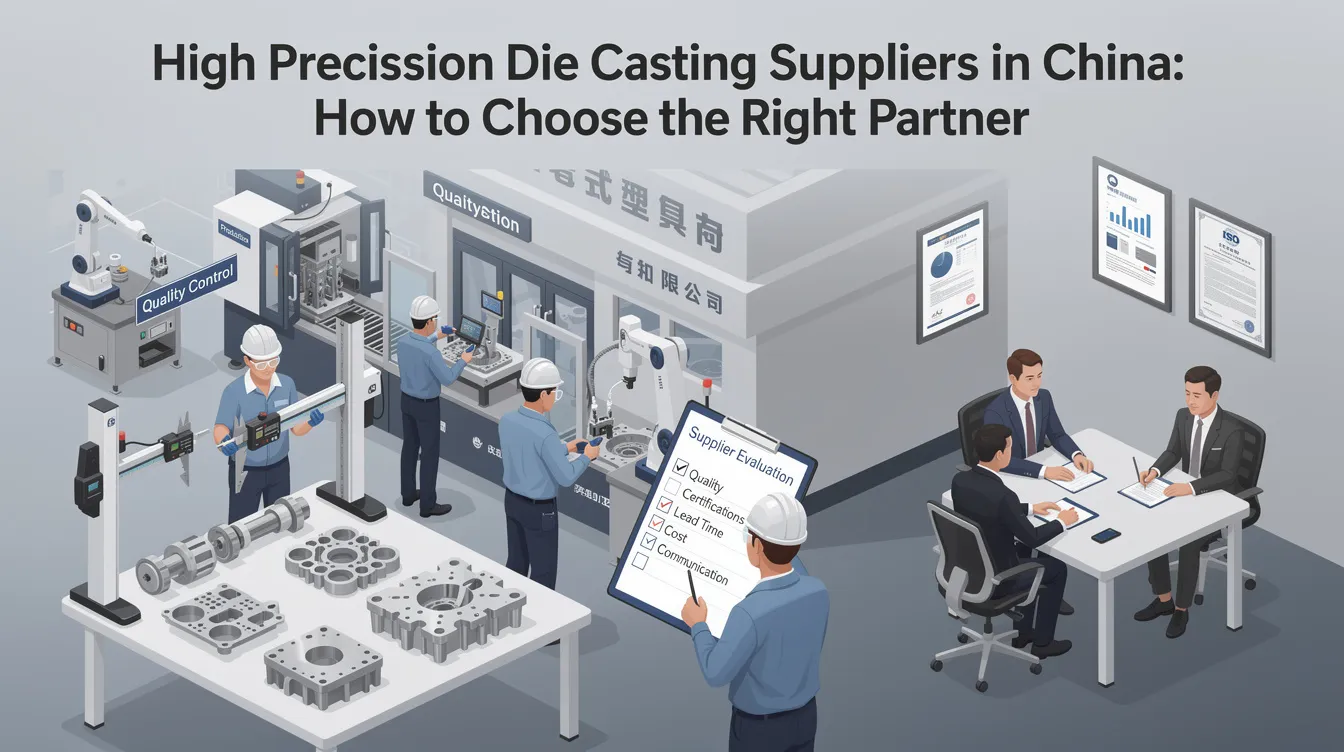
High Precision Die Casting Suppliers in China: How to Choose the Right Partner
Introduction: Why High Precision Die Casting Suppliers in China Matter in 2026
If you’re an overseas OEM or design engineer searching for high precision die casting suppliers in China, you already know the stakes. From EV motor housings and 5G base-station enclosures to surgical robot joints, the parts your products depend on must hit tolerances that were unthinkable a decade ago. China is a global leader in high-precision die casting, and the country has many capable die casting manufacturers ready to serve international buyers at scale.
Since 2020, the shift toward lightweight aluminum die casting has accelerated dramatically. The EV boom pushed demand for structural castings with thin walls and tight tolerances. Meanwhile, 5G infrastructure and robotics created new requirements for complex metal components with excellent dimensional accuracy. China’s industrial regions like Guangdong and Zhejiang have concentrated manufacturing capabilities that give overseas buyers access to deep tooling expertise, competitive pricing, and fast ramp-up.
Anebon Metal Products Limited, founded in 2010 in Dongguan, Guangdong, is one example of a trusted die casting manufacturer serving these markets. With ISO 9001:2015 and ISO 14001:2015 certifications, Anebon provides die casting, cnc machining, and sheet metal fabrication for OEMs across automotive, medical, aerospace, and electronics.
This article covers:
-
What high precision die casting actually means and when you need it
-
How to evaluate Chinese suppliers on capabilities, quality, and cost
-
The die casting process, DFM guidelines, and post-casting operations
-
Common pitfalls, industry trends, and how to work with Anebon as your reliable partner
What Is High Precision Die Casting? (And When You Really Need It)
Die casting is a metal casting process where molten metal is injected into a hardened steel die casting mold under high pressure, producing parts with fine detail and repeatable geometry. Aluminum die casting is the most common die casting process, favored for thin-wall, complex parts that demand strength without weight.
“High precision” means concrete numbers:
-
As-cast tolerances held to ±0.01 mm on critical features
-
CNC precision machining post-casting that reaches ±0.002–0.005 mm (Anebon’s capability extends to ±0.002 mm)
-
Surface finishes down to Ra 0.8–1.6 µm for cosmetic or sealing surfaces
-
Minimum wall thicknesses of 0.8–1.2 mm in aluminum
High-precision die casting is critical for industries like automotive, medical, and electronics. Standard die casting works fine for brackets or non-critical housings, but high pressure die casting is needed when parts must mate precisely, seal under load, or meet regulatory dimensional requirements.
Typical applications include:
-
Gearbox housings and robot joints for industrial machinery
-
Aerospace brackets and gimbal supports
-
5G base-station housings requiring EMI shielding
-
Medical imaging frames with traceability requirements
-
EV inverter cases and structural battery components
Aluminum die casting is lightweight and withstands high temperatures. Zinc die casting is ideal for intricate and detailed components. Magnesium die casting is lightweight and robust for weight-sensitive applications. A380 aluminum alloy is commonly used for its corrosion resistance, and aluminum die casting parts have high thermal and electrical conductivity. Zinc alloys are used for producing dimensionally accurate parts across electronics and marine hardware applications.
High precision reduces downstream machining time, eliminates assembly mismatches, and cuts field failure rates for sealing and structural components.
Overview of China’s High Precision Die Casting Industry
China dominates global aluminum casting and zinc die casting production, with specialized clusters that have matured since 2010. The main manufacturing hubs include Ningbo (Zhejiang), Dongguan and Shenzhen (Guangdong), Chongqing, and Suzhou/Jiangsu-each with advanced die casting factories, tooling shops, alloy suppliers, and export logistics.
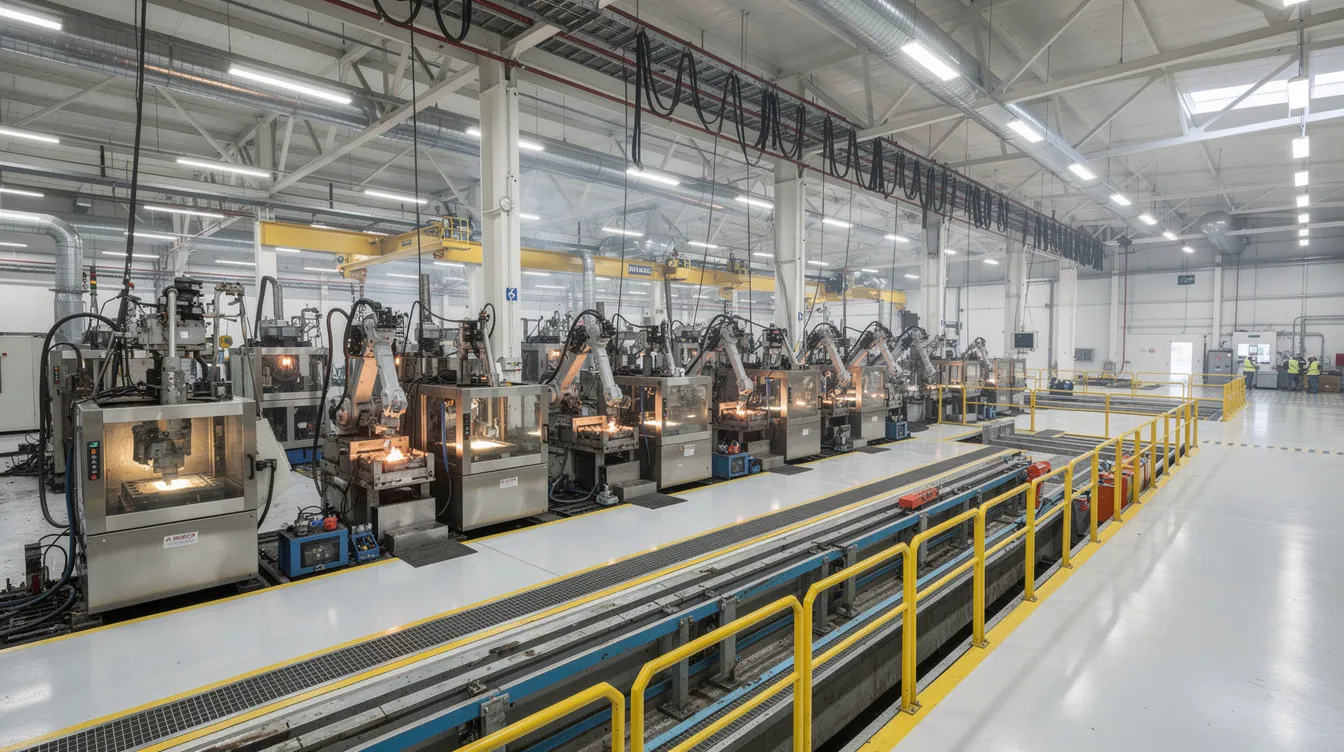
By 2025, many leading Chinese die casting co ltd operations had obtained ISO 9001, IATF 16949, and ISO 14001 certifications for automotive and industrial exports. Many Chinese die casting manufacturers hold ISO 9001 certification, and IATF 16949 certification is common among automotive die casting firms. ISO 14001 certification indicates environmental management compliance.
The range of supplier scales is broad. Global Metal Plastic operates a facility of 5,000 to 10,000 m², suitable for precision prototyping and mid-volume work. Zhejiang Yulong Vehicle Industry has a facility size over 30,000 m², reflecting impressive annual production capacity for high-volume automotive parts. Ningbo Yujun Mechanical Technology was established in 2014 and serves precision casting needs. Suzhou Xiyi Trading holds five quality certifications including ISO 9001. Dongguan Xinghang Precision Hardware focuses on high-precision aluminum die casting for export.
The distinction matters: commodity die casting services handle bulk, looser-tolerance parts. Specialized high-precision suppliers integrate mold design, vacuum casting, post-machining, and surface treatment into a single accountable workflow.
Key Capabilities to Look For in a High Precision Die Casting Supplier
When evaluating a die casting supplier, check for the following:
-
Casting machines in the right tonnage range. Leading manufacturers focus on high-tonnage automated machines for various applications, from 160 to 3,500 tons clamping force for thin-wall structural parts. Major suppliers often possess a range of cold and hot chamber die-casting machines.
-
In-house cnc precision machining. Look for 3-, 4-, and 5-axis CNC machining centers that hold tight tolerances without shipping parts between facilities. Suppliers offering integrated services can provide better tolerance control.
-
Advanced casting equipment. Automatic ladling, spray systems, real-time process monitoring, vacuum-assisted die casting, and mold-temperature control are baseline expectations for precision work. Reputable die casting manufacturers in China utilize advanced machining and inspection technologies.
-
Integrated tooling design. A die casting manufacturer should design and build its own molds with mold-flow simulation, especially for complex aluminum die casting parts.
-
Metrology assets. CMMs, optical scanners, roughness testers, and X-ray CT for porosity detection are non-negotiable for export-quality precision casting.
-
DFM feedback capability. A die casting company that provides engineering feedback early saves you weeks of revision. This is a key differentiator for overseas OEMs needing design support on alloy materials selection, wall thickness optimization, and gating strategy.
Aluminum Die Casting vs. Other Casting Processes
Aluminum die casting dominates when you need high volume, tight tolerances, and excellent surface finishing on complex parts. Here’s how it compares:
-
vs. Sand casting: Sand casting allows very large parts with low tooling cost, but tolerances are loose (±0.5 mm+), surface finish is rough, and per-part cost is high at volume. Die casting wins on repeatability and cycle speed.
-
vs. Investment casting (lost wax casting): Lost wax casting achieves complex geometries and fine surfaces, but tooling costs are higher, cycle times are slower, and it’s not ideal for structural parts. For a deeper comparison, see our die casting vs investment casting guide.
-
vs. Gravity casting and permanent mold casting: These processes sit between sand and die casting in precision and volume capability. Gravity casting suits medium runs of thick-walled aluminum casting parts but can’t match the dimensional repeatability of high pressure die casting.
The die casting process offers excellent dimensional repeatability and smooth surface finish (Ra 1.6–3.2 µm typical), ideal for cosmetic housings and sealing surfaces. Aluminum die casting is ideal for mass production of complex parts, and aluminum die casting parts are corrosion resistant and durable. Aluminum die casting supports rapid cycle speeds and consistent quality across production runs.
Sometimes you combine processes: aluminum die casting for housings, investment casting for complex low-volume internals, and precision machining for all critical features. A high-precision die casting company may provide services such as CNC machining and surface finishing to handle all of this under one roof.
Deep Dive into the High Pressure Die Casting Process
Understanding the casting process helps you evaluate whether a die casting factory has the right controls. Here’s the sequence:
-
Alloy melting and preparation. Raw material (aluminum ingots or certified scrap) is melted, degassed, and alloyed. Clean melt reduces inclusions and porosity.
-
Die preparation. The die casting mold is preheated to target temperature. Lubrication is applied. Mold flow simulation done during mold design anticipates flow and thermal behavior.
-
Injection under high pressure. Molten metal is forced into the die at 40–120 MPa. High-pressure casting produces excellent dimensional accuracy. Shot speed profiles are tuned to control turbulence and air entrapment.
-
Solidification. Cooling channels control the solidification front. Uniform cooling reduces warpage and porosity.
-
Ejection and trimming. Parts are ejected, and runners, gates, and flash are trimmed.
-
Secondary operations. Die casting cnc machining of critical features, heat treatment if needed, and surface treatment.
Cold chamber die casting requires separate heating of metal and is standard for aluminum alloys. Hot chamber die casting uses a hydraulic piston for injection and is used for zinc and magnesium. Multi-slide die casting allows for complex and accurate castings in smaller zinc components. Low-pressure injection uses air pressure to fill die cavities and is sometimes combined with gravity casting for thicker sections.
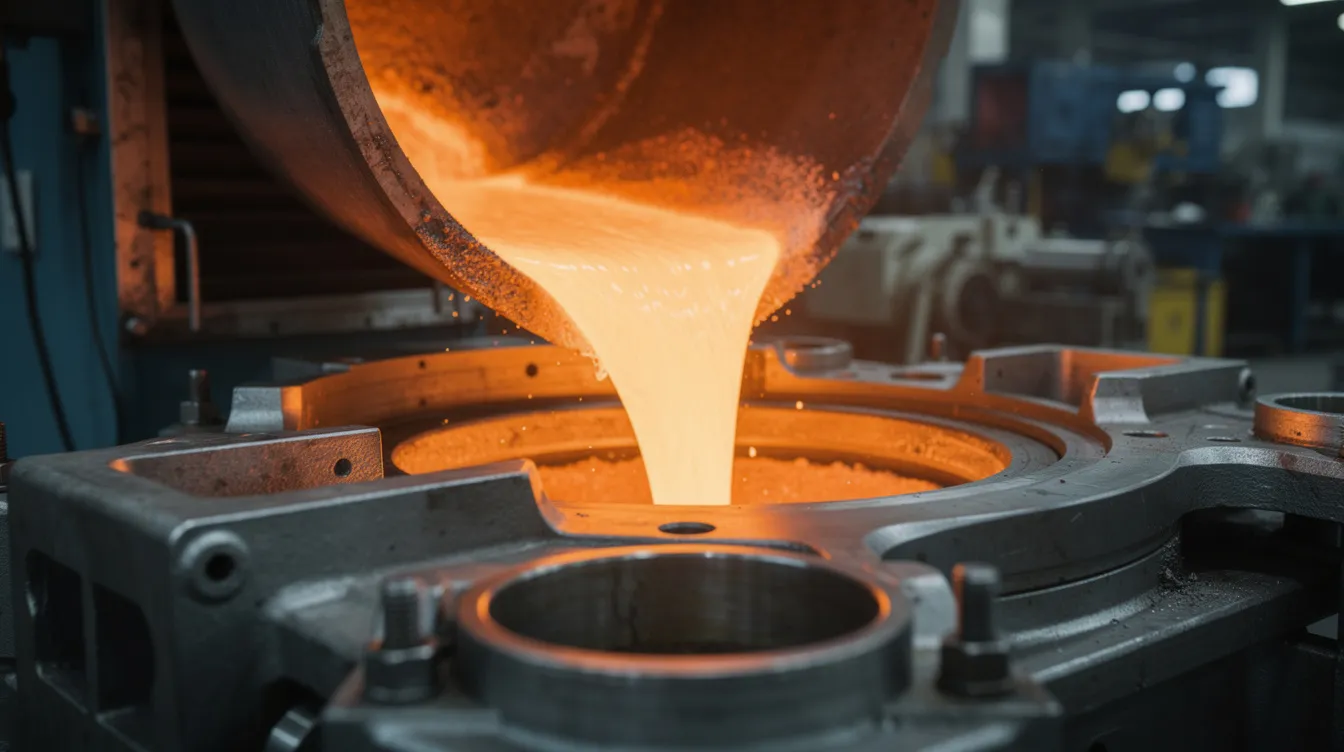
Top Chinese die casting factories use automated dosing furnaces, inline temperature control, vacuum-assist systems, and data logging for each shot. These production processes directly reduce porosity, warpage, and dimensional variation in die casting products.
Design for Manufacturability (DFM) with Chinese Die Casting Suppliers
Early collaboration with a casting manufacturer on DFM reduces cost and lead time significantly. A supplier like Anebon would provide these guidelines:
-
Wall thickness: 1.5–3.0 mm is typical for aluminum die casting. Sections below 0.8 mm require vacuum-assist and careful design.
-
Draft angles: 1°–2° minimum on walls parallel to mold opening to avoid surface defects on ejection.
-
Fillet radii: ≥0.5× wall thickness at internal corners to prevent cold shuts and stress concentrations.
-
Parting line selection: Locate so critical surfaces aren’t split. Avoid undercuts or use sliders sparingly-each adds tooling cost.
-
Ejector pin placement: Position away from cosmetic surfaces. Poor placement creates visible marks.
-
Gate and overflow design controls flow direction and reduces porosity in critical sealing surfaces.
Good DFM can reduce CNC machining time by 20–40% on complex OEM parts. Tools and molds should be maintained for longevity to affect costs over the program life.
CNC Precision Machining After Die Casting
Even the best near-net-shape die casting parts need finishing precision machining on functional features. Typical post-casting operations include:
-
Milling of reference faces and mounting surfaces
-
Drilling and tapping threaded holes
-
Boring tolerance-critical bores for bearings or shafts
-
Contour finishing for sealing grooves
High-precision suppliers in Guangdong and Zhejiang use 5-axis CNC machining to achieve dimensional accuracy of ±0.002–0.005 mm on aerospace and medical parts. Fixture design that references cast datums and compensates for minor casting variation is critical to consistent results.
Anebon integrates CNC machining cells adjacent to die casting cells to shorten lead times and improve consistency. This reduces handling, eliminates inter-supplier transport, and keeps quality feedback loops tight.
Surface Treatment and Finishing Options
Surface treatment is essential for corrosion resistance, appearance, and functional performance of aluminum die casting parts. Common options include:
-
Anodizing (clear, black, hard) for wear and corrosion protection
-
Powder coating for durable, uniform color finishes on housings and enclosures
-
Wet painting for custom colors and UV resistance
-
Chromate conversion for conductive corrosion protection on electronic components
Functional coatings include EMI shielding for electronics, nickel plating for wear resistance, and PTFE-based coatings for low friction. For a deeper dive, refer to our comprehensive guide to surface treatment processes.
The surface finishing sequence matters: deburring → shot blasting or sand blasting → machining → cleaning → masking → coating. Anebon manages in-house and qualified partner treatment lines in Guangdong with documented process control for film thickness (±10 µm) and salt spray resistance.
Quality Control Systems You Should Demand
Stable quality in precision casting demands robust systems, not just good casting machines. Here’s what to verify:
-
ISO 9001:2015 for quality management-universal among serious exporters
-
IATF 16949 for automotive programs. ISO 9001 and IATF 16949 certifications ensure robust quality control.
-
ISO 14001:2015 for environmental management
-
ISO 13485 certification is essential for medical device manufacturers
-
VDA 6.1 certification is recognized in the automotive industry, particularly for European OEMs
Quality certifications reflect a supplier’s adherence to industry standards. Concrete inspection steps to demand:
-
Incoming material analysis via spectrometer (alloy composition verification)
-
In-process SPC on dimensions, shot pressure, and die temperature
-
First-article inspection (FAI) with full dimensional reports
-
Final 100% visual checks before packaging
-
CMM dimensional reports, X-ray inspection for porosity in pressure-tight components, and salt-spray testing for coated parts
A supplier like Anebon shares PPAP, FAI reports, control plans, and capability studies (Cp, Cpk) with overseas clients as standard practice for quality assurance.
How to Evaluate a Die Casting Factory in China Remotely
Since 2020, remote auditing and online supplier qualification have become standard practice. Here’s a practical checklist:
-
Request factory videos showing casting equipment, machining cells, and inspection labs in operation
-
Confirm floor area, machine tonnage ranges, and annual production capacity
-
Obtain recent quality documents: certificates, process flow charts, sample inspection reports, and control plans
-
Run a paid prototype or pilot batch to evaluate real communication quality, lead time accuracy, and defect handling. A practical evaluation process includes reviewing certifications and requesting sample parts.
-
Third-party audits can verify factory capacity and quality management systems. Use auditors based in Dongguan, Ningbo, or Chongqing for on-site verification when needed.
Cost Drivers in High Precision Die Casting
China offers competitive pricing for die casting, but precision adds specific cost factors that buyers must understand:
-
Primary drivers: Die tooling complexity (multi-cavity, slide cores, premium steel grades), alloy choice (aluminum vs. zinc alloys vs. magnesium), part weight, die casting machine tonnage, and expected annual volume
-
Secondary drivers: Tight tolerance zones requiring extra CNC machining passes, slower cycle times for thin-wall or vacuum-assisted parts, and post-surface treatment requirements
-
Design optimization: Consolidating multiple parts into a single casting, setting realistic tolerance bands, and simplifying parting lines all reduce total landed cost
-
Logistics: Most overseas OEMs ship FOB Shenzhen or Ningbo. Factor in packaging, customs documentation, and potential tariff exposure for your target region.
Common Defects in Die Casting and How Top Suppliers Prevent Them
Even advanced factories must manage defects. Understanding them helps you assess a die casting supplier’s process maturity.
Common defect types:
-
Gas porosity (hydrogen or trapped air)
-
Shrinkage porosity (thick-to-thin transitions)
-
Cold shuts and misruns (inadequate flow or low die temperature)
-
Flash (worn dies or excessive clamping gaps)
-
Warping (uneven cooling)
-
Blistering after painting (subsurface gas pockets)
Defect prevention strategies may include vacuum die casting and thorough X-ray testing. Top suppliers also use optimized venting and gating layouts, die temperature control, and controlled shot speed profiles. Process capability data and historic defect rates from suppliers help engineers assess risk before committing to production scale.
Anebon uses mold flow simulation and real-time process monitoring to keep defect rates low for export customers in regulated industries.
Industries That Benefit Most from Chinese High Precision Die Casting
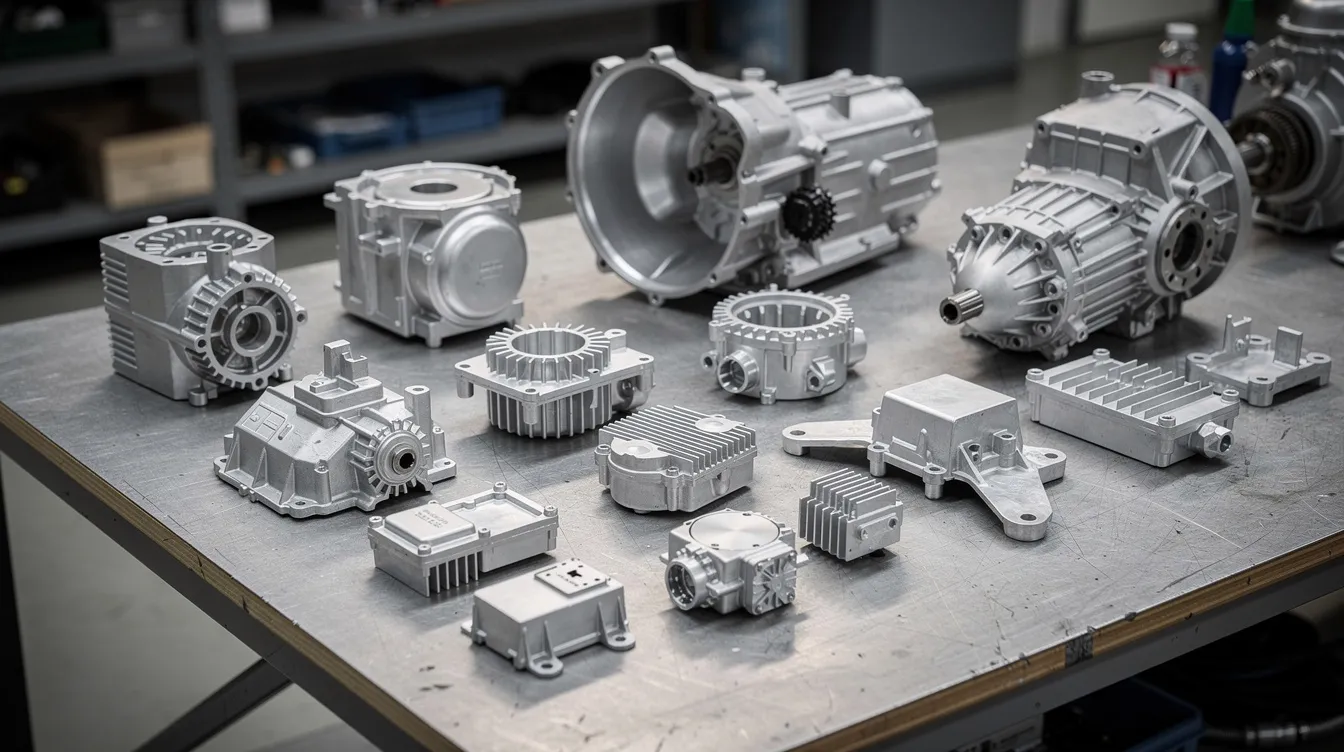
-
Automotive and EV: Motor housings, inverter cases, transmission cases, and structural battery components supplied to Tier-1s. Wencan die casting and similar companies in the die casting field have served this sector since around 2015. The aluminum die casting industry continues to grow as automakers push for lightweight alloy die casting solutions.
-
Medical devices: Imaging equipment frames, pump housings, and surgical robot joints requiring clean surfaces and full traceability. ISO 13485 is the baseline here.
-
Electronics and telecom: 5G base-station housings, heat sinks for led lighting, and EMI-shielded enclosures for global OEMs. Electrical conductivity and corrosion resistance are key material selection criteria for electronic components.
-
Industrial machinery and robotics: Gearboxes, servo motor housings, robotic arm links, and AGV chassis components. These applications for industrial equipment demand stable quality over long production runs, plus capability in construction machinery housings and marine hardware.
-
Aerospace and drones: Lightweight brackets, gimbal housings, and high-stiffness structural components where every gram matters.
Anebon focuses on these high-value segments rather than generic commodity castings, serving as a trusted partner for OEMs with die casting needs in regulated markets.
Case-Style Examples of High Precision Die Casting Projects
-
EV inverter housing (European OEM): Originally machined from billet aluminum, the part was redesigned for aluminum die casting in 2021. Combined casting and CNC machining held all critical bore tolerances. Cost dropped over 30%, and production scale ramped to 5,000 units/month within three months.
-
Medical device enclosure (US OEM): Tight cosmetic and dimensional requirements drove the selection of vacuum die casting with CMM inspection at every stage. Powder coating met FDA-compliant finish expectations. Full PPAP documentation was delivered before mass production began.
-
Robotics gearbox housing: Thin walls (1.8 mm) with complex internal ribs required optimized gating and cooling to minimize warpage. Many manufacturers support rapid prototype tooling before full production-this project went from prototype to 10,000 pcs/month with stable quality in under four months.
-
5G telecom enclosure: ADC12 aluminum alloy die casting with integrated EMI shielding features and anodized finish. Die casting cnc machining on mounting faces held ±0.01 mm. The casting supplier in China delivered consistent batches over 18 months with zero field returns.
Each example combined die casting process control, precision machining, and surface treatment to deliver production-ready die casting parts.
Working with Anebon Metal Products Limited as Your High Precision Partner
Anebon Metal Products Limited is a Dongguan-based OEM-focused die casting and CNC machining company founded in 2010. Supplier experience with specific materials and product complexity is essential-Anebon brings over 15 years of export project history.
-
Core capabilities: High pressure aluminum die casting, zinc die casting, precision CNC milling and turning, and sheet metal fabrication
-
Certifications: ISO 9001:2015 and ISO 14001:2015, with machining tolerances as tight as ±0.002 mm on critical features
-
One-stop service: Design consulting (DFM), rapid prototyping, tooling design and manufacturing, casting, machining, surface treatment, assembly, and export logistics
-
Client profile: Overseas OEMs and R&D teams in automotive, robotics, electronics, medical, and industrial machinery needing repeatable high-precision metal components
End-to-End Project Workflow with a Chinese High Precision Die Casting Co Ltd
A typical project follows these steps:
-
RFQ and NDA – Submit 3D models, 2D drawings, and volume forecasts
-
DFM review and cost optimization – Engineering feedback on wall thickness, draft, gating, and alloy selection
-
Tooling design with mold-flow simulation – Die design finalized with fill, cooling, and stress analysis
-
Tool manufacturing – Typically 4–6 weeks for aluminum die casting molds after drawing approval
-
Sample submission (T0/T1) – First articles produced within 1–2 weeks of tool completion
-
Validation and PPAP – Dimensional, material, and surface reports shared for customer approval
-
Ramp-up to production – Volume increases per agreed schedule
-
Continuous improvement – Process monitoring, periodic tool maintenance, and yield optimization
Anebon communicates at each step using drawings, 3D models, inspection reports, and video updates to keep overseas teams aligned. For more on accelerating your production with rapid castings, see our detailed guide.
Documentation, Traceability, and Compliance for Overseas OEMs
For automotive, medical, and aerospace customers, documentation is as important as the parts themselves. Standard documents include:
-
Material certificates and alloy composition reports
-
RoHS/REACH declarations
-
Inspection reports (dimensional, visual, functional)
-
PPAP packages and control plans
-
Capability studies (Cp, Cpk)
Traceability approaches include lot numbers on castings, barcodes on packaging, retained samples, and digital record keeping for multi-year production runs. Anebon can also comply with customer-specific requirements such as IMDS submissions, special cleanliness standards, and custom packaging for sensitive die casting products.
Pitfalls to Avoid When Sourcing Die Casting in China
-
Choosing purely on lowest price without checking tooling quality, process capability, and export experience. Cheap dies wear fast and produce inconsistent parts.
-
Incomplete drawings or vague tolerance specs lead to disputes. Always provide clear 2D/3D data with acceptance criteria before requesting quotes.
-
Overlooking surface treatment requirements and discovering late that the die casting factory cannot meet cosmetic or corrosion standards for your application.
-
Ignoring communication responsiveness. Time-zone handling and English-speaking engineering contacts-like those at Anebon-make the difference between smooth projects and costly delays.
-
Skipping pilot runs. Never go straight to mass production without validating a paid prototype batch to evaluate real-world quality and defect handling.
How to Request a Quote and Get Reliable Cost & Lead Time Estimates
To get accurate quotes from high precision die casting suppliers in China, prepare your RFQ with:
-
3D models (STEP/IGES format) and 2D drawings with tolerances clearly marked
-
Annual volume forecast and target start date
-
Target region (EU/US) for compliance and logistics planning
-
Preferred alloy (e.g., A380, ADC12, AlSi10Mg) and surface treatment requirements
-
Any special testing or certification needs
Anebon can also advise on material and finishing options if you only provide functional requirements. Typical response times are 24–48 hours for basic quotes. Quote accuracy depends on gating feasibility, expected tool life, and finishing complexity.
Request alternative options-single cavity vs. multi-cavity molds, for example-to see cost vs. lead-time trade-offs clearly.
Future Trends in High Precision Die Casting in China
The die casting field is evolving rapidly. From 2024 through 2030, several developments are reshaping how casting companies operate:
-
Structural “mega-castings” for EV body-in-white components, replacing dozens of stamped and welded parts with single large aluminum castings using cutting edge technology and machines over 6,000 tons
-
Automation: Robotic deburring, automated inspection with vision systems, and real-time process analytics are becoming standard in leading factories
-
Digital twins and AI: Simulation of every shot parameter, predictive maintenance, and AI-driven process control using advanced technology are reducing scrap and cycle times
-
Sustainability: Greater emphasis on scrap recycling (>95% in top shops), energy-efficient melting, and greener coatings with fewer volatile organic compounds
Anebon continues investing in advanced casting equipment, 5-axis machining, and data-driven quality systems to remain a trusted die casting supplier for overseas customers.
Conclusion: Finding a Trusted Die Casting Partner in China
Choosing the right die casting manufacturer comes down to five factors: process capability, precision, quality systems, engineering support, and communication. Price matters, but it should never be the sole criterion when your parts must hold ±0.01 mm as-cast or ±0.002 mm after machining.
Working directly with a high precision die casting factory in China that integrates tooling, casting, cnc machining, and surface treatment under one roof gives you accountability, speed, and consistency that multi-vendor supply chains cannot match. The casting supplier you select should be a trusted partner, not just a vendor.
Contact Anebon Metal Products Limited for a detailed DFM review or to request a quote on your next aluminum die casting project. Whether you’re an overseas OEM, design engineer, or R&D team, Anebon is ready to be your long-term, reliable partner for high-precision die casting parts that perform in the field.