Top High Precision Die Casting Suppliers in China for Quality Parts
High Precision Die Casting Suppliers in China: How to Choose the Right Partner in 2026
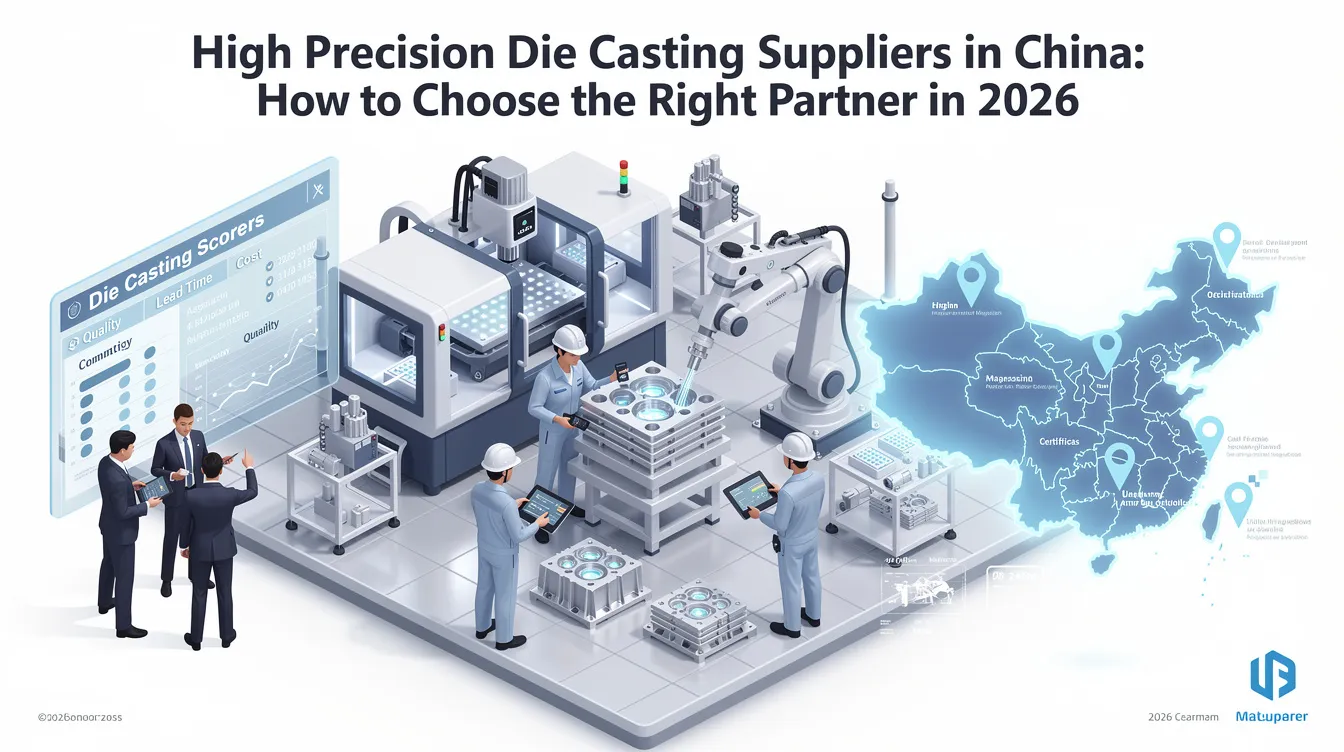
Finding the right high precision die casting supplier in China can determine whether your next product launch succeeds or stalls. This guide breaks down what to evaluate, what to demand, and how to structure a partnership that delivers repeatable results.
Quick Overview: Finding a High-Precision Die Casting Supplier in China
China is a global hub for high-precision die casting, and manufacturers in China often excel in managing complex geometries for various materials. For buyers in EV, robotics, medical devices, 5G hardware, and aerospace, “high precision” means a casting supplier in China that delivers parts with tight tolerances, controlled porosity, quality surface finishing, and full traceability-not just raw castings.
This article is written from the perspective of Anebon Metal Products Limited (Co Ltd), an ISO 9001:2015 and ISO 14001:2015 certified OEM partner founded in 2010 in Dongguan, Guangdong. Anebon’s core capabilities span high pressure die casting, aluminum die casting, and cnc precision machining-the three pillars buyers should evaluate in any serious supplier.
Key takeaways to keep in mind:
-
Tolerances: ±0.1–0.2 mm as-cast; ±0.005–0.02 mm after CNC on critical features
-
Certifications to demand: ISO 9001:2015, ISO 14001:2015, IATF 16949 (automotive), ISO 13485 (medical)
-
Tooling lead time: 4–6 weeks for medium-complexity molds
-
T1 samples: 1–2 weeks after mold completion
-
Validation and PPAP: 2–4 weeks
What “High Precision” Really Means in Die Casting
High-precision die casting offers excellent dimensional accuracy and repeatability, but the term means different things depending on whether you’re talking about as-cast or post-machined features.
-
As-cast tolerances in aluminum HPDC typically fall within IT8–IT10, or roughly ±0.10–0.20 mm per 25 mm of linear dimension
-
After CNC finishing, critical features can be held to IT6 or better-±0.005–0.02 mm on holes, mounting bosses, and sealing faces
-
Flatness on sealing surfaces is often specified at ≤0.02 mm over 100 mm
-
Surface roughness as-cast runs Ra 3–6 µm; after machining, ≤0.8 µm is standard for gasket interfaces
Die casting is recognized for producing thin-walled and highly precise net-shape parts, but achieving this demands advanced mold design, mold-flow simulation, and tightly controlled die casting process parameters. Die casting can produce parts with high dimensional accuracy only when the entire system-tooling, process, and finishing-is engineered together.
Examples of precision casting components include EV inverter housings with thermal-pin geometries, 5G base-station heat sinks with 0.5 mm fins, and surgical tool handles requiring full traceability.
Key Die Casting Processes Used by Chinese Precision Suppliers
Top-tier suppliers typically run several metal casting process types under one roof. Here’s what matters:
-
High pressure die casting (HPDC): The dominant process for aluminum and magnesium die casting. Uses cold chamber or hot chamber machines depending on alloy. Die casting is inherently fast and efficient for large-scale production, making HPDC ideal for volumes from thousands to millions of parts.
-
Cold chamber die casting: Used for aluminum and alloys with higher melting points. Cold chamber die casting requires separate heating of metal before injection into the die.
-
Hot chamber die casting: Used for zinc alloys and some magnesium alloys. Hot chamber die casting uses a hydraulic piston for injection, enabling faster cycles for lower-melting-point metals. Zinc die casting via hot chamber tends to yield finer surface details.
-
Supplementary processes: Gravity casting for thick-section, heat-treatable parts (e.g., A356-T6); low-pressure casting for pressure-tight components; permanent mold casting for moderate volumes; and prototype or soft tooling for early validation.
Multi-slide die casting allows for complex part designs in certain zinc and small-component applications. Some buyers also compare die casting against investment casting (lost wax casting / wax casting) or sand casting; you can review the differences between die casting and investment casting to determine the best fit. Anebon focuses on HPDC plus CNC finishing rather than sand casting for programs requiring tight tolerances.
Aluminum Die Casting Capabilities: What to Look For
Aluminum is the most common alloy used in die casting, and aluminum die casting is the most common die casting process globally. Here’s why it dominates and what to evaluate:
-
Properties: Aluminum die cast parts have high thermal and electrical conductivity, making them ideal for heat sinks, motor housings, and electronic components. Aluminum die casting is lightweight yet withstands high temperatures, which is critical for powertrain and industrial equipment applications.
-
Common alloys in 2026: A380 aluminum alloy is commonly used for die casting-it offers high corrosion resistance and strength. Other popular choices include ADC12, A360, and AlSi10Mg, each targeting specific properties like thermal conductivity, castability, or mechanical performance. These alloy materials give engineers flexibility across application types.
-
Machine tonnage: Ask about locking force range. Leading Chinese plants run casting machines from 160 T to 3,500 T, handling aluminum casting parts from a few grams to 20+ kg.
-
Alloy die casting strategy: Anebon selects alloy and gate design to balance precision, strength, and cost for aluminum die casting parts serving overseas OEM customers.
Aluminum die casting is ideal for mass production of complex parts, and aluminum die casting can withstand high operating temperatures-both factors that keep aluminum die casting industry growth strong through 2026.
CNC Precision Machining and Tight-Tolerance Finishing
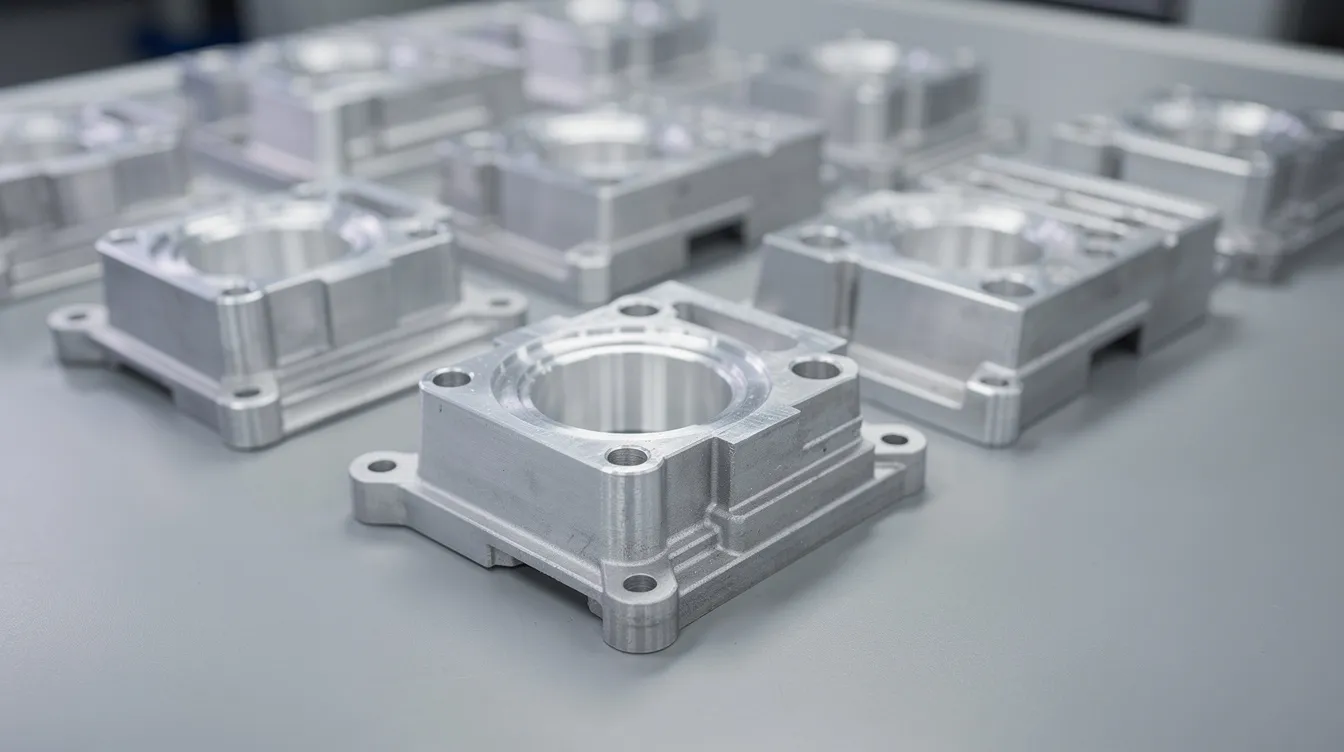
Even the best die casting parts require CNC finishing for functional interfaces. Suppliers often integrate CNC machining and surface finishing to reduce assembly work and maintain dimensional consistency across the full part.
Typical die casting cnc machining operations include:
-
3-axis and 5-axis milling for complex geometries
-
Turning, drilling, tapping, and reaming for precision holes
-
Surface milling and lapping of sealing faces
Anebon commonly holds ±0.002–0.01 mm on critical dimensions after precision machining, with surface roughness Ra < 0.8 µm on sealing surfaces. CMM-driven in-process checks, tool wear monitoring, and SPC keep high-volume programs within spec.
A true high precision die casting supplier should be evaluated as a combined casting + CNC machining system, not casting alone.
Surface Treatment and Cosmetic Requirements
Surface treatment is central to performance, corrosion resistance, and appearance in aluminum die casting products. Common options Chinese precision suppliers provide include:
-
Anodizing and hard anodizing
-
Powder coating and liquid painting
-
Chromate conversion coatings (trivalent for environmental compliance)
-
Polishing, bead blasting, shot blasting
-
Heat treatment for mechanical property improvement
The die casting manufacturer must design for coating thickness, masking, and cosmetic zones from the DFM stage. Anebon coordinates surface treatment with dimensional control, especially where coatings affect fits or electrical conductivity zones. For Class-A consumer-facing surfaces, lightbox inspection and strict color-matching protocols apply.
Core Industries Served by High-Precision Die Casting Suppliers in China
Chinese die casting suppliers serve industries such as automotive and aerospace, along with medical, telecom, and robotics. Aluminum alloys are ideal for automotive and medical applications, and aluminum die casting parts are used in automotive and electronics industries extensively.
-
Automotive & EV: Motor housings, EV chassis components, inverter housings, gearbox covers, battery structural parts
-
Medical devices: Enclosures, imaging brackets, surgical handles-requiring ISO 13485-level documentation
-
Electronics & telecom: 5G heat sinks, base station chassis, led lighting housings, EMI shielding enclosures
-
Robotics & industrial machinery: Servo motor bodies, gearbox housings, construction machinery brackets
-
Aerospace: Support brackets, marine hardware, structural metal components requiring full traceability
-
Other: Electronic components, industrial equipment housings, precision casting assemblies
Anebon primarily supports overseas OEMs in the EU, US, and Japan across these sectors, delivering batch-certified automotive manufacturing solutions with EN/ASTM material equivalents.
How the High-Precision Die Casting Process Works from RFQ to Mass Production
Here’s the typical project lifecycle and what production processes look like:
-
RFQ & DFM: Buyer submits 3D model (STEP/IGES), 2D drawings with GD&T, volume, and specs. Anebon returns DFM feedback within a few working days-gating suggestions, draft angles, wall thickness analysis.
-
Tooling design & build: Die casting mold designed with mold design software, manufactured from H13 steel. Timeline: 4–6 weeks.
-
T1 sampling: First articles produced 1–2 weeks after mold completion.
-
Validation: PPAP/FAI with CMM reports, X-ray for porosity if required. 2–4 weeks.
-
Ramp-up: Pilot runs to confirm yields and consistency.
-
Serial production: Full-volume runs with ongoing quality control and batch traceability.
Digital tools-CAD/CAM, mold-flow simulation, CMM data feedback-help shorten launch times. Chinese manufacturers can rapidly scale production to meet high-volume demands once tooling is validated.
Tooling Design: The Foundation of High Precision
Die casting mold quality directly determines die life, part precision, and total cost of ownership. Key factors include:
-
Parting line strategy to minimize flash in visible areas
-
Draft angles of 1–3° on vertical walls
-
Uniform wall thickness to reduce warpage
-
Overflow and vent design to control air pressure and porosity
-
Cooling channel layout (conformal cooling for high-end molds)
Anebon uses H13 tool steel for aluminum alloy high pressure casting dies, achieving 300,000+ cycles for aluminum programs. Modular inserts enable engineering changes without full tool replacement, reducing cost and downtime. Tolerance splits between as-cast and CNC-finished features are defined collaboratively with customers during mold design.
Quality Control and Certifications You Should Demand
Verification of certifications like ISO 9001 is crucial for selecting suppliers. Reputable suppliers frequently maintain certifications like ISO 9001 and IATF 16949. Here’s the full list to evaluate:
-
ISO 9001:2015 – ensures consistent quality management systems
-
ISO 14001:2015 – focuses on effective environmental management
-
IATF 16949 – crucial for automotive suppliers
-
ISO 13485 – essential for medical device manufacturers
-
ISO 45001 – ensures occupational health and safety management
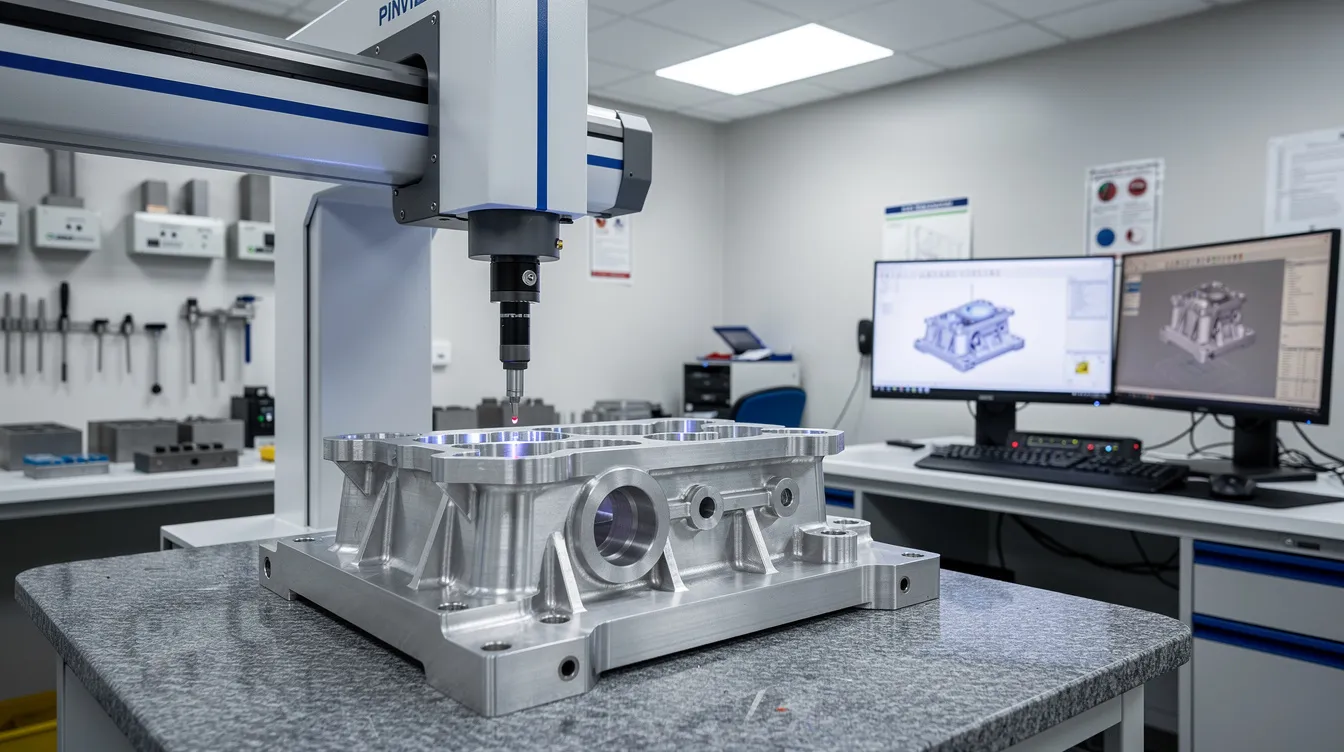
Detailed quality assurance processes are essential for high-precision die casting. Inspection equipment to confirm: CMM, spectrometer for alloy verification, X-ray for porosity, hardness tester, surface roughness gauge, leak test rigs.
Anebon’s quality control workflow covers incoming raw material verification, in-process checks, final inspection with traceable reports, and capability studies for critical dimensions. Control plans, PPAP documentation, and traceable batch markings are standard for export customers.
Casting Equipment and Automation Levels in Leading Chinese Plants
Many leading suppliers operate advanced high-pressure die casting equipment. Benchmarks to look for:
-
Automated HPDC cells with 300–2,500 T die casting machine capacity
-
Robotic ladling of molten metal and automated die spray
-
Real-time process monitoring (temperature, injection speed, shot weight)
-
Integration between casting equipment and downstream CNC cells
Automation improves consistency, reduces porosity, and supports stable quality in high-volume programs. Some casting companies report impressive annual production capacity-annual production capacity measured in thousands of tons and millions of parts per year across their production scale.
Anebon’s investment philosophy prioritizes high-precision machines and advanced technology rather than only high tonnage, matching overseas OEM expectations for dimensional repeatability at scale. Cutting edge technology in process monitoring and closed-loop control is becoming standard in the die casting field.
Design for Manufacturability (DFM) When Working with Chinese Die Casting Suppliers
Early design involvement can help minimize casting issues in die manufacturing. Many suppliers provide end-to-end services including design-for-manufacturing support-and the best ones treat DFM as a value-added engineering service, not just a checkbox.
Key DFM considerations:
-
Minimum wall thickness: ~0.5–1.0 mm for aluminum die casting depending on alloy and geometry
-
Draft angles: 1–3° on all vertical walls
-
Ribs and bosses with generous fillets; avoid sharp internal corners
-
Parting line placement to optimize appearance and reduce secondary machining
-
Avoid isolated mass sections that cause hot spots and warpage
Anebon’s DFM deliverables include marked-up 3D/2D files, proposed tolerance splits between as-cast and machined features, and suggestions for standardizing features across part families.
Tolerances, Porosity, and Other Critical Engineering Considerations
Realistic as-cast tolerances in high pressure aluminum die casting run ±0.1–0.2 mm for general features. After machining, critical features reach ±0.005–0.02 mm. Surface roughness as-cast sits around Ra 3–6 µm, improving to ≤0.8 µm with machining.
Porosity control:
-
Gas porosity (trapped air/hydrogen) and shrinkage porosity are the primary types
-
Vacuum-assisted HPDC and squeeze casting significantly reduce both
-
Gate design, overflow, and controlled die temperature are essential
-
X-ray inspection for pressure-tight or safety-critical components
For sealing surfaces and pressure-tight parts, Anebon identifies “critical-to-function” features with customers and aligns inspection plans including leak testing and flatness verification for O-ring grooves.
Comparing Chinese High-Precision Die Casting Suppliers: A Practical Checklist
Many suppliers specialize in producing complex geometries that require tight tolerances, but capabilities vary widely. China has many capable die casting manufacturers-here’s what to verify:
Technical checks:
-
Founding year and track record (10–15 years for complex programs)
-
Die casting machine tonnage range and casting equipment breadth
-
In-house CNC capacity (number of axes, machines)
-
Supported alloys and surface treatment capabilities
-
Ability to serve as a full die casting company, not just a casting manufacturer
Quality checks:
-
Certifications (ISO 9001, IATF 16949, industry-specific)
-
Typical PPM rates and CMM report availability
-
Sample lead times and NPI maturity
Commercial checks:
-
Export experience to EU/US/Japan
-
IP protection measures and tooling ownership terms
-
Language and engineering communication quality
For context, the Chinese market includes established names across regions: Ningbo Yujun Mechanical Technology was established in 2014; Zhejiang Yulong Vehicle Industry operates a facility over 30,000 m²; Dongguan Xinghang Precision Hardware specializes in aluminum-zinc-magnesium die casting; L-TOOLING (HK) has a facility size of 10,000 to 30,000 m²; Inox Cast specializes in aluminum die casting for over 20 years; and wencan die casting is another recognized player in the die casting field. Anebon ticks these boxes for most OEM and R&D clients seeking long-term partnerships.
Cost Drivers in High-Precision Aluminum Die Casting
The lowest quote is often not the lowest total cost. China’s manufacturing infrastructure allows for significant cost savings in production, but scrap, rework, and delays erode those savings fast.
Key cost contributors:
-
Die complexity and number of cavities
-
Alloy choice and raw material cost
-
Machine tonnage and cycle time
-
CNC machining time and fixture complexity
-
Surface treatment and inspection depth
Smart DFM can reduce cost significantly: simplifying geometries, consolidating multiple parts into one casting, optimizing wall thickness, and standardizing features. Anebon provides cost-transparent quotes separating tooling, casting, machining, finishing, and logistics.
Lead Times and Capacity Planning with Chinese Suppliers
Realistic 2026 lead times from China for mass production programs:
-
Mold build: 4–6 weeks (medium complexity)
-
T1 samples: 1–2 weeks after mold ready
-
Validation: 2–4 weeks
-
Repeat orders: 2–4 weeks for existing molds
Holiday periods (Chinese New Year, Golden Week) can cause 2–4 weeks of delays. Plan buffer stock accordingly. Capacity discussions should cover annual volume forecasts, peak demand scenarios, and flexible machining capacity for ramp-ups.
Anebon’s MOQs accommodate both rapid prototypes and long-term production runs.
Working Model: From Rapid Prototyping to Full-Scale Production
OEMs and design engineers need a die casting supplier who supports them from early prototypes through serial production. Prototype options include:
-
CNC machining from billet aluminum for form/fit validation
-
Soft tooling (aluminum molds) for low-volume pilot casting runs
-
Rapid castings to test functional performance before committing to hard tooling
Most programs go through 2–3 prototype iterations before geometry freeze. Anebon transitions customers from prototype to production while maintaining design intent and tolerance consistency throughout.
Risk Management, IP Protection, and Communication with Chinese Partners
Common concerns for Western OEMs sourcing die casting services in China include IP leakage, inconsistent quality, and communication gaps. Practical protections include:
-
NDAs and controlled file sharing (send only necessary geometry)
-
Clear tooling ownership agreements
-
Periodic audits (on-site or remote)
-
Structured project updates with English-speaking engineers
Anebon’s experience working with EU, US, and Japanese clients includes dedicated project engineers, regular design reviews, and clear escalation paths for quality or delivery issues. Treat your trusted die casting supplier as a collaborative partner, not a black-box vendor.
Case-Style Examples of High-Precision Projects
Example 1: EV Inverter Housing
-
Aluminum HPDC with thin thermal fins (0.6 mm wall)
-
Sealing face flatness ≤0.02 mm; CNC-machined O-ring groove to ±0.01 mm
-
Porosity controlled via vacuum-assisted casting; 100% leak tested
-
Black anodized finish for corrosion resistance
Example 2: Medical Imaging Bracket
-
Small batch (500 pcs/year), 5-axis CNC finishing to ±0.005 mm
-
Full dimensional traceability per lot; documentation for regulatory submission
-
Bead-blasted surface with chromate conversion coating
Example 3: Telecom Heat Sink
-
Complex fin geometry for thermal dissipation; dimensional stability across 200 mm span
-
Black powder coating finish; tight mounting hole patterns (±0.01 mm)
-
Warpage resolved through conformal cooling redesign in mold
How Anebon Metal Products Limited Positions Itself Among China’s Precision Die Casting Suppliers
Anebon Metal Products Limited (Co Ltd) was founded in 2010 in Dongguan, Guangdong. The company holds ISO 9001:2015 and ISO 14001:2015 certifications and focuses exclusively on B2B OEM programs.
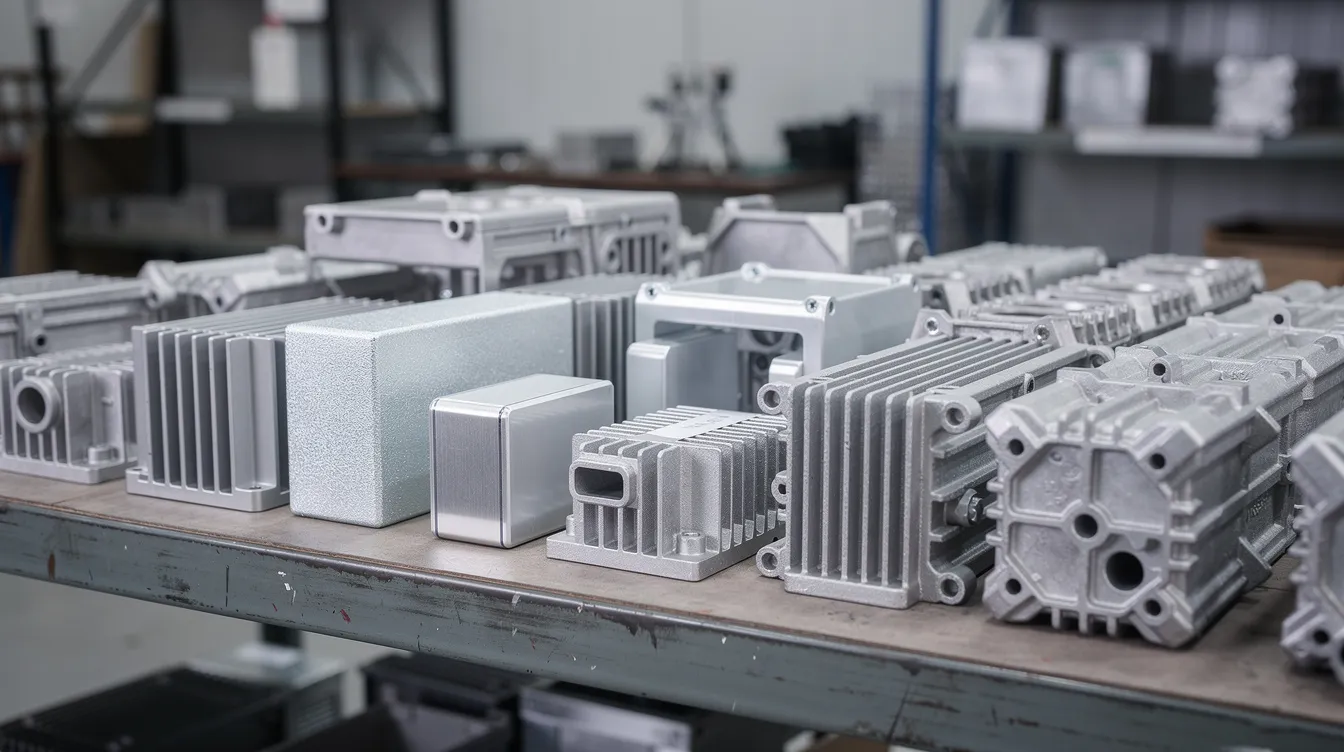
Core die casting services include precision CNC machining, aluminum die casting customized service, sheet metal fabrication, DFM consulting, and rapid prototyping. Industries served span aerospace, medical, automotive, electronics, and robotics, with exports to the EU, US, UK, and Japan.
Anebon delivers tight tolerances down to ±0.002 mm by CNC, engineering support through every project phase, and stable quality for long-term programs-positioning itself as a reliable partner rather than a transactional vendor.
How to Request a Quote and What Information to Prepare
Before contacting any die casting manufacturer, gather the following to meet your die casting needs efficiently:
-
3D models (STEP/IGES format)
-
2D drawings with GD&T, tolerances, and surface finish notes
-
Annual volume estimates and target lead times
-
Preferred alloy and surface treatments
-
Industry-specific standards (e.g., IATF 16949 for automotive, ISO 13485 for medical, AS9100 for aerospace)
Detailed RFQs enable faster, more accurate pricing and DFM feedback. Start with a technical discussion rather than bidding purely on price-it leads to better outcomes and long-term program stability.
Common Mistakes to Avoid When Choosing a High-Precision Die Casting Supplier in China
-
Choosing solely on unit price – ignores tooling quality, scrap rates, and hidden rework costs
-
Underestimating tooling importance – a poorly designed die casting mold leads to warpage, porosity, and short die life
-
Ignoring certification gaps – no ISO 9001 or IATF 16949 means no systemic quality assurance
-
Not clarifying tolerance priorities – over-specifying as-cast features inflates cost; under-specifying machined features causes field failures
-
Skipping sample validation – rushing to production without FAI creates expensive problems downstream
-
Not aligning on surface treatment standards – coating thickness, masking, and cosmetic zones must be defined in DFM
A structured supplier assessment and early DFM with a company like Anebon avoids these issues before they become costly.
Future Trends in High-Precision Die Casting in China (2026 and Beyond)
The aluminum die casting industry continues to evolve. Key trends shaping supplier choice today:
-
Increased adoption of automation and closed-loop process control in high pressure die casting
-
Real-time data collection and Industry 4.0 integration for zero-defect production processes
-
Growing demand from EVs, renewable energy, and autonomous systems accelerating need for large, precise aluminum casting
-
Environmental regulations pushing cleaner alloys and greener surface treatments
-
More customers expecting full supply chain transparency, including material provenance and carbon footprint reporting
Anebon’s focus areas align with these trends: smarter inspection, closer integration of simulation, and multi-process capabilities spanning casting, CNC, and sheet metal.
Conclusion: Selecting a Trusted High-Precision Die Casting Partner in China
Selecting the right trusted partner among casting companies in China comes down to system-level capability. Process expertise in high pressure die casting, precision machining, surface treatment, quality control, and clear communication must all work together. No single machine or certification replaces an integrated approach.
High-precision aluminum die casting is not a commodity. It requires a die casting company that invests in tooling quality, controls porosity, holds tight tolerances through finishing, and documents everything for export customers. That’s what separates a reliable partner from a low-cost quote.
Anebon Metal Products Limited invites you to send your drawings and project details for a detailed DFM review and quotation. Start with a technical conversation-let’s solve the engineering challenges together before cutting steel.